The Daily Circuit: Family offices gather in Abu Dhabi + Aramco offering imminent
👋 Hello from the Middle East!
Today in The Daily Circuit, we’re looking at Aramco’s imminent secondary stock offering, the China-Arab summit in Beijing, Pakistan’s reliance on funds from the Gulf and the star Saudi couturier set to unveil Riyadh Air’s crew attire in Paris next month. But first, a family affair for fund managers in the UAE’s capital.
Hundreds of investors gathered in Abu Dhabi today to discuss the future of family offices – a growing group that is steering an expanding pot of wealth to the region at a pivotal moment of economic transformation. “Our mandate is to stay away from oil,” Abdulrahman Al Suwaidi, Managing Director of the UAE’s AS Investments, quipped on a panel at the Abu Dhabi Family Office Summit on Saadiyat Island this morning, The Circuit’s Kelsey Warner reports.
Instead, the investors safeguarding the Gulf’s intergenerational wealth are looking to the diversification strategies in the region, such as Saudi Arabia’s Vision 2030 or the UAE’s “Future Economy” initiatives, to guide their investment decisions. Al Suwaidi, who was previously the director of investments for the ruling family of Dubai’s family office the Al Maktoums’ Dubai Holding, said his current fund is deploying capital in food security – they own a stake in the biggest halal poultry farm in the U.K. – as well as in green energy.
In a part of the world overrun by fund managers looking to drum up capital, Ali Raza, CIO of Saudi Arabia Holding Co., said a key missing piece is how to effectively navigate the market. “This goes for any region in the world but this is really the gap here,” Raza said. Echoing Al Suwaidi, he implored would-be fundraisers to look to the economic transformation strategies in the countries where they are deal-hunting to identify opportunity. Raza’s fund is deploying capital into electric vehicles and future mobility as well as semiconductors and data centers, he said. “Think very literally about Vision 2030,” he advised.
Family offices in the Middle East have grown rapidly in recent years, with total assets under management forecasted to hit a half trillion dollars in 2025, according to an analysis by Forbes. Some 45% of family offices in the region are managing a portfolio worth $251 million to $500 million, with another 32% presiding over $2.1 billion to $5 billion. Although slightly ahead of their Asian counterparts, the concept of family offices remains relatively new in the region, with less than half operating for more than a decade, Forbes found. By comparison, roughly two-thirds of U.S. and U.K. family offices have been around for more than 10 years.
At a summit meeting in Beijing with member-states of the Arab League today, China’s President Xi Jinping called for stronger ties in the fields of energy, tech and manufacturing with the MENA region. “China will further enhance strategic cooperation with the Arab side on oil and gas, and integrate supply security with market security,” Xi told the 10th Ministerial Meeting of the China-Arab States Cooperation Forum.
UAE President Sheikh Mohamed bin Zayed, who is being hosted by Xi on a two-day state visit to the world’s second-largest economy, told the forum that developing relations with China is important for the Middle East and “we remain committed to building bridges of cooperation to advance a more prosperous future for all,” summarizing his remarks on X.
The Emirati leader’s China foray followed his state visit to South Korea and the signing of a free trade agreement between the two countries, which, according to Bloomberg, “stands out amid a rising tide of protectionism and tensions among the world’s biggest economies.”
Saudi Aramco, the world’s largest oil company, is generating renewed energy among investors as it moves forward with a secondary offering. The share sale is currently being planned to start on Sunday with the booking process to take orders and could raise more than $10 billion, making it the largest offering of its kind in years, Bloomberg reports. No final decisions have been made on the offering period and terms of the deal, including its size, could still change, according to the news agency. Aramco didn’t immediately respond to requests for comment. The offering is set to come days after Aramco’s stock dropped to the lowest level in over a year. The deal’s opening will coincide with next week’s OPEC+ meeting to discuss oil output policy, where the group is expected to maintain supply curbs. Saudi Arabia’s production is close to its lowest level in three years.
PAKISTAN CALLS
The UAE and Saudi Arabia have pledged to investbillions of dollars in Pakistan’s ailing economy as the Gulf states expand their influence in South Asia and Islamabad seeks to lessen its reliance on Chinese funding, the Hong Kong-based South China Morning Post reports. On a visit with UAE President Sheikh Mohamed bin Zayed in Abu Dhabi last week, Pakistani Prime Minister Shehbaz Sharif secured $10 billion in investments from the country. The UAE deal follows China’s push this month to revive infrastructure investments in Pakistan under its Belt and Road Initiative, the newspaper reported. Saudi Arabia, meanwhile, said last month it would fast-track $5 billion to Pakistan as part of an estimated $25 billion investment program. Pakistan is under economic stress after implementing a series of austerity measures in July that were required by the International Monetary Fund under a $3 billion emergency bailout program that helped the country avoid defaulting on its international payments.
💲 Sovereign Circuit
Public Investment Fund: The PIF was ranked as the sovereign wealth fund with the greatest brand value in the world, according to an analysis by London-based Brand Finance. The strategic consulting firm pegged the value of the PIF’s brand at $1.1 billion, praising the fund’s investment strategy, the trust in its name and awareness of its brand. Gulf International Bank, which is owned by the PIF, expects to raise $500 million from the sale of dollar-denominated five-year senior unsecured bonds, Reuters reports. The Saudi Red Sea Authority issued its first cruise ship maritime tourism license to Cruise Saudi, a PIF-backed shipping operator in Jeddah. PIF-owned Neo Space Group signed an agreement with SES, a Luxembourg-based satellite telecommunications company, to collaborate on launching an inflight network that promises seamless global web connectivity for airline passengers.
Investment Corporation of Dubai: The sovereign wealth fund, which operates as Dubai’s main investment arm, reported a 68% increase in 2023 net income from the previous year.
Mubadala: Danish private equity fund Polaris agreed to sell safety training provider RelyOn Nutec to Mubadala Capital, the wholly-owned asset management subsidiary of Mubadala Investment Co., for an undisclosed sum, it shared in a statement this week.
↪↩ Closing Circuit
💸 Portfolio Sale: Bahraini dual-listed investment fund Ithmaar Holding is going ahead with the sale of its financial and investment portfolios, worth $695 million to $715 million in assets and $665 million to $695 million in liabilities, to Bahraini investment bank GFH Financial, according to a disclosure to the Dubai Financial Market (DFM) and Bahrain Bourse.
🛢️ Refining Record: Kuwait’s oil refining capacity has reached a record 1.8 million barrels per day, boosted by its new Al-Zour refinery that is among the biggest in the Middle East.
🥤 Inconvenient Purchase: Electra Consumer Products sold off the eight 7-Eleven convenience stores it opened in Israel over 18 months, receiving $810,000 from buyer Seven Express after losing over $16 million as the Texas-based chain’s franchisee.
🗣 Circuit Chatter
🛫 First Class: Qatar Airways was named the world’s best airline by aviation industry website AirlineRatings[dot]com, with Dubai-based Emirates ranked No. 5 and Abu Dhabi’s Etihad No. 8.
⚖️ Moscow Law: Dubai-based Habib Al Mulla & Partners announced it will open the first office of a UAE law firm in Russia, focusing on commercial law, investment law and dispute resolution.
🤖 AI Partners: Saudi Arabia’s Ministry of Media signed a preliminary agreement with Microsoft Arabia to cooperate in the fields of artificial intelligence, machine learning, data analysis, cybersecurity and software development.
🛩️ Mideast Hub: Italy’s ITA airlines announced it will fly five weekly flights between Riyadh and Rome, supporting Saudi Arabia’s ambitions to become a regional aviation hub.
🌐 AI Player: The UAE’s push to develop artificial intelligence tools such as the Arabic-language Falcon large language model shows the country’s potential to become a major player in global technology, Kevin Miller, Vice President for Global Data Centres at Amazon Web Services, told The National.
🌍 Power Circuit
Sheikh Khaled bin Mohamed bin Zayed, Crown Prince of Abu Dhabi and Chairman of the Abu Dhabi Executive Council, attended the graduation ceremony on Wednesday at Khalifa University, expressing the emirate’s commitment to investing in education and preparing students with the skills to help build the UAE’s knowledge economy.
Sheikh Saudi bin Saqr Al Qasimi, Ruler of Ras Al Khaimah, toured the Sobha Model Industries factory in the emirate’s Al Hamra Industrial Area on Wednesday to highlight the importance of manufacturing and advanced technology to the UAE’s economy.
➿ On the Circuit
UAE Minister of Economy Abdulla bin Touq Al Marrisigned a preliminary agreement on intellectual property protections with Kathi Vidal, U.S. Under Secretary of Commerce for Intellectual Property and Director of the U.S. Patent and Trade Office, during a visit to Washington.
Guy Smith has been tapped to become Senior Managing Director and Head of Global Corporate Finance at First Abu Dhabi Bank, the UAE’s largest lender. He joins from Nomura in Hong Kong.
Majid Sultan Aljoker has been tapped to head the Corporate Resilience Department at Dubai Airport in addition to his role as COO. The move comes amid a management reshuffle at the world’s busiest international airport, in line with Emiratization goals, Enterprise reports. Adil Al Fahim, current CFO at Dubai Airports, will handle corporate assurance; Meshari Al Bannai was appointed Chief People Officer; Omar Binadai was appointed Chief Technology and Infrastructure Officer and Buti Qurwash expands his role to become Senior Vice President of Safety and Security Affairs.
Simon Kim, Founder of Hashed, and Gabrielle Inzirillo, Head of Ecosystem Development at ADGM, will be in conversation next Wednesday, June 5 at Abu Dhabi Global Market covering topics around Web3 venture capital and cross-border collaboration.
🎶 Culture Circuit
✈️ High Fashion: Saudi couturier Mohammed Ashi will design the first cabin crew uniform for PIF-owned Riyadh Air, which will be unveiled next month during Paris Fashion Week. Ashi, the first designer from the Gulf to join France’s Fédération de la Haute Couture as a guest member, has created clothing worn by Beyonce, Lady Gaga and Queen Rania of Jordan. “It’s an exciting time to be in Saudi Arabia and to witness another Saudi brand going global,” he said.
📷 Photo of The Day
Hamad Obaid Al Mansoori, Director-General of Digital Dubai, met with Aziz Akhannouch, Prime Minister of Morocco, at the Dubai Pavilion during the opening of GITEX Africa 2024 on Wednesday. (Photo: WAM)
🗓️ Circuit Calendar
May 29-31, Marrakech, Morocco: GITEX Africa. The second edition of the biggest tech and startup gathering in Africa. Place Bab Jdid.
June 2, Muscat, Oman: Taiwan Trade Mission to Oman. Taiwan trade officials invite Omani investors and entrepreneurs for one-on-one meetings at conference. Crowne Plaza Muscat.
June 5, Hong Kong: Bloomberg Wealth Event. A gathering to bring actionable intelligence to portfolio managers and other dealmakers and analysts from asset managers and owners, family offices and hedge funds. Conrad Hong Kong.
June 11-13, Rio de Janeiro, Brazil: Future Investment Initiative Priority Summit. Saudi Public Investment Fund holds FII conference for first time in Latin America. Copacabana Palace.
June 16-18, Eid Al Adha. Government offices and businesses are closed across the MENA region for the Islamic holiday. Dates are subject to sighting of the moon by state religious committees in each country.
June 22-23, New York City: Mubadala New York Sail Grand Prix. Flying catamarans compete at SailGP’s two-day racing festival in New York Harbor. Governors Island.
June 23-26, National Harbor, Maryland: SelectUSA Investment Summit. The highest profile event in the U.S. to facilitate business investment by connecting thousands of investors, companies, economic development organizations and industry experts to make deals. Gaylord National Resort and Convention Center.
July 15-26, Granada, Spain: ADIA Lab International Summer School. A course of lectures and case studies to explore the critical role of trust and safety in AI, examining the ethical, technical and societal implications of AI applications. University of Granada.
Takwin Ventures helps Israel’s Arab tech entrepreneurs navigate obstacles
HAIFA, Israel – Waseem Geraisy, co-founder and CEO of medical device startup Sorlis, worked for 15 years as a business consultant at a variety of small companies before taking steps to acquire the skills and contacts he needed to build an Israeli tech firm.
Like other Arab entrepreneurs, Geraisy, 38, recognized the obstacles. Among them, Israel’s bountiful startups largely emerge from a close-knit ecosystem cultivated in the army’s intelligence technology branches. Arab citizens, who make up 21% of the population, are exempt from military service and miss out on the networking culture generated there.
Enter Takwin Ventures, a project co-founded by two of Israel’s largest venture capital firms, which tries to fill in the gaps and give Arab companies the support and funding they need. Geraisy, whose company has developed a device for the early detection of bed sores, was accepted to Takwin’s 3D Generation program in 2022 and is now trying to raise $5 million to get it off the ground.
“We had few useful connections,” Geraisy told The Circuit. “3D Generation gave me the opportunity to meet people I would not have met anywhere else.”
Takwin, Arabic for genesis, was co-founded in 2015 by Imad Telhami, a veteran Arab executive at Israel’s Delta Galil Industries, a textile maker with factories in Egypt and Jordan. With backing from Erel Margalit, founder of Jerusalem Venture Partners and a former member of the Israeli Parliament, and Chemi Peres, chief of Pitango VC and the son of former Prime Minister Shimon Peres, Telhami grounded Takwin on the principles of ambition and growing a tough skin.
“You need to have the courage to dream big if you wish to build a company,” Telhami told The Circuit. “An entrepreneur cannot think like a victim.”
In Geraisy’s case, Takwin sent him to 3D Generation’s six-month academic program at Reichman University north of Tel Aviv in Herzliya, Israel, where he mixed with industry mentors and other participants, eventually brainstorming with them and co-founding Sorlis.
Dr. Nardeen Zoubi, an Arab woman who also participated in the Takwin program, is Chief Medical Officer. Rafi Rabinovitz, a mechanical engineer and startup veteran who was Geraisy’s mentor at Takwin, joined Sorlis as Chief Science Officer. He brought in Micha Nisani as Chief Technology Officer after the two were senior executives at Given Imaging, one of Israel’s best-known medical device startups. The company, which pioneered the field of capsule endoscopy with its swallowable pill-sized camera, is now a unit of Dublin, Ireland-based Medtronic.
Sorlis received $1 million in seed funding, split evenly from the Takwin 2 fund and a grant from the government’s Israel Innovation Authority. Geraisy said the company will seek to obtain FDA approval for the device and raise $5 million in a Series A financing round led by Takwin.
Headquartered in the northern port city of Haifa, Takwin has provided 13 early-stage startups with a combination of funding, office space, research assistance, and connections to professional networks, Itzik Frid, Takwin’s CEO and managing partner, told The Circuit.
“We started with a social mission but we always said it is a return-based fund,” Frid said. “We are looking to make tons of money for our entrepreneurs and investors because we believe only by making huge returns will we entice young folks in the Arab sector to go into high tech – the same way it happened in [Israel’s] Jewish sector.”
Among Takwin’s other portfolio companies, Imagry makes software to guide self-driving vehicles without maps, SeismicAI makes an early warning system for earthquakes and Myndlift allows therapists to give patients guided neurofeedback remotely.
Arab business leaders in Israel saw themselves as a natural link to the broader Middle East market after the 2020 Abraham Accords that sought to normalize relations with the UAE, Bahrain, Morocco and Sudan. Among the showcased speakers at Saudi Arabia’s Future Investment Initiative conference in 2022 was Samer Haj-Yehia, then Chairman of Israel’s Bank Leumi, the country’s largest lender, now Chairman of the Strategic Advisory Board at Israel’s Vintage Investment Partners.
The Takwin office is a favorite showpiece for diplomats seeking examples of brighter prospects amid the gloom of the Middle East conflict. U.S. Ambassador Jack Lew posted photos on X after his visit to Takwin in February, hailing the “amazing joint contributions of Arab and Jewish business partnerships in Israel.”
Fadi Swidan, Takwin’s Vice President of Marketing and Business Development, said basing the firm in Haifa makes it more accessible to Israel’s Arab citizens who mostly live in the north, but makes it more remote from the center of VC gravity in Tel Aviv and Herzliya.
“That is why we needed a dedicated fund to give them a starting point, to give them access to smart money and good access to networks,” Swidan said.
Frid notes that venture capital has dried up over the past two years from Silicon Valley to Tel Aviv, making Takwin’s challenge even greater. Aiming to raise $80 million in 2022 for its Takwin 2 fund, the firm has had to lower its goal to $30 million since the Gaza war.
“If fundraising is an issue for all Israeli companies,” Frid said, “it is ten times worse for Arab-Israeli companies.”
Catching up with Ashish Koshy, the M42 executive leading the UAE’s push for personalized medicine
M42 Health is overseeing the Emirati Genome Program, which has mapped the genetic code of more than 500,000 people in the UAE, representing one of the largest initiatives of its kind in the world.
Abu Dhabi Department of Health Chairman Mansoor Ibrahim Al Mansoori has called the project “a contribution to Arabs and to the world,” a key to improving health outcomes, tailoring personalized medicine and preventing disease. To date, only 1% of the world’s genomes that have been mapped are of Arab descent. The resulting reference genome in the M42 project is aimed at more personalized and preventive healthcare for the UAE’s citizens and a greater understanding of rare genetic disorders and new treatments.
The national program is shaping practically everything at healthtech behemoth M42 Health, created less than two years ago when Abu Dhabi’s Mubadala Health and G42 Healthcare merged, bringing labs, technology, hospitals and clinics under one brand.
Similar efforts are underway in Saudi Arabia and Qatar to map the local population’s genetic code. But Mansoori says the UAE is ahead.
This week, M42 announced a new research partnership with Microsoft, Harvard University and MIT. The collaboration, announced in Dubai during the Arab Health conference, will give research teams access to M42 data in a secure environment, its developers say, to advance clinical research and drug discovery.
To talk about the business and how M42 is building on these partnerships, The Circuit caught up with Group Chief Operating Officer Ashish Koshy on the sidelines of the World Economic Forum meeting in Davos, Switzerland, earlier this month. This interview has been edited for brevity and clarity.
The Circuit: More than a year after the merger of Mubadala Health and G42 Healthcare, you are out and about. Here at Davos, you have had a large presence and later this month at Arab Health. What is on your agenda and what are you hoping to get by being, pardon the phrase, on the circuit?
Ashish Koshy: The year 2023 has been a significant year for integration. M42 was created with the merger between Mubadala Health and G42 Healthcare. G42 Healthcare brings the digital tech and genomics, and Mubadala Health having the state of the art facilities.
It’s been a wonderful year of integration and yet we were able to launch some cutting-edge initiatives. One is Med42 which was launched in October as the world’s first open access, clinical large language model to pass the U.S. Medical Licensing Exam. To date, to my knowledge – and in spite of AI changing by the minute – there’s nothing yet that has crossed that benchmark, which showcases the power and the mandate that was created with this merger.
Second, one of the largest products we launched is the pharmacogenomics initiative. You’ve heard of the Emirati Genome Program: a large population-scale genetic sequencing program. The question is, okay, what’s next? We are now returning to patients [that shared their DNA sample], and telling them what pharmaceutical drugs work for them based on their genetic makeup. This is a national initiative. We want to work with partners here in the AI space specifically on strengthening our roadmap. We’re saying we’re here and we’re open for business.
TC: The last time I talked to you, when you were CEO of G42 Healthcare, you were Mr. Personalized Medicine. But your portfolio has changed with the Mubadala Health merger. Can you dig into what your remit is now?
AK: Personalized medicine is still on the agenda! It’s on the agenda. M42 is one of the largest integrated healthtech companies in the world. We have 450 facilities, business operations in 26 different countries and an employee size of 20,000. What has changed since the last time we spoke is our portfolio has the Omics Center of Excellence, which is running DNA sequencing at scale. We have IROS which is running clinical trials. We have an environmental science business, which is running programs specifically testing wastewater samples and proactively understanding risks to the environment.
TC: That was an interesting COVID learning…
AK: Absolutely. And it’s still working and right now it’s supporting multiple initiatives in public health. We have a digital health pillar, one of the key products is called Malaffi which is the health information exchange. So we’ve created a platform, and irrespective of which hospital you are in, the data is centralized [in the UAE]. So that’s the G42 Health universe.
On the Mubadala Health side, you have Cleveland Clinic Abu Dhabi, Imperial College, we have HealthPlus, we’ve got IVF facilities and a recent acquisition called Diaverum, which is the third-largest dialysis network in the world. It’s currently running large dialysis programs, including in Saudi Arabia. In a nutshell, our portfolio includes state-of-the-art facilities to digital health.
TC: Speaking of that deal, M42 bought Diaverum in April 2023, it reportedly valued this Swedish company at $2.5 billion. Are you looking at further acquisitions? Are you looking for technology vendors? The word ‘partner’ is thrown around a lot. Can you drill down what partnerships mean in an M42 context?
AK: Our mandate set by the board and our shareholders is to bring in tech-enabled solutions that will improve patient outcomes, go on that journey for personalized medicine and also ensure we improve the operational workflow and improve margins within the business. Now, if there are tech solutions, if there are companies or partners that are ahead of the curve currently and we can plug and play into the ecosystem that I just described, 100% it’s part of the mandate. There’s no one-size-fits-all all in terms of the acquisition approach, but if it fits into our synergistic goals, and also long-term vision, then yes.
TC: Do you have geographies that you’re interested in or particular technologies?
AK: I think we are agnostic on geographies. I think it’s based on what the partner or the company provides, even if it’s healthcare in a different part of the continent or world but fits into the metrics that we just described, it’s definitely open for discussion.
TC: I’m curious about the futuristic vision the UAE has for healthcare, particularly for its citizens. It wants to map the genome of every Emirati citizen, and one day invite expat residents, of which we are many, to participate and for personalized medicine to be the norm.
AK: You can participate! Just don’t expect the government to fund it for now. You can walk into a facility and say hey, here is my signature on the consent form, I want to be part of this initiative. And you can get that done.
TC: How much will it cost?
AK: I think roughly around I need to double-check on that but roughly 1000 dirhams, ballpark figure. Don’t quote me on that.
TC: From the resulting genomic profile you get, how does M42 plug that into the UAE’s broader healthcare goals?
AK: I think the UAE is well in advance of other countries across the globe in building this national initiative. Be it a Malaffi initiative, which is a national centralized platform, connecting all the hospitals together. Some countries or governments say, Why do we do it? But the UAE had that before COVID and see how Abu Dhabi managed COVID. We launched this genomics initiative pre-COVID. And that’s when, eventually when COVID came you wanted sequencing partners to run large-scale COVID variant sequencing. So absolutely I think in terms of future vision, the foundation has already been laid by the UAE. I’m talking even beyond M42. Be it on the data infrastructure, be it on sequencing, be it on biobanking. I think it’s open for business for life science companies to come and invest into Brand Abu Dhabi and partner with companies like M42.
TC: These are highly technical areas that require a lot of skill, a lot of graduate degrees in one room. How are you hiring? What jobs are open?
AK: Our doors are always open for the right talent. And the fact that M42 offers everything even beyond a physician or a nurse portfolio all the way to cloud ops. So the range of opportunities that M42 offers is a lot and we’re constantly on the lookout for global talent. From the top of my head, specifically on AI, we were doing a lot on initiatives around Med42 and building an AI system. We’ve got an active collaboration with Microsoft which is a strong strategic partner for us. We’ve got active hiring specifically on the environmental science business, because there’s a huge thing now post-COP28, a huge focus on climate change. These are three main pillars, but in hospital operations, always we are looking for talent.
TC: You’re an expat. You decided to make the move to Abu Dhabi. The question always is, do you plan to stay?
AK: I came here in 2016, 2017, on a six-month stint, like the typical consultant, and never left. I was talking to some of my colleagues here. The UAE offers a wonderful ecosystem compared to some of the other countries around the neighborhood. It’s inclusive, it’s tolerant. It offers business opportunities. So yeah, I don’t want to leave at all and now the fact that we are bringing and rewarding talent with Golden Visas, we see a huge influx of people that want to come in, which makes our job easier to hire the right talent. The UAE is home for me and I don’t intend to leave.
Arabs and Israelis mull regional free-trade pact at Bahrain talks
Nearly three years after establishing diplomatic ties, representatives from a group of Arab countries and Israel met this week in Bahrain to brainstorm ideas about forming a regional free-trade alliance.
The discussions were unofficial and meant to lay the groundwork for future negotiations among the countries that normalized relations with Israel under the 2020 Abraham Accords. The talks were organized by the Atlantic Council, a Washington think tank, as part of the backchannel “N7 Initiative” it developed in partnership with the New York-based Jeffrey M. Talpins Foundation to bolster the Accords.
“We brought senior trade negotiators together for a private discussion… to do a road map for a multilateral, regional free-trade agreement,” William F. Wechsler, senior director of the Atlantic Council’s Middle East programs and head of the N7 project, told The Circuit.
Taking part in the talks on Monday and Tuesday were trade officials from Bahrain, the United Arab Emirates, Morocco and Israel, Wechsler said, as well as former officials from Egypt and Sudan. Jordan did not participate. The N7 brand refers to Israel and the six Arab countries that have signed peace treaties or normalization pacts with it. Under the rules of the conference, none of the trade negotiators’ names could be made public.
The back-channel talks provided an opportunity for government representatives to discuss concrete steps for advancing normalization face-to-face at a time when such encounters have become less frequent. A meeting of the U.S.-backed Negev Forum, comprising the foreign ministers of the seven countries, has been repeatedly postponed this year amid violent eruptions of the Israeli-Palestinian conflict that have been strongly condemned by the Arab countries in the N7.
The trade conference was the third in a series of N7 events aimed at generating ideas for specific areas of Arab-Israel cooperation that will be presented for consideration by the Negev Forum. It followed a March meeting in the UAE on agriculture, water and food security, and December talks in Morocco on education and coexistence.
Increasing the potential impact of the N7 project is the fact that it was directed until last month by Daniel Shapiro, the former U.S. ambassador to Israel. Shapiro was appointed on June 29 to be the State Department’s senior advisor on regional integration. In his announcement, Secretary of State Tony Blinken said Shapiro’s task was to help “deepen and broaden the Abraham Accords, and build the Negev Forum.”
The UAE and Israel signed a free-trade agreement last year that the two countries predict will generate $10 billion in annual bilateral economic activity by 2026. Bahrain has indicated it is also close to signing a free-trade agreement with Israel. Wechsler said that a regional agreement would bring extra benefits because “as you add countries, it has a multiplier effect on free trade.”
While the trade negotiators went unidentified at the conference, the participating nations sent senior officials to observe the discussions and join an opening dinner at the Sofitel Hotel in Bahrain’s capital city of Manama. Among them were Abdelouahed Rahal, director general of the trade division at Morocco’s Ministry of Industry and Trade; Shaikh Abdulla bin Ahmed Al Khalifa, undersecretary for political affairs at Bahrain’s Foreign Ministry; Israel’s ambassador to Bahrain, Eitan Naeh; and the U.S. ambassador to Bahrain, Steven Bondy.
Cybersecurity and space exploration are emerging as fruitful areas for joint research and investment between Arabs and Israelis. That was the message that rang out from one conference hall to another in Tel Aviv last week, where cabinet ministers, scientists and investors hailed the prospects for Middle East cooperation made possible by the 2020 Abraham Accords.
At the Cybertech 2023 conference, top government officials responsible for cybersecurity in the UAE, Bahrain, Morocco, Israel and the U.S. appeared together onstage to talk about the benefits of regional partnership. “The first word needed for success is trust, and what you see in front of you today is trust,” said Salman bin Mohammed bin Abdullah al-Khalifa, CEO of Bahrain’s National Cybersecurity Centre. “We’ve all been working together behind the scenes but now we’re past that stage, and I think we now want to see this trust in action.” Read The Circuit’s interview with Israeli tech patriarch Yossi Vardi, who hosted both Cybertech and the subsequent DLD Tel Aviv Innovation Festival last week.
Across town at the 18th Ilan Ramon International Space Conference – named for the Israeli astronaut who died with six American crewmates in the 2003 Columbia space shuttle disaster – discussion of Arab-Israeli cooperation generated headlines. “Today we are witnessing a new era of space exploration, one that is marked by cooperation between countries, private companies and research institutions,” said Sarah bint Yousef Al Amiri, the UAE minister of state for advanced technology and chairwoman of the UAE Space Agency. “Let us continue to work together and make the impossible possible.”
Debate continued to rage in Israel over the prospects of a credit downgrade because of Prime Minister Benjamin Netanyahu’s proposals to limit the power of the judiciary, which opponents have branded undemocratic. Thousands marched for the fifth week in a row at protest demonstrations in Tel Aviv, Jerusalem and Haifa. Jacob Frenkel, former governor of the Bank of Israel and ex-chairman of JP Morgan Chase International, criticized the prime minister for dismissing warnings about investor risk. “When JPMorgan makes a recommendation, take it very seriously,” he said in a television interview. Netanyahu, who flew to Paris last week for a meeting with French President Emmanuel Macron, also met with business leaders there and said he heard no concern about dangers of investing in Israel.
The UAE’s envoy to Israel, Ambassador Mohammed Al Khaja, met with the current governor of the Bank of Israel, Amir Yaron, who has also cautioned about the impact of the judicial reform package on Israeli markets. Al Khaja tweeted his appreciation to Yaron “for sharing your insights & prospects of Israel’s economy & the growth potential by engaging all sectors of society. We look forward to continue working together to realize the full potential of our countries’ thriving economies.”
Welcome to The Weekly Circuit, where we cover the Middle East through a business and cultural lens. Read on for the stories, deals and players at the top of the news. Please send comments and story tips to [email protected].
Spread the word! Invite your friends to sign up.👇
OFF THE SHELVES
Missing pieces to cultural puzzles appear in UAE-Israel library ties
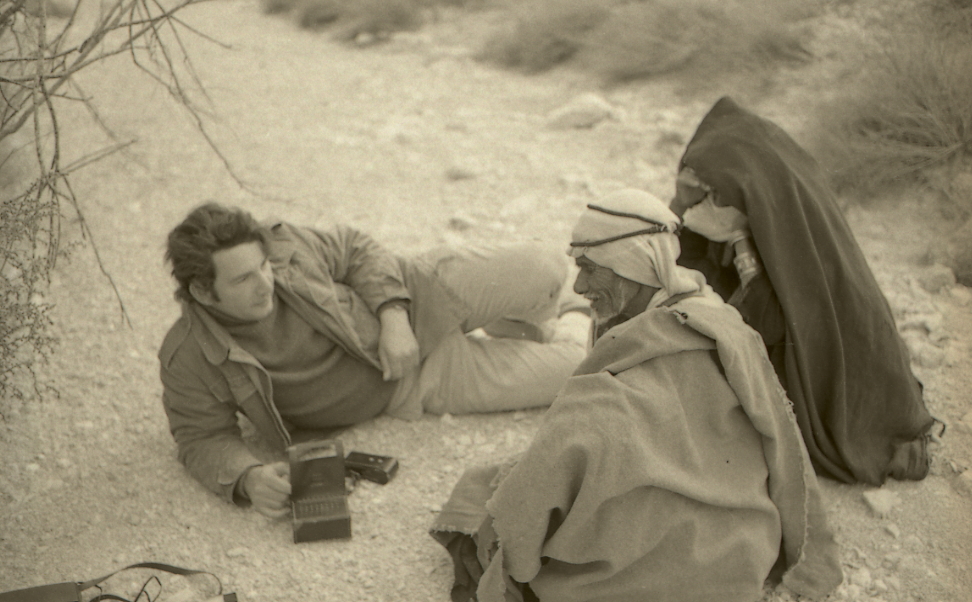
Clinton Bailey recorded hundreds of hours of oral history from Bedouins.
NATIONAL LIBRARY OF ISRAEL
Nearly 120 years ago, Hermann Burchardt, a German Jewish explorer, was traveling in the Middle East, talking to Arab leaders and taking photographs, Jenni Frazer reports for The Circuit. Among the iconic pictures was what is thought to be the first image of the founding father of Abu Dhabi, Sheikh Zayed bin Khalifa Al Nahyan, known as Zayed the First. He was the great-great-grandfather of the current president of the United Arab Emirates, Sheikh Mohamed bin Zayed Al Nahyan.
Murder mystery: Although the pictures Burchardt took in Abu Dhabi became famous in the region and reproduced many times, his personal impressions of the people and places he photographed remained a mystery. He and his fellow travelers were murdered in Yemen in 1909 and his journals were assumed to have been lost. Eventually, via the estate of Eugen Mittwoch, a German scholar of Islamic and Judaic studies, Burchardt’s missing diary — and hundreds of pages of correspondence, notes and official documents, together with numerous photos — all found their way to the National Library of Israel in Jerusalem.
Filling in the blanks: It was this material that delighted Hamad Al-Mutairi, director of the archives department of the Emirates National Library and Archives (NLA), based in Abu Dhabi, when he and other colleagues visited Israel last summer. For Al-Mutairi, seeing the Burchardt collection in Jerusalem was thrilling, and filled in the blanks for his researchers. “We were able to see details about the kind of food he ate, and the type of traditional hospitality given to him at that time as a traveler in the region.” The Emirati visit — and a memorandum of understanding between the two libraries — is a direct and tangible result of the Abraham Accords, signed initially between Israel and three partners — the UAE, Bahrain and Morocco — in 2020.
Joint exhibit: The Burchardt material is essential to drawing a fuller picture of the first years of the individual emirates that now make up the UAE. The Israelis have provided Abu Dhabi with digital copies of Burchardt’s diary and the accompanying papers, which will become part of the NLA collection. “We didn’t stop there,” said Al-Mutairi. “We’re now trying to find the right time to put together some sort of exhibition about Burchardt, charting his journeys across the region. It might be online or it might be physical.” The formal agreement between the two libraries will ensure that the material will marry the holdings that each has; and in the meantime, experts from the two institutions will work together to enrich and expand background information and metadata related to the archive’s contents, including translations, greatly increasing its value to scholars across the globe as a rare reflection of Gulf history.
Oral history: The UAE has built up an enviable body of material based on oral history, while the Israeli library has tended to focus more on physical collections — its Islam and Middle East collection, for example, includes priceless documents and manuscripts not even found in much of the Arab world. Samuel Thrope, curator of the Islam and Middle East collection in Jerusalem, said he has been talking with colleagues at the NLA about oral history connected to a project on Clinton Bailey, an American-Israeli researcher who spent 50 years documenting Bedouin culture and society. The Bailey recordings — all 350 hours of them — are “super-interesting,” said Thrope, and chronicle Bedouin life in the Negev and Sinai between the late 1960s and 2009. “They have all been cataloged and digitized — and now we are in the process of transcribing them.”
Catching up with Yossi Vardi, wisecracking patriarch of Israel’s startup culture
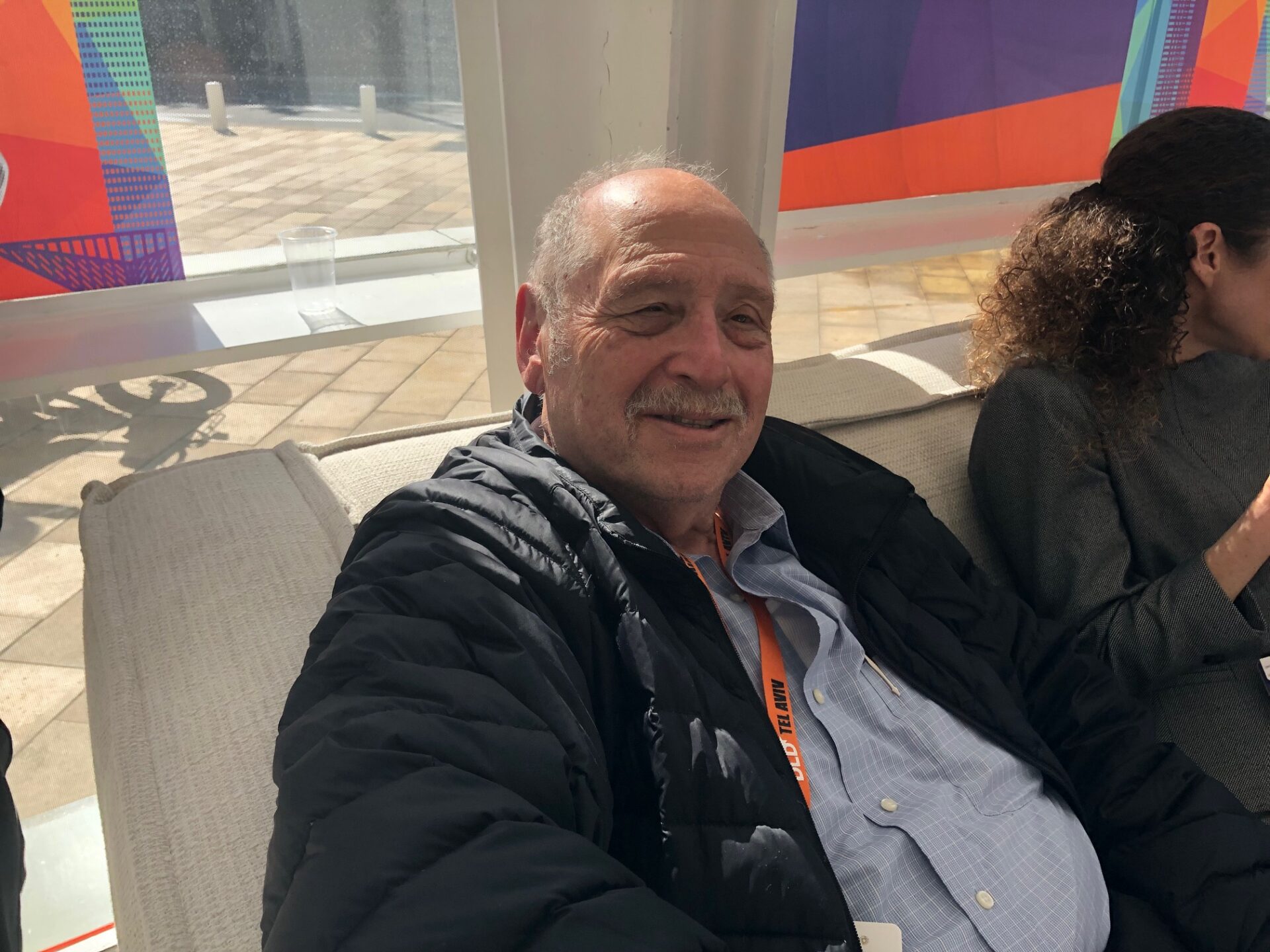
Yossi Vardi holds court in lobby of Habima theater at DLD Tel Aviv Innovation Festival.
Leaning back on a big white couch in the lobby at Tel Aviv’s Habima national theater, where he was hosting one of Israel’s most influential annual technology conferences, Yossi Vardi gets ready to shmooze. At 80 years old, he’s dressed in a scruffy black winter jacket and positions himself at the foot of Habima’s grand curving staircase, The Circuit’s Jonathan Ferziger reports. Inevitably the investors, CEOs and government ministers rushing to lead panel discussions at last week’s DLD Tel Aviv Innovation Festival catch his eye and pause to say hello. In Hebrew, English and Yiddish, Vardi trades quips with them – many of whom consider him their mentor – basking in his reputation as the adorably ornery grandpa of Israel’s startup culture. He doesn’t always remember people’s names so he asks them to draw close and examines their conference badge. One budding entrepreneur wouldn’t leave after a two-minute pitch, and Vardi told him his idea wasn’t worth listening to.
AOL deal: Over the arc of Vardi’s career, which took him from procuring crude for the energy-starved nation in the 1970s as chairman of the Israel National Oil Company to selling ICQ, the first widely used instant messaging software that his son Arik created with three friends, to AOL for $407 million, Vardi has been a leader in Israel’s tech world. He has since led, invested in or helped build more than 70 startups, and is in demand as a speaker around the world about how Israel earned its name as the Startup Nation. He was the recipient of the Prime Minister’s Award for Life Achievement. In between Vardi’s brief conversations with roughly two dozen conference participants heading up the stairs, The Circuit interviewed him about the difficulty of raising venture capital, investor concern about Israel’s judicial reforms, normalization with Arab countries, artificial intelligence and what makes a good startup entrepreneur.
The Circuit: How do companies survive this period when investment capital is drying up?
Yossi Vardi: First of all, they need one very important thing, which is luck. The second thing is money. Money has been disappearing very quickly and therefore some companies will perish and some companies will resolve this by being acquired by other people. We saw it in 2000, we saw it in 2008 to a lesser degree and we’re going to see it again now. It’s not a pleasant situation, but this is business, this is the cycle.
Israeli startup executives are marching in the streets against the government’s proposed judicial reforms and some companies are threatening to take their money out of the country. What impact does that have on foreign investors?
We are now in a very, very sensitive situation. Some people say it will be disaster, while the government says everything is wonderful. We have to stare directly at the crisis and figure out how to resolve it, because the question is not who is right and who is not right. Suppose the worst scenario appears and we lose the tech industry. Some people will say we are sorry. But it’s too serious to just say we’re sorry. We are playing here with a nuclear economic situation. I really hope that we get sober and learn how to reduce the risks.
What impact do the normalization agreements with the Gulf states have on investment?
You have to remember that the two fundamental agreements Israel has reached with Arab countries are with Egypt and Jordan, which stopped the killing of people. This is something holy. We must arrive at some kind of arrangement with the Palestinians. I think the Abraham Accords are important. They enhance the legitimacy of Israel in the eyes of other members in the region. So they’re a segue for us to do more things. In this respect the Abraham Accords are important and I hope they will develop further. When the economic situation of the world is good, we get a wonderful flow of funds. I don’t think business with the Gulf states is going to tilt the needle, but it’s very welcome.
Vertical Farms: Saudi Arabia’s Public Investment Fund signed an agreement with Newark, N.J.-based AeroFarms to create indoor vertical farms. AeroFarms CEO David Rosenberg said the farms will be built in the kingdom and across the MENA region.
Money-Back Guarantee: Indian billionaire Gautam Adani returned $400 million invested by Abu Dhabi’s International Holding Co. after scrapping a planned stock sale in his flagship company.
Hedge Hub: Brevan Howard Asset Management is opening an office in Abu Dhabi that will specialize in digital assets as the UAE becomes a growing hub for hedge funds.
Russia Havens: U.S. officials are pressing the UAE and Turkey to crack down on Russians inside their borders who may be assisting Moscow’s war with Ukraine.
Enter Robodocs: Israel’s Beilinson Hospital hosted a conference on medical uses for artificial intelligence, drawing doctors, scientists and entrepreneurs.
Frequent Visitor: Jordan’s King Abdullah II visited President Joe Biden last week for the third time since Biden became president, making him the most frequent White House foreign guest. Read a report about Jordan’s aversion to the Abraham Accords in Jewish Insider and a recommendation by the Washington Institute for Near East Policy that the king focus on economic issues.
Closing Circuit
First Time: Steven A. Cohen’s Point72 hedge fund bought a $15 million stake in startup MediWound, the American billionaire’s first known investment in an Israeli company
Gas Explorers: Qatar Energy will join a consortium of companies searching for gas off Lebanon’s Mediterranean coast, replacing a Russian firm that withdrew in September.
Fusion Funds: NT-Tao, an Israeli startup developing nuclear fusion-generated energy, raised $22 million in a funding round led by Delek US and NextGear Ventures.
Crypto Wallets: Addressable, an Israeli startup that secures crypto wallets with digital fingerprints, raised $7.5 million in a funding round led by Viola and Fabric Ventures.
Pollen Supplement: BloomX, an Israeli firm that uses AI to help crops get sufficient pollen, raised $8 million in a funding round led by Ahern Agribusiness.
Cloud Protection: Israel’s Sentra, a cybersecurity startup that protects cloud data, raised $30 million in a funding round led by Munich Re Ventures.
On the Circuit
Ayman Alsayariwas appointed governor of Saudi Arabia’s central bank, Sama, replacing Fahad Almubarak, according to a royal decree by King Salman.
Ayelet Shaked, Israel’s former interior minister, was hired as chairperson of Kardan Real Estate, which will pay her $488,000 in salary and stock options.
Jason Greenblatt, the former White House Middle East envoy, writes in Arab News that Saudi Arabia and Qatar are becoming comfortable places to travel for religious Jews.
Ahead on the Circuit
Feb. 6-9, Riyadh, Saudi Arabia: LEAP Tech Conference. More than 100,000 expected at the second edition of the Middle East’s biggest tech event. Riyadh Front Expo Centre.
Feb. 14, Beersheva, Israel: Israel Climate Change Conference. Gathering of environmentalists, researchers, business executives and government officials. Ben- Gurion University campus.
Feb. 15, Jerusalem, Israel: OurCrowd Global Investor Summit. Thousands of investors and startup executives from around the world are expected at the annual conference. Jerusalem International Convention Center.
Feb. 20-24, Abu Dhabi, UAE: IDEX 2023, Middle East’s biggest defense industry conference. Abu Dhabi National Exhibition Centre.
Feb. 20-24, Dubai, UAE. Gulfood Exhibition. More than 4,000 companies from 120 countries attend the world’s largest food and beverage industry conference. Dubai World Trade Centre.
Culture Circuit
Movie Buyout: AMC Theatres sold its stake for $30 million in a joint venture that brought cinemas to Saudi Arabia in 2018. The international movie theater chain said it was bought out by Saudi Entertainment Ventures, its local partner, which will carry a license for the AMC’s brand and content. The New York-based entertainment company has been trying to manage a high debt load stemming from the Covid-19 pandemic. In Saudi Arabia, AMC said it “will transition from a management and investment role to a pure licensing relationship.”
Wellness Highway: Dubai is considering a plan to build a glass-covered “wellness highway” looping around the city, which would be powered by sustainable energy and contain 93 kilometers (58 miles) of paths for biking and running.
Bedouin Film Festival: Rahat, Israel’s largest Bedouin city, is hosting its first film festival over four weekends this month. Some 40 films, including movies from Saudi Arabia, Iran, Italy, France and Spain, will be screened at the Rahat Center for Fine Arts. The event includes the premiere of “Jirah,” a documentary by Rahat filmmaker Yosef Abu Medigam.
Mideast mulls alliances at U.N. conference to avert environmental catastrophe
From lab-cultured milk to hydrogen-based energy generation, Israelis sought to share expertise in desert agriculture, desalination and food security with new Arab partners at the United Nations climate change summit and establish alliances across the Middle East and North Africa.
The campaign was led by Israeli President Isaac Herzog, who said cooperation would lead to “regional climate resilience,” in a Nov. 7 address to the COP27 conference in Sharm el-Sheikh, Egypt. A nonprofit industry group, Start-Up Nation Central, sought to foster connections with Bahrain, the United Arab Emirates, Morocco and other countries that have signed peace agreements or normalized relations with Israel through an initiative it dubbed the MENA Alliance for Climate Innovation.
“We want to create a business-focused framework with partners from the region to connect startups with investors and corporations, and to work together to develop solutions addressing shared climate challenges,” Yariv Becher, Start-Up Nation Central’s vice president for innovation diplomacy, told The Circuit from Sharm el-Sheikh.“We came to COP27 to move things forward.”
Israel, which has the third-largest number of startups per capita in the world, has developed an international reputation for the quality of its research in desalination and desert agriculture. That has created natural linkages with its new allies in the world’s driest region, which extends from the Arabian desert to the Sahara. Israeli companies have developed partnerships in the UAE and Bahrain that enable them to do business in Saudi Arabia and other countries that don’t have formal diplomatic ties with the Jewish state.
Warning that the region is “on the brink of catastrophe,” Herzog laid out a framework for regional cooperation in addressing climate challenges.
“Here in Sharm el-Sheikh, I wish to reiterate the State of Israel’s solid commitments to achieving net zero carbon emissions and to transitioning from fossil fuels to renewable energy by 2050,” the president said. “But Israel is prepared to assume far greater responsibility,” he added. “Israel is prepared to lead the effort towards regional climate resilience – I intend to spearhead the development of what I term a Renewable Middle East, a regional ecosystem of sustainable peace.”
In the Israeli pavilion at the conference, 10 startups promoted their technologies: Aleph Farms, which produces meat from animal cells; Beewise, which develops robot-controlled beehives; GenCell, which generates energy from hydrogen and ammonia; Groundwork BioAg, which produces inoculants for commercial agriculture; H2Pro, which produces hydrogen-based energy; Home BioGas, which reduces cooking gas from household waste; Remilk, which produces laboratory-cultured milk; Tomorrow.io, which develops weather forecasting technology; UBQ Materials, which turns household waste into a thermoplastic product; and Wiliot, which reduces greenhouse gas emissions from production lines.
Underlining the region’s concern about climate change, next year’s conference, COP28, will be held in the United Arab Emirates, whose president, Sheikh Mohamed bin Zayed Al Nahyan, pledged the country’s dedication to renewable energy even as it stands as the world’s seventh-largest oil producer.
“Our world is facing complex challenges, most important of which is climate change, which now affects the world’s stability and security – including food security… We have only one planet, and with that in mind, it is imperative that we partner and work together in a spirit of determination and optimism to address this common challenge through climate action,” he said.
Also at the conference, cabinet ministers from Israel, Jordan and the UAE signed a memorandum of understanding that lays the groundwork for creating solar energy fields in Jordan. The three-way agreement will enable Jordan to sell solar power from the solar field built by an Emirati firm, while Israel will sell desalinated water to Jordan from a site that will be built on the Mediterranean coast. The MOU was signed on Nov. 8 by Esawi Freij, Israel’s outgoing minister for regional cooperation; Mohammad Al Najjar, Jordan’s minister of water and irrigation; and the UAE’s Climate Change and Environment Minister Mariam Al Mheiri.
Israeli tech veteran sees slow path to greater regional acceptance
For decades, Koby Huberman has been tilling the soil, patiently developing contacts across the Arab-Israeli divide and telling whoever would listen that employing a regional approach to Middle East peacemaking would yield the most profitable results.
That’s why the Israeli tech industry veteran is far from discouraged with the inconclusive results of President Joe Biden’s July visit to Israel, the West Bank and Saudi Arabia. It took years of unsung work to help plant the seeds for quiet political ties and unpublicized Gulf-Israel business deals that burst into the sunlight with the 2020 signing of the Trump-brokered Abraham Accords.
“We are transforming the relationship model where very few were quietly working behind the scenes building bridges in the Arab world,” Huberman said in an interview with The Circuit. “Investors are now beginning to understand the new business environment.”
Earlier in his bridge-building career, Huberman, was corporate vice president for business development at Nice Systems, the telecommunications, data security and surveillance software maker that has become one of the five biggest Israeli companies on Wall Street with a $13.6 billion market value. He moved on to become a business consultant and dedicate more of his time to cultivating ties between Israelis and Arabs.
In 2011, he launched the Israeli Peace Initiative with Yuval Rabin, son of the slain prime minister Yitzhak Rabin, and an assortment of senior military and intelligence figures, who developed a proposal for resolving the conflict with the Palestinians. That led to a broader project called the Israel Regional Initiative that provided a discreet meeting ground for Israelis and Arabs to work on plans for cross-border cooperation in a more integrated Middle East. Bearded and trim at 65, Huberman now hopes to help expand Israel’s relations with more of its neighbors and bring in the Palestinians.
“Impressive as it is,” Huberman said, the normalization agreement between the United Arab Emirates and Israel “is not a game-changer for both countries.” Its value, he said, is to create a comfortable trade channel to the region’s bigger markets in Saudi Arabia, Egypt and other Arab nations.
“You’re talking about two countries of 10 million people each that can make great progress together, but at the end of the day, these are not large consumer markets,” said Huberman, drinking carrot juice at a Tel Aviv cafe.
“They are gateways for the transformation of ideas to business and to funnel goods to different points… addressing shared economic interests, joining forces, bringing together capacities, capital, ideas and infrastructure in order to make things happen. It’s about widening the scale and looking at the prism that says, what if the UAE, Israel and Egypt joined forces to do something in Africa? What if the UAE, Israel and Jordan can do something with Saudi Arabia and Egypt?”
Despite expectations in Israel that the Biden visit would lead to more overt actions by the Saudis toward normalization, Huberman said the limited steps, such as allowing Israeli airlines to overfly the kingdom and agreeing on rules governing two strategic islands in the Red Sea, were roughly what could be expected in a region that generally undertakes political changes very slowly.
“My takeaways are, first of all, I was thrilled to see that this administration has gone back to regional basics and that it did not cut the cord that was developed by the Trump administration,” Huberman said. Biden “gave reassurances to Israel, to Saudi Arabia, to the UAE, to Egypt and to an extent, to the Palestinians. America is aware of the complexity and is committed to help the region move forward.”
“This will yield a lot of progress for the wellbeing of the region and a lot of business upside,” he said.
Partnership with the UAE, Bahrain and Morocco, as well as improved cooperation with Egypt and Jordan, should ultimately enable rapprochement with the Palestinians, according to Huberman.
“It’s not about extending [the Abraham Accords]. It’s about understanding that there is a new page in the history of the region, which can be leveraged if properly addressed,” he said. “There was a need for a new paradigm. Any progress with the Palestinians must be regionally led and internationally supported, and not the other way around.”
It’s a mistake, though to believe that restoring economic aid to the Palestinians or showering greater sums on both sides will lead to an end of the conflict, Huberman said.
“There is no amount of money that would convince Palestinians to withdraw some of their aspirations for recognition and respect, and there will be no amount of money that will be enough for Israel to give up historic rights or linkage to biblical territories,” he said.
The fact that Israel is gaining acceptance across the region – particularly in Morocco, where close to 1 million Israelis trace their roots — should enable its leaders to consider steps with the Palestinians that they’ve been unwilling to take in the past.
“We are not yet even at the beginning of the potential transformation that can be unlocked with Israelis going to Morocco,” he said. “Frankly, there is a huge emotional impact to this reconciliation. People who felt they were being uprooted and brought [to Israel from Morocco] can now could go back and see the graveyards of their ancestors.”
“With all these things going on, with the progress that is quietly being made, whether this is through business or cultural cooperation, what I believe it will do is that it will giveIsraelis a greater sense of confidence, or self-confidence and peace of mind, to consider concessions and flexibility that otherwise have not been possible to consider.”
Huberman cautions that even with prospects for extending the Abraham Accords to additional countries, Israel is still far off from gaining full acceptance across the Arab world. “I don’t want to sound too romantic,” he said. “I’m not talking about months. I’m talking about decades. But these are important processes that we are beginning to see.”
Israeli defense chief hosts Iftar for Arab ambassadors
Israeli Defense Minister Benny Gantz on Monday sought to soothe tensions over recent violence in Jerusalem by inviting Arab diplomats to break the daily Ramadan fast at his office compound in Tel Aviv.
Over a traditional Iftar dinner, Gantz asked envoys from the United Arab Emirates, Bahrain, Morocco and Egypt to relay to their leaders that Israel is “taking unprecedented steps to enable freedom of worship,” according to a Defense Ministry statement. He said “extremists” are to blame for restrictions that have triggered clashes between Palestinians and Israeli security forces on Jerusalem’s Temple Mount, a site held sacred by both Muslims and Jews that is known in Arabic as the Haram Sharif.
The conflict, which has flared for weeks and included Israeli-Palestinian confrontations in Gaza and the West Bank, has been condemned across the Arab world, including by the UAE, Bahrain and Morocco, all three of which normalized relations with Israel in 2020. A year ago, tensions over Jerusalem led to an 11-day conflict with Hamas in the Gaza Strip.
Egyptian President Abdel-Fatteh el-Sissi convened a summit in Cairo on Sunday with Jordan’s King Abdullah II and UAE Crown Prince Mohammed bin Zayed Al Nahyan, in which the three leaders expressed their “readiness to exert all efforts to restore calm in Jerusalem, end all forms of escalation and remove obstacles impeding worshippers’ access.”
In his remarks to the Arab diplomats on Monday, Gantz hailed the Abraham Accords while warning about the nuclear threat from Iran.
“Israel values freedom of worship and we will do everything in our capacity to enable it, while an extremist group — the minority — aims to harm it,” Gantz said. “It is important for us that this message is brought to the leaders of your countries.”
Guests at the Iftar meal in Tel Aviv included Moroccan Ambassador Abderrahim Bayoud, UAE Ambassador Mohamed Al Khaja, Bahraini Deputy Head of Mission Abdulkarim Ebrahim Alanansari and Egyptian Embassy Counsellor Walid Talaat Mahdy.
Also at the table were Jonathan Shrier, deputy chief of mission at the U.S. Embassy in Jerusalem and two Israeli lawmakers — Ruth Wasserman Lande of Gantz’s Blue & White party and Likud’s Ofir Akunis, the co-leaders of a Knesset caucus set up to support the Abraham Accords. No Jordanian representative was listed in the Defense Ministry statement.
Congress launches bipartisan Abraham Accords Caucus
At a time when Congress appears increasingly fractured along party lines and between chambers, a group of eight House and Senate lawmakers will come together this week to launch a bipartisan Abraham Accords Caucus, focused on supporting and promoting the normalization agreements between Israel and Arab states.
The caucus’s co-chairs will be Sens. James Lankford (R-OK), Jacky Rosen (D-NV), Joni Ernst (R-IA) and Cory Booker (D-NJ), and Reps. Cathy McMorris Rodgers (R-WA), David Trone (D-MD), Ann Wagner (R-MO) and Brad Schneider (D-IL). Lankford described the new group as a “cheerleading squad” for the Accords in an interview with Jewish Insiderlast week.
“The bipartisan, bicameral Abraham Accords Caucus will provide a unique opportunity for world leaders to come together in our common pursuit of creating a better, safer and more prosperous world for our children and grandchildren,” Rodgers told JI. “I am encouraged by the progress we have made, and I look forward to the amazing things we can accomplish together through our shared commitment to a better future in the name of peace.”
Lankford and Trone said the group came together around a shared goal of supporting the Accords, which were signed in September 2020 between Israel, the United Arab Emirates and Bahrain, working to expand the agreements and promoting economic activity among the countries in the agreement.
“In just one year, the Abraham Accords have already transformed the Middle East by contributing to regional peace and stability, promoting U.S. interests, and enhancing Israel’s security,” Rosen added. “The Abraham Accords Caucus will build on that success by providing bipartisan leadership to strengthen existing partnerships and widen the circle of peace to new countries.” Since the signing of the Accords, Sudan and Morocco have also normalized relations with Israel.
Lankford said that the group can also help keep the executive branch focused on adding more countries to the agreement, both during the Biden administration as well as those of future presidents.
“I don’t want this getting lost in the State Department,” he said. “So this is a way that we can actually reach out to State and continue to push that, and continue to be able to encourage those countries… and we have relationships with them as well.”
The group has not yet sketched out any specific projects or initiatives that it plans to pursue, but Lankford said the group has discussed trips to and conferences with the signatory countries.
“Finalizing the Abraham Accords was a historic step toward peace in the Middle East,” Ernst said. “We must continue these efforts to further our nation’s partnership with Israel and promote peace and prosperity, and I look forward to working with my Democratic and Republican colleagues in the Abraham Accords Caucus to do so.”
Lankford also anticipates that the caucus will urge companies to engage economically with countries in the bloc and collaborate with members of the Knesset and government officials in the Arab states. Trone said the group will also work to support U.S. government investments in the Accords countries, as well as reach out to Egypt, Jordan and Palestinian leaders.
“The United States must continue to play an active role in fostering further dialogue and partnership between Israel and other Arab countries, and I look forward to doing just that as part of this bipartisan group,” Booker told JI.
The path to forming the caucus has not been without a few hurdles: The original plan was to launch the group around the first anniversary of the Accords last September.
Lankford primarily blamed the pandemic for the delays, adding that the Biden State Department’s calibration of its policy on the Accords also took time and that Democratic colleagues told him that they wanted “know exactly where State is on this” before joining the caucus.
“My concern initially was [that the] State Department was hesitant on it, to try to figure out, ‘Are we going to continue [the Accords]? Is this larger?’ They were slow to the trigger last year,” Lankford said. “I’m not not trying to throw anybody on the bus under it. State’s got to figure out what they’re going to do — I think they’re on board now… and working to be able to gain support on both sides of the aisle.”
Trone said, “The biggest focus has been that we really wanted to make it bipartisan and it took a little while for everybody to understand why the caucus will matter and what the caucus is trying to do… and that is a bipartisan — no politics, no party”
Trone said he expects the caucus, which will add members in matched bipartisan pairs, to grow quickly.
It’s less clear at this stage how the caucus might engage with the other major congressional initiative, the Israel Relations Normalization Act, which has garnered support from nearly three-quarters of both chambers but has stalled since being introduced last year. Rosen, Booker, Schneider and Wagner are the original sponsors of that legislation in their respective chambers, and all of the caucus’s members are listed as co-sponsors.
In the Senate, Sen. Ted Cruz (R-TX) is blocking fast-tracked unanimous passage of the legislation, citing concerns about language in the bill establishing U.S. policy as supporting a two-state solution between Israel and the Palestinians. In the House, the bill passed the Foreign Affairs Committee in September but has not yet received a floor vote.
Lankford declined to say specifically how the caucus might engage on the bill, explaining, “I don’t want to try to say for the other three that are helping me get this thing off the ground what’s going to be a priority at the beginning. So let me not say that as a priority. I’m just telling you, anything solidifies the agreement and expands the agreement, we’re going to be for.”
Lankford said he had not discussed Cruz’s objections to the bill with him.
A spokesperson for Rosen, one of the bill’s original Senate sponsors, offered a similar response saying, “Senator Rosen is a co-sponsor and a strong supporter of the Israel Relations Normalization Act, and the Senate Abraham Accords Caucus will explore a range of legislative opportunities once launched.”
Trone said that the caucus can “without question” help to move the bill through the House.
The leaders of the Israeli Knesset’s Abraham Accords Caucus congratulated their U.S. counterparts on the announcement in a statement Monday.
“I deeply cherish the support from the United States and offer my congratulations on the establishment of a sister-caucus in America, with whom we can advance further frameworks for regional cooperation,” Knesset Member Ruth Wasserman Lande said.
The Abraham Accords Peace Institute, a group founded last year by former Trump administration senior adviser Jared Kushner to promote trade and tourism between Israel and the Accords countries, will be collaborating with the caucus.
The caucus “will play a role in a number of ways but the most important I think is to strongly show the support that exists in the U.S. popularly and within the government for the Accords and for their continuing growth and expansion,” the institute’s executive director, Rob Greenway, told JI. He expects the caucus can “do a great deal” to support the Accords’ expansion, keep the Accords top of mind in Congress and help shape pending legislation.