






Home
Features
Quick Hits
The Daily Circuit
About
Facebook
Twitter
Instagram
Subscribe
SIGN IN
Features Quick Hits The Daily Circuit SWFs Org Charts
Facebook
Twitter
Instagram
Subscribe
SIGN IN
Search

Quick Hits

STARTING early

Saudi Arabia invests to turn young generation into sports fans

The Daily Circuit: Milken quizzes Mubadala chief + Abu Dhabi F1 Grand Prix

GULF TALKFEST

What’s on tap at the Milken Middle East and Africa Summit today – Day 2

REGIONAL SUMMITRY

Milken conference wrestles with AI’s impact on Mideast, Africa

GLOBAL PUSH

Mubadala Capital, Aldar team up on $1 billion investment fund

The Daily Circuit: Milken summit ponders AI + Aldar-Mubadala $1B fund

GULF TALKFEST

What’s on tap at the Milken Middle East and Africa Summit today

sovereign support

Ellison gets support from Gulf funds for Warner Discovery bid

The Daily Circuit: Gulf sovereigns back Ellison + QIA cuts Sainsbury’s stake

high octane

Ellison’s Sail GP coasts to season finale in waters of Abu Dhabi

CITY PLAY

Qiddiya confirms sovereign funding for $40B “city for play”

BUYING ITALY

Eagle Hills, Coima launch $463 million redevelopment of Rome’s Guido Reni Barracks

The Daily Circuit: SailGP’s UAE spectacle + ACWA Power secures $5.9B

GAMING SPREE

Saudi Arabia’s Savvy eyes next big move with ByteDance talks

TRUMP TUMBLE

Trump $1.5 billion crypto gamble backfires amid spiraling Alt5

The Daily Circuit: Savvy Games eyes ByteDance unit + Aramco selects Citi

DIGITAL DICE

UAE’s TrueWin, Dream Island online betting platforms go live

FRENCH OUTPOST

Aramco Ventures opens Paris office for European investments

The Daily Circuit: Aramco opens Paris VC outpost + BlackRock’s Saudi strategy

energy future

ADNOC sets course for next five years with $150B spending plan

Quick Hits

PLUGGING IN

Can Lucid jump-start the electric vehicle industry in Saudi Arabia?

Though fewer than 1% of cars on the road are electric, the kingdom is setting an ambitious target for 2030 of 30% as it tries to shift the economy from oil

AMER HILABI/AFP via Getty Images

A Lucid Motors electric vehicle shown at the KSA Green Transition Journey exhibition in Jeddah. (Photo: Getty Images)

October 2, 2023
Share
Facebook
Twitter
Email
Add The Circuit on Google

Saudi Arabia’s push to develop an electric vehicle industry took a step forward last week when California-based Lucid Motors opened the kingdom’s first automobile factory. 

With initial plans to assemble 5,000 EVs a year at its new plant outside the western port city of Jeddah, Lucid expects to boost that number to 155,000, underlining Saudi Arabia’s ambition to become a significant manufacturer. It would be a major leap as much for the country as for the luxury carmaker, which produced 7,180 vehicles last year at its sole factory in Casa Grande, Ariz., hampered by supply chain issues and recalls. By comparison, Elon Musk’s Tesla sent almost 1.4 million cars off its assembly lines in the U.S., Germany and China last year. 

Riyadh is looking to supply the domestic market but also to transform the kingdom into a regional car hub as it diversifies its economy beyond oil revenue – and it’s looking beyond Lucid to meet its aims. 

While the kingdom’s Public Investment Fund has put a total of $5.4 billion into the loss-making Lucid to become its largest shareholder, the government has also signed a $5.6 billion deal with China’s Human Horizons to develop and manufacture EVs. Meanwhile, major players from Hyundai to Peugeot have already said they see a road to Middle East manufacturing and sales of EVs running through Saudi Arabia.

Market research firm Mordor Intelligence valued the EV market in the Middle East and Africa at $2.7 billion this year, dominated by Tesla, Volkswagen, BMW, Nissan and Hyundai but estimates it will grow to $7.65 billion by 2028. 

The kingdom is eyeing the domestic development of EV parts both for home and export as well. PIF, Saudi Arabia’s sovereign wealth fund, and Taiwanese manufacturing giant Foxconn founded the Saudi electric car company Ceer Motors in 2022 and the pair is in talks to build a $9 billion plant to manufacture microchips and electric-vehicle components. 

While the new Lucid plant will see workers reassemble premade American-designed and built “kits,”, the kingdom is planning to domestically design and manufacture EVs as part of its Vision 2030 reform program to shake up almost every sector of the society and economy over the next seven years under Crown Prince Mohammed bin Salman. 

“As Saudi charges toward its Vision 2030, our facility will pave the way for the country’s electric automotive industry and the expansion of the supply chain, and with the support of the Saudi Government, we are proud to drive local talent development in the technology industry,”  Peter Rawlinson, CEO and chief technology officer of Lucid Group, said at the opening of the plant in Jeddah on Wednesday. “We look forward to delivering Saudi-assembled cars to customers in Saudi Arabia and beyond.”

But Saudi Arabia will face strong global competition in EV manufacturing and regional challenges from long-established car industries in Morocco and Turkey; the latter says its membership in the EU Customs Union gives it a strong advantage. 

While the kingdom plans on 30% of car sales to be EVs by 2030, it may face consumer hesitation. Gasoline is subsidized at $2.35 a gallon this month – compared to an average $3.85 in the U.S. – and less than 1% of passenger car sales are currently electric. 

Another major speed bump is a lack of charging infrastructure as well as maintenance and specialized technical knowledge.

However,  the government launched the Saudi Electrical Vehicle Charging Infrastructure Development Initiative in 2021 with the target of 50,000 charging stations across the nation by 2025. 

A poll by General Motors and Morningstar in June 2023 found that 63% of Saudi respondents were “strongly considering” a future EV purchase but only 1 in 5 said that they knew of a charging point in a convenient location for home or work. 

The same poll found that knowledge of EVs in the kingdom was already very high, no doubt boosted by some of the kingdom’s flagship projects like the NEOM McLaren Electric Racing team competing in the Formula E championships as well as the off-road all-electric Extreme E race.

While the kingdom is aiming for net zero by 2060, most respondents to the survey said that it was the cost of fuel, potential savings and the improvement in available EV options that was driving them to look at buying an electric car. 
Read More
ON THE METER

Drone air-taxis conduct test flights over Jerusalem

Cando Drones expects to offer service to Tel Aviv in 2025 as Saudi Arabia, the UAE and Singapore make plans to fill the skies with air taxis

Mark Nomdar/Cando

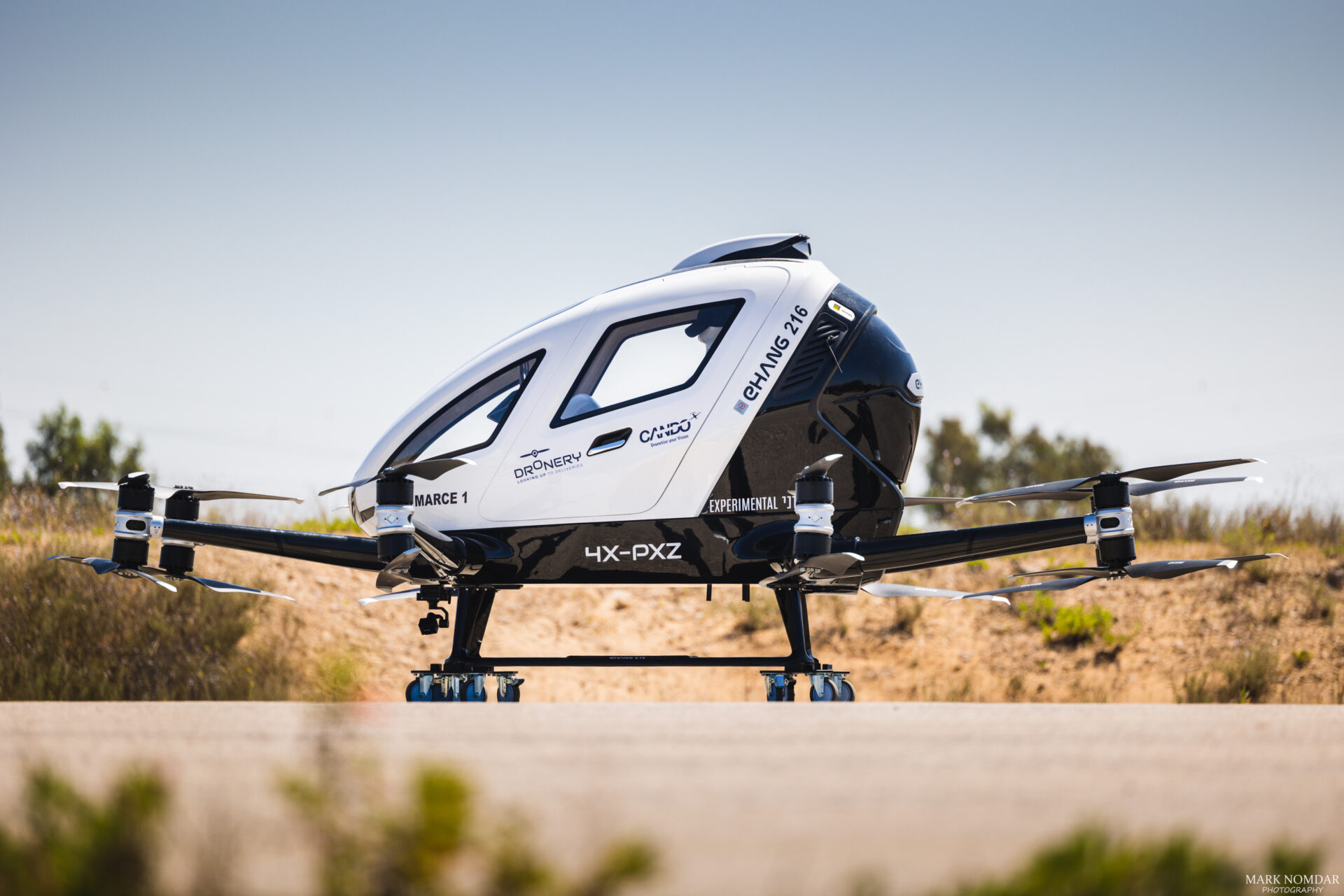
Cando's EHANG 216 experimental air-taxi drone

September 25, 2023
Share
Facebook
Twitter
Email
Add The Circuit on Google

JERUSALEM – Perched on seven whirring propellers, the sleek black-and-white cockpit lifted vertically toward the sky and circled above the hills and valleys of the pine-filled Jerusalem Forest.

Two years from now, the remote-controlled aircraft could be ferrying passengers to Tel Aviv, Ben Gurion International Airport and suburbs teeming with tech startups as drone-taxi service is introduced to Israel. Among the objectives is to whisk travelers above the traffic jams that snarl Israel’s highways, and ultimately cut down the number of vehicles on the road.

In a combined effort by industry, government and regulatory authorities, Israel is conducting test flights to determine how it can safely unleash fleets of drones with fare-paying passengers into its Mediterranean skies. Saudi Arabia, the United Arab Emirates and Singapore are among a number of ambitious nations vying to be first with a pilotless air-taxi system operating at a competitive cost.

“We have built a concept of operation to reduce traffic around the world,” Yoely Or, CEO of Cando Drones, said during a recent demonstration for reporters of the aircraft’s capabilities on the grounds of Jerusalem’s Hadassah-Ein Kerem Hospital. Or said he expects the drone taxis to operate commercially by 2025 with more than 100 aircraft making short hops between Israeli metropolitan areas.

At the hospital, the helicopter-like EVTOL drone – electric vertical takeoff and landing – sat on a helipad waiting for its test flight. Inside are two comfortable-looking seats for passengers, although not much room for cargo. A drone pilot operates the aircraft sitting in a screen-filled command-and-control room in an office building miles away. As it took off, the drone’s lights turned green and it lifted silently to an altitude barely visible to a naked eye. After a 15-minute flight, it descended directly onto the helipad.

The taxi demonstration was part of Israel’s National Drone Initiative, which is holding flight tests and demonstrations in locations around Israel. The initiative is a partnership between government entities led by the Transportation Ministry, the Israel Innovation Authority, Ayalon Highways Ltd., and the Civil Aviation Authority of Israel (CAAI). The goal of the initiative is to support and promote drone flight through technology, regulation and infrastructure.

“What we’re looking at here is how… to move beyond transporting packages to transporting human beings,” said Daniella Partem, a senior director of the Innovation Authority. “We are looking to improve the economic viability of this model and advance connectivity in urban areas and further afield around the world.”

Partem said the drone taxis would also be made available for use in emergencies like earthquakes to bring relief workers and medicine to an affected area. But CEO Or sees the commercial possibilities, saying the drones will be just like ground taxis but much faster.

While saying fares for the air taxi service would be moderate, neither Or nor Partem would put a price on the rides. “There are no prices yet because the flights are still experimental,” the Innovation Authority said in response to questions. “The operating expenses are not yet based on regular activity.” 

Each drone, manufactured by Guangzhou, China-based EHANG Intelligent Technology, can carry up to 220 kilograms (485 pounds) and fly 30 kilometers (19 miles), according to Or, who said they expect to increase the range within the next two years to make the 70-kilometer (43-mile) trip to Tel Aviv. The aircraft costs about $500,000 apiece, including import charges to Israel, and the company currently has two drones in testing. The company has raised $25 million from investors, including Israeli supermarket chain owner Rami Levy, who plans to use drones for grocery deliveries.

“Our vision for joint operations with Cando Drones is to create a system for operating an autonomous drone fleet for the purposes of security and delivery, from the stage of customer order up to delivery and mission completion,” Levy said.

Cando Drones, whose Dronery subsidiary runs the air taxi project, is not the only company in Israel developing air taxis. In June, Air One tested a similar all-electric two-seater drone taxi that can fly up to 160 kilometers (99 miles). Like Cando, Air One plans to operate a fleet of air taxis.

In the command-and-control center on the 17th floor of an office tower at Jerusalem’s Malha Technology Park, representatives from all of the parties in the initiative sat around a large table, surrounded by screens that show drone flights in real time.

“The challenge is not delivering food or medicine from point A to point B. The challenge is to make the skies over the city safe,” Libby Bahat, the head of aerial infrastructure at the Israeli Civil Aviation Authority, said. “Free-market competition will make the prices reasonable, but the challenge is to make the skies as safe as possible.”

Israel faces some significant security issues in drone aviation. Large swaths of the country along the borders with Jordan, Egypt, Lebanon and Syria are off-limits, as well as the sky over the Old City of Jerusalem.

“There are a few challenges to widespread operations of civilian drones,” Eyal Pinko, an expert in intelligence, cyberwarfare and national security at Bar-Ilan University in Ramat Gan, Israel, told The Circuit. “First is the cybersecurity issue and how to protect the drones from being hacked. Iran is trying to hack anything it can – water, electricity and transportation. Second is how to recognize the drone and see that it is not meant for terror activities. Thirdly is a question of real estate. Israeli streets have a lot of houses and electricity cables and in the populated cities, not much empty space.”

Pinko said that the three most advanced countries in civilian drone technology are Singapore, Saudi Arabia and the UAE. In Dubai, there is already a plan for air taxi stations and UAE Prime Minister Mohammed bin Rashid Al Maktoum, said the company will work with Santa Cruz, Calif.-based Joby Aviation.

In Singapore, where Pinko said regulatory structure is most advanced, a fleet of air taxis is set to start operating by the end of this year. Abu Dhabi-based Edge Group, a government-owned arms maker and defense conglomerate invested $14 million earlier this year in Israel’s High Lander Aviation, a platform that enables drone operations by managing traffic, aerial security, public safety and drone delivery networks.

“We see it as a strong strategic investment,” High Lander CEO Alon Abelson told The Circuit. “We had an option to work with VCs in Israel, but we see the Gulf and what is happening there as a clear target to lead the ecosystem in aviation.”

Read More
TALENT PIPELINE

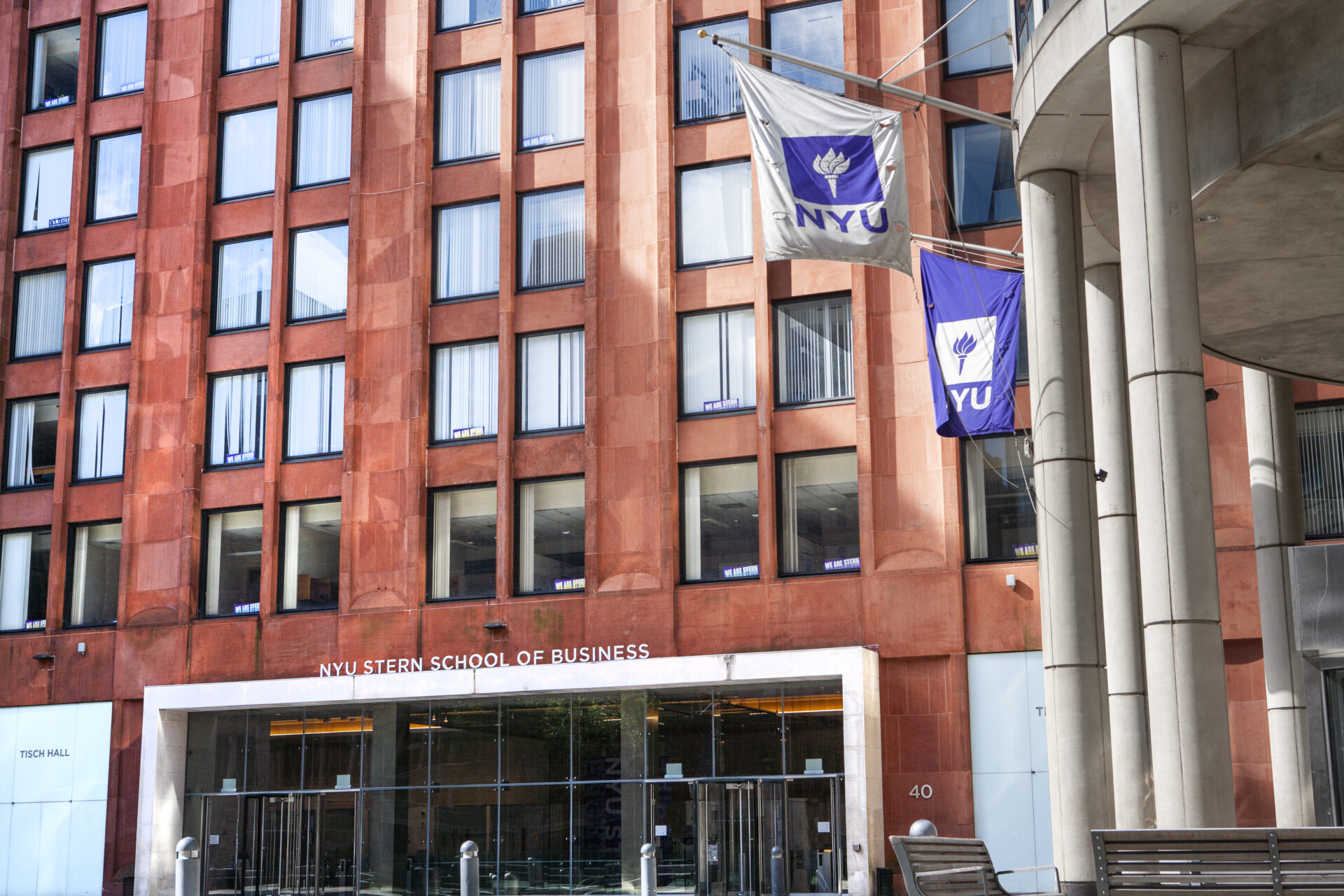
New York University to offer MBA program at Abu Dhabi campus

NYU Stern School of Business’s Middle East initiative will debut in 2025 as it seeks to channel graduates into tech, energy and other growing industries

Getty Images

NYU Stern School of Business at New York University's Manhattan campus

September 20, 2023
Share
Facebook
Twitter
Email
Add The Circuit on Google

ABU DHABI, United Arab Emirates — New York University is opening an outpost in the Middle East for its Stern School of Business with a new one-year MBA program at its campus in Abu Dhabi.

The new program joins France’s INSEAD and Boston-based Hult as top-tier business schools with a presence in the United Arab Emirates. The program targets early-career professionals to develop a pipeline of talent in the UAE and wider region amid public and private sector growth in energy, finance, technology, aviation and hospitality.

“The introduction of this full-time MBA to the MENA region is groundbreaking for students who want to earn an MBA from one of the world’s leading business schools in just one year and build a career in a region that is seeing exponential growth,” said Raghu Sundaram, dean of the NYU business school.

“Stern at NYUAD,” as the program is named, will open its doors in January 2025. Spring and fall modules will be hosted in Abu Dhabi and a summer session will be held in New York City.

Robert Salomon, a professor of management at Stern since 2005 who focuses on globalization, will be the program’s inaugural dean.

Read More
GOING GREEN

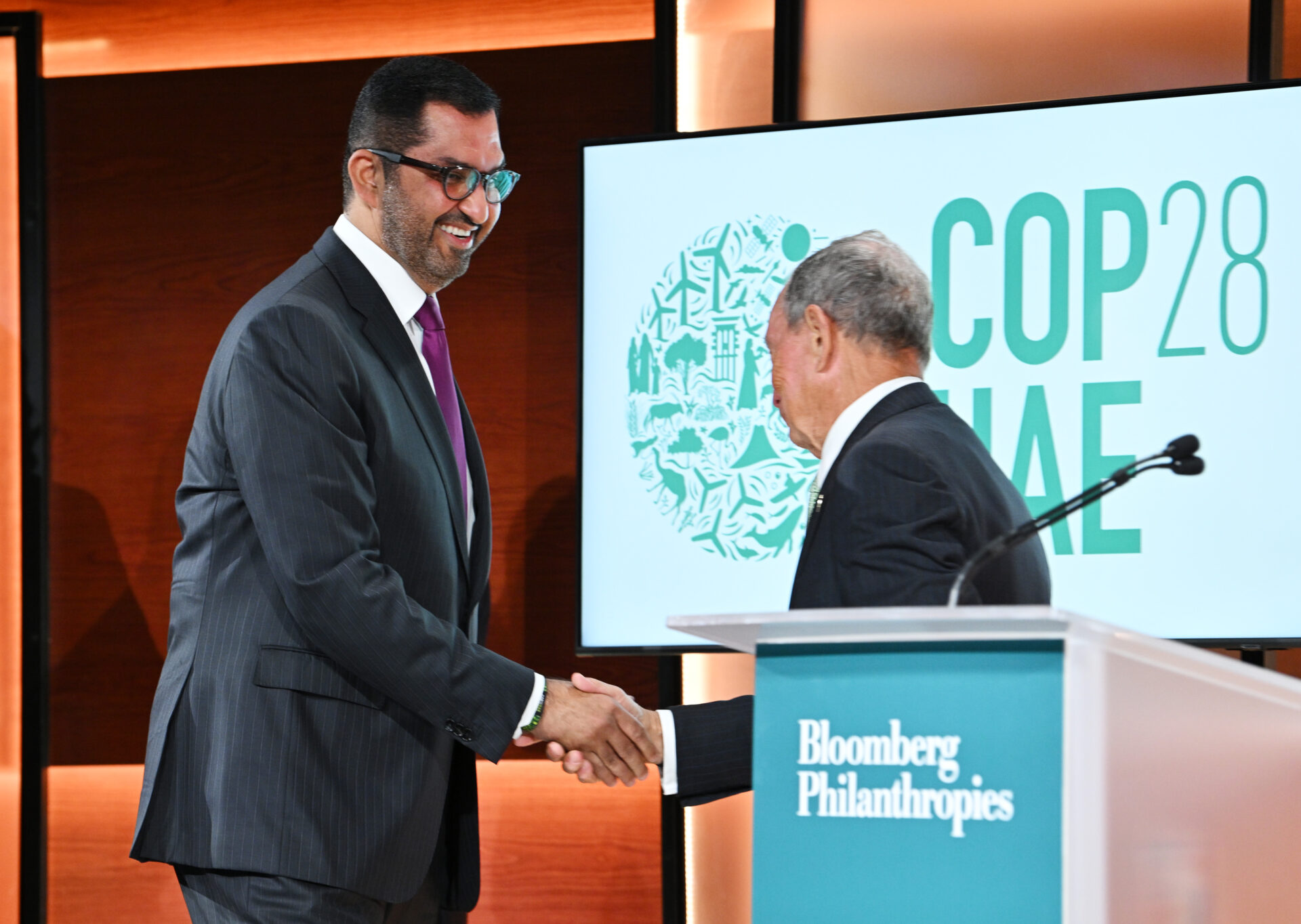
‘Follow the money,’ COP28 climate chief Al Jaber writes before ringing NYSE bell

The U.N. conference's president-designate teams up with New York City's former mayor Michael Bloomberg on an environmental initiative designed for local leaders that will be rolled out Dec. 1 after COP28 opens in Dubai

Bryan Bedder/Getty Images

COP28 president-designate Sultan Al Jaber (L) and former New York City mayor Michael Bloomberg speak onstage at the Plaza Hotel in New York City

September 20, 2023
Share
Facebook
Twitter
Email
Add The Circuit on Google

Sultan Al Jaber, the Emirati oil executive and president-designate of this year’s COP28 environmental conference, called for a major overhaul of climate finance to bridge an anticipated $2.4 trillion investment gap by 2030 as he came to New York for the United Nations General Assembly.

“Without major reform of the current financial system… we will not have the ability to invest in the resources and infrastructure that help developing countries – especially small island developing states and economies across the Global South – to cope with flooding, droughts, heatwaves, storms, and other climate shocks,” Al Jaber wrote in an op-ed for Fortune.

“If you want to understand the state of the world’s climate efforts, follow the money,” wrote Al Jaber, who will lead the two-week UN conference when it opens in Dubai Nov. 30. He is also CEO of the Abu Dhabi National Oil Company and chairman of Masdar, a consolidated renewable energy subsidiary under ADNOC, Mubadala and TAQA.

Al Jaber’s full-throated support for climate finance reform comes as the United Arab Emirates is reportedly mulling a multibillion-dollar fund largely pulled from its sovereign wealth fund coffers for clean energy investments which it would roll out at COP28, Politico reported last month.

The Fortune piece was published hours before Al Jaber rang the opening bell at the New York Stock Exchange on Tuesday, becoming the first head of the UN climate conference to do so.

Following the market opening, he and the city’s former mayor, Michael Bloomberg, announced a separate initiative within the Dubai conference, the COP28 Local Climate Action Summit. Bloomberg was appointed in 2021 as the UN’s special envoy on climate ambition and solutions.

The event, scheduled for Dec. 1-2, will bring together hundreds of “subnational” climate leaders like mayors, governors and business executives who are “increasingly critical in helping national governments reach emissions reduction targets and net-zero ambitions while building resilient and future-proof economies and societies”, according to a statement.

On Friday at the UN, Al Jaber also urged nations to agree on administering a fund to compensate developing nations afflicted by damage caused by climate change ahead of COP28.

The loss and damages fund was agreed on in Egypt during COP27 and a committee was set up to finalize the details of the fund. That group has so far met three times and will meet again next month in Aswan, Egypt. But so far leaders have yet to agree on how the money should be raised or disbursed.

“We need to stay very focused on ensuring that we operationalize this fund as soon as possible,” Al Jaber said.

Read More
ARABIAN VENTURE

Israel’s most active VC firm aims to triple head count at Abu Dhabi AI office

OurCrowd subsidiary IDI is attracting talent to the Emirati capital to develop machine-learning tools for customers in fintech, energy, health care and government

Three buildings at Abu Dhabi Global Market

Abu Dhabi Global Market in the UAE capital. (KARIM SAHIB/AFP VIA GETTY)

Abu Dhabi Global Market in the UAE capital (Getty Images)

September 18, 2023
Share
Facebook
Twitter
Email
Add The Circuit on Google

ABU DHABI, United Arab Emirates – Israel’s most active venture capital firm is looking to triple the head count at its Abu Dhabi office dedicated to artificial intelligence development as it ramps up efforts to develop tools for customers in fintech, energy, health care and government. 

The UAE venture, Integrated Data Intelligence, is a subsidiary of Jerusalem-based OurCrowd, the first VC firm to register in the UAE after the Abraham Accords were signed three years ago and with $2.2 billion in committed capital.

IDI, which is less than a year old, is the commercial byproduct of OurCrowd’s decade-long, $100 million investment into developing a new kind of investment platform that has made it among the most prolific VC investors in the world. The platform has allowed its 260,000 investors to invest in over 370 portfolio companies from almost every country in the world while adhering to local laws in those investors’ respective jurisdictions. 

“That’s a lot of data,” Sabah al-Binali, executive chairman of OurCrowd Arabia, told The Circuit.

The startup, which was seeded with an initial joint commitment of $60 million from OurCrowd and the Abu Dhabi Investment Office (ADIO), is the venture firm’s first R&D center outside Israel. It continues to develop AI for OurCrowd but is now using its technology as a blueprint for other platforms that will benefit by applying AI to their own data. The aim is to increase business efficiency, reduce costs and improve outcomes, Jon Medved, OurCrowd’s founder and CEO, wrote at the time the company was launched.

IDI has 16 people from 15 countries working in the Al Maryah Island office at Hub71, the emirate’s startup and technology campus, with two employees from Israel and two recruited from the first graduating class of Abu Dhabi’s AI research university. IDI is looking to grow to 50 employees by the end of 2024.

The company’s presence in Abu Dhabi is a reflection of al-Binali’s enthusiasm and optimism for a productive relationship between Israel and the UAE — and his almost dogged pursuit of finding ways to work together that go beyond the stereotype that Israel is a technology hotbed and the Gulf is a destination market to raise capital.

“In Israel they have a huge supply of AI talent but the demand for AI talent far exceeds that,” al-Binali said. 

“So I raised my hand, and I said, ‘What about Abu Dhabi?’” 

“It’s easy to attract talent here, because getting a visa is like this,” al-Binali said while snapping his fingers, adding that his understanding of the market and government initiatives helped to get the business set up.

Al-Binali, a Princeton graduate with a Ph. D. from Columbia University, worked for over 20 years in investment and financial services spanning the UAE and Saudi Arabia, including the acquisition of a Saudi investment bank by Credit Suisse and the 2012 sale of Zawya, a Dubai news service, to Thomson Reuters. 

With the Abraham Accords he sees an unmissable opportunity. He joined OurCrowd within a month of the landmark U.S.-brokered agreement and has been a connector for the firm ever since.

It was al-Binali who helped OurCrowd gear its investing platform toward an AI future. He recommended Hasanat Dewan, whom he met while they were both postgraduate students at Columbia in New York, to the role of chief innovation officer in 2021. 

Dewan had held posts in technology transformation for E*TRADE, BNY Mellon, Russell Investments, Merrill Lynch and Deutsche Bank. Today he’s based in Abu Dhabi as CEO of IDI. 

And it is a good time for OurCrowd to be diversifying into technology development amid a global slowdown in venture capital activity. 

True to form, al-Binali sees the current environment as an opportunity. 

Gulf startups traditionally have had strong access to early-stage capital, but later-stage investments – which typically command larger check sizes – are harder to come by. Venture capital firms tend to be smaller and more conservative. 

“Israeli VCs are much more comfortable at the higher risk segments and deploying that,” al-Binali said. “There are, at the B, C [funding] rounds, we see opportunities.” 

His advice to Israelis looking to forge ties in the Gulf? Pace yourself.

“If you sit there sending emails every week, you’re gonna burn out,” he said, adding that slowing down and being deliberate can be worth it.

“The payoff in the end is big. Not just in terms of investment size but in terms of commitment. Because once an Emirati or Gulf investor comes in, they’re going to back you all the way. It’s not hot money. So you have to earn that trust.”

Read More
DEAL DRIVER

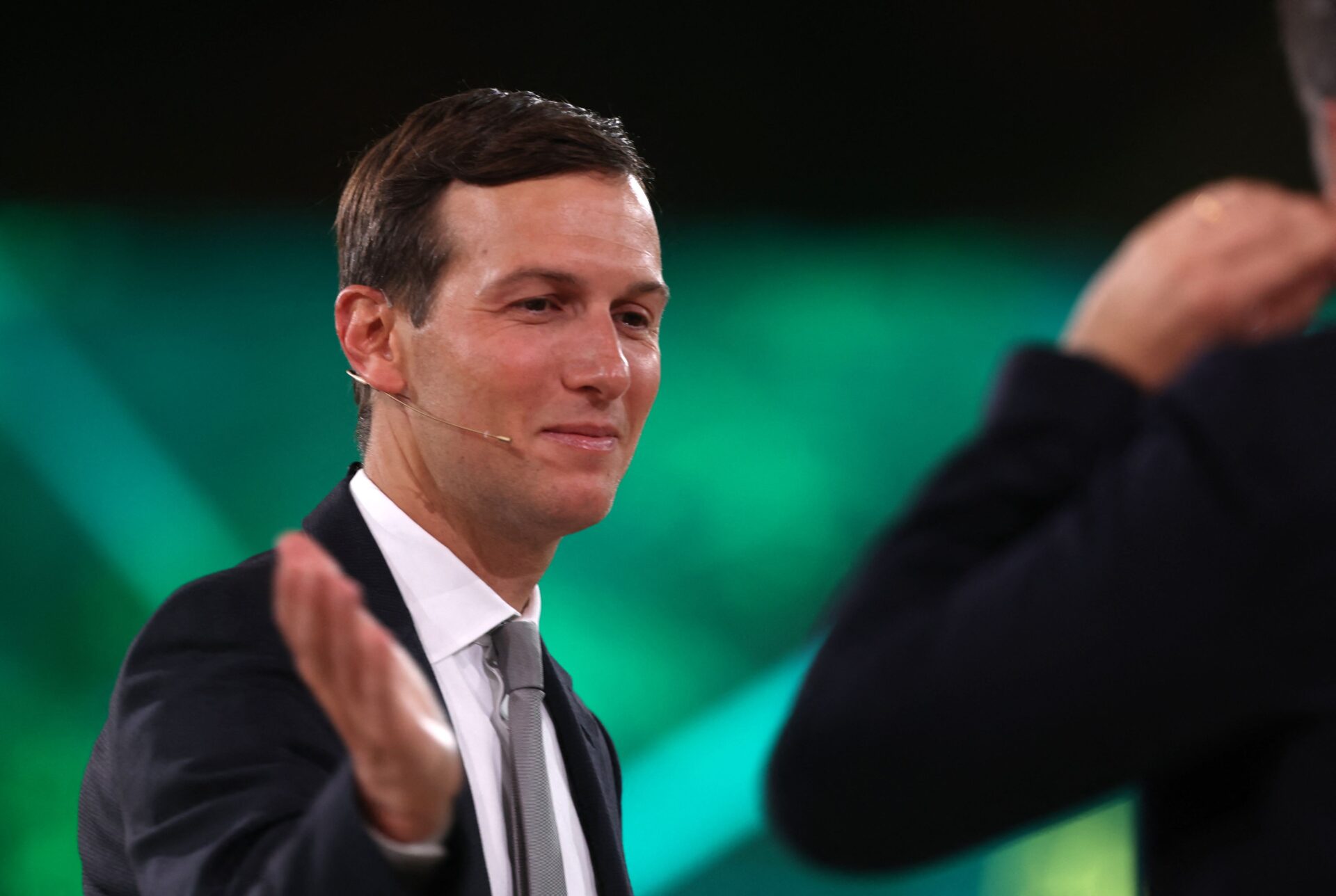
Kushner’s Affinity Partners to buy stake in Israel’s Shlomo car firm

Investment of $150 million by Saudi-backed private equity fund is Affinity's first in Israel amid continuing negotiations for Phoenix Insurance Agencies

FAYEZ NURELDINE/AFP via Getty Images

Affinity Partners founder Jared Kushner at Future Investment Initiative conference in Saudi Arabia last October

By
Jonathan H. Ferziger
September 6, 2023
Share
Facebook
Twitter
Email
Add The Circuit on Google

TEL AVIV, Israel – After two years of scouting, Jared Kushner’s Gulf-backed private equity fund, Affinity Partners, will make its first investment in Israel, buying a $150 million minority stake in the country’s largest car rental agency and affiliated businesses.

Miami-based Affinity agreed on Wednesday to acquire 15% of the automotive and credit unit of Shlomo Group, which is located south of Tel Aviv in Tzrifin. Shlomo is the Israeli partner of Germany’s Sixt, the No. 5 international car rental company. The Israeli firm has a fleet of 78,000 vehicles, along with leasing, sales and car financing divisions.

“We are bullish on the long-term growth prospects of Israel and the broader new Middle East,” Kushner said in a statement, calling Shlomo Group’s growth from a small agency 55 years ago to the industry leader, “rock-solid.” Kushner is the son-in-law of former President Donald Trump and was his adviser in the White House.


The fund, which was backed by $2 billion from Saudi Arabia’s Public Investment Fund and hundreds of millions from sovereign wealth funds in the United Arab Emirates and Qatar when it was established in 2021, did not seek permission from any of its partners to buy the stake in the Israeli company, a person familiar with the matter told The Circuit. The person asked not to be identified due to sensitivities.

Saudi Arabia and Israel do not have diplomatic ties, although they are engaged in U.S.-brokered talks to normalize their relations, as the United Arab Emirates, Bahrain and Morocco did through the Abraham Accords in 2020. Qatar also doesn’t have official relations with Israel.

Under the agreement, a new $1 billion subsidiary will be created that will operate Shlomo Group’s rental, sales and credit business, the statement said. Affinity, which has an option to buy an additional 3%, will appoint a director and an observer to the division’s board of directors. It also plans to “promote joint company transactions in the Middle East and North America.”

Affinity, meanwhile, is also in negotiations to buy a 25% stake in Phoenix Insurance Agencies, Israel’s largest insurer, after a deal for the parent company was dropped by Abu Dhabi’s ADQ investment fund, Israel’s Calcalist newspaper reported.

The fund founded by Kushner is one of several potential buyers for the insurance company. Phoenix Group, a wide-ranging financial services firm based in the Tel Aviv suburb of Givatayim, was in talks to sell a controlling stake to ADQ in July. The deal would have been one of the largest between companies in the UAE and Israel, but the sale fell through due to regulatory hurdles, the sellers said in a July filing to the Tel Aviv Stock Exchange.

Affinity has reviewed requests for investment from more than 100 Israeli companies during the past two years, the person familiar with the matter said.

Read More
GLOBAL HEALTH

Why is Abu Dhabi’s PureHealth buying up U.K. hospitals?

The biggest health-care network in the UAE has made two big-ticket acquisitions since forming last year – including a debut in the U.S. and a research partnership with Israel.

An operating room in Birmingham, England.

Christopher Furlong/ Getty Images

An operating room in Birmingham, England

September 4, 2023
Share
Facebook
Twitter
Email
Add The Circuit on Google

ABU DHABI, United Arab Emirates – The UAE’s biggest health-care network, PureHealth, has made two big-ticket acquisitions since forming last year, looking outside the region to the U.S. and U.K. for growth, while forging a research relationship with Israel. 

Last week, PureHealth bought one of the U.K.’s largest independent hospital operators in a $1.2 billion deal. Circle Health Group operates 53 private hospitals and marks PureHealth’s entrance into the British market. The news came three months after a deal was finalized for a minority stake in U.S.-based Ardent Health Services. The $490 million equity investment made PureHealth the only UAE-based health-care provider to ever directly acquire assets in U.S. hospitals and clinics.

ADQ, PureHealth’s largest shareholder, is one of the Middle East’s largest holding companies with a broad portfolio of large Abu Dhabi firms. 

As one of several sovereign wealth funds in the capital emirate it also has a unique mandate: to be the lead investor driving the UAE’s economic transformation from petro-state to a knowledge-based economy. Chaired by Sheikh Tahnoun bin Zayed Al Nahyan, the country’s national security adviser and brother to president of the UAE, Sheikh Mohammed bin Zayed, its portfolio includes holdings in agriculture, energy, financial services, health care and life sciences. 

ADQ merged its health-care subsidiaries with Alpha Dhabi’s Pure Health Medical Supplies in January 2022. PureHealth, which had branded itself as a research and clinical hub focused on longevity, was the main provider of the nation’s massive COVID-19 testing effort at the time. ADQ’s agreement consolidated the public health provider SEHA, major health insurer Daman and stem cell research center ADSCC into one group, creating a footprint of more than 25 hospitals, more than 100 clinics and more than 160 laboratories in the UAE. Its shareholders include Alpha Dhabi Holding, AH Capital, Ataa Financial Investments as well as International Holding Co., a company also led by Sheikh Tahnoon. 

“Going forward, PureHealth will actively seek expansion opportunities globally to further diversify its portfolio and leverage its success in the UAE,” Mohamed Thani Murshed Al Rumaithi, chairman of Alpha Dhabi Holding, a minority shareholder, said at the time.

Earlier this year, PureHealth also struck a strategic partnership with Israel’s Sheba Medical Center, a globally recognized medical research institution.

The two entities said at the time they will closely collaborate on joint clinical research projects, promote the use of advanced technology in health care, expand genetic research initiatives and boost health tourism in both countries.

The alliance will also focus on education and training. Both parties will jointly organize conferences and events, and create clinical specialization projects and internships.

This expansion strategy follows a wider trend in the Gulf, Bloomberg noted last week, with a glut of deals happening between the Middle East and the West in sectors spanning sport, energy, logistics and yes, health care. 

“Corporates in the Middle East, especially in Saudi Arabia and the UAE, are being empowered by their sovereign backers to go out and seek transformative transactions,” Hamza Girach, co-head of Citigroup Inc.’s Middle East and Africa, banking, capital markets and advisory unit, told Bloomberg in an interview. “This is the biggest shift that we are seeing when it comes to dealmaking in the Middle East, which is the emergence of these companies who are seeking overseas growth and keen to expand via acquisitions.” 

PureHealth’s deal with Ardent, which was first announced in September 2022, gives PureHealth board observer rights, although not a seat on Ardent’s board of directors. The investment also “does not include plans for either the expansion of Ardent’s physical footprint or collaboration between Ardent and PureHealth in the delivery of care”, according to a statement.

“The conclusion of this transaction marks the beginning of a new phase of growth for PureHealth in which we will build on our global relationships and strengthen our international reputation,” Farhan Malik, managing director and CEO of PureHealth, said at the time.

These global ambitions for UAE health care came after a strong pandemic performance, which to outsiders may have appeared unexpected. Health-care costs were increasing when COVID-19 took hold and the country had a shortage of nurses relative to Western nations, according to analysis by the U.S.-UAE Business Council in 2021. Yet on Bloomberg’s monthly global COVID-19 resilience ranking the UAE regularly sat in the top three, thanks to a high vaccination rate and relatively limited interference to travel and economic activity. 

Today, Abu Dhabi has ambitions to capture the world’s first population-wide genetic library and localize pharmaceuticals manufacturing while becoming a destination for clinical trials and research. The genome project is a foundational piece to Abu Dhabi’s ambitious plans for personalized medicine, which also include a connected network of the emirate’s medical records.

Read More
STARTUP DREAMERS

Palestinian interns dodge obstacles for tech opportunities

Google, Intel, Cisco are among the companies helping young West Bank and East Jerusalem residents get software and entrepreneurship experience

NoledgeLoss via LinkedIN

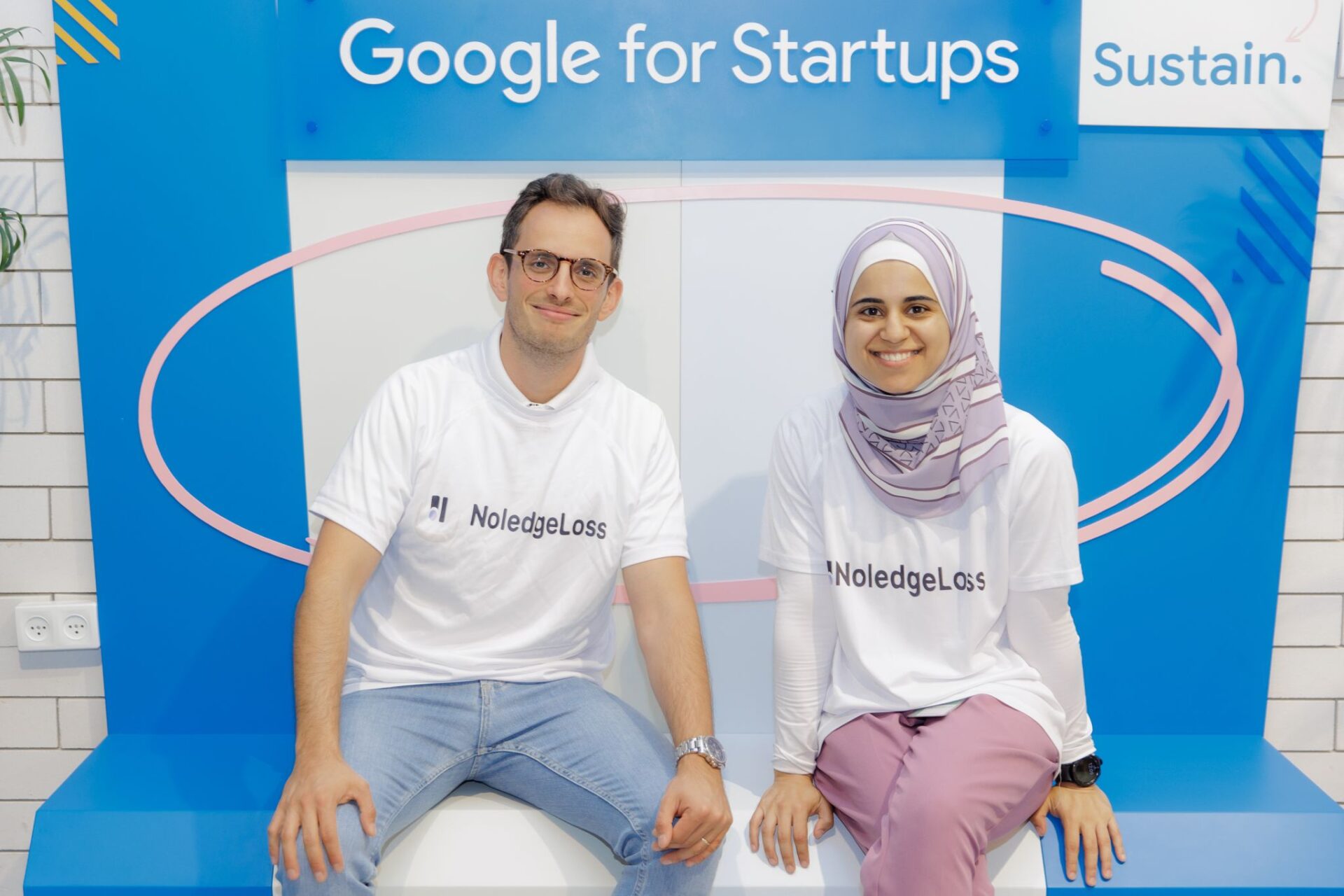
NoledgeLoss co-founders Enas Awwad and Tal Givati at Google for Startups campus in Tel Aviv

September 4, 2023
Share
Facebook
Twitter
Email
Add The Circuit on Google

TEL AVIV, Israel – Enas Awwad, a 29-year-old Palestinian software engineer from the West Bank, credits interning at an Israeli startup four years ago with giving her many of the skills she needed to co-found a company in May.

Awwad is chief technology officer at NoledgeLoss Ltd., a developer of business productivity software that is germinating at the Google for Startups campus in Tel Aviv during its early fundraising stage. She is among the breakout stars of the Palestinian Internship Program, or PIP, an effort launched nine years ago by Israeli venture capital investors and technology firms to build peace through business partnerships.

“I am the bridge,” Awwad told The Circuit. Dressed modestly in a lavender hijab head covering, she now tries to help other young Palestinians enter the clubby and competitive Israeli tech market, which spawns more startups per capita than any other country. “I understand why they do things in certain ways and can explain it to the two sides,” said Awwad, who founded NoledgeLoss with Israeli partner Tal Givati, the CEO.

Created in 2014 by New York-born Yadin Kaufmann, a co-founder of Israel’s Veritas Capital Partners, PIP has placed paid interns at the Israeli branches of global giants ranging from Intel and Cisco to Microsoft and Google. Among the Israeli businesses employing Palestinian interns are VC firms Pitango and OurCrowd, as well as Teva Pharmaceutical Industries, Freightos and Redefine Meat.

Most recently, PIP’s leaders have been looking toward the Gulf, particularly for their affiliated mentorship program. Israeli companies have been setting up offices and forming joint ventures in the United Arab Emirates and Bahrain since the 2020 Abraham Accords. Skills the Palestinian interns acquire through PIP make them attractive local hires because of their strong technical skills and their native Arabic. Often they can work remotely from the communities where they live.

“The regional tech ecosystem is always looking for talent, and there is great Palestinian talent,” said Tally Zingher, a PIP board member and CEO of Dawsat, a weight-loss and wellness company for which Arab women are the target audience, and which has an office in Abu Dhabi.

Still, PIP’s main goal is to help the interns play a leading role in building the Palestinian tech sector by working in jobs in the Palestinian economy. The internship program and the more advanced Palestinian Mentorship Program, which aims to develop entrepreneurial skills, were designed to address the poor job prospects for Palestinians in the West Bank and East Jerusalem, who are cut off from the thriving technology climate in Israel. Participants from the Gaza Strip have participated in the mentorship program by video. More than 3,000 students graduate from Palestinian universities with technology degrees each year, but fewer than half find employment in their fields. Palestinian companies have been stymied by the political conflict with Israel, which limits international growth and investment.

That has led to a brain drain of Palestinian engineers and other tech graduates, who find themselves with a degree but no place in the West Bank to gain experience, Kaufmann said. Similarly, Israeli engineers and entrepreneurs are often lured to greener pastures in Silicon Valley. In the meantime, there are many companies in Israel that can offer fresh Palestinian graduates their first opportunities, he said. “We have developed great relationships and both partners have gained,” Kaufmann told The Circuit. “We wanted to provide them with skills, experience, and networks so they could return and help the Palestinian tech ecosystem by stimulating innovation, investment and opportunity.”

Kaufmann, who also founded Sadara Ventures to provide financing for Palestinian startups, said that PIP’s interns can create new opportunities for Israeli companies that want to expand regionally.

“In addition to benefiting from having a dedicated and talented employee, they have also benefited from having someone who can help open a window to neighboring Arab countries,” Kaufmann said.

When she started interning at Israeli startup Colabo five years ago, Awwad needed to cross through a military checkpoint from her home in the West Bank city of Tulkarm to reach the office in Herzliya, 25 miles west on Israel’s Mediterranean coast. PIP coordinated all the travel permits with the Israeli and Palestinian authorities.

Awwad’s new company, NoledgeLoss, addresses the database challenges companies face in losing information on customers and work processes when employees move to new jobs.

Another graduate of the two programs is Adnan Jaber, a Palestinian resident of East Jerusalem, who created a mobile app when he was an intern in the West Bank’s  Rawabi TechHub in 2017 and later developed personal-fitness tracking software. Now he engages in what he calls “peace tech,” trying to connect Israeli and Palestinian leaders who are making efforts through business to resolve the conflict.

Jaber also manages a video production company creating videos in Hebrew and Arabic that focus on positive interaction between Israelis and Palestinians.

“I found a philanthropist, I hired a team,” he told The Circuit. “I am using production management skills, entrepreneurship skills and business modeling skills. PIP was the first to give me those skills,” he said.

In the mentorship program, which started in 2020, many participants are eager to receive guidance from entrepreneurs and executives who have experience in the Gulf and other Arab countries, said PIP’s executive director, Anna Gol-Dekel.

“The mentors we have who have done business in the Gulf are in high demand,” Gol-Dekel said. “They bring a lot of value… with insights of how to expand a business into the Arab world,” she said. “That is the No. 1 thing our mentees are looking for.”

While the internship program tries to stay nonpolitical, politics are unavoidable in a region fraught with tensions and conflicts, noted Cecile Blilious, head of impact and sustainability at Pitango, one of Israel’s oldest and largest VCs.

“Things are always tense — we can’t overlook that,” Blilious told The Circuit. “We have to consider that people are really afraid on both sides, especially with all the violence going on now, it is terrifying,” said Blilious.

“But once you overcome that,” she continued, “there is obviously business to be done, and in the end we are in high-tech innovation, entrepreneurship and ideas impact, which means something for us as people.”

Still, with the Israeli-Palestinian peace talks at a standstill for nearly a decade and violent incidents breaking out daily in the West Bank, normalization is a very loaded word in the Palestinian lexicon. Both Jaber and Awwad said people have told them they shouldn’t be associated with the Israeli-backed internship program.

“There are always people who will criticize you and people who will support you,” Awwad said. “I choose to stay with those people who offer support.” 

Read More

Posts pagination

Prev 1 … 88 89 90 91 92 93 94 95 96 … 101 Next
Navigation
Home
Features
Quick Hits
The Daily Circuit
Org Charts
About
Social
Facebook
Twitter
Instagram
Subscribe
Subscribe

Copyright © 2025 · All Rights Reserved · The Circuit

Sign into your account

Email me a link to sign in

I don't have an account

Sign in or subscribe to continue to read this article

Enter your email and create a password to gain access to our exclusive content

Already a subscriber? Sign in

Unlock full access
Become a premium subscriber

Don't miss out! A paid subscription is required to access this page