Weekly Circuit: Electric vehicle pioneer drives growth of startups + Turkey reconciles with Israel
👋 Good Monday morning in the Middle East!
From Detroit to Tel Aviv, electric vehicles are gaining momentum. After passage this month of the Biden administration’s Inflation Reduction Act, America’s automobile manufacturers will get a raft of incentives to produce EVs and consumers will receive a $7,500 tax credit to buy them. In Israel where EV purchases are up 70% this year, The Circuit profiles investor Michael Granoff, who has funded 37 mobility startups through his venture capital firm in a career committed to weaning the world off the internal combustion engine. Most recently, he’s been putting money into early-stage businesses in the Gulf. Whether it’s producing components for self-driving cars or competing against Uber with a fleet of Tesla EVs, Granoff’s portfolio of companies is playing a growing role in charting the future of transportation.
As Israel looks for new partners in the region to join the two-year-old Abraham Accords, it managed last week to reach a reconciliation agreement with Turkey after a rocky relationship that lasted more than a decade. Even with the absence of ambassadors in each other’s countries over the past four years, the two countries have maintained a robust trade relationship, with Turkey exporting $4.2 billion in goods to Israel in the first seven months of 2022. Turkish President Recep Tayyip Erdogan, who has been eager to improve Turkey’s global standing amid an economic crisis at home and ahead of elections next year, spoke by phone last week with Israeli Prime Minister Yair Lapid after the announcement of the restoration of full diplomatic ties.
In music news, Israelis bid a sad farewell to local rock icon Zvika Pik, who died on Aug. 14, at 72, after a career that took off in 1970 with his starring role in the Hebrew version of “Hair.” The United Arab Emirates, meanwhile, is getting ready for superstar rapper 50 Cent, who plays the Coca-Cola Arena in Dubai at the end of September, two months after performing in Tel Aviv. Two weeks later, Canada’s Justin Bieber is booked to appear on the same stage.
Welcome to The Weekly Circuit, where we cover the Middle East through a business and cultural lens. Read on for the stories, deals and players at the top of the news. Please send comments and story tips to [email protected].
Spread the word! Invite your friends to sign up.👇
GOING PLACES
An electric vehicle pioneer drives growth of Mideast transportation startups
Michael Granoff, whose $160 million venture capital fund invests in companies that expand the way people get from one place to another, hates driving the family car to work. Granoff, founder and managing partner of Maniv Mobility, generally commutes to his Tel Aviv office from a northern suburb by train, bus, taxi or riding with a neighbor. For a meeting across town, he often hops on one of the motorized rental scooters clustered on city sidewalks. “I prefer anything than having to sit in traffic and not be productive and be frustrated and then having to park,” Granoff, 53, toldThe Circuit’s Jonathan Ferziger. “It actually doesn’t cost me more.”
Self-driving cars: Granoff is not just trying to save money. He’s an evangelist and battle-scarred veteran in the global revolution to widen vehicular choices. To date, Maniv has made investments in 37 companies spread across eight countries. The businesses range from designing sensors in Israel for self-driving cars and running a Tesla ride-sharing service in Manhattan to unleashing electric scooters on the United Arab Emirates.
Gulf ventures: It’s the Gulf that gets him jazzed these days. Just a week after the UAE and Bahrain signed the Abraham Accords with Israel at the White House on Sept. 15, 2020, Granoff jumped on a plane. He was soon introduced to the founders of Fenix, which runs the Emirati scooter fleet, and made his first investment — $3.8 million — in the company. “Dubai is becoming a bit of a technology magnet for the Arab world in a similar way that the [San Francisco] Bay Area is, and the government there is committed to nurturing the tech sector and entrepreneurship,” Granoff said. “I think there will be lots more opportunity over time.”
Better Place burns: Granoff grew up in New York City, the son of clothing maker and philanthropist Martin Granoff, who is also a champion horse breeder. Among the younger Granoff’s biggest investments was Better Place, an ambitious effort in Israel at building a charging network for electronic vehicles, or EVs. Founded by charismatic entrepreneur Shai Agassi, the company enchanted investors including Israel’s Idan Ofer, France’s Groupe Renault, HSBC and Morgan Stanley. Better Place burned through $1 billion in capital before going bankrupt in 2013.
Back in business: Around that time, Granoff moved to Israel with his wife and four children, where he established Maniv Mobility in an effort to find alternatives to gasoline-fueled engines. EV purchases have soared by 70% in Israel over the past year with more than 10,000 new vehicles on the road. Granoff’s resilience after Better Place’s demise has established him as an important investor today for early-stage mobility companies, said Brian Blum, author of Totaled: The Billion-Dollar Crash of the Startup that Took on Big Auto, Big Oil and The World. “It was a real blow to have this thing that he believed in so much fall apart,” Blum told The Circuit. “The thing is it didn’t stop him from continuing on his mission of investing in the future of mobility and technology. You know, he just jumped right back into it.”
Riyadh Makeover: High oil prices and relaxed social restrictions are creating a booming new economy in Saudi Arabia, where Bloombergreports that women are buying designer apartments and the kingdom is trying to attract millions of expatriates.
Disruptive Investments: Group 42, the Abu Dhabi-based company focused on artificial intelligence and cloud computing, is launching a $10 billion fund that will invest in disruptive technologies in high-growth regions.
Send money: Israel’s Rewire was acquired by U.S. competitor Remitly for $80 million in cash and stock. Both companies help expat workers send money to their home countries.
VC Leader: Emirati companies raised $699 million during the first half of 2022, making it the leading Arab country for attracting venture capital. Saudi Arabia was second with $584 million, Egypt third with $307 million.
Climate Deal: Pledges by oil companies BP, Royal Dutch Shell and Equinor to reduce carbon use fall short of the goals set out in the 2015 Paris Agreement, a new study shows.
Looking Ahead: Dubai’s Museum of the Future will work with the Dubai Electricity and Water Authority to showcase technology related to renewable energy and sustainability.
Animal Farm: Abu Dhabi’s Hatch & Boost Ventures launched its first agrotech startup, called World of Farming, using hydroponic techniques to produce livestock feed.
Closing Circuit
Metaverse Accelerator: Emirates NBD will team up with Microsoft and the Dubai International Financial Centre’s FinTech Hive to launch an accelerator program to help financial startups operate in the metaverse.
Israeli Investing: Alex Sapir’s Sapir Corp. received an $88.6 million loan from Israeli backers for his NoMo SoHo hotel in New York.
Property Deal: Apollo Global Management has acquired an 11.1 percent stake in Abu Dhabi’s Aldar Investment Properties for $400 million.
HR Hub: Israel’s HiBob, a human resources management platform, raised $150 million in a funding round led by Bessemer Venture Partners and General Atlantic.
Cloud Funding: Israel’s DriveNets, which builds cloud-based telecom networks, raised $262 million in a financing round led by D2 Investments with participation from Bessemer, Pitango and Harel Insurance.
Stock Tips: Israel’s eToro social media investment platform received regulatory approval to buy New York-based competitor Gatsby for $50 million in cash and stock.
Room with a View: Israel’s Guesty, which helps hospitality businesses manage short-term rentals, raised $170 million in a round led by Apax Digital, MSD and Sixth Street Growth.
On the Circuit
Adam Neumann, the Israeli-American founder fired as CEO of WeWork, is starting a residential real estate rental venture called Flow, which raised $350 million from Andreessen Horowitz, one of Silicon Valley’s biggest investors in early-stage startups.
Tareq Amer, governor of Egypt’s central bank, submitted his resignation to President Abdel Fattah Al Sisi after seven years in the job.
Julian Wentzel was named HSBC’s head of global banking for the Middle East, North Africa and Turkey, subject to regulatory approval.
Crown Prince Hussein of Jordan is engaged to Rajwa Al Saif, a Saudi citizen who studied architecture at New York’s Syracuse University.
Ahead on the Circuit
Sept. 14-15, New York. “Mind the Tech 2022” conference sponsored by the Israeli-based Calcalist financial news site and Bank Leumi, brings Israeli tech industry leaders and investors to New York. Apella Alexandria conference center.
Sept. 28-29, Dubai: World Green Economy Summit. Dubai Electricity and Water Authority hosts environmental conference with the World Green Economy Organization. Dubai World Trade Centre.
Oct. 10-13: Dubai: Gitex Global, Investors, technology leaders, corporate CEOs and government officials get together for premier Gulf technology event. Dubai World Trade Centre.
Oct. 25-27, Riyadh: Future Investment Initiative. Sixth edition of Saudi Arabia’s flagship conference drawing government and business leaders from around the world. King Abdulaziz International Conference Center.
Circuit Culture
So long, Zvika: Israeli music fans are mourning Zvika Pik, who died last week at 72. The Polish-born Israeli rocker, who starred in the Hebrew production of “Hair” in 1970, went on to become one of the country’s top hitmakers. More recently he was known as the cantankerous aging star of the TV reality show, “The Maestro,” and father-in-law of American filmmaker Quentin Tarantino, who married his daughter Daniella. Israeli President Isaac Herzog paid tribute to Pik as an “inseparable part of the Israeli soundtrack” and “deeply connected to the richness of Israeli traditional roots.”
Manama Festival: Bahrain’s The Avenues Carnival features international street theater performers from countries including Spain, Taiwan, Argentina, Italy and Australia. Runs through Aug. 27 at The Avenues waterfront shopping center.
Rapping in Dubai. 50 Cent Green Light Gang World Tour. American superstar rapper 50 Cent will perform at Dubai’s Coca-Cola Arena for one show on Sept. 30.
Gallery-Hopping: The annual Art Abu Dhabi festival, which returns after being suspended during the pandemic, will feature some 45 Emirati art galleries. Manarat Al Saadiyat. Nov. 16-20.
In a first, Israel participates in Global Aerospace Summit in Abu Dhabi
In another debut for Israel stemming from the Abraham Accords, the country’s leading aviation manufacturer — Israel Aerospace Industries (IAI) — participated in a major industry conference last week in the United Arab Emirates.
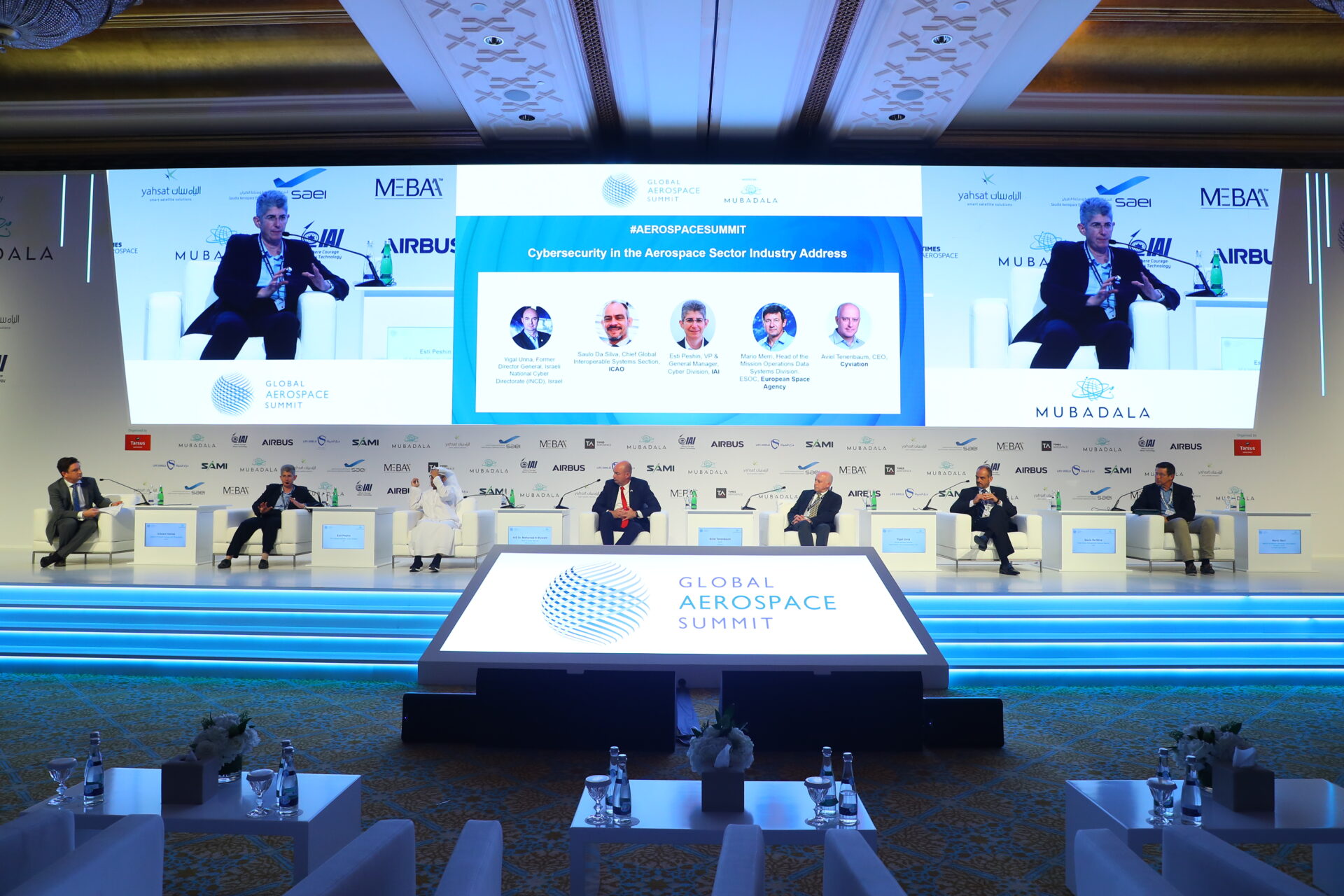
The three-day Global Aerospace Summit, held at the Emirates Palace in Abu Dhabi and hosted by the Mubadala Investment Company, covered topics ranging from aviation and space to cybersecurity and innovation. It brought together more than 1,000 senior executives from the aerospace and defense sectors in countries around the world that are eager to foster global collaboration and partnerships.
The presence of IAI, which produces aerial and aeronautic systems for both military and civilian use, broke new ground for Israel nearly two years after it signed normalization agreements with the UAE and several other Arab nations.
“What is important is that we are in the UAE and this summit is a semi-historical event for us because we are attending it for the first time ever,” Sharon Biton, IAI’s vice president of marketing for the Middle East and North Africa, told The Circuit.
Global Aerospace Summit in Abu Dhabi (Courtesy)
The summit, now in its sixth edition, also welcomed 120 expert speakers that engaged the audience with more than 30 hours of panel discussions and workshops aiming to help shape the future of the industry.
IAI was one of the sponsors for the Global Aerospace Summit. With 15,000 employees, including 6,000 engineers, the company, according to Biton, is the largest high-tech firm in the Middle East. A leader in both the defense and commercial markets delivering state-of-the-art technologies in air, space, naval, cyber and homeland defense, IAI is fully owned by the Israeli government. It designs, produces, develops and maintains civil aircraft, drones, fighter aircraft, missile, avionics and space-based systems.
In 2021, IAI reported annual sales of approximately $4.5 billion with an order backlog of $13.4 billion.
“The UAE is a hub for the Arab world in general, and the Abraham Accords gave us a big boost so that we as Israelis are now able to come to all kinds of places [in the UAE] and we get licenses to market in all kinds of places,” Biton said. “The UAE as a business hub symbolizes success for the region.”
Since Israel signed the Abraham Accords at the White House in September 2020 with the UAE and Bahrain, it has rewritten the rules of Middle East business after being shunned by most of the Arab world following its establishment in 1948. Among other significant developments in the past two years have been the first direct flights to the Gulf states from Israel and invitations for Israel to participate in the Dubai Expo and the World Cup soccer championship matches in Qatar later this year.
While IAI was the only Israeli company with a physical booth at the summit, several other Israeli individuals from the industry were present and participated in various panels, including one on “Cybersecurity in the Aerospace Sector,” which examined the most significant cyber security challenges facing the aerospace sector. It was led by Mohamed Al Kuwaiti, the head of cyber security for the UAE government, with speakers including Yigal Unna, former director general of the Israel National Cyber Directorate, and IAI’s Esti Peshin, the company’s vice president and general manager of its cyber division.
In the talk, Peshin highlighted the need for cyber security solutions for commercial aviation.
In a panel on R&D investments, Eytan Eshel, IAI’s chief technology officer, stressed the company’s work as a bridge. “IAI’s Innovation Center is a prime example of bringing together startups and the defense ecosystem to develop new, unique solutions,” he said. “We invest in the future by investing in innovation.”
Jacob Rozmann, vice president and general manager of Lahav Aerostructures in IAI’s Aviation Group, emphasized the importance of forging regional ties between Israel and the region., “Regional cooperation for transforming supply chains will result in quicker shipment, lower costs and a stronger industry network,” Rozmann said.
Global Aerospace Summit in Abu Dhabi (Courtesy)
Irit Fried, who is in charge of education programming in IAI’s Space Division, said teaching young people about opportunities beyond earth’s orbit is critical. “Our mentorship programs share knowledge and passion with students and inspire future commitment to space.”
Over the last few years, IAI has expanded its business activities in the UAE. In November 2021, Abu Dhabi-based EDGE, the region’s leading technology company for defense, signed a memorandum of understanding with IAI during a ceremony at the 2021 Dubai Airshow to establish a maintenance center for a selection of IAI’s systems in the UAE.
“This summit is about meeting people,” Biton said, “and it is about bringing into action our slogan, which states ‘Together we have a Brighter Future.’ We are aiming for a mutual future that must be brighter and that must talk about not only providing Israel with solutions but also cooperation.”
The summit, added Biton, was “a tremendous success with lots of traffic of very important people that led to very important meetings, which led to interesting opportunities. We felt a warm welcome from the Emiratis as individuals representing IAI and as ambassadors of the State of Israel — emotionally and business-wise.”
The first UAE minister to visit Israel got her start on climate change while scuba diving
When Mariam bint Mohammed AlMheiri landed in Tel Aviv last year, she didn’t know what to expect. A serial startup founder and environmentalist, AlMheiri is used to experimenting and exploring. But as the first United Arab Emirates minister to visit Israel after the Abraham Accords normalized ties between the countries in 2020, she was taking a new — and particularly noticeable — leap of faith.
“I remember at the hotel I was staying at, they put a label on the water bottle and the chocolate, saying, ‘Thank you to the first minister of the UAE,’ with my name on it,” recalled AlMheiri, the UAE’s minister of climate change and the environment. “When I was at restaurants or cafes, they wanted me to sign a book, because they said it’s the first time we have someone from the UAE and a minister.” People asked for selfies everywhere she went.
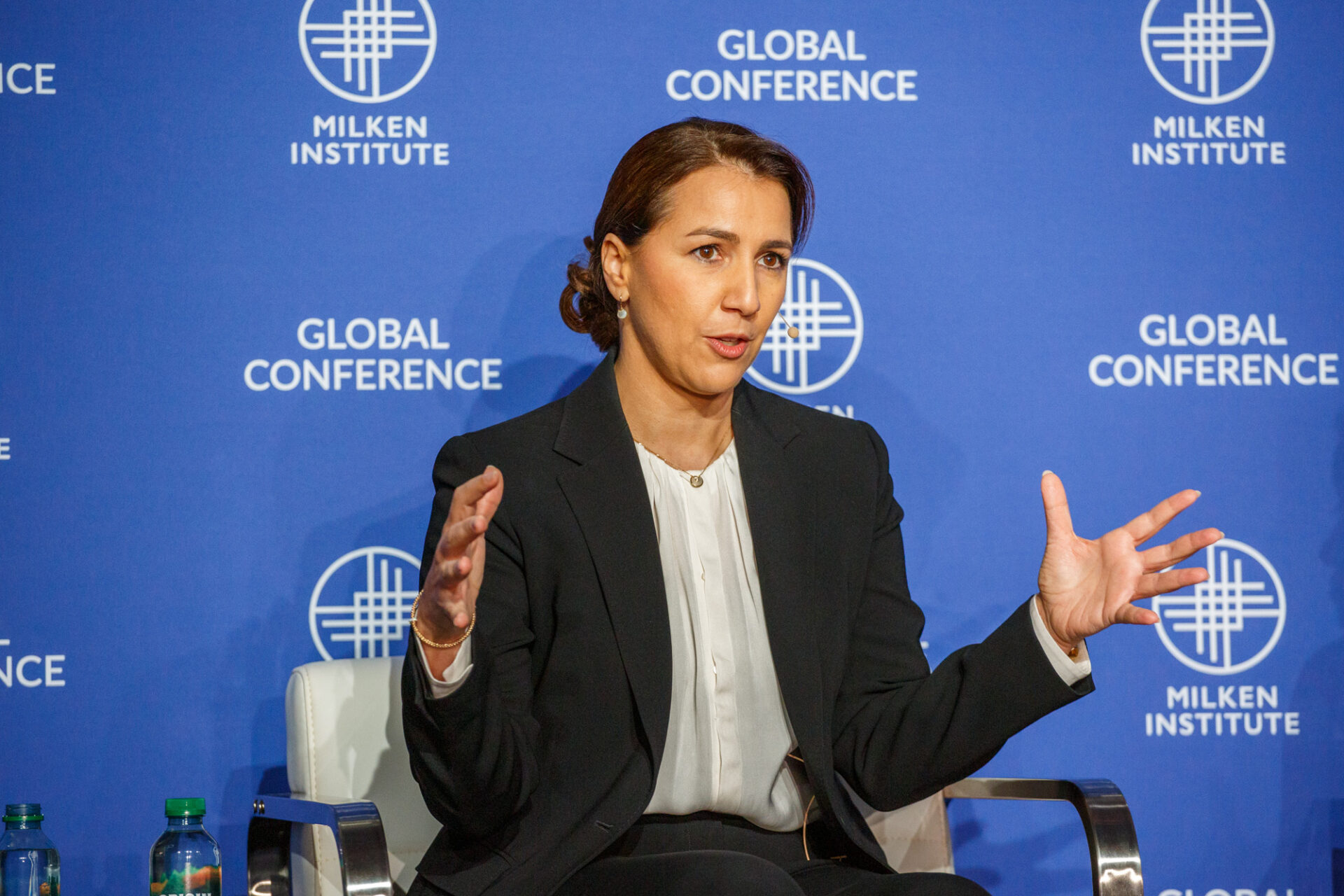
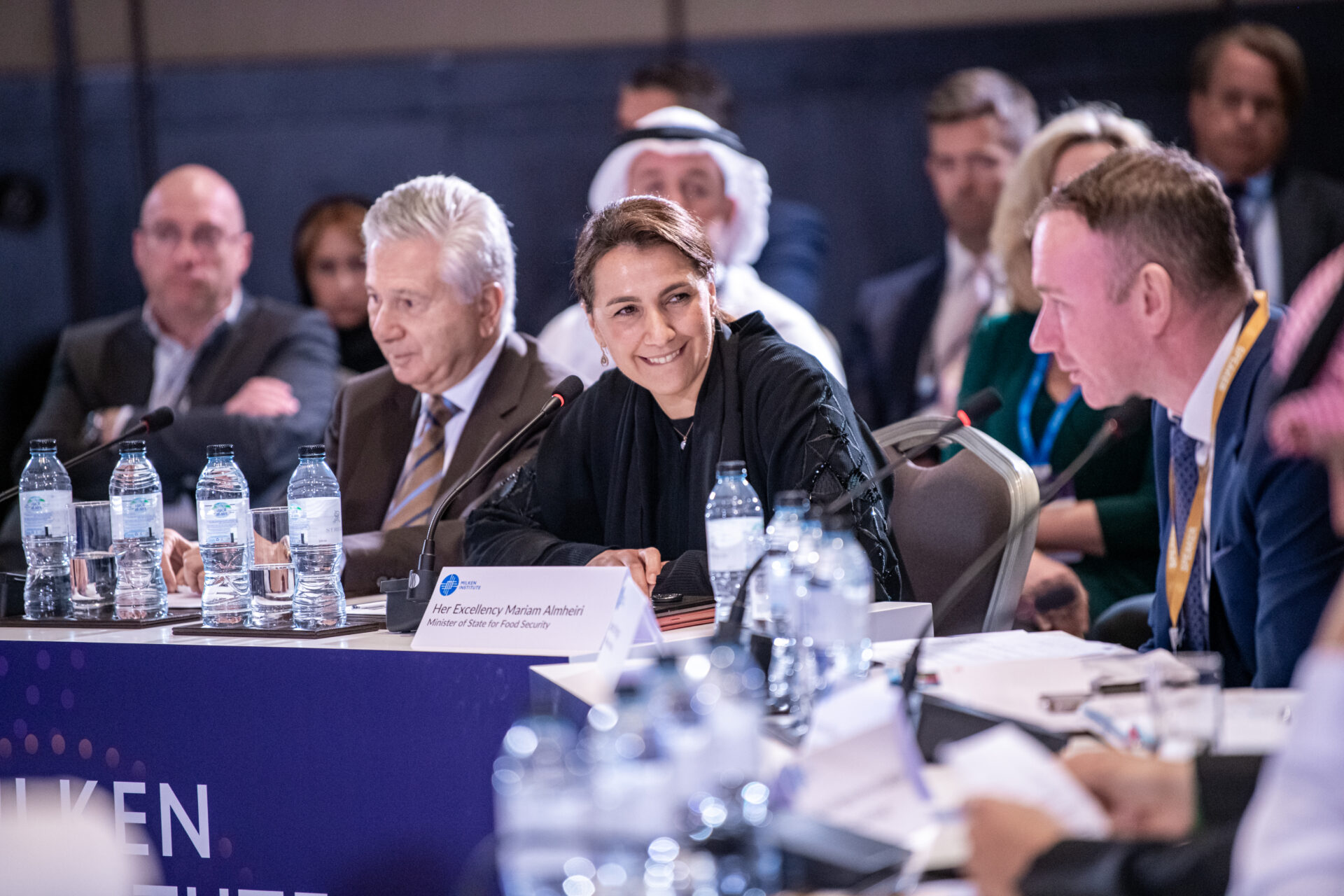
“For us, the Abraham Accords is a historic moment for both countries,” AlMheiri told The Circuit in an interview earlier this month in Los Angeles, where she was speaking at the Milken Institute Global Conference about energy and food technology.
AlMheiri’s approach to her posting has been characterized by a drive to innovate and an attention to detail that she has cultivated since before launching her first business, when she lived in Germany after college and engineered steel bearings for race cars. Last year, when she visited Israel, AlMheiri was serving as minister of state for food and water security. Now, after a promotion, she is responsible for helping the UAE reach ambitious clean energy and sustainability goals. For a major oil-producing nation in a region that is especially susceptible to the ravages of climate change, this is a task both improbable and of paramount importance.
“Things have to move faster. Our government wants to be very agile, very focused on game-changing initiatives,” AlMheiri said.
Asher Fredman, a founder member of the UAE-Israel Business Council, said the UAE is “investing in building the infrastructure to realize the vision of the UAE’s leadership of moving away from fossil fuels and reducing their emissions,” he said, and the Abraham Accords allow for collaboration on this goal.
There is potential in “integrating Israeli startups, or Israeli research, into these major projects that the UAE is developing, both in the UAE and also in other countries around the world,” said Fredman, who also serves as Israel director for the Abraham Accords Peace Institute, an NGO founded by former President Donald Trump’s senior advisor Jared Kushner to advance the Accords.
“Our government wants to be very agile, very focused on game-changing initiatives.”
— Mariam AlMheiri, Emirati minister of climate change and the environment
During AlMheiri’s visit to Israel last July, she and Israel’s environmental protection minister, Tamar Zandberg, signed a memorandum of understanding to cooperate on preservation efforts and environmental protection.
“Israel and the United Arab Emirates have common environmental challenges, and the right way to deal with them is regional cooperation in finding and implementing solutions,” Zandberg told The Circuit in a statement. The MOU represents “an extraordinary opportunity to advance the capabilities of both countries in the fields of the environment and the fight against the climate crisis.”
AlMheiri has spearheaded the development of the UAE’s “FoodTech Valley,” a play on Silicon Valley, that is meant to drive the discovery of the next big ideas in food technology. Aside from its geopolitical significance, her trip to Israel last year was also intended as a way to connect with Israeli entrepreneurs and urge them to take part in the FoodTech Challenge, a tech competition that will award up to $2 million to companies on the cutting edge of food and agriculture technology.
“Here you have two countries that really think of innovation and technology in the heart of everything they do,” AlMheiri said of Israel and the UAE. “We have similar challenges. And having our mindsets put together and using our strengths for mutual benefit, it’s just going to help for regional security, and for the people in our region as well.”
Convincing Israeli entrepreneurs to come to the UAE is easy, AlMheiri said, but getting Emirati businesses interested in Israel is more challenging. “I’ve seen more interest in Israel working in the UAE, but I think that’s because they are further down the line in their business mindset,” she noted. “The UAE is still coming along to this idea of being also a kind of ‘startup nation’ as well.”
The Abraham Accords provided Israeli businesses with an unexpected and lucrative opportunity: access to one of the most dynamic business hubs in the world. And the new relationship gave the UAE a model of how to build a collaborative, interconnected tech ecosystem.
“The UAE being a new market for them is suddenly really attractive, because they want to be the first,” AlMheiri said of Israeli businesses. “You’re seeing that they’re jumping on that ship a lot faster than the UAE companies, because the UAE companies already have access to, let’s say, India or China.” What Emirati companies are looking for, she explained, is “technology partners more than looking at market access.” Israel has the tech know-how; the UAE has the market opportunities. It’s a pairing that makes sense, she said.
AlMheiri easily alternates between savvy business language, scientific jargon and casual conversation. She was educated as a mechanical engineer, but it was a passion for scuba diving that led her, almost by accident, to work for the Emirati government.
She took up deep-sea diving as a hobby while trying to find work in aeronautical engineering when she returned to the UAE, where she grew up, from Germany.
“Going diving, it’s just a different world because you can’t talk to each other. And you’ve got the silence, but you’re just observing and enjoying,” she said. “I think that was when I first started to also see what we’re doing to the environment.”
She noticed fishing traps that had been left behind in the Persian Gulf waters off the country’s coast. Once the big nets get lost at sea, “a fish goes in, gets trapped inside, becomes bait and then attracts other fish to come in,” she explained. So all those fish get trapped, which is bad for marine life and for the ocean. She flagged the issue for the climate change ministry and ultimately got it to prohibit that type of fishing equipment in some areas.
“I was observing a lot of things underwater, which kind of was an eye-opener for me,” AlMheiri recalled. “It started to get me thinking about things like aquaculture. Like, why are we not thinking of growing local fish in a more sustainable way?”
“Israel and the United Arab Emirates have common environmental challenges, and the right way to deal with them is regional cooperation in finding and implementing solutions.”
At a sustainability event, she approached the minister of environment and water to speak about marine research,and suggested she could help.
“The minister said, ‘Why don’t you come and join the ministry?’” said AlMheiri. So she did — first as an expert advising the minister, and then as the director of the Sheikh Khalifa Marine Research Centre, where she created a hatchery for the country to produce fish domestically and launched a marine innovation park in conjunction with an Australian university. She has since risen through the ranks to her current position overseeing the nation’s efforts to adapt to and mitigate the effects of climate change.
She argues that food safety and security are closely connected to questions around climate change. Making the UAE “food secure” is a priority, referring to “when a country ensures that the people in my country have access to safe, nutritious, affordable food at all times,” AlMheiri explained.
She spearheaded a research project to understand the UAE’s “food basket,” meaning the two dozen food items that make up 80% of the country’s diet. “Then you look at those 24 items [and ask], what makes sense to grow in the UAE sustainably where innovation is available, and what makes more sense to store?” she asked. A lot of vegetables can be grown year-round in the UAE, despite its desert climate, due to innovations in agricultural technology. Other food will still be imported, but it must come from a variety of places, so a major natural disaster or other catastrophic event doesn’t cut the UAE off from its food sources.
The rest of the world has learned this lesson in the nearly three months since Russia invaded Ukraine, which is a major exporter of wheat. “We’re in a very good situation, because now that there’s nothing coming from Russia and Ukraine, we’re OK, because we’ve already built that kind of diversification,” said AlMheiri. Delegations from other countries in the region have been making pilgrimages to the UAE to learn what they need to do to catch up.
Her position requires big-picture strategizing and an awareness that it takes many years of incremental steps to reach those long-term goals — a realization that any nation hoping to adapt to climate change will have to come to on their own. Take, for instance, the UAE’s goal to get to net-zero carbon emissions by 2050, which it announced last fall.
“We started from being just oil and gas. By 2050, we want to have 50% clean and renewable,” explained AlMheiri. “We’re working now on a detailed plan with interim targets of 2030, 2035, 2040, so that things become more real. Because 2050 sounds like a long way away, but there’s so many steps we need to do.”
But any nation that hopes to limit the effects of climate change knows it cannot do so alone. “We need to put all hands on deck to solve the climate crisis,” said AlMheiri.
“One of the projects that we’re really proud of now is the Project Prosperity,” a UAE-brokered deal that will see Israel and Jordan trade Israeli desalinated water for Jordanian solar energy, she explained. “It’s a beautiful idea because it’s about regional stability and energy security and water security.” U.S. climate envoy John Kerry traveled to Dubai in November to be present for the signing of a letter of intent from the three countries.
“We want to be the mediator, to try and build those bridges,” said AlMheiri. She noted that the UAE will host the COP28 international climate conference next year. Could the country use its desire to lead on climate as a way to advance the Abraham Accords?
“I don’t work so much in the ministry of foreign affairs,” she said, when asked whether climate change cooperation can bring other Emirati allies like Saudi Arabia into the Abraham Accords. “All I can say is that the climate agenda touches us. Each of us has a role to play.”
AlMheiri has not gone scuba diving in years. Who has the time, when the world is on fire?
“When you’re driven by passion, you sometimes feel guilty to take a few days off,” she said. “There’s so much to do and so little time.”
Biden hopes to recruit new Arab country for Abraham Accords, Israel envoy says
TEL AVIV –— As President Joe Biden assembles the agenda for his first Middle East visit since taking office, his administration is trying to coax at least one more Arab nation to join the Abraham Accords and normalize relations with Israel, U.S. Ambassador Tom Nides said on Tuesday.
“My job personally is to go deeper with the countries we have, and the [job of the] White House is to go wider and bring more countries into the forum,” Biden’s envoy to Israel said in a webcast from Jerusalem organized by the Atlantic Council, a Washington think tank, and the Jeffrey M. Talpins Foundation.
Nides dodged questions on anAxios report that Biden will fly to Israel in late June and convene a meeting of regional leaders to strengthen and expand the 2020 agreements mediated by the Trump administration in which the United Arab Emirates, Bahrain and Morocco established diplomatic ties with the Jewish state. But Nides indicated that the prospect of brokering new Arab-Israeli relationships is tantalizing for the 79-year-old Biden, who often boasts that he’s met with every Israeli prime minister since his 1973 encounter as a freshman senator with Golda Meir.
“Wouldn’t it be great if Saudi Arabia had normalized relationships with Israel, and Kuwait and the whole region,” said Nides in an interview with Dan Shapiro, the former ambassador to Israel under the Obama administration. Shapiro was recently named a distinguished fellow at the Atlantic Council to work on the “N7” project that was started with Talpins’ sponsorship last year to promote normalization. “You’ve got to create the momentum. Every one of these is difficult to do. Our view is, the more the merrier.”
Nides, who left his post as vice chairman of Morgan Stanley to take over the top job at the embassy in Jerusalem, said dates are still unsettled while advisers grapple with how to make the maiden presidential trip to the Middle East a success. Israeli Prime Minister Naftali Bennett announced after a phone conversation that Biden has accepted his invitation to visit in the coming months.
“Each of these countries wants something from us and we want something from them, and they want something from the Israelis,” Nides said. “This little maneuver is not for the faint-hearted, but I think it’s well worth the time and the energy.”
Nides, a longtime Democratic fundraiser, said he has no hesitation in giving credit to former President Donald Trump for engineering the Abraham Accords. In following up on the previous administration’s achievements, he said Israel’s recent summit in the Negev desert created a “phenomenal opportunity” by bringing together the foreign ministers of the UAE, Bahrain, Morocco and Egypt, as well as U.S. Secretary of State Tony Blinken.
Among his greatest challenges, Nides said, were violent confrontations between Palestinians and Israeli police last month on the Temple Mount in Jerusalem’s Old City, the sacred site revered by Muslims and Jews. He said the rare confluence of the Jewish festival of Passover, the Muslim holy month of Ramadan and the Christian holiday of Easter focused attention on the Israeli-Palestinian conflict and required intense diplomacy to ensure there was no repeat of last year’s violence that led to a missile conflict in May between Israel and Hamas in the Gaza Strip. Nides credited both Bennett and Palestinian Authority President Mahmoud Abbas for preventing the situation from getting out of control.
“To be honest, we were pretty nervous,” Nides said. “We spent a lot of time trying to keep things calm, keeping the Temple Mount calm.”
Incoming UAE envoy to the Vatican says warming ties with Israel is the real deal
Israelis should feel confident about their newfound ties with the United Arab Emirates and be assured that the normalization process ignited by the Abraham Accords is based on core Emirati values that do not stem from any special or fleeting transaction with the United States, the newly appointed UAE ambassador to the Vatican, Omar Ghobash, told The Circuit in a recent interview.
“It’s something that comes up a lot,” said Ghobash, who is currently assistant minister for culture and public diplomacy, referencing some cynical voices that still question the genuineness of the 18-month-old Accords. “It’s actually a principled decision that comes right from the core of the royal family.”
Speaking to JI on the sidelines of the recent Jewish Funders Network Conference in Palm Beach, Fla., Ghobash, 50, who is a well-known diplomat, businessman and author in his own country, will soon be at the forefront of interfaith dialogue and religious tolerance in the Vatican as his country leads a historic process in the Arab world to encourage peaceful relations with the world’s only Jewish state.
Ghobash explained that because the UAE is a “leadership organized society,” everyone looks to the royals for guidance, and his fellow countrymen have chosen to embrace the historic steps taken over the past two years by Sheikh Mohamed bin Zayed Al Nahyan, the Crown Prince of Abu Dhabi, better known by his initials, MBZ.
While clandestine relations between Israel and several Arab countries – mainly based on security cooperation – were a badly kept secret for more than a decade, the public declarations by the UAE and Bahrain in September 2020 to recognize Israel were seen as bold moves.
The Accords paved the way for Sudan and Morocco to normalize ties with Israel months later and, over the past year, the so-called cold peace agreements Israel has held for decades with Egypt and Jordan have begun to thaw. There is now speculation that the process could draw in other Middle East and Muslim states, including Saudi Arabia and Indonesia — and maybe even the Palestinians.
“We know that life is short, and we have a remarkable opportunity in the Emirates to take the country to the next stage, we’ve got an ambitious leadership and a whole bunch of great kids,” said Ghobash, author of the 2018 acclaimed book, Letters to a Young Muslim, which reflects on challenges of faith, culture and society through a series of letters.
“The way I see it is that we’re allying and aligning ourselves with other nations that actually want to build and prosper,” the ambassador continued. “While on the other side are negative players who are manipulative and destructive.”
Ghobash also said that those who have been critical of the Abraham Accords or downplayed their significance do not understand that the Gulf nation was “breaking with the biggest taboo we’ve ever had in our history – to recognize Israel, to recognize the Jew, to recognize this country and to want to work with them publicly. It is a massive thing for us.”
“The lack of seriousness that is attributed to the Abraham Accords by certain parties and groups has really surprised me; it’s almost offensive for us,” he emphasized.
The son of the UAE’s first minister of state for foreign affairs, Saif Ghobash, who was assassinated in a 1977 terrorist attack, the younger Ghobash – who himself is now a seasoned diplomat after serving for more than a decade as the UAE’s envoy in Russia and Paris, respectively – said his country could learn a great deal from Israelis, especially “how to get things done.”
“We are also getting things done in the Emirates, but there are certain areas such as education, government and the private sector where Israelis can offer us examples of how to better involve young people,” he observed.
However, Ghobash cautioned, Israelis need to slow down and have more confidence in the emerging ties. After decades of regional isolation, Israelis have welcomed the Accords with a rush of activities, and there is an unspoken pressure to cement the relationship as fast as possible, in case the window of opportunity closes — as it has with other Arab states. In less than a year, most of Israel’s top leaders have already paid official visits to the Gulf state, while tens of thousands of Israeli tourists and businesspeople have flocked to Dubai and Abu Dhabi seeking shopping and new opportunities.
While Emiratis are also curious about Israel, with many expressing a desire to visit the Jewish state and a handful of senior officials making the trip, overall they appear more cautious. Ghobash suggested the differing approaches were because “Israelis were totally ready for peace,” while the Arab world was less prepared for the process happening when it did.
“Now, all of a sudden, we are at peace and there are expectations… it’s all a bit mind-boggling. What exactly are we supposed to do now?” he mused.
Ghobash also said that the “thrusting” character of many Israelis makes some of his fellow countrymen uncomfortable. “When faced with people pushing us, we feel like we’re being managed, and we don’t like to feel that way,” he said.
“We like to feel that we have all the time in the world to make a decision,” explained Ghobash. “Just because you’re in a hurry doesn’t mean that we’re in a hurry, so this process is there, it will just take a little more time for us.”
Abraham Accords Games to spotlight soccer diplomacy at Dubai Expo
As Expo 2020 Dubai comes to a close at the end of March, the United Arab Emirates will host a soccer match between teams from the Abraham Accords’ signatory countries, U.S. Ambassador to Israel Tom Nides announced on Wednesday.
Players from Israel, Morocco, Bahrain and the United Arab Emirates will face off in Dubai in the inaugural “Abraham Accords Games,” an effort being spearheaded by Nides and the UAE’s ambassador to Israel, Mohamed Al Khaja. The event will also feature a “dinner celebration” with chefs from each country.
“I fundamentally believe that travel, tourism [and] culture is the way to cement, in people’s psyche, the importance of these Abraham Accords,” Nides told reporters in a virtual press conference on Wednesday.
Since arriving in Israel in December, Nides has emerged as one of the most vocal proponents of the Abraham Accords — the 2020 pact that normalized ties between Israel, the UAE, Morocco, Bahrain and Sudan — within President Joe Biden’s administration.
The event will take place on March 29, and the delegations from each country will also visit the others’ booths at the Expo. The culture ministers from each of the four countries will be in attendance. After the event, they will sign a “cultural cooperation declaration” with the goal of “fomenting and just continuing to advance the idea that cultural cooperation is the key to success to the Abraham Accords,” said Nides.
With the event taking place in an international hub like Dubai, Nides said he hopes the event will show other countries the benefit of joining the Abraham Accords.
“It just shows what happens when there’s cooperation,” he explained. “Obviously, the more people understand each other, the more ability there is to work together, not only on playing football or eating food, but how do we do economic ties? How do we do energy ties? How do we do security ties? How do we do cooperation?”
Sudan, which was a signatory to the Abraham Accords in 2020 but has been absent from most of the resulting cooperation, will not participate in the Abraham Accords Games. Sudan “is going through some complications with leadership,” said Nides, referring to a military coup that rocked the country last year, but “our hope is that we’ll all be doing all these events together.”
The Abraham Accords Games is the first major event in a cross-cultural approach Nides is taking to advancing the Abraham Accords and showing their potential to other countries in the region. “I’m hoping that Israel plans to do something this summer for a month of different activities in the cultures of all the countries,” Nides said, explaining his vision for a “whole month of concerts and plays and arts. There’s just a massive amount of stuff that people don’t know about each one of these countries.”
Nides urged policymakers and practitioners in the Abraham Accords countries to “get in the mindset of kids” by working with “influencers, pop stars [and] cultural icons,” which he said he has a plan to do.
Tzipi Livni opens up about her Gulf visits before the Abraham Accords
Long before “Hatikvah,” Israel’s national anthem, played openly in Abu Dhabi or Manama, long before Israeli military jets took part in training exercises with Gulf countries, and long before normalization agreements were signed at the White House, there was one Israeli leader engaging in quiet, and very secret, diplomacy with the Arab world: Tzipi Livni.
Livni, 63, who served in a variety of Israeli government positions, including deputy prime minister, foreign minister and justice minister, between 2001 and 2014, also led the country through several rounds of peace negotiations with the Palestinians. It was this role – where she worked opposite the Palestinian Authority’s chief negotiator, the late Saeb Erekat – that led her to forge warm ties with multiple Arab leaders, some of whom are now at the forefront of the Abraham Accords, the U.S.-mediated normalization agreements between Israel and four Arab countries.
In a recent interview with Jewish Insider, the former Israeli lawmaker downplayed more than a decade of covert meetings and conversations with country leaders, foreign ministers and other representatives of the Emirates, Bahrain, Qatar, even Saudi Arabia. And while former President Donald Trump’s son-in-law and senior advisor Jared Kushner has twice been nominated for a Nobel Peace Prize as one of the architects of the Abraham Accords, it is possible that this entire process might not have happened if not for the groundwork laid by Livni.
“Truthfully, I didn’t think that Kushner could do this; it’s really a huge achievement. I mean, to have these agreements without the Palestinians, it really surprised me when I saw the news. It is a real game-changer,” Livni said during the interview at her Tel Aviv home. “[Kushner] deserves all the credit he is getting.”
Today, relations between Israel and the United Arab Emirates, Bahrain and Morocco are out in the open, even flourishing. Just this week, Israeli Prime Minister Naftali Bennett made history as the first Israeli premier to travel to the Gulf state of Bahrain. In January, Israeli President Isaac Herzog proudly met with Abu Dhabi’s Crown Prince Sheikh Mohamed bin Zayed, following similar visits by Bennett and Foreign Minister Yair Lapid to the United Arab Emirates.
Livni said that she was as surprised as anyone when the White House announced the agreements in August 2020, although, she noted, there were some signs of a regional sea change. She recalled two key incidents several months before that momentous announcement, and the subsequent signing of the Accords on the White House lawn in September 2020, that made her realize attitudes were shifting.
“In 2019, not long after I quit politics, I was invited to attend a conference in Bahrain,” Livni said. “It was an international conference, but the event was sponsored by Bahraini officials, and I arrived there openly with an Israeli passport.”
“For the first time ever, I held a public meeting with [Bahrain’s Foreign Minister Khalid bin Ahmed] Al Khalifa, and we even took a photo together,” she continued. “It felt very normal and that was something I was not used to.”
Livni stepped back from the Israeli political scene three years ago, heading shortly after to teach a course in diplomacy at the Harvard Kennedy School in Cambridge, Mass. It was there, at the tail end of 2019, that she once again noticed a shift in attitudes toward Israel in the Arab world. Former Norwegian peace negotiator Terje Larson reached out to her just prior to her return to Israel asking her to join him at an international conference in Abu Dhabi. As Livni waited for a direct flight to the UAE, ground staff called ahead to Abu Dhabi making sure officials there would accept an Israeli passport. The message was that they would.
“At the conference, there were leaders from all over the region, not only those who have now normalized relations with Israel, and we discussed all different matters, including the Israeli-Palestinian peace process,” said Livni, who was invited to join a public panel for the first time ever.
“That was before the Abraham Accords, when the Arab world was still saying it would not normalize ties without Israel first achieving peace with the Palestinians,” she said. “But the atmosphere was different. I was accepted and I sat openly with those whom I had met with in secret before.”
Livni traces her covert meetings back to the period of the Annapolis Conference more than a decade earlier. It was her Palestinian peace partner, Erekat, who first lobbied Arab leaders on her behalf, urging them to meet with the Israeli leader.
Later, said Livni, Larsen stepped in, inviting her and other regional leaders to gather under the guise of his International Peace Institute (IPI). “The meetings were not public but there were others in the room from Arab countries,” she said, describing how she soon had the phone numbers of numerous Arab ministers and their assistants and began meeting with them regularly, informally, on the sidelines of international gatherings such as the U.N. General Assembly in New York and the Munich Security Conference in Germany.
“For many years I had these discreet meetings,” Livni mused. “And it was clear that if anything was leaked to the media then it would have been the end of these kinds of meetings, so I kept it completely secret.”
Among the meetings and relationships forged, Livni describes a 2008 visit to Qatar, for the Doha Forum on Democracy, Development, and Free Trade. Her appearance at the conference was made public, but while in Qatar she attended a dinner at the home of the country’s emir, Sheikh Hamad bin Khalifa Al Thani. There she met with the foreign ministers of Oman and other Arab states, as well and held a heated exchange with Turkish President Recep Tayyip Erdogan.
“We discussed Gaza, Hamas and what needs to be done,” said Livni of her meeting with the Turkish leader, whose attitude toward Israel shifted in the subsequent years. Two years later, Erdogan would expel Israeli diplomats following the Mavi Marmara flotilla incident. With the other Arab leaders at the Doha dinner, Livni said, “we discussed the situation in the region, the mutual threats, what was happening in Israel, with the Israeli-Palestinian peace process, and I was really impressed with how familiar they all were with Israel and Israeli politics.”
“It’s clear that this opened the door, it was the first understanding that we have mutual regional interests and there was the possibility to have a direct line, discreetly, to speak about these issues,” she continued. “There were also other lines [between the countries] but they were mostly on security. I was speaking with them on broader challenges.”
Throughout a decade of such meetings, Livni told JI that it was always made clear to her that normalization with the wider Middle East region – 55 Muslim and Arab states – would only come after Israelis and Palestinians made peace. For the Palestinians, she said, this backing was their main leverage.
However, she described a conversation with Erekat in 2014, during the last serious round of peace negotiations facilitated by then-Secretary of State John Kerry, after Palestinian President Mahmoud Abbas refused to respond to the deal being offered. “I told him, ‘Listen, this is the time to make a decision because the Arab world cannot just stay waiting for you like this,’” Livni said she warned him. Six years later, the normalization agreements were signed between Israel, the UAE and Bahrain, catching the Palestinians off-guard.
“Frankly, I was really happy when the Abraham Accords were signed and I am hoping that more countries will join, but when it comes to the Israeli-Palestinian conflict, we are now on a slippery slope towards a one-state reality,” she theorized.
While there is a possibility that the normalization agreements could make peace with the Palestinians more likely, Livni cautioned that the Accords are more likely to cause apathy on both sides. The process, she explained, has been used to sell the concept of “peace for peace” to the Israeli people. Now, she explained, that some will say, “‘What is the use of having peace with the Palestinians? We don’t need it.’ I am really worried about that.”
And Livni added, she believes it is unlikely that a U.S. administration will initiate another attempt to bring about peace or even that Israeli or Palestinian leaders would respond to such a gesture.
“In Israel, we have a government whose guidelines are not to touch this sensitive issue,” she pointed out. Even though her days as the country’s peace negotiator are now over and attitudes have clearly changed in the region, Livni said she has not given up on her vision for peace with the Palestinians.
“I believe peace is crucial for the future of Israel,” she said.
One year after Abraham Accords, growing Gulf Jewish community finds cohesion
When Rafael Schwartz moved to Kuwait three years ago for work, he was hoping he’d be able to make quick trips to the fledgling Jewish community in the nearby United Arab Emirates every few weeks if he needed Jewish company or kosher food. But when COVID-19 struck two years ago, he found himself unable to travel.
“My intention was to leave once a month and go to Dubai, where there was a small Jewish community, but the pandemic changed all that and I never left Kuwait,” Schwartz, who is originally from the U.K., recently told The Circuit over Zoom.
Once the virus hit, traveling in and out of Kuwait, which sits at the tip of the Persian Gulf, bordering Iraq and Saudi Arabia, became difficult — and sometimes impossible, when the country closed its borders — and Schwartz soon found himself trying to keep up with his Jewish traditions in a country that does not officially recognize Israel and is known for its institutionalized, often pervasive, antisemitism. An engineer by trade, Schwartz told JI that while he has lived and worked in multiple countries with small or nonexistent Jewish residents, he still found himself yearning for Jewish community.
Then, in February 2021, something like a miracle happened. Spurred by the fall 2020 signing of the Abraham Accords, a set of normalization agreements between Israel and four Muslim-majority countries, the Association of Gulf Jewish Communities (AGJC) was born, connecting Jews in six Persian Gulf countries and providing a Jewish lifeline for people like Schwartz.
In that short time, the AGJC has become the backbone of Jewish life in the Gulf, primarily in the UAE and Bahrain — two of the signatories to the Abraham Accords — and has connected the sprinkling of Jews living and working in Kuwait, Oman, Qatar and Saudi Arabia.
The association estimates there are roughly 1,200 Jews residing in the Gulf, not including a further 1,000 serving there as part of the U.S. military. Among its activities, the organization has played a hand in the growing number of Jewish life-cycle events, helping to organize the region’s first bar mitzvah in 16 years and its first Jewish wedding in 52 years. It has also launched a Jewish dating website, a Beth Din of Arabia (Jewish religious court), and is currently in the process of creating an Arabian Kosher Certification Agency, which will set standards for kashrut throughout all six Gulf countries. The AGJC also offers weekly in-person and virtual programming, including a Friday pre-Shabbat Zoom and events around the holidays.
“There was a big Pesach turnout,” said Schwartz, who logged into the Zoom event from Kuwait. “One of the people who also joined was a Jewish lady from Kuwait City who has lived here for 40 years. She was curious about where to find matzah and the rabbi connected us so that we could meet.”
For indigenous Gulf Jews, such as Ebrahim Daoud Nonoo, AGJC’s president and the chairman of the board of trustees of the House of Ten Commandments, the Jewish community in Bahrain, the growing Jewish life is a welcome change.
“It is lovely,” Nonoo, whose family has lived in Manama, Bahrain’s capital, for more than 100 years, told JI. “The community is a very ancient one but until now we had to send our kids abroad to study, and the problem with that is that they don’t come back. So now we have a community that is growing older and older and there are no children.”
“We are a tiny community and the good thing we are seeing now is that we have a workable way to make Jewish life flourish in the country,” he continued. “The AGJC is a fantastic support for all the communities in the Gulf, allowing us to enjoy Jewish life not just from the point of view of kosher food or religious books, but we also have the input of a rabbi and we have used him for bar mitzvahs and weddings.”
Nonoo, who served as a member of Bahrain’s Shura Council (Upper House of Parliament) from 2001 to 2006, added, “We are in a much better place than before because we no longer need to go to Europe or the United States to find Jewish support, we can now get it from Dubai or we have it here in Bahrain.”
The more the Jewish community grows, said Nonoo, it will attract Jews from all over the world to live and work comfortably in the Gulf. And, he added, the presence of a Jewish community in countries where they were absent or invisible for so many decades is essential for outreach to local Muslim populations.
“It is really sad to see a Jewish community die, and we are bringing them back to life,” he said, adding that the synagogue often invites local Muslims to participate in services and events to learn about Judaism.
“When I arrived here a year ago, Jewish life in the Gulf was almost unknown,” Rabbi Dr. Elie Abadie, the AGJC’s rabbi, said in an interview with JI. “It was barren land, but I could see that we could create an orchard and connect Jewish communities and individuals in all of the countries.”
Abadie, who was born in Lebanon and speaks fluent Arabic, said that the UAE and Bahrain are now “fully open” and embracing their Jewish communities, and he is hopeful that “Saudi Arabia will follow suit sooner rather than later, then Oman, Qatar, Kuwait — which will probably be the last the one to open, although there are some rumblings that people want to open up to Jews and Israel.”
Abadie said that the AGJC had connected with individual American Jewish soldiers stationed in Kuwait who have lived there for decades and are married to locals, as well as a few descendants of Jews who now live as Muslims.
“It feels really good watching this and, in a way, it makes you feel vindicated that finally Arab countries have come to realize that either persecuting or expelling their Jews was a historical mistake and now they want to correct that and welcome the Jews back,” he said. “I hope and pray that we will see even more events for the Jewish community in these countries and that more Jews will either go to settle there or come out of the closet, so to speak.”
Visions of Abraham offers Jewish tourists to the UAE an interfaith experience
Tens of thousands of Israelis and Jews from around the world have visited the United Arab Emirates following last year’s historic signing of the Abraham Accords, many of them coming with a desire to learn about the intersection between the two cultures. And now, a new U.S.-based nonprofit is spearheading the effort to create and promote educational initiatives relating to interfaith programming between Muslims and Jews.
Visions of Abraham (VOA) seeks to provide an experience that looks at the impact of the landmark agreement through the creation of bespoke and immersive tours of the UAE and its Jewish community.
“Visions of Abraham encourages all levels of Jewish travel to the UAE,” Eli Epstein, the organization’s co-founder, told Jewish Insider. “We believe that experiencing the UAE allows for discovery of the people and the UAE and their values as well as the many amazing activities.”
The country saw an uptick in Jewish tourists during Hanukkah, when visitors from around the world came to celebrate the holiday with the local community — with many Emirati government officials also in attendance at the festivities.
In what New York Times columnist Thomas Friedman has called possibly “one of the most significant realignments in modern Middle East history,” the Accords have prompted not only business and trade — $570 million, according to the Central Bureau of Statistics — between Israel and the United Arab Emirates, but also interreligious and cultural dialogue. For example, new Hebrew-language schools holding classes in Dubai and Abu Dhabi include numerous Emiratis wishing to study in Israel or do business there.
Visions of Abraham has already begun offering its services to Jewish organizations planning delegations to the UAE and looking for an experience in the Gulf country that is tied to the Abraham Accords.
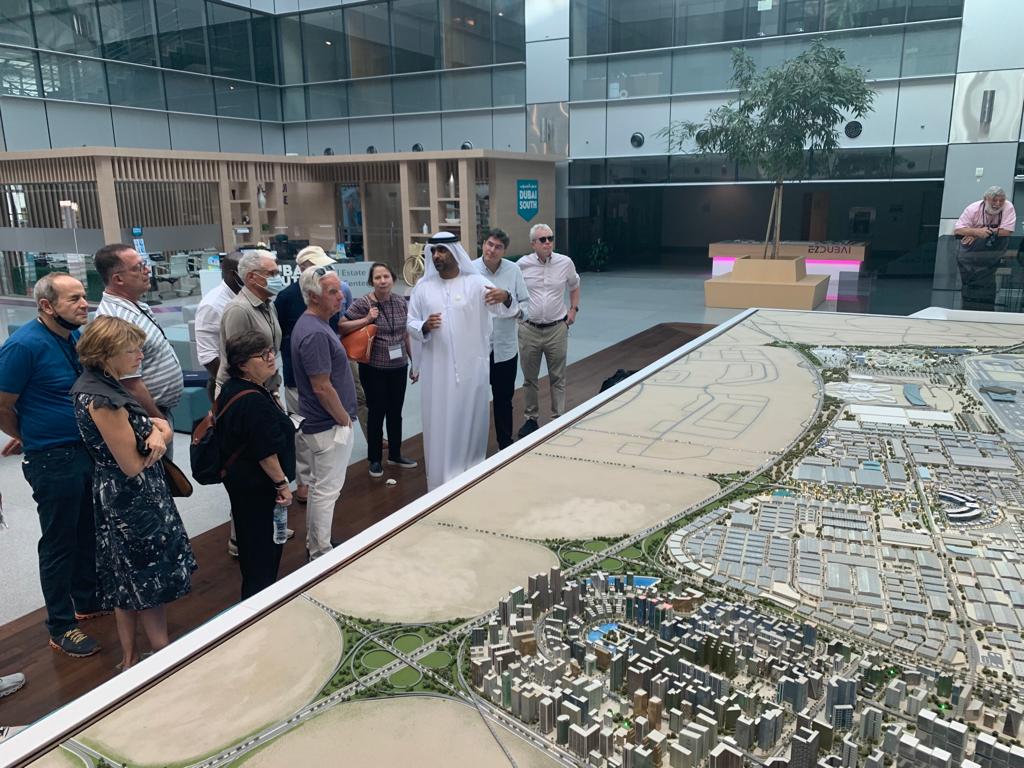
Most recently, the UJA-Federation of New York and the American Jewish Joint Distribution Committee collaborated with VOA to offer customized tours of the UAE for their delegations. During their stay, individuals from both delegations met with notable UAE personalities from the nonprofit, business and education sectors, including Sarah Al Amiri, minister of state for science & technology; Israeli Ambassador to the UAE Amir Hayek; Ambassador Marcy Grossman, Canada’s envoy to the Gulf nation; Ali Al Nuaimi, chairman of Hedayah; Mohammed Alabbar, founder and chairman of Emaar Properties; and Tahnoon Saif, CEO of Dubai South, among others. The delegations also toured the Abrahamic Family House, the interfaith complex on Abu Dhabi’s Saadiyat Island, scheduled to open in 2022.
Delegation meeting with Tahnoon Saif, CEO of Dubai South (Courtesy)
Epstein explained that VOA specializes in making “in-depth encounters with the leadership of the UAE to enhance the understanding and appreciation of the country especially in the context of the Abraham Accords.”
“We arrange meetings depending on the group’s interest, and we can arrange for them to meet UAE leaders in business, education, religion or politics, for example,” he added. “We want our visitors to experience as much as possible of Emirati culture and the openness that is so apparent in their hospitality and to engage Jews from around the world and especially from Israel.”
VOA also donates profits to the Jewish Community of the Emirates (JCE) — and vice versa — enabling both to continue to welcome visitors.
“The JCE is allocating the funds it receives from Visions of Abraham for our operational expenses, which include hosting Shabbat and holiday meals for visitors and community members alike,” Alex Peterfreund, co-founder of Dubai’s Jewish community, told JI. “These Shabbat meals are extraordinarily exciting as we also have our Muslim neighbors join us and together, we discuss Muslim-Jewish relations. Additionally, the funds will go toward educational programs for children.”
Participants from the delegations explained how the VOA-organized experience in the UAE shattered their long-held stereotypes of the Gulf nation.
“Most on the trip were seeing the miracle called the UAE for the first time, with most preconceived notions shattered by the reality of what they experienced,” Jeff Schoenfeld, a delegation member, told JI. “I have been traveling to the UAE for over 30 years, and I found myself elated by the consistency and intentionality of the pro-women, pro-equality, pro-pluralism, pro-growth narrative that guides the country today. The pace of change is exponential now, with the Abraham Accords just the latest manifestation of the leadership that the UAE is bringing to the entire Gulf region.”
Since the signing of the Accords, cross-cultural, multifaith initiatives have sprung up organically in the UAE, Israel and elsewhere. Some are bilateral, between the UAE and Israel, while others are trilateral, between the UAE, Israel and the U.S., while still others include the entire Gulf region.
“There is much work ahead to build understanding between Muslims and Jews, and we sensed a great willingness — top-down and bottom-up — to foster this exchange,” Schoenfeld said.
Canada’s ambassador to the UAE is celebrating Jewish life in the Emirates
When Marcy Grossman celebrated Hanukkah in the United Arab Emirates last year, it was a subdued, underground affair.
“It was basically like 75 people in a residence, we lit candles, ate latkes, that was it,” said Grossman, who has served as Canada’s ambassador to the UAE since October 2019. The gathering was held in what was known as “the villa,” Dubai’s secret, unmarked synagogue. But this year, just a few months after the signing of the Abraham Accords codifying peace between Israel and the UAE, the celebrations reached another dimension.
“It’s a different world,” Grossman told Jewish Insider in a video interview from Abu Dhabi on the seventh night of Hanukkah. “I was in Dubai last week for the start of Hanukkah… there were three major Hanukkah celebrations to choose from, there was a 12-foot menorah put up in front of Burj Khalifa, the tallest building in the world, there was ‘Sevivon’ [the dreidel song] being sung in the streets, there were kippot, there was kosher food — it’s just unbelievable, really,” she added. “And it just keeps growing.”
Grossman, a career officer with the Canadian Foreign Service, first arrived in the UAE in 2018, as Canada’s consul general to Dubai. A native of Montreal, Grossman received bachelor’s and master’s degrees in psychology from Carleton University in Ottawa. She got her start in public service in the Correctional Service of Canada before joining the Department of Foreign Affairs and International Trade in 2001. Since then, Grossman has served in a series of diplomatic postings in the United States including Dallas, Miami, Los Angeles and Denver.
After close to 20 years in the U.S., Grossman was ready for a change — and grateful when one came her way.
“Dubai was really calling to me, I don’t know why,” she told JI. “I was really thrilled when I got matched to Dubai. I like to say that Dubai picked me.”
With two decades of foreign postings under her belt, Grossman speaks with the smooth, practiced cadence of a longtime diplomat. But she also exudes a warmth and intimacy — as well as an evident passion and ambition for her life’s work. Her lively Twitter feed, meanwhile, showcases her activities, travels and her well-documented affinityforunicorns.
Canadian Ambassador to the UAE Marcy Grossman celebrating UAE National Day in Ottawa with UAE Ambassador to Canada Fahad Al Raqbani in December 2019. (Courtesy)
While her primary role as an ambassador is promoting the bilateral relationship between Canada and the UAE — with a focus on boosting trade ties — both Grossman and Ottawa have additional goals on their agenda.
“Canada actually has a platform on feminist foreign policy, looking at all aspects of trade, development, foreign policy through a gender lens,” Grossman said. “And that is something that is really important to my platform here.” Canada, she pointed out, has reached gender parity in its foreign service, noting that the current Canadian ambassadors to Lebanon, Jordan and Morocco are all female.
And she was prepared for a certain level of culture shock in the Emirates — admitting that her first foreign posting in Dallas provided quite a jolt to her Canadian sensibilities.
“I had no idea what to expect when I was coming to the UAE,” recalled Grossman. “I didn’t know how I was going to be received, I didn’t know what it was like to be a woman in the UAE… I was wondering what it was going to be like as a Jewish woman here.”
Grossman noted that she is in the minority in the UAE as a female ambassador, as around 90% of the envoys posted in Abu Dhabi are male — something she said is fairly in line with worldwide trends. And though she never publicly advertised her Judaism, “my name speaks volumes.” But any reservations she had before arriving were quickly assuaged.
“In 2018, I actually thought it was a bold move for my government to send a Jewish female envoy… and I thought it was a very bold move for the UAE to warmly welcome me,” she said. “I’ve always felt very, very, very warmly welcomed here and respected. There’s never been any antisemitism.”
Beth Hirshfeld, president of the Canada-UAE Business Council, told JI that Grossman hit the ground running when she arrived in Dubai two years ago.
“I met H.E. Marcy Grossman on her first day in the UAE when she dropped off her luggage, changed into a ballgown, and, jet-lagged, headed out to a Business Council Gala supporting Canada-UAE trade,” said Hirshfeld. “I think that this sums up Ambassador Grossman very well — energetic, engaged, always willing to help out, and incredibly passionate about building the relationship between Canada and the UAE. This, paired with her down-to-earth, caring and charismatic personality has made her both a pleasure to work with and a wonderful leader.”
***
Within a few months of arriving in Dubai in 2018, Grossman sought to track down the local Jewish community, which at the time was operating largely under the radar.
“I had heard there was a Jewish community but I did not know anyone in it, and anyone from it, and I had no idea how to find it,” Grossman recalled. After making a few calls, she managed to connect with the organizers of the home-based synagogue and was able to attend gatherings, “but it was still very quiet, and very subdued.”
Grossman watches Rabbi Elie Abadie complete the writing of a Torah scroll in Dubai in March 2019. (Courtesy)
Things started to change in 2019, she said, which the UAE declared its “Year of Tolerance,” during which issues of “pluralism and religious diversity really came to the forefront.” That was also the year the UAE announced the creation of the “Abrahamic Family House,” a still-in-progress complex in Abu Dhabi slated to eventually house a mosque, synagogue and church.
“As soon as that happened I realized that something really was moving,” she said. And with the announcement of the Abraham Accords a year later, the local Jewish community transformed from secret and underground to public and vocal.
“I can’t even tell you how many Jewish Canadians, Jewish Israeli-Canadians have reached out to me and talked to me about wanting to come here,” Grossman said. “It’s just really incredible. It’s just been nonstop.”
The announcement of the Israel-UAE normalization deal in August, Grossman said, was shocking but not surprising.
“I don’t think there was anybody other than a few people who actually knew what was the best kept secret,” she said. “It was a huge shock to everyone, to everyone in the diplomatic community, to everyone around the world. It was a very, very closely held secret,” she added. “I was surprised at the announcement, but I wasn’t surprised that it happened. I knew that things were moving in that direction.”
Rabbi Yehuda Sarna, a native of Montreal who has served as the non-resident chief rabbi of the UAE since last year, told JI that he has been impressed by Grossman’s commitment to public service.
“Amb. Grossman has always had a unique sense of purpose and mission. She is aware of her unicorn status — Ashkenazi Jewish woman of power in the Arab world — and approaches it with dignity and responsibility,” said Sarna. “Her spirituality, values, and sense of community should make every Jew and every Canadian proud.”
Grossman told JI that she always hoped — but never quite imagined — that she would occupy a front row seat to Middle East peace. “I joined the Foreign Service 20 years ago always with a view in mind of somehow making a contribution to peace in the Middle East,” she said. “I didn’t know how that was going to transpire, I certainly never expected it to happen in the UAE. I feel so blessed and so honored to actually be here at this time.”
The ambassador said she has been blown away by the number of Israelis who have flooded into the Emirates over the past month alone — with some estimates of more than 50,000 tourists. And she believes that once COVID-19 restrictions are eventually lifted that figure will skyrocket.
“I think the next big milestone and the next larger momentum is going to be Expo 2020,” the global exhibition that was originally planned for Dubai this year and delayed due to COVID until October 2021. “We’ll see a lot more people around Expo.”
In the interim, however, Israeli tourism will likely slow down, after Israel’s Health Ministry mandated Dubai switch from a “green destination” to a “red destination” — mandating quarantine for returnees — as of Dec. 26.
But Grossman is optimistic about the many new opportunities that are continually developing.
“It’s just amazing how warm and welcoming the peace has been and how many people have come here,” she said, opening up “some really, really interesting new ways of working,” pointing to a hockey game in Dubai over the weekend between the UAE’s Mighty Camels and Israel’s Bat Yam Chiefs — during which Grossman dropped the ceremonial first puck.
“It’s an opportunity for Canada to not only support sports diplomacy, but also to continue to… move the peace agenda forward any way we can,” she added, “whether it’s economically or by cultural diplomacy or sports diplomacy or initiatives around peace and security. It’s just amazing how these opportunities have presented themselves.”
Grossman dropping the ceremonial first puck during the Israel-UAE hockey game over the weekend. (Courtesy)
The past few months, Grossman said, have also opened up a world of new — and old — connections.
Michal Divon, an Israeli journalist based in New York, has visited the UAE multiple times since the Abraham Accords were signed earlier this year. But her family has known Grossman for many years — since Divon’s father, Haim Divon, served as Israel’s ambassador to Canada while Michal was in high school.
“I started a peace camp for Israeli and Palestinian youth back then and Marcy has always been an enormous advocate for peace,” Divon told JI. “When the Abraham Accords were signed Marcy reached out to me and we’ve been in close contact ever since,” she added. “She has been instrumental in helping the Jewish community in Dubai and has a very important role every week — reciting the prayer for the leadership and people of the UAE. It’s very unique.”
And Grossman has also been gaining fans in Israel as ties and initiatives open up.
Knesset Member Michal Cotler-Wunsh, who grew up in Montreal and is the stepdaughter of former Canadian Justice Minister Irwin Cotler, told JI that Grossman embodies the values of “tolerance, coexistence, equality, and peace” and is “committed to furthering them in the region and beyond.”
“Her vision and leadership in engaging and connecting to Judaism and Israel, enabling decision makers to engage with our peers and the Jewish community in the UAE, is the cornerstone of realizing the potential of these historic times,” added Cotler-Wunsh, a lawmaker with Blue and White, “and is important to forging new relationships, women’s empowerment, and cultivating lasting people-to-people peace.”
Grossman, who said her most recent visit to Israel was seven or eight years ago to celebrate her son’s bar mitzvah, is eager to return now that direct flights have opened up.
“Now that direct flights are happening I’m really excited and hoping — as soon as travel opens up — that’s going to be my first trip.”