Huda Kattan reclaims full ownership of her UAE brand
Dubai-based beauty entrepreneur and influencer Huda Kattan is buying back full control of Huda Beauty, making her eponymous brand fully independent again in a move to “stay true to our roots.”
Private equity firm TSG Consumer Partners acquired a minority stake in the brand in 2017, and a year later, it was valued at more than $1 billion by Forbes.
Now Kattan, who launched the brand in 2013 with a $6,000 loan from her sister, has bought back all the shares for an undisclosed sum.
Huda Beauty has become one of the most recognized cosmetic brands in the Middle East and North America, based on a digital-first strategy and viral product drops.
Israeli entrepreneur and investor Erel Margalit explores Bahrain’s fintech sector
With an eye to Riyadh, Israeli entrepreneur and investor Erel Margalit spent four days in Bahrain last week exploring the Gulf state’s advances and aspirations in the world of financial technology, or fintech, as well as assessing the possibility of opening one of his innovation centers in the country. He believes that such developments could form a tech bridge to Bahrain’s neighbor, Saudi Arabia, which Israel has long been hoping will be the next country to join the Abraham Accords normalization agreements.
“I was surprised by the level of entrepreneurship in Bahrain; those regulating the country are using ideas and concepts like a startup,” Margalit, founder and executive chairman of Jerusalem Venture Partners (JVP) – one of Israel’s oldest and most established venture capital companies – told Jewish Insider in an exclusive interview on Saturday.
“They are able and modest and ready to hear new ideas,” he said of Bahraini officials and counterparts that he met with. “They want to hear about what we are doing in Israel and there is a real eagerness to cooperate with us.”
Margalit, who served as a member of Knesset for the Labor party from 2015-2017, was invited by the Bahraini government and the country’s Economic Development Board. He was also a special guest of the country’s finance and national economy minister, H. E. Shaikh Salman bin Khalifa Al Khalifa.
The first Israeli businessman to meet with the minister since the signing of the Abraham Accords in September 2020, Margalit also held discussions with economic-business leaders, including the heads of Bahrain’s major banks – the National Bank of Bahrain and ila Bank – various investment funds, communications and energy companies, and heads of leading universities, as well as leaders in the innovation industry and dozens of technology and social entrepreneurs.
Much of the discussions, Margalit told JI, focused on how to develop the country’s fintech industry, which draws innovators and investors from across the Arab world. It’s a fine fit for many Israeli companies already working in this now-growing tech field, he added.
“Fintech is about allowing financial services to reach people who don’t always have access to them,” the entrepreneur explained. “Bringing financial services to small businesses in different countries is touching, and it is a path that builds goodwill and removes barriers.”
But boosting the fintech industry in Bahrain, which is strategically located in the Persian Gulf just off the coast of Saudi Arabia, could also be a highly beneficial step for Israel, where there is hope that the Saudis may be the next Arab nation to normalize ties with the Jewish state.
“Bahrain is a bridge to Saudi Arabia, and we all realize that this might be Israel’s next big step in the Arab world,” Margalit said. “For Israel, Bahrain can serve as a gateway to a much larger chapter that will make a big difference to Israel’s economy and its diplomacy.”
Margalit said that Al Khalifa took a special interest in his Startup City model, which connects prominent tech and business players with social and cultural entrepreneurs. Margalit first developed the concept about 15 years ago in Jerusalem and has since created four more hubs, each focused on a specific aspect of the innovation and technology ecosystem, including cyber, food tech and health tech.
“They heard about what we are doing in New York [Margalit opened a hub in Soho in June 2021], Haifa, the Galilee, Jerusalem and Beersheba and invited us to have an open conversation about how Israel and Bahrain can cooperate,” Margalit said, adding he was “honored to answer the invitation of the Bahraini government to open a new economic chapter between the two countries based on high-tech and entrepreneurship.”
Israel’s ambassador to Bahrain, Eitan Na’eh, who accompanied Margalit at the meetings, called the visit a “milestone in the relations between the business sectors of the two countries.”
“Erel’s Startup City model, which was presented to senior Bahraini officials, complements our joint vision of building a tech corridor between the two countries,” Na’eh said. “Israel sees Bahrain as the gateway to the Gulf.”
The quarterback scion in Zion
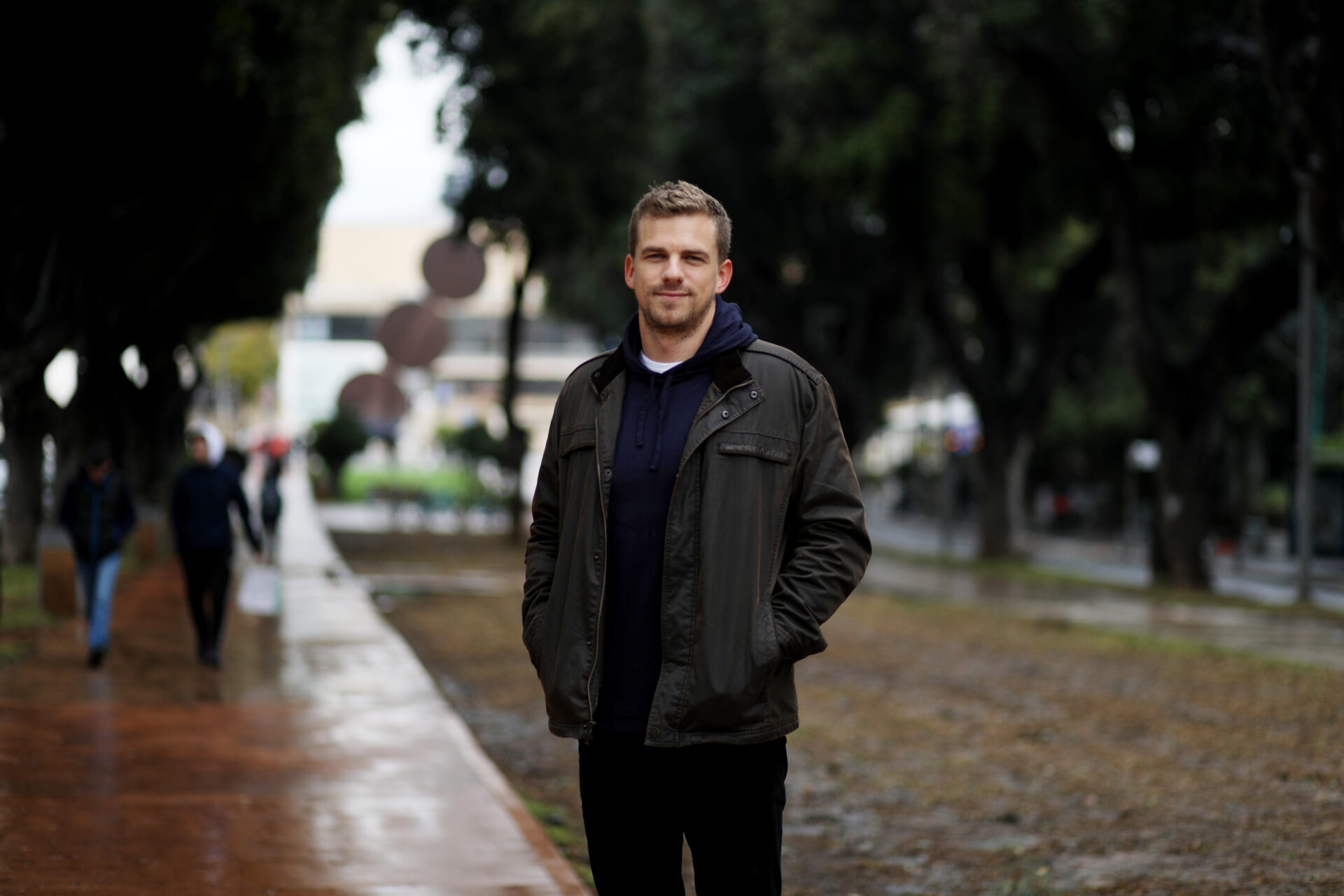
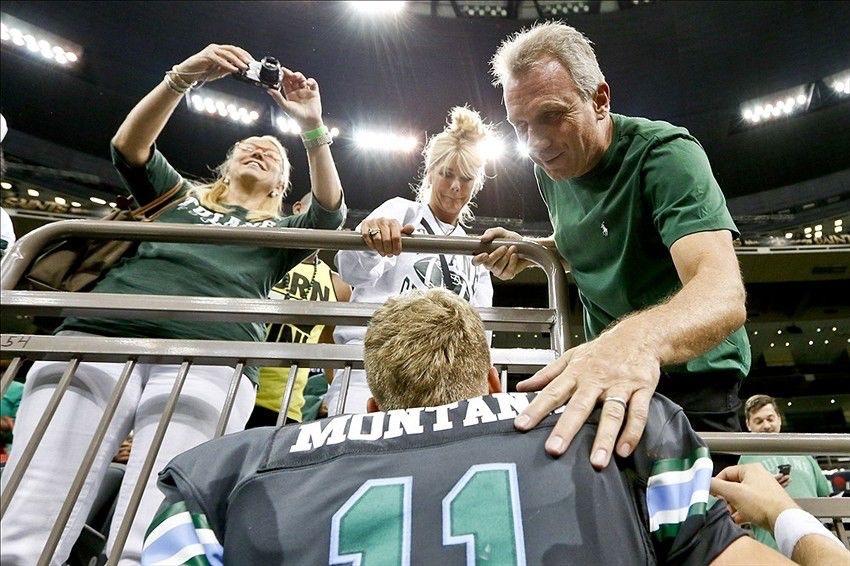
To most Israelis, Nicky Montana appears to be just another ambitious American entrepreneur and investor curious about the startup nation’s vibrant innovation scene and what it might contribute to our world in the future. For Americans and NFL-knowledgeable Israelis, however, he is royalty, as the son of iconic Hall of Fame quarterback Joe Montana.
The younger Montana moved to Israel three months ago and takes all the labels — and his father’s legendary status — in stride, remaining singularly focused on learning as much as he can about what makes Israel’s high-tech industry tick.
“There’s so much interesting stuff that has brought my attention here,” Montana, 29, told The Circuit in an interview at a Tel Aviv cafe last week. “I was here in the past – on a trip with [New England Patriots owner and sponsor of the Israel Football League] Robert Kraft – and that was very different. We went to Jerusalem, and we toured around, the schedule was very regimented. Now I am living here and meeting real people and just kind of getting ingrained in everything, and it’s really been incredible.”
Born and raised in California, where his father won four Super Bowl championships with the San Francisco 49ers, Montana said his father tried to downplay his fame and “never really talked about any of it really.”
He said he only learned the true extent of his father’s celebrity status more recently from the new six-part documentary series, “Joe Montana: Cool Under Pressure,” produced by Peacock.
Nicky Montana (Photo: Gili Levinson for The Circuit)
“It was all external and you know, sometimes people would be like, ‘Do you really understand?’” Montana recalled. “I mean, obviously out on the field he was incredible, but then I would hear people talking about after the game that he went to hang out with Frank Sinatra and I’m like, ‘I got to hear everything about that. Who was there? What were you guys doing? And I wonder what else was going on under the hood.”
Montana, who said as a baby he initially called his father ‘Hey Joe,’ mimicking the fans who would scream out to the legendary quarterback, also said that growing up, he and his older brother, Nate, were not pressured to pursue the game professionally. (Montana also has two older sisters.)
“It was never like, ‘You have to play or we’re going out to the yard now for drills,’ he would never bring it up, really,” said Montana. “I would have to beg him to help with practices, but he was super sensitive because of the pressure that might be put on us from a young age.”
In the end, both brothers went on to play college football. Nicky, as quarterback like his father, first played for the University of Washington from 2009 to 2012, and later for Mt. San Antonio College. After one season with the junior college, he transferred in 2013 to Tulane, where he was the starting quarterback.
Montana said that like any teenager, he had to learn to appreciate his father’s “status and his knowledge,” but he quickly realized that he had a valuable resource if he wanted to follow in his father’s footsteps. “It is hard to take direction from your parents, you know, I think a lot of people struggle with it and it took me a few years to realize like, wow, he’s, you know, the best ever and if I don’t listen to him, then the joke’s on me.”
Nicky Montana with his family (Courtesy)
Eventually, however, he decided not to pursue a career in professional football. “It was always my dream, but towards the end, I kept getting hurt and taken out of the game,” Montana explained. “At a certain point, towards the end, I was just like, I’ve been doing this my whole life and I don’t know what it is, but the feeling is gone.”
Putting his football career behind him, Nicky took the skills of leadership and endurance that he learned on the field and turned his attention to the world of high-tech. He began by dabbling in fantasy sports, and eventually sold his own startup, a Y Combinator-backed company called Balto, to FuboTV, the leading sports-first live TV streaming platform in the U.S., in December 2020.
“I think the whole Israeli thing called chutzpah — I’m probably butchering it — is very motivating,” he grinned. “It is incredible to see it in real life, but Israel’s success is partly because of Israelis not being afraid to fail; they just keep on going until they succeed.”
Montana then began investing as an angel investor in more than half a dozen companies across the globe. Last year, when Isaac “Yitz” Applbaum, co-founder and partner of Tel Aviv-based MizMaa Ventures, and a close friend of the Montana family (as well as a wine columnist at Jewish Insider), asked if he wanted to move to Tel Aviv and work for MizMaa, Montana hesitated only slightly.
His friends, he said, thought he was crazy. “All they knew about Israel was camels and rockets,” he quipped. “But the opportunity to come to a place like Israel, given everything that’s going on here, was super enticing – everyone is an entrepreneur here.”
Montana, whose focus at MizMaa is on Web3, cryptocurrencies and fintech, continued, “There’s so much ambition and it’s amazing being on the venture side and seeing how everyone thinks the world’s gonna look in the future.”
“The other thing, I guess, is the adventure coming over here because I’ve lived in California my whole life,” he continued. “I was curious because I grew up in Silicon Valley and a bunch of my friends are either entrepreneurs or work for the top firms there, and I wanted to know what is the difference, what’s going on here that’s not going on in San Francisco or Silicon Valley?”
Nicky Montana (Courtesy)
While Montana has been getting a glimpse into the future as envisaged by the best minds in Israeli startups, he is also enjoying the here and now of life in Tel Aviv, as well as the idiosyncrasies of Israeli culture.
“I think the whole Israeli thing called chutzpah — I’m probably butchering it — is very motivating,” he grinned. “It is incredible to see it in real life, but Israel’s success is partly because of Israelis not being afraid to fail; they just keep on going until they succeed.”
Asked if anyone in Israel has associated him with his famous father or if he’d been approached about playing for the Israel Football League, Montana laughed. “The head coach DM’d me before I got over here with a really funny message: ‘Words reach me that you’re coming to the region, do you want to come and try out?’” he said.
As for Israelis recognizing the legendary Joe Montana, his son laughed: “I don’t know why they would — they might confuse him with Daniel Craig, though.”