

Saudi Arabia’s dream train to chug across the desert at $4,000 a night
Paolo Barletta, a dapper Italian railroad impresario, is channeling the spirit of the storied Orient Express and Fellini’s La Dolce Vita to bring luxury train travel to Saudi Arabia.
Starting late next year, his “Dream of the Desert” line will take passengers on an 800-mile journey across the kingdom’s dune-filled landscapes for between $4,000 and $28,000 a night, Barletta, CEO of Rome-based Arsenale Group, told The Circuit in Riyadh.
That shouldn’t be a problem for his target clientele of wealthy Saudis and free-spending international visitors looking for thrills as the once-secluded Gulf state keeps rolling out new tourist attractions.
“People here are spending crazy amounts of money to go to the Red Sea, to go to AlUla, to go to the Aseer region. So why not on a train?” Barletta, 39, said on Tuesday in an interview outside the King Abdulaziz International Convention Center.
Dressed in a grey double-breasted suit with purple polka-dotted tie and a white pocket handkerchief, the 39-year-old chief of his family-owned firm was escorting Saudi cabinet ministers and billionaire corporate executives onto a mock-up coach for the new line set up outside this week’s Future Investment Initiative conference.
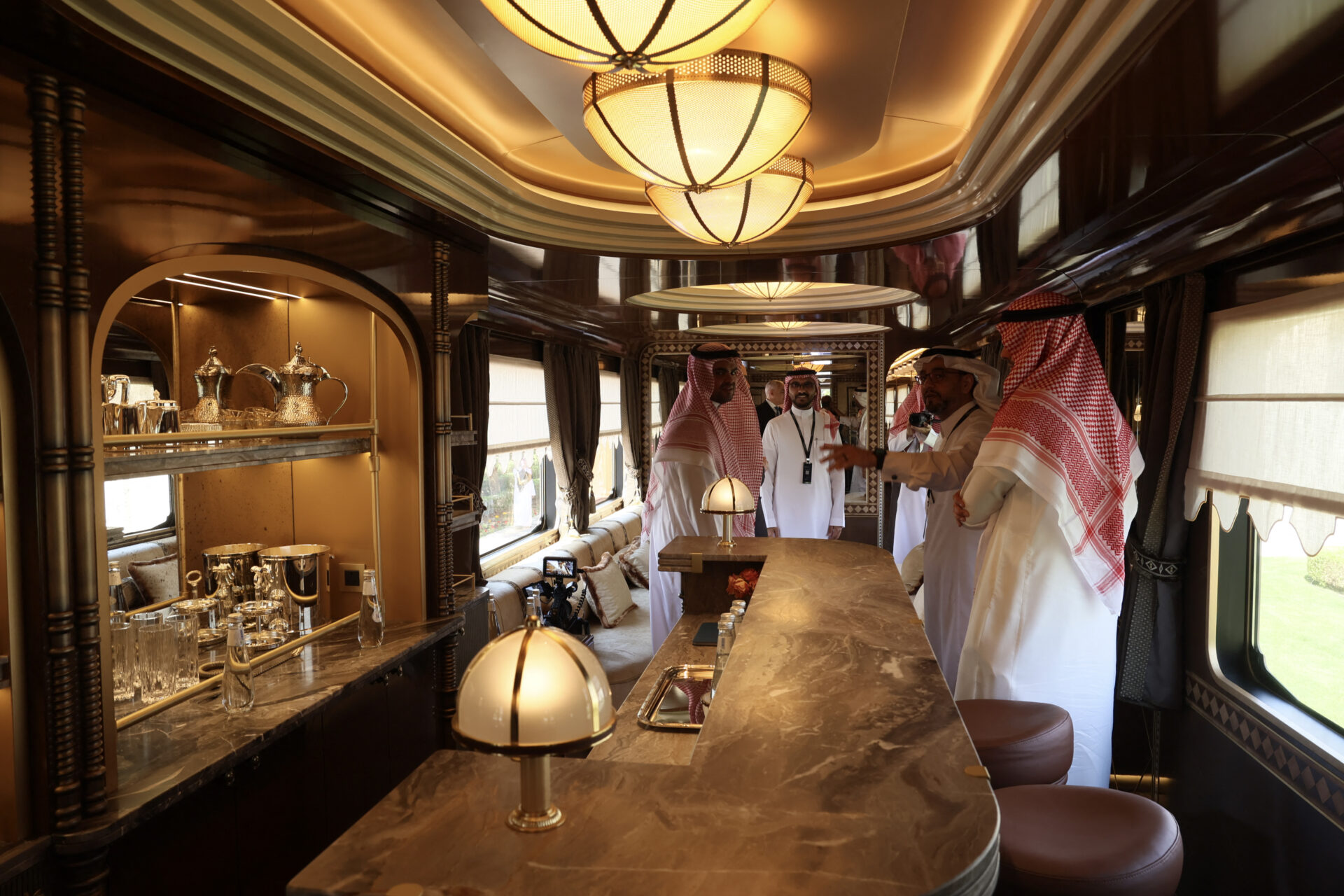
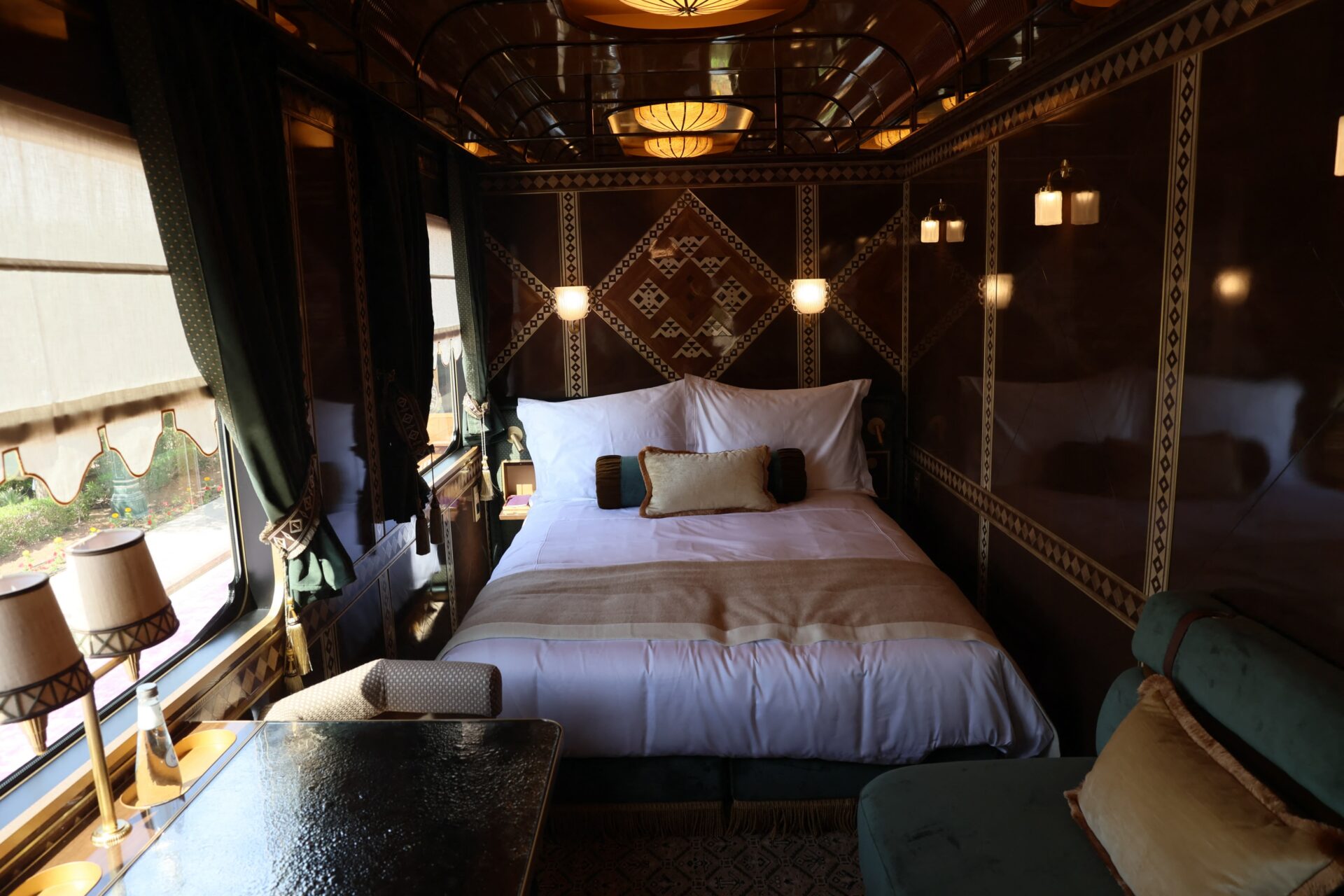
The Dream of the Desert luxury train, now being assembled in Italy, evokes a gilded vision of Arabian travel, with interiors conceived by architect and interior designer Aline Asmar d’Amman, blending Italian style, Saudi heritage and the elegance of Europe’s Orient Express. Each coach features plush sleeper cabins with private bathrooms, marble-accented dining cars serving regional cuisine and lounges dressed in brass, walnut, and desert-hued fabrics.
“So we are a vertically integrated, supply-chain company where we engineer, manufacture and operate our own trains,” Barletta said. “The train cars are being made now in our factory in Puglia. They’ll be shipped to Saudi Arabia in Spring 2026 and be operative from the end of the year.”
Saudi Arabia is advancing four of the world’s largest tourism developments as part of its Vision 2030 plan. The $500 billion NEOM project anchors the push with a high-tech city and luxury destinations on the Red Sea. The $20 billion Red Sea Project is building eco-resorts across more than 90 islands, while Qiddiya, near Riyadh, is a $9 billion entertainment hub featuring theme parks and sports venues. Rounding out the effort is Diriyah Gate, a $63 billion heritage and hospitality complex transforming the birthplace of the Saudi state into a global cultural and leisure destination.
Once delivered, the train will feature 31 private cabins and two presidential suites, accommodating a maximum of 66 guests. Guests will have access to two restaurant cars offering a choice between authentic Saudi cuisine and international menus with Italian fusion influences, all “curated to a Michelin-level standard,” according to an Arsenale press release. A central Majlis lounge will provide space for socializing and relaxation.
While pricing has not yet been formally announced, Barletta said it would be similar to Arsenale’s La Dolce Vita Orient Express line, with its Fellini-inspired 60’s-style interiors, where tickets start at 3,500 euros ($4,000) per person per night, based on double occupancy. The top-of-the-line suites on the European route go for 25,000 euros a night.
Dream of the Desert will offer one- and two-night trips from Riyadh to the Al-Jawf station on the northern Saudi-Jordan border. Barletta said Arsenale will spend about $65 million on the Dream of the Desert project as part of a partnership with Saudi Arabia Railways and several government departments. It also has contracts to build luxury train lines in Egypt along the Nile and in Uzbekistan.
Saudi Transport Minister Saleh bin Nasser Al-Jasser said he was impressed after a walk-through on the model train car.
“It shows that different sectors within the economy – the transport and logistics, the tourism, the culture – working together to bring and facilitate services like this with the private sector is testimony that Saudi Arabia is very attractive to investment,” he said.
As for the pricing, he sees no obstacle.
“Obviously, it is designed to attract the high end of the market, but there are also services that attract different levels of people… priced at a few dollars,” he said. “There are different services that cater to all.”