The Daily Circuit: Saudi interest in Greenland’s minerals + ADNOC eyes Venezuela
In today’s Daily Circuit, we’re reporting on ADNOC’s interest in Venezuelan gas, Qatari plans to buy control of two Syrian banks, the Arab Energy Fund taking a minority stake in Saudi Arabia’s Arabian Petroleum Supply Co., and plans for an $8.2 billion Mercedes Benz-branded city in Dubai. But first, Greenland’s mineral resources are attracting investors in Saudi Arabia.
Amid U.S. President Donald Trump’s declarations of interest in taking over Greenland, a Saudi investment group is in talks with New York-based Critical Metals Corp. to build a refinery for processing the massive Arctic island’s mineral resources.
Critical Metals announced on Thursday that it signed a non-binding term sheet to form a 50-50 joint venture with Saudi Arabia’s Tariq Abdel Hadi Abdullah Al-Qahtani & Brothers. The facility would be linked to the U.S. company’s planned Tanbreez mining project in Greenland.
Under the plan, about a quarter of the minerals from the Tanbreez mine would be processed in Saudi Arabia, which is looking to extract more value from its own deposits of so-called rare earths. Critical Metals said the refined materials could be used in high-tech applications and distributed through U.S. defense supply chains.
If finalized, the deal would give Critical Metals guaranteed customers and likely ease its path to full financing for the project, which is estimated to cost $290 million to start production by next year.
“We see a strong opportunity to work closely with partners in the United States to responsibly develop and deploy these materials in support of next-generation technologies,” Abdulmalik Tariq Al-Qahtani, the Saudi firm’s CEO, said in a statement.
Editor’s Note: Have thoughts or feedback? Hit reply or drop us a note at [email protected].
📰 Developing Stories
SYRIAN STAKES
Qatar’s Estithmar Holding is poised to purchase controlling stakes in two Syrian banks. The investment group plans to take over majority ownership of Shahba Bank and about 30% of Syria International Islamic Bank, Reuters reports. The move would be the first foreign banking acquisition in Syria since the fall of Bashar al-Assad and follows the recent lifting of U.S. sanctions on Syria. The year-old interim government of President Ahmed al-Sharaa has been seeking to bring foreign capital into Syria’s banking system after more than a decade of conflict.
EXPO IPO
Competition to dominate the events space in the Gulf is heating up, with two major groups exploring the potential to launch IPOs this year. Dubai World Trade Centre and U.K.-based Informa Group, which host some of the emirate’s biggest conferences and expos, have hired Rothschild & Co. as a financial adviser for a potential listing in Dubai, Bloomberg reports. The pair announced a joint venture last March to own and operate major events, including the Dubai Airshow and Gulfood. Meanwhile, the organizer of Saudi Arabia’s Future Investment Initiative, Richard Attias & Associates, is among eight companies earmarked by the Public Investment Fund for IPOs this year.
💲 Sovereign Circuit
ADNOC: Abu Dhabi’s state oil company is evaluating a potential investment in Venezuela’s natural gas industry as the beleaguered country tries to revive output and attract foreign partners, Bloomberg reports. TAQA: Abu Dhabi National Energy Company (TAQA), Emirates Water and Electricity Company, Masdar, EDF power solutions and Jinko Power Technology announced the issuance of long-term green bonds to refinance Al Dhafra Solar Photovoltaic Independent Power Plant, raising more than $870 million.
Masdar: UAE’s Masdar is partnering with Elite Agro Holding to launch the MENA region’s first agricultural photovoltaic project, combining solar panels with greenhouses. Masdar and Montenegro’s national power utility EPCG, meanwhile, agreed to explore a joint venture to develop and operate large-scale renewable energy projects.
Qatar Investment Authority: Qatar National Bank raised $650 million through a Formosa bond issue in Taiwan, with HSBC, KGI Securities and Standard Chartered acting as joint managers.
ADQ: AD Ports Group signed a $228 million land sale agreement with Danube Properties for a major residential and mixed-use project on roughly 1 million square meters within Abu Dhabi’s KEZAD Town Centre.
Arab Energy Fund: The fund has taken a minority stake in Saudi Arabia’s Arabian Petroleum Supply Co., backing the company’s regional expansion across fuel supply, logistics and related energy services.
↪↩ Closing Circuit
💰 Japanese Credit: Saudi Arabia has secured a 12-year, $1.5 billion credit line from Japan’s export credit agency Nexi to support water and energy projects under Vision 2030.
🔋 Clean Projects: The UAE Ministry of Energy and Infrastructure announced a joint venture with Baah and India’s Lohum to develop the country’s first large-scale electric vehicle battery recycling facility in the emirate of Sharjah.
🚗 Branded Build: UAE developer Binghatti and Mercedes-Benz unveiled an $8.2 billion co-branded development in Dubai’s Nad Al Sheba at a star-studded event hosted by American TV star Terry Crews.
🗣 Circuit Chatter
🏦 Open Shop: National Bank of Canada announced the opening of an office in the Dubai International Financial Centre to support Canadian clients expanding into the Middle East.
⭐ Gold Star: Abu Dhabi Customs and the Emirates Drug Establishment launched the Golden List of Pharmaceutical Companies, initially covering 31 firms, to streamline customs procedures and strengthen supply chains.
🛥️ Calm Seas: Danish Shipping company Maersk will resume sailing through the Red Sea and Suez Canal following improved stability in the area, The Wall Street Journal reports.
🌍 Power Circuit
UAE President Sheikh Mohamed bin Zayedmet withBassirou Diomaye Faye, President of Senegal, at Qasr Al Shati palace in Abu Dhabi on Thursday. Sheikh Mohamed also held a phone call with Robert Fico, Prime Minister of the Slovak Republic, on Thursday and received a written message from Sanae Takaichi, Prime Minister of Japan.
Sheikh Mohammed bin Rashid, UAE Vice President and Ruler of Dubai, honored the six winners of Great Arab Minds 2025 at the Museum of the Future in Dubai.
Sheikh Tahnoon bin Zayed, UAE National Security Advisor and Chairman of Abu Dhabi’s International Holding Co., said talks on Thursday with U.S. Undersecretary of State for Economic Affairs Jacob Helbergfocused on deepening cooperation in artificial intelligence and investment.
Sheikh Maktoum bin Mohammed, UAE Minister of Finance and Deputy Ruler of Dubai, met withNicolas Bos, Group CEO of Richemont, to discuss opportunities in the UAE. Sheikh Maktoum also met withWang Chuanfu, Chairman of the Board and CEO of Chinese electric vehicle maker BYD.
Sheikh Abdullah bin Zayed, UAE Minister of Foreign Affairs and Deputy Prime Minister, held a phone call with Kaja Kallas, High Representative of the European Union for Foreign Affairs and Security Policy and Vice-President of the European Commission, on Thursday.
Saudi Arabia’s Crown Prince Mohammed bin Salmanreceived a written message on Thursday from Oman’s Sultan Haitham bin Tariq.
➿ On the Circuit
Bandar Alkhorayef, Saudi Arabia’s Minister of Industry and Mineral Resources, said reports that the Public Investment Fund intends to spin off its Manara Minerals subsidiary were inaccurate and any move would have to be announced by the PIF.
Ali Shaath, the former deputy planning minister for the Palestinian Authority who was chosen to lead a U.S.-backed committee to govern Gaza, has proposed pushing war debris into the Mediterranean Sea to speed reconstruction, Reuters reports
Nasser al Sharji was appointed CEO of Oman Airports, replacing Ahmed Al Amri, who has been appointed Chairman of the Muscat Municipality.
Mattar Al Tayer, Dubai’s Roads and Transport Authority Chairman, said Electric air taxis developed by Joby Aviation are set to begin commercial operations in Dubai by the end of this year, Reuters reports.
Aryna Sabalenka, the world’s No.1 tennis player, has been signed as Emirates airline’s first tennis ambassador as part of the airline’s commitments as the official airline of all four Grand Slams worldwide.
🎶 Culture Circuit
🎨 Under the Hammer: Pieces by Andy Warhol, Pablo Picasso, Jean-Michel Basquiat, Camille Pissarro and David Hockney are among the highlights in Sotheby’s next major art sale in Saudi Arabia. The “Origins II” auction taking place in Diriyah on Jan. 31 comes amid a growing appetite for fine art investment in the kingdom, where Sotheby’s held its first international sale last January, netting $17 million. Among this year’s works is Warhol’s 1978 painting of Muhammad Ali, originally commissioned by U.S. investment banker Richard Weisman.
📷 Photo of the Day
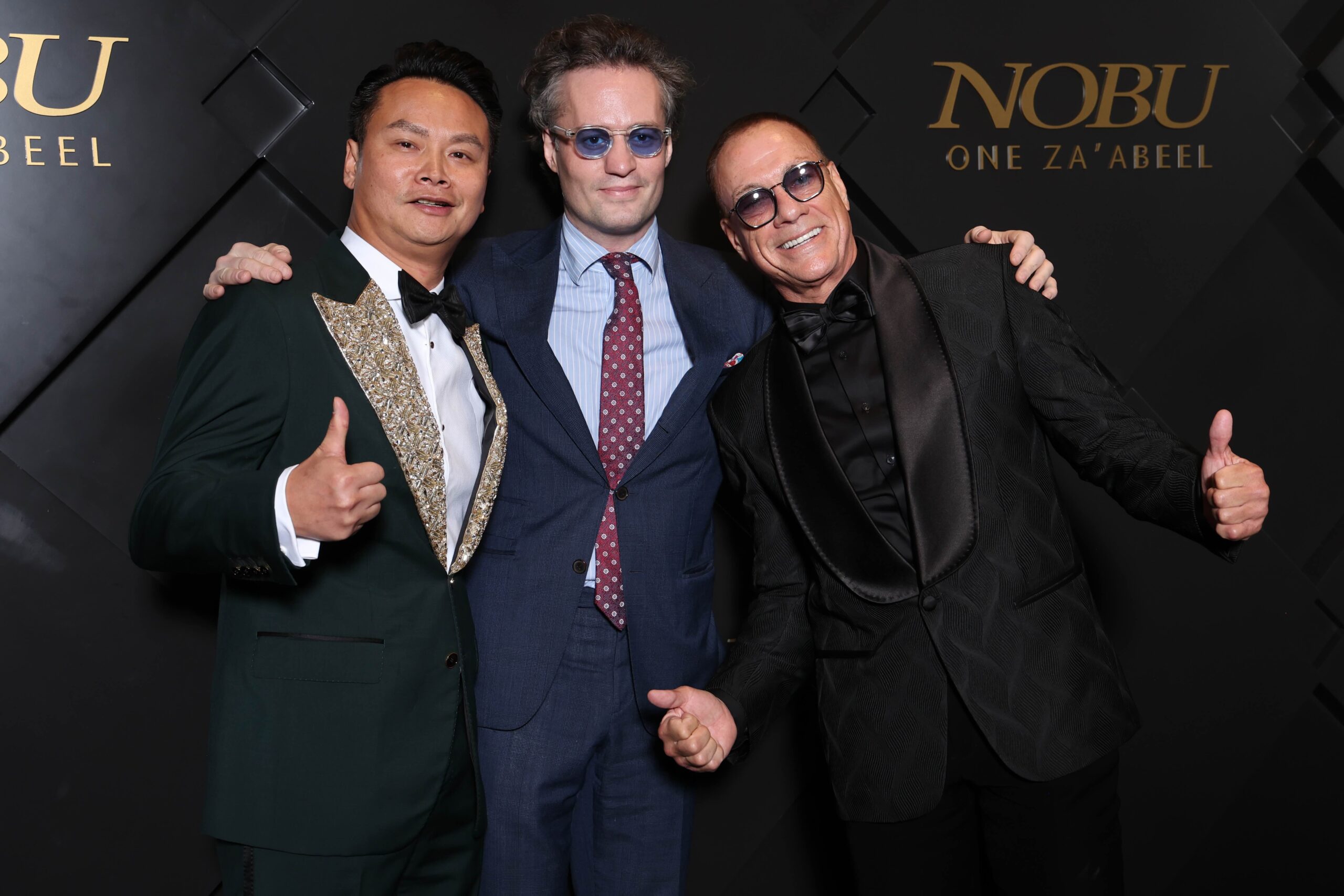
Jean-Claude Van Damme, the action movie star, walks the red carpet at opening night for the Nobu One Za’abeel restaurant in Dubai on Thursday. (Tristan Fewings/Getty Images for One & Only)
📅 Circuit Calendar
Jan. 18-21, Riyadh. Big5 Construct Saudi. Latest trends and opportunities among construction companies operating in KSA. Riyadh Front Exhibition & Conference Center located at ROSHN Front.
Jan. 20-22, Abu Dhabi. UMEX 2026. The Unmanned Systems Exhibitions and Conference showcases the latest advances in autonomous systems, robotics, artificial intelligence, and training simulation. ADNEC.
Jan.26-27, Riyadh. Super Return. A major private equity & venture capital conference held in Riyadh, Saudi Arabia.The Fairmont Hotel.
Jan. 26-28, Riyadh. Saudi Franchise Expo. The exhibition brings local and international businesses that want to create franchising companies into the kingdom. The Arena Riyadh Venue for Exhibitions, Riyadh.
Jan. 26-30, Dubai. Gulf Food. The world’s largest food and beverage industry event. Dubai World Trade Centre & Dubai Exhibition Centre.
Jan.29, Dubai. The Great Marketing & Business Minds. In this 4th edition, the event brings the most influential marketing and business leaders for a deep dive into performance-driven marketing, data integration, and the evolving accountability of brand leadership. Pullman Dubai Downtown.
Feb 1-6, Dubai. Dubai Fashion Week. The event showcases the latest collections by global and regional designers and positions Dubai as a major creative hub on the global fashion calendar alongside fashion capitals like New York, London, Milan and Paris. Dubai Design District.
Feb. 1-4, Doha. Web Summit Qatar. Connecting a new generation of founders in the Middle East to investors, journalists and more around the world. Doha Exhibition and Convention Center.
Feb. 2-5, Doha. LNG2026. The 21st International Conference & Exhibition on Liquefied Natural Gas. Qatar National Convention Center.
Feb. 3-5, Dubai. World Government Summit. Brings together heads of state, policy makers, top corporate executives to debate global priorities. Madinat Jumeirah.
Feb. 4-5, Dubai. PropTech Connect Middle East. The Dubai Land Department will host the first regional edition of the real estate technology event. Grand Hyatt Dubai.
Feb. 10-11, Abu Dhabi. Top Advisors & Investors Summit. The event will convene the region’s foremost advisors, financiers, and investors in the UAE capital. TBC
Feb.12-13, Riyadh. PIF Private Sector Forum. The event, in its third edition, aims to support the Saudi Public Investment Fund’s Private Sector Engagement Strategic Initiative. King AbdelAziz International Conference Center.
The Daily Circuit: PIF mulls LIV Golf’s future + Altérra’s Spanish partner
In today’s Daily Circuit, we’re reporting on International Holding Co.’s deal with the U.S. government’s DFC foreign investment arm, Saudi Arabia’s spinoff of Manara Minerals from the PIF, Altérra’s climate co-investment vehicle with Spain’s BBVA, and Lucid’s Saudi manufacturing plant for its electric vehicles. But first, LIV Golf falls short of its ambitious expectations.
After pouring nearly $5 billion into its upstart LIV Golf tournament, Saudi Arabia’s Public Investment Fund is facing questions about whether its high-stakes confrontation with the PGA was worth it.
Inside the $925 billion sovereign wealth fund, senior officials are reflecting on nearly four years of sparse attendance, lower-than-expected TV ratings and sagging global influence as they make decisions on whether to keep financing LIV, Bloomberg reports.
The PIF, which is led by Aramco Chairman and golf enthusiast Yasir al-Rumayyan, rattled the PGA when it signed some of the sport’s biggest names with nine-figure contracts, including Phil Mickelson, Jon Rahm, Bryson DeChambeau, and Dustin Johnson. U.S. President Donald Trump is one of LIV’s biggest fans and hosted several of its tournaments at his golf resorts.
Since its splashy first year, competitive pressure from the Tour has intensified with moves such as a “Returning Member Program,” which lured Brooks Koepka back to the PGA fold under the threat of heavy financial penalties.
Attempts to merge the LIV with the PGA have faltered, meanwhile, leaving the Saudi backers to carry continued operational losses and come up with a formula for reviving the league or pulling the plug.
Editor’s Note: Have thoughts or feedback? Hit reply or drop us a note at [email protected].
📰 Developing Stories
U.S. COLLAB
International Holding Co., the vast Abu Dhabi conglomerate overseen by Sheikh Tahnoon bin Zayed, has inked a deal to co-invest with the U.S. government’s foreign investment arm. The agreement with the International Development Finance Corp. opens the way for collaboration across a broad swath of sectors, including energy, infrastructure, mining, port operations and data centers. It will focus on projects spanning emerging and frontier markets, with the ability to “deploy capital at scale,” IHC announced. The deal is unconventional for the DFC, which traditionally funds development projects in lower- and middle-income countries, and comes amid shifting U.S. priorities abroad under President Donald Trump.
MINING SPINOFF
Saudi Arabia’s Manara Minerals will take a more independent course as the kingdom seeks to extract more value from its vast mining resources. The company, a joint venture between the Public Investment Fund and its Ma’aden mining subsidiary, will be spun off to focus on Saudi Arabia’s underground deposits of so-called critical minerals, Reuters reports. Lithium and copper, for instance, are needed for manufacturing electric vehicles and a variety of clean-energy technologies. Separating Manara is intended to attract additional Saudi and foreign investors while shifting away from passive investing toward hands-on mining expertise.
💲 Sovereign Circuit
Altérra: The Abu Dhabi climate finance company said financial services group BBVA is committing $250 million to a $1.2 billion climate co-investment vehicle that will be domiciled in the ADGM financial hub.
G42: Cerebras, the AI chipmaker that counts UAE tech investor G42 as its main customer, has made a $10 billion deal to deliver computing power to OpenAI as it attempts to diversify its revenues ahead of an expected IPO.
Public Investment Fund: The PIF and Red Sea Aluminium Holdings agreed on initial terms to develop an aluminum complex in Yanbu.
Lucid Group: The PIF-owned maker of electric vehicles plans to start manufacturing EVs in Saudi Arabia this year, advancing the kingdom’s push to cultivate a domestic auto industry.
Qatar Investment Authority: Prague-based munitions company Defense Company Czechoslovak Group is planning to raise $873 million in an IPO on the Euronext Amsterdam, with commitments from investors including a subsidiary of the QIA.
Lunate: Lunate, an Abu Dhabi-based global investment manager, has launched its Boreas range of thematic Exchange Traded Funds (ETFs) on Deutsche Börse Xetra, a major European stock exchange.
↪↩ Closing Circuit
⚜️ Mining Partners: Saudi Arabia’s Ministry of Industry and Mineral Resources signed three international agreements with Chile, Canada and Brazil to expand partnerships in the mining sector during the Future Minerals Forum in Riyadh.
💰 Asia Loans: Kuwait-based Equate Group is seeking a $300 million dual-tranche loan from Asian lenders, led by Mizuho Bank.
🔋 Battery Builder:Canadian miner Northern Graphite and Saudi Arabia’s Al Obeikan Group will form a joint venture to build a battery anode materials plant in the kingdom.
🗣 Circuit Chatter
🛏️ Hotel Push:Marriott International and Saudi developer Al Qimmah plan to open more than 2,700 hotel rooms across the kingdom, reflecting a shift toward mid- and upper-mid-scale tourism as Saudi Arabia broadens its accommodation base beyond high-end luxury resorts.
☀️ Clean Vibes:Australian clean-energy companies are increasingly looking to manufacture in the UAE to reduce supply-chain risks and accelerate exports.
⛏️ Dig It: Pakistan plans to announce several joint mining ventures with Saudi Arabia in April, with talks underway on exploratory projects for minerals including copper, zinc, gold and chromite.
🔴 Visa Freeze: Applicants from Kuwait, Egypt, Iraq and nine other Arab countries will not be able to immigrate to the U.S. until further announcement, the state department said.
⚽ Money Ball: Alsharif Faisal bin Jamil, a Jordanian royal, is leading a consortium taking control of England’s Sheffield Wednesday soccer club with the aim of applying science and analytics to improve the team’s performance.
🌍 Power Circuit
UAE President Sheikh Mohamed bin Zayed met with Serbia’s President Aleksandar Vučić on Wednesday at the Zayed National Museum in Abu Dhabi. Sheikh Mohamed also met with Irakli Kobakhidze, Prime Minister of Georgia, on Wednesday.
Prince Khalid bin Salman, Saudi Arabia’s Defense Minister, said the kingdom will invest $506 million in development projects in Yemen.
Sheikh Abdullah bin Zayed, UAE Minister of Foreign Affairs and Deputy Prime Minister, met withHakan Fidan, Turkey’s Minister of Foreign Affairs, in Abu Dhabi on Wednesday.
Sheikh Khaled bin Mohamed, Crown Prince of Abu Dhabi and Chairman of the Abu Dhabi Executive Council, attended panel discussions held as part of Abu Dhabi Sustainability Week 2026 on Wednesday.
➿ On the Circuit
Noura Al Kaabi, UAE Minister of State, met with Dr. Vince Henderson, Dominica’s Minister of Foreign Affairs, International Business, Trade and Energy, on Wednesday.
Suhail Al Mazrouei, UAE Minister of Energy and Infrastructure, said that the country’s installed renewable energy capacity has now exceeded 7.7 gigawatts, with more projects under development to raise the capacity to more than 23 gigawatts by 2031.
Mohamed Alabbar, CEO of Emaar Properties, said that the tender for the redesigned Dubai Creek Tower, which was originally planned to be taller than Burj Khalifa, will be issued in the next three months, years after the project was put on hold.
Randa Hamed, CEO of Egypt’s Okaz asset management and brokerage firm, told Zawya that the company is planning to launch its first equity fund that will invest in Egyptian stocks.
Travis Scott, the American rapper, will perform at the Fanatics Flag Football Classic at Riyadh’s Kingdom Arena on March 21, NFL legend Tom Brady announced in a video reel shared by Turki Alalshikh, Chairman of Saudi Arabia’s General Entertainment Authority.
🎶 Culture Circuit
🍣 Hat Trick: Lest Dubai’s growing traffic jams prevent anyone from getting their hit of black cod miso, Japanese restaurateur Nobu Matsuhisa is opening his third restaurant in the emirate this week. Nobu One Za’abeel is located in The Link – a skybridge cluster of restaurants and bars 100 meters (330 feet) above ground – and will cater mostly to business clientele. The 274-seat restaurant features skyline views, a 28-seat sushi counter and adaptable private dining areas, The National reports.
📷 Photo of the Day
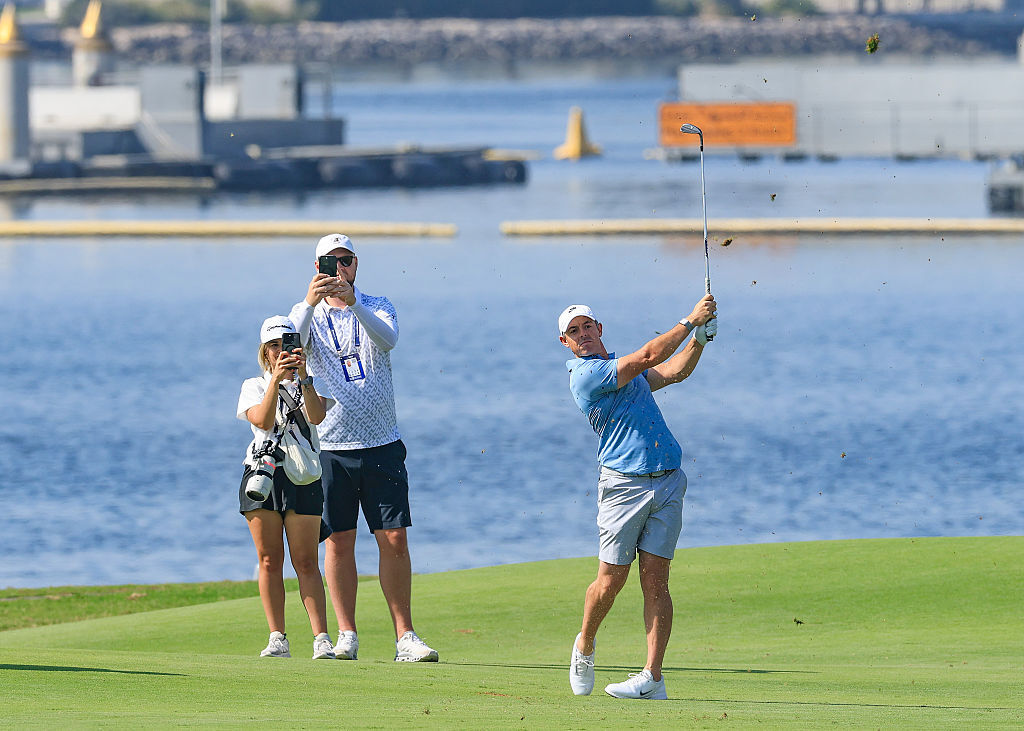
Rory McIlroy of Northern Ireland plays a shot during his practice round prior to the Dubai Invitational 2026 golf tournament at Dubai Creek Resort on Wednesday. (David Cannon/Getty Images)
📅 Circuit Calendar
Jan. 18-21, Riyadh. Big5 Construct Saudi. Latest trends and opportunities among construction companies operating in KSA. Riyadh Front Exhibition & Conference Center located at ROSHN Front.
Jan. 20-22, Abu Dhabi. UMEX 2026. The Unmanned Systems Exhibitions and Conference showcases the latest advances in autonomous systems, robotics, artificial intelligence, and training simulation. ADNEC.
Jan.26-27, Riyadh. Super Return. A major private equity & venture capital conference held in Riyadh, Saudi Arabia.The Fairmont Hotel.
Jan. 26-28, Riyadh. Saudi Franchise Expo. The exhibition brings local and international businesses that want to create franchising companies into the kingdom. The Arena Riyadh Venue for Exhibitions, Riyadh.
Jan. 26-30, Dubai. Gulf Food. The world’s largest food and beverage industry event. Dubai World Trade Centre & Dubai Exhibition Centre.
Jan.29, Dubai. The Great Marketing & Business Minds. In this 4th edition, the event brings the most influential marketing and business leaders for a deep dive into performance-driven marketing, data integration, and the evolving accountability of brand leadership. Pullman Dubai Downtown.
Feb 1-6, Dubai. Dubai Fashion Week. The event showcases the latest collections by global and regional designers and positions Dubai as a major creative hub on the global fashion calendar alongside fashion capitals like New York, London, Milan and Paris. Dubai Design District.
Feb. 1-4, Doha. Web Summit Qatar. Connecting a new generation of founders in the Middle East to investors, journalists and more around the world. Doha Exhibition and Convention Center.
Feb. 2-5, Doha. LNG2026. The 21st International Conference & Exhibition on Liquefied Natural Gas. Qatar National Convention Center.
Feb. 3-5, Dubai. World Government Summit. Brings together heads of state, policy makers, top corporate executives to debate global priorities. Madinat Jumeirah.
Feb. 4-5, Dubai. PropTech Connect Middle East. The Dubai Land Department will host the first regional edition of the real estate technology event. Grand Hyatt Dubai.
Feb. 10-11, Abu Dhabi. Top Advisors & Investors Summit. The event will convene the region’s foremost advisors, financiers, and investors in the UAE capital. TBC
Feb.12-13, Riyadh. PIF Private Sector Forum. The event, in its third edition, aims to support the Saudi Public Investment Fund’s Private Sector Engagement Strategic Initiative. King AbdelAziz International Conference Center.
The Daily Circuit: PIF’s $12B gaming shift + French connection for Bapco
In today’s Daily Circuit, we’re reporting on the $18.7 billion acquisition by a Mubadala Capital unit of Invesco’s Canadian fund business, TotalEnergies’ joint venture with Bahrain’s Bapco Energies, Emirati startup Mal raising $230 million for its new AI-driven bank, and the UAE’s broad exposure to Trump tariffs over its business with Iran. But first, MBS’s latest move to rule the gaming world.
Saudi Arabia’s Public Investment Fund has moved to consolidate its expansive gaming investments, shifting about $12 billion worth of shares, including its stake in Nintendo, to its Savvy Games subsidiary.
Savvy, which was created in 2021 with a cash stockpile of $38 billion, is the backbone of Crown Prince Mohammed bin Salman’s plans to dominate global gaming. The move to bring more of the PIF’s gaming investments under one roof indicates a desire to further elevate Savvy’s status in the industry.
“These transfers will move the stewardship of PIF’s games investments to Savvy, given Savvy is a leading games organization for the PIF and a core component of the National Gaming and Esports Strategy,” Amar Batkhuu, a Savvy spokesperson, told Bloomberg, noting that the transfer has been planned for a long time.
Savvy’s investments include Niantic, the developer of mobile hit “Pokémon Go”and “Monopoly Go” developer Scopely Inc., as well as several esports plays, which have had mixed success. Most recently, it has been in talks with TikTok owner ByteDance to buy its Shanghai Moonton Technology unit, one of the world’s most popular mobile developers.
The company’s success was somewhat overshadowed last year by the PIF’s own blockbuster deal to take gaming titan Electronic Arts private in a $50 billion leveraged buyout backed by private equity firm Silver Lake and Jared Kushner’s Affinity Partners.
Editor’s Note: Have thoughts or feedback? Hit reply or drop us a note at [email protected].
📰 Developing Stories
TRADE TROUBLE
The UAE and China top the list of countries most exposed to U.S. President Donald Trump’s threat to impose a 25% tariff on those doing business with Iran. Abu Dhabi is assessing how the proposed measure could disrupt supply chains and trade flows, given the UAE’s role as one of Iran’s largest commercial partners, Bloomberg reports. UAE Minister of Foreign Trade Thani Al Zeyoudi said he’s still evaluating the possible effects, while details of how the tariff would be applied remain unclear. The UAE, meanwhile, signed Comprehensive Economic Partnership Agreements with Nigeria and the Philippines in Abu Dhabi on Tuesday to cut tariffs and deepen trade and investment.
PETROLEUM PARTNERS
French energy giant TotalEnergies has formed a joint venture with Bahrain’s Bapco Energies aimed at boosting trade in petroleum products across the Middle East. The venture called BxT Trading will handle flows from Bapco’s expanded Sitra refinery and draw on TotalEnergies’ global expertise to deepen market access. The companies said they expect the partnership to strengthen Bahrain’s competitiveness and enhance TotalEnergies’ regional presence. Bapco Chairman Sheikh Nasser Al Khalifa and TotalEnergies CEO Patrick Pouyanne signed the 50-50 venture agreement at a ceremony in Abu Dhabi on Tuesday.
💲 Sovereign Circuit
Mubadala Capital: Invesco is selling its $18.7 billion Canadian investment fund business to Mubadala Capital-backed CI Global Asset Management amid ongoing consolidation in the mutual fund industry.
AD Ports: KEZAD Group, a unit of AD Ports, formed a joint venture with Sharjah-based BEEAH to provide eco-friendly waste management services across the company’s free zones and industrial districts.
Emirates Nuclear Energy Co., which is backed by ADQ, said its Barakah plants are now supplying 57% of electricity demand from UAE households.
Public Investment Fund: Saudi Arabia’s Heritage Commission, in collaboration with PIF-owned Soudah Development, announced the discovery of 20 ancient rock art sites within the southwest Soudah Peaks area.
Arab Energy Fund: The Arab Energy Fund plans to allocate more capital to regional funds as Gulf nations seek global investment to diversify their hydrocarbon-dependent economies, CEO Khalid Al-Ruwaigh told Bloomberg.
↪↩ Closing Circuit
💰 Record Fund: Abu Dhabi-based digital finance startup Mal raised $230 million in a seed round led by BlueFive Capital, as it prepares to launch an AI-driven Islamic bank.
🩺 New Beds:Saudi Arabia’s Mouwasat Medical Services Co. won approval to build a $240 million hospital in Riyadh.
📈 Private Credit: Saudi Arabia’s Jadwa Investment Co. plans to raise up to $200 million for its flagship private credit fund to capitalize on Gulf demand for alternative financing.
🛡️ Defense Pact: The UAE’s EDGE and Spain’s Indra Group signed an agreement to establish a new defense manufacturing company in Spain to develop smart weapons and munitions.
✈️ Drone Deal: European missile manufacturer MBDA signed the first export contract for its Sky Warden anti-drone system with Oman on the sidelines of the Dubai Airshow in November,Intelligence Online reports.
🗣 Circuit Chatter
🛫 African Runway: Ethiopia started construction on what it says will be Africa’s largest airport, a $12.5 billion project that aims to handle up to 110 million passengers annually.
🤝 New Market: Canada will begin negotiations next month on a comprehensive economic partnership agreement with the UAE as it seeks to diversify trade away from the United States and attract Gulf investment, particularly in liquefied natural gas, Reuters reports.
🌊 Trade Player: Medina, one of the two Muslim holy cities, is emerging as a strategic hub for maritime transport and supply chains, benefiting from its Red Sea coast location and its key role in the kingdom’s logistics network
🏠 Tower of Wellness: Sharjah developer Arada launched Inaura Downtown, a 42-story skyscraper in central Dubai that will contain apartments, fitness clubs, restaurants and a luxury hotel, all dedicated to “wellness.”
🌍 Power Circuit
UAE President Sheikh Mohamed bin Zayedmet with Daniel Chapo, President of Mozambique, who is taking part in Abu Dhabi Sustainability Week, on Tuesday. Sheikh Mohamed also met withMilojko Spajić, Prime Minister of Montenegro; Bola Ahmed Tinubu, President of Nigeria; and Ferdinand Marcos Jr., President of the Philippines.
Sheikh Mohamedconferred the Order of Zayed, the UAE’s highest civilian honour, on Edi Rama, Prime Minister of Albania, on Tuesday.
Sheikh Khaled bin Mohamed, Crown Prince of Abu Dhabi and Chairman of the Abu Dhabi Executive Council, met withWang Chuanfu, Chairman and CEO of Chinese electric car maker BYD, on Wednesday.
Sheikh Abdullah bin Zayed, UAE Minister of Foreign Affairs and Deputy Prime Minister, held a phone call with Abbas Araghchi, Minister of Foreign Affairs of Iran, on Tuesday. Sheikh Abdullahmet withJamshid Khodjaev, Deputy Prime Minister of Uzbekistan, on the sidelines of Abu Dhabi Sustainability Week. He also met with Ronald Lamola, Minister of International Relations and Cooperation of South Africa.
Sheikh Zayed bin Hamdan, Chairman of International Holding Co.’s 2PointZero investment firm, met withJamshid Khodjayev, Deputy Prime Minister of Uzbekistan, on Tuesday.
➿ On the Circuit
Bandar Alkhorayef, Saudi Arabia’s Minister of Industry and Mineral Resources, said the world is preparing for “a new era of global development, prosperity and stability through minerals,” speaking on Tuesday to the annual Future Minerals Forum in Riyadh.
Saeed Al Hajeri, UAE Minister of State, met with Maria Theresa Lazaro, Secretary of Foreign Affairs of the Philippines, during her visit to the UAE to participate in Abu Dhabi Sustainability Week.
Rolf Schilde was appointed Senior Executive Officer at Indosuez Wealth Management Dubai International Financial Centre Branch, while Charles Tort was named Deputy CEO.
🎶 Culture Circuit
👣 Feet First: A drawing of a foot by Michelangelo is on display in Dubai, the first time a work by the Italian Renaissance artist has gone on show in the UAE. The previously unknown sketch is of the right foot of the Libyan Sibyl, a figure who appears on the far east end of the frescoes on the Sistine Chapel ceiling in the Vatican. It is one of only 50 known studies related to the chapel. Christie’s will auction the work in New York next month with an estimate of $1.5 million to $2 million.
📷 Photo of the Day
UAE President Sheikh Mohamed bin Zayed met with Sheikh Mohammed bin Rashid, Vice President, Prime Minister and Ruler of Dubai, at Qasr Al Bahr palace in Abu Dhabi on Tuesday and presented him with an inscribed photo album. (Emirates News Agency)
📅 Circuit Calendar
Jan. 11-15, Abu Dhabi. Abu Dhabi Sustainability Week. UAE leaders host corporate executives, policymakers and environmental groups to debate the future of renewable energy and climate change. ADNEC.
Jan. 12-15, Dubai. Dubai International Project Management Forum. Bringing together global leaders, policymakers, and innovators to explore how collaboration, innovation, and sustainability can unite diverse communities. Madinat Jumeirah.
Jan. 13-15, Riyadh. Future Minerals Forum. The conference aims to hold conversations among governments, investors, and innovators to secure the minerals essential for a sustainable, tech-enabled future. King AbdelAziz International Conference Center.
Jan. 13-15, Abu Dhabi. World Future Energy Summit. The annual event brings in policymakers and industry leaders to discuss the challenges of working towards net zero. ADNEC.
Jan. 18-21, Riyadh. Big5 Construct Saudi. Latest trends and opportunities among construction companies operating in KSA. Riyadh Front Exhibition & Conference Center located at ROSHN Front.
Jan. 20-22, Abu Dhabi. UMEX 2026. The Unmanned Systems Exhibitions and Conference showcases the latest advances in autonomous systems, robotics, artificial intelligence, and training simulation. ADNEC.
Jan.26-27, Riyadh. Super Return. A major private equity & venture capital conference held in Riyadh, Saudi Arabia.The Fairmont Hotel.
Jan. 26-28, Riyadh. Saudi Franchise Expo. The exhibition brings local and international businesses that want to create franchising companies into the kingdom. The Arena Riyadh Venue for Exhibitions, Riyadh.
Jan. 26-30, Dubai. Gulf Food. The world’s largest food and beverage industry event. Dubai World Trade Centre & Dubai Exhibition Centre.
Jan.29, Dubai. The Great Marketing & Business Minds. In this 4th edition, the event brings the most influential marketing and business leaders for a deep dive into performance-driven marketing, data integration, and the evolving accountability of brand leadership. Pullman Dubai Downtown.
Feb 1-6, Dubai. Dubai Fashion Week. The event showcases the latest collections by global and regional designers and positions Dubai as a major creative hub on the global fashion calendar alongside fashion capitals like New York, London, Milan and Paris. Dubai Design District.
Feb. 1-4, Doha. Web Summit Qatar. Connecting a new generation of founders in the Middle East to investors, journalists and more around the world. Doha Exhibition and Convention Center.
Feb. 2-5, Doha. LNG2026. The 21st International Conference & Exhibition on Liquefied Natural Gas. Qatar National Convention Center.
Feb. 3-5, Dubai. World Government Summit. Brings together heads of state, policy makers, top corporate executives to debate global priorities. Madinat Jumeirah.
Feb. 4-5, Dubai. PropTech Connect Middle East. The Dubai Land Department will host the first regional edition of the real estate technology event. Grand Hyatt Dubai.
Feb. 10-11, Abu Dhabi. Top Advisors & Investors Summit. The event will convene the region’s foremost advisors, financiers, and investors in the UAE capital. TBC
Feb.12-13, Riyadh. PIF Private Sector Forum. The event, in its third edition, aims to support the Saudi Public Investment Fund’s Private Sector Engagement Strategic Initiative. King AbdelAziz International Conference Center.
The Daily Circuit: Sustainability meets energy in Abu Dhabi + PIF-EWPartners fund
In today’s Daily Circuit, we’re reporting on the $800 million tech fund being developed by PIF-backed EWPartners, First Abu Dhabi Bank’s collaboration with T. Rowe Price, Qatar’s entry to the U.S.-initiated “Pax Silica,” and L’Imad Holding’s new board, chaired by Abu Dhabi’s Crown Prince. But first, hydrocarbons hold their own during Abu Dhabi Sustainability Week.
The UAE’s top energy executive told the audience at Abu Dhabi Sustainability Week that an expected 500% increase in power demand from data centers by 2040 – propelled by artificial intelligence – means that hydrocarbons will remain the Earth’s dominant fuel.
In a keynote address to the annual environment conference, Dr. Sultan Al Jaber, CEO of the ADNOC state oil company, Chairman of Masdar and Minister of Industry and Advanced Technology, said the UAE has invested more than $148 billion in AI initiatives. The government plans to expand its clean energy capacity to more than 22 gigawatts by 2031 to help meet rising electricity needs from its data centers, he said.
“While some view this as a constraint, I view it as a catalyst,” said Al Jaber, who served as President at the U.N.’s COP28 climate conference in Dubai three years ago. “Sustainable progress is not about slowing down growth; it is about designing a better engine.”
Al Jaber told the gathering that roughly $4 trillion of annual investment will be required globally in grids and data center infrastructure to keep pace with demand as digitalization accelerates.
The event drew senior leadership from around the world, with UAE President Sheikh Mohamed bin Zayed attending the opening ceremony alongside heads of state from Serbia, Albania, Nigeria, South Africa and the Philippines. Chief executives from major energy and investment firms came to Abu Dhabi for the conference, including BlackRock, TotalEnergies, Engie and Iberdrola.
Editor’s Note: Have thoughts or feedback? Hit reply or drop us a note at [email protected].
TOP TEAM
Abu Dhabi names L’Imad board, led by Crown Prince, e& Chief
The government of Abu Dhabi appointed a board of directors chaired by its Crown Prince for L’Imad Holding Co., the investment vehicle backed by the emirate’s sovereign wealth funds that last month joined Paramount’s hostile takeover bid for Warner Bros.
Jassem Al Zaabi, Chairman of the Abu Dhabi Department of Finance and of telecommunications group e&, was named Managing Director and CEO, The Circuit’s Jonathan Ferziger reports. Sheikh Khaled bin Mohamed, Crown Prince of Abu Dhabi and Chairman of the Abu Dhabi Executive Council, will serve as Chairman.
Board members include Khaldoon Al Mubarak, Managing Director and CEO of Mubadala; Waleed Al Mokarrab Al Muhairi, the sovereign fund’s Deputy CEO; and Mohamed Al Shorafa, Chairman of Etihad Airways and of the Abu Dhabi Department of Municipalities and Transport.
Qatar has joined the Trump administration’s international initiative aimed at strengthening cooperation on advanced technology, dubbed “Pax Silica.” The pact – which the UAE is scheduled to sign later this week – covers semiconductors, artificial intelligence and secure supply chains. The aim is to make critical technologies more reliable and less vulnerable to disruption as demand rises worldwide. Qatari officials said the agreement will assist the government’s push to build up its digital economy and play a bigger role in global technology infrastructure. Israel, Japan, South Korea, Singapore, the U.K. and Australia are already partners to the initiative.
ON STANDBY
Dubai’s global port operator DP World is ready to start operations in Venezuela “within 24 hours” if the situation changes following the capture of President Nicolas Maduro by the U.S., its chairman says. “Tomorrow if there’s a cargo opportunity in Venezuela, we will go … We can start within 24 hours if we need to. We know the place very well, the teams, everybody,” Sultan bin Sulayem, DP World Chairman and Group CEO, told The National. The container shipping and logistics giant previously ran terminal operations at Venezuela’s Puerto Cabello until 2009, when the military took over the country’s ports and airports under former President Hugo Chavez. Since then U.S. sanctions have made it difficult to return.
💲 Sovereign Circuit
PureHealth: The Abu Dhabi-based company, backed by ADQ, International Holding Co. and Alpha Dhabi, launched a central research center to consolidate clinical research across its hospitals, clinics and labs.
Public Investment Fund: Saudi Electricity Co., backed by the PIF, secured a five-year loan of up to $1.5 billion, arranged by Sumitomo Mitsui Banking Corp.
Public Investment Fund: Private equity firm EWPartners, backed by the PIF, is seeking to close an $800 million Saudi Arabia-based fund backed by investors from the GCC and East Asia to invest in supply chains, logistics, and digital infrastructure, including data centers.
Maaden: Saudi Arabian Mining Company, a PIF company, has added 7.8 million ounces of gold reserves across four sites.
Aramco: Arabian Drilling Co. has secured three Saudi Aramco land rig contract extensions worth $373 million, adding 25 rig years to its backlog, with operations phased throughout the year.
↪↩ Closing Circuit
💰 UAE Partnership: First Abu Dhabi Bank announced a strategic collaboration agreement with U.S. asset manager T. Rowe Price to expand investment services across the Gulf.
🌐 Star Power: Sama X secured a license from Bahrain’s telecom regulator to launch SpaceX’s Starlink broadband services in the kingdom.
🚆 Global Loop: UAE-based BNW Developments has awarded a AED1 billion ($272 million) contract to China Railway Group subsidiary CREC4 for a prime Dubai project.
🗣 Circuit Chatter
📈 Lebanon Rally: Lebanese government bonds surged to their highest levels in almost five years on Monday amid growing hopes that a proposed banking law could unlock deposits and pave the way for debt restructuring.
💔 Deals Off: Somalia’s government annulled all agreements with the UAE, including port and security deals.
🛢️ Last Chance: Iraq will allow Russia’s Lukoil to retain its 75% stake in the West Qurna-2 oilfield for one year to either resume operations or sell its share, denying reports of nationalization.
🌍 Power Circuit
UAE President Sheikh Mohamed bin Zayed attended the opening ceremony of Abu Dhabi Sustainability Week at the Abu Dhabi National Exhibition Centre on Tuesday.
President Ferdinand R. Marcos Jr. of the Philippines arrived in the UAE late Monday evening for a one-day visit at the invitation ofthe UAE President.
Sheikh Abdullah bin Zayed, UAE Minister of Foreign Affairs and Deputy Prime Minister, held a phone call on Monday with Dr. Fuad Mohammed Hussein, Deputy Prime Minister and Minister of Foreign Affairs of Iraq. Sheikh Abdullah also held a call with Anita Anand, Minister of Foreign Affairs of Canada.
Sheikh Hamdan bin Zayed, Ruler’s Representative in the Al Dhafra Region, reviewed the main strategic energy and water projects in the region during a meeting with a delegation from the Abu Dhabi Department of Energy, led by Dr. Abdulla Humaid Al Jarwan, Chairman of the Department.
Sheikh Theyab bin Mohamed, Deputy Chairman of the Presidential Court for Development and Fallen Heroes’ Affairs, attended a reception hosted by Abdullah Ali Abdullah Al-Yahya, Minister of Foreign Affairs of Kuwait, for the marriage of his son Othman.
➿ On the Circuit
Dina Powell McCormickwas named President and Vice Chairman of Meta, reporting to CEO Mark Zuckerberg. She was previously U.S. Deputy National Security Advisor, a senior executive at Goldman Sachs, and President and Vice Chair at BDT & MSD Partners.
Bandar Alkhorayef,Saudi Arabia’s Minister of Industry and Mineral Resources, met with several foreign officials ahead of the Future Minerals Forum, which starts today in Riyadh. The meetings included Brazil’s Minister of Mining and Energy Alexandre Silveira, Pakistan’s Minister of Petroleum Ali Pervaiz Malik, Nigeria’s Minister of Solid Minerals Development Dele Alake and Minister of Mines of the Democratic Republic of the Congo Louis Watum Kabamba.
Eric Trump, son of U.S. President Donald Trump and Executive Vice President of The Trump Organization, told Asharq Al-Awsat he expects that Saudi Arabia’s decision to open its stock market to foreign investors will attract billions of dollars in new capital.
Will Smith, the U.S actor, attended the Middle East premier of National Geographic’s “Pole to Pole with Will Smith” in Dubai on Monday.
Serena Sebastiani was appointed as new Group Chief Strategy and Venture Officer at Fuze, one of the Middle East and Turkey’s fastest-growing financial infrastructure providers.
🎶 Culture Circuit
🎻 Musical Awakening: A sweeter sound than the more commonly-heard squealing of racing car tires has been building over Abu Dhabi’s Yas Island in recent weeks. The UAE National Orchestra, a new 100-piece ensemble made up of musicians from 30 different countries, has been warming up in a warehouse at Yas Creative Hub for its debut public performance, The National reports. The orchestra’s opening show this Thursday at the Emirates Palace Auditorium will see it perform “The Beginning,” an Emirati Symphony commissioned from Lebanese composer Nadim Tarabay.
📷 Photo of the Day
Britain’s Rachel Stratton claimed first place in the Camel Trek Marathon’s 1,500-meter race at the Dubai Camel Racing Club on Sunday. (Emirates News Agency)
📅 Circuit Calendar
Jan. 11-15, Abu Dhabi. Abu Dhabi Sustainability Week. UAE leaders host corporate executives, policymakers and environmental groups to debate the future of renewable energy and climate change. ADNEC.
Jan. 12-14, Dubai. Intersec. Billed as the world’s premier event for security, safety, and fire protection. Dubai World Trade Center.
Jan. 12-15, Dubai. Dubai International Project Management Forum. Bringing together global leaders, policymakers, and innovators to explore how collaboration, innovation, and sustainability can unite diverse communities. Madinat Jumeirah.
Jan. 13-15, Riyadh. Future Minerals Forum. The conference aims to hold conversations among governments, investors, and innovators to secure the minerals essential for a sustainable, tech-enabled future. King AbdelAziz International Conference Center.
Jan. 13-15, Abu Dhabi. World Future Energy Summit. The annual event brings in policymakers and industry leaders to discuss the challenges of working towards net zero. ADNEC.
Jan. 18-21, Riyadh. Big5 Construct Saudi. Latest trends and opportunities among construction companies operating in KSA. Riyadh Front Exhibition & Conference Center located at ROSHN Front.
Jan. 20-22, Abu Dhabi. UMEX 2026. The Unmanned Systems Exhibitions and Conference showcases the latest advances in autonomous systems, robotics, artificial intelligence, and training simulation. ADNEC.
Jan.26-27, Riyadh. Super Return. A major private equity & venture capital conference held in Riyadh, Saudi Arabia.The Fairmont Hotel.
Jan. 26-28, Riyadh. Saudi Franchise Expo. The exhibition brings local and international businesses that want to create franchising companies into the kingdom. The Arena Riyadh Venue for Exhibitions, Riyadh.
Jan. 26-30, Dubai. Gulf Food. The world’s largest food and beverage industry event. Dubai World Trade Centre & Dubai Exhibition Centre.
Jan.29, Dubai. The Great Marketing & Business Minds. In this 4th edition, the event brings the most influential marketing and business leaders for a deep dive into performance-driven marketing, data integration, and the evolving accountability of brand leadership. Pullman Dubai Downtown.
Feb 1-6, Dubai. Dubai Fashion Week. The event showcases the latest collections by global and regional designers and positions Dubai as a major creative hub on the global fashion calendar alongside fashion capitals like New York, London, Milan and Paris. Dubai Design District.
Feb. 1-4, Doha. Web Summit Qatar. Connecting a new generation of founders in the Middle East to investors, journalists and more around the world. Doha Exhibition and Convention Center.
Feb. 2-5, Doha. LNG2026. The 21st International Conference & Exhibition on Liquefied Natural Gas. Qatar National Convention Center.
Feb. 3-5, Dubai. World Government Summit. Brings together heads of state, policy makers, top corporate executives to debate global priorities. Madinat Jumeirah.
Feb. 4-5, Dubai. PropTech Connect Middle East. The Dubai Land Department will host the first regional edition of the real estate technology event. Grand Hyatt Dubai.
Feb. 10-11, Abu Dhabi. Top Advisors & Investors Summit. The event will convene the region’s foremost advisors, financiers, and investors in the UAE capital. TBC
Feb.12-13, Riyadh. PIF Private Sector Forum. The event, in its third edition, aims to support the Saudi Public Investment Fund’s Private Sector Engagement Strategic Initiative. King AbdelAziz International Conference Center.
The Daily Circuit: UAE climate confab kicks off + Trump-branded Saudi villages
In today’s Daily Circuit, we’re reporting on Dar Global’s Trump-branded luxury projects in Riyadh and Jeddah, prospects for a $10 billion bounty from new foreign investment in the Saudi stock market, the 74% jump in last year’s venture capital funding for Mideast startups, and Qatar’s efforts to host the first FIFA World Cup tournament for women’s soccer. But first, climate warriors flock to Abu Dhabi.
The Trump administration’s retreat from U.S. global climate commitments is forcing an Abu Dhabi-based global energy organization to seek cash from corporate donors.
The International Renewable Energy Agency will solicit help from businesses as well as additional donations from member countries to patch up its budget, Director-General Francesco La Camera told reporters at its 16th assembly in the UAE capital on Sunday. The meeting is the first in a series of environmental conferences marking Abu Dhabi Sustainability Week.
The U.S. contributes about 22% of IRENA’s budget and there are doubts over whether it will fulfill its obligation to give one year’s notice before ceasing payments.
“This is what politics brings,” La Camera said. “We have to accept it and strive for the best.”
The Trump administration announced last week that it was withdrawing from 66 global organizations, including the United Nations Framework Convention on Climate Change, that the President said were “contrary to the interests of the United States.”
Abu Dhabi houses IRENA in a custom-built sustainable office complex on the edge of its futuristic green community, Masdar City, and is a substantial donor, alongside Germany and other European nations. Hosting the organization has helped burnish the UAE’s reputation for leadership in the energy transition, despite being among the world’s biggest oil producers.
Editor’s Note: Have thoughts or feedback? Hit reply or drop us a note at [email protected].
📰 Developing Stories
OPEN DOORS
Saudi Arabia’s plan to open its stock exchange to all foreign investors next month could unlock as much as $10 billion in foreign investment, Arab News reports. The change removes long-standing rules that limited access by foreigners mainly to large institutions. Regulators say the changes will make it easier for global funds and individuals to buy Saudi shares directly. Hamza Dweik, head of trading at Saxo Bank for the Middle East and North Africa, told the newspaper that the move will deepen liquidity in a market and is expected to increase Saudi Arabia’s weighting in global emerging-market indices to 4.7% from 3.2%.
VC BOOM
Venture capital funding in the Middle East jumped 74% last year, hitting a record as startups raised about $3.8 billion across nearly 700 deals. Much of the growth came from foreign investors, with Saudi Arabia and the UAE drawing the largest share of the money, Bloomberg reports, citing data from Magnitt. The surge came even as venture funding stayed weak or slowed in many other regions. Investors have been drawn by government-backed tech pushes, large domestic markets and a growing pipeline of local startups.
💲 Sovereign Circuit
Abu Dhabi Investment Authority: Shares of Chinese AI firm MiniMax, backed by ADIA, more than doubled on their Hong Kong debut, boosting the company’s value to about $14 billion.
Masdar: Abu Dhabi Future Energy Company Masdar signed its first power purchase agreement in Angola for the 150-megawatt Quipungo solar project, part of the wider 500-megawatt Project Royal Sable, on the sidelines of Abu Dhabi Sustainability Week.
Public Investment Fund: Saudi Arabia’s PIF-backed Ayar First Investment Co., invested in four major Japanese gaming firms – Capcom, Bandai Namco, Nexon, and Koei Tecmo.
ADQ: Etihad Airways, which is owned by the Abu Dhabi sovereign wealth fund, carried 22.4 million passengers in 2025, a 21% increase from the previous year.
Mubadala:Elena Rybakina, the 2022 Wimbledon champion, will headline the Mubadala Abu Dhabi Open when the event kicks off at the end of this month, The National reports.
↪↩ Closing Circuit
🏢 Trump Towns: Saudi developer Dar Global said it will team up with the Trump Organization on $10 billion of luxury residential, hotel and golf course developments in Riyadh and Jeddah.
🏡 Millionaire Homes: Dubai set a record for luxury home sales last year, with 500 sales above $10 million, totalling more than $9 billion, according to Knight Frank.
🌀 New Energy:Egypt signed $1.8 billion in renewable energy deals, including contracts with Norwegian firm Scatec and China’s Sungrow.
💶 Copper Funds:Oman secured $400 million in financing for the Mazoon Copper Project, the country’s largest copper mining development, led by Qatar-based Ahlibank.
💰 Flight Money: Kuwait’s low-cost airline Jazeera Airways has secured new loans and renewed deals with local banks for up to $152 million.
🗣 Circuit Chatter
🌍 Tourist Hotspots: Morocco and Egypt each drew nearly 20 million visitors in 2025 as expanded air links and new attractions such as the Grand Egyptian Museum made them Africa’s most popular destinations.
⚽ Trophy Hunting: Qatar is in talks with FIFA to host the inaugural Women’s Club World Cup in January 2028, as part of its continued pursuit of major football events following the 2022 men’s World Cup.
🖥️ Tech Alliance: Qatar and the UAE are set to join a U.S.-led initiative to secure and diversify semiconductor and AI supply chains, expanding what backers call “Pax Silica” to foster cooperation among Middle Eastern and allied partners.
💵 FDI Surge: Foreign direct investment into Jordan rose 27% in 2025 to nearly $2.1 billion, with Gulf states, led by Saudi Arabia, accounting for almost a third of the inflows.
✈️ Clear Skies:Airlines from the UAE and Qatar resumed flights to Iran on Sunday after a two-day suspension, with Emirates and flydubai services to Tehran and other cities operating on schedule.
🌍 Power Circuit
Sheikh Mohammed bin Rashid, UAE Vice President, Prime Minister, and Ruler of Dubai, attended the fourth edition of the 1 Billion Followers Summit, the emirate’s gathering dedicated to the “content creation” economy.
Oman’s Sultan Haitham bin Tariqhas issued a number of decrees, in celebration of the anniversary of his accession, to support key social and economic initiatives.
Sheikh Mohammed bin Abdulrahman, Qatar’s Prime Minister and Minister of Foreign Affairs, met withBen Black, CEO of the U.S. International Development Finance Corporation in Qatar on Monday. The Qatari Prime Minister held a phone call with Anita Anand, Canada’s Minister of Foreign Affairs, on Sunday.
Sheikh Hazza bin Zayed, Ruler’s Representative in Al Ain Region, visited Al Sarooj Park on Monday to review its facilities, following a redevelopment.
➿ On the Circuit
Ursula von der Leyen, EU President, said on Friday during a visit to Damascus that the EU will grant Syria around 620 million euros ($722 million) this year and next for post-war recovery, bilateral support and humanitarian aid.
Dr. Sultan Al Jaber, UAE Minister of Industry and Advanced Technology and Managing Director and Group CEO of ADNOC, chaired a meeting of the UAE-France High-Level Business Council in Abu Dhabi. Also attending were Samia Bouazza, CEO at 2PointZero Group, Mohamed Hesham, CEO of ePointZero, and Peter Abraam, Chief Strategy and Growth Officer at IHC.
Daisy Ho, HSBC Asset Management’s CEO for Asia and the Middle East, told Bloomberg TV that the bank has a long-term commitment in the Middle East, announcing its asset management arm has been given the green light to open a branch in the UAE.
Mansoor Rashid Al-Khaterwas appointed CEO of the Qatar Financial Centre, effective Jan. 11, succeeding Yousuf Mohamed Al-Jaida.
Hasan Hadi, an Iraqi director, was nominated by the Directors Guild of America Awards nomination for Outstanding Directorial Achievement in a First-Time Theatrical Feature Film for his debut, “The President’s Cake.”
Lara Trump, daughter-in-law of U.S. President Donald Trump and a political commentator, attended the 1 Billion Followers Summit in Abu Dhabi, where she was interviewed by The National on stage.
🎶 Culture Circuit
🤖 Haunted Doll: Tunisian filmmaker Zoubeir Jlassi was awarded the $1 million AI Film Award at Dubai’s 1 Billion Followers Summit for his submission “Lilly”. The award, given in partnership with Google Gemini, recognizes films that are at least 70% produced using generative AI tools. The winning film follows the redemptive story of a man who commits a hit-and-run accident and is then haunted by a doll that was lodged in his car bumper.
📷 Photo of the Day
FC Barcelona soccer players celebrate their victory in the Spanish Super Cup Final match against Real Madrid at King Abdullah Sports City Hall Stadium in Jeddah on Sunday. (Maciej Rogowski/Eurasia Sport Images/Getty Images)
📅 Circuit Calendar
Jan. 11-15, Abu Dhabi. Abu Dhabi Sustainability Week. With the theme “The Nexus of Next: All Systems Go,” ADSW will connect ambition with action across innovation, finance, and people, showcasing how the world can move forward with confidence. ADNEC.
Jan. 12-14, Dubai. Intersec. Billed as the world’s premier event for security, safety, and fire protection. Dubai World Trade Center.
Jan. 12-15, Dubai. Dubai International Project Management Forum. Bringing together global leaders, policymakers, and innovators to explore how collaboration, innovation, and sustainability can unite diverse communities. Madinat Jumeirah.
Jan. 13-15, Riyadh. Future Minerals Forum. The conference aims to hold conversations among governments, investors, and innovators to secure the minerals essential for a sustainable, tech-enabled future. King AbdelAziz International Conference Center.
Jan. 13-15, Abu Dhabi. World Future Energy Summit. The annual event brings in policymakers and industry leaders to discuss the challenges of working towards net zero. ADNEC.
Jan. 18-21, Riyadh. Big5 Construct Saudi. Latest trends and opportunities among construction companies operating in KSA. Riyadh Front Exhibition & Conference Center located at ROSHN Front.
Jan. 20-22, Abu Dhabi. UMEX 2026. The Unmanned Systems Exhibitions and Conference showcases the latest advances in autonomous systems, robotics, artificial intelligence, and training simulation. ADNEC.
Jan.26-27, Riyadh. Super Return. A major private equity & venture capital conference held in Riyadh, Saudi Arabia.The Fairmont Hotel.
Jan. 26-28, Riyadh. Saudi Franchise Expo. The exhibition brings local and international businesses that want to create franchising companies into the kingdom. The Arena Riyadh Venue for Exhibitions, Riyadh.
Jan. 26-30, Dubai. Gulf Food. The world’s largest food and beverage industry event. Dubai World Trade Centre & Dubai Exhibition Centre.
Jan.29, Dubai. The Great Marketing & Business Minds. In this 4th edition, the event brings the most influential marketing and business leaders for a deep dive into performance-driven marketing, data integration, and the evolving accountability of brand leadership. Pullman Dubai Downtown.
Feb 1-6, Dubai. Dubai Fashion Week. The event showcases the latest collections by global and regional designers and positions Dubai as a major creative hub on the global fashion calendar alongside fashion capitals like New York, London, Milan and Paris. Dubai Design District.
Feb. 1-4, Doha. Web Summit Qatar. Connecting a new generation of founders in the Middle East to investors, journalists and more around the world. Doha Exhibition and Convention Center.
Feb. 2-5, Doha. LNG2026. The 21st International Conference & Exhibition on Liquefied Natural Gas. Qatar National Convention Center.
Feb. 3-5, Dubai. World Government Summit. Brings together heads of state, policy makers, top corporate executives to debate global priorities. Madinat Jumeirah.
Feb. 4-5, Dubai. PropTech Connect Middle East. The Dubai Land Department will host the first regional edition of the real estate technology event. Grand Hyatt Dubai.
Feb. 10-11, Abu Dhabi. Top Advisors & Investors Summit. The event will convene the region’s foremost advisors, financiers, and investors in the UAE capital. TBC
Feb.12-13, Riyadh. PIF Private Sector Forum. The event, in its third edition, aims to support the Saudi Public Investment Fund’s Private Sector Engagement Strategic Initiative. King AbdelAziz International Conference Center.
Saudi Arabia to build world’s largest government data center
Saudi Arabia has broken ground on what it describes as the world’s largest government data center, launching a facility in Riyadh intended to anchor the kingdom’s digital infrastructure and support artificial intelligence services.
Construction of the the 30 million square-foot (2.8 million square-meter) Hexagon project comes as Saudi Arabia and the UAE race to position the Gulf as a global hub for AI development, Arabian Gulf Business Insight reports.
Hexagon’s size reflects Saudi Arabia’s growing use of internet-connected sensors and cameras across its cities, driving the need to process vast amounts of data.
The government already uses AI-powered systems to manage traffic – including 14,000 cameras within Riyadh’s public transportation network – generating continuous data flows that require large-scale computing capacity.
Both Saudi Arabia and the UAE have signed agreements to use advanced Nvidia chips, expand cloud capacity and collaborate with leading model developers such as OpenAI, Anthropic and Elon Musk’s xAI.
Saudi Arabia has tied its push to new government-backed platforms and data centers, while the UAE has rolled out large AI campuses and investment vehicles to anchor partnerships with U.S. tech firms.
The Daily Circuit: Supersized Saudi data center + Baidu’s Dubai robotaxis
In today’s Daily Circuit, we’re reporting on Baidu winning first dibs to test its driverless vehicles in Dubai, an Abu Dhabi solar energy company issuing an $870 million green bond, Oman’s new $1 billion hydrogen pipeline and a $1.3 billion contract for Casablanca’s new airport terminal. But first, Saudi Arabia provides a massive home for its burgeoning AI data.
Saudi Arabia has broken ground on what it describes as the world’s largest government data center, launching a facility in Riyadh intended to anchor the kingdom’s digital infrastructure and support artificial intelligence services.
Construction of the the 30 million square-foot (2.8 million square-meter) Hexagon project comes as Saudi Arabia and the UAE race to position the Gulf as a global hub for AI development, Arabian Gulf Business Insight reports.
Hexagon’s size reflects Saudi Arabia’s growing use of internet-connected sensors and cameras across its cities, driving the need to process vast amounts of data. The government already uses AI-powered systems to manage traffic – including 14,000 cameras within Riyadh’s public transportation network – generating continuous data flows that require large-scale computing capacity.
Both Saudi Arabia and the UAE have signed agreements to use advanced Nvidia chips, expand cloud capacity and collaborate with leading model developers such as OpenAI, Anthropic and Elon Musk’s xAI.
Saudi Arabia has tied its push to new government-backed platforms and data centers, while the UAE has rolled out large AI campuses and investment vehicles to anchor partnerships with U.S. tech firms.
Editor’s Note: Have thoughts or feedback? Hit reply or drop us a note at [email protected].
📰 Developing Stories
ROBOT RIDES
Apollo Go, the ride-hailing platform owned by Chinese tech company Baidu, will be the first company to test fully driverless vehicles in Dubai, after receiving a permit from the emirate’s Road Transport Authority. The authorization comes as Baidu officially launched a hub for autonomous vehicles in downtown Dubai, which includes charging and maintenance facilities and will eventually serve as a command center for a fleet of more than 1,000 robotaxis. Uber and WeRide launched fully driverless taxis in parts of neighboring emirate Abu Dhabi in November. Both emirates have ambitious plans for driver automation, with Dubai targeting 25% autonomous total transportation by 2030 and Abu Dhabi setting a similar goal for 2040.
AI INFLUENCERS
The existential threat of artificial intelligence to Dubai’s influencer economy was the topic du jour as the enormous 1 billion Followers Summit kicked off across key Dubai landmarks today. The summit, which attracts more than 15,000 top Arab and global creators including the likes of YouTube star MrBeast, features more than 500 speakers taking part in keynote sessions, roundtables, debates and workshops over three days. Egyptian content creator Farah El Kordy and Dhairya Patel, who represents “virtual influencer” Lil Miquela, used a panel discussion to debate whether AI influencers would take over social media. Day 2 features a “fireside chat” with Lara Trump, the wife of U.S. President Donald Trump’s son Eric, who hosts a FOX News show and promotes fitness brands. Among the other guests are U.S. actor and producer Will Smith, Emaar Founder Mohamed Alabbar, and retired English soccer star Rio Ferdinand.
💲 Sovereign Circuit
ADQ:AD Ports Group announced a series of senior executive appointments to its Logistics Cluster, including Björn Eckbauer as Senior Vice President of Global Air Freight Development and Procurement and Boris Kuehn as Senior Vice President of Mergers and Acquisitions.
Oman Investment Authority: Oman’s state-owned OQ Gas Networks plans to invest nearly $1 billion to build a new 200-kilometer (124-mile) hydrogen pipeline network.
Public Investment Fund: Kathryn Wylde, former CEO of the Partnership for New York City business organization, has held talks about working for the Saudi sovereign wealth fund, the New York Post reports.
↪↩ Closing Circuit
📈 Bond Demand:Abu Dhabi-based Dhafrah PV2 Energy Company raised $870 million through a long-term green bond.
🏢 Tower Launch:Dubai-traded Union Properties has launched Mirdad Tower 2, the second of four towers in its approximately $545 million Mirdad development in Dubai’s Motor City.
✈️ Terminal Deal: Morocco awarded the $1.3 billion contract for the new terminal at Casablanca Mohammed V Airport to a Moroccan consortium led by SGTM and TGCC.
🚁 Flying Vehicles: Barq Group signed an agreement with U.S.-based Elroy Air to form a $200 million joint venture to build a manufacturing facility in Abu Dhabi producing the Chaparral autonomous hybrid-electric VTOL cargo aircraft.
⛽Gas Side:Lebanon has has signed an agreement with QatarEnergy, TotalEnergies, and Eni for offshore gas exploration in its Block 8 area.
🗣 Circuit Chatter
💰 Open Market: Kuwait plans to boost private investment and improve public services by appointing a consultant to solicit new bids on 23 state-backed projects across real estate, infrastructure and municipal assets.
⚖️ Gas Investment:Jordan is advancing a new law to attract investment in hydrogen, biomethane and related projects by regulating gas sales, import, transport, distribution and storage.
🚀 Tourism Sector: Saudi Arabia’s tourism workforce surpassed one million in the third quarter of 2025, up 6.4 percent year on year,
⛏️ Mining Giants: Rio Tinto and Glencore have resumed talks on a potential all-share merger that could create a nearly $200 billion global mining giant to rival BHP as the world’s biggest.
🌍 Power Circuit
UAE President Sheikh Mohamed bin Zayedmet withMassad Boulos, the White House Senior Advisor for Arab and African Affairs, at Qasr Al Shati palace in Abu Dhabi on Thursday.
Sheikh Hazza bin Zayed, the UAE Ruler’s Representative to Al Ain, met on Thursdaywith Sheikh Zayed bin Hamdan, Chairman of 2PointZero, and Mariam bint Mohammed Almheiri, Vice Chair of 2PointZero, along with Syed Basar Shueb, CEO and Managing Director of International Holding Co., who is a 2PointZero board member.
Sheikh Abdullah bin Zayed, UAE Deputy Prime Minister and Minister of Foreign Affairs, appointedMaqsoud Kruse as Envoy of the Minister of Foreign Affairs for Countering Extremism and Terrorism.
Prince Faisal bin Farhan, Saudi Arabia’s Foreign Minister, held a phone call with his Iraqi counterpart Fuad Hussein on Thursday. Prince Faisal also held a phone call with his Syrian counterpart Asaad Al-Shaibani.
Sheikh Theyab bin Mohamed, Deputy Chairman of the Presidential Court for Development and Martyrs Families Affairs and Chairman of the Board of Trustees of Erth Zayed, led the foundation’s board meeting to discuss its strategic directions for 2026.
➿ On the Circuit
Mario Balotelli, the Italian soccer star, is expected to sign a contract to play with the UAE’s Al Ittifaq team, in one of the biggest signings in UAE football history, The National reports.
Paul Griffiths, CEO of Dubai Airports, was appointed as the new “CEO Champion” of the U.K.’s Sustainable Aviation Fuel Pathfinder Initiative.
Shoeil Al-Ayed, CEO of Riyadh Cement Co., told Al-Eqtisadiah the company expects to fully rely on natural gas as an alternative to liquid fuel in its operational processes by 2027.
🎶 Culture Circuit
🦋 Winging It: The sight of 10,000 rainforest-loving butterflies in the desert climate of the UAE might seem improbable, but two new tropical biodomes have brought the unlikely vision to reality. The Butterfly Gardens Abu Dhabi opens today next to The National Aquarium at Al Qana. The domes, which mirror the environment of butterfly habitats in Asia and central South America, also house other species of insects, tarantulas and small exotic animals including a family of sloths and a pair of Palawan bearcats.
📷 Photo of the Day
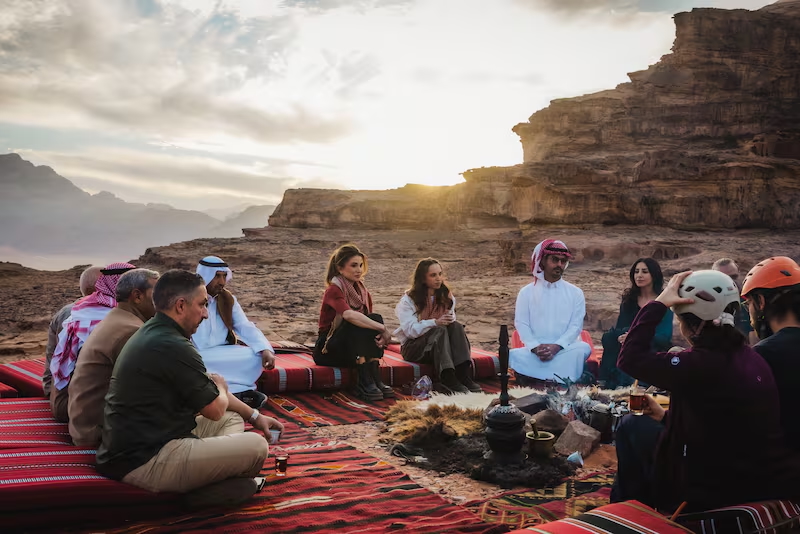
Jordan’s Queen Rania and Princess Salma toured Wadi Rum, a UNESCO-protected desert and tourist hotspot, sampling Bedouin culture and meeting local tourism operators. The pair observed a battle recreation of the Great Arab Revolt of 1916 from aboard the Ottoman-era Hejaz Railway steam train. (Royal Hashemite Court)
📅 Circuit Calendar
Jan. 9-11, Dubai. 1 Billion Followers Summit. A gathering of global content creators to discuss the latest trends. Emirates Towers, Museum of the Future, Dubai International Financial Center.
Jan. 11-15, Abu Dhabi. Abu Dhabi Sustainability Week. With the theme “The Nexus of Next: All Systems Go,” ADSW will connect ambition with action across innovation, finance, and people, showcasing how the world can move forward with confidence. ADNEC.
Jan. 12-14, Dubai. Intersec. Billed as the world’s premier event for security, safety, and fire protection. Dubai World Trade Center.
Jan. 12-15, Dubai. Dubai International Project Management Forum. Bringing together global leaders, policymakers, and innovators to explore how collaboration, innovation, and sustainability can unite diverse communities. Madinat Jumeirah.
Jan. 13-15, Riyadh. Future Minerals Forum. The conference aims to hold conversations among governments, investors, and innovators to secure the minerals essential for a sustainable, tech-enabled future. King AbdelAziz International Conference Center.
Jan. 13-15, Abu Dhabi. World Future Energy Summit. The annual event brings in policymakers and industry leaders to discuss the challenges of working towards net zero. ADNEC.
Jan. 18-21, Riyadh. Big5 Construct Saudi. Latest trends and opportunities among construction companies operating in KSA. Riyadh Front Exhibition & Conference Center located at ROSHN Front.
Jan. 20-22, Abu Dhabi. UMEX 2026. The Unmanned Systems Exhibitions and Conference showcases the latest advances in autonomous systems, robotics, artificial intelligence, and training simulation. ADNEC.
Jan.26-27, Riyadh. Super Return. A major private equity & venture capital conference held in Riyadh, Saudi Arabia.The Fairmont Hotel.
Jan. 26-28, Riyadh. Saudi Franchise Expo. The exhibition brings local and international businesses that want to create franchising companies into the kingdom. The Arena Riyadh Venue for Exhibitions, Riyadh.
Jan.29, Dubai. The Great Marketing & Business Minds. In this 4th edition, the event brings the most influential marketing and business leaders for a deep dive into performance-driven marketing, data integration, and the evolving accountability of brand leadership. Pullman Dubai Downtown.
Feb 1-6, Dubai. Dubai Fashion Week. The event showcases the latest collections by global and regional designers and positions Dubai as a major creative hub on the global fashion calendar alongside fashion capitals like New York, London, Milan and Paris. Dubai Design District.
Feb. 1-4, Doha. Web Summit Qatar. Connecting a new generation of founders in the Middle East to investors, journalists and more around the world. Doha Exhibition and Convention Center.
Feb. 2-5, Doha. LNG2026. The 21st International Conference & Exhibition on Liquefied Natural Gas. Qatar National Convention Center.
Feb. 3-5, Dubai. World Government Summit. Brings together heads of state, policy makers, top corporate executives to debate global priorities. Madinat Jumeirah.
Feb. 4-5, Dubai. PropTech Connect Middle East. The Dubai Land Department will host the first regional edition of the real estate technology event. Grand Hyatt Dubai.
Feb. 10-11, Abu Dhabi. Top Advisors & Investors Summit. The event will convene the region’s foremost advisors, financiers, and investors in the UAE capital. TBC
Feb.12-13, Riyadh. PIF Private Sector Forum. The event, in its third edition, aims to support the Saudi Public Investment Fund’s Private Sector Engagement Strategic Initiative. King AbdelAziz International Conference Center.
Emirates commits $12 billion to new Al Maktoum International
Emirates will invest up to $12 billion in Al Maktoum International as part of the Dubai government’s $35 billion redevelopment of the site, which is slated to replace DXB as the emirate’s main aviation hub by 2032.
Sheikh Ahmed bin Saeed, Chairman and CEO of Emirates Group, said total spending will far exceed the headline figure.
He said Emirates plans to finance its share of the investment through a combination of cash reserves and new debt.
Moreover, U.K. Export Finance, the government-backed export credit agency, announced during the Dubai Airshow that it will invest $3.5 billion to support the participation of the U.K. businesses in the new airport.
Dubai to unveil first gaming pavilion at Germany’s Gamescom
Dubai expects to turn heads at Germany’s Gamescom 2025 next week when it unveils the first gaming pavilion sponsored by a Middle East government.
The emirate wants to use the world’s biggest gaming event to showcase its $1 billion effort to rank among the world’s top 10 gaming hubs by 2033, Arabian Business reports.
“Our presence at Gamescom underscores the strength of an ecosystem that combines innovation, education, advanced technology, and talent development,” Sheikha Latifa bint Mohammed Al Maktoum, Chairperson of Dubai Culture, said in a statement.
Some 350 gaming companies have set up shop in Dubai, 12% of them part of major global tech firms, the news site said.
Wynn resorts is in the midst of building the UAE’s first casino in the emirate of Ras Al Khaimah, which is due to open in 2027.
Foreign direct investment in Saudi Arabia bounces back
Saudi Arabia appears to be rebounding from a slowdown in foreign investment that has strained government budgets and forced cuts in some of the kingdom’s most ambitious construction projects.
First-quarter figures released on Sunday showed that inflows of foreign direct investment reached $6.4 billion, a 24% jump from the same period in 2024 and the best start to a year since 2022.
Saudi Arabia has been prodding trade partners to invest more heavily in the kingdom amid low oil prices that have led to growing budget deficits.
Slowing FDI over the past three years is enabling the UAE to overtake Saudi Arabia this year in the value of awarded construction projects, Bloomberg reports, citing data provided by the Middle East Economic Digest.
Halfway through 2025, the UAE has approved an estimated $31 billion in contracts, compared to Saudi Arabia’s $20.6 billion. If the trend continues, it will be the first time the UAE comes out ahead in awarded contracts since 2018.