Iran attacks roil Mideast markets, though oil impact stays moderate
U.S. and Israeli strikes on Iran, coupled with Iranian missile assaults on the Gulf, are playing havoc with world markets as tanker traffic through the Strait of Hormuz has practically ground to a halt.
Oil prices, though, have risen only modestly compared with past crises, suggesting traders are betting on a short-lived conflict, Bloomberg reports.
The effective stoppage of about 20% of global seaborne oil flows has pushed the price of Brent crude to its highest since mid-2025, but the scale of gains remains limited partly because major producers still can redirect some supply and spare capacity cushions the market.
Natural gas prices have spiked far more sharply than crude, reflecting the fact that disruptions to LNG infrastructure in the Gulf have a more punishing impact than on oil, the news agency said.
QatarEnergy announced on Monday that it ceased LNG production after military attacks on its Ras Laffan complex, the world’s biggest natural gas export facility.
Israeli entrepreneur looks to sell electric trucks in Saudi Arabia
RIYADH, Saudi Arabia — It sounds counterintuitive, even like the start of a gag: an Israeli tech entrepreneur comes to an Arab desert kingdom that is the largest oil producer in the Middle East, and whose entire economy runs on crude, and he’s hawking zero-emission e-trucks.
But Asher Bennett, the brother of former Israeli Prime Minister Naftali Bennett and the founder of the London-based e-truck maker Tevva Motors, may be looking down the road clear-eyed and he may just have the right vehicle, and the right technology, at the right time. Even Saudi Arabia is setting new environmental standards to reduce reliance on fossil fuels.
“There’s a lot of interest in the Gulf for our technologies, so I’m here from time to time,” Bennett told The Circuit on the second day of the Future Investment Initiative conference, often called “Davos in the Desert” because it’s patterned after the annual World Economic Forum event in Davos, Switzerland. “I was invited here last year and it was an eye-opener,” he said in an interview at the King Abdulaziz Convention Center, the site of the conference here in the Saudi capital.
Israeli companies are increasingly being allowed to operate in the Saudi kingdom despite the fact that it has not joined the 2020 Abraham Accords, which normalized diplomatic relations with the United Arab Emirates, Bahrain, Morocco and Sudan. Like Bennett, who has American parents, many Israelis are dual citizens and face few restrictions on entering the country. In other cases, Saudi officials have granted special visas to admit Israelis, particularly tech executives, without a second nationality.
At least four Israelis were invited to speak at this week’s conference, including Samer Haj Yehia, chairman of Bank Leumi and an Arab citizen of Israel; and U.S.-born Jonathan Medved, founder and CEO of the venture capital investing platform OurCrowd.
The new unofficial policy toward Israelis reflects the drive by Crown Prince Mohammed bin Salman, recently appointed prime minister, to overhaul the country’s economy and wean it off dependence on oil. Known as MBS, the prince has in the past expressed admiration for Israel’s tech industry and said he sees Israel as a “potential ally.” Still, the country adheres to the Arab League position of not establishing official ties with Israel until its conflict with the Palestinians is resolved.
Bennett, 53, said he developed an interest in e-vehicles through his service as a naval officer on an Israeli submarine, which was propelled by batteries attached to a large electric motor. Unlike other successful Israeli companies such as Mobileye, the maker of sophisticated navigation systems and software for self-driving cars that was bought by Intel for $15 billion, Tevva builds vehicles, he said.
“I’m the Israeli tech entrepreneur who figured out the one business step that we’re not good at in Israel and that’s automotive, the hardware side,” he said. “We don’t build cars in Israel, we don’t teach the engineering side in Israel, so I moved to the U.K.”
Tevva, which developed a dual-motor system that includes a hydrogen fuel cell to extend the vehicle’s range, produced a small fleet of trucks for the UPS package delivery service in London. “The average car drives one to two hours a day where the average truck goes out for eight, nine or 10 hours a day,” Bennett said. “Batteries alone don’t do it, so we mix batteries with hydrogen fuel cells. We can go much farther but also make it more economical.”
Tevva, which means nature in Hebrew, has raised more than $90 million in investment, including a $57 million funding round that closed in November 2021. Bennett declined to disclose the total amount. He said investors come from Europe, the U.S., India and the Gulf.
Abu Dhabi business leaders look to cement ties with Tel Aviv foray
TEL AVIV – Emirati bankers, oil traders and tech entrepreneurs came to downtown Tel Aviv on Tuesday, signing a series of agreements and predicting that business connections would continue to strengthen as open Israeli-Emirati relations enter their third year.
The Emiratis were welcomed at the Tel Aviv Stock Exchange by Israeli business leaders eager to develop new partnerships in the United Arab Emirates and use the tiny Gulf state as a springboard to markets across the Middle East and Asia.
The two-day trip was a chance for “high-profile networking,” said Ahmed Jasim Al Zaabi, chairman of the Abu Dhabi Global Market, which organized the forum with the Tel Aviv Stock Exchange. He expressed a desire to “foster stronger ties between the two nations” and said the corporate leaders with whom he was traveling saw “abundant business opportunities.”
Joining Al Zaabi in the delegation were representatives of Mubadala, the Abu Dhabi sovereign wealth fund and its Mubadala Petroleum unit, which paid $1 billion last year for a 20% stake in Israel’s Tamar offshore gas field. The group also included executives from First Abu Dhabi Bank; the Abu Dhabi National Oil Company, known as ADNOC; HUB71, the government-backed office park and incubator for startups; and AIQ, an artificial intelligence and cloud computing company, according to a statement. The visit followed a similar trip that an Israeli delegation made to Abu Dhabi in March.
UAE Ambassador to Israel Mohamed Al Khaja hailed the free-trade agreement signed in May between the two countries and said the pact should help “forge business ties and create ventures reaching new markets.” Officials from both countries have predicted that after five years, the pact should generate more than $10 billion a year in bilateral trade. The trip came nearly two years after the signing of the Abraham Accords on Sept. 15, 2020, at the White House, in which the UAE and Bahrain normalized relations with Israel. Morocco and Sudan followed later in the year.
While in Tel Aviv, representatives from three of the Emirati organizations signed a series of memorandums of understanding with Israeli partners. Those included a cooperation agreement between ADGM and Israel’s Start-Up Nation Central, to work together in supporting the growth of new companies in both countries.
“We think it is important to see Israeli companies present in the region,” Yariv Becher, Start-Up Nation Central’s vice president of Innovation Diplomacy, told The Circuit. “It would, first of all, for them, open not just the Gulf but also, it’s a spearhead to other markets. It would create impact over there and would really help in establishing mutual economic exchange.”
The idea, Becher said, is to promote “co-location” in Israel and the UAE. “It goes both ways. It could be Israeli venture firms that might be interested in investment opportunities in in the Gulf, but we would, of course, want to see Emirati investors looking at Israeli companies as well.”
The second agreement concluded at the conference was to increase cybersecurity literacy and was signed by the ADGM Academy and Israel’s Avnon Group Middle East. A third memorandum of understanding focused on strengthening data privacy and was signed by regulatory offices from both countries.
“We must open up the Israeli market to the Eastern Hemisphere as well,” Itai Ben Zeev, CEO of the Tel Aviv Stock Exchange, told the gathering. “We are dedicated to constantly increasing the number and diversity of investors in the Israeli capital market.”
After gathering on Tuesday at the stock exchange building in downtown Tel Aviv, which also houses the UAE embassy, the Emiratis met with individual Israeli companies and investors on Wednesday before returning to Abu Dhabi, the embassy said.
Israeli tech startup Wilco closes experience gap for aspiring software engineers
A rookie software engineer sits at his desk and faces a problem he’s never encountered before, at least not in his college coding class. The wrong fix could cost his company millions, but luckily the stakes here are much lower. This engineer is honing his skills at a fantasy company on an online platform that works much like a flight simulator for aspiring pilots.
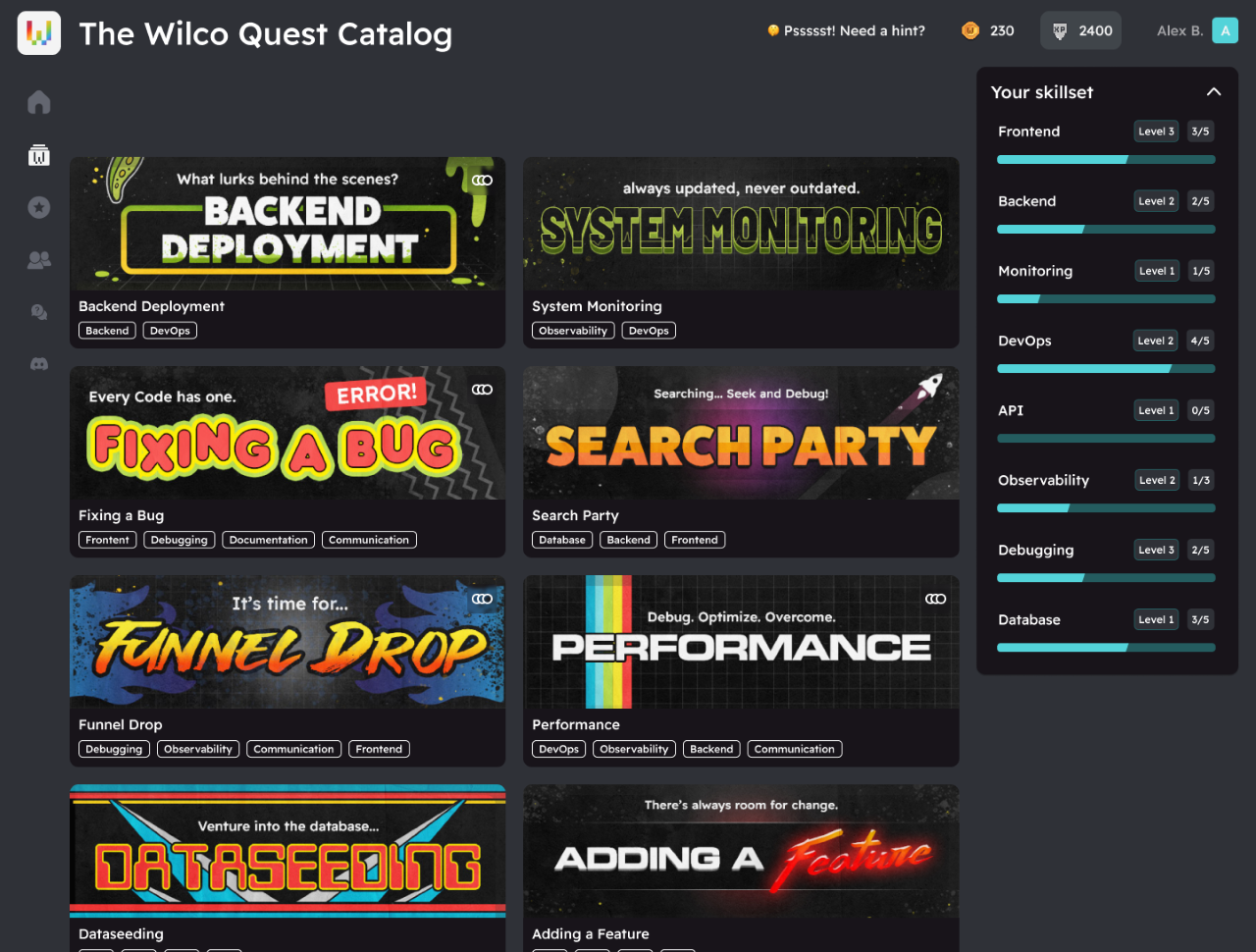
When the Israeli startup Wilco launched its simulator platform last month, On Freund, the company’s CEO, and his founding partners were taking a page out of the playbook used by pilots, architects and race car drivers by creating a simulation experience for software engineers to gain new skills and master existing ones regardless of someone’s career opportunities or background. Engineers using Wilco complete various “quests” that allow them to practice troubleshooting problems that commonly arise in real-world situations, but in an engaging way that’s akin to a video game.
“I quickly realized that there is a difference between the theory which they have learned in school and the actual hands-on practice that takes years to come by,” Freund told The Circuit.
The idea for Wilco (the name comes from the Roger Wilco character in the “Space Quest” movie franchise, not the alt-rock group) came to Freund about a decade ago. After he graduated from Tel Aviv University, he was managing a team of engineers at Handy, an online platform that connects users with cleaning and handyperson services, and Freund was looking for ways to let his team practice and learn new skills, outside of coding, that were not taught in university.
Freund thought about hosting an evening school where he could expose software engineers to real-world problems within a few months, rather than the decades it might take on the job. He kicked around the idea for a few years, and in 2020 he reached out to a few chief technology officers, who supported his goal.
One of Freund’s former colleagues, however, told him to think bigger.
“I mentioned my idea to a colleague of mine and he told me I was stupid. He said that I was going to have six, maybe 10 developers per class, which wasn’t making a dent in the universe,” Freund said. “He wanted to work with me and figure out a scalable way to solve this problem.”
A year later, in 2021, Freund, Alon Carmel, Wilco’s chief products officer, and Shem Magnezi, the startup’s chief technology officer, came together to launch Wilco with $7 million in seed money; the platform is accessible to any software engineer regardless of their background or location.
All three founders understood that gaining new engineering experiences on the job was a tough and slow process. They wanted to close the gap of experience for people who may be working at companies that don’t have access to the same resources or a strong set of mentors that inspire and push their employees.
“What we try to do is give engineers an environment where they can gain experience at their own pace, in a safe way, and solely based on their merit,” Freund said.
The ‘quests’ offered by Wilco
Wilco is unlike other coding practice websites that allow participants to practice only one set of skills. Freund stresses that coding is just one of the many skills an engineer needs to be a good software developer.
Wilco allows engineers to join a fantasy company that has all the complex systems that a real company would. Freund ticked off some of them: logging data, monitoring, analytics, load balancing a network’s infrastructure, a real data set, as well as the unexpected issues that typically arise from humans working on all of these components.
Engineers then join a “quest” that includes a problem that the engineer must fix. The quests, Freund said, grew out of experiences Wilco’s partners faced in their own careers as developers. He gave the example of a company needing to know the extent of damage for a particular software problem, how the engineer would fix it and how the problem should be communicated to a stakeholder.
“The focus is not on how to fix a problem, because anyone can learn that in college or a boot camp or even an online course,” Freund said. “The focus is how do you even know that something’s wrong in production? What do you do once you’ve found out? Do you go for a quick-and-dirty fix or something more meaningful?”
What Freund finds most rewarding about Wilco is hearing developers talk about the value they get out of the platform. Engineers can communicate with each other over Discord, the voice and instant messaging platform, where they often ask each other how to solve certain quests and exchange tips and advice.
Freund wants Wilco to become the standard place for developers to practice, in the way that flight simulators are for pilots.
“Software engineers shouldn’t be expected to wait for an emergency or something extremely important to happen that they must solve without previous experience,” Freund said. “We want to be a place where developers can practice regardless of their background or skill level to unlock their full potential.”
Israeli tech veteran sees slow path to greater regional acceptance
For decades, Koby Huberman has been tilling the soil, patiently developing contacts across the Arab-Israeli divide and telling whoever would listen that employing a regional approach to Middle East peacemaking would yield the most profitable results.
That’s why the Israeli tech industry veteran is far from discouraged with the inconclusive results of President Joe Biden’s July visit to Israel, the West Bank and Saudi Arabia. It took years of unsung work to help plant the seeds for quiet political ties and unpublicized Gulf-Israel business deals that burst into the sunlight with the 2020 signing of the Trump-brokered Abraham Accords.
“We are transforming the relationship model where very few were quietly working behind the scenes building bridges in the Arab world,” Huberman said in an interview with The Circuit. “Investors are now beginning to understand the new business environment.”
Earlier in his bridge-building career, Huberman, was corporate vice president for business development at Nice Systems, the telecommunications, data security and surveillance software maker that has become one of the five biggest Israeli companies on Wall Street with a $13.6 billion market value. He moved on to become a business consultant and dedicate more of his time to cultivating ties between Israelis and Arabs.
In 2011, he launched the Israeli Peace Initiative with Yuval Rabin, son of the slain prime minister Yitzhak Rabin, and an assortment of senior military and intelligence figures, who developed a proposal for resolving the conflict with the Palestinians. That led to a broader project called the Israel Regional Initiative that provided a discreet meeting ground for Israelis and Arabs to work on plans for cross-border cooperation in a more integrated Middle East. Bearded and trim at 65, Huberman now hopes to help expand Israel’s relations with more of its neighbors and bring in the Palestinians.
“Impressive as it is,” Huberman said, the normalization agreement between the United Arab Emirates and Israel “is not a game-changer for both countries.” Its value, he said, is to create a comfortable trade channel to the region’s bigger markets in Saudi Arabia, Egypt and other Arab nations.
“You’re talking about two countries of 10 million people each that can make great progress together, but at the end of the day, these are not large consumer markets,” said Huberman, drinking carrot juice at a Tel Aviv cafe.
“They are gateways for the transformation of ideas to business and to funnel goods to different points… addressing shared economic interests, joining forces, bringing together capacities, capital, ideas and infrastructure in order to make things happen. It’s about widening the scale and looking at the prism that says, what if the UAE, Israel and Egypt joined forces to do something in Africa? What if the UAE, Israel and Jordan can do something with Saudi Arabia and Egypt?”
Despite expectations in Israel that the Biden visit would lead to more overt actions by the Saudis toward normalization, Huberman said the limited steps, such as allowing Israeli airlines to overfly the kingdom and agreeing on rules governing two strategic islands in the Red Sea, were roughly what could be expected in a region that generally undertakes political changes very slowly.
“My takeaways are, first of all, I was thrilled to see that this administration has gone back to regional basics and that it did not cut the cord that was developed by the Trump administration,” Huberman said. Biden “gave reassurances to Israel, to Saudi Arabia, to the UAE, to Egypt and to an extent, to the Palestinians. America is aware of the complexity and is committed to help the region move forward.”
“This will yield a lot of progress for the wellbeing of the region and a lot of business upside,” he said.
Partnership with the UAE, Bahrain and Morocco, as well as improved cooperation with Egypt and Jordan, should ultimately enable rapprochement with the Palestinians, according to Huberman.
“It’s not about extending [the Abraham Accords]. It’s about understanding that there is a new page in the history of the region, which can be leveraged if properly addressed,” he said. “There was a need for a new paradigm. Any progress with the Palestinians must be regionally led and internationally supported, and not the other way around.”
It’s a mistake, though to believe that restoring economic aid to the Palestinians or showering greater sums on both sides will lead to an end of the conflict, Huberman said.
“There is no amount of money that would convince Palestinians to withdraw some of their aspirations for recognition and respect, and there will be no amount of money that will be enough for Israel to give up historic rights or linkage to biblical territories,” he said.
The fact that Israel is gaining acceptance across the region – particularly in Morocco, where close to 1 million Israelis trace their roots — should enable its leaders to consider steps with the Palestinians that they’ve been unwilling to take in the past.
“We are not yet even at the beginning of the potential transformation that can be unlocked with Israelis going to Morocco,” he said. “Frankly, there is a huge emotional impact to this reconciliation. People who felt they were being uprooted and brought [to Israel from Morocco] can now could go back and see the graveyards of their ancestors.”
“With all these things going on, with the progress that is quietly being made, whether this is through business or cultural cooperation, what I believe it will do is that it will giveIsraelis a greater sense of confidence, or self-confidence and peace of mind, to consider concessions and flexibility that otherwise have not been possible to consider.”
Huberman cautions that even with prospects for extending the Abraham Accords to additional countries, Israel is still far off from gaining full acceptance across the Arab world. “I don’t want to sound too romantic,” he said. “I’m not talking about months. I’m talking about decades. But these are important processes that we are beginning to see.”
Israeli start-ups confront economic slowdown + Arab culture on DC’s National Mall
👋 Good Monday morning in the Middle East!
Israeli Prime Minister Naftali Bennett’s coalition government has collapsed and the business community is yawning. As the Knesset, Israel’s 120-seat parliament, debates this week when to schedule the next round of elections – likely to be held in early November – tech industry leaders who have been driving economic growth see little impact from the government’s instability. What does make a difference is the prospect of recession in the U.S., where funding for startups is getting harder to tap, as Entrée Capital founder Avi Eyal tells The Circuit below.
Techno Campus: Many of those leaders will be milling around Tel Aviv University for Cyber Week, the annual jamboree that draws prominent figures in the digital security realm. Among corporate figures expected on campus are Check Point Software CEO Gil Schwed, CyberArk CEO Udi Mokady and Jane Horvath, Apple’s chief privacy officer. From the White House come both National Cyber Director Chris Inglis and Deputy National Security Advisor for Cyber and Emerging Technologies Anne Neuberger. Prime Minister Bennett, a former cybersecurity CEO, had been scheduled to address the conference, but his appearance is in question due to recent political circumstances.
Trending in the Gulf: Analyzing future business trends in the Middle East was top of the agenda at last week’s Qatar Economic Forum, although more headlines were generated from a video interview during the conference with billionaire Elon Musk. In Washington, the United Arab Emirates introduced Americans to Gulf Arab culture with a weekend fair of music, crafts and food on the National Mall, as The Circuit’s Gabby Deutch reports.
Welcome to The Weekly Circuit, where we cover the Middle East through a business and cultural lens. Read on for the stories, deals and players at the top of the news. Please send comments and story tips to [email protected].
Circuit Interview
Entrée Capital’s Eyal pushed start-ups to raise cash quickly, prepare to slash expenses
Avi Eyal, co-founder of Israel-based Entrée Capital, said he and his partners have spent the past year trying to prepare cash-burning startups for the economic slowdown that has hit technology businesses around the world. The venture capital firm, one of the biggest operating in Israel, manages about $1 billion in assets and has current investments in some 150 companies internationally. His message last year — the most lucrative ever for Israeli technology — was that CEOs should accelerate fundraising efforts and determine where expenses could be reduced.
Backup Plan: “We actually went to most of our portfolio companies, and in between June and December, we raised money for the bulk of them,” Eyal said in an interview with The Circuit’s Jonathan Ferziger. “At the same time, we told all the companies to have a backup plan, have a simulation of how they would cut costs very quickly, and how they would use that money, not to achieve the same growth but to achieve a quarter of their profits or less,” he said, “Some did, some didn’t.”
Serial Entrepreneur: Born in Israel and raised from age 6 in South Africa, Eyal is an engineer and a serial founder of start-ups who opened Entrée Capital in 2010 with internet entrepreneur Martin Moshal, a childhood friend. The firm was an early investor in Monday.com, a maker of workplace management software that held its initial public offering on the Nasdaq a year ago, and fraud-detecting Riskified, which trades on the New York Stock Exchange. Tracking the markets, both have shrunk in value since their 2021 IPOs.
Gulf Investments: Recently, Entrée has been investing in the Gulf, deepening relationships with Mubadala, the $284 billion Abu Dhabi sovereign wealth fund, and other Emirati businesses, after starting quietly before the September 2020 Abraham Accords. As the collapse of Israel’s coalition government sets up the fifth national election in three years, Eyal, 51, said the political instability holds much less of a threat to tech companies than the prospect of recession in the U.S., where many seek to raise money. “Governments come and go and I don’t think it has any impact on the technology space,” he said.
Elon Musk, oil prices, World Cup soccer dominate stage at Qatar Economic Forum
Heads of state, oil executives and the richest man in the world pondered the prospects for a U.S. recession last week during the Qatar Economic Forum. The three-day conference in the capital city of Doha focused on matters ranging from the global economic slowdown and escalating crude prices to whether Qatar can rustle up enough beds to handle 1.2 million ticket-holders for soccer’s 2022 World Cup in November.
Twitter Riddle: Elon Musk, however, stole the show when he injected new uncertainty into the question of whether he will ultimately buy Twitter and talked about where he’s spending other portions of his $220 billion personal fortune. Musk, the 50-year-old chief executive of electric carmaker Tesla and rocket company SpaceX, said there were still “unresolved matters” holding up his $44 billion bid for the popular social media platform.
Recession Inevitable: Asked about the U.S. economy in an interview by video feed with John Micklethwait, editor-in-chief of Bloomberg News, Musk said a recession is inevitable and outlined the job cuts he’s ordered at Tesla that will reduce the salaried workforce by 10%. “As to whether there is a recession in the near-term, that is more likely than not.”
Energy Deals: Also at the conference was ExxonMobil CEO Darren Woods, who said oil companies will need three to five years to “catch up” on the investments required to assure adequate world supply. He spoke on a panel with Qatari Energy Minister Saad Al-Kaabi, with whom he also signed an investment agreement to take a 6.25% stake in Qatar’s $29 billion North Field liquefied natural gas project.
An Emirati ‘majlis’ presents Arab culture at Smithsonian Festival on the National Mall
On a scorching summer afternoon, tourists to Washington, D.C., came to relax in the shade of the makeshift wooden majlis, Arabic for a sitting room,on the National Mall. The Washington Monument towered in the background. Children picked up brushes to paint watercolor pictures of flowers. A veiled Emirati girl held a falcon on her wrist, demonstrating the Bedouin discipline of handling the predatory bird.
Traveling Falcons: The dozens of interactive demonstrations and events were part of this year’s Smithsonian Folklife Festival, spotlighting the culture of the United Arab Emirates. More than 90 participants flew in from the UAE to showcase the nation’s vibrant, diverse culture. (No special plane was needed for the falconry participants; travelers on Etihad Airways can bring a caged bird with them on the plane.)
Saffron Perfume: Mona Haddad, a young woman mixing scents from saffron and rosewood to create perfumes, said she learned the craft from her mother. She dabbed a bit of oil on her fingers and rubbed it behind one visitor’s ears, telling her the fresh scent would last for three days. The festival concludes its first week on June 27 and picks up again from June 30-July 4.
Russian Exit: Russian commodities dealers are leaving Switzerland and setting up businesses in Dubai because of sanctions stemming from Russia’s invasion of Ukraine, which are making it difficult for them to operate.
DXB-TLV: Emirates Air inaugurated daily flights between Dubai and Tel Aviv, joining five other UAE and Israeli carriers that fly the route.
Spanish Trains: Etihad Rail signed an agreement with Spain’s CAF Group worth $327 million to supply passenger trains for the UAE’s new rail network, connecting 11 cities across the country.
Friendly Skies: Qatar Airways said the company is trying to work with Saudia, Kuwait Airways and other Gulf airlines to enable soccer fans to get to Qatar for the World Cup in November.
Egyptian Spree: Saudi Arabia and Egypt signed 14 investment deals worth $7.7 billion during a visit to Egypt by Saudi Crown Prince Mohammed bin Salman, including an agreement to build the Egypt Center for Petroleum and Petroleum Products Storage.
Orbiting the UAE: Abu Dhabi-listed companies International Holding Company and Alpha Dhabi will invest a combined $50 million in Elon Musk’s SpaceX.
African Medicine: The UAE’s Etihad Credit Insurance Co. and Israel Export Insurance Corp. agreed to collaborate in financing construction of four hospitals and a medical storage facility in Ghana.
Closing Circuit
On the Radar: U.S. aerospace company Leonardo DRS will acquire Israel’s RADA Electronic Industries, which makes tactical radar systems, paying a 34% premium in a deal that values Rada at $775 million.
Energy Trade: The Abu Dhabi National Energy Company and Abu Dhabi National Oil Company will acquire major stakes in Masdar, an Emirati renewable energy company, from Abu Dhabi’s sovereign wealth fund, Mubadala Investment Company, in a deal that values Masdar at $1.9 billion.
No Borders: Israeli e-commerce platform Global-e Online said it will buy Borderfree, which specializes in international shipping, from Pitney Bowes in a $100 million cash deal.
Flying High: Israir, which runs a low-cost Israeli airline and tourism business, raised $7.3 million in an IPO on the Tel Aviv Stock Exchange.
Dream House: Huspy, a UAE-based home financing startup, raised $37 million in a Series A funding round led by Sequoia Capital India, with participation from the San Francisco-based Founders Fund.
No Hacking: U.S. media giant Comcast agreed to acquire Levl, an American-Israeli startup that develops technology for authenticating wireless devices, for an estimated $50 million.
Buy More: Israel’s Amy, which uses artificial intelligence to help sales representatives build relationships with customers, raised $6 million in a seed round of funding co-led by Next Coast Ventures and Lorne Abony.
Very Large: Abu Dhabi-based Al-Seer Marine bought two ships known as VLCCs (very large crude carriers) and worth $110 million to expand its fleet amid higher global oil demand.
Making Babies: AiVF,an Israelifertility tech startup, raised $25 million fromInsight Partners and WeWork founder Adam Neumann’s family office.
Startup Fund: Vine Ventures, a New York-based early-stage venture capital firm, raised $140 million for its second fund, with half of the money dedicated to Israeli startups.
On the Circuit
Yair Lapid: The Israeli foreign minister and leader of the Yesh Atid party is expected to become acting prime minister this week, replacing Naftali Bennett, as the Knesset decides when to schedule new elections after the splintering of the government coalition.
Ted Sarandos: The Netflix CEO met Israeli Communications Minister Yoaz Hendel in a bid to stop international streaming services from being required to produce original material in Israel. He said Netflix may reduce investment in Israel if the law is passed.
Moti Eliav: Intuit appointed Eliav as site leader and general manager for the U.S. software company’s activities in Israel, succeeding Gene Golovinsky.
Ahead on the Circuit
June 27-30, Tel Aviv: Cyber Week. International conference brings companies from 80 countries to talk about latest trends in digital security. Tel Aviv University.
July 4, Haifa: Blue 2022 Economy Conference. Maritime industry leaders meet with government, energy and environmental figures, launch National Center for Innovation and Blue Economy. Bahai World Centre.
July 19, Nazareth: Economic Conference on Arab Society in Israel, Central Bank Governor Amir Yaron meets business and government leaders. Golden Crown Hotel.
Circuit Culture
Saudi Netplay: After Saudi Arabia rattled the Professional Golf Association by organizing a rival tournament earlier this month and offering star players as much as $200 million to join, the kingdom has approached the Women’s Tennis Association about hosting an event. Golfers who participated in the LIV tour were accused of “sportswashing” Saudi human rights abuses, including the 2018 murder of dissident journalist Jamal Khashoggi.
Circle of Life: Abu Dhabi will host “The Lion King” in November when the Tony Award-winning Disney musical makes its Middle East debut with a four-week run at the Etihad Arena.
Classical to Klezmer: Israel’s annual Voice of Music Festival offers performances this week ranging from classical and jazz to klezmer and oud at Kibbutz Kfar Blum in the Upper Galilee. June 28 to July 2.
Gas deal bolsters Israel-Egypt industrial ties; help for Europe’s fuel gap limited
The European Union’s commitment to buy Mediterranean gas through an Israeli-Egyptian partnership will be a boon to the energy industries in both countries, even if it’s only a fraction of what’s needed to reduce the continent’s dependence on Russian gas.
Following the deal signed in Cairo last week, government officials hailed the commercial and political benefits for Israel and Egypt in working together to export liquefied natural gas to markets outside the region. Energy analysts noted, though, that it would take years to ramp up supply through the Idku and Damietta liquefaction plants on Egypt’s northern coast and will do little to fill the gaps in gas flow that have hiked Europe’s energy costs since Russia invaded Ukraine in February.
“On a practical level, Israel is already supplying close to maximum capacity” for its domestic gas needs and the amount sent via an undersea pipeline to Egypt, Amit Mor, chief executive of Eco Energy, an Israeli consulting firm, said in an interview with The Circuit. While “nice and symbolic,” he said, the three-way agreement “will not have a significant effect on the gas supply to Europe because it is a relatively small amount.”
While the gas deal has been in the works for several years, said Middle East political risk consultant Ghanem Nuseibeh, “what has happened with the Ukraine crisis is a wake-up call.” That the countries who inked the agreement have realized that they face serious and common challenges has allowed a “shift in geopolitics,” said Nuseibeh, a founder of London-based Cornerstone Global Associates. This has forced previous regional concerns and rivalries to “become of secondary importance compared to the real challenges of energy and food security faced by all the countries,” he said.
The cooperative effort by Egypt and Israel to supply gas to Europe stands in contrast to the saber-rattling between Lebanon and Israel that has flared in recent weeks over deep-water gas fields straddling the two countries’ maritime borders. Just two days before the Cairo ceremony, U.S. energy envoy Amos Hochstein flew to Beirut in an attempt to find a solution to the dispute, which has simmered for years and has threatened to escalate into a military confrontation.
The tensions with Lebanon had little visible impact on the European gas deal with Egypt and Israel, which was praised for its potential to help all three parties.
“This is a tremendous moment in which little Israel becomes a significant player in the global energy market,” Israeli Energy Minister Karin Elharrar said at the June 15 signing of a memorandum of understanding between the European Union and the two countries. It took place at a meeting of the East Mediterranean Gas Forum, which also includes Greece, Cyprus, France, Italy, Jordan and the Palestinian Authority.
Egyptian Minister of Petroleum and Mineral Resources Tarek El Molla called the deal an “important milestone,” adding that it would “strengthen relations between our region and Europe, and I think further collaboration will come between member countries of the East Mediterranean Gas Forum.” Despite having signed a peace agreement 43 years ago, Egypt and Israel have never enjoyed warm relations.
Also known as the EastMed Forum, the group formed in 2019 to bring together countries in the Eastern Mediterranean basin and aims to promote cooperation in a region rich with deep-sea gas reserves. The agreement signed with the EU not only increases the market for that gas, it also encourages European companies to participate in further exploration.
Ursula von der Leyen, president of the European Commission, also signed the agreement in Cairo and later tweeted, “This will contribute to our energy security. And we are building infrastructure fit for renewables — the energy of the future.”
A day before the signing, von der Leyen, during a stop in Jerusalem, pointed to Europe’s pressing fuel needs after a meeting with Israeli Prime Minister Naftali Bennett. “With the beginning of this war and the attempt of Russia to blackmail us through energy, by deliberately cutting off the energy supplies, we decided to cut off and to get rid of the dependency on Russian fossil fuels, and to move away from Russia and diversify to trustworthy suppliers,” she said.
The discovery of the offshore Leviathan and Tamar gas fields in the Mediterranean over the past two decades has been a stunning development for the Israeli gas industry. Among international companies that may benefit from the European agreement with Israel and Egypt are Chevron Corp., Shell Plc and TotalEnergies SE, according to Bloomberg, citing a note to investors by analysts at Barclays Plc. All three companies have stakes in gas projects in Israel or Egypt.
The Tamar field has also become one of the banner stories of the Gulf-Israel normalization pact known as the Abraham Accords. Abu Dhabi’s Mubadala Petroleum bought a 22% stake in the exploration project last year for about $1 billion, the largest deal since the Accords were signed at the White House in September 2020.
For Israel’s former minister of energy, Yuval Steinitz, who was instrumental in establishing the EastMed Forum and instigating Israel’s previous gas deals with Egypt and another with Jordan, the EU deal ratified the regional importance of the gas discoveries. He said that the partnerships in the field of energy are “the first significant economic cooperation” between Israel and Egypt since the 1979 Camp David Accords, and between Israel and Jordan, which made peace in 1994.
Steinitz, who was energy minister between 2015 and 2021, said he was confident that other Arab states such as Saudi Arabia and the Emirates would soon join the EastMed Forum as observer countries and also that said contracts originated when he was energy minister have already generated some $30 billion. Their value is likely to triple in the near future, he said.
Among the projects undertaken by the EastMed Forum is the construction of an underwater pipeline that would be able to transfer even larger amounts of natural gas from Israel and the region directly to Europe without first needing to be liquefied. Although previously approved by the member countries, including with the backing of the two previous U.S. administrations, the project has stalled in the last six months after President Joe Biden withdrew his support over environmental concerns.
“This is a clear mistake,” Steinitz told The Circuit. “I don’t know why this evaporated in the last half-year. It is rational and reasonable to build such a pipe if you want Israel and Cyprus to become substantial suppliers of gas to Europe.”
Shai Bazak, CEO of ELNET, a non-government organization that works to strengthen the relationship between Israel and Europe, also said the energy issue “is one of the most important areas for collaboration.”
“We knew it would come up even before the war [in Ukraine],” said Bazak, who served as former Israeli Prime Benjamin Netanyahu’s spokesman in the 1990s.
“Selling gas gives Israel a place at the table in the Middle East,” Bazak said, noting that the European Union is Israel’s top trading partner. “The energy issue is part of the geopolitical arena and gives us more strength.”
Despite the reassuring display of peaceful collaboration between Egypt and Israel, the dispute over gas with Lebanon remains, with the potential for igniting military confrontation in the region.
The dispute involves an 840-square-kilometer (325-square-mile) swath of Mediterranean Sea off the two country’s coasts.. Previous efforts to resolve the problem stalled two years ago when Lebanon changed its demands, asserting that its previous maritime map needed modifying.
Tensions flared again earlier this month when a vessel belonging to Greek-British gas company Energean arrived in the area to develop Karish, one of Israel’s three operational gas fields. Lebanese leaders charged that the floating rig was operating in disputed waters, which drew unprecedented threats from Hezbollah, the militant Islamist group that dominates Lebanese politics and is a designated terrorist organization.
Sarit Zehavi, CEO and founder of the Alma Education and Research Center, which focuses on Israel’s security challenges on its northern border, said the visit by Hochstein, the U.S. special envoy, appeared to have calmed tensions. She said Lebanese anger towards Israel stemmed most likely from internal politics than from any legitimate claim to the area where Karish is located.
Lebanon’s President Michel Aoun and its prime minister, Najib Mikati, both warned Israel against drilling in the offshore natural gas field, with Mikati, according to Reuters, accusing Israel of “encroaching on Lebanon’s maritime wealth, and imposing a fait accompli in a disputed area.”
Steinitz, who oversaw the last round of negotiations with Lebanon when he was minister, pointed out that the Karish field was far from the area under dispute. He said the most recent blow-up was probably because Lebanon, which is in a severe economic crisis, has not been able to find its own gas in the area. He noted that international companies have resisted working off the Lebanese coast because of the dispute with Israel.
However, added Steinitz, because Lebanon is in the same geological area as Egypt, Israel and Cyprus, which all have discovered gas, “it is very likely that there is also gas in Lebanese waters.”
Israeli entrepreneur and investor Erel Margalit explores Bahrain’s fintech sector
With an eye to Riyadh, Israeli entrepreneur and investor Erel Margalit spent four days in Bahrain last week exploring the Gulf state’s advances and aspirations in the world of financial technology, or fintech, as well as assessing the possibility of opening one of his innovation centers in the country. He believes that such developments could form a tech bridge to Bahrain’s neighbor, Saudi Arabia, which Israel has long been hoping will be the next country to join the Abraham Accords normalization agreements.
“I was surprised by the level of entrepreneurship in Bahrain; those regulating the country are using ideas and concepts like a startup,” Margalit, founder and executive chairman of Jerusalem Venture Partners (JVP) – one of Israel’s oldest and most established venture capital companies – told Jewish Insider in an exclusive interview on Saturday.
“They are able and modest and ready to hear new ideas,” he said of Bahraini officials and counterparts that he met with. “They want to hear about what we are doing in Israel and there is a real eagerness to cooperate with us.”
Margalit, who served as a member of Knesset for the Labor party from 2015-2017, was invited by the Bahraini government and the country’s Economic Development Board. He was also a special guest of the country’s finance and national economy minister, H. E. Shaikh Salman bin Khalifa Al Khalifa.
The first Israeli businessman to meet with the minister since the signing of the Abraham Accords in September 2020, Margalit also held discussions with economic-business leaders, including the heads of Bahrain’s major banks – the National Bank of Bahrain and ila Bank – various investment funds, communications and energy companies, and heads of leading universities, as well as leaders in the innovation industry and dozens of technology and social entrepreneurs.
Much of the discussions, Margalit told JI, focused on how to develop the country’s fintech industry, which draws innovators and investors from across the Arab world. It’s a fine fit for many Israeli companies already working in this now-growing tech field, he added.
“Fintech is about allowing financial services to reach people who don’t always have access to them,” the entrepreneur explained. “Bringing financial services to small businesses in different countries is touching, and it is a path that builds goodwill and removes barriers.”
But boosting the fintech industry in Bahrain, which is strategically located in the Persian Gulf just off the coast of Saudi Arabia, could also be a highly beneficial step for Israel, where there is hope that the Saudis may be the next Arab nation to normalize ties with the Jewish state.
“Bahrain is a bridge to Saudi Arabia, and we all realize that this might be Israel’s next big step in the Arab world,” Margalit said. “For Israel, Bahrain can serve as a gateway to a much larger chapter that will make a big difference to Israel’s economy and its diplomacy.”
Margalit said that Al Khalifa took a special interest in his Startup City model, which connects prominent tech and business players with social and cultural entrepreneurs. Margalit first developed the concept about 15 years ago in Jerusalem and has since created four more hubs, each focused on a specific aspect of the innovation and technology ecosystem, including cyber, food tech and health tech.
“They heard about what we are doing in New York [Margalit opened a hub in Soho in June 2021], Haifa, the Galilee, Jerusalem and Beersheba and invited us to have an open conversation about how Israel and Bahrain can cooperate,” Margalit said, adding he was “honored to answer the invitation of the Bahraini government to open a new economic chapter between the two countries based on high-tech and entrepreneurship.”
Israel’s ambassador to Bahrain, Eitan Na’eh, who accompanied Margalit at the meetings, called the visit a “milestone in the relations between the business sectors of the two countries.”
“Erel’s Startup City model, which was presented to senior Bahraini officials, complements our joint vision of building a tech corridor between the two countries,” Na’eh said. “Israel sees Bahrain as the gateway to the Gulf.”