The Weekly Circuit: India draws UAE ministers + Saudi LatAm odyssey
👋 Hello from the Middle East!
This week, we’re looking at Saudi Arabia’s global pursuit of minerals for its budding EV industry, great expectations for Mubadala’s Fortress Investment Group, the PIF’s new strategy guru and ADIA’s contemplated plunge into Nestlé’s new ice cream venture. But first, India lures ministers and business chiefs from the UAE.
UAE Minister of Economy Abdullah bin Touq is in India with a bevy of Emirati business leaders in tow as the world’s most populous nation looms ever larger as a magnet for sovereign investment.
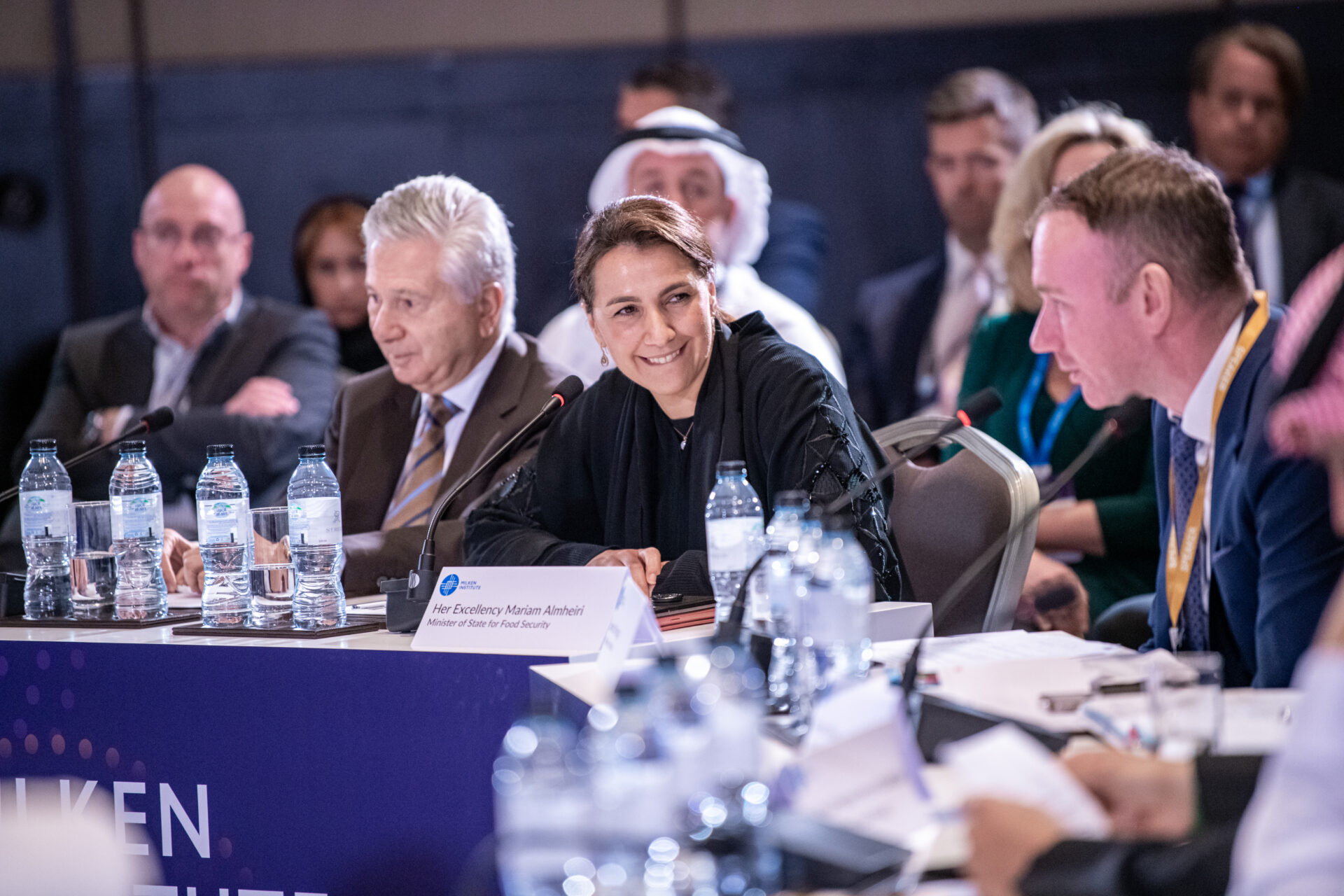
Bin Touq and Alia bint Abdulla Al Mazrouei, Minister of State for Entrepreneurship, lead a trade delegation that has been engaging with top government officials and corporate chieftains in India, which is the UAE’s third largest trade partner. The tour, which featured a one-day business conference on Wednesday in the framework of the UAE’s Investopia Global Talks, follows reciprocal visits to each other’s country this year by UAE President Sheikh Mohamed bin Zayed and Indian Prime Minister Narendra Modi.
The UAE is far from alone in courting India. An analysis by U.S.-based Invesco found that 88% of sovereign wealth funds, including all of those in the Middle East, consider the Indian subcontinent to be the most attractive target for investment among emerging markets. The report notes the interest Saudi Investment Minister Khalid Al-Falih expressed last year in establishing a branch of the Public Investment Fund in India’s Gujarat International Finance Tec-City and channeling capital to Indian startups.
Meanwhile, Saudi Arabia’s efforts to lure international companies are lifting commercial real estate in Riyadh. Office occupancy is a closely watched metric for any big city. In the Saudi capital, which is vying to become the Middle East’s hub for corporate headquarters, the growth of business space is a particularly critical indicator for the city and the future of the country’s non-oil economy.
Riyadh’s office market grew 3.4% year-on-year in the first quarter, exceeding initial estimates, and is expected to propel GDP growth to a projected 5% this year, according to the latest Saudi commercial market report by Savills.
Over 120 foreign firms relocated their regional headquarters to Riyadh in the first three months of the year – a nearly fivefold increase from the year before – as a new Saudi law came into effect, requiring firms to establish their HQ in the kingdom or risk losing out on lucrative government contracts. That is the stick – the carrot is tax breaks and some subsidies for setup and relocation, depending on the sector.
The influx is turning the heads of Western companies, according to Ramzi Darwish, Head of Saudi Arabia at Savills Middle East. The majority of inquiries for office space are now coming from outside of the kingdom, with half from U.S. and U.K. corporations, he said.
Welcome to The Weekly Circuit. Read on for the stories, deals and players at the top of the news across the MENA business landscape. Please send comments and story tips to [email protected].
DIGGING DEEP
Saudi mining minister visits Brazil, Chile in pursuit of mineral wealth

Saudi Arabia’s determination to develop an electric vehicle industry and expand its role in the international mining industry is taking its leaders to South America, writes The Circuit’s Jonathan Ferziger.
Southern Tour: Bandar Alkhorayaf, Saudi Arabia’s Minister of Industry and Mineral Resources, is visiting Brazil and Chile over this week and next as the world’s leading oil exporter seeks to expand its international presence in mining.
Animal, Vegetable, Mineral: In Brazil, talks will cover mining, food processing and aviation, while in Chile the focus is on lithium, needed for electric vehicle batteries.


Sovereign Hire
PIF’s Al Saif to drive data-led strategy for attracting new capital
Saudi Arabia’s Public Investment Fund has hired from within to lead its Investment Strategy and Economic Insights division as the kingdom looks to tap foreign investors and lucrative sectors to fund its massive economic transformation plan, writes The Circuit’s Kelsey Warner.
Standing Start: Fahad Al Saif will start in the role immediately and continue as Head of the Global Capital Finance Division, overseeing government asset transfers, fundraising and investor relations, according to a statement from the PIF.
Trend Setter: In his new role, he will be the official informant on what should drive the PIF’s overarching investment strategy and lead research on market trends and net zero strategies, according to the PIF.
💲 Sovereign Circuit
ADQ: ADQ-backed PureHealth successfully concluded the initial public offering of its subsidiary, Ardent Health Partners on the New York Stock Exchange last Thursday. Ardent Health offered 14,300,000 shares of its common stock at $16 per share, under the ticker ARDT. Meanwhile, Abu Dhabi Ports Pakistan, a unit of the ports group owned by ADQ, will invest $250 million in Karachi Port over the next ten years as it looks to modernize the infrastructure in the seaside city.
Mubadala: Fortress Investment Group, which is backed by the Abu Dhabi sovereign wealth fund, expects to double assets under management to $100 billion as it pushes into private wealth and insurance, Bloomberg reports. Mubadala Capital is buying a majority stake from Bain in high-end baby gear brand Bugaboo. This values the Amsterdam-based company at several hundred million pounds, the Financial Times reports. Mubadala Energy has named Bakheet Al Katheeri, CEO of UAE at Mubadala, as Chairman of the Board, while Mansoor Mohamed Al Hamed, Managing Director and CEO of Mubadala Energy, has also joined the board alongside Inderpal Singh, Executive Director, UAE Industries at Mubadala.
Abu Dhabi Investment Authority: ADIA is considering a $1.1 billion investment in Nestle’s ice cream joint venture, which includes brands like Haagen-Dazs, Bloomberg reports. The sovereign wealth fund, meanwhile, confirmed that it has committed to invest $400 million in London-based Arrow Global Capital Management with a focus on real estate financing.
Lunate: The Abu Dhabi-based alternative investment firm is among the backers of Egyptian fintech MNT-Halan, which raised more than $157 million in a new funding round from groups including International Finance Corp., Lorax Capital Partners and GB Corp.
Public Investment Fund: The Saudi sovereign wealth fund has made an offer that would boost its stake in Selfridges to 50% after the U.K. department store’s co-owner fell into insolvency, Bloomberg reports. The PIF, meanwhile, has tallied the direct and indirect jobs it has created via its 95 portfolio companies and puts the headcount at 762,000 in a new report. Its direct holdings include 23 companies such as oil major Saudi Aramco, telco STC, mining firm Ma’aden and alternative energy firm Acwa Power.
Qatar Investment Authority: The QIA will change the look of the skyline in London’s Canary Wharf financial district as it plans to structurally change a 45-floor office tower it owns once banking giant HSBC moves out. The Qatari sovereign wealth fund and the area’s landlord Canary Wharf Group said they will convert the building to mixed-use to include residential units, making it one of the biggest redevelopment projects yet to repurpose office buildings since the pandemic.
↪↩ Closing Circuit
🤖 AI Prod: Saudi Aramco’s Wa’ed Ventures has invested $15 million in South Korean chipmaker Rebellions Inc. as part of a push to accelerate the AI industry in Saudi Arabia.
🏭 Acid Maker: Lionsbridge, a subsidiary of U.S. construction services firm Wesson Group, is planning to build a phosphoric acid factory at Egypt’s Abu Tartour port, pledging to invest up to $3 billion.
📚 New School: Dubai’s GEMS Education has secured a $3.25 billion financing facility from a consortium of local and international lenders and investors including Brookfield Asset Management, allowing it to refinance its existing debt and buy out the majority of minority shareholders.
⛽ Offshore Gas: Energean, the London-based gas and oil explorer, will invest about $1.2 billion to develop its Katlan site off Israel’s Mediterranean coast, with gas output expected to start in early 2027.
☁️ Wiz Walks: Wiz, a four-year-old Israeli developer of cloud security software, turned down a record $23 billion buyout offer from Google parent Alphabet and will pursue an IPO instead.
🗣 Circuit Chatter
🌍 Passport Power: The UAE passport has joined a list of the world’s top 10 most powerful travel documents for the first time, ranking ninth, with visa-free access now available in 185 countries. Singapore claims the top spot, with access to 195 destinations.
🚢 Shipping Emissions: The longer shipping routes that cargo vessels have been forced to chart because of attacks by Yemen’s Houthis on traffic in the Red Sea has led to a 6% increase in the industry’s carbon emissions, Bloomberg reports.
🛩️ Repair Hub: Gulf Air, the national carrier of Bahrain, announced plans to build a state-of-the-art maintenance, repair and overhaul facility at Bahrain International Airport.
✈️ Smart Travel: Abu Dhabi is rolling out a biometric system for authenticating passengers at Zayed International Airport which will reduce the need for passports and cut processing time for departing passengers.
💨 Shisha R&D: Advanced Inhalation Rituals, a UAE company that makes shisha pipes and other smoking equipment, has launched a new R&D lab in Dubai.
🌍 Power Circuit
Sheikh Tamim bin Hamad Al Thani, the Emir of Qatar, participated in the 142nd session of the International Olympic Committee, which was chaired by Thomas Bach, President of the Committee, and held at the Palais des Congrès in Paris. Attending the meeting for Saudi Arabia was Princess Reema bint Bandar Al-Saud, the kingdom’s Ambassador to the U.S..
Sheikh Mohammed bin Rashid, Vice President and Prime Minister of the UAE and Ruler of Dubai, toured the regional hub of Firmenich, the world’s largest privately owned fragrance and taste company, located in the Dubai Science Park, accompanied by Malek Al Malek, Director General of the Dubai Development Authority and Chairman of the TECOM Group.
Sheikh Khaled bin Mohamed, Crown Prince of Abu Dhabi and Chairman of the Abu Dhabi Executive Council, chaired a board meeting of the Advanced Technology Research Council and reviewed plans to launch new ventures in data security, mobility and agritech.
➿ On the Circuit
Dr. Sultan Al Jaber, the UAE Minister of Industry and Advanced Technology, Chief Executive of ADNOC and President of the COP28 climate conference, called on energy companies to make a collective push toward achieving net-zero emissions by 2050, speaking at the Ministerial on Climate Action meeting in Wuhan, China.
Ben Powell was named Chief Strategist in Dubai for the Middle East and Asia Pacific division of the BlackRock Investment Institute, a unit of the world’s largest asset manager that publishes research about the global economy, geopolitics and financial markets.
Xia Cai, Qatar Airways’ Senior Vice President of Product Development, unveiled the airline’s updated business class cabins to reporters at the UK’s Farnborough International Airshow on Monday, with new configurations that cater to families.
Martin Helweg, CEO of P&O Maritime Logistics, a unit of Dubai logistics giant DP World, is stepping down after nearly eight years at the company, he shared in a Linkedin post on Tuesday.
🎶 Culture Circuit
🎞️ Silver Screen: Several movies from the MENA region have been announced as part of the lineup for the 81st Venice Film Festival, including two titles backed by Saudi Arabia’s Red Sea Film Foundation: “Aicha,” from Tunisian director Mehdi M. Barsaoui and “Seeking Haven For Mr. Rambo,” from Egypt’s Khaled Mansour. The nominations come as the kingdom is pouring money into its film industry, resulting in a growing number of global accolades, including having its first film selected for Cannes this year.
📚 Book Smart: Saudi Arabia is turning to Arabic writers as a source for adaptations as the kingdom looks to expand its film industry. To spur storytelling, the government has launched a global prize for Arabic fiction with a prize pool of $690,000, including first prizes of $100,000 for several categories.
🐪 Dates for the Diary: Hundreds of thousands of visitors are expected to descend on Al Dhafra’s Liwa Date Festival this week to celebrate the sweet and versatile fruit that is a foundational element of Emirati culture. Running until July 28, the festival sees date farmers competing for prizes, while visitors are invited to take part in date-related activities, including culinary and handicraft displays.
📷 Photo of the Day

🗓️ Ahead on The Circuit
July 2-Aug. 25, Riyadh, Saudi Arabia: Esports World Cup. An international competition for professional gamers with a $60 million prize pot. Boulevard City.
July 15-26, Granada, Spain: ADIA Lab International Summer School. A course of lectures and case studies to explore the critical role of trust and safety in AI, examining the ethical, technical and societal implications of AI applications. University of Granada.
July 22-26, Farnborough, U.K.: Farnborough International Airshow. Airline executives, investors, government officials gather for industry presentations and dealmaking. Farnborough International Exhibition & Conference Centre.
July 27-Aug. 4, Washington D.C. Mubadala Citi DC Open. Tennis tournament featuring nine of the world’s top 20 players. Rock Creek Park.
Aug. 12-15, Riyadh, Saudi Arabia: Saudi Food Expo. One of the kingdom’s largest trade shows for the food & beverage industry. Riyadh Front Exhibitions.
Sep. 30-Oct. 2, Dubai, UAE: Future Hospitality Summit. The global conference for leaders in the hospitality industry expands this year at a new location with dedicated space for ESG planning, country pavilions and a larger exhibition area. Madinat Jumeirah.