The Daily Circuit: MBS heads for Paris + Record oil tanker prices
In today’s Daily Circuit, we’re reporting on record prices for oil tankers ready to navigate the Strait of Hormuz, ADNOC Distribution bringing a South African investor into its Shell business, Uber launching driverless taxis in Dubai and a public show of warmth between prominent Saudi and Emirati figures. But first, Saudi Crown Prince Mohammed bin Salman will attend next week’s Esports World Cup in Paris alongside French President Emmanuel Macron.
Saudi Crown Prince Mohammed bin Salman heads to Paris on Sunday for a two-day visit that mixes geopolitics, business and Saudi Arabia’s multibillion-dollar bet on gaming.
French President Emmanuel Macron will host MBS for talks on economic ties and regional stability, and the two leaders will convene the Franco-Saudi Strategic Partnership Council for the first time, Arab News reports.
The visit comes as France and Saudi Arabia seek closer coordination on the Middle East amid the war with Iran and follows Macron’s trip to the kingdom in December 2024.
MBS and Macron will also attend Sunday’s closing ceremony of the Esports World Cup, which moved from Riyadh to Paris this year due to the regional conflict and is being held outside Saudi Arabia for the first time.
The tournament offers a showcase for one of the kingdom’s biggest diversification bets, with the Public Investment Fund committing $38 billion to turn Saudi Arabia into a global gaming hub.
Editor’s Note: Have thoughts or feedback? Hit reply or drop us a note at [email protected].
GULF SIGNALS
Saudi entertainment chief shares photo of encounter with son of UAE’s Sheikh Tahnoon bin Zayed
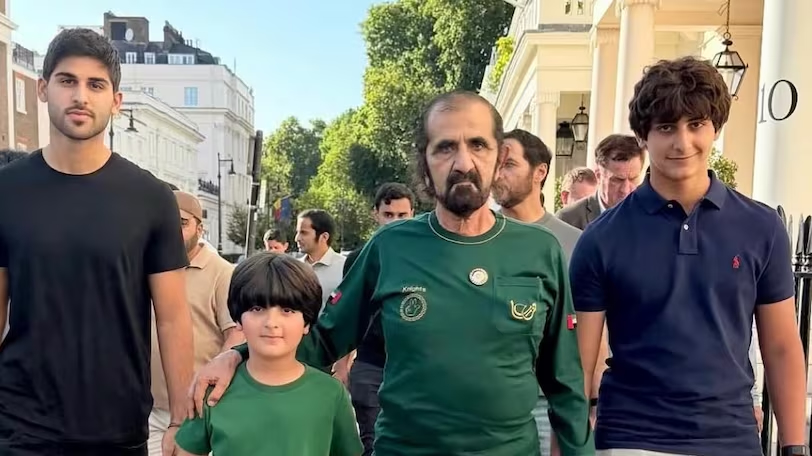
The chief of Saudi Arabia’s multibillion-dollar drive to build a world-class entertainment industry posted a photo of himself on social media with the son of Sheikh Tahnoon bin Zayed, the UAE National Security Adviser, in a public show of warmth amid strained ties between the two Gulf neighbors.
The picture shared on Instagram on Thursday shows Turki Alalshikh, Chairman of the Saudi General Entertainment Authority, with the young Emirati royal, Sheikh Zayed bin Tahnoon bin Zayed, The Circuit’s Jonathan Ferziger reports. The two are both wearing dark baseball caps with their arms on each other’s shoulders.
Last month, Alalshikh posted a photo of Sheikh Mansour bin Zayed, the UAE Vice President, Deputy Prime Minister and Chairman of the Presidential Court, in a friendly embrace with Saudi Arabia’s Minister of Defense, Prince Khalid bin Salman. Saudi-UAE relations have frayed in recent months over a variety of issues, including OPEC oil quotas and their support for opposing sides in Yemen’s conflict.
Soaring demand for oil tankers is driving costs to record highs as Gulf producers struggle to keep crude flowing through the Strait of Hormuz. Prices for supertankers have topped $130 million, the highest since 2008, while charter rates are also soaring, the Financial Times reports. Meanwhile, ADNOC and Kuwait Petroleum have set up shuttle operations through the war-disrupted strait, and Iraq is offering bigger discounts to buyers willing to risk the passage. The scramble has sent daily rates on some Hormuz-to-China voyages above $550,000, with just 29 tankers now accounting for more than half of all trips through the strait.
EXTREMIST PURGE
Saudi Arabia’s Etidal, a government-backed center that tracks and analyzes extremist propaganda online, worked with Telegram to remove some 34 million pieces of content and shut down 1,275 channels in the first half of 2026. The material – including videos, audio files, documents and other propaganda – was posted on Telegram, the popular messaging app whose public channels can reach large audiences, Arab News reports. Etidal identifies material linked to groups such as ISIS and Al Qaeda and flags it for Telegram, whose moderators decide what to remove. Since the partnership began in 2022, Telegram has removed nearly 293 million items and closed more than 20,000 channels identified through the effort.
💲 Sovereign Circuit
Public Investment Fund: Cenomi Centers is teaming up with the Saudi sovereign wealth fund to develop a shopping mall in Medina’s Al Madinah Downtown project.
Oman Investment Authority: Oman Investment Authority President Abdulsalam Al Murshidi led a delegation visiting Solidcore Resources’ Kyzyl mine and processing plant in Kazakhstan.
ADNOC: The UAE national oil company’s ADNOC Distribution unit agreed to sell a minority stake in Shell Downstream South Africa to Reatile Group after it completes a planned $1 billion acquisition of the company in 2027.
↪↩ Closing Circuit
✈️ Jet Fuel: The U.S. State Department approved a possible $4.5 billion sale to Qatar of as many as four Boeing KC-46A aerial refueling tankers, with Boeing, RTX and Northrop Grumman serving as the principal contractors.
🚧 Construction Phase: Sharjah-based Arada won a contract to develop a $1.4 billion residential project in Broadbeach on Australia’s Gold Coast.
💵Capital Takeover: Exits MENA, an investment advisory firm, is acquiring Avanz Capital Egypt, which will be rebranded as Exits Manara.
⚡Energy Sector: Saudi Arabia is developing four battery energy storage projects with a combined capacity of 2,000MW and a four-hour storage duration, backed by $1.2 billion in investment to strengthen grid reliability amid rising electricity demand.
🗣 Circuit Chatter
🚨Finance Crackdown: Two Binance employees were briefly detained by UAE authorities over inquiries into possible financial crimes, but the crypto exchange said they were cleared and released, Reuters reports.
⛳ Golf Reset: The PGA Tour will adopt a two-tier structure in 2028 with at least $20 million in prize money for elite events, cementing changes made to fend off Saudi-backed LIV Golf, whose challenge to the U.S. tour has effectively collapsed after five years of upheaval, the Financial Times reports.
🕸️ Air Connection: Qatar Airways said it will become the first airline to operate a fleet of Boeing 787-9 aircraft equipped with onboard Wi-Fi provided by Starlink.
📉 Declining Assets: Moody’s expects Qatari banks’ net profits to decline in 2026 as higher credit costs put pressure on asset quality amid the Middle East conflict.
🌍 Power Circuit
Emir of KuwaitSheikh Meshal Al-Ahmed, met withJasem Albudaiwi, Secretary General of the Gulf Cooperation Council, on Tuesday at Al Bayan Palace in Kuwait.
Sheikh Abdullah bin Zayed, UAE Minister of Foreign Affairs, held a phone call with Omar Bula Escobar, Minister of Foreign Affairs of Colombia.
Sheikh Saud bin Saqr Al Qasimi, Supreme Council Member and Ruler of northern emirate Ras Al Khaimah, met with UAE Government Cyber Security Council on Tuesday.
➿ On the Circuit
Nasser Al Sharji was named as Oman Air’s new CEO starting Sept. 1, replacing Con Korfiatis, who oversaw a two-year restructuring of the national carrier.
Khalid Aliawas appointed Chief Digital and Customer Experience Officer at stc Bahrain, a digital enabler.
Mohammad Al Sariwas appointed as CEO of HRE Development, a Dubai-based real estate developer.
🎶 Culture Circuit
🎨 Kids’ Canvas: Abu Dhabi is preparing to stage what organizers call the Arab world’s first outdoor art biennale devoted to children. The one-month show, scheduled to start Nov. 6, will fill the capital city’s Umm Al Emarat Park with works designed to be experienced through touch, sound, movement and light, The National reports. Among the featured artists will be Alia AlShamsi of the UAE, Hana El-Sagini from Egypt and Indonesia’s Eko Nugroho.
📷 Photo of the Day
Uberlaunched its new driverless taxi service in Dubai on Thursday, featuring Baidu’s Apollo Go vehicles in partnership with New Horizon Luxury Vehicles (Baidu)
August 30-Sept. 2, Riyadh. Big 5 Construct. The event connects construction industry stakeholders with suppliers in Saudi Arabia. Riyadh Front Exhibition & Conference Center.
August 31-Sept. 3, Riyadh. LEAP Expo Riyadh. A major tech trade show for the Middle East, which includes a global startup live pitch event. RECC Malham.
Sept. 1-3, Dubai. Middle East Energy. A three-day energy exhibition in Dubai brings together utilities, developers, manufacturers and industry professionals. Dubai World Trade Centre.
Sept. 1-3, Doha. Qatar Event Show. Brings together the events industry through a three-day program featuring exhibitions, conferences, workshops and networking opportunities. Doha Exhibition & Convention Center.
Sept.7-8, Abu Dhabi. Hili Forum. The events bring policymakers and leading experts to examine the future of regional security, trade and energy corridors and technology. The St. Regis Saadiyat Island Resort.
Sept. 7-9, Dubai. AIM Congress. The global investment platform’s annual meeting brings together investors, governments, businesses and policymakers. Dubai World Trade Centre.
Sept. 11-13, Abu Dhabi. Middle East Film & Comic Con. Featuring some of the world’s biggest brands in film, TV, sci-fi, animation, manga, comics and collectibles. ADNEC Centre.
Sept. 13-18, Abu Dhabi. Abu Dhabi International Book Fair. Fostering collaboration between regional publishing sectors and creative industries. ADNEC Centre.
Sept. 14-16, Riyadh. Money 20/20. The event brings together banks, Big Tech, fintechs, regulators, startups and investors. Riyadh Exhibition & Convention Centre.
Sept.14-17, Bangkok. Gastech. The global energy event brings together global energy leaders, policymakers and industry experts to explore natural gas, LNG, hydrogen, low-carbon solutions, electrification and AI. Bangkok International Trade & Exhibition Centre.
Sept. 14-18, Dubai. Arabian Travel Market. The flagship global travel trade show, which was postponed in May, returns, bringing 55,000+ travel professionals, 2,800+ exhibitors and representatives from 166 countries. Dubai World Trade Centre.
Sept. 15-17, Dubai. Arab Media Forum. The region’s largest media gathering, organized by the Dubai Press Club. Dubai World Trade Centre.
Sept. 16-18, Dubai. GISEC Global. MENA’S largest cybersecurity event brings together governments, CISOs, technology companies and cybersecurity experts to explore emerging threats, AI security, and other technologies. Dubai Exhibition Centre.
Sept. 20, New York. Qatar Economic Forum, Powered by Bloomberg: UNGA Special Edition 2026. The forum will host a special leadership gathering alongside the 2026 UNGA in New York, bringing together global leaders to explore capital, risk and resilience in a volatile global economy.
Sept. 28-Oct. 1, Singapore. SuperReturn Asia. The region’s premier private capital gathering. Marina Bay Sands Convention Centre.
Sept. 29-Oct. 1, Abu Dhabi. LIVEX 2026. Abu Dhabi’s inaugural Livability and Investment Exhibition. ADNEC Centre.
Oct. 6-7, Abu Dhabi. AiEverything.The AI Summit brings together policymakers, innovators and business leaders. ADNEC.
Oct. 7-9, Singapore. Milken Institute Asia Summit. Bringing together a global community of influential leaders shaping the next era of intelligence, collaboration and growth. Four Seasons Hotel.
Oct. 21-24, Riyadh. Six Kings Slam. World No. 1 Jannik Sinner will defend his Six Kings Slam title when the exhibition tournament returns, to be streamed globally on Netflix. ANB Arena.
Oct. 26-29, Riyadh. Future Investment Initiative. Saudi Arabia’s keystone annual business conference, sponsored by the Public Investment Fund. King Abdulaziz International Convention Center.
The Daily Circuit: PIF nets football stakes + Investcorp buys 20Cube
In today’s Daily Circuit, we’re reporting on Investcorp’s $58 million bet on Indian logistics firm 20Cube, DP World’s expansion of its logistics network across Asia, the potential impact of the UAE cutting off financial transactions with Iran, and Kuwait Petroleum Corp.’s effort to reassure investors after its headquarters was hit in the Iran war. But first, Saudi Arabia is handing more control of its biggest soccer clubs to the Public Investment Fund.
Saudi Arabia is reshuffling ownership in four of its biggest soccer clubs, transferring additional stakes to its sovereign wealth fund as the kingdom seeks to attract private investment.
The Public Investment Fund is receiving 25% holdings in Al-Ittihad, Al-Ahli, Al-Hilal and Al-Nassr that are currently held by nonprofit foundations, Arabian Gulf Business Insight reports.
The Saudi Ministry of Sports announced on Wednesday that the foundations’ boards will be dissolved, saying the changes are intended to make the clubs more attractive to investors.
The PIF already agreed in April to sell 70% of Al-Hilal to Prince Alwaleed bin Talal’s Kingdom Holding for $224 million, while U.S.-based Harburg Group became the first foreign buyer of a Saudi Pro League club last year.
The moves are part of Crown Prince Mohammed bin Salman’s effort to turn Saudi sports into a business that can attract outside capital, rather than relying primarily on government money.
Editor’s Note: Have thoughts or feedback? Hit reply or drop us a note at [email protected].
📰 Developing Stories
SQUEEZING IRAN
Iran is losing one of its biggest economic lifelines as the UAE cuts off financial and commercial transactions with Tehran. Dubai has long served as a gateway for Iranian imports, foreign currency and access to the global financial system, The Wall Street Journal reports. The cutoff could give U.S. President Donald Trump a powerful tool in his campaign to squeeze Iran economically by closing channels Tehran has used to work around international sanctions. Enforcement may prove difficult, however, after Iranian businesses spent years building networks of shell companies, money exchanges and other workarounds in Dubai, the Journal said.
KUWAITI REBOUND
Kuwait Petroleum Corp.’s scorched waterfront headquarters has become a symbol of the Iran war’s impacton the Gulf nation. The government is trying to reassure businesses that the country remains open for business despite the April drone strike that forced employees to relocate while operations continued, Bloomberg reports. After seven months of conflict, Kuwait is focused on maintaining oil exports, electricity and desalination supplies and normal economic activity, including a $16 billion pipeline deal with North American firms. The response reflects a resilience shaped by the 1990 Iraqi invasion, with many Kuwaitis seeing the latest conflict as another chapter in the country’s struggle to preserve its independence, the news agency said.
💲 Sovereign Circuit
Aramco: Saudi Aramco will supply at least three European refiners with their full requested crude volumes for September, using export routes including Egypt’s Sidi Kerir and Saudi Arabia’s Yanbu as disruptions continue in the Strait of Hormuz and the Red Sea, Bloomberg reports.
Public Investment Fund: Saudi Arabia spent more than $50 billion on the construction of its NEOM megaproject, with the PIF now paying billions more to wind down contracts, leaving partially built structures in the desert, The Wall Street Journal reports.
DP World: DP World is expanding its Southeast Asian logistics network, opening a warehouse in Malaysia and planning facilities in Kuala Lumpur, the Philippines and Thailand by year-end.
↪↩ Closing Circuit
🚕 Bolt Boost: Dubai Taxi Co. and Bolt are adding Arabia Taxi’s 1,607 vehicles to the Bolt ride-hailing platform, expanding their Dubai fleet to boost availability and cut passenger wait times.
📦 Indian Logistics: Bahrain-based Investcorp acquired India’s 20Cube 3PL Solutions for about $58 million and plans, together with 20Cube, to invest up to another $78 million buying logistics businesses as it expands in the fast-growing Indian market.
🚚 Building Blocks: Egypt’s EDECS Group won a contract from DP World to redevelop seven cargo and material handling yards at Tanzania’s Dar es Salaam Port, expanding its logistics footprint in East and Central Africa.
🗣 Circuit Chatter
☀️ Tight Deadline: Saudi Arabia must accelerate renewable energy development to meet its 2030 target of generating half its electricity from green sources, despite war-related supply-chain disruptions and tighter financing, Arabian Gulf Business Insight reports.
💻 Tech Allies: Dubai and India have deepened cooperation on agentic AI through a preliminary agreement between Dubai Chambers and Nasscom to help UAE businesses adopt the technology and Indian AI firms expand into the Emirates.
💵 Targeting Investors: The Sharjah Research, Technology and Innovation Park is aiming to commercialize products in water, food, energy, sustainability and advanced manufacturing.
🌍 Power Circuit
Prince Faisal bin Farhan, Saudi Arabia’s Foreign Minister, met withToshimitsu Motegi, Japanese Foreign Minister, who said that the kingdom is seeing “promising opportunities to expand cooperation” in investment, energy, resources, supply chains, defense, and technology.
Prince Faisal also met with Qatar’s Foreign Minister Sheikh Mohammed bin Abdulrahman in Riyadh.
Emir Sheikh Meshal Al-Ahmad Al-Jaber of Kuwait received a letter from Sudan’s President of the Transitional Sovereignty Council, General Abdel Fattah Al-Burhan.
➿ On the Circuit
Dr. Anwar Gargash, Adviser to the UAE President, said several media outlets circulated “false information” about alleged loopholes in the country’s financial sanctions against Iran.
Mohamed Abdalla Al Zaabi, CEO of Miral Group, the company bringing Disney World to Abu Dhabi, attended D23, an event for Disney fans in Anaheim, Calif.
Gianni Infantino: The Qatar Football Association expressed concerns over the lack of consultation with members before the Asian Football Confederation signed an open letter criticizing Infantino, the FIFA President,Reuters reports.
Abdulaziz Alobaidli, Director General for Regulatory Affairs at the Department of Energy in Abu Dhabi, told The Nationalthat the city’s power demand is expected to double by 2050.
Yevgeny Dibrov, the co-founder of cybersecurity firm Armis, is profiled in Fortune, which recounts his start in an elite Israeli military technology unit before selling Armis to ServiceNow for $7.75 billion in April.
🎶 Culture Circuit
📚 Back to Books: The Abu Dhabi International Book Fair returns Sept. 13 after the Iran war forced organizers to postpone it from April. The six-day event will also host the delayed Sheikh Zayed Book Award, one of the Arab world’s biggest literary prizes, with $2.1 million in prize money. Taking center stage will be the classic novel Don Quixote, with talks exploring Miguel de Cervantes’ tale of the would-be knight and his sidekick Sancho Panza, and how their adventures found an audience in the Arab world, The National reports.
📷 Photo of the Day
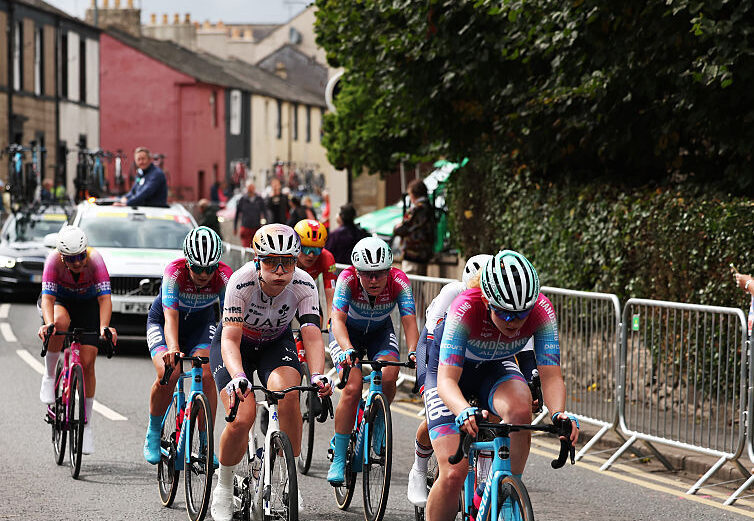
Elynor Backstedt, riding for UAE Team L’Imad, during Stage 1 of the 11th Lloyds Tour of Britain Women 2026 in Cockermouth, England, on Wednesday (Matt McNulty/Getty Images)
August 30-Sept. 2, Riyadh. Big 5 Construct. The event connects construction industry stakeholders with suppliers in Saudi Arabia. Riyadh Front Exhibition & Conference Center.
August 31-Sept. 3, Riyadh. LEAP Expo Riyadh. A major tech trade show for the Middle East, which includes a global startup live pitch event. RECC Malham.
Sept. 1-3, Dubai. Middle East Energy. A three-day energy exhibition in Dubai brings together utilities, developers, manufacturers and industry professionals. Dubai World Trade Centre.
Sept. 1-3, Doha. Qatar Event Show. Brings together the events industry through a three-day program featuring exhibitions, conferences, workshops and networking opportunities. Doha Exhibition & Convention Center.
Sept.7-8, Abu Dhabi. Hili Forum. The events bring policymakers and leading experts to examine the future of regional security, trade and energy corridors and technology. The St. Regis Saadiyat Island Resort.
Sept. 7-9, Dubai. AIM Congress. The global investment platform’s annual meeting brings together investors, governments, businesses and policymakers. Dubai World Trade Centre.
Sept. 11-13, Abu Dhabi. Middle East Film & Comic Con. Featuring some of the world’s biggest brands in film, TV, sci-fi, animation, manga, comics and collectibles. ADNEC Centre.
Sept. 13-18, Abu Dhabi. Abu Dhabi International Book Fair. Fostering collaboration between regional publishing sectors and creative industries. ADNEC Centre.
Sept. 14-16, Riyadh. Money 20/20. The event brings together banks, Big Tech, fintechs, regulators, startups and investors. Riyadh Exhibition & Convention Centre.
Sept.14-17, Bangkok. Gastech. The global energy event brings together global energy leaders, policymakers and industry experts to explore natural gas, LNG, hydrogen, low-carbon solutions, electrification and AI. Bangkok International Trade & Exhibition Centre.
Sept. 14-18, Dubai. Arabian Travel Market. The flagship global travel trade show, which was postponed in May, returns, bringing 55,000+ travel professionals, 2,800+ exhibitors and representatives from 166 countries. Dubai World Trade Centre.
Sept. 15-17, Dubai. Arab Media Forum. The region’s largest media gathering, organized by the Dubai Press Club. Dubai World Trade Centre.
Sept. 16-18, Dubai. GISEC Global. MENA’S largest cybersecurity event brings together governments, CISOs, technology companies and cybersecurity experts to explore emerging threats, AI security, and other technologies. Dubai Exhibition Centre.
Sept. 20, New York. Qatar Economic Forum, Powered by Bloomberg: UNGA Special Edition 2026. The forum will host a special leadership gathering alongside the 2026 UNGA in New York, bringing together global leaders to explore capital, risk and resilience in a volatile global economy.
Sept. 28-Oct. 1, Singapore. SuperReturn Asia. The region’s premier private capital gathering. Marina Bay Sands Convention Centre.
Sept. 29-Oct. 1, Abu Dhabi. LIVEX 2026. Abu Dhabi’s inaugural Livability and Investment Exhibition. ADNEC Centre.
Oct. 6-7, Abu Dhabi. AiEverything.The AI Summit brings together policymakers, innovators and business leaders. ADNEC.
Oct. 7-9, Singapore. Milken Institute Asia Summit. Bringing together a global community of influential leaders shaping the next era of intelligence, collaboration and growth. Four Seasons Hotel.
Oct. 21-24, Riyadh. Six Kings Slam. World No. 1 Jannik Sinner will defend his Six Kings Slam title when the exhibition tournament returns, to be streamed globally on Netflix. ANB Arena.
Oct. 26-29, Riyadh. Future Investment Initiative. Saudi Arabia’s keystone annual business conference, sponsored by the Public Investment Fund. King Abdulaziz International Convention Center.
The Daily Circuit: Storing Gulf oil in Asia + Anthropic’s sovereign fund bounty
In today’s Daily Circuit, we’re reporting on the bounty Gulf sovereign wealth funds can expect when Anthropic goes public, Aramco’s mineral exploration venture with Maaden in the Saudi desert, the Abu Dhabi Investment Council investing $1 billion with Singapore’s Dymon Asia Capital hedge fund, and an interview with the DMCC’s Ahmed Bin Sulayem on turning Dubai into a hub for computer gaming. But first, Gulf oil producers want to park stockpiles of crude in Asia to assure their safety.
Saudi Arabia and the UAE are looking far from home for safer places to store their oil, pushing to expand stockpiles in Asia as the Strait of Hormuz remains dangerous because of the U.S.-Iran war.
The two Gulf producers have asked Japan to let each increase its stored crude by as much as 10-fold from the roughly 8 million barrels they hold there today, The New York Times reports.
They are pursuing similar talks with South Korea, putting more barrels closer to their biggest customers and beyond the Gulf’s vulnerable shipping routes.
The plan could give Japan and South Korea a bigger cushion against supply disruptions, although Japan may not have enough spare tank capacity to accommodate all the oil that Riyadh and Abu Dhabi want to store.
Meanwhile, Japanese refiner Idemitsu Kosan has begun sourcing Saudi crude from the Red Sea port of Yanbu through safer alternative routes that can extend shipping from about 20 days to as long as 60 days, Reuters reports.
Editor’s Note: Have thoughts or feedback? Hit reply or drop us a note at [email protected].
CIRCUIT INTERVIEW
From coffee to consoles: how Ahmed Bin Sulayem is turning Dubai into a gaming hub
Ahmed Bin Sulayem, the DMCC’s Executive Chairman and CEO, with Mario Rizzo, co-founder and CEO of Artisan Studios
Ahmed Bin Sulayem follows his passions. Running the massive Dubai Multi Commodities Centre, which was established in 2002 as a hub for the emirate’s flourishing diamond industry, he channeled a deep love of coffee into creating a Middle East exchange for the caffeinated crop.
Bin Sulayem, the DMCC’s Executive Chairman and CEO, is following a similar roadmap for computer gaming, an industry that has mushroomed into a $350 billion global market, The Circuit’s Omnia Al Desoukie reports. Early on, the DMCC became a magnet for tech companies and now hosts firms active in artificial intelligence, cryptocurrencies and cybersecurity.
But it’s Bin Sulayem’s favorite video games such as “Street Fighter,” “Hitman,” ”Braid,” ”The Legend of Zelda,” and “Assassin’s Creed” that are fueling the current endeavor.
Saudi Arabia is treating financial transfers to the UAE with the extra scrutiny generally applied to countries suspected of money laundering. The Saudi central bank notified key banks earlier this year to apply the additional checks, Reuters reports, citing three people with direct knowledge of the policy and six who said transfers to the UAE have been delayed or returned. The Saudi central bank said there are “no direct restrictions on specific countries,” while a UAE official said the government had received no reports of unusual transfer delays. One Saudi insider told the news agency that the measures are a “subtle message” to Abu Dhabi amid widening tensions between the two Gulf powers.
REAPING REWARDS
A potential $2 trillion IPO by Anthropic this autumn could reward Gulf sovereign wealth funds for investing early in the AI developer. Anthropic counts the Qatar Investment Authority, Abu Dhabi’s MGX – a joint venture between Mubadala and G42 – and Alpha Wave, which is majority-owned by International Holding Co.’s Judan Financial, among its startup backers, with the funds committing an estimated $7.5 billion, Arabian Gulf Business Insight writes. Institutional investors interviewed by the Financial Times last week expect Anthropic to reach a $2 trillion valuation when it goes to market. The San Francisco-based company’s preliminary second-quarter revenue exceeded $11.5 billion, up from $787 million a year earlier and $4.7 billion in the first quarter.
💲 Sovereign Circuit
Public Investment Fund: Saudi Aramco and PIF-owned mining company Maaden are forming a joint venture to explore for copper and other critical minerals across a 100-kilometer area of the kingdom.
LIV Golf: The upstart golf league that was founded by the PIF – which is now withdrawing support – has canceled its final event of the season, moving the team championship to Indianapolis this week.
Red Sea Global: The Saudi tourism developer has opened the Rosewood AMAALA at Triple Bay resort on Saudi Arabia’s northwestern coast, which it is pitching as a “wellness destination.”
↪↩ Closing Circuit
💰 Asia Expansion: The Abu Dhabi Investment Council is committing about $1 billion to Singapore-based hedge fund firm Dymon Asia Capital to support its expansion from London to Hong Kong, while ADIC increases its exposure to hedge funds, Bloomberg reports.
📈 Raising Stakes: Saudi Arabia’s holdings of U.S. Treasuries rose by approximately $2.2 billion to $142.5 billion in June 2026, compared with the previous month, according to data from the U.S. Treasury Department.
☀️ Energy Boost: Saudi Arabia’s cumulative investment in operating renewable energy projects reached $9.6 billion by the end of 2025, with 15 projects providing more than 12,000 megawatts of capacity, up 88% year-on-year after five new solar projects came online.
🗣 Circuit Chatter
⚜️ Gold Diggers: Saudi Gold Refinery Co. has applied for exploration licenses in Egypt’s Eastern Desert and aims to secure a mining license and begin gold production before 2030, Chairman Suliman Al-Othaim said.
👓 Seeing AI: Blind Egyptian entrepreneur Mark Morad, 20, developed ScribeMe, an AI-assisted app that describes the world to visually impaired users through smartphones and Meta glasses and is now used by thousands of people in 140 countries, Reuters reports.
🚢 Tanker Premium: Daily earnings for supertankers carrying Persian Gulf crude to China have surged to nearly $510,000, a two-month high, as Saudi Arabia, Iraq and the UAE scramble for vessels to move promised supplies through the still-dangerous Strait of Hormuz, Bloomberg reports.
🌍 Power Circuit
UAE President Sheikh Mohamed bin Zayedheld a phone call withU.S. President Donald Trump on Tuesday.
U.S. Secretary of State Marco Rubiospoke on Tuesday with UAE National Security Advisor Sheikh Tahnoon bin Zayed over security issues, including Lebanon coordination in the region.
Prince Turki Al-Faisal, former head of Saudi Arabia’s General Intelligence Presidency, spoke at the closing ceremony of the Gulf Academy for Leadership and Innovation in the U.K. for budding government and business leaders across the GCC.
➿ On the Circuit
Dr. Abdullah Al-Rabeeah, advisor at the Saudi Royal Court and supervisor-general of the Saudi aid agency KSrelief, met withGhazi Al-Enez, Saudi Ambassador to Syria, in Riyadh.
Afra Al Hameli, Director of Strategic Communications at the UAE Ministry of Foreign Affairs, said all trade, commercial exchanges and financial transactions with Iran have been halted until further notice.
David Petraeus, former Director of the CIA, said 15% of Qatar’s liquefied natural gas “is out” for the next three to five years as a result of Iranian strikes and that Saudi oil facilities have also been damaged, speaking to The Cipher Brief.
Ayesha Bin Kalban, the Dubai International Financial Centre’s Courts Registrar, told Arabian Gulf Business Insightthat thevolume of cases filed is expected to grow this year, driven by more cross-border litigation and disputes related to the Iran conflict.
Kirill Dmitriev, head of the Russian Direct Investment Fund, is expected to lose his role as President Vladimir Putin’s special envoy for international investment within the year, as Russian prosecutors and the FSB prepare an audit of the sovereign wealth fund amid signs that Dmitriev’s influence in Moscow is fading, Intelligence Online reports.
🎶 Culture Circuit
🏰 Emirati Magic: Disney is working to give its planned Abu Dhabi theme park a distinctly Emirati identity, with its Imagineers studying the UAE’s heritage, architecture and culture as they develop the Yas Island resort. Footage shown at Disney’s annual D23 convention in California featured the design team visiting Al Ain Oasis and Qasr Al Hosn, Abu Dhabi’s oldest surviving building, The National reports. Disney hasn’t revealed what will make it into the park, but former CEO Bob Iger has said the resort will be “authentically Disney and distinctly Emirati.”
📷 Photo of the Day
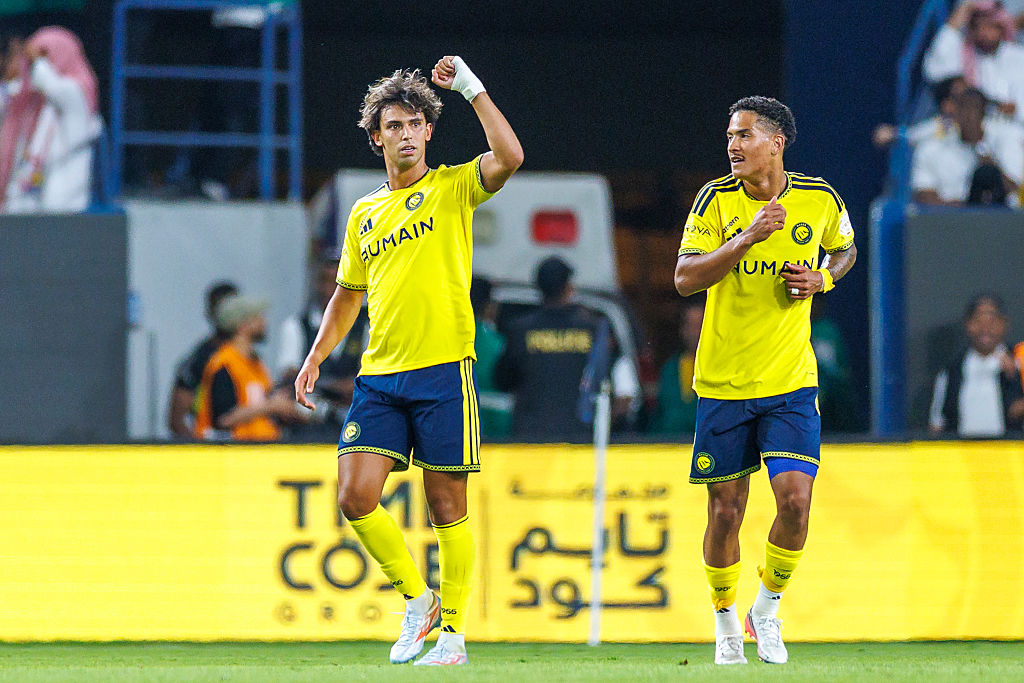
Joao Felix of the Saudi Pro League’s Al Nassr FC team after scoring a goal last weekend against Al Fateh FC at Riyadh’s Al Awwal Park. Al Nassr struck a sponsorship deal with the Public Investment Fund’s Humain company in July to put the AI firm’s logo on its jerseys. (Abdullah Ahmed/Getty Images)
📅 Ahead on the Circuit
August 18-19, Dubai. Middle East Event Show. Bringing together professionals from the events industry. Dubai World Trade Centre.
August 30-Sept. 2, Riyadh. Big 5 Construct. The event connects construction industry stakeholders with suppliers in Saudi Arabia. Riyadh Front Exhibition & Conference Center.
August 31-Sept. 3, Riyadh. LEAP Expo Riyadh. A major tech trade show for the Middle East, which includes a global startup live pitch event. RECC Malham.
Sept. 1-3, Dubai. Middle East Energy. A three-day energy exhibition in Dubai brings together utilities, developers, manufacturers and industry professionals. Dubai World Trade Centre.
Sept. 1-3, Doha. Qatar Event Show. Brings together the events industry through a three-day program featuring exhibitions, conferences, workshops and networking opportunities. Doha Exhibition & Convention Center.
Sept. 7-9, Dubai. AIM Congress. The global investment platform’s annual meeting brings together investors, governments, businesses and policymakers. Dubai World Trade Centre.
Sept. 11-13, Abu Dhabi. Middle East Film & Comic Con. Featuring some of the world’s biggest brands in film, TV, sci-fi, animation, manga, comics and collectibles. ADNEC Centre.
Sept. 13-18, Abu Dhabi. Abu Dhabi International Book Fair. Fostering collaboration between regional publishing sectors and creative industries. ADNEC Centre.
Sept. 14-18, Dubai. Arabian Travel Market. The flagship global travel trade show, which was postponed in May, returns, bringing 55,000+ travel professionals, 2,800+ exhibitors and representatives from 166 countries. Dubai World Trade Centre.
Sept. 15-17, Dubai. Arab Media Forum. The region’s largest media gathering, organized by the Dubai Press Club. Dubai World Trade Centre.
Sept. 20, New York. Qatar Economic Forum, Powered by Bloomberg: UNGA Special Edition 2026. The forum will host a special leadership gathering alongside the 2026 UNGA in New York, bringing together global leaders to explore capital, risk and resilience in a volatile global economy.
Sept. 28-Oct. 1, Singapore. SuperReturn Asia. The region’s premier private capital gathering. Marina Bay Sands Convention Centre.
Sept. 29-Oct. 1, Abu Dhabi. LIVEX 2026. Abu Dhabi’s inaugural Livability and Investment Exhibition. ADNEC Centre.
Oct. 7-9, Singapore. Milken Institute Asia Summit. Bringing together a global community of influential leaders shaping the next era of intelligence, collaboration and growth. Four Seasons Hotel.
Oct. 21-24, Riyadh. Six Kings Slam. World No. 1 Jannik Sinner will defend his Six Kings Slam title when the exhibition tournament returns, to be streamed globally on Netflix. ANB Arena.
Oct. 26-29, Riyadh. Future Investment Initiative. Saudi Arabia’s keystone annual business conference, sponsored by the Public Investment Fund. King Abdulaziz International Convention Center.
The Daily Circuit: Space42 orbits abroad + Saudi fund’s AUM drops
In today’s Daily Circuit, we’re reporting on a decline in assets under management for Saudi Arabia’s Public Investment Fund, DP World delivering mobile port cranes to Syria, Libya seeking $40 billion to double its oil production, and Riyadh’s Diriyah development securing $533 million in financing for its hotel-branded residences. But first, Space42 heads for foreign markets.
Abu Dhabi’s Space42 aims to become a lot less dependent on the UAE, targeting international markets to account for nearly a third of its revenue by 2030.
The satellite and data company, whose largest shareholders are Abu Dhabi-based G42, the Mubadala sovereign wealth fund and International Holding Co., currently gets about 90% of its business from the UAE and 80% of its revenue from government contracts, Arabian Gulf Business Insight reports.
Managing Director Karim Michel Sabbagh told the outlet that the Iran conflict has increased demand for resilient communications and near-real-time satellite intelligence, lifting what he called the “baseline” for Space42’s services.
Space42 reported first-half revenue on Monday of $260 million, up about 15% from $226 million a year earlier, while net profit fell about 65% to $18 million. The company is committing about $1.7 billion to growth while aiming to cut government business to roughly half of its revenue by the end of the decade.
Sabbagh said one of the company’s key prospects is Equatys, a partnership with U.S. satellite operator Viasat that would let ordinary mobile phones connect directly to satellites, with deployment planned for 2028-2029.
Editor’s Note: Have thoughts or feedback? Hit reply or drop us a note at [email protected].
📰 Developing Stories
PIF PROFIT
Saudi Arabia’s Public Investment Fund reported that assets under management slipped to about $905 billion last year from $913 billion in 2024, while annualized total return for shareholders dropped to 5.8% from 7.2%. The results were contained in the sovereign wealth fund’s annual report for 2025, which was released on Monday. At the end of June, the PIF reported that last year’s profitmore than doubled to $17 billion and revenue rose 9% to $120 billion. The PIF has recently been shifting its strategy and scaling back some of the kingdom’s largest projects. The fund said the drop in shareholder return stemmed from a decrease in the valuations of some assets “as a result of wider market conditions, and as PIF continued to make long-term local investments to drive economic transformation.”
LIBYAN CRUDE
Libya hopes to double oil production to 2 million barrels a day by the early 2030s but needs as much as $40 billion in foreign investment to accomplish the goal. Libya’s National Oil Corp. Chairman Masoud Suleman tells the Financial Times that a $2 billion allocation for the oil company in the government’s new budget gives him confidence that investors will come aboard. The country has resumed oil tenders after nearly two decades, signing deals with Repsol, Eni and QatarEnergy, while BP, Shell, Exxon and Chevron are also returning as security conditions improve. The comeback remains fragile, however, with oil facilities still vulnerable to attacks and NOC recently declaring force majeure at an export terminal after drone strikes, the FT said.
💲 Sovereign Circuit
Mubadala: A federal investigation into Dodgers owner Mark Walter’s financial empire grew out of scrutiny over a 2025 deal in which the Abu Dhabi sovereign wealth fund’s Mubadala Capital unit agreed to help his TWG Global raise $10 billion, The Wall Street Journal reports.
DP World: The Dubai logistics giant delivered three mobile cranes as part of its $800 million investment to modernize Syria’s Port of Tartous, boosting cargo-handling capacity by about 40% under its 30-year concession.
Public Investment Fund: Diriyah Co., which is owned by the Saudi sovereign wealth fund, secured $533 million in financing from Arab National Bank to develop hotel-branded residences.
Saudi Aramco: The state-owned oil company is offering crude for sale from ships off Oman, a sign the kingdom is joining the UAE in moving oil through the Strait of Hormuz before transferring it to other vessels outside the Gulf, Bloomberg reports.
↪↩ Closing Circuit
🚚 Green Logistics: A.P. Moller Capital is acquiring a majority stake in Morocco’s transportation and logistics firm Globex Investissement to support growth and green logistics expansion.
🏗️ Concrete Loan: Saudi-based Qassim Cement Co. has secured a $107 million loan from the Saudi Industrial Development Fund to finance the construction of a fourth production line.
🏦 Digital Banking: Egypt’s Financial Regulatory Authority has approved the newly established company, Digital Banker, Wayak, to provide fintech-enabled consumer finance services, and CFH Asset Management to conduct portfolio and investment fund management activities.
🗣 Circuit Chatter
💰 Kuwait Capital: Blackstone, Brookfield and KKR tapped insurance-industry capital to finance much of the debt in their $16 billion Kuwait pipeline deal, bypassing a more traditional bank package assembled by HSBC and JPMorgan, Bloomberg reports.
🌊 Spill Struggle: Bad weather and technical problems are slowing efforts to salvage a grounded tanker leaking Russian crude off Oman, where the spill has spread around a protected nature reserve and reached the coastline, Reuters reports.
✈️ Open Airspace: Flydubai has resumed select flights through Iranian airspace while Emirates continues to avoid the country amid ongoing security assessments.
🚢 Tanker Arrests: The UAE-linked fuel tanker Amara made multiple U-turns and stopped near Iran’s Qeshm Island as Tehran tightened control of the Strait of Hormuz and reportedly detained another UAE-linked tanker, warning ships must pay for transit, Bloomberg reports.
🌍 Power Circuit
UAE President Sheikh Mohamed bin Zayed met withOman’s Sultan Haitham bin Tariq on Monday in Abu Dhabi to discuss relations between both countries.
Sheikh Abdullah bin Zayed, UAE Minister of Foreign Affairs, held a phone call withSheikh Jarrah Jaber Al-Ahmad, Kuwait’s Minister of Foreign Affairs, on Monday.
Prince Faisal bin Farhan bin Abdullah, Saudi Arabia’s Minister of Foreign Affairs, met with Mohieldin Salem Ahmed Ibrahim, Sudan’s Minister of Foreign Affairs and International Cooperation, on Monday to sign a document establishing the Saudi-Sudanese Coordination Council.
➿ On the Circuit
Fahad Al-Bani, CEO of Arabian Drilling, said that the company has secured an undisclosed contract with a new GCC client, marking its entry into another regional market and expanding its offshore operations beyond Saudi Arabia.
Faisal Fahad Al Tlasiwas appointed as Julphar’s General Manager in Saudi Arabia, and Khaled Tawfik Mohamed Khalil was appointed Chief Commercial Officer.
Soumaya Ben Beya Dridje, a partner at Qatar’s first independent venture capital firm, Rasmal Ventures, told Arabian Gulf Business Insight that Middle Eastern and East Asian startups offer some of the strongest technology opportunities, with lower valuations and greater return potential than Western counterparts.
🎶 Culture Circuit
💃 Show Stopper: Shakira won’t be taking the stage in Abu Dhabi in November after organizers canceled the 2026 Offlimits Music Festival, which was already postponed in April because of regional tensions. The event, billed as the UAE’s largest single-day music festival, was also set to feature the Jonas Brothers, NE-YO, Biffy Clyro and a lineup of regional acts, The National reports.
📷 Photo of the Day
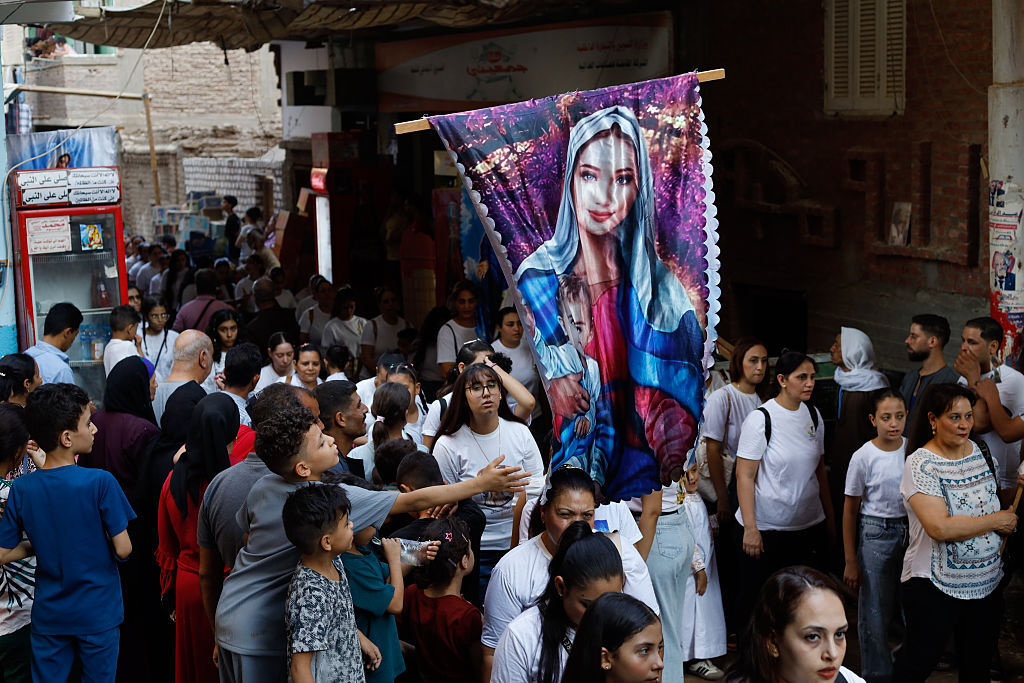
Christian pilgrims gather at Dronka Monastery in Assiut, Egypt, to observe the annual Fast of the Virgin Mary, which runs through Aug. 21 (Doaa Adel/NurPhoto via Getty Images)
📅 Ahead on the Circuit
August 18-19, Dubai. Middle East Event Show. Bringing together professionals from the events industry. Dubai World Trade Centre.
August 30-Sept. 2, Riyadh. Big 5 Construct. The event connects construction industry stakeholders with suppliers in Saudi Arabia. Riyadh Front Exhibition & Conference Center.
August 31-Sept. 3, Riyadh. LEAP Expo Riyadh. A major tech trade show for the Middle East, which includes a global startup live pitch event. RECC Malham.
Sept. 1-3, Dubai. Middle East Energy. A three-day energy exhibition in Dubai brings together utilities, developers, manufacturers and industry professionals. Dubai World Trade Centre.
Sept. 1-3, Doha. Qatar Event Show. Brings together the events industry through a three-day program featuring exhibitions, conferences, workshops and networking opportunities. Doha Exhibition & Convention Center.
Sept. 7-9, Dubai. AIM Congress. The global investment platform’s annual meeting brings together investors, governments, businesses and policymakers. Dubai World Trade Centre.
Sept. 11-13, Abu Dhabi. Middle East Film & Comic Con. Featuring some of the world’s biggest brands in film, TV, sci-fi, animation, manga, comics and collectibles. ADNEC Centre.
Sept. 13-18, Abu Dhabi. Abu Dhabi International Book Fair. Fostering collaboration between regional publishing sectors and creative industries. ADNEC Centre.
Sept. 14-18, Dubai. Arabian Travel Market. The flagship global travel trade show, which was postponed in May, returns, bringing 55,000+ travel professionals, 2,800+ exhibitors and representatives from 166 countries. Dubai World Trade Centre.
Sept. 15-17, Dubai. Arab Media Forum. The region’s largest media gathering, organized by the Dubai Press Club. Dubai World Trade Centre.
Sept. 20, New York. Qatar Economic Forum, Powered by Bloomberg: UNGA Special Edition 2026. The forum will host a special leadership gathering alongside the 2026 UNGA in New York, bringing together global leaders to explore capital, risk and resilience in a volatile global economy.
Sept. 28-Oct. 1, Singapore. SuperReturn Asia. The region’s premier private capital gathering. Marina Bay Sands Convention Centre.
Sept. 29-Oct. 1, Abu Dhabi. LIVEX 2026. Abu Dhabi’s inaugural Livability and Investment Exhibition. ADNEC Centre.
Oct. 7-9, Singapore. Milken Institute Asia Summit. Bringing together a global community of influential leaders shaping the next era of intelligence, collaboration and growth. Four Seasons Hotel.
Oct. 21-24, Riyadh. Six Kings Slam. World No. 1 Jannik Sinner will defend his Six Kings Slam title when the exhibition tournament returns, to be streamed globally on Netflix. ANB Arena.
Oct. 26-29, Riyadh. Future Investment Initiative. Saudi Arabia’s keystone annual business conference, sponsored by the Public Investment Fund. King Abdulaziz International Convention Center.
The Daily Circuit: L’Imad offers AD Ports buyout + QIA in Canary Wharf
In today’s Daily Circuit, we’re reporting on the Qatar Investment Authority buying a London office complex in Canary Wharf, Bahrain borrowing $530 million to help pay off war-related costs, Dubai examining proposals for a rail link between DXB and Al Maktoum International Airport, and Gulf countries taking a new look at rehabilitating Jordan’s old Hejaz railway. But first, L’Imad Holding offers to buy full control of AD Ports.
Abu Dhabi’s L’Imad Holding sovereign wealth fund wants tighter control of the emirate’s ports as the Iran war makes shipping through the Strait of Hormuz increasingly risky.
The government-owned fund is offering to buy the 24.6% of AD Ports it doesn’t already control for about $2.1 billion, valuing the company at $8.66 billion, Bloomberg reports.
The offer of 6.25 dirhams a share is a 23% premium to Friday’s close and sent AD Ports shares up by the daily limit of 15% on Monday.
Taking AD Ports private would give L’Imad more freedom to invest and make acquisitions across a network that includes ports, shipping services and economic zones, including infrastructure that can help Abu Dhabi bypass Hormuz.
The move comes weeks after L’Imad said it would delist $81 billion utility TAQA, reversing Abu Dhabi’s recent push to put major state assets on the public market.
Editor’s Note: Have thoughts or feedback? Hit reply or drop us a note at [email protected].
📰 Developing Stories
JORDANIAN ROUTE
Gulf countries are taking a new look at Jordan’s old Hejaz railway as an alternative to shipping goods through the Strait of Hormuz. While the rusting tracks have been eyed for years as a link between the Gulf and the Mediterranean through Israel’s Haifa port, now planners are looking toward Turkey, Arabian Global Business Insight reports. Saudi Arabia has been in discussions with Turkey and Syria about reviving the century-old Jordanian link, which would require tens of billions of dollars of reconstruction work. Meanwhile, the UAE and Oman are looking into the route as an extension of the ongoing GCC railway project that aims to link all of the Gulf states through one trunk line by 2030.
OIL FLOW
The use of so-called “dark tankers” by Middle Eastern oil producers is moving more than 4 million barrels a daythrough the Strait of Hormuz. The covert trade involves shuttling crude through the strait and transferring it to tankers in the Gulf of Oman, even as vessels face repeated attacks and heightened security risks, Bloomberg reports. The flows have become a crucial lifeline for global markets, which had feared a far larger supply shock when the war began. Tracking the shipments remains difficult, but the volumes are running above previous market estimates, according to people familiar with the trade.
💲 Sovereign Circuit
Oman Investment Authority: OQ Exploration & Production’s first-half 2026 revenue rose 12% year-on-year to $ 1.8 billion, and net profit climbed 19% due to the increase in oil prices.
Qatar Investment Authority: Brookfield and Qatar Investment Authority affiliates bought a London office complex in Canary Wharf for $843 million from their joint venture, Canary Wharf Group.
Masdar: The government-owned Abu Dhabi Future Energy Company, known as Masdar, and ScottishPower Renewables have installed 95 foundations at the $5.4 billion East Anglia Three offshore wind farm, paving the way for the 1.4GW project to become operational by the end of 2026.
↪↩ Closing Circuit
🚢 Port Struck: Yemen’s Mocha port suspended operations after more than 25 Houthi missiles struck the Red Sea facility in recent days, killing seven people and causing an estimated $16 million in damage.
📉 Deep Dip: The MENA economy is projected to contract 3.3% this year, its deepest downturn in four decades, before rebounding 8.5% in 2027, according to BMI.
💰 Financial Hurdle: Bahrain has borrowed $530 million for two years at a 7% interest rate, as the country continues to face financial pressure linked to high debt and the impact of the regional conflict.
🎬 AI Video: Higgsfield, the hit AI video generation platform, raised $400 million in a funding round from investors including Goldman Sachs, Intel and DST Global, reaching a valuation of $5.4 billion, the Financial Times reports. Alex Mashrabov, the company’s CEO and co-founder, spoke at Web Summit Qatar in February.
🗣 Circuit Chatter
⚡ Power Shortage: A global shortage of power transformers is threatening the Gulf’s AI data-center buildout as projects compete with renewable energy developments for scarce equipment, Arabian Gulf Business Insight reports, citing Hassan Zaheer, managing partner at industry research firm PTR.
🚂 Rail Talent: King Abdulaziz University and Saudi Arabia’s Transport General Authority have launched the Kingdom’s first specialized bachelor’s degree programs in railway transport to develop national talent for the expanding rail and logistics sector.
✈️ Airport Bid: Dubai has received proposals from six consultant groups for the study and design of the planned 55-kilometer Airport Express Line linking Dubai International Airport with Al Maktoum International Airport.
🤖 Approaching Agreement: Anthropic is nearing a deal to acquire Israeli AI startup Decart at a valuation of about $7 billion, with most of the consideration expected to be paid in Anthropic shares, Calcalist reports.
💺 Status Quest: Coby Wayne, a creator of aviation content, tells Business Insider about how he spent $2,700 flying around the world in three days to keep his British Airways frequent-flier status, with a missed connection leaving him an unexpected 18 hours to explore Doha, Qatar.
🌍 Power Circuit
U.S. President Donald Trump praised the Makkah Joint Defense Agreement, writing in a Truth Social post on Sunday he was “very happy to see that Saudi Arabia, Turkey, and Pakistan have recently, and finally, signed” the accord.
Egyptian President Abdel Fattah al-Sisimet withJared Kushner, the U.S. envoy and son-in-law of President Trump, who was in Egypt for talks with a Hamas delegation.
Jordan’s King Abdullah IIflew to China today for his first visit since 2015 and was scheduled to meet with President Xi Jinping.
Sheikh Joaan bin Hamad Al Thani, President of the Qatar Olympic Committee and Chairman of Al Shaqab equestrian center, attended the Global Champions Arabians Tour in London over the weekend, where the world’s top Arabian horses competed in the three-day championship.
➿ On the Circuit
Ziad El Chaar, Dar Global CEO, predicts a shake-up of the so-called “off-plan” model of construction for Gulf developers, in which buyers pay most of the costs before the building is built, Arabian Gulf Business Insight reports.
Abbas Sajwani, founder and CEO of AHS Properties, shows how he runs his Dubai-based business empire from a $250 million superyacht in a new video tour.
Darine Obeidwas appointed by the U.K.’s Financial Conduct Authority as its attaché for the UAE, based at the British Embassy in Abu Dhabi.
Eoin Cantwell, Founder and CEO of Dubai-based FITT Meals, has more than tripled the healthy meal-delivery company’s revenue to over $10 million from $3 million in 2023 while expanding its workforce to 140 employees, CEO Magazine reports.
🎶 Culture Circuit
🏺 Lost City: Egyptian archaeologists may have found the long-lost ancient city of Masn, whose location has puzzled scholars for nearly 140 years. The researchers uncovered a sandstone inscription near the Suez Canal that names the 3,000-year-old city and bears the royal titles of Ramses II, The National reports, adding that further excavation is needed to confirm the discovery.
📷 Photo of the Day
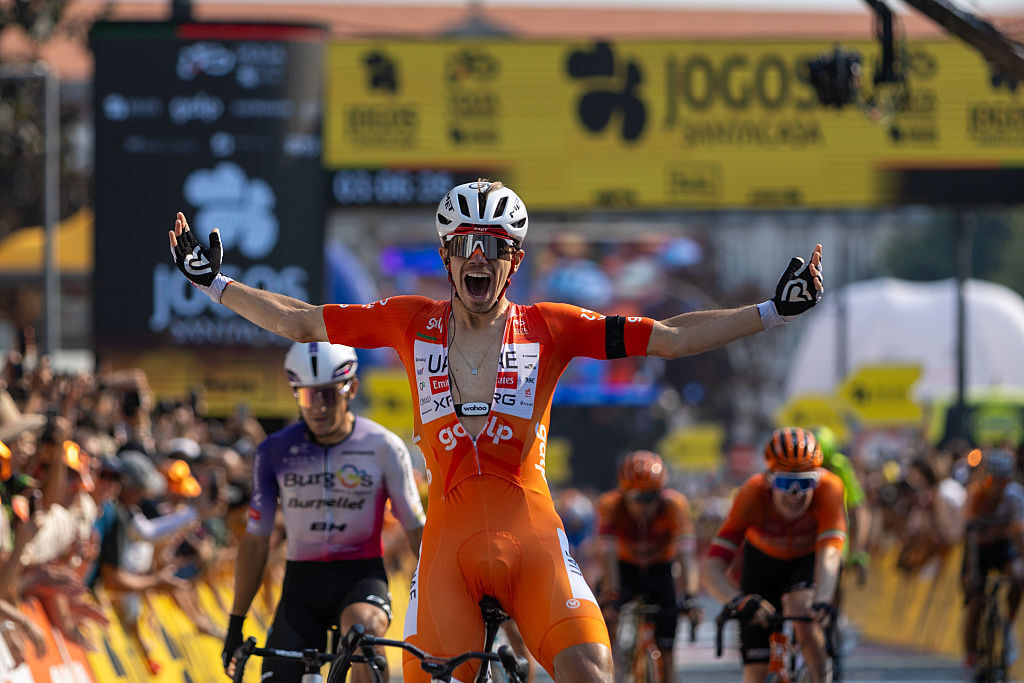
Portugal’s Rui Oliveira, riding for UAE Team Emirates XRG, celebrates his victory on Sunday in the final stage of the Volta a Portugal 2026 cycling race in the city of Porto (Miguel Lemos / NurPhoto via Getty Images)
📅 Ahead on the Circuit
August 18-19, Dubai. Middle East Event Show. Bringing together professionals from the events industry. Dubai World Trade Centre.
August 30-Sept. 2, Riyadh. Big 5 Construct. The event connects construction industry stakeholders with suppliers in Saudi Arabia. Riyadh Front Exhibition & Conference Center.
August 31-Sept. 3, Riyadh. LEAP Expo Riyadh. A major tech trade show for the Middle East, which includes a global startup live pitch event. RECC Malham.
Sept. 1-3, Dubai. Middle East Energy. A three-day energy exhibition in Dubai brings together utilities, developers, manufacturers and industry professionals. Dubai World Trade Centre.
Sept. 1-3, Doha. Qatar Event Show. Brings together the events industry through a three-day program featuring exhibitions, conferences, workshops and networking opportunities. Doha Exhibition & Convention Center.
Sept. 7-9, Dubai. AIM Congress. The global investment platform’s annual meeting brings together investors, governments, businesses and policymakers. Dubai World Trade Centre.
Sept. 11-13, Abu Dhabi. Middle East Film & Comic Con. Featuring some of the world’s biggest brands in film, TV, sci-fi, animation, manga, comics and collectibles. ADNEC Centre.
Sept. 13-18, Abu Dhabi. Abu Dhabi International Book Fair. Fostering collaboration between regional publishing sectors and creative industries. ADNEC Centre.
Sept. 14-18, Dubai. Arabian Travel Market. The flagship global travel trade show, which was postponed in May, returns, bringing 55,000+ travel professionals, 2,800+ exhibitors and representatives from 166 countries. Dubai World Trade Centre.
Sept. 15-17, Dubai. Arab Media Forum. The region’s largest media gathering, organized by the Dubai Press Club. Dubai World Trade Centre.
Sept. 20, New York. Qatar Economic Forum, Powered by Bloomberg: UNGA Special Edition 2026. The forum will host a special leadership gathering alongside the 2026 UNGA in New York, bringing together global leaders to explore capital, risk and resilience in a volatile global economy.
Sept. 28-Oct. 1, Singapore. SuperReturn Asia. The region’s premier private capital gathering. Marina Bay Sands Convention Centre.
Sept. 29-Oct. 1, Abu Dhabi. LIVEX 2026. Abu Dhabi’s inaugural Livability and Investment Exhibition. ADNEC Centre.
Oct. 7-9, Singapore. Milken Institute Asia Summit. Bringing together a global community of influential leaders shaping the next era of intelligence, collaboration and growth. Four Seasons Hotel.
Oct. 21-24, Riyadh. Six Kings Slam. World No. 1 Jannik Sinner will defend his Six Kings Slam title when the exhibition tournament returns, to be streamed globally on Netflix. ANB Arena.
Oct. 26-29, Riyadh. Future Investment Initiative. Saudi Arabia’s keystone annual business conference, sponsored by the Public Investment Fund. King Abdulaziz International Convention Center.
The Daily Circuit: ADNOC’s post-OPEC path + DP World to invest $3B
In today’s Daily Circuit, we’re reporting on Saudi Arabia’s Public Investment Fund getting ready to sell more assets, DP World’s plans to disburse $3 billion in international investments, XRG entering Venezuela to finance natural gas exploration, and ACWA Power completing its $8.5 billion green hydrogen plant in NEOM. But first, ADNOC sees growth in its post-OPEC future.
The UAE’s exit from OPEC in May has enabled state energy company ADNOC to pursue an aggressive strategy that has boosted oil sales and added new customers in Asia.
Freed from the OPEC production limits that had constrained its growth, ADNOC’s new course is paying off, Reuters reports. The UAE supplied 32% of Middle Eastern oil shipments to Asia in June and 27% in July, compared with 20% last year, according to trade intelligence firm Kpler.
ADNOC is also expanding its shipping fleet and using shuttle tankers to move crude across the war-disrupted Strait of Hormuz, even after attacks that struck 15 of its vessels killed one crew member and injured 20 others.
Iraq’s oil marketing firm SOMO confirmed a Bloomberg report this week that ADNOC is buying its crude and shipping it through the Gulf waterway.
With UAE oil production expected to reach 5.2 million barrels a day in 2027, up from its former OPEC target of about 3.5 million, ADNOC’s push could challenge Saudi Aramco and other Gulf producers for a larger share of the Asian market, Reuters says.
Editor’s Note: Have thoughts or feedback? Hit reply or drop us a note at [email protected].
📰 Developing Stories
SELLING DOWN
Saudi Arabia’s Public Investment Fund is preparing to sell more of its assets, pursue public listings and bring in outside investors. The shift, outlined in the sovereign wealth’s new five-year strategy, aims to move mature portfolio companies toward private ownership while freeing the fund’s balance sheet for other investments, Bloomberg reports. The approach could involve the futuristic NEOM megaproject, with the PIF focusing its capital on more mature areas such as ports and manufacturing, while seeking private financing elsewhere. The fund, which has created about 100 companies, has already begun selling some of its more than $900 billion in assets, including a majority stake in Al Hilal Football Club to Prince Alwaleed bin Talal in April.
HORMUZ HEDGE
DP World plans to invest $3 billion this year across the UAE, Saudi Arabia, India and the Democratic Republic of the Congo as the Dubai-based ports operator expands despite disruptions from the Iran war. In the UAE, the government-owned company is developing two deepwater terminals in Fujairah that would give cargo ships access to its logistics network without passing through the Strait of Hormuz, The National reports. DP World said first-half profit fell 39% to $585 million even as revenue rose 13% to $12.7 billion. The company has sought to keep cargo moving by expanding inland connections and logistics capacity, including the purchase of 700 trucks last month for its Gulf road-freight network.
💲 Sovereign Circuit
Public Investment Fund: Arabian Drilling, a unit of Saudi Arabia’s PIF-backed TAQA energy services company, said all of its temporarily suspended offshore rigs will resume work by the end of September, Arab News reports.
ACWA Power: Saudi Arabia PIF-owned green energy company, is teaming up with Indonesia’s PT Garam to develop a $400 million seawater desalination and industrial salt plant in East Java.
Qatar Investment Authority: Rasmal Ventures, a venture capital firm backed by the QIA, invested in AI payments firm Yuno’s $45 million Series B financing round, which raised money for its GCC expansion through a new hub in Qatar.
↪↩ Closing Circuit
🇴🇲 Debt Sale: Oman is offering up to $260 million of seven-year government bonds as it raises domestic financing for budget needs and to refinance maturing debt.
🪙 Token Hub: Coinbase received regulatory approval to establish an international tokenization hub at Abu Dhabi Global Market.
🚗 Car Financing: Dubai-based mobility startup Naran raised $10 million from UAE investment firm Landel to expand its vehicle-financing and fleet-management business across Latin America and Africa.
🗣 Circuit Chatter
📱 Gaining Visibility: Dubai telecom operator du will join the MSCI UAE Standard Index in September to broaden its international investor base and increase the stock’s visibility.
🤖 AI Access: Abu Dhabi Securities Exchange has become the first exchange in the Middle East and North Africa to make official live market data directly accessible through AI platforms, including ChatGPT and Claude.
📦 Hitting Hard: Hapag-Lloyd, the German container-shipping company, said the U.S.-Iran war cut second-quarter profit to $83 million from $306 million in the same period of 2025 despite a 10% boost in revenue.
🌍 Power Circuit
Saudi Crown Prince Mohammed bin Salman held a phone call with Admiral Brad Cooper, Commander of U.S. Central Command, on Thursday to discuss military cooperation between the two countries.
UAE President Sheikh Mohamed bin Zayedheld a phone call with Maldives President Mohamed Muizzu on Thursday.
Prince Faisal bin Farhan, Saudi Arabia’s foreign minister, met with his Turkish and Egyptian counterparts, Hakan Fidan and Badr Abdellaty, in the Egyptian city of El Alamein.
➿ On the Circuit
Ali Alshimmari, Managing Director and CEO of UAE-based Global South Utilities, received the rank of Commander of the Order of Central African Merit from Central African Republic President Faustin-Archange Touadéra.
Jassim Mohammed Al Budaiwi, Secretary-General of the Gulf Cooperation Council, met withNabil Fahmy, Secretary-General of the League of Arab States, on Thursday.
Amir Ali Salemi Zadeh, Founder and CEO of JTA International Investment Holding, which owns Qatar’s first electric vehicle factory, said that the EVs will be built specifically designed for conditions in the Gulf, The National reports.
🎶 Culture Circuit
🖼️ Frame Game: Saudi Arabia’s King Abdulaziz Center for World Culture is putting five Arab artists head-to-head for a $100,000 prize, exhibiting their newly created works together at its Ithra museum in the eastern city of Dhahran. Finalists include Kuwait’s Aseel AlYaqoub, Syria’s Bady Dalloul, Egypt’s Heba Amin Elmahamly, Jordan’s Ala Younis, and Palestinian artist Jawad Al Malhi, Gulf Today reports. The winner will be announced in October, and the work will join Ithra’s permanent collection.
📷 Photo of the Day
The Perseid meteor shower seen in the skies over Saudi Arabia’s Gharameel Nature Reserve in AlUla (Saudi Press Agency)
📅 Ahead on the Circuit
August 18-19, Dubai. Middle East Event Show. Bringing together professionals from the events industry. Dubai World Trade Centre.
August 30-Sept. 2, Riyadh. Big 5 Construct. The event connects construction industry stakeholders with suppliers in Saudi Arabia. Riyadh Front Exhibition & Conference Center.
August 31-Sept. 3, Riyadh. LEAP Expo Riyadh. A major tech trade show for the Middle East, which includes a global startup live pitch event. RECC Malham.
Sept. 1-3, Dubai. Middle East Energy. A three-day energy exhibition in Dubai brings together utilities, developers, manufacturers and industry professionals. Dubai World Trade Centre.
Sept. 1-3, Doha. Qatar Event Show. Brings together the events industry through a three-day program featuring exhibitions, conferences, workshops and networking opportunities. Doha Exhibition & Convention Center.
Sept. 7-9, Dubai. AIM Congress. The global investment platform’s annual meeting brings together investors, governments, businesses and policymakers. Dubai World Trade Centre.
Sept. 11-13, Abu Dhabi. Middle East Film & Comic Con. Featuring some of the world’s biggest brands in film, TV, sci-fi, animation, manga, comics and collectibles. ADNEC Centre.
Sept. 13-18, Abu Dhabi. Abu Dhabi International Book Fair. Fostering collaboration between regional publishing sectors and creative industries. ADNEC Centre.
Sept. 14-18, Dubai. Arabian Travel Market. The flagship global travel trade show, which was postponed in May, returns, bringing 55,000+ travel professionals, 2,800+ exhibitors and representatives from 166 countries. Dubai World Trade Centre.
Sept. 15-17, Dubai. Arab Media Forum. The region’s largest media gathering, organized by the Dubai Press Club. Dubai World Trade Centre.
Sept. 20, New York. Qatar Economic Forum, Powered by Bloomberg: UNGA Special Edition 2026. The forum will host a special leadership gathering alongside the 2026 UNGA in New York, bringing together global leaders to explore capital, risk and resilience in a volatile global economy.
Sept. 28-Oct. 1, Singapore. SuperReturn Asia. The region’s premier private capital gathering. Marina Bay Sands Convention Centre.
Sept. 29-Oct. 1, Abu Dhabi. LIVEX 2026. Abu Dhabi’s inaugural Livability and Investment Exhibition. ADNEC Centre.
Oct. 7-9, Singapore. Milken Institute Asia Summit. Bringing together a global community of influential leaders shaping the next era of intelligence, collaboration and growth. Four Seasons Hotel.
Oct. 21-24, Riyadh. Six Kings Slam. World No. 1 Jannik Sinner will defend his Six Kings Slam title when the exhibition tournament returns, to be streamed globally on Netflix. ANB Arena.
Oct. 26-29, Riyadh. Future Investment Initiative. Saudi Arabia’s keystone annual business conference, sponsored by the Public Investment Fund. King Abdulaziz International Convention Center.
The Daily Circuit: Saudi AI draws investors + ACWA Power’s Indonesian project
In today’s Daily Circuit, we’re reporting on ACWA Power developing a $400 million desalination plant in Indonesia, the UAE’s new IPNation investing $100 million in the Arab music industry, Saudi Arabia’s Arabian Drilling restarting its offshore rigs after a wartime suspension and Egypt planning a $500 million tire factory. But first, investors flock to invest in Saudi Arabia’s AI data centers and computing infrastructure.
Saudi Arabia’s growing AI industry attracted a bounty of private investment last year, placing it on the World Bank’s Top Ten list of the industry’s funding magnets.
The ranking in a World Bank report on“The Promise of Artificial Intelligence” comes amid a surge in spending on AI infrastructure, data centers and computing capacity.
The Washington-based international lender said Saudi Arabia’s position among the top tech powers illustrates how emerging markets with sufficient capital and infrastructure can become significant players in the global AI economy.
The Saudi Cabinet declared 2026 the kingdom’s “Year of AI” in a March session chaired by Crown Prince Mohammed bin Salman, who outlined a plan to achieve international tech leadership in his Vision 2030 blueprint.
Meanwhile, New York consulting firm Alvarez & Marsal said Saudi Arabia’s AI and cloud expansion could require up to $42 billion in project capital by 2030 when about half of its announced data center capacity is due to be delivered, Arabian Gulf Business Insight reports.
Editor’s Note: Have thoughts or feedback? Hit reply or drop us a note at [email protected].
📰 Developing Stories
INFANTINO ALLIES
Six Arab football federations, including Qatar and 2030 World Cup co-host Morocco, rallied behind FIFA President Gianni Infantino today as he faces calls to resign over a failed plan to sell a stake in the World Cup’s commercial rights to private investors. UEFA, the Asian Football Confederation and CONCACAF have called for Infantino to step down after he proposed selling 20% of the rights for about $4.2 billion. The football associations of Qatar, Morocco, Egypt, Lebanon, Sudan and Mauritania said in a joint statement that they have “full support” for Infantino and confidence in his leadership. Four of the six federation chiefs are also members of the FIFA Council.
ROLLING ALONG
Egypt plans to build a $500 million tire factory for passenger cars and light commercial vehicles. The project is being put up for bids and will be developed on a site in 10th of Ramadan City under a private-sector partnership, Asharq Bloomberg reports. Egypt imports nearly 8 million tires a year at a cost of about $1.25 billion, while China’s Sailun is the only company currently operating in the passenger car tire segment and is expected to start production in the Suez Canal Economic Zone. Most local tire plants focus on trucks and two- and three-wheel vehicles, with the Pyramids factory in Port Said being the country’s largest.
💲 Sovereign Circuit
Public Investment Fund: Arabian Drilling, a unit of Saudi Arabia’s PIF-backed TAQA energy services company, said all of its temporarily suspended offshore rigs will resume work by the end of September, Arab News reports.
ACWA Power: Saudi Arabia PIF-owned green energy company, is teaming up with Indonesia’s PT Garam to develop a $400 million seawater desalination and industrial salt plant in East Java.
Qatar Investment Authority: Rasmal Ventures, a venture capital firm backed by the QIA, invested in AI payments firm Yuno’s $45 million Series B financing round, which raised money for its GCC expansion through a new hub in Qatar.
↪↩ Closing Circuit
🎵Music Maven: Influence Media Partners is backing the launch of IPNation, an Abu Dhabi-based $100 million investment platform to acquire Arabic music and entertainment intellectual property across the MENA region.
☀️Solar Leader: Abu Dhabi-based Global South Utilities has completed a 50MW solar plant in the Central African Republic, the country’s largest infrastructure project.
💰Faith Investing: SAB Invest has launched the open-ended, Islamic-compliant Global Select Equity Fund, targeting Saudi retail and institutional investors.
📉 Oil Squeeze: The International Energy Agency says shipping disruptions have left global oil markets facing a 1.8 million-barrel-a-day supply deficit this quarter, more than double its previous estimate.
🗣 Circuit Chatter
🛢️ Hormuz Hedge: Gulf oil producers are betting that security and alternative export routes now matter more than cost and efficiency as they spend billions of dollars on pipelines and storage to reduce their reliance on the Strait of Hormuz, The New York Times reports.
✈️ Royal Eclipse: Members of the Qatari royal family reportedly traveled to Mallorca to see the total eclipse of the sun on Wednesday, flying from Doha on the emirate’s Boeing 747-8, Luxurylaunches reports.
🛍️ Iranian Credit: Businesses in Iran are increasingly offering “buy now, pay later” plans to attract customers as the cost of living rises,the Financial Times reports.
🌍 Power Circuit
UAE President Sheikh Mohamed bin Zayed and Bahrain’s King Hamad bin Isa Al Khalifa met in Abu Dhabi on Wednesday. Sheikh Mohamed also held a phone call withFélix Tshisekedi, President of Congo.
Prince Faisal bin Farhan, Saudi Arabia’s Foreign Minister, met with Badr Abdelatty, Egypt’s Foreign Minister, on Tuesday to discuss cooperation between the two countries.
Sheikh Sultan bin Falah bin Zayed, a member of the Abu Dhabi ruling family, was seen at a shooting range with Areen Masrour Barzani, son of Masrour Barzani, Prime Minister of Iraq’s Kurdistan region.
➿ On the Circuit
Abdolnaser Hemmati, Iran’s Central Bank Governor, said on Wednesday that the country will soon join BRICS New Development Bank, despite international sanctions.
Sunil Kumar, CEO of the Spinneys supermarket chain, told Arabian Gulf Business Insight that the company’s 5% revenue boost in the first half of the year was driven by online sales, while it diversified supply routes due to wartime disruptions.
Zlatko Dalić, former coach of the Croatian national football team, was appointed head coach of the UAE National Team.
Damian Austinwas appointed CEO of the British Arab Commercial Bank. He was previously the London-based trade lender’s chief banking officer.
🎶 Culture Circuit
🎨 Written Art: Saudi Arabia marked World Calligraphy Day on Wednesday with a showcase at Riyadh’s King Abdulaziz Public Library, drawing on rare manuscripts, historic coins and works by leading Arabic calligraphers. Among the library’s treasures being highlighted this month are centuries-old Quranic manuscripts and examples of Kufic, Thuluth, Naskh, and other classical scripts, alongside contemporary works that demonstrate how the tradition continues to evolve, the Saudi Press Agency reports.
📷 Photo of the Day
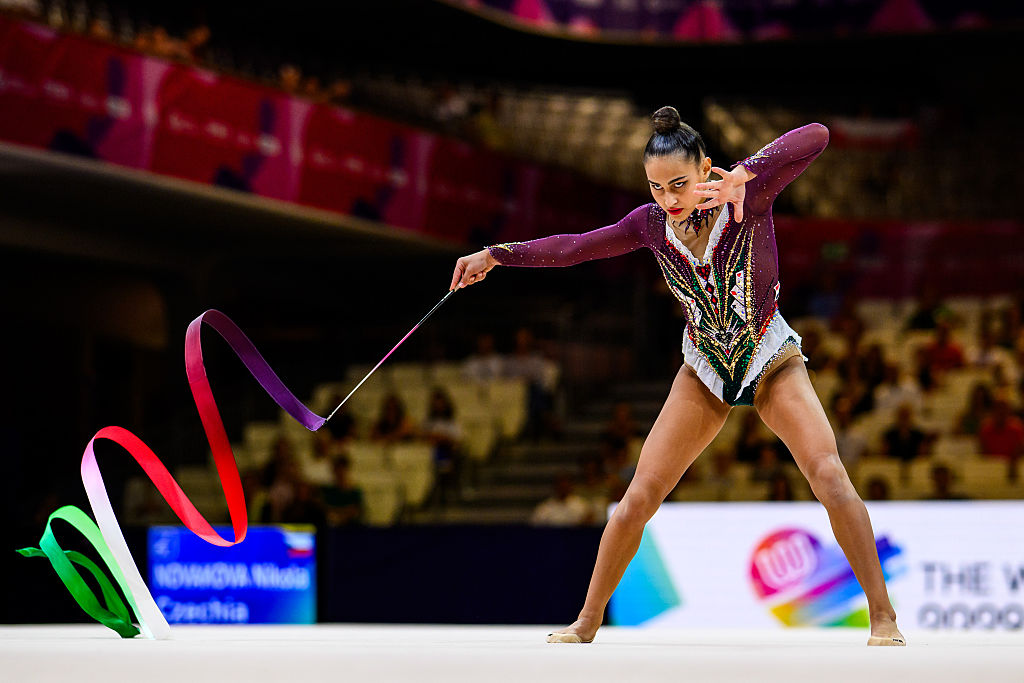
Lina Heleika of Egypt competes in the ribbon exercise on day one of the 2026 Rhythmic Gymnastics World Championships in Frankfurt am Main, Germany (Tom Weller/Getty Images)
📅 Ahead on the Circuit
August 18-19, Dubai. Middle East Event Show. Bringing together professionals from the events industry. Dubai World Trade Centre.
August 30-Sept. 2, Riyadh. Big 5 Construct. The event connects construction industry stakeholders with suppliers in Saudi Arabia. Riyadh Front Exhibition & Conference Center.
August 31-Sept. 3, Riyadh. LEAP Expo Riyadh. A major tech trade show for the Middle East, which includes a global startup live pitch event. RECC Malham.
Sept. 1-3, Dubai. Middle East Energy. A three-day energy exhibition in Dubai brings together utilities, developers, manufacturers and industry professionals. Dubai World Trade Centre.
Sept. 1-3, Doha. Qatar Event Show. Brings together the events industry through a three-day program featuring exhibitions, conferences, workshops and networking opportunities. Doha Exhibition & Convention Center.
Sept. 7-9, Dubai. AIM Congress. AIM is a global investment platform that brings together investors, governments, businesses and policymakers to explore investment opportunities, partnerships and sustainable economic growth. Dubai World Trade Centre.
Sept. 11-13, Abu Dhabi. Middle East Film & Comic Con. Featuring some of the world’s biggest brands in film, TV, sci-fi, animation, manga, comics and collectibles. ADNEC Centre.
Sept. 13-18, Abu Dhabi. Abu Dhabi International Book Fair. Fostering collaboration between regional publishing sectors and creative industries. ADNEC Centre.
Sept. 14-18, Dubai. Arabian Travel Market. The flagship global travel trade show, which was postponed in May, returns, bringing 55,000+ travel professionals, 2,800+ exhibitors and representatives from 166 countries. Dubai World Trade Centre.
Sept. 15-17, Dubai. Arab Media Forum. The region’s largest media gathering, organized by the Dubai Press Club. Dubai World Trade Centre.
Sept. 20, New York. Qatar Economic Forum, Powered by Bloomberg: UNGA Special Edition 2026. The forum will host a special leadership gathering alongside the 2026 UNGA in New York, bringing together global leaders to explore capital, risk and resilience in a volatile global economy.
Sept. 28-Oct. 1, Singapore. SuperReturn Asia. The region’s premier private capital gathering. Marina Bay Sands Convention Centre.
Sept. 29-Oct. 1, Abu Dhabi. LIVEX 2026. Abu Dhabi’s inaugural Livability and Investment Exhibition. ADNEC Centre.
Oct. 7-9, Singapore. Milken Institute Asia Summit. Bringing together a global community of influential leaders shaping the next era of intelligence, collaboration and growth. Four Seasons Hotel.
Oct. 21-24, Riyadh. Six Kings Slam. World No. 1 Jannik Sinner will defend his Six Kings Slam title when the exhibition tournament returns, to be streamed globally on Netflix. ANB Arena.
Oct. 26-29, Riyadh. Future Investment Initiative Tenth Edition 2026. Saudi Arabia’s keystone annual business conference, sponsored by the Public Investment Fund. King Abdulaziz International Convention Center.
In today’s Daily Circuit, we’re reporting on Emirates Global Aluminium spending $400 million to restore its war-slowed operations, the Qatar Investment Authority’s role in Ari Emanuel’s $6 billion purchase of ATG Entertainment, an Oman wind-energy project securing $130 million in financing, and the loss of 137,000 jobs in the Gulf’s travel and tourism industry. But first, ADNOC lends Iraq a hand exporting its oil to Asia.
ADNOC is reportedly offering to move Iraqi oil through the Strait of Hormuz for its Asian customers as part of a strategy that has helped the UAE keep crude flowing during the war with Iran.
The Abu Dhabi National Oil Co. is shipping Iraqi crude and other Middle Eastern oil grades through a “dark shuttling” system in which tankers make short trips through the strait with their transponders switched off before transferring the cargo to other vessels outside the Gulf, Bloomberg reports.
The Red Sea’s Bab Al-Mandeb Strait is also growing more perilous, with four crew members and two rescuers killed on Tuesday in a Houthi attack on an Egyptian-owned cargo ship, Reuters reports.
And in the Gulf of Oman, U.S. forces fired two Hellfire missiles at a Panama-flagged container ship that ignored warnings to stop sailing toward an Iranian port.
U.S. President Donald Trump, meanwhile, declared that the U.S. has “total control” over the Strait of Hormuz, even as Pakistan’s defense minister said Washington and Tehran were close to a possible agreement over the waterway.
Editor’s Note: Have thoughts or feedback? Hit reply or drop us a note at [email protected].
📰 Developing Stories
TOURISM TOLL
The Gulf’s travel and tourism industry is expected to lose 137,000 jobs this year because of the Iran conflict. Employment across the six GCC countries is forecast to fall 4.3% from 3.2 million in 2025, with Saudi Arabia losing 69,000 jobs and the UAE 46,000, according to the World Travel & Tourism Council. Hotel occupancy across the Middle East fell 19% through July, while revenue per available room dropped 21%. The WTTC expects Middle East travel and tourism activity to contract 14.5% this year, making it the only region in the world forecast to decline.
TAXING TUNES
The UAE will start charging businesses an annual royalty fee to play copyrighted music on their premises, pulling the country into line with international practices. The permit will cover entities including shopping malls, fitness centers, cafes and restaurants, but non-commercial settings like schools and charity events will be exempt. The fees, which will be scaled to business size and type of music used, will be managed by Emirates Music Rights Association and Music Nation, a collective management organization founded and chaired by Rasha Khalifa Al Mubarak. The fees will apply from Dec. 1, with 10% of the funds collected going towards the newly established Cultural Support Fund for Music.
💲 Sovereign Circuit
Mubadala: Emirates Global Aluminium, which is owned by Mubadala and the Investment Corp. of Dubai, plans to spend $400 million to restore its main smelter to pre-war production levels in the first quarter of next year, although shipments will depend on the reopening of the Strait of Hormuz.
Mubadala: The Abu Dhabi sovereign wealth fund has boosted its stake in Abu Dhabi’s Aldar Properties from 27.01% to 28.03% of the company’s issued share capital.
Qatar Investment Authority:Hollywood mogul Ari Emanuel engineered a $6 billion deal to buy U.K.-based ATG Entertainment through his investment firm Mari, backed by the QIA, Apollo Global Management and RedBird Capital.
Qatar National Bank: The QIA-backed lender is seeking a $2 billion syndicated loan to refinance existing debt.
Oman Investment Authority: A French-Omani consortium, including OIA’s OQ energy firm and Paris-based EDF Power Solutions, secured financing for a $130 million wind project in northeastern Oman.
↪↩ Closing Circuit
💰 Crypto Capital: Cryptocurrency platform Bitget has launched a $300 million institutional capital program to help build trading institutions across the Middle East and North Africa.
🏦 Raising Cash: Saudi Arabia’s National Building & Marketing Co. renewed a $36 million credit facility with Alinma Bank.
🏠 Prewar Property: Abu Dhabi’s property market has already outperformed all of last year, according to government data, with residential sales values reaching $23.5 billion by mid-August. However, much of the growth came in the first quarter, before the Iran war began on February 28.
🗣 Circuit Chatter
🏘️ Ratings Review: Moody’s Ratings has placed Dubai-based luxury developer Binghatti Holding’s ratings on review for a potential downgrade based on the company’s deteriorating liquidity profile and uncertainty about its ability to generate cash flows amid war-driven uncertainty, The National reports.
⚖️ Ousting Outlaws: Kuwait has warned foreign residents they face deportation if convicted of operating or facilitating unlicensed businesses, under a new law imposing up to five years in prison and fines of as much as $330,000.
🛢️ Back in Business: Saudi offshore drilling contractor ADES Holding has received resumption notices for all temporarily suspended offshore rigs in the kingdom, as operations recover amid regional conflict.
🌍 Power Circuit
UAE President Sheikh Mohamed bin Zayed met businessmanYusuff Ali, Chairman of LuLu Group International, and a number of employees during a visit to a shopping center in Abu Dhabi.
Prince Faisal bin Farhan, Saudi Arabia’s Foreign Minister, held a phone call withHakan Fidan, Turkey’s Foreign Minister, on Tuesday.
Jasem Albudaiwi, Secretary-General of the Gulf Cooperation Council, receivedDr. Badr Abdelatty, Egypt’s Minister of Foreign Affairs, Emigration and Egyptian Expatriates, on Tuesday in El Alamein, Egypt.
➿ On the Circuit
Dr. Samir bin Abdulaziz Altubayyeb, Adviser to the Saudi Ministry of Defense and CEO of the Ministry of Defense Transformation Program, led a Saudi delegation to the U.K. Defense Academy and the U.S. National Defense University.
Cristiano Ronaldo, the Portuguese soccer star who plays for Saudi club Al-Nassr, married his long-term partnerGeorgina Rodriguez in a civil and private ceremony in Cascais, Portugal.
Jonathan Seal, CEO of the Sharjah-based Arada’s U.K. arm, met with government officials at Downing Street and proposed a plan to accelerate homebuilding that includes eased lending procedures for first-time buyers, stamp duty reforms, and simplified planning rules.
Turki Al-Sheikh, the Saudi Arabian boxing power broker, backed out of a deal to buy English Championship football club Derby County.
🎶 Culture Circuit
🤼 Comic Return: WWE star and actor John Cena will attend the Middle East Film and Comic Con in Abu Dhabi, which is scheduled for Sept. 11-13 after being postponed in April. Cena joins a lineup of celebrities including Japanese actor Mackenyu, who plays Roronoa Zoro in Netflix’s live-action adaptation of manga hit “One Piece,” The National reports. A multiple-time world champion, Cena is one of the most recognizable figures in professional wrestling.
📷 Photo of the Day
Sheikh Mohammed bin Rashid, UAE Vice President and Ruler of Dubai, shared an image of himself with three of his grandsons in London via social media. (@HHShkMohd / X)
📅 Ahead on the Circuit
August 18-19, Dubai. Middle East Event Show. Bringing together professionals from the events industry. Dubai World Trade Centre.
August 30-Sept. 2, Riyadh. Big 5 Construct. The event connects construction industry stakeholders with suppliers in Saudi Arabia. Riyadh Front Exhibition & Conference Center.
August 31-Sept. 3, Riyadh. LEAP Expo Riyadh. A major tech trade show for the Middle East, which includes a global startup live pitch event. RECC Malham.
Sept. 1-3, Dubai. Middle East Energy. A three-day energy exhibition in Dubai brings together utilities, developers, manufacturers and industry professionals. Dubai World Trade Centre.
Sept. 1-3, Doha. Qatar Event Show. Brings together the events industry through a three-day program featuring exhibitions, conferences, workshops and networking opportunities. Doha Exhibition & Convention Center.
Sept. 11-13, Abu Dhabi. Middle East Film & Comic Con. Featuring some of the world’s biggest brands in film, TV, sci-fi, animation, manga, comics and collectibles. ADNEC Centre.
Sept. 13-18, Abu Dhabi. Abu Dhabi International Book Fair. Fostering collaboration between regional publishing sectors and creative industries. ADNEC Centre.
Sept. 14-18, Dubai. Arabian Travel Market. The flagship global travel trade show, which was postponed in May, returns, bringing 55,000+ travel professionals, 2,800+ exhibitors and representatives from 166 countries. Dubai World Trade Centre.
Sept. 15-17, Dubai. Arab Media Forum. The region’s largest media gathering, organized by the Dubai Press Club. Dubai World Trade Centre.
Sept. 20, New York. Qatar Economic Forum, Powered by Bloomberg: UNGA Special Edition 2026. The forum will host a special leadership gathering alongside the 2026 UNGA in New York, bringing together global leaders to explore capital, risk and resilience in a volatile global economy.
Sept. 28-Oct. 1, Singapore. SuperReturn Asia. The region’s premier private capital gathering. Marina Bay Sands Convention Centre.
Sept. 29-Oct. 1, Abu Dhabi. LIVEX 2026. Abu Dhabi’s inaugural Livability and Investment Exhibition. ADNEC Centre.
Oct. 7-9, Singapore. Milken Institute Asia Summit. Bringing together a global community of influential leaders shaping the next era of intelligence, collaboration and growth. Four Seasons Hotel.
Oct. 21-24, Riyadh. Six Kings Slam. World No. 1 Jannik Sinner will defend his Six Kings Slam title when the exhibition tournament returns, to be streamed globally on Netflix. ANB Arena.
Oct. 26-29, Riyadh. Future Investment Initiative Tenth Edition 2026. Saudi Arabia’s keystone annual business conference, sponsored by the Public Investment Fund. King Abdulaziz International Convention Center.
Oman tackles oil slick after sanctioned tanker runs aground
Oman is dealing with an oil slick covering about 390 square kilometers after the tanker Caroline Bezengi, which was carrying about 1 million barrels of Russian Urals crude, ran aground off the Hallaniyat Islands.
The vessel appears to have been stranded for about seven weeks and had previously been sanctioned by the U.K. and EU, Bloomberg reports.
The slick is spreading north and northeast, with the nearest point about 7km from the shoreline, threatening coral reefs, fish, turtles, dolphins and whales in the area.
Authorities are using aerial surveillance, satellite imagery and subsea inspections to contain the spill, secure the vessel and transfer its remaining cargo.
The Daily Circuit: Qatar launches Egypt resort project + Oman works to contain oil slick
In today’s Daily Circuit, we’re reporting on Dubai’s private-school market expanding its “super-premium” offerings, Oman dealing with a spreading slick from a grounded tanker carrying Russian oil, Saudi Aramco delaying the restart of its Jazan refinery after a weekend attack, and the Governor of Saudi Arabia’s PIF spotted alongside U.S. President Donald Trump at a LIV Golf event. But first, Qatar’s Egyptian megaproject.
The real estate arm of the Qatar Investment Authority has launched the first phase of its $29.5 billion tourism development on Egypt’s northwestern Mediterranean coast.
The $4.5 billion phase one of Qatari Diar’s Alam El-Roum project includes a 2km beach and promenade, natural and artificial lakes, a marina with 50 berths for yachts and four hotels with a total of more than 1,000 rooms.
Qatari Diar CEO Sheikh Hamad bin Talal Al-Thani met Egypt’s Prime Minister Mostafa Madbouly in Cairo on Sunday to discuss the project and said the company was seeking global partners, Arabian Gulf Business Insight reports. The company already transferred $3.5 billion in cash to the Egyptian government late last year.
The Alam El-Roum project is one of several major Gulf investments in Egyptian developments that have come as part of a broader economic bailout that helped save the country from a currency collapse.
The UAE’s $35 billion Ras El Hekma project, led by Abu Dhabi’s L’Imad Holding,is the largest foreign direct investment in Egyptian history.
Editor’s Note: Have thoughts or feedback? Hit reply or drop us a note at [email protected].
📰 Developing Stories
OIL SPILL
Oman is dealing with an oil slick covering about 390 square kilometres after the tanker Caroline Bezengi, which was carrying about 1 million barrels of Russian Urals crude,ran aground off the Hallaniyat Islands. The vessel appears to have been stranded for about seven weeks and had previously been sanctioned by the U.K. and EU, Bloomberg reports. The slick is spreading north and northeast, with the nearest point about 7km from the shoreline, threatening coral reefs, fish, turtles, dolphins and whales in the area. Authorities are using aerial surveillance, satellite imagery and subsea inspections to contain the spill, secure the vessel and transfer its remaining cargo.
POSH SCHOOLS
Dubai’s private-school market is expanding its “super-premium” tier as wealthy families seek traditional British education, with new schools continuing to open despite regional tensions. Taaleem’s Harrow Dubai will open on Aug. 31 with fees of $21,800 to $34,853. “Five years ago, there was a huge surge in mid-market schools. Super-premium is not something that’s been particularly developed, and in the last three years, it’s certainly been a focus for education providers,” Simon O’Connor, Headmaster of Harrow Dubai, told Arabian Gulf Business Insight. The school will initially enroll more than 375 pupils representing over 50 nationalities and replicate the independent school model of its U.K. namesake. Queen Elizabeth’s School Dubai Sports City will also open Aug. 31, charging up to $37,196 for Years 7 and 8 and offering facilities including a 400-meter athletics track and a football programme with the Real Madrid Foundation.
💲 Sovereign Circuit
Saudi Aramco: The state-owned oil giant has delayed the restart of its 400,000-barrel-a-day Jazan refinery to Aug. 30 after a weekend attack caused a fire at the facility.
G42:Space42, a G42 company, signed a $7 million deal with South Korea’s Autonomous A2Z to deploy Level-4 autonomous vehicles in the UAE.
Public Investment Fund: PIF Governor Yasir Al-Rumayyan was seen alongside U.S. President Donald Trump ahead of the final round of LIV Golf’s event at the Trump National Bedminster on Sunday. It comes as the struggling league said last week that it had secured a lead investor, reported to be British investment firm BC Partners, after the PIF said in April that it would pull funding.
↪↩ Closing Circuit
🛎️ Luxury Fund: Sports Boulevard Real Estate Development and Investment Co. has partnered with Rikaz Properties to launch a $186 million fund to develop a five-star hotel in Riyadh’s Hittin district.
💰 Pulling Cash: Foreign investors reduced their exposure to GCC equities, withdrawing a net $415 million from regional markets in July as the Iran conflict escalated again.
✈️ Jet Deal: Dubai Aerospace Enterprise will buy four Boeing 777F freighters and lease them to Saudia, with deliveries scheduled from October 2026 to May 2027 to support the Saudi carrier’s expanding cargo network.
👍 Thumbs Up: Oman and Emirates Investment Holding Co. will submit a non-binding expression of interest to acquire Muscat-based investment banking and financial services firm Fincorp, in which it already holds a 51.2% interest.
🔎 Chain Research: NYU Abu Dhabi has secured a renewed six-year grant from Ripple’s University Blockchain Research Initiative to advance research into how blockchain can improve market efficiency, trade and inclusive economic growth.
🗣 Circuit Chatter
🛢️ Pipe Dream: Egypt and Libya are nearing the launch of a $1 billion-plus project to build an 800-kilometer oil pipeline linking Tobruk to Alexandria to transport Libyan crude to Egyptian refineries.
💾 Backup Plan: Dubai banks are spending millions to back up data overseas amid continued disruptions to Amazon Web Services in the UAE following damage to its data centers from Iranian strikes in March, The Banker reports.
🏖️ Beach Days: The construction of a 550-meter beachfront has been completed at the Wynn Al Marjan casino resort in the UAE emirate of Ras Al Khaimah, The National reports.
⚖️ Tax Relief: Entrepreneurs have welcomed a move by the UAE to extend corporate tax relief for small businesses with annual revenue of up to Dh3m ($810,000) until 2029.
🌍 Power Circuit
Saudi Arabia’s Crown Prince Mohammed bin Salmanheld a phone call with Ukrainian President Volodymyr Zelensky on Monday, during which Zelensky congratulated the Crown Prince on the signing of a regional defense agreement between Saudi Arabia, Turkey and Pakistan last week.
Sheikh Mohammed bin Rashid, UAE Vice President and Ruler of Dubai, shared an image on social media on Monday of himself with three of his grandsons in London.
Sheikh Abdullah bin Zayed, UAE Minister of Foreign Affairs, held a phone call withAnita Anand, Canada’s Foreign Minister, on Monday.
Sheikh Shakhboot bin Nahyan, UAE Minister of State, met with Zimbabwe’s President Emmerson Mnangagwa in Harare on Monday.
➿ On the Circuit
Fahad Al Mheiri, Boeing’s Vice President for the Middle East, Gulf and North Africa, told The National that Gulf airlines remain committed to their Boeing orders and deliveries despite the Iran war, citing long-term growth prospects and resilient aviation hubs.
Gautam Adani, Chairman of Adani Group, has had charges of conspiracy and securities and wire fraud against him dismissed by a U.S. district judge, ending a major case that threatened his conglomerate’s expansion plans. Adani Group reportedly secured a loan of about $800 million to help fund its push into data centers from a group of overseas lenders following the court decision.
Todd Boehley, Chairman and CEO of asset manager Eldridge Industries, is rolling out AI across companies ranging from Chelsea Football Club to film studio A24, after acquiring a 50% stake in European AI company Sudolabs, the Financial Times reports.
Yasemin Bedirwas appointed as President of Mastercard’s Eastern Europe, Middle East and Africa region.
🎶 Culture Circuit
🧺 Honing Craft: A new museum in the UAE emirate of Sharjah will be the first in the region dedicated to contemporary crafts. The Irthi Museum, to be launched by the Irthi Contemporary Crafts Council in the Sharjah Creative Quarter, will hold exhibitions and collections as well as focusing on research, education and design, The National reports. “The Irthi Museum stands as a living bridge between heritage techniques and contemporary expressions,” Reem BinKaram, director-general of Irthi Contemporary Crafts Council, said.
📷 Photo of the Day
U.S. President Donald Trump stands with Yasir Al-Rumayyan, Governor of Saudi Arabia’s Public Investment Fund, as they watch day four of LIV Golf New York at Trump National Golf Club in Bedminster, New Jersey, on Sunday. (Jordan Bank/Getty Images)
📅 Ahead on the Circuit
August 18-19, Dubai. Middle East Event Show. Bringing together professionals from the events industry. Dubai World Trade Centre.
August 30-Sept. 2, Riyadh. Big 5 Construct. The event connects construction industry stakeholders with suppliers in Saudi Arabia. Riyadh Front Exhibition & Conference Center.
August 31-Sept. 3, Riyadh. LEAP Expo Riyadh. A major tech trade show for the Middle East, which includes a global startup live pitch event. RECC Malham.
Sept. 1-3, Dubai. Middle East Energy. A three-day energy exhibition in Dubai brings together utilities, developers, manufacturers and industry professionals. Dubai World Trade Centre.
Sept. 1-3, Doha. Qatar Event Show. Brings together the events industry through a three-day program featuring exhibitions, conferences, workshops and networking opportunities. Doha Exhibition & Convention Center.
Sept. 11-13, Abu Dhabi. Middle East Film & Comic Con. Featuring some of the world’s biggest brands in film, TV, sci-fi, animation, manga, comics and collectibles. ADNEC Centre.
Sept. 13-18, Abu Dhabi. Abu Dhabi International Book Fair. Fostering collaboration between regional publishing sectors and creative industries. ADNEC Centre.
Sept. 14-18, Dubai. Arabian Travel Market. The flagship global travel trade show, which was postponed in May, returns, bringing 55,000+ travel professionals, 2,800+ exhibitors and representatives from 166 countries. Dubai World Trade Centre.
Sept. 15-17, Dubai. Arab Media Forum. The region’s largest media gathering, organized by the Dubai Press Club. Dubai World Trade Centre.
Sept. 20, New York. Qatar Economic Forum, Powered by Bloomberg: UNGA Special Edition 2026. The forum will host a special leadership gathering alongside the 2026 UNGA in New York, bringing together global leaders to explore capital, risk and resilience in a volatile global economy.
Sept. 28-Oct. 1, Singapore. SuperReturn Asia. The region’s premier private capital gathering. Marina Bay Sands Convention Centre.
Sept. 29-Oct. 1, Abu Dhabi. LIVEX 2026. Abu Dhabi’s inaugural Livability and Investment Exhibition. ADNEC Centre.
Oct. 7-9, Singapore. Milken Institute Asia Summit. Bringing together a global community of influential leaders shaping the next era of intelligence, collaboration and growth. Four Seasons Hotel.
Oct. 21-24, Riyadh. Six Kings Slam. World No. 1 Jannik Sinner will defend his Six Kings Slam title when the exhibition tournament returns, to be streamed globally on Netflix. ANB Arena.
Oct. 26-29, Riyadh. Future Investment Initiative Tenth Edition 2026. Saudi Arabia’s keystone annual business conference, sponsored by the Public Investment Fund. King Abdulaziz International Convention Center.