

The Daily Circuit: Axel Springer invests in The Circuit + ADNOC’s new ships
In today’s Daily Circuit, we’re reporting on ADNOC spending $2.7 billion to buy new ships, Microsoft distributing an Arabic AI model, TAQA delisting its shares from the Abu Dhabi Securities Exchange, and Dubai-based fintech Fasset reaching a $1 billion valuation. But first, publishing company Axel Springer invests in The Circuit.
Axel Springer, the transatlantic media company that publishes BILD, The Telegraph, POLITICO and Business Insider, announced today that it has invested in The Circuit as a first step in its expansion into the Middle East.
The Circuit publishes this daily newsletter, The Daily Circuit, covering business and technology trends across the Middle East and providing tailored briefings for institutions, companies, and industry events.
Axel Springer appointed Frank Mahlberg, currently Chief Operating Officer of the BILD Group, to the newly created role of Managing Director Axel Springer Middle East, headquartered in Abu Dhabi. The move establishes Axel Springer’s presence in the UAE for the first time.
Mahlberg will coordinate Axel Springer’s activities in the UAE and represent it throughout the region, the company said in a press release. His responsibilities include building new partnerships and identifying growth opportunities for Axel Springer’s brands and products.
“Axel Springer will use its presence in this dynamic region to build new relationships and partnerships for our brands and businesses,” Mahlberg said. “We look forward to exploring the potential of this market as part of our values-driven growth strategy.”
Editor’s Note: Have thoughts or feedback? Hit reply or drop us a note at [email protected].
📰 Developing Stories
SHIP SHOPPING
After attacks on at least 16 of its ships over the past six months of conflict with Iran and Yemen’s Houthis, ADNOC is making a major investment to enlarge its fleet and move more of its energy supplies around the world. The UAE national oil company’s shipping arm agreed to pay $444 million for two LNG carriers, bringing its vessel purchases this year to $2.7 billion, the company said. Owning ships has become a strategic advantage for ADNOC as attacks in the Strait of Hormuz and the Red Sea disrupt traffic and send freight rates soaring. The company also plans to boost oil output and natural gas production after having quit OPEC in May.
CLONED STAFF
Saudi Arabia’s Aramco Ventures co-led a $20 million seed round for Twin1 AI, which creates digital replicas of employees to answer questions, draft messages and handle routine workplace tasks. The California-based company’s platform is designed to replicate human judgment and communication styles through email, Slack and Microsoft Teams. Twin1 AI said it’s targeting sectors including banking, legal and energy. Aramco Ventures is an investment arm of Saudi Aramco, the world’s biggest oil exporter.
💲 Sovereign Circuit
Public Investment Fund: Microsoft will distribute Humain’s Saudi-developed Allam Arabic AI model globally, giving companies and governments access to technology designed for more than 400 million Arabic speakers.
TAQA: Abu Dhabi National Energy Company will delist all of its shares from the Abu Dhabi Securities Exchange following its acquisition by Abu Dhabi Power Corporation.
ADQ: ADX-listed AD Ports said International Securities has been appointed to help manage ADQ’s voluntary cash offer, joining several other banks and financial firms involved in the deal.
↪↩ Closing Circuit
🎮 Game Fund: Saudi Arabia’s National Development Fund approved $112 million in financing for 82 gaming and esports entities across the kingdom.
👥 Fintech Unicorn: Dubai’s Fasset fintech startup has reached a $1 billion valuation after raising $68 million in a Series C round led by Japan’s SBI Group, becoming the region’s latest unicorn.
✈️ Slower Movement: Dubai International Airport’s passenger traffic fell 31% to 31.5 million in the first half of 2026 as the Iran war disrupted travel.
🗣 Circuit Chatter
⚛️ Nuclear Option: U.S. President Donald Trump submitted the civil nuclear agreement to Congress that he negotiated with Saudi Arabia, maintaining his condition that the kingdom normalize relations with Israel, The Wall Street Journal reports.
🇺🇸 Return Trip: The U.S. is sending personnel back to diplomatic missions in Lebanon, Israel, Saudi Arabia and Iraq who were evacuated during the Iran war, Reuters reports.
🏘️ Exclusive Built: Wynn Al Marjan Island in the UAE’s Ras Al Khaimah emirate has unveiled its exclusive Townhomes, ultra-private residences within the resort’s boutique Enclave hotel.
📉 Placing Restrictions: Saudi Arabia is cutting fees and easing margin requirements for futures on the kingdom’s top 30 stocks to boost derivatives trading, liquidity and investor participation, Bloomberg reports.
💸 Shrinking Down: Qatar’s economy is forecast to contract 8.6% in 2026, the steepest decline in the GCC, as war-related damage to its LNG infrastructure and disruptions through the Strait of Hormuz cost an estimated $24 billion in gas sales, Reuters reports.
🌍 Power Circuit
Sheikh Abdullah bin Zayed, UAE Minister of Foreign Affairs, held a phone call with the Prime Minister of Lebanon Nawaf Salam, on Tuesday.
Sheikh Hasher bin Maktoum, Chairman of Dubai Media Inc., inaugurated the 31st edition of the Dubai International Pharmaceuticals and Technologies Conference and Exhibition at Dubai World Trade Centre on Tuesday.
Sheikha Fatima bint Mubarak, wife of the late UAE President Sheikh Zayed bin Sultan Al Nahyan, Chairwoman of the General Women’s Union, President of the Supreme Council for Motherhood and Childhood, and Supreme Chairwoman of the Family Development Foundation, shared a statement on Tuesday in celebration of the Prophet Mohammed’s birthday, praising the country for upholding “an authentic path rooted in the values of Islam and the strength of social cohesion.”
➿ On the Circuit
Gagan Gupta, founder of Dubai-based Spiro electric mobility startup, said in an interview with Zawya that the company is targeting expansion into new markets including Ethiopia, Malawi, Mali and the DRC after raising $270 million.
Dr. Rabeah Alzaidy was appointed to lead Lenovo’s Research & Development initiatives in Saudi Arabia, focusing on artificial intelligence and technology development in the kingdom.
Faisal J. Abbas, Editor-in-Chief of Arab News, gave a briefing at the French Senate on Saudi Crown Prince Mohammed bin Salman’s visit to France.
🎶 Culture Circuit
🐫 Camel Casting: Saudi Arabia will hold a conference next week on how camels are portrayed in movies, television, literature and digital media. The Sept. 5 forum in the city of Taif will explore how the humped beast went from a key desert mode of transportation to an enduring national symbol, Arab News reports.
📷 Photo of the Day
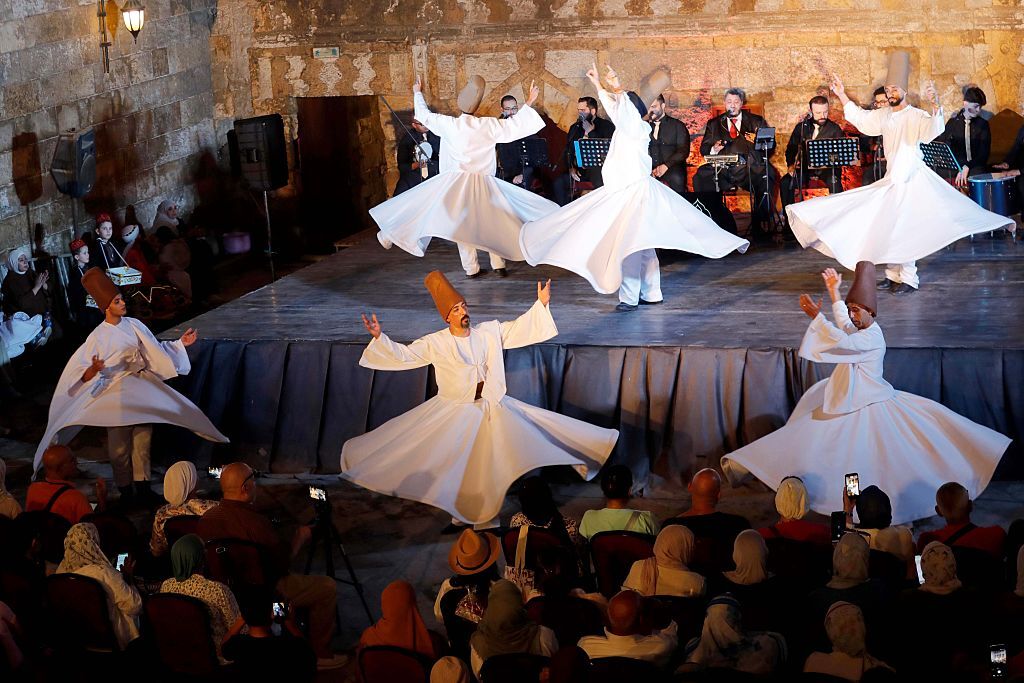
Aug. 28-Sept. 6, Abu Dhabi. Abu Dhabi International Hunting and Equestrian Exhibition. An annual event celebrating traditional Emirati heritage and culture. ADNEC.
Aug. 30-Sept. 2, Riyadh. Big 5 Construct. The event connects construction industry stakeholders with suppliers in Saudi Arabia. Riyadh Front Exhibition & Conference Centre.
Aug. 31-Sept. 3, Riyadh. LEAP Expo Riyadh. A major tech trade show for the Middle East, which includes a global startup live pitch event. RECC Malham.
Aug. 28-Sept. 6, Abu Dhabi. Abu Dhabi International Hunting and Equestrian Exhibition. An annual event celebrating traditional Emirati heritage and culture. ADNEC.
Aug. 30-Sept. 2, Riyadh. Big 5 Construct. The event connects construction industry stakeholders with suppliers in Saudi Arabia. Riyadh Front Exhibition & Conference Centre.
Aug. 31-Sept. 3, Riyadh. LEAP Expo Riyadh. A major tech trade show for the Middle East, which includes a global startup live pitch event. RECC Malham.
Sept. 1-3, Dubai. Middle East Energy. A three-day energy exhibition in Dubai brings together utilities, developers, manufacturers and industry professionals. Dubai World Trade Centre.
Sept. 1-3, Doha. Qatar Event Show. Brings together the events industry through a three-day program featuring exhibitions, conferences, workshops and networking opportunities. Doha Exhibition & Convention Center.
Sept. 7-8, Abu Dhabi. Hili Forum. The events bring policymakers and leading experts to examine the future of regional security, trade and energy corridors and technology. The St. Regis Saadiyat Island Resort.
Sept. 7-9, Dubai. AIM Congress. The global investment platform’s annual meeting brings together investors, governments, businesses and policymakers. Dubai World Trade Centre.
Sept. 11-13, Abu Dhabi. Middle East Film & Comic Con. Featuring some of the world’s biggest brands in film, TV, sci-fi, animation, manga, comics and collectibles. ADNEC Centre.
Sept. 13-18, Abu Dhabi. Abu Dhabi International Book Fair. Fostering collaboration between regional publishing sectors and creative industries. ADNEC Centre.
Sept. 14-16, Riyadh. Money 20/20. The event brings together banks, Big Tech, fintechs, regulators, startups and investors. Riyadh Exhibition & Convention Centre.
Sept. 14-17, Bangkok. Gastech. The global energy event brings together global energy leaders, policymakers and industry experts to explore natural gas, LNG, hydrogen, low-carbon solutions, electrification and AI. Bangkok International Trade & Exhibition Centre.
Sept. 14-18, Dubai. Arabian Travel Market. The flagship global travel trade show, which was postponed in May, returns, bringing 55,000+ travel professionals, 2,800+ exhibitors and representatives from 166 countries. Dubai World Trade Centre.
Sept. 15-17, Dubai. Arab Media Forum. The region’s largest media gathering, organized by the Dubai Press Club. Dubai World Trade Centre.
Sept. 16-18, Dubai. GISEC Global. MENA’S largest cybersecurity event brings together governments, CISOs, technology companies and cybersecurity experts to explore emerging threats, AI security, and other technologies. Dubai Exhibition Centre.
Sept. 17-19, Abu Dhabi. International Real Estate & Investment Show 2026. An event targeting investors and consumers rather than trade visitors. ADNEC Centre.
Sept. 20, New York. Qatar Economic Forum, Powered by Bloomberg: UNGA Special Edition 2026. The forum will host a special leadership gathering alongside the 2026 UNGA in New York, bringing together global leaders to explore capital, risk and resilience in a volatile global economy.
Sept. 28-Oct. 1, Singapore. SuperReturn Asia. The region’s premier private capital gathering. Marina Bay Sands Convention Centre.
Sept. 29-Oct. 1, Abu Dhabi. LIVEX 2026. Abu Dhabi’s inaugural Livability and Investment Exhibition. ADNEC Centre.
Oct. 6-7, Abu Dhabi. AiEverything.The AI Summit brings together policymakers, innovators and business leaders. ADNEC.
Oct. 7-9, Singapore. Milken Institute Asia Summit. Bringing together a global community of influential leaders shaping the next era of intelligence, collaboration and growth. Four Seasons Hotel.
Oct. 21, 22, 24, Riyadh. Six Kings Slam. World No. 1 Jannik Sinner will defend his Six Kings Slam title when the exhibition tournament returns, to be streamed globally on Netflix. ANB Arena.
Oct. 26-29, Riyadh. Future Investment Initiative. Saudi Arabia’s keystone annual business conference, sponsored by the Public Investment Fund. King Abdulaziz International Convention Center.