The Daily Circuit: MBS heads for Paris + Record oil tanker prices
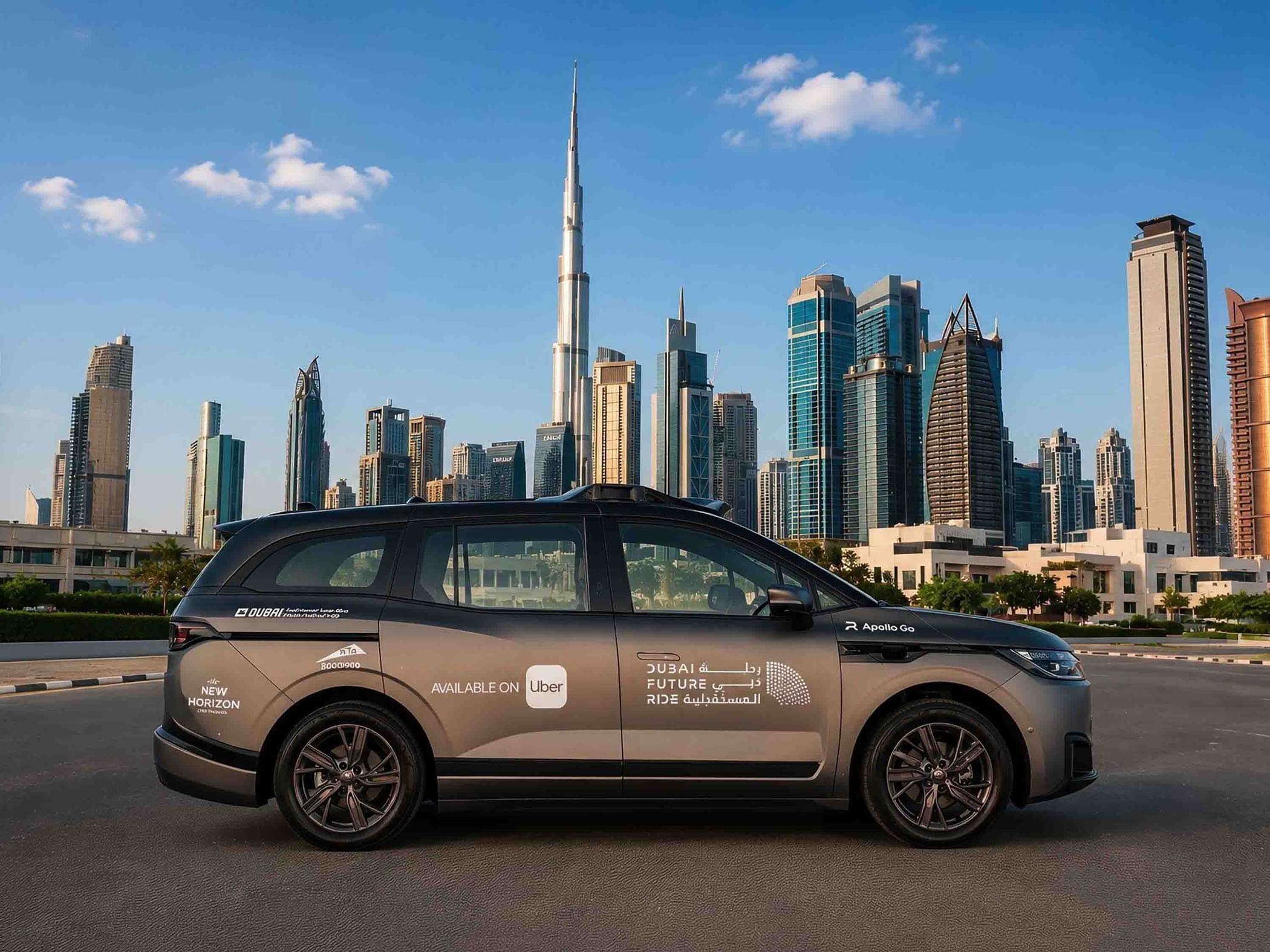
In today’s Daily Circuit, we’re reporting on record prices for oil tankers ready to navigate the Strait of Hormuz, ADNOC Distribution bringing a South African investor into its Shell business, Uber launching driverless taxis in Dubai and a public show of warmth between prominent Saudi and Emirati figures. But first, Saudi Crown Prince Mohammed bin Salman will attend next week’s Esports World Cup in Paris alongside French President Emmanuel Macron.
Saudi Crown Prince Mohammed bin Salman heads to Paris on Sunday for a two-day visit that mixes geopolitics, business and Saudi Arabia’s multibillion-dollar bet on gaming.
French President Emmanuel Macron will host MBS for talks on economic ties and regional stability, and the two leaders will convene the Franco-Saudi Strategic Partnership Council for the first time, Arab News reports.
The visit comes as France and Saudi Arabia seek closer coordination on the Middle East amid the war with Iran and follows Macron’s trip to the kingdom in December 2024.
MBS and Macron will also attend Sunday’s closing ceremony of the Esports World Cup, which moved from Riyadh to Paris this year due to the regional conflict and is being held outside Saudi Arabia for the first time.
The tournament offers a showcase for one of the kingdom’s biggest diversification bets, with the Public Investment Fund committing $38 billion to turn Saudi Arabia into a global gaming hub.
Editor’s Note: Have thoughts or feedback? Hit reply or drop us a note at [email protected].
GULF SIGNALS
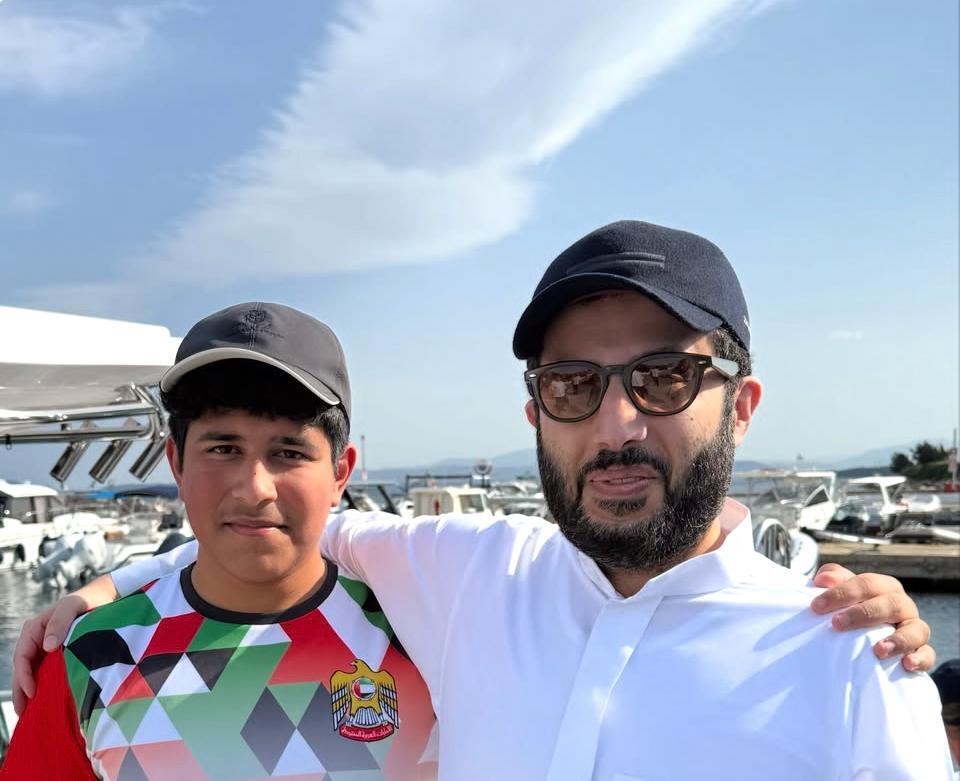
Saudi entertainment chief shares photo of encounter with son of UAE’s Sheikh Tahnoon bin Zayed
The chief of Saudi Arabia’s multibillion-dollar drive to build a world-class entertainment industry posted a photo of himself on social media with the son of Sheikh Tahnoon bin Zayed, the UAE National Security Adviser, in a public show of warmth amid strained ties between the two Gulf neighbors.
The picture shared on Instagram on Thursday shows Turki Alalshikh, Chairman of the Saudi General Entertainment Authority, with the young Emirati royal, Sheikh Zayed bin Tahnoon bin Zayed, The Circuit’s Jonathan Ferziger reports. The two are both wearing dark baseball caps with their arms on each other’s shoulders.
Last month, Alalshikh posted a photo of Sheikh Mansour bin Zayed, the UAE Vice President, Deputy Prime Minister and Chairman of the Presidential Court, in a friendly embrace with Saudi Arabia’s Minister of Defense, Prince Khalid bin Salman. Saudi-UAE relations have frayed in recent months over a variety of issues, including OPEC oil quotas and their support for opposing sides in Yemen’s conflict.
Soaring demand for oil tankers is driving costs to record highs as Gulf producers struggle to keep crude flowing through the Strait of Hormuz. Prices for supertankers have topped $130 million, the highest since 2008, while charter rates are also soaring, the Financial Times reports. Meanwhile, ADNOC and Kuwait Petroleum have set up shuttle operations through the war-disrupted strait, and Iraq is offering bigger discounts to buyers willing to risk the passage. The scramble has sent daily rates on some Hormuz-to-China voyages above $550,000, with just 29 tankers now accounting for more than half of all trips through the strait.
EXTREMIST PURGE
Saudi Arabia’s Etidal, a government-backed center that tracks and analyzes extremist propaganda online, worked with Telegram to remove some 34 million pieces of content and shut down 1,275 channels in the first half of 2026. The material – including videos, audio files, documents and other propaganda – was posted on Telegram, the popular messaging app whose public channels can reach large audiences, Arab News reports. Etidal identifies material linked to groups such as ISIS and Al Qaeda and flags it for Telegram, whose moderators decide what to remove. Since the partnership began in 2022, Telegram has removed nearly 293 million items and closed more than 20,000 channels identified through the effort.
💲 Sovereign Circuit
Public Investment Fund: Cenomi Centers is teaming up with the Saudi sovereign wealth fund to develop a shopping mall in Medina’s Al Madinah Downtown project.
Oman Investment Authority: Oman Investment Authority President Abdulsalam Al Murshidi led a delegation visiting Solidcore Resources’ Kyzyl mine and processing plant in Kazakhstan.
ADNOC: The UAE national oil company’s ADNOC Distribution unit agreed to sell a minority stake in Shell Downstream South Africa to Reatile Group after it completes a planned $1 billion acquisition of the company in 2027.
↪↩ Closing Circuit
✈️ Jet Fuel: The U.S. State Department approved a possible $4.5 billion sale to Qatar of as many as four Boeing KC-46A aerial refueling tankers, with Boeing, RTX and Northrop Grumman serving as the principal contractors.
🚧 Construction Phase: Sharjah-based Arada won a contract to develop a $1.4 billion residential project in Broadbeach on Australia’s Gold Coast.
💵Capital Takeover: Exits MENA, an investment advisory firm, is acquiring Avanz Capital Egypt, which will be rebranded as Exits Manara.
⚡Energy Sector: Saudi Arabia is developing four battery energy storage projects with a combined capacity of 2,000MW and a four-hour storage duration, backed by $1.2 billion in investment to strengthen grid reliability amid rising electricity demand.
🗣 Circuit Chatter
🚨Finance Crackdown: Two Binance employees were briefly detained by UAE authorities over inquiries into possible financial crimes, but the crypto exchange said they were cleared and released, Reuters reports.
⛳ Golf Reset: The PGA Tour will adopt a two-tier structure in 2028 with at least $20 million in prize money for elite events, cementing changes made to fend off Saudi-backed LIV Golf, whose challenge to the U.S. tour has effectively collapsed after five years of upheaval, the Financial Times reports.
🕸️ Air Connection: Qatar Airways said it will become the first airline to operate a fleet of Boeing 787-9 aircraft equipped with onboard Wi-Fi provided by Starlink.
📉 Declining Assets: Moody’s expects Qatari banks’ net profits to decline in 2026 as higher credit costs put pressure on asset quality amid the Middle East conflict.
🌍 Power Circuit
Emir of KuwaitSheikh Meshal Al-Ahmed, met withJasem Albudaiwi, Secretary General of the Gulf Cooperation Council, on Tuesday at Al Bayan Palace in Kuwait.
Sheikh Abdullah bin Zayed, UAE Minister of Foreign Affairs, held a phone call with Omar Bula Escobar, Minister of Foreign Affairs of Colombia.
Sheikh Saud bin Saqr Al Qasimi, Supreme Council Member and Ruler of northern emirate Ras Al Khaimah, met with UAE Government Cyber Security Council on Tuesday.
➿ On the Circuit
Nasser Al Sharji was named as Oman Air’s new CEO starting Sept. 1, replacing Con Korfiatis, who oversaw a two-year restructuring of the national carrier.
Khalid Aliawas appointed Chief Digital and Customer Experience Officer at stc Bahrain, a digital enabler.
Mohammad Al Sariwas appointed as CEO of HRE Development, a Dubai-based real estate developer.
🎶 Culture Circuit
🎨 Kids’ Canvas: Abu Dhabi is preparing to stage what organizers call the Arab world’s first outdoor art biennale devoted to children. The one-month show, scheduled to start Nov. 6, will fill the capital city’s Umm Al Emarat Park with works designed to be experienced through touch, sound, movement and light, The National reports. Among the featured artists will be Alia AlShamsi of the UAE, Hana El-Sagini from Egypt and Indonesia’s Eko Nugroho.
📷 Photo of the Day
Uberlaunched its new driverless taxi service in Dubai on Thursday, featuring Baidu’s Apollo Go vehicles in partnership with New Horizon Luxury Vehicles (Baidu)
August 30-Sept. 2, Riyadh. Big 5 Construct. The event connects construction industry stakeholders with suppliers in Saudi Arabia. Riyadh Front Exhibition & Conference Center.
August 31-Sept. 3, Riyadh. LEAP Expo Riyadh. A major tech trade show for the Middle East, which includes a global startup live pitch event. RECC Malham.
Sept. 1-3, Dubai. Middle East Energy. A three-day energy exhibition in Dubai brings together utilities, developers, manufacturers and industry professionals. Dubai World Trade Centre.
Sept. 1-3, Doha. Qatar Event Show. Brings together the events industry through a three-day program featuring exhibitions, conferences, workshops and networking opportunities. Doha Exhibition & Convention Center.
Sept.7-8, Abu Dhabi. Hili Forum. The events bring policymakers and leading experts to examine the future of regional security, trade and energy corridors and technology. The St. Regis Saadiyat Island Resort.
Sept. 7-9, Dubai. AIM Congress. The global investment platform’s annual meeting brings together investors, governments, businesses and policymakers. Dubai World Trade Centre.
Sept. 11-13, Abu Dhabi. Middle East Film & Comic Con. Featuring some of the world’s biggest brands in film, TV, sci-fi, animation, manga, comics and collectibles. ADNEC Centre.
Sept. 13-18, Abu Dhabi. Abu Dhabi International Book Fair. Fostering collaboration between regional publishing sectors and creative industries. ADNEC Centre.
Sept. 14-16, Riyadh. Money 20/20. The event brings together banks, Big Tech, fintechs, regulators, startups and investors. Riyadh Exhibition & Convention Centre.
Sept.14-17, Bangkok. Gastech. The global energy event brings together global energy leaders, policymakers and industry experts to explore natural gas, LNG, hydrogen, low-carbon solutions, electrification and AI. Bangkok International Trade & Exhibition Centre.
Sept. 14-18, Dubai. Arabian Travel Market. The flagship global travel trade show, which was postponed in May, returns, bringing 55,000+ travel professionals, 2,800+ exhibitors and representatives from 166 countries. Dubai World Trade Centre.
Sept. 15-17, Dubai. Arab Media Forum. The region’s largest media gathering, organized by the Dubai Press Club. Dubai World Trade Centre.
Sept. 16-18, Dubai. GISEC Global. MENA’S largest cybersecurity event brings together governments, CISOs, technology companies and cybersecurity experts to explore emerging threats, AI security, and other technologies. Dubai Exhibition Centre.
Sept. 20, New York. Qatar Economic Forum, Powered by Bloomberg: UNGA Special Edition 2026. The forum will host a special leadership gathering alongside the 2026 UNGA in New York, bringing together global leaders to explore capital, risk and resilience in a volatile global economy.
Sept. 28-Oct. 1, Singapore. SuperReturn Asia. The region’s premier private capital gathering. Marina Bay Sands Convention Centre.
Sept. 29-Oct. 1, Abu Dhabi. LIVEX 2026. Abu Dhabi’s inaugural Livability and Investment Exhibition. ADNEC Centre.
Oct. 6-7, Abu Dhabi. AiEverything.The AI Summit brings together policymakers, innovators and business leaders. ADNEC.
Oct. 7-9, Singapore. Milken Institute Asia Summit. Bringing together a global community of influential leaders shaping the next era of intelligence, collaboration and growth. Four Seasons Hotel.
Oct. 21-24, Riyadh. Six Kings Slam. World No. 1 Jannik Sinner will defend his Six Kings Slam title when the exhibition tournament returns, to be streamed globally on Netflix. ANB Arena.
Oct. 26-29, Riyadh. Future Investment Initiative. Saudi Arabia’s keystone annual business conference, sponsored by the Public Investment Fund. King Abdulaziz International Convention Center.
MBS leaves Washington with $575B in pledged Saudi deals
Amid the social splash and diplomatic advances that Saudi Crown Prince Mohammed bin Salman made in Washington this week, the kingdom tallied some $575 billion in deals from two days of rubbing shoulders with America’s corporate elite.
Among the biggest was an agreement between Elon Musk’s xAI, Jensen Huang’s Nvidia and Saudi Arabia’s Humain to build a 500-megawatt data center to bolster the kingdom’s ambitions of becoming a world hub for powering artificial intelligence.
Humain, meanwhile, which was launched by the Public Investment Fund in May, formed a joint venture with Advanced Micro Devices and Cisco to build more Middle East data centers. Also announced was a deal between PIF-owned mining company Ma’aden and Pentagon-backed MP Materials to build a rare-earth refining facility in Saudi Arabia, challenging China’s dominance in global mineral markets. And Salesforce said it will set up a regional headquarters in Riyadh as it prepares to invest $500 million in AI and cloud services.
Addressing the Crown Prince and an entourage of his Cabinet ministers at the U.S.-Saudi Investment Forum held at Washington’s Kennedy Center on Wednesday, U.S. President Donald Trump said: “I want to thank you for bringing all those jobs and all those great opportunities to America.”
The deals were made possible, in part, by the U.S. Commerce Department allowing U.S. companies to sell advanced Nvidia chips to both Humain and Abu Dhabi AI company G42, The Wall Street Journal reports.
While the Saudi leader told Trump during their initial meeting this week in the Oval Office that the kingdom plans to spend almost $1 trillion in the U.S. – spanning energy, artificial intelligence, defense and aerospace, finance, infrastructure, education, and healthcare – many of the announcements involved preliminary agreements far from conclusion, The New York Times reports.
That reflects Saudi Arabia’s current financial constraints amid slumping oil prices that have produced serial budget deficits and forced cutbacks in NEOM and several of its other ambitious megaprojects.
8VC’s Alex Moore scouts Mideast ahead of Saudi leader’s White House visit
As Saudi Crown Prince Mohammed bin Salman heads to Washington next week, venture capital investor Alex Moore is exploring laser warfare startups and sea-cruising drone technology that could capture a portion of the hundreds of billions of dollars the Gulf ruler promises to spend in the U.S.
Moore, an early protégé of Palantir co-founder Peter Thiel, heads the defense portfolio at Austin, Texas-based 8VC and traveled to Israel last week to assess new investment prospects for the $8 billion firm. Other partners have been scouting companies in the UAE and neighboring countries for 8VC, which counts Abu Dhabi’s Mubadala sovereign wealth fund as an investor.
The Saudi Crown Prince, known widely as MBS, is scheduled to visit the White House on Nov. 18, where he will follow up on the $148 billion arms agreement he signed in May when U.S. President Donald Trump met him in Riyadh. The meeting in Washington will also take up Saudi Arabia’s longstanding request for a comprehensive defense pact similar to one with Qatar and may determine the disposition of some $450 billion more in Saudi funding commitments to the U.S.
“We’re very interested in this new possible agreement with the Saudis,” Moore, 43, said in an interview with The Circuit in Tel Aviv, predicting it will “unleash innovation.”
Trump says he will press MBS again next week to normalize relations with Israel by joining the Abraham Accords, the U.S.-brokered pact from 2020 that was signed by the UAE, Bahrain and Morocco. Many Israeli-founded startups establish headquarters in the U.S. and some of their technology could be attractive to the Saudis.
Among the firms Moore visited during his week in Israel was Particle Lab, which is developing anti-missile systems using supercharged, subatomic particle beams; and LiteVision, the maker of a wide-angle camera mounted on airborne drones to identify threats such as rocket launchers on the battlefield.
“Israel has the talent to actually leapfrog the U.S. ecosystem in a few categories,” Moore said, citing lasers and other directed-energy technologies as an area where Israel is “radically ahead.”
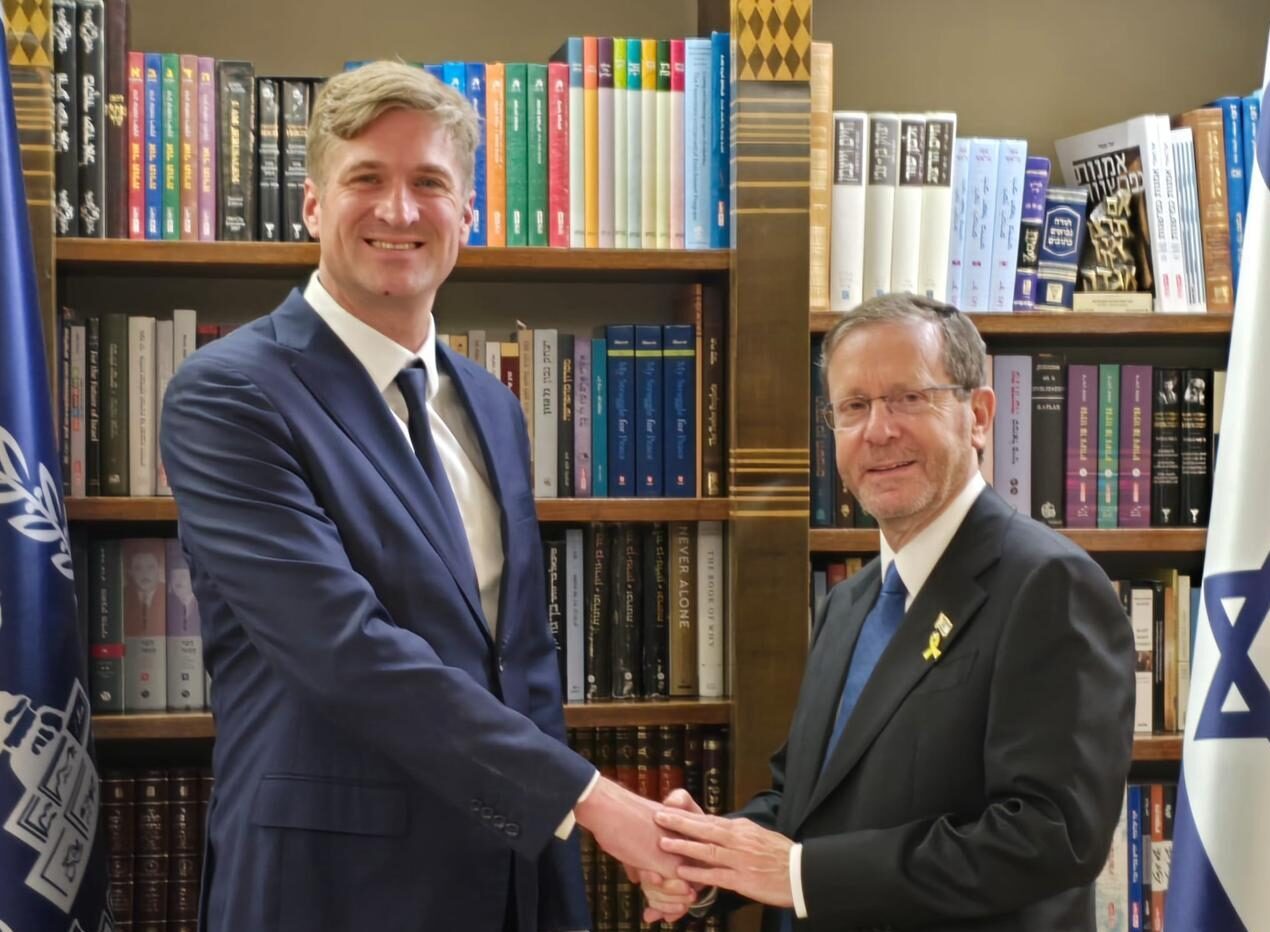
Escorting Moore through his meetings was Isaac “Yitz” Applbaum, a longtime San Francisco-based VC investor who – together with his son Aaron Applbaum and partners Frederic Landau and Yoav Knoll – recently founded Kinetica, an Israeli venture capital firm specializing in defense startups. Moore also notched a meeting with Isaac Herzog at the Israeli President’s Modernist-style residence in Jerusalem’s Talbiyeh neighborhood.
The Kinetica team includes Saar Tzur, a Major General in the Israeli Defense Forces reserves and adviser to drone maker Heven Aerotech, and Amit Kunik, a reserve Brigadier General in military intelligence.
On the relationship with 8VC, Yitz Applbaum says: “We are their eyes and ears in Israel.”
8VC Partner Alex Moore meets with Israeli President Isaac Herzog in Jerusalem (Kinetica)
Moore’s visit is an indication that Israel is starting to emerge from the two years of the Gaza war, when foreign investors refrained from visiting the country even if they “stayed engaged quietly,” said Avi Hasson, CEO of Startup Nation Central, which tracks Israel’s tech industry. “What we are seeing now is an acceleration – senior partners are back on the ground, activity is picking up, and the ecosystem is moving from quiet maintenance to renewed growth.”
A 2005 graduate of Stanford University in economics who stands 6-foot-5 (196 centimeters), Moore was the first employee hired by Palantir, the data-mining powerhouse that bridges Silicon Valley and the Washington national-security world, where he became Director of Operations.
Working while in his twenties with Thiel and co-founder Alex Karp – both legends in the software industry – was an education in broadly divergent styles of management, he recalls, particularly in the take-no-prisoners world of young software engineers.
Running an engineering organization is like “taming a wild animal,” Moore said. “We had kind of a motley crew of these super-genius engineers… and the smarter the people are, the more rebellious they get, and they don’t want to agree on things. Like, ‘My architecture idea is better than yours. Why would we build the product your way?’ You have to get them on the same page.”
Part of Palantir’s success was the way that Thiel and Karp played off each other, Moore said. “Peter is this big vision, world-level type of problem solver. So I think from him, we basically got this confidence of just being extremely bold, even as young people. Like, ‘Why don’t we build the best software company in the world?’ So you kind of start believing it. You get a lot of that strength from Peter, that level of extremity, of extreme thinking.”
Karp, on the other hand, was more of a philosopher and an artist. “He is a genius at understanding the mood of the team – adding a sense of humor here, adding some tough love here, and conducting the orchestra in a way that feels very seamless. He kind of pulls the genius engineer out of his own head.”
After leaving Palantir in 2010 and founding two businesses himself, Moore joined 8VC, a fund started by Palantir co-founder Joe Lonsdale, and headed its startup incubator program. One of the young companies he mentored was Saronic, a maker of maritime drones for the U.S. Navy, which is now valued at $4 billion. Working with Saronic from the ground up kindled an interest in maritime technology that he found in Israel at startups Orca AI and Metacentric Systems.
Sitting at dusk in the courtyard at Tel Aviv’s fashionable Norman Hotel, Moore says drones should be used to address conflicts such as the attacks on ships by Yemen’s Houthi rebels that have paralyzed traffic in the Red Sea – a body of water bordered both by Saudi Arabia and Israel.
“I think we will end up with a mostly autonomous, or entirely autonomous, policing force of boats that follow around oil tankers and have interdiction capabilities. One will have drones, one will have directed-energy, others will have guns, another will have warheads,” Moore said, spinning out battle scenarios as he leaned back in an Adirondack chair.
“If you’re going into dangerous areas, I think that’s the future,” he said.
As for winning some of the Saudi contracts MBS will be offering in Washington this week, and others pledged by the UAE and Qatar during Trump’s Middle East swing in May, Moore said several companies in 8VC’s portfolio are primed to compete.
“Where we are at now is we have industrial-grade startups that are ready and capable of setting up factories and facilities and building products in the Middle East,” Moore said.
“It’s really about knowing that the companies we do send over to do those deals can deliver,” he said. “I’m more optimistic than ever.”
U.S.-Saudi investor summit to follow MBS meeting with Trump
Preparations are moving into high gear for next week’s White House visit by Saudi Crown Prince Mohammed bin Salman, with an investor summit now set to take place on the sidelines.
The conference, co-hosted by the Saudi Ministry of Investment and the U.S.-Saudi Business Council, will take place on Nov. 19 at Washington’s John F. Kennedy Center for the Performing Arts, CBS reports.
While still unconfirmed, the event in billed in an invitation as a platform for “exclusive business matchmaking” through which participants will “explore new investment horizons across critical sectors, including energy, technology, financial services, infrastructure, and healthcare.”
No word yet whether the investor summit will be attended by MBS and President Donald Trump, who will meet the day before in the Oval Office and join a black-tie dinner likely to include top executives from Wall Street and Silicon Valley. When Trump visited Saudi Arabia in May, the U.S. leader joined the Crown Prince at an investor conference in Riyadh alongside Tesla’s Elon Musk, OpenAI’s Sam Altman, Nvidia’s Jensen Huang, BlackRock’s Larry Fink and Citigroup’s Jane Fraser.
Already gathering in Washington are some of MBS’s top lieutenants who are meeting with Trump administration counterparts to set the agenda for talks covering some $600 million that the Saudi kingdom has committed to spending with U.S. businesses. Among the most watched was the meeting on Tuesday between Yasir Al-Rumayyan, Governor of Saudi Arabia’s Public Investment Fund, and U.S. Treasury Secretary Scott Bessent.
Prince Khalid bin Salman, the Saudi Minister of Defense, met on Tuesday with U.S. Secretary of State Marco Rubio, Secretary of War Pete Hegseth, and U.S. Special Envoy for the Middle East Steve Witkoff. The meeting was also attended by Saudi Ambassador to the U.S. Princess Reema bint Bandar.
Trump tries to stoke Abraham Accords by recruiting Kazakhstan
With Saudi Crown Prince Mohammed bin Salman due to visit the White House this month, U.S. President Donald Trump is attempting to inject new life into the Abraham Accords.
First signed five years ago to normalize Israel’s ties with the UAE, Bahrain and Morocco, the agreement will be expanded to include the central Asian nation of Kazakhstan, whose population is mostly Muslim, Trump said on Thursday.
Posting on his Truth Social media platform, Trump said he held a three-way call with Israeli Prime Minister Benjamin Netanyahu and Kazakh President Kassym-Jomart Tokayev.
The U.S. leader said Kazakhstan would be the first of “many” new countries to join in his second term.
Tokayev said his decision to join the accords was driven primarily by financial benefits, The New York Times reports. “We will get certain dividends from the point of view of economic cooperation,” he said.
Trump has repeatedly coaxed Saudi Arabia’s de facto leader to join the agreement and said that the issue will be on the agenda for their Nov. 18 meeting.
Prince Mohammed, who has said he would like to improve ties with Israel, more recently conditioned signing the accords on the Jewish state agreeing on a “pathway” to Palestinian statehood.
Trump expected to host MBS in November visit to White House
Saudi Crown Prince Mohammed bin Salman appears to be getting ready for his first White House visit since 2018.
Discussions with U.S. President Donald Trump at the planned Nov. 17-18 meeting are likelyto cover a much-sought defense cooperation pact with the U.S., arms purchases, Gaza reconstruction and possible normalization with Israel.
That’s according to The Wall Street Journal, Bloomberg and other U.S. media, which cited unidentified sources. No confirmation so far from the Saudi Royal Court or the White House.
The proposed security agreement would expand weapons sales, intelligence sharing and coordination against Iran and terrorist groups, the Journal said.
Trump, who last month brokered a cease-fire to end Israel’s two-year war in Gaza, has publicly predicted that Saudi Arabia will soon join the Abraham Accords.
The visit recalls Prince Mohammed’s 2018 trip to Washington, when Trump hosted him at the White House and touted the potential for tens of billions of dollars in Saudi purchases of American arms.
That visit – part of a tour that included meetings with U.S. technology and defense executives – came before the killing of journalist Jamal Khashoggi by Saudi agents that nearly ruptured relations between the two countries.
Trump, who visited Riyadh in May on a swing through the Gulf that included the UAE and Qatar, also attended the Saudi Public Investment Fund’s FII Priority summit in Miami in February, where he praised the kingdom’s growing investments in the U.S.
Neom faces 20% budget cut amid continued drop in Saudi oil prices
Neom, the flagship mega-project of Saudi Crown Prince Mohammed bin Salman’s Vision 2030 economic roadmap, is facing budget cuts.
The development along the Red Sea coast is expected to be allocated 20% less than its targeted budget for this year, Bloomberg reports.
The revision comes as the kingdom reconciles lower-than-expected oil prices and foreign investment that has it on track for at least three more years of projected national budget deficits.
Saudi Finance Minister Mohammed Al-Jadaan has previously said the eight-year-old Vision 2030 plan may face delays because the kingdom needs to be careful about “overheating” the economy – which may cause inflation to rise.
“If you don’t allow your economy to catch up with your projects, basically what will happen is you’ll import a lot more,” Al-Jadaan said at the Qatar Economic Forum in May.
As a result, Saudi Arabia could lack the factories and other capacity needed to support its plans. “So giving it more time is actually wise,” he said.
Modifying the vision is not necessarily a bad sign, analysts told Bloomberg, echoing the Finance Minister’s comments. The “rightsizing” of projects is a sign the kingdom is maturing, according to Goldman Sachs’ MENA Economist, Farouk Soussa.
“What they’re doing in terms of adjusting these projects gives us a lot of comfort,” Soussa said. “They’re basically saying they’re not going to go for broke or bet the house on any one particular thing. If it’s possible, they’ll do it. If not, they won’t. They’re being quite sensible.”
Riyadh among top 15 fastest-growing cities over next 10 years
Even as the most audacious blueprints for Saudi Crown Prince Mohammed Bin Salman’s Vision 2030 are revised, Riyadh is still poised to be one of the fastest-growing cities in the world over the next decade as the kingdom’s mega-projects take root, according to British property consultancy Savills.
Saudi Arabia’s capital city landed in the top 15 fastest-growing cities by 2033 — the only urban center outside of Asia on the list — according to the Savills Growth Hubs Index.
Indian and Chinese cities take five spots each in the top 15, followed by Vietnam with two, and the Philippines, Bangladesh and Saudi Arabia with one each. The ranking is a compilation of forecasts of population, wealth and economic expansion.
Riyadh is at the center of the kingdom’s diversification push away from oil as the city serves as regional headquarters to an influx of international companies.
Major new developments are also underway to improve livability. The mixed-use property development New Murabba and a new metro system are under construction as the city prepares to host the World Expo in 2030 and vies for the World Cup in 2034.
The Middle East’s third largest city is expected to record a 26% uptick in population, taking Riyadh from 5.9 million to 9.2 million residents in 10 years. The new-arrivals boom is expected to result in continued government spending on massive infrastructure projects as well as improved amenities and services to accommodate the growing population, according to Savills.
“Saudi Arabia boasts a population of around 36 million people and, astonishingly, 67% are under the age of 35,” Richard Paul, Head of Professional Services & Consultancy Middle East, said in the report.
“The employment potential and ultimate spending power of this segment of the population over the next decade are enormous.”