ADNOC spends $2.7 billion to buy new ships amid Iran conflict
After attacks on at least 16 of its ships over the past six months of conflict with Iran and Yemen’s Houthis, ADNOC is making a major investment to enlarge its fleet and move more of its energy supplies around the world.
The UAE national oil company’s shipping arm agreed to pay $444 million for two LNG carriers, bringing its vessel purchases this year to $2.7 billion, the company said.
Owning ships has become a strategic advantage for ADNOC as attacks in the Strait of Hormuz and the Red Sea disrupt traffic and send freight rates soaring.
The company also plans to boost oil output and natural gas production after having quit OPEC in May.
L’Imad moves to take full control of AD Ports amid Hormuz risks
Abu Dhabi’s L’Imad Holding sovereign wealth fund wants tighter control of the emirate’s ports as the Iran war makes shipping through the Strait of Hormuz increasingly risky.
The government-owned fund is offering to buy the 24.6% of AD Ports it doesn’t already control for about $2.1 billion, valuing the company at $8.66 billion, Bloomberg reports.
The offer of 6.25 dirhams a share is a 23% premium to Friday’s close and sent AD Ports shares up by the daily limit of 15% on Monday.
Taking AD Ports private would give L’Imad more freedom to invest and make acquisitions across a network that includes ports, shipping services and economic zones, including infrastructure that can help Abu Dhabi bypass Hormuz.
The move comes two months after L’Imad said it would delist $81 billion utility TAQA, reversing Abu Dhabi’s recent push to put major state assets on the public market.
The Daily Circuit: DP World plans bypass port + Saudi cabinet shuffle
In today’s Daily Circuit, we’re reporting on Saudi Energy Minister Prince Abdulaziz bin Salman taking on the additional post as Minister of Industry and Mineral Resources, Masdar raising $5 billion in financing for its new solar battery storage project, Saudi Re getting regulatory permission to acquire a stake in London-based AdA Risk Holding, and the stream of kings, princes and presidents pouring into Qatar to offer condolences on the death of the former Emir, Sheikh Hamad bin Khalifa Al-Thani.
DP World is drawing up plans to build a new port on the UAE’s east coast after the Iran war exposed the risks of relying on the Strait of Hormuz.
The Dubai-owned company has been discussing construction of a port and container terminal in Fujairah that would let cargo reach the UAE through the Gulf of Oman and then travel by truck to Dubai, Abu Dhabi and elsewhere in the Gulf, the Financial Times reports.
The move is part of a wider UAE effort to protect its economy after fighting with Iran caused shipping through Hormuz to collapse and sharply reduced traffic at Jebel Ali, the country’s biggest port.
DP World has said broadly it is working on plans to keep cargo moving during future disruptions. People familiar with the project told the newspaper that construction could begin soon enough for the first phase to open in about 18 months.
Meanwhile, Iran struck two supertankers with cruise missiles in the Strait of Hormuz, killing an Indian crew member. One of the vessels belonged to ADNOC Logistics & Services.
Editor’s Note: Have thoughts or feedback? Hit reply or drop us a note at [email protected].
📰 Developing Stories
POWER SHIFT
Saudi Arabia has put Energy Minister Prince Abdulaziz bin Salman in charge of both energy and industry after the Iran war exposed how disruptions to oil shipments, trade routes and manufacturing can quickly spill across the economy. In appointing Prince Abdulaziz Minister of Industry and Mineral Resources in addition to his current post, the government aims to centralize decisions across oil, mining and factories as it works to reduce its dependence on crude exports, Asharq Al-Wasat reports. Under the new structure, Prince Abdulaziz will lead efforts to expand manufacturing, increase non-oil exports and raise the sector’s contribution to the economy to almost $240 billion by 2030. Former Industry Minister Bandar Alkhorayef will remain in the cabinet and take charge of the kingdom’s military industries regulator.
FOUNDER FAITH
Startup founders chasing money in the Gulf have not let the war slow their stride. Many are staying put in the UAE, Qatar and Saudi Arabia in the hope that generous incentives will continue to flow from the region’s sovereign funds, Bloomberg reports. In Abu Dhabi, Mubadala-backed startup incubator Hub71, which gives successful entrants $140,000 in cash investment and incentives, went ahead with its annual event in June, treating attendees to Mexican food and talks from Careem, Talabat and Whoop. “This situation has become sort of normalized, and people kind of know what to expect,” said Biotech entrepreneur Rayees Rahman, whose drug discovery startup Harmonic Discovery joined Hub71 last September and is now negotiating with a Dubai-based venture capital firm.
💲 Sovereign Circuit
Mubadala: The Abu Dhabi sovereign wealth fund’s Mubadala Bio unit has begun producing hemodialysis concentrate solutions in the UAE for the first time through its Wellpharma subsidiary, launching eight products used to treat patients with kidney failure.
Abu Dhabi Investment Authority: India’s largest asset manager, SBI Funds Management, raised almost $280 million from anchor investors, including ADIA, ahead of its $1.2 billion IPO.
Masdar: The Abu Dhabi-owned renewable power company has secured a $5 billion financing package from a consortium of 13 banks for its $6 billion around-the-clock solar and battery storage project.
Public Investment Fund: The Saudi sovereign wealth fund signed a preliminary agreement with infrastructure investor I Squared Capital to pursue up to $2 billion in investments in PIF-owned real estate and infrastructure assets, with a focus on digital infrastructure and district cooling.
Public Investment Fund: California led a group of 12 U.S. States in filing a lawsuit to block the $110 billion merger between Paramount Skydance and Warner Bros. The PIF, Qatar Investment Authority and Abu Dhabi’s L’Imad Holding are all backing the deal.
Saudi Re: The PIF-owned reinsurance company has secured regulatory approval to acquire a 22.5% stake in London-based AdA Risk Holding for nearly $12 million.
Riyadh Air: The PIF-owned airline is studying an order for 25 to 30 additional Boeing 787 Dreamliners by exercising most of its purchase options, with a deal potentially announced at next week’s Farnborough Airshow, Reuters reports.
↪↩ Closing Circuit
⚓ Port Authority: Saudi Ports Authority (Mawani) will invest $170 million with DP World and Red Sea Gateway Terminal to expand cargo-handling capacity at Jeddah Islamic Port.
☀️ Sun Smart: UAE-based energy transition platform Positive Zero has secured a $375 million loan to expand its distributed solar, energy efficiency and clean mobility infrastructure across the GCC.
💰 Loan Refresh: Saudi-listed SHL Finance has renewed a $480 million Shariah-compliant credit facility agreement with Arab National Bank.
🏢 HQ Contract: China State Construction Engineering Corporation Middle East has won the contract to build Kuwait’s 55-story Direct Investment Promotion Authority headquarters in Sharq.
🗣 Circuit Chatter
🛢️ Output Surge: The UAE told OPEC its crude production jumped to 3.8 million barrels a day in June, reflecting its exit from the producer group and efforts to reroute exports during the Iran conflict.
✈️ Adjusting Flights: Air travel in the Gulf faces renewed disruption as airlines adjust operations amid escalating U.S.-Iran tensions.
🚨 Back On: Iran-backed Houthis in Yemen fired ballistic missiles and drones on Saudi Arabia on Monday, targeting Abha Airport in the south-west region in the first major escalation since the 2022 ceasefire.
🌍 Power Circuit
Qatar’s Emir Sheikh Tamim bin Hamadreceived a stream of regional and global leaders at Lusail Palace offering condolences for the death of his father, Sheikh Hamad bin Khalifa Al-Thani. Guests included: Bahrain’s King Hamad bin Isa Al Khalifa, Syrian President Ahmed al-Sharaa, Egyptian President Abdel Fattah El-Sisi, Lebanese President Joseph Aoun, Italian Prime Minister Giorgia Meloni, Ethiopian Prime Minister Abiy Ahmed Ali, FIFA President Gianni Infantino, Kazakhstan’s President Kassym-Jomart Tokayev and UAE Deputy Prime Minister and Minister of Interior Lt. Gen. Sheikh Saif bin Zayed. Sheikh Tamim received phone calls from UAE President Sheikh Mohamed bin Zayed and Saudi Crown Prince Mohammed bin Salman.
Sheikh Mansour bin Zayed, UAE Vice President, Deputy Prime Minister and Chairman of the Presidential Court, chaired a meeting of the Emirates Investment Authority board on Monday.
Prince Faisal bin Farhan, Saudi Arabia’s Foreign Minister, held a telephone call with Antonio Tajani, Italy’s Deputy Prime Minister and Minister of Foreign Affairs,on Monday.
➿ On the Circuit
U.S. President Donald Trumpwill host Iraqi Prime Minister Ali Al Zaidi at the White House today.
Hamdullah Mohib, CEO of Orbitworks, a two-year-old satellite manufacturer in the UAE, told Arabian Gulf Business Insight that the company is preparing for its first launch in the autumn.
Xavier Niel: The French billionaire sent a banker to the UAE in early July to gauge whether telecom giant e& would sell its 16.2% stake in Vodafone, wrapping up a $5.9 billion deal a week later that made him the company’s largest shareholder, the Financial Times reports.
🎶 Culture Circuit
🎨 Art Scene: Three leading Emirati artists were featured among the exhibitions at NOMAD Hamptons 2026 in the first U.S. edition of the traveling art fair. In a show titled “Rooted Movements,” Afra Al Dhaheri, Zuhoor Al Sayegh, and Azza Al Qubaisi introduced New York audiences in the exclusive Southampton town of Water Mill to a new generation of Emirati artistic practices that engaged deeply with materiality, memory, and place. The collaboration between the Department of Culture and Tourism-Abu Dhabi and NOMAD came after the emirate hosted the art fair at the decommissioned Zayed International Airport Terminal 1 last year.
📷 Photo of the Day
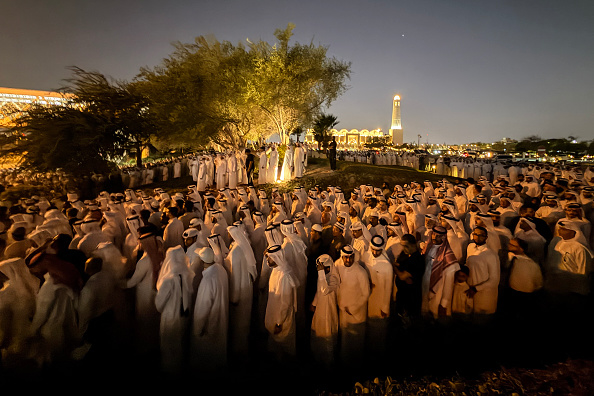
Mourners gather for prayers after the announcement of the death of Qatar’s former leader Sheikh Hamad bin Khalifa Al-Thani at the Imam Mohammed ibn Abd al-Wahhab Mosque in Doha (Mahmud Hams / AFP via Getty Images)
📅 Ahead on the Circuit
July 14-15, Carlisle, Pa., Pennsylvania Defense and Innovation Summit. U.S. President Donald Trump to headline event at U.S. Army War College in Carlisle, joining defense, technology, finance and government leaders for discussions on military innovation and investment.
August 18-19, Dubai. Middle East Event Show. Bringing together professionals from the events industry. Dubai World Trade Center.
August 31-Sept. 3, Riyadh. LEAP Expo Riyadh. A major tech trade show for the Middle East, which includes a global startup live pitch event. RECC Malham.
Sept. 11-13, Abu Dhabi. Middle East Film & Comic Con. Featuring some of the world’s biggest brands in film, TV, sci-fi, animation, manga, comics and collectibles. ADNEC Center.
Sept. 13-18, Abu Dhabi. Abu Dhabi International Book Fair. Fostering collaboration between regional publishing sectors and creative industries. ADNEC Center.
Sept. 29-Oct. 1, Abu Dhabi. LIVEX 2026. Abu Dhabi’s inaugural Livability and Investment Exhibition. ADNEC Centre.
The Daily Circuit: U.S. eases UAE chip access + Qatar’s former Emir dies
In today’s Daily Circuit, we’re reporting on the death of Qatar’s former Emir, Sheikh Hamad bin Khalifa Al Thani, the UAE’s EDGE focusing on global defense sales and NEOM toning down some of the futuristic glitz from its marketing materials. Plus, Tobias Maier, CEO of DHL Global Forwarding Middle East & Africa, talks to The Circuit.
The U.S. just made it much easier for the UAE to buy America’s most advanced technology, including Nvidia AI chips, military equipment and commercial satellites.
The new rules eliminate export license requirements for the UAE government and approved companies, including G42, Core42 and MGX, as well as U.S. firms operating in the emirates such as Amazon, Apple, Google, Meta, Microsoft, OpenAI, Oracle and xAI.
U.S. officials said the move announced on Friday reflects the UAE’s growing strategic importance, citing its cooperation against Iran and its proxies and more than $1 trillion of UAE investment in the United States.
The Commerce Department also placed the UAE in a preferred export-control category that grants broader access to military and dual-use technology, making it the only country in the group that is outside the major multilateral export-control regimes.
The decision locks in a framework announced last year, expands access to technology used in oil, gas and civil nuclear projects, and signals Washington’s intention to deepen its technology partnership with the UAE.
Editor’s Note: Have thoughts or feedback? Hit reply or drop us a note at [email protected].
📰 Developing Stories
QATAR MOURNS
Foreign leaders and royals are heading to Qatar this week following the death of former Emir Sheikh Hamad bin Khalifa Al Thani at 74. Qatar held funeral prayers on Sunday and planned to bury Sheikh Hamad at Lusail Cemetery, while declaring four days of national mourning. Emir Sheikh Tamim bin Hamad Al Thani, Sheikh Hamad’s son, will receive condolences at Lusail Palace through Wednesday. During his 1995-2013 rule, Sheikh Hamad developed Qatar’s vast gas reserves and turned the country into a leading LNG exporter. The resulting wealth financed major infrastructure projects and global investments through the Qatar Investment Authority.
BUILDING BLOCKCHAIN
ADI Chain, a part of IHC’s ADI Foundation, has received a $50 million investment to help grow its blockchain network and build the technology needed for large organizations to use it securely. The funding, announced today, will be used to expand the network, support developers and create partnerships with governments, banks and businesses looking to move important services onto blockchain. ADI Chain is already supporting projects such as ADI Predictstreet, a FIFA World Cup Prediction Market platform built with Kalshi, and DDSC, a UAE dirham-backed digital currency developed with First Abu Dhabi Bank, International Holding Company and Sirius International Holding.
💲 Sovereign Circuit
ADNOC: Abu Dhabi National Oil Co. is tweaking crude prices to offer cargoes collected outside the Strait of Hormuz at a premium rate, Bloomberg reports.
EDGE: Abu Dhabi-backed EDGE Group is trying to turn the UAE’s push for homegrown defense technology into a global business, Managing Director and CEO Hamad Al Marar said in the first episode of “Managing Middle East,” on CNBC.
Public Investment Fund: Saudi Pro League clubs, particularly the PIF-owned “Big Four,” are preparing for potential legal disputes over player wages after Saudi Arabia’s sovereign wealth fund sharply cut their budgets by an estimated $200-400 million, Intelligence Online reports.
NEOM: Saudi Arabia’s NEOM project has been attempting to reshape its public image by toning down claims around The Line, including overhauling its website to remove some of the futuristic imagery, Arabian Gulf Business Insight reports.
↪↩ Closing Circuit
𖥂 Drone Deals: Saudi Arabia bought a record $47.2 million worth of drones from Taiwan, becoming the top buyer for the island’s emerging UAV industry, Bloomberg reports.
🏝️ Leisure Investment: Aldar has launched Yas Point, a $1.63 billion waterfront development on Abu Dhabi’s Yas Island featuring 1,600 homes, a five-star resort, branded residences, an international school, and retail.
📈 Riyadh IPO: Digital service provider NourNet is working with Goldman Sachs and HSBC on a potential initial public offering, Bloomberg reports.
🛎️ Ritz Contract: Dubai-listed Drake & Scull International has won a $14.4 million mechanical, electrical and plumbing contract from Khamas Group for The Ritz-Carlton Residences in Business Bay.
📦 New Arrival: Specialist logistics firm Rock-It has established its regional headquarters in Abu Dhabi, in collaboration with Abu Dhabi Investment Office.
🗣 Circuit Chatter
💺 Jumbo Rumors: Emirates’ reduced A380 schedule this summer has sparked speculation the superjumbo is nearing retirement, but analysts say the cuts are temporary due to refurbishment, maintenance and delivery delays.
🔴 In The Middle: Tensions between Saudi Arabia and the UAE are prompting global financial firms to prepare contingency plans as they assess risks to accessing the Gulf’s $3 trillion sovereign wealth ecosystem, Bloomberg reports.
🤝 New Partners: Saudi Arabia’s SAL Logistics has partnered with China’s SF Airlines to provide integrated air cargo ground handling services.
📉 Saudi Slowdown: Fitch Ratings has kept its credit view on Saudi Arabia unchanged but expects GDP growth to slow to 0.6% in 2026 due to trade disruptions from the effective closure of the Strait of Hormuz amid the U.S.-Iran war.
✈️ Damascus Bound: Dubai’s budget carrier flydubai will resume daily flights to Aleppo from July 20 after a 14-year pause, expanding its Syrian network.
🌍 Power Circuit
UAE President Sheikh Mohamed bin Zayed met with Egypt’s President Abdel Fattah El-Sisi, in El Alamein on Egypt’s Mediterranean coast.
Sheikh Mohamedheld a phone call with Greek Prime Minister Kyriakos Mitsotakis on Monday.
Sheikh Abdullah bin Zayed, UAE Foreign Minister, spoke withNasser Bourita, Morocco’s Minister of Foreign Affairs, African Cooperation and Moroccan Expatriates. Sheikh Abdullah also held a phone call withDr. Badr Abdelatty, Egypt’s Minister of Foreign Affairs, International Cooperation and Egyptian Expatriates on Sunday.
➿ On the Circuit
Jeff Zucker, CEO of RedBird IMI and chairman of Banijay Entertainment, told The Nationalthat the deal between Banijay Entertainment and All3Media creates a “truly global powerhouse” at a time of huge appetite for streaming and live events.
Dirk-Jan van Hameren, a Nike marketing veteran, is joining Whoop,the Wall Street Journal reports. The fitness tracker brand is backed by investors including Mubadala and Qatar Investment Authority.
Christian Kremerswas appointed Vice President of Yalago, a leisure accommodation wholesaler, at dnata Travel Group.
Khalil Al Zadjali was appointed Vice President of the Valuation Committee at the Oman Real Estate Association at Cavendish Maxwell, a Middle East real estate advisory group and property consultancy.
🎶 Culture Circuit
🍸 Lounge Time: Riyadh Air’s first premium lounge at Saudi Arabia’s King Khalid International Airport has opened following the airline’s official launch. Spanning about 2,000 square meters (21,500 square feet), the Hafawa Lounge includes private sleep suites, massage chairs and a mocktail bar, Condé Nast Traveller Middle East reports. Designed by Yabu Pushelberg, the lounge is arranged as a succession of spaces connected by winding walkways, with interiors inspired by the Saudi desert, reflected in the honey-toned oak, brushed bronze and textured plaster.
📷 Photo of the Day
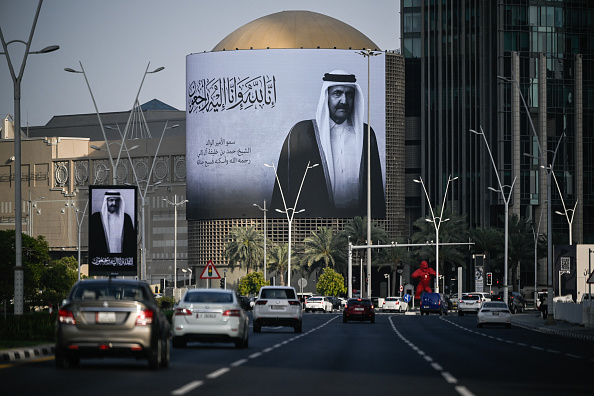
A portrait of Qatar’s former leader Sheikh Hamad bin Khalifa Al Thani is displayed on a billboard in Doha on Sunday, after the announcement of his death. (Mahmud Hams / AFP via Getty Images)
📅 Ahead on the Circuit
July 14-15, Carlisle, Pa., Pennsylvania Defense and Innovation Summit. U.S. President Donald Trump to headline event at U.S. Army War College in Carlisle, joining defense, technology, finance and government leaders for discussions on military innovation and investment.
August 18-19, Dubai. Middle East Event Show. Bringing together professionals from the events industry. Dubai World Trade Center.
August 31-Sept. 3, Riyadh. LEAP Expo Riyadh. A major tech trade show for the Middle East, which includes a global startup live pitch event. RECC Malham.
Sept. 11-13, Abu Dhabi. Middle East Film & Comic Con. Featuring some of the world’s biggest brands in film, TV, sci-fi, animation, manga, comics and collectibles. ADNEC Center.
Sept. 13-18, Abu Dhabi. Abu Dhabi International Book Fair. Fostering collaboration between regional publishing sectors and creative industries. ADNEC Center.
Sept. 29-Oct. 1, Abu Dhabi. LIVEX 2026. Abu Dhabi’s inaugural Livability and Investment Exhibition. ADNEC Centre.
DHL sees silver lining in war’s impact on shipping logistics
DHL is locking in plans to invest some $565 million to expand its Middle East operations, betting that the region will emerge from war with Iran as a dominant global logistics hub.
Tobias Maier, CEO of DHL Global Forwarding Middle East & Africa, said upcoming infrastructure and energy projects financed by Gulf sovereign wealth funds present new opportunities for the express delivery company amid the war’s disruption of traditional shipping routes.
“These investments don’t stop because supply chains become more complicated – they become more important,” Maier said in an interview with The Circuit.
DHL has committed about half of its planned investment to expand logistics facilities in Riyadh and Dubai. The new funding comes as ships have been targeted by missile and drone attacks in both the Gulf and the Red Sea during the war between the U.S., Iran and Israel that began in late February.
The supply-chain disruptions resulting from the war have prompted many customers to switch their shipping from sea vessels to air freight to avoid delays and keep products on shelves. DHL has the third-largest air network among global delivery services, behind FedEx and UPS.
“There was a shift in reality,” said Maier, who took over the Dubai-based DHL unit last December. “Typically, most cargo volumes go via sea freight on shipping lines, which is, of course, much cheaper and lower cost.”
DHL Group, which employs roughly 400,000 people worldwide, is building a 55,000-square-meter warehouse in Dubai South at a cost of $140 million, with construction underway and completion planned for summer 2027. The site sits inside the emirate’s aviation, logistics and free-trade zone, anchored around the under-construction Al Maktoum International Airport, which Dubai is positioning to become the world’s largest.
The ongoing disruptions have highlighted a broad shift in the logistics industry, where shipping expertise provides additional value in areas such as customs clearance, documentation, market intelligence, routing alternatives and access to diversified transportation networks.
From the perspective of cargo shippers, the Strait of Hormuz blockade has reinforced the need to focus on dependability, even at the expense of speed.
“Companies are increasingly moving away from a purely lowest-cost model and prioritizing redundancy, flexibility and continuity of supply,” Rohan Mehta, Managing Director of Petrochem Middle East, the largest independent chemical distributor in the region, told The Circuit.
“What we are seeing is not just a short-term rerouting exercise; it is a clear shift toward resilience,” he said.
Mehta said that means more diversified routing and greater use of alternative export corridors, such as the UAE’s eastern emirate of Fujairah and Saudi Arabia’s Red Sea port of Yanbu.
Historically, the UAE and other Gulf ports have served as logistics hubs for Africa, with companies storing inventory in the region’s free zones before distributing products across the continent. The recent war-related disruptions, though, have encouraged some companies to bypass Dubai and ship directly from Europe or China into African markets.
At the same time, countries such as Egypt are attracting increased manufacturing investment, particularly from Turkey, creating new logistics opportunities for DHL across the region. Beyond the Riyadh and Dubai facilities, DHL has earmarked $85 million for its first regional aircraft maintenance hangar, at Bahrain International Airport, and about $30 million for an air-side gateway facility at Muscat International Airport in Oman.
Still, Maier said the UAE retains advantages that are difficult for competitors to replicate.
“It’s not just about infrastructure or capital,” he said. “The UAE has developed a business-friendly culture, agility, and government support that are difficult to replicate.”
While the Gulf will remain a critical hub, Petrochem’s Mehta said the new conditions are accelerating structural changes that will determine how companies plan logistics.
“Companies that adapt now are likely to be better protected against the next shock, whether that is geopolitical, operational or commercial,” Mehta said.
The Daily Circuit: e&’s $6B Vodafone exit + Humain’s Canadian partner
In today’s Daily Circuit, we’re reporting on Saudi Arabia’s Humain teaming up with Canada’s Cohere to build a giant AI computing center, ADNOC boosting crude oil production to an all-time high, Mubadala’s Emirates Global Aluminium’s return to operations at its Abu Dhabi refinery after a war-related shutdown and Oman’s OQ unloading its stake in Majis Industrial Services. But first, e&’s nearly $6 billion exit from Vodafone.
UAE telecom giant e& is cashing out of Vodafone, selling its entire 16.2% stake for about $5.9 billion to French telecom billionaire Xavier Niel’s investment vehicle Vega.
The sale gives e&, which is majority-owned by the Emirates Investment Authority, a clean exit from the holding it started building in 2022.
Under e&, Vodafonehas spent the past three yearsshrinking its European portfolio, selling businesses in Spain and Italy, while merging with Three UK to create Britain’s largest mobile operator.
E&, short for Emirates Telecommunications Group, first bought a 9.8% stake in Vodafone in 2022, then steadily increased its holding to 16.2%.
The transaction ends the companies’ four-year relationship, and former e& CEO Hatem Dowidar has resigned from Vodafone’s board.
Editor’s Note: Have thoughts or feedback? Hit reply or drop us a note at [email protected].
📰 Developing Stories
CANADIAN CONNECTION
Saudi Arabia’s Humain artificial intelligence company and Canada’s Cohere have formed a partnership to build one of the region’s largest AI computing centers, with operations targeted to begin in late 2027. The announcement came during Canadian Prime Minister Mark Carney’s visit to the kingdom, the first by a Canadian premier in 26 years. During the prime minister’s visit, the two countries signed more than $760 million in agreements and expanded cooperation in energy, mining and infrastructure. Carney also met Saudi Aramco CEO Amin Nasser in Jeddah on Thursday, and the two countries agreed to deepen cooperation in mining and energy. Meanwhile, Saudi Arabia’s Public Investment Fund, the majority owner of Humain, accepted Carney’s invitation to a Toronto investment summit in September.
STUDIO STANDOFF
Paramount Skydance’s Gulf-backed $110 billion merger with Warner Bros. Discovery may be in jeopardy from a U.S. legal offensive. States led by California and New York are preparing to sue to block the deal as early as next week, Status reports. It comes after Oregon’s attorney general has asked a court to halt the mega-merger while it investigates Paramount’s lobbying of the Trump administration. The deal also faces scrutiny in the U.K. and Europe. Saudi Arabia’s Public Investment Fund, the Qatar Investment Authority and Abu Dhabi’s L’imad Holding are set to hold a combined 38.5% stake in the merged entity. Meanwhile, Arete Research downgraded Paramount Skydance shares and slashed its price target to $2 over concerns about its ability to manage the large amount of debt that will come from the merger. Shares in Paramount closed down 4.3% at $9.33 on Thursday.
💲 Sovereign Circuit
Mubadala: Emirates Global Aluminium, owned by the Abu Dhabi fund, has restarted production at its Al Taweelah alumina refinery, with output expected to reach 50% of capacity within days, three months after it was damaged by an Iranian drone attack.
ADNOC: Despite disruptions from the Iran war, Abu Dhabi’s state-owned oil company boosted crude oil production to an all-time high last month, pumping 4.1 million barrels a day on average in June, the International Energy Agency said in its monthly report.
ADNOC: Abu Dhabi-listed ADNOC Logistics & Services has ordered four additional next-generation LNG carriers worth $900 million, expanding its LNG newbuild program to 18 vessels to support growing gas demand and its LNG trading ambitions.
Masdar: Chinese electric vehicle and battery company BYD was awarded a contract from Abu Dhabi’s green energy company Masdar to supply 11.27 gigawatt hours of its BYD Haohan battery system for the emirate’s huge round-the-clock solar project.
DP World: DP World has acquired 700 trucks to expand its Gulf road freight network, as logistics providers develop alternative routes amid Strait of Hormuz disruptions.
Qatar Investment Authority: QIA-owned QatarEnergy halted plans to quickly raise output at its Ras Laffan LNG complex after a tanker attack in the Strait of Hormuz, scaling back operations and reducing vessel calls over security concerns.
Oman Investment Authority:The sovereign wealth fund’s OQ energy company agreed to sell its stake in Majis Industrial Services to a consortium of Oman’s Rakiza and Florida-based IV3 Aqua.
Libyan Investment Authority: Qatar’s UCC Holding signed a production-sharing deal with LIA and the state-owned National Oil Corporation to develop an oilfield in Libya’s Ghadames basin, targeting 80,000 barrels per day of crude output and increased foreign investment.
↪↩ Closing Circuit
🚖 Taxi Takeover: Dubai Taxi Co. completed its $395 million acquisition of National Taxi, creating the UAE’s largest taxi operator and expanding its presence into Abu Dhabi.
📷 Media Play: Banijay Entertainment and All3Media have completed their merger with backing from RedBird IMI, creating a London-based global production powerhouse spanning 25 countries, with Abu Dhabi playing a key role in the deal.
🛢️ Oil Output: Iraq signed deals with U.S. energy firms HKN Energy and Halliburton to boost oil and gas production and attract further foreign investment in its energy sector.
💰 Funding Challenges: The Saudi Fund for Development has invested over $3 billion in programs across 22 small island developing states, supporting sanitation, water, energy, transport and infrastructure projects.
🗣 Circuit Chatter
🚢 Port Hub: Russia plans to open a commercial logistics hub at Syria’s Tartous port by mid-July, using the facility to ship wheat and other goods as it expands its economic influence in post-Assad Syria, Reuters reports.
💎 Treasure Hunt: Iraqi authorities allegedly uncovered 14 billion dinars ($10.7 million) hidden in a drainage pit during an ongoing anti-corruption investigation linked to Adnan Al Jumaili, the detained Deputy Oil Minister for Refining Affairs.
🚚 Shipping Impact: U.S.-GCC trade dropped sharply in May as the Iran conflict and Strait of Hormuz disruption pushed regional exports to their lowest levels in years.
🌍 Power Circuit
Canada’s Prime Minister Mark Carneydeparted from Jeddah on Friday, after a two-day official visit to Saudi Arabia, where he met Crown Prince Mohammed bin Salman at Al Salam Palace. Carney also met withPrince Abdulaziz bin Salman, Saudi Arabia’s Energy Minister, during his visit to the Kingdom.
Princess Reema bint Bandar, Saudi Arabia’s Ambassador to the U.S., met with U.S. Secretary of State Marco Rubio on Thursday in Washington, D.C.
Sheikh Abdullah bin Zayed, UAE Foreign Minister, held a phone call withSheikh Mohammed bin Abdulrahman Al Thani, Qatar’s Prime Minister and Foreign Minister, on Thursday.
Sheikh Shakhboot bin Nahyan, UAE Minister of State, met with Nigeria’s President Bola Ahmed Tinubu in Abuja on Friday during his visit to Nigeria.
Sheikh Saud bin Saqr Al Qasimi, Ruler of the northern emirate of Ras Al Khaimah, met withDr. Deepak Mittal, India’s Ambassador to the UAE, and a delegation of business leaders, at the Ruler’s palace in Saqr bin Mohammed City.
Sheikh Mohamed bin Mansour, son of Sheikh Mansour bin Zayed, UAE Vice President, was pictured withAreen Masrour Barzani, the eldest son of Masrour Barzani, the Prime Minister of the Kurdistan Region of Iraq, and with heavyweight boxing champion Agit Kabayel.
➿ On the Circuit
Mohamed Hassan Alsuwaidi, UAE Investment Minister, said the UAE faces intensifying competition for global capital in strategic sectors such as AI, clean energy, advanced manufacturing and life sciences as investment flows become more concentrated.
Reem Al Hashimy, UAE Minister of State for International Cooperation, and Dr. Thani Al Zeyoudi, Minister of Foreign Trade, met withHelen McEntee, Ireland’s Minister for Foreign Affairs and Trade and Minister for Defense, in Abu Dhabi on Thursday.
Tom Goodale will lead a team of 16 people to expand the American advisory firm Cantor’s fixed-income business outside of the U.S., with the majority to be located in Abu Dhabi. Goodale is among at least 10 people who left Stifel Financial Corp. for Cantor, Bloomberg reports.
🎶 Culture Circuit
🎞 Rolling Dunes: Abu Dhabi has deepened its role in the “Dune” film franchise, with the trilogy’s final installment involving its biggest UAE shoot yet and pulling in a vast team of local crew members, contractors, interns and performers. A new trailer for “Dune: Part Three” was shown at a global Imax event on Wednesday, along with a live discussion between director Denis Villeneuve and Timothée Chalamet, who stars as Paul Atreide in the sci-fi blockbuster. The Abu Dhabi audience also heard from Emirati stuntman Mohamed Mostafa, who appears in the latest installment, The National reports. The vast red dunes of the UAE’s Liwa Desert represent the fictional desert planet of Arrakis across all three films.
📷 Photo of the Day
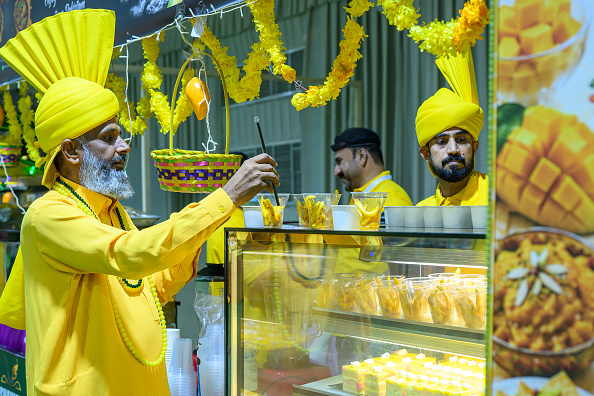
A vendor prepares cups of fresh mangoes for customers during the Pakistani Mango Festival at the Souq Waqif Traditional Market in Doha, Qatar, on Thursday. (Noushad Thekkayil/NurPhoto via Getty Images)
📅 Ahead on the Circuit
July 7-11, Sun Valley, Idaho. Allen & Co. Conference. Annual invitation-only gathering of top figures in technology, finance, media and government. Sun Valley Lodge.
July 9-11, Alexandria, Egypt. Comixandria. The international comics festival draws crowds of fans, collectors, illustrators and publishers. Jesuit Cultural Center.
July 14-15, Carlisle, Pa., Pennsylvania Defense and Innovation Summit. U.S. President Donald Trump to headline event at U.S. Army War College in Carlisle, joining defense, technology, finance and government leaders for discussions on military innovation and investment.
August 18-19, Dubai. Middle East Event Show. Bringing together professionals from the events industry. Dubai World Trade Center.
August 31-Sept. 3, Riyadh. LEAP Expo Riyadh. A major tech trade show for the Middle East, which includes a global startup live pitch event. RECC Malham.
Sept. 11-13, Abu Dhabi. Middle East Film & Comic Con. Featuring some of the world’s biggest brands in film, TV, sci-fi, animation, manga, comics and collectibles. ADNEC Center.
Sept. 13-18, Abu Dhabi. Abu Dhabi International Book Fair. Fostering collaboration between regional publishing sectors and creative industries. ADNEC Center.
Sept. 29-Oct. 1, Abu Dhabi. LIVEX 2026. Abu Dhabi’s inaugural Livability and Investment Exhibition. ADNEC Centre.
The Daily Circuit: War’s impact on Gulf earnings + Asyad shipping sale
In today’s Daily Circuit, we’re reporting on Oman’s Asyad Group selling a chunk of its shipping business, Aramco meeting resistance in restoring crude exports because of renewed security concerns among its customers, Deutsche Bank setting up a regional headquarters in Riyadh, LIV Golf warning employees of mass layoffs to come in the U.S. and U.K. But first, earnings reports this month should reflect disruptions to Gulf businesses from the Middle East conflict.
The Iran war’s toll on corporate earnings will become clearer this week as Gulf companies start to report second-quarter earnings.
Abu Dhabi-based ADNOC Gas should reflect a near 20% drop in domestic gas sales following Iranian drone and missile attacks at its Habshan gas processing plant in April that disrupted supplies, Reuters reports.
UAE-based Emaar Properties, Aldar and other developers are likely to demonstrate the war’s impact on the housing marketwith declines reported in second-quarter residential sales.
Lenders including Saudi National Bank and Emirates NBD will show the effects of weaker trade finance, tourism and international spending, the news agency said.
Saudi Arabia’s economy is now forecast to grow 1.7% this year after the IMF cut its estimate by 1.4 percentage points, while lowering its overall 2026 growth forecast for the Middle East to 0.7% from 1.9% because of the fallout from the Strait of Hormuz disruption.
Editor’s Note: Have thoughts or feedback? Hit reply or drop us a note at [email protected].
📰 Developing Stories
LIV LAYOFFS
LIV Golf has notified employees in the U.S. and U.K. that they face mass layoffs, in the latest sign that the ailing rebel league is struggling to stay afloat following the exit of Saudi Arabia’s Public Investment Fund. The grim outlook comes as two English companies filed a lawsuit seeking $210 million and $630 million in damages from LIV Golf, the PIF and other individuals and entities, according to court records obtained by ESPN. The companies, World Golf Group and Premier Golf League, claim that they first conceived the idea of a world golf league that provided the blueprint for LIV Golf’s launch. The PIF said in April that it would withdraw its backing from LIV Golf, after years of heavy losses and weak television audiences.
JORDAN CAPITAL
Oman and Jordan agreed to create a $100 million joint investment company to back projects in the Hashemite kingdom’s energy, mining and technology industries. The venture will be owned equally by Oman Investment Authority and Jordan’s Social Security Investment Fund, with each contributing half the capital, Arab News reports. Executives from the two funds say the project is intended to support economic diversification, deepen cross-border investment and expand commercially viable projects in high-growth sectors. The announcement follows the World Bank’s approval of a $700 million loan to support Jordan’s private-sector growth.
💲 Sovereign Circuit
Saudi Aramco: The state-owned oil giant’s efforts to restore crude exports from the reopened Ras Tanura terminal are meeting resistance as some customers decline to load cargoes because of renewed security concerns after attacks on ships in the Strait of Hormuz, Bloomberg reports.
Oman Investment Authority: OIA-backed Asyad Group is planning to sell an additional stake in Asyad Shipping worth about $190 million, increasing the number of the company’s shares available for public trading to meet Omani stock market rules, with the sale expected in the second half of the year, Bloomberg reports.
Qatar Investment Authority: The QIA participated in a $1 billion funding round for SambaNova, a California-based AI chips, systems, and cloud services provider.
Paramount: Oregon Attorney General Dan Rayfield is seeking a court order requiring Paramount Skydance to provide lobbying documents and delay its $110 billion Warner Bros. Discovery acquisition by 60 days amid an ongoing antitrust probe.
↪↩ Closing Circuit
🏦 Saudi Foothold: Deutsche Bank secured a regional headquarters license in Riyadh, becoming the latest international lender to establish a base in the kingdom as Saudi Arabia pushes multinationals to set up a head office as a prerequisite for winning government contracts.
🧬 Biotech Boost: Saudi fintech and private credit firm Seha Invest signed a $500 million partnership with Boston-based Y-Innovations to support biotechnology and healthcare development in the kingdom, announcing the agreement on the sidelines of the BMG Forum at the London Stock Exchange.
🍍 Fruit Platter: Saudi Arabia’s Jazan Region has launched a tropical fruits and greenhouses project with investments exceeding $159 million.
🗣 Circuit Chatter
⚠️ Tanker Damage: A QatarEnergy LNG tanker remains stranded off Oman after a projectile strike sparked an engine-room fire, although officials say its cargo is intact and the risk of an explosion remains low while salvage crews prepare an operation.
✈️ Flying Rebound: Airbus said Middle East travel demand has rebounded to about 90% of pre-war levels and expects Gulf airlines to overcome disruptions from the Iran war, continue expanding their fleets and remain a key driver of global aviation growth,Bloomberg reports.
🚢 Leaving Hormuz: The UAE is accelerating plans to reduce reliance on the Strait of Hormuz by expanding alternative transport corridors and Gulf of Oman ports, while leveraging the scale and integrated logistics of hubs like Jebel Ali to remain competitive.
🌍 Power Circuit
UAE President Sheikh Mohamed bin Zayedarrived in Kuwait on Thursday, where he was received by Sheikh Mishal Al-Ahmad Al-Jaber, Emir of the State of Kuwait.
Qatar’s Prime Minister Sheikh Mohammed bin Abdulrahman al-Thani visited Muscat on Wednesday for talks with Oman on initiating negotiations involving Iran, Iraq and Gulf Arab states on the Strait of Hormuz, Reuters reports.
Prince Faisal bin Farhan, Saudi Arabia’s Foreign Minister, met withOman’s Foreign Minister Sayyid Badr Albusaidi in Muscat on Wednesday.
Sheikh Shakhboot bin Nahyan, UAE Minister of State, met with Ghana’s President John Dramani Mahama in the capital Accra, during an official visit to the country.
➿ On the Circuit
Fatih Birol, International Energy Agency Executive Director, told The Nationalthat Gulf oil exporters need to “regain their reputation as reliable exporters” and that the Iran war has permanently altered risk calculations for buyers.
Tariq Al-Khawaji, Vice President of the Saudi Film Festival, talked to Arab News about his optimism for the kingdom’s film scene and how far it has come since the days when he had to go abroad to watch blockbuster hits like “The Matrix.”
Helmut von Struve, CEO of Siemens in the UAE and Middle East, joined UAE Energy and Petroleum Undersecretary Sharif Al Olamato inaugurate the Emirates Monitoring Centre, the country’s first national control hub linking all four electricity utilities.
🎶 Culture Circuit
🎮 Game On: Dubai’s gaming enthusiasts, creators and fans came together last night for a midnight celebration of the launch of “Assassin’s Creed: Black Flag Resynced,” a remake of one of French studio Ubisoft’s most popular titles. The event, held by the Dubai Films and Games Commission and Ubisoft, featured an interactive gaming hub, cosplay and franchise trivia. Ubisoft, one of the world’s biggest studios, was the first major game publisher to establish roots in the Gulf region when it opened a studio in Abu Dhabi in 2011.
📷 Photo of the Day
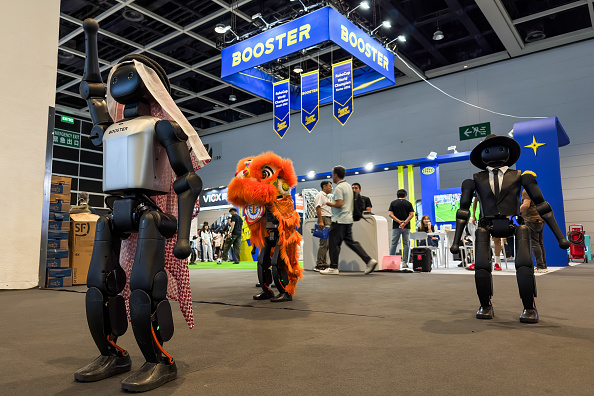
A robot styled in a Saudi keffiyeh took the floor this week at the Hong Kong Convention and Exhibition Centre during the LEAP East 2026 technology conference, the first Asia-Pacific edition of the Saudi-born event. (Photo by Cheng Xin/Getty Images)
📅 Ahead on the Circuit
July 7-11, Sun Valley, Idaho. Allen & Co. Conference. Annual invitation-only gathering of top figures in technology, finance, media and government. Sun Valley Lodge.
July 8-10, Hong Kong. LEAP East 2026. The first Asia-Pacific edition of Saudi Arabia’s flagship technology conference. Hong Kong Convention and Exhibition Centre.
July 9-11, Alexandria, Egypt. Comixandria. The international comics festival draws crowds of fans, collectors, illustrators and publishers. Jesuit Cultural Center.
July 14-15, Carlisle, Pa., Pennsylvania Defense and Innovation Summit. U.S. President Donald Trump to headline event at U.S. Army War College in Carlisle, joining defense, technology, finance and government leaders for discussions on military innovation and investment.
August 18-19, Dubai. Middle East Event Show. Bringing together professionals from the events industry. Dubai World Trade Center.
August 31-Sept. 3, Riyadh. LEAP Expo Riyadh. A major tech trade show for the Middle East, which includes a global startup live pitch event. RECC Malham.
Sept. 11-13, Abu Dhabi. Middle East Film & Comic Con. Featuring some of the world’s biggest brands in film, TV, sci-fi, animation, manga, comics and collectibles. ADNEC Center.
Sept. 13-18, Abu Dhabi. Abu Dhabi International Book Fair. Fostering collaboration between regional publishing sectors and creative industries. ADNEC Center.
Sept. 29-Oct. 1, Abu Dhabi. LIVEX 2026. Abu Dhabi’s inaugural Livability and Investment Exhibition. ADNEC Centre.
The Daily Circuit: Oil soars as Iran truce crumbles + L’Imad hires BCG
In today’s Daily Circuit, we’re reporting on the UAE’s L’Imad sovereign wealth fund hiring Boston Consulting to overhaul its management, the surge in Oman India Fertiliser shares at its Muscat trading debut, ACWA Power tapped by Saudi Arabia to sell green hydrogen, and Inception42 introducing AI agents to handle UAE government services. But first, renewed war jitters send energy prices soaring.
Oil prices surged today after U.S. President Donald Trump declared the ceasefire with Iran was “over,” jolting energy markets and raising fresh concerns about the security of Gulf oil exports.
Brent crude jumped more than 5% to above $78 a barrel, while U.S. benchmark West Texas Intermediate climbed above $74, wiping out several days of market calm.
The U.S. also revoked a waiver allowing Iran to sell oil, as American forces struck more than 80 targets in Iran that officials said were linked to attacks on commercial shipping.
Iran retaliated with strikes on U.S. military sites in Bahrain and Kuwait, extending the conflict and increasing the risk of further disruption in the Gulf.
Shipping through the Strait of Hormuz remains well below normal after attacks this week on three commercial vessels, including a Saudi oil tanker and a Qatari LNG carrier, threatening another squeeze on global energy supplies.
Editor’s Note: Have thoughts or feedback? Hit reply or drop us a note at [email protected].
📰 Developing Stories
FERTILE GROUND
Shares in Oman India Fertiliser Co. surged almost 20% as they started trading in Muscat today, following the region’s biggest IPO of the year. The company, which is backed by the Oman Investment Authority and the Indian government, raised 261 million Omani rials ($678 million) at the top end of the marketed range, valuing it at about $2.7 billion, Bloomberg reports. The listing drew demand from other regional sovereign wealth funds amid a rally in fertilizer prices driven by regional conflict, as well as increased interest in companies with access to Oman’s port infrastructure outside of the Strait of Hormuz. The company operates ammonia and urea plants in Oman. Ahead of the IPO, the OIA owned 50% of Oman India Fertiliser via state-owned energy company OQ, while Indian agricultural cooperatives IFFCO and Kribhco each held 25%.
OFFICE AGENTS
Abu Dhabi’s Inception42 plans to start deploying agentic artificial intelligence across the UAE federal government this quarter, with a goal of automating 50% of government operations within two years. The government-backed company, a unit of G42, says the systems will independently carry out complex, multi-step tasks with limited human intervention. Chief Executive Ashish Koshy told Arabian Gulf Business Insight the rollout is on a fixed timetable and is beginning to be used by government agencies. The initiative is part of a broader G42 and Microsoft collaboration expected to bring $15.2 billion of AI investment to the UAE while creating a unified AI platform for governments and businesses.
💲 Sovereign Circuit
L’Imad Holding: Abu Dhabi’s newest sovereign fund is working with Boston Consulting Group to recruit senior professionals and overhaul its executive ranks, as it prepares to take a more central role in the emirate’s dealmaking ambitions, Bloomberg reports. The fund has reportedly asked some executives who transferred from ADQ after it was merged into the new entity to reapply for their positions.
Public Investment Fund: ACWA Power, a Saudi clean energy company owned by the kingdom’s sovereign wealth fund, received an exclusive mandate from Saudi Arabia to export green hydrogen, green ammonia, green methanol and other green fuels.
Public Investment Fund: Saudi Arabia’s heritage destination AlUla is seeking private investment as it launches a new phase of expansion through public-private partnerships, with plans to triple hotel capacity to at least 3,000 rooms by 2030.
Private Department of Sheikh Mohammed bin Khalid Al Nahyan: The investment firm owned by members of Abu Dhabi’s ruling family said it will invest $1.1 billion in Saudi Aramco-backed LNG company MidOcean Energy.
Oman Investment Authority: Minerals Development Oman and Kazakhstan’s Solidcore Resources will jointly develop the Khabiyat copper and gold project in northern Oman, with Solidcore investing $31 million to potentially acquire a 60% stake.
↪↩ Closing Circuit
🚁 Taking Off: The UAE’s General Civil Aviation Authority gave its approval to Dubai’s new VDX, the world’s first commercial vertiport designed specifically for electric air taxis, clearing the way for future passenger service.
📦 Logistics Buildup: Gulftainer, a UAE-based private logistics company, will invest $2 billion to become a global trade infrastructure company by integrating ports, shipping, logistics, industrial ecosystems and AI-powered supply chains.
🛎️ Holy Upgrade: A $99 million renovation project has begun at the five-star Makkah Hotel & Towers in the holy city of Mecca.
🗣 Circuit Chatter
🏦 Payment Declined: Saudi Arabia has been accused of blocking or delaying financial transfers from banks in the kingdom to accounts based in the UAE, the Financial Times reports.
⛽ Syrian Power: TotalEnergies CEO Patrick Pouyanné said in Damascus that the French company is discussing an offshore exploration contract with Syria for oil and gas, though he ruled out a near-term return to onshore operations because of security concerns.
💰 Investment Drive: Saudi Arabia has launched a trade mission to Morocco involving more than 70 companies as it seeks to boost non-oil exports and strengthen commercial ties with North Africa.
✈️ Lost Cargo: Five crew members are missing after a cargo plane that departed Sharjah disappeared from radar off Pakistan’s coast following a reported navigation system failure, with flight data suggesting it crashed into the sea.
🌍 Power Circuit
UAE President Sheikh Mohamed bin Zayedmet on Tuesday with a delegation from the Emirates Foundation that included Sheikh Khaled bin Mohamed, Crown Prince of Abu Dhabi; Sheikh Hamdan bin Zayed, Ruler’s Representative in Al Dhafra Region; Sheikh Saif bin Mohammed; Sheikh Suroor bin Mohammed; Sheikh Nahyan bin Zayed, Chairman of Zayed for Good Foundation. Also attending, Marty Edelman, the real estate lawyer and advisor to the royal family who was awarded the UAE’s Order of the Union last month.
Prince Faisal bin Farhan, Saudi Arabia’s Foreign Minister, met withHelen McEntee, Ireland’s Minister of Foreign Affairs, Trade and Defense, in Jeddah on Tuesday.
Mark Carney, Canada’s Prime Minister, will begin a visit to Saudi Arabia on Wednesday, where he is expected to meet Saudi Crown Prince Mohammed bin Salman and sign an investment pact.
➿ On the Circuit
Dr. Sultan Al Jaber, UAE Minister of Industry and Advanced Technology and Managing Director and Group CEO of ADNOC, met withKim Jung-kwan, South Korea’s Minister of Trade, Industry and Energy.
Khaled Al-Saeedi, Director of Government Communication at the UAE Agriculture Ministry, said that the emirates will begin importing fruit and vegetables directly from Syria through a transit route via Iraq.
Humaid Mohammad Obaid Alqutamiwas appointed Chairman of Dubai-based Islamic Arab Insurance Co (Salama).
Ali Saadwas appointed as Managing Director of a newly formed Middle East branch of the leisure group Overseas Network in Qatar.
🎶 Culture Circuit
🍫 Sweet Success: The husband and wife duo behind the global success of Dubai chocolate say the sense of disbelief has not worn off when they spot the countless imitations that have followed. Sarah Hamouda and husband Yezen Alani, the founders of Fix Dessert Chocolatier, still marvel at the array of products inspired by their pistachio and knafeh flavor combination, from sweets to deodorant and candles. “It’s extremely flattering. We’re still pinching ourselves,” Alani told The National. “For us to be able to create a category in itself is incredible. To inspire others to do their own take on the Dubai chocolate – which actually we didn’t name, the world did – is amazing.”
📷 Photo of the Day
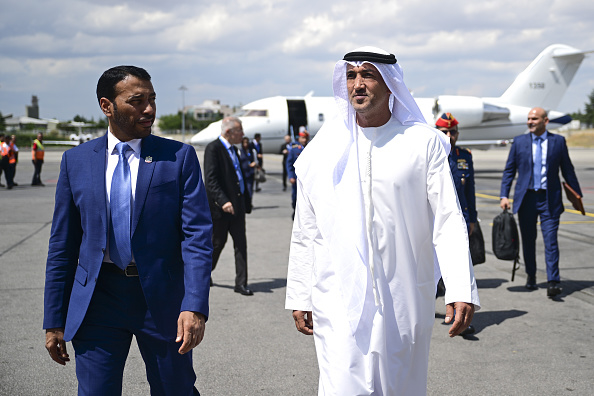
Mohamed Bin Mubarak Fadhel Al Mazrouei, UAE Minister of State for Defense Affairs, arrives at Esenboga Airport ahead of the 36th NATO Summit of Heads of State and Government in Ankara, Turkey on Tuesday. (Mehmet Futsi/Anadolu via Getty Images)
📅 Ahead on the Circuit
July 7-11, Sun Valley, Idaho. Allen & Co. Conference. Annual invitation-only gathering of top figures in technology, finance, media and government. Sun Valley Lodge.
July 8-9, Abu Dhabi. Money Expo Abu Dhabi. Bringing together investors, traders, fintech innovators, and financial institutions to explore the future of finance. ADNEC Center.
July 9-11, Alexandria, Egypt. Comixandria. International comics festival draws crowds of fans, collectors, illustrators and publishers. Jesuit Cultural Center.
July 14-15, Carlisle, Pa. Pennsylvania Defense and Innovation Summit. U.S. President Donald Trump to headline event at U.S. Army War College in Carlisle, joining defense, technology, finance and government leaders for discussions on military innovation and investment.
August 18-19, Dubai. Middle East Event Show. Bringing together professionals from the events industry. Dubai World Trade Center.
August 31-Sept. 3, Riyadh. LEAP Expo Riyadh. A major tech trade show for the Middle East, which includes a global startup live pitch event. RECC Malham.
Sept. 11-13, Abu Dhabi. Middle East Film & Comic Con. Featuring some of the world’s biggest brands in film, TV, sci-fi, animation, manga, comics and collectibles. ADNEC Center.
Sept. 13-18, Abu Dhabi. Abu Dhabi International Book Fair. Fostering collaboration between regional publishing sectors and creative industries. ADNEC Center.
Sept. 29-Oct. 1, Abu Dhabi. LIVEX 2026. Abu Dhabi’s inaugural Livability and Investment Exhibition. ADNEC Centre.
The Daily Circuit: Aramco slashes crude prices + MBZ family office
In today’s Daily Circuit, we’re reporting on UAE President Sheikh Mohamed bin Zayed’s little-known family office, Sweden’s Mubadala-backed Klarna seeking a U.S. banking license, Saudi Arabia’s Dar Global buying up distressed residential property in London, and praise in the travel press for Riyadh Air’s stylish debut. But first, Saudi Arabia’s dramatic move to recapture its prewar share in the oil market.
Saudi Aramco is slashing crude prices with its biggest discount in 25 years.
The state oil giant cut the price of its flagship Arab Light crude for Asian buyers by $11 a barrel for next month, leaving it $1.50 below competing grades from the region. It’s the first time since 2020 that Saudi Arabia has sold Arab Light at a discount, and the biggest monthly reduction in its official selling prices since at least 2000, Bloomberg reports.
China, meanwhile, has sharply increased purchases of Middle Eastern crude, buying at least 26 million barrels for July and August delivery from Qatar, Saudi Arabia, the UAE and Iraq, the Financial Times reports.
The price cuts come as Gulf producers ramp up exports through the Strait of Hormuz following an interim U.S.-Iran deal, which has swollen regional supplies.
Still, an LNG tanker owned by Qatar’s state shipping company Nakilat was struck by a projectile, believed to be a drone or missile, near the Omani coast after exiting the Gulf waterway, sparking a fire that caused severe damage, Reuters reports.
Editor’s Note: Have thoughts or feedback? Hit reply or drop us a note at [email protected].
📰 Developing Stories
FAMILY TIES
AC Limited, the family office of UAE President Sheikh Mohamed bin Zayed, has become a major source of capital for private equity, hedge funds and corporate deals while managing assets believed to be worth tens of billions of dollars. The firm has invested in companies including Amazon, Microsoft, Nvidia and McLaren, while backing funds and transactions involving Blackstone, Carlyle, Ardian and Hayfin, Bloomberg reports. The report said AC Limited’s role in most of those investments had not previously been disclosed, with people familiar with the firm describing it as one of the world’s most influential family offices despite its intentionally low public profile. A sparse one-page website omits any reference to its royal ownership, executives or investments, and executives seeking capital are warned not to ask whose money the firm manages.
CANADIAN CONUNDRUM
The UAE has $50 billion to invest in Canada, but nowhere to put it. Officials told an Emirati delegation in June that it was too early to deploy the capital because there were too few investment-ready projects, the Financial Times reports. Prime Minister Mark Carney secured the pledge from UAE President Sheikh Mohamed bin Zayed and Abu Dhabi Crown Prince Sheikh Khaled bin Mohamed last November. A UAE official said the investment plans remain on track and will move forward as suitable opportunities are identified.
💲 Sovereign Circuit
Abu Dhabi Investment Authority: SBI Funds Management is set to attract investments from ADIA and GIC in its $1.2 billion IPO, which values India’s largest asset manager at about $12.3 billion, Reuters reports.
ADNOC: Abu Dhabi National Oil Co. signed a 15-year deal with Japan’s Inpex to supply 1 million tons a year of LNG from its Ruwais project.
ADNOC Distribution: The ADNOC unit agreed to acquire Shell’s South African fuel retail business in a deal that values the company at about $1 billion.
Mubadala: Stockholm-based Klarna, the buy-now-pay-later firm backed by Abu Dhabi sovereign fund Mubadala, has applied for a U.S. banking license in Utah, Bloomberg reports.
Public Investment Fund: The new PIF-owned Saudi airline earned praise from Condé Nast Traveller, which said “It arrives with a level of polish that many carriers take years to achieve.”
Saudia Group:The group, which operates Saudi Arabia’s oldest government-owned airline, agreed to buy four Boeing 777-200 freight planes for Saudia Cargo, part of the kingdom’s strategy to grow as a regional logistics hub.
Oman Investment Authority: OIA-backed United Solar has closed a $50 million equity investment from the World Bank Group’s International Finance Corporation for its polysilicon facility in Oman’s Sohar Free Zone, completing a $1.6 billion capital raise from a consortium of global investors.
↪↩ Closing Circuit
✈️Taking Flight: Dubai Aerospace Enterprise has partnered with U.S.-based Neuberger Specialty Finance to launch Mustang Aerospace, a new aircraft leasing co-investment vehicle targeting up to $6 billion in assets over the medium term,The National reports.
🛣️ Dubai Loop: Production has begun on 25,000 precast concrete tunnel segments for the first phase of Dubai Loop, marking a major construction milestone for the underground transport project by The Boring Company and Dubai’s Roads and Transport Authority.
📈 No Limits: Abu Dhabi’s ADX securities exchange will remove daily price limits for listed ETFs and futures contracts from August 3 to enhance price discovery, liquidity, trading efficiency and investor responsiveness.
⛽ Gas Hunt:Israel launched a new licensing round to find more offshore natural gas and boost exports, allowing Chevron to bid while it continues to operate the country’s Tamar and Leviathan gas fields.
🗣 Circuit Chatter
🇬🇧 London Calling:Saudi Arabia’s Dar Global is targeting distressed residential projects in prime central London areas such as Mayfair, Belgravia and Knightsbridge, CEO Ziad El Chaar tells Arabian Gulf Business Insight.
⚒️ Pipeline Performance: Saudi Arabia is considering expanding its East-West crude oil pipeline to boost export capacity via the Red Sea and reduce reliance on the Strait of Hormuz, Reuters reports.
🧐 Cheaper Lifestyle: Dubai has dropped seven places to rank as the 14th most expensive city in the world for the ultra-wealthy amid cooling prices and global currency swings, according to Julius Baer’s Global Wealth and Lifestyle Report 2026.
🏎️ Car Show: Formula 1 is considering reinstating the Bahrain Grand Prix this season, potentially in September between the Azerbaijan and Singapore races, with a decision expected before the August summer break.
🏗️ Shifting Focus: Oman aims to turn wartime supply-chain shifts into a long-term logistics advantage by expanding road, rail and port infrastructure to become a regional trade hub.
🌍 Power Circuit
UAE President Sheikh Mohamed bin Zayed issued a federal decree appointingMohammed Saeed Rashid Al Shehhi as the Secretary-General of the National Media Authority, with the rank of Ministry Undersecretary.
Sheikh Hamdan bin Mohammed, the Crown Prince of Dubai, met global gaming executives at a gathering that was designed to promote investment, talent development and the emirate’s ambitions to become a regional gaming hub.
French President Emmanuel Macron arrived in Damascus on Monday, where he met with Syrian President Ahmed al-Sharaa.
Sheikh Bandar bin Mohammed bin Saoud Al-Thani, Governor of Qatar Central Bank and Chairman of Qatar Investment Authority, met with Co-CEO of KKR & Co. Scott Nuttall during his visit to New York on Monday.
➿ On the Circuit
Pierre Fayad, formerly of Goldman Sachs, was hired by HSBC as Mergers and Acquisitions Director of its Capital Markets and Advisory team in Saudi Arabia, Reuters reports. HSBC also appointed Andrew Pedder as Head of Leveraged and Acquisition Finance on the team and Chris Johannson as Director of Equity Capital Markets.
Omar Al Olama, UAE Minister of State for Artificial Intelligence, spoke at the opening session of the UN’s global dialogue on AI governance on Monday, urging those attending to take a cautiously optimistic view of AI, while making sure that everyone plays a role in ensuring it is “merciful and supportive.”
Andrey Artamonov was appointed as the Chief Technology and Information Officer at Dubai-based neobroker Amana.
🎶 Culture Circuit
✨ Carpet Magic: As Levantine carpet-maker Iwan Maktabi opens a new flagship store on Jumeirah Beach Road in Dubai, The National tells the story of how the 100-year-old business founded by an entrepreneurial carpet dealer from Iran has evolved into a design-forward creator of bespoke commissions. The new generation of the family business has pushed the boundaries of the traditional carpet trade, opening an experimental pop-up at trendy Alserkal Avenue and inviting artists to collaborate on original designs.
📷 Photo of the Day
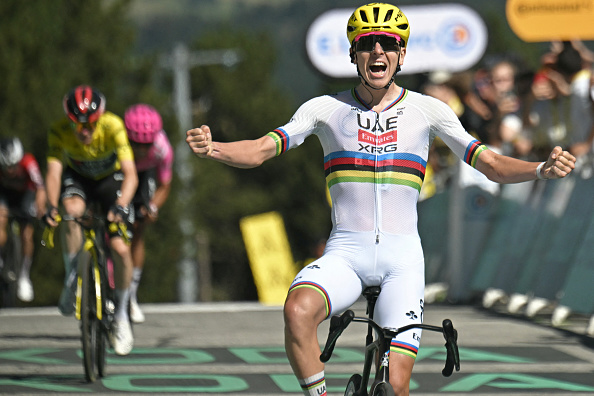
UAE Team Emirates-XRG rider Tadej Pogacar pedals to the finish line on Monday to win the third stage of the Tour de France between Granollers and Les Angles in southern France
📅 Ahead on the Circuit
July 7-11, Sun Valley, Idaho. Allen & Co. Conference. Annual invitation-only gathering of top figures in technology, finance, media and government. Sun Valley Lodge.
July 8-9, Abu Dhabi. Money Expo Abu Dhabi. Bringing together investors, traders, fintech innovators, and financial institutions to explore the future of finance. ADNEC Center.
July 9-11, Alexandria, Egypt. Comixandria. International comics festival draws crowds of fans, collectors, illustrators and publishers. Jesuit Cultural Center.
July 14-15, Carlisle, Pa. Pennsylvania Defense and Innovation Summit. U.S. President Donald Trump to headline event at U.S. Army War College in Carlisle, joining defense, technology, finance and government leaders for discussions on military innovation and investment.
August 18-19, Dubai. Middle East Event Show. Bringing together professionals from the events industry. Dubai World Trade Center.
August 31-Sept. 3, Riyadh. LEAP Expo Riyadh. A major tech trade show for the Middle East, which includes a global startup live pitch event. RECC Malham.
Sept. 11-13, Abu Dhabi. Middle East Film & Comic Con. Featuring some of the world’s biggest brands in film, TV, sci-fi, animation, manga, comics and collectibles. ADNEC Center.
Sept. 13-18, Abu Dhabi. Abu Dhabi International Book Fair. Fostering collaboration between regional publishing sectors and creative industries. ADNEC Center.
Sept. 29-Oct. 1, Abu Dhabi. LIVEX 2026. Abu Dhabi’s inaugural Livability and Investment Exhibition. ADNEC Centre.
The Daily Circuit: Mubadala bets on private credit + ADNOC’s LNG platform
In today’s Daily Circuit, we’re reporting on ADNOC’s new LNG marketing and trading platform, maritime trade between Iran and Qatar resuming after a five-month cutoff caused by the war, Saudi investors launching a private equity fund focused on healthcare, logistics and data centers, and thousands of gamers arriving in Paris for Saudi Arabia’s Esports World Cup. But first, Mubadala makes structural changes aimed at attracting outside investment.
Abu Dhabi’s Mubadala sovereign wealth fund is handing management of a $25 billion private credit portfolio to its asset management arm, Mubadala Capital, in a move that will let the business raise money from outside investors for the first time.
Mubadala is also committing another $4.65 billion to help the platform grow, betting that more pension funds, insurers and other institutional investors will seek private lenders as traditional banks pull back from corporate lending, Bloomberg reports.
The strategy reflects the rapid growth of private credit, in which investment firms make loans directly to companies rather than relying on banks. Mubadala Capital CEO Hani Barhoush told the news agency that the move opens the firm’s lending platform to outside investors while the sovereign fund retains ownership of the $25 billion portfolio.
Private credit has grown into a $1.8 trillion market, attracting firms including Blackstone, Apollo Global Management, Ares Management and Brookfield Asset Management. As part of the overhaul, Mubadala CEO Khaldoon Al Mubarak will become chairman of Mubadala Capital, which has grown from an in-house investment unit into one of the Middle East’s largest alternative asset managers.
The business, which invests in direct lending, infrastructure, real estate debt and other credit strategies, will be led by Omar Eraiqat as president and chief investment officer for Credit and Solutions, alongside Fabrizio Bocciardi as head of credit. More than 25 employees have transferred to Mubadala Capital as part of the restructuring.
Editor’s Note: Have thoughts or feedback? Hit reply or drop us a note at [email protected].
📰 Developing Stories
GAME ON
Saudi Arabia’s Esports World Cup kicks off in Paris today, the first time it has been held outside of the kingdom since its launch in 2024. The tournament, which attracts about 2,000 players competing for a prize pool of more than $75 million over seven weeks, is part of Saudi Prince Mohammed bin Salman’s plans to build a globally competitive gaming industry. Organizers said regional tensions were a factor in moving the tournament to the French capital, but it also reflected a longer-term ambition to expand the competition globally. The New Global Sport Conference, the associated annual business gathering, will hold an invitation-only summit in Paris. Another conference will be held in Riyadh from Oct. 30 to Nov. 1, followed by the Esports Nations Cup on Nov. 2.
LNG TRADING
ADNOC has launched a liquefied natural gas marketing and trading platform at Abu Dhabi Global Market to optimize global LNG exports from its expanding portfolio. The integrated entity combines marketing activities from ADNOC Gas and international investing arm XRG with ADNOC Trading’s commercial operations into a single hub, The National reports. ADNOC said the platform would target 47 million tonnes per annum of LNG capacity by 2035 and is designed to increase flexibility, shipping optionality and portfolio optimization. “This world-class, integrated commercial LNG platform brings together the full strength of ADNOC’s marketing, trading and shipping capabilities to create a single global hub in Abu Dhabi,” Dr. Sultan Al Jaber, ADNOC’s Managing Director and group CEO, said.
💲 Sovereign Circuit
Public Investment Fund: Saudi Arabia’s SABIL grain company has unloaded its first wheat at NEOM Port, using the new hub to diversify logistics and speed up distribution across northern regions.
Public Investment Fund: Saudi Arabia transferred $20.6 billion in infrastructure and utility assets from the PIF to the Ministry of Finance in 2025 under a government restructuring move.
International Holding Co.: DDSC, a UAE dirham-pegged stablecoin developed by IHC, FAB, and Sirius, has been approved for use on VARA-regulated platforms, making it more accessible for everyday retail transactions in the UAE.
G42: Abu Dhabi’s G42, through its Inception42 arm, and Microsoft are expanding their AI partnership to integrate Inception42’s Catalyst platform with Microsoft Copilot, enabling secure AI assistants for governments and businesses while keeping sensitive data within the UAE.
ADNOC: Abu Dhabi oil giant is reviewing investment banks for advisory mandates as it prepares for its next phase of international investment and dealmaking.
↪↩ Closing Circuit
💰 New Fund: Saudi investors are launching a private equity fund targeting at least $500 million to attract foreign investment into sectors including healthcare, logistics, cold storage and data centers, Arabian Gulf Business Insight reports.
🏢 Real Estate Fund: UAE property developer Arada plans to launch Arada Capital, an Abu Dhabi-based fund platform targeting $5 billion in assets under management within four years.
🌊 Friends Again: Maritime trade between Iran and Qatar has resumed after a five-month pause, with shipping restarting between Dayyer and Al Ruwais ports.
🎡 Rivalry Wheel: Saudi Arabia is seeking private investors for the $135 million “Hijaz Eye” Ferris wheel in Medina, a tourism project aimed at pilgrims and domestic visitors.
🗣 Circuit Chatter
🚢 StraitFlush: The UAE has been covertly shipping crude through the Strait of Hormuz using stealth tactics, with Korean-owned Sinokor Group emerging as a major transporter and profiting tens of millions from deals with ADNOC, Bloomberg reports.
🏗️ Old Plans: Emaar’s planned $54 billion “city within a city” megaproject is tipped to be a revamped version of its Dubai Estate masterplan in south-east Dubai, Arabian Gulf Business Insight reports.
✈️ Sudan Land: Qatar Airways has launched three weekly flights to Port Sudan, restoring its Sudan service and connecting passengers to more than 160 destinations via Doha.
⚓ Double Digits: Despite ongoing disruptions, Qatar’s ports saw strong June growth, handling 78,002 twenty-foot equivalent units and higher cargo and vessel volumes as trade activity rose across its three commercial ports.
🌍 Power Circuit
UAE President Sheikh Mohamed bin Zayedsent a congratulatory cable to Keiko Sofia Fujimori Higuchi on her victory in the presidential election in Peru. Sheikh Mohammed bin Rashid Al Maktoum, UAE Vice President, Prime Minister and Ruler of Dubai, and Sheikh Mansour bin Zayed, UAE Vice President, Deputy Prime Minister, and Chairman of the Presidential Court, also sent congratulatory cables.
Sheikh Mohammed bin Abdulrahman Al Thani, Qatar’s Prime Minister and Minister of Foreign Affairs, met with India’s External Affairs Minister S. Jaishankar in Doha on Sunday.
Prince Faisal bin Farhan, Saudi Arabia’s Foreign Minister, met withAbdullatif bin Rashid, Bahrain’s Foreign Minister, on Sunday in Riyadh.
➿ On the Circuit
Stefano Domenicali, President of Formula One, said he is hopeful that at least one of the two races that were canceled in Bahrain and Saudi Arabia because of the Middle East conflict can be restored to the 2026 calendar.
Darren Woods, CEO of ExxonMobil, is described in a Financial Times profile as the “industry’s most powerful chief executive for a generation.”
Dr. Sultan Al Neyadi, UAE Minister of State for Youth Affairs and astronaut, held high-level talks with Serbian President Aleksandar Vucic in Belgrade as part of a mission to bolster ties and strengthen ambitions in space. Fellow UAE astronauts Maj. Hazza Al Mansouri and Mohammed Al Mulla were also part of the trip to Serbia.
Alain Bejjani, former CEO of UAE retailer Majid Al Futtaim, said in an interview with Arabian Business that businesses should reinvest a portion of the financial gains generated by automation into supporting employees whose jobs are displaced.
Masayoshi Son, CEO of SoftBank Group, has put himself at the center of the global AI boom. Some think he now has too much control, writes the Financial Times.
🎶 Culture Circuit
🎤 Desert Beats: Apple Music has partnered with Saudi Arabia’s MDLBEAST to release a collection of live sets recorded at Sandstorm 2025, one of the Middle East’s biggest music festivals. The release brings together performances from local, regional and international artists, including Armin van Buuren, Alok, Steve Aoki, Omar Basaad, Elfuego, Sidney Samson, N.A.H, Nikaya, DJ Viva, The Engineers, and Gino & Enzo Ingrosso, Arab News reports.
📷 Photo of the Day
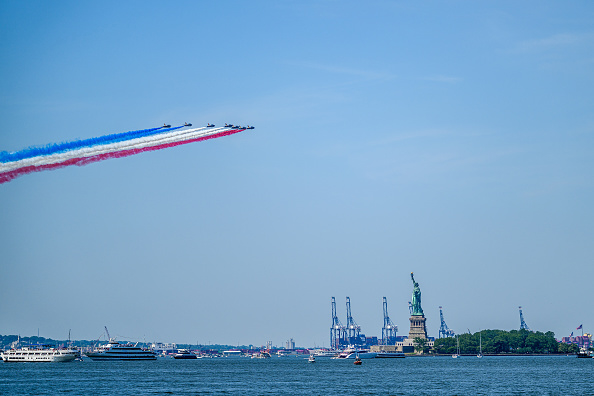
The UAE’s Fursan Al Emarat aerobatic jet teamflies over the Statue of Liberty in New York Harbor during the July 4 celebrations on Saturday of America’s 250th birthday (Roy Rochlin/Getty Images)
📅 Ahead on the Circuit
July 7-11, Sun Valley, Idaho. Allen & Co. Conference. Annual invitation-only gathering of top figures in technology, finance, media and government. Sun Valley Lodge.
July 8-9, Abu Dhabi. Money Expo Abu Dhabi. Bringing together investors, traders, fintech innovators, and financial institutions to explore the future of finance. ADNEC Center.
July 9-11, Alexandria, Egypt. Comixandria. International comics festival draws crowds of fans, collectors, illustrators and publishers. Jesuit Cultural Center.
July 14-15, Carlisle, Pa. Pennsylvania Defense and Innovation Summit. U.S. President Donald Trump to headline event at U.S. Army War College in Carlisle, joining defense, technology, finance and government leaders for discussions on military innovation and investment.
August 18-19, Dubai. Middle East Event Show. Bringing together professionals from the events industry. Dubai World Trade Center.
August 31-Sept. 3, Riyadh. LEAP Expo Riyadh. A major tech trade show for the Middle East, which includes a global startup live pitch event. RECC Malham.
Sept. 11-13, Abu Dhabi. Middle East Film & Comic Con. Featuring some of the world’s biggest brands in film, TV, sci-fi, animation, manga, comics and collectibles. ADNEC Center.
Sept. 13-18, Abu Dhabi. Abu Dhabi International Book Fair. Fostering collaboration between regional publishing sectors and creative industries. ADNEC Center.