

The Weekly Circuit: NEOM takes Manhattan + Neumann wants WeWork back
👋 Hello from the Middle East!
This week we’re looking at Adam Neumann’s attempt to buy back WeWork, Boeing’s move to Saudi Arabia, McKinsey and BCG under U.S. Senate scrutiny for work with the Saudi Public Investment Fund, and new details about Emaar’s Dubai Square development. But first, why NEOM wants to make it in New York.
Saudi Arabia’s $500 billion NEOM project, which is trying to reinvent the urban landscape almost from scratch, has placed its U.S. headquarters smack in the middle of New York City. The office in New York’s Hudson Yards on the Manhattan waterfront will enable NEOM’s managers to connect with Wall Street, drawing investors, industry leaders and candidates for executive posts.
NEOM’S The Line, a 110-mile city-in-the-making parallel to the Red Sea coast, and its luxury Trojena ski resort in the Tabuk mountains, aim to rewrite rules of engineering and conceptions of what is possible in the desert kingdom. Princess Reema bint Bandar, Saudi Arabia’s ambassador to the U.S., formally opened the office on Tuesday, calling NEOM, “an inspiration for ambitious projects around the world, as it represents a unique model for future cities.”
WeWork founder Adam Neumann, who turned the shared office-space market into a global phenomenon only to be squeezed out amid a failed IPO, is trying to buy the firm out of bankruptcy. Neumann has sought over the past several months to purchase the business through his new real estate company, Flow Global, and to provide bankruptcy financing to keep it operating, The New York Times reported in its Dealbook section. Dan Loeb, the New York investor and founder of Three Point Management, has been working with Neumann on the deal.
Boeing Co., the world’s second-largest commercial aircraft manufacturer, has applied for a license to establish its Middle East headquarters in Riyadh, Bloomberg reports. The move comes as international companies seek to comply with Saudi Arabia’s new rules requiring that they shift their main regional office to Saudi Arabia or risk being cut off from government contracts. Companies that have been licensed to set up regional hubs in Saudi Arabia include Airbus, Oracle and Pfizer.
Executives from McKinsey & Co., Boston Consulting Group and Teneo Strategy faced questions on Tuesday from a U.S. Senate committee for their lack of cooperation with an investigation into the merger of the PGA Tour with the Public Investment Fund-backed LIV Golf. BCG’s Rich Lesser, McKinsey’s Bob Sternfels and Teneo CEO Paul Keary testified that their employees in Saudi Arabia could face jail if the firms handed over details of their work for the country’s sovereign wealth fund without approval from the kingdom, the Financial Times reports.
Emaar Properties, the UAE developer that built the 162-story Burj Khalifa – already the world’s biggest skyscraper – has scrapped plans to build an even taller tower rising 1 kilometer high. Instead, Emaar founder Mohammed Alabbar disclosed at the Sharjah Entrepreneurship Festival on Sunday that his company will build a 50-story building overlooking the Dubai Creek that will anchor a new downtown shopping district and exude savoir faire. “In elegance, it reminds you of Marilyn Monroe,” he said. As for a mall that will be built at the foot of the tower, Alabbar said shoppers in electric cars will be welcome to drive through the corridors.
Welcome to The Weekly Circuit. Read on for the stories, deals and players at the top of the news across the MENA business landscape. Please send comments and story tips to [email protected].
FUTURE FACTORY
Saudi Arabia taps ex-Dell executive as CEO of new manufacturing powerhouse


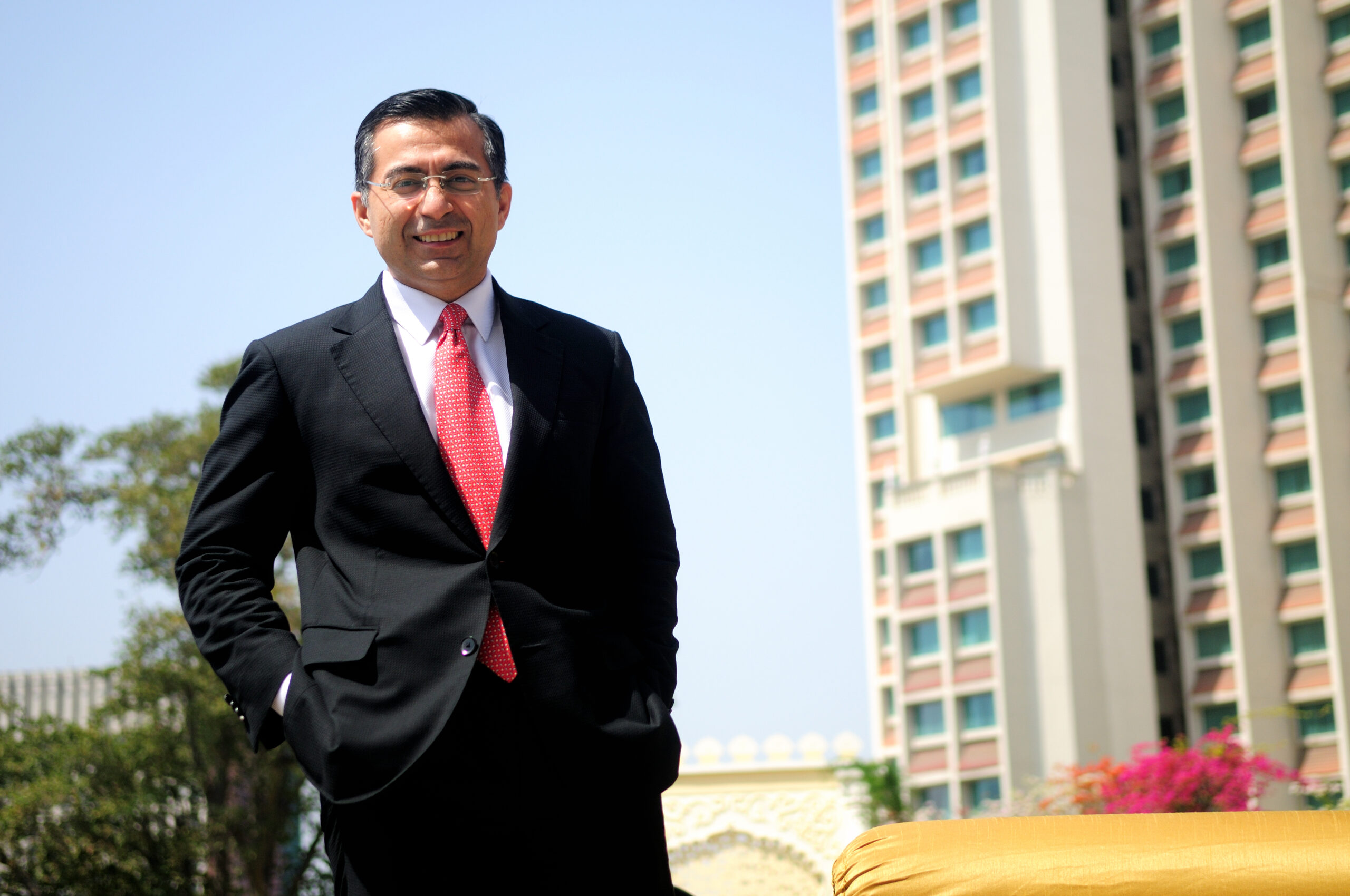
Saudi Arabia has tapped an ex-Dell Technologies executive to lead the recently formed Public Investment Fund company Alat, an industrial electronics company with $100 billion in backing that aims to become a local manufacturing powerhouse, The Circuit’s Kelsey Warner reports.
Riyadh-made robots: Global CEO Amit Midha will lead the ambitious plans for the new manufacturing hub in the kingdom. Chaired by Saudi Crown Prince Mohammed bin Salman, Alat is targeting the creation of 39,000 direct jobs in Saudi Arabia and a $9.3 billion contribution to GDP by 2030. The company is launching with more than 30 product categories including robotics, computing and digital entertainment, as well as advanced heavy machinery.
Net-zero ambitions: Alat, which will officially open for business on Feb. 20, also has a sustainability component and plans to work with global companies to reduce their emissions and move towards zero-carbon manufacturing.
Legacy past: “We will passionately use technology to transform business,” Midha said in a statement on Tuesday. He comes to Riyadh from Singapore, off the back of a nearly 17-year career at Dell, where he joined in 2006 when the Red Rock, Tex. company was the world’s biggest PC maker.
Click here to read the full story.
Sovereign Circuit
Public Investment Fund: The Saudi sovereign wealth fund and its portfolio companies have attracted $25.6 billion worth of investments in less than three years, according to its Governor, Yasir Al-Rumayyan. The kingdom has set a goal to derive 65% of its GDP from private business activities by 2030, Al-Rumayyan said. The Private Sector Forum, hosted by the PIF, got underway in Riyadh on Tuesday with the sovereign wealth fund showcasing its portfolio companies to potential private sector investors and collaborators. The PIF is in talks to buy a stake in four U.K. Premiership rugby clubs that could be worth a combined $77 million, the Daily Mail reports.
Abu Dhabi Investment Authority: ADIA is mulling the purchase of a minority stake in Dalian Wanda Group Co.’s mall operator, Bloomberg reports. Private equity firm PAG and other investors hold a combined 60% in China’s Zhuhai Wanda, the world’s largest mall operator by square footage. ADIA’s return on investment reached 17.3% last year, buoyed by high oil prices and up from 16.4% in 2022, Global SWF reports.
Mubadala: The sovereign wealth fund is partnering with Aldar, Abu Dhabi’s biggest developer, to build an office tower on Al Maryah Island, the capital’s financial center. The plan is part of Aldar’s larger development push to deploy $1.4 billion on a range of retail, commercial and residential assets across the emirate. The Abu Dhabi fund was part of a consortium of investors that bought an 8% stake in India’s Manipal Health Enterprises from Temasek, the investment arm of the Singaporean government. Temasek acquired control of Manipal last year when it paid $2 billion for a 41% stake in the company. With the sell-off, Tamasek now owns 51%. The UAE’s biggest lender beat analysts’ estimates reporting earnings. First Abu Dhabi Bank (FAB), whose largest shareholder is Mubadala, made a net profit of $1 billion in the fourth quarter of 2023 and reported annual profits were up 22% year-on-year, according to a statement last week to ADX where its shares trade.
Qatar Investment Authority: The Real Deal looks at how the Qatari sovereign wealth fund plunged $45 billion into the Manhattan property market over the past 16 years to become New York City’s largest foreign investor.
Circuit Chatter
🛏️ Hotel Mecca: Dubai-based Jumeirah Group opened its first hotel in Saudi Arabia, the Jumeirah Jabal Omar in the holy city of Mecca, as the company seeks to expand in the Middle East.
💻 Still Working: Israeli entrepreneurs discuss maintaining business ties in the UAE amid the war in Gaza in a new Financial Times feature.
🛍️ Modern Mall: The technology-centric plans for Dubai Square, a residential, retail and hospitality development equal in size to Dubai Mall from Emaar, were revealed at a workshop with CEO Mohamed Alabbar in Dubai on Wednesday.
📱 Tech Fest: Web Summit Qatar expects 12,500 participants at its conference starting Feb. 26, almost double initial estimates, Sheikh Jassim bin Mansour Al Thani, chairman of the organizing committee said.
💊 Active Ingredients: Israel’s Teva Pharmaceuticals, the world’s biggest maker of generic drugs, said it will put its active pharmaceutical ingredients business up for sale.
📈 Going Public: Oman’s state energy firm OQ SAOC has asked banks to pitch for roles on the initial public offerings of two of its units, as the sultanate pushes ahead with an ambitious privatization strategy, Bloomberg reports.
🦾 Local Defense: Under a localization agreement, U.S. defense giant Lockheed Martin has awarded two key subcontracts to Saudi Arabia for certain components in its anti-ballistic missile defense system known as THAAD, Reuters reports.
🇪🇬 To the Rescue: The IMF is “very close” to reaching terms with Egypt on a new loan package to keep its economy afloat, Managing Director Kristalina Georgieva said.
💰 Hedge Fund Hub: London-based Eisler Capital plans to open an office in Dubai, the latest in a string of hedge funds setting up shop in the UAE, Bloomberg reports.
🚢 Trading Terminals: Saudi Arabia boosted oil exports from its Muajjiz terminal in Medina last month as part of an effort to avoid areas in the southern Red Sea that have been attacked by Yemeni Houthi militants, Bloomberg reports.
🌍 Expat Heaven: The UAE is the world’s top destination for expats seeking work visas, according to a report by the HR platform Deel analyzing data from 160 countries.
Closing Circuit
🌊 City Sites: Saudi Arabia’s western port city of Jeddah signed $3.2 billion in contracts to build several new projects, including an opera house, a stadium and an oceanarium.
🇮🇷 Ties that Bind: Iranian military officials attended the World Defense Show in Saudi Arabia this week, indicating that ties between the rivals are growing, Bloomberg reports.
🚘Kushner’s Cars: Affinity Partners, the Gulf-backed private equity fund led by Jared Kushner, has completed its $110 million purchase of a 15% stake in Israel’s Shlomo Group automotive and financing business, Calcalist reports.
🚢 Ships ‘R’ Us: AD Ports Group in the UAE signed a 25-year deal with Pakistan’s Karachi Port Trust to develop, operate and manage its terminals.
🏢 No Confidence: Three board members at Apex Investment, formerly known as Ras Al Khaimah Cement, resigned just days after the company reported $16 million in losses.
🤖 Network Guardian: Oasis Security, an Israeli startup that smokes out hostile bots, raised $35 million in a Series A funding round led by Sequoia Capital.
📈 Sustainable Stocks: The Amman Stock Exchange expects to launch an environmental sustainability index for Jordanian companies under its plan to integrate this year with Abu Dhabi’s ADX market, CEO Mazen Wathaifi told CNBC Arabia.
🏈 Super Bowl Platform: Israel’s Papaya Global plans to unveil its new workforce payments platform this coming Sunday in a 30-second Super Bowl ad that may cost $7 million.
Power Circuit
Indian Prime Minister Narendra Modi, Turkey’s President Recep Tayyip Erdogan and Qatar’s Prime Minister Sheikh Mohammed bin Abdulrahman Al Thani will take part in next week’s World Government Summit in Dubai, organizers announced on Tuesday.
UAE President Sheikh Mohammed Bin Zayed traveled to Jordan for an official visit. He was received at the airport by King Abdullah II, Crown Prince Hussein bin Abdullah and a retinue of cabinet members.
Saudi Arabia’s Minister of Defense Khalid bin Salman was present alongside South Korea’s Defense Minister Shin Won-sik for a preliminary agreement to boost defense cooperation, on the sidelines of the World Defense Show in Riyadh earlier this week. Shin also held talks with Abdullah bin Bandar Al Saud, the minister of Saudi Arabia’s National Guard.
UAE Minister of Foreign Affairs Sheikh Abdullah bin Zayed met with Barbara Leaf, U.S. Assistant Secretary of State for Near Eastern Affairs, in Abu Dhabi on Saturday. The meeting was also attended by Reem Ebrahim Al Hashimy, UAE Minister of State for International Cooperation; and Lana Nusseibeh, Assistant Minister for Political Affairs and Ambassador to the United Nations.
Sheikh Mohammed Bin Rashid, the Ruler of Dubai and Vice President of the UAE, announced the new “Zero Government Bureaucracy Programme” that aims to cut red tape across a broad range of state services.
Sheikh Hamdan Bin Mohammed Al Maktoum, Crown Prince of Dubai, announced that the emirate welcomed a record 17 million visitors last year, up more than 19% from 2022.
Abu Dhabi Crown Prince Sheikh Khaled bin Mohamed chaired the Advanced Technology Research Council’s board meeting last week and approved initiatives to encourage research and development activity in the emirate.
On The Circuit
OPEC Secretary-General Haitham Al-Ghais is in Goa, India for the second annual India Energy Week which is focused on the energy transition.
Gil Shwed, co-founder of Check Point Software Technologies, will step down as CEO of the Israeli cybersecurity company and assume the position of executive chairman.
Hafize Gaye Erkan, governor of Turkey’s central bank, resigned after less than a year in office, citing a “character assassination campaign” against her. Fatih Karahan, a former deputy governor of the bank and former economist at the Federal Reserve Bank of New York, was named Erkan’s successor. He faces rising inflation as he takes up the post.
Ariel Sterman has been promoted to partner at Bessemer Venture Partners’ Tel Aviv office, focusing on investments in Israel and Europe.
Tennis fan favorites Ons Jabeur and Naomi Osaka were eliminated from doubles competition at the Mubadala Abu Dhabi Open on Tuesday, beaten in straight sets by Magda Linette and Bernarda Pera.
French chef Alain Ducasse has opened a pop-up restaurant in Saudi Arabia’s ancient desert city of AlUla, which has drawn a bounty of government investment to turn the site into a magnet for tourism.
John Podesta, former White House chief of staff in the Clinton administration, was named by President Joe Biden as Special Envoy for Climate, replacing John Kerry, who helped broker the agreement at the U.N.’s COP28 summit in Dubai on reducing use of fossil fuels.
Former Israeli Prime Minister Naftali Bennett joined the board of Lasso Security, a Tel Aviv-based startup that defends generative AI systems against hackers. Bennett was also appointed last year to the board of Quantum Source, which develops technology for photonics and quantum computing.
Circuit Culture
🎾 Tennis Titans: Saudi Arabia will host a new tennis tournament in October titled “6 Kings Slam,” in which No. 1-ranked Novak Dejokovik, No. 2 Carl Alcaraz and Grand Slam winner Rafa Nadal will compete for an as-yet undisclosed cash prize.
⚽ Penalty Kick: Saudi Arabia is having more trouble recruiting international soccer stars this season than in 2023 because of complaints from veteran players about the pro league’s facility standards and isolated social life, The Athletic reports.
🏟️ Arabian Arena: Populous, the architecture firm building the new Prince Mohammed bin Salman Stadium outside Riyadh, released a super-cool animated video showing what the futuristic project will look like when completed.
🎨 Venice Return: Eight works by Emirati conceptual artist Abdullah Al Saadi will be exhibited in The National Pavilion UAE at the Venice Art Biennale 2024. The exhibition, titled Abdullah Al Saadi: Sites of Memory, Sites of Amnesia, explores Al Saadi’s journeys into the wilderness, The National reports. This year marks the eighth time the UAE has taken part in the festival, one of the world’s most important contemporary visual art exhibitions. It will be held between April 20 and Nov. 24.
Ahead On The Circuit
Feb. 3-11, Abu Dhabi, UAE: Mubadala Abu Dhabi Open. WTA brings top women tennis players to the nine-day tournament. International Tennis Center, Zayed Sports City.
Feb. 7-8, Riyadh, Saudi Arabia: PIF Private Sector Forum. The gathering will showcase the Public Investment Fund and its portfolio companies’ business opportunities. King Abdul Aziz International Conference Center.
Feb. 9-11, Abu Dhabi, UAE: Middle East Comic Con. Nerds unite for the biggest pop culture gathering in the region. Abu Dhabi National Exhibitions Center.
Feb. 12-13, Riyadh, Saudi Arabia: Global Smart City Forum. AI and smart city experts convene to discuss the future of these cities and their impact on communities. The Arena.
Feb. 12-14, Dubai, UAE: World Governments Summit. Artificial intelligence takes center stage this year at the global gathering. Madinat Jumeirah.
Feb. 16-18, Munich, Germany: Munich Security Conference. Defense industry, foreign policy and national security leaders gather for the annual summit. Hotel Bayerischer Hof.
Feb. 19-20, Riyadh, Saudi Arabia: Saudi Capital Markets Forum. A gathering of government ministers, banks and local publicly traded companies to discuss integrating emerging markets with established financial systems. King Abdullah Financial District.
Feb. 21-22, Dubai, UAE: Step Conference. The Dubai edition of the leading tech festival for emerging markets. Internet City.
Feb. 22-23, Miami Beach, FL: FII Priority Miami. A summit on disruptive technology and investment trends hosted by the Future Investment Initiative Institute. Faena Hotel Miami Beach.
Feb. 26-29, Doha, Qatar: Web Summit Qatar. A Middle East edition of the technology crowd mega-event, gathering investors, entrepreneurs and business leaders. Doha Exhibition and Convention Centre.
Feb. 28-29, Abu Dhabi, UAE: Investopia. A gathering of investors hosted by SALT and Investopia, an investment platform launched by the UAE Ministry of Economy and backed by Mubadala and the Department of Economic Development. St. Regis Saadiyat.
March 1, Abu Dhabi, UAE: Abu Dhabi Family Office Summit. One of the largest meetings in the region for family office leaders and investors. Saadiyat Rotana.
March 4-7, Riyadh, Saudi Arabia: LEAP. A global technology conference for developers, startups, investors, C-suite and media. King Abdul Aziz International Conference Center.
March 5-6, Doha, Qatar: International LNG Forum. Gathering of industry leaders and key stakeholders to discuss the future of gas in a key export market. InterContinental Doha Beach.