








UAE boosting use of AI in physical world, Dr. Sultan Al Jaber says
The ADNOC national oil company is deploying thousands of agentic AI and robotic applications as it works to develop 'intelligent infrastructure'
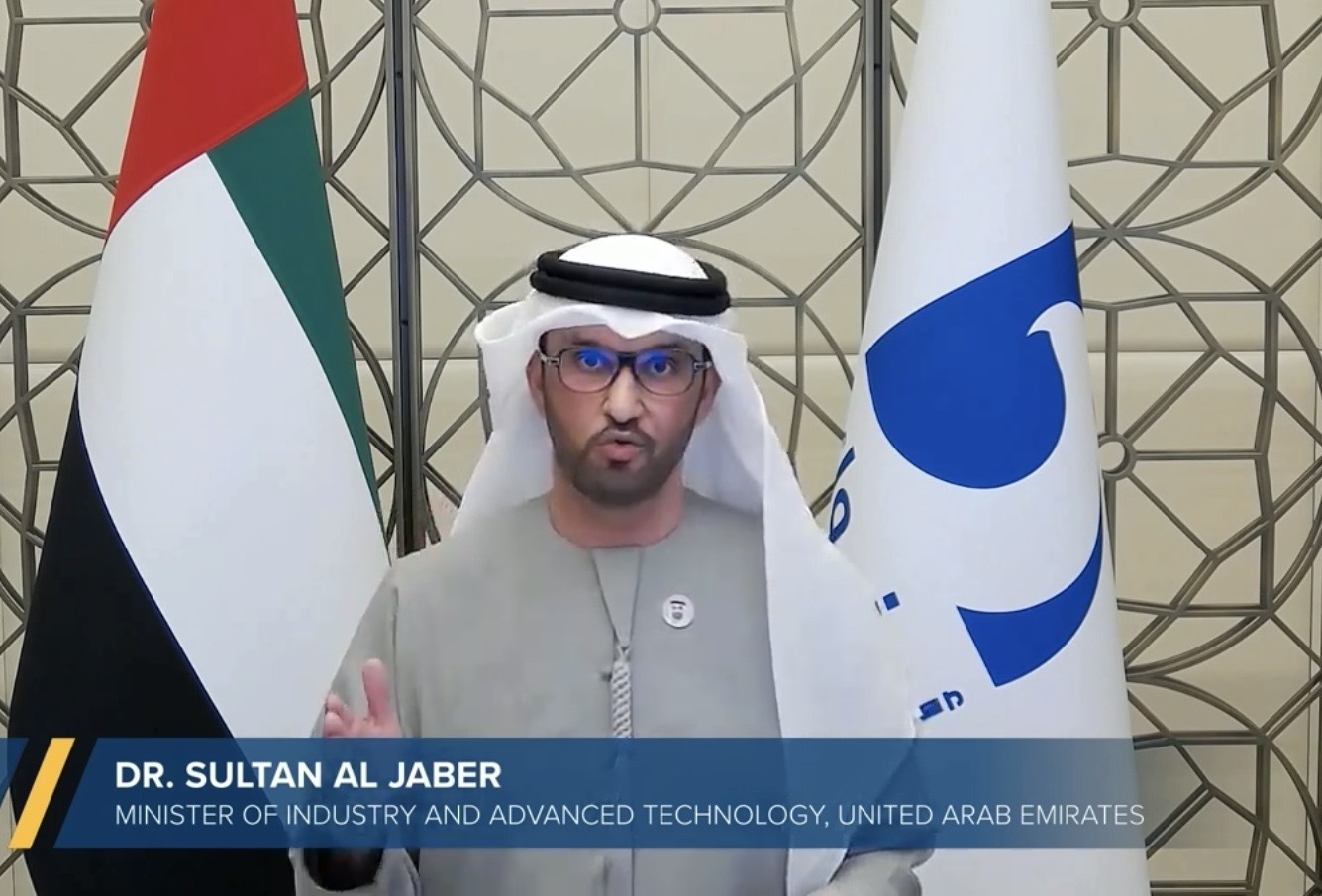
Screenshot/Atlantic Council
Dr. Sultan Al Jaber speaks during interview with the Atlantic Council


 Add The Circuit on Google
Dr. Sultan Al Jaber, the UAE’s Minister of Industry and Advanced Technology, and its top oil executive told a Washington audience that the country is moving to a new stage of artificial intelligence, using the technology to run business operations and develop its infrastructure.
“In the first phase AI helped generate content. It helped analyze information and automate workflows,” Dr. Al Jaber said Wednesday in a webcast interview with the Atlantic Council. “In the next phase, AI is helping us operate physical systems through robotics, autonomous inspections, intelligent infrastructure, and real-time operational optimization,” he said.
Dr. Al Jaber, who is Group CEO of the UAE’s ADNOC national oil company, linked AI directly to energy production and said the firm is deploying thousands of agentic AI and robotic applications. “The AI race is an electron race, and countries that can provide reliable, scalable, and affordable power will have a major competitive edge and a major strategic advantage,” he said, speaking from his office in Abu Dhabi.
The UAE has emerged as one of the world’s most aggressive state-backed AI investors through firms such as G42 and MGX. UAE funds have invested in OpenAI, xAI and Anthropic, while G42 teamed up with Nvidia on the massive Stargate data center project in Abu Dhabi.
The Emirati cabinet minister said government funds will continue to put money into U.S. companies despite disruptions from the Iran war and volatility in global oil markets.
“We invest in America because we believe in America,” Dr. Al Jaber said. “We believe in its energy resources, its capital markets, its innovation ecosystem, and its people and the quality of the ecosystem that has been created that helps attract investments.”
The minister’s remarks at the Atlantic Council event come as the UAE tries to protect its oil exports from disruptions tied to the Iran war after shipping through the Strait of Hormuz was severely affected and facilities linked to ADNOC were targeted during the conflict.
The UAE, one of the world’s largest oil exporters, formally announced on April 28 that it would withdraw from OPEC, with the decision taking effect on May 1. Officials argued that OPEC production quotas were limiting Abu Dhabi’s ability to expand output despite billions of dollars in investment in new oil capacity.