





UAE maps strategy to protect Gulf shipping from renewed threats
Al Zeyoudi said the UAE is investing in rail links, ports and overland trade corridors that can move goods between Asia, the Middle East and Europe
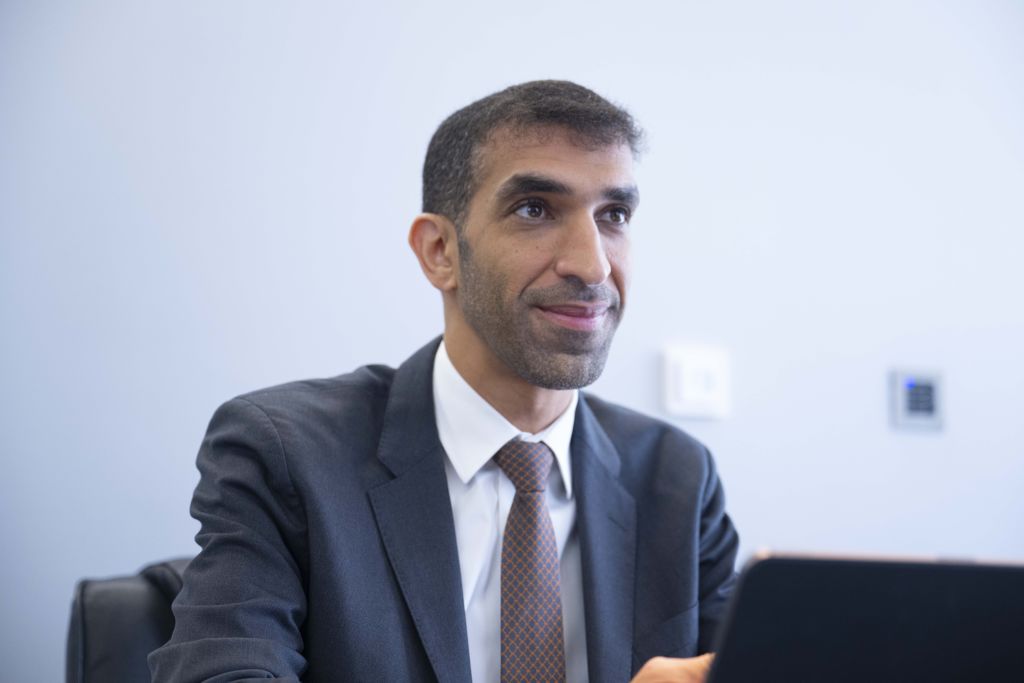
Getty Images
Thani Al Zeyoudi, UAE Minister of State for Foreign Trade


 Add The Circuit on Google
UAE Minister of State for Foreign Trade Thani Al Zeyoudi offered a glimpse today at how government planners are trying to prevent a repeat of Iran’s chokehold over Gulf shipping. “We want to make our dependency on the Strait of Hormuz close to zero,” Al Zeyoudi said in an interview with Bloomberg.
A key part of the strategy is the emirate of Fujairah, where the government has spent years building infrastructure to bypass the narrow waterway. ADNOC already operates a pipeline that can carry up to 1.5 million barrels of crude a day directly from Abu Dhabi to Fujairah, and is developing a second line that would further increase export capacity.
Al Zeyoudi said the UAE is also investing in rail links, ports and overland trade corridors that can move goods between Asia, the Middle East and Europe without relying on a single maritime route.
The aftermath of the Strait of Hormuz crisis will also be prominent at this week’s Saudi Arabia’s FII Priority Europe conference in Rome.
Opening the formal proceedings on Thursday will be PIF Governor Yasir Al-Rumayyan, who will be joined by Saudi Tourism Minister Ahmed Al-Khateeb, Princess Reema bint Bandar, the Saudi Ambassador to the U.S., and a full roster of government officials.
Among European leaders on the schedule are Albanian Prime Minister Edi Rama, former Italian Prime Minister Matteo Renzi and Italian Industry Minister Adolfo Urso.
Speakers include Anthony Gutman, Co-CEO of Goldman Sachs International; Andrew Cohen, executive chairman of JPMorgan Chase’s global private bank; Lord Franck Petitgas, Vice Chairman of Blackstone Europe; Sir Noel Quinn, Chairman of Julius Baer; Mohamed Alabbar, founder of Emaar Properties; and Gerard Inzerillo, Group CEO of Diriyah Co.