UAE to ban most single-use plastics in pollution crackdown
The UAE is preparing to impose a ban on most single-use plastics widely used in the food delivery industry, under a major push to reduce pollution.
From Jan. 1 it will be illegal to import, manufacture or trade a range of single-use plastic and styrofoam items, including cutlery, straws, beverage cups and lids, plates and food containers, The National reports.
The Ministry of Climate Change and Environment sent a reminder on Tuesday urging all businesses to comply with the laws, which were previously announced.
Rules around single-use plastic bags, which were banned in Abu Dhabi in 2022 and UAE-wide in 2024, will also be tightened.
Studies have found that nine out of 10 turtles and five out of 10 camels found dead in the UAE had plastic in their stomachs.
IMF green-lights $2.5 billion finance package for Egypt bailout
Egypt will get immediate access to some $1.2 billion that the International Monetary Fund approved after a review of the economic bailout program it undertook three years ago.
The IMF gave a green light on Monday to $2.5 billion in financing for Egypt, of which the other $1.3 billion is dedicated to spending on climate change and will be allocated in installments.
In a progress report on the 2022 rescue package, the IMF found “notable delays” on economic steps it mandated to “level the playing field.”
Still, it noted progress by the government and praised its “decisive action” over the past year on selling off state assets and maintaining a flexible currency exchange rate.
Abu Dhabi Sustainability Week draws presidents, energy CEOs
Environmentalists and energy companies are pouring into Abu Dhabi as a week of events focused on battling climate change kicks off.
Abu Dhabi Sustainability Week will draw 13 heads of state and at least 140 government ministers and senior officials from around the world when it starts on Monday with the annual assembly of IRENA, the U.N.’s International Renewable Energy Agency, which is based in the emirate.
With the week’s centerpiece ADSW Summit slated for Wednesday, other notable gatherings include the Global Climate Finance Annual Meeting, the World Future Energy Summit, the Green Energy Summit, the WiSER Forum for Women in Sustainability, Environment and Renewable Energy, and the ceremony to award the annual Zayed Sustainability Prize Awards.
Choreographing all the activities is Dr. Sultan Al Jaber, the UAE Minister of Industry and Advanced Technology, Group CEO of ADNOC and Chairman of the Abu Dhabi-based Masdar sustainable energy company. Al Jaber was President of COP28, the annual U.N. climate conference held in Dubai two years ago.
Among the national leaders joining the coming week’s events are Italian Prime Minister Giorgia Meloni, Malaysian Prime Minister Anwar Ibrahim, Finland’s Prime Minister Petteri Orpo, Azerbaijani President, Kenyan President William Ruto, Rwandan President Paul Kagame. ADSW is conducted under the patronage of UAE President Sheikh Mohamed bin Zayed.
”By bringing together leaders in policy, business and technology, ADSW Summit 2025 will unite the global community to deliver interconnected solutions for energy, economies, and the environment,” Masdar CEO Mohamed Jameel Al Ramahi, Sustainability Week’s official host, said in a statement.
Topping the list of ADSW speakers will be Mohamed Al Hammadi, Managing Director and CEO of the Emirates Nuclear Energy Company; Catherine MacGregor, CEO of Paris-based Engie; Greg Jackson, CEO of the U.K.’s Octopus Energy; Lord Adair Turner, Chair of the international Energy Transitions Commission; Dr. Mahmoud Mohieldin, Special Envoy for Financing the U.N.’s 2030 Sustainable Development Agenda, United Nations; Musabbeh Al Kaabi, CEO of ADNOC’s Upstream division; and Himanshu Gupta, CEO and co-founder of San Francisco-based ClimateAi.
Intense heat forces new reflection on Gulf tourism, business plans
From Saudi Arabia’s Red Sea resorts to Dubai’s neighborhood mosques, the season’s searing temperatures are forcing nations across the Middle East to reevaluate the impact climate change could have on their people and economies.
Following the deaths of more than 1,300 pilgrims who made the hajj this month to Mecca, authorities across the region are taking steps to protect worshippers from heat that often exceeds 50 Celsius (122 F).
In the UAE, mosques have been instructed to limit their Friday sermons and prayers to no more than 10 minutes because of the scorching sun.
The New York Times published a story on Thursday suggesting that global warming could undermine some of the ambitious tourism, sports and industrial projects now underway across the Gulf, including Saudi Arabia’s Neom mega-development and the string of luxury hotels under construction on the shores of the Red Sea.
In North Africa, the unrelenting dry weather has depressed harvests of fruit for export while requiring Morocco to spend record sumson wheat imports, Bloomberg reports.
The Daily Circuit: ADNOC’s new acquisitions + Gulf battles the heat
👋 Hello from the Middle East!
Today in The Daily Circuit, we’re looking at new ways in which the Middle East is grappling with climate change, takeaways from “Summer Davos” in China, the deep tech conference ADQ is planning in Abu Dhabi and the returns Blackstone is enjoying in India. But first, ADNOC is loosening the strings of its $150 billion purse.
The decision by the UAE’s national oil company ADNOC to move from operating simply as a domestic oil producer to becoming an international dealmaker comes straight from the top – and progress this week on a $12.5 billion takeover of German chemicals giant Covestro may burnish its reputation.
UAE President Sheikh Mohamed bin Zayed chaired a November 2022 board meeting where he approved a $150 billion five-year capital spending plan to transition the company from a traditional state oil firm into a diversified, multinational energy company.
When the Covestro deal appeared to stall in recent months, ADNOC raised its bid after seeking approval from MBZ, Bloomberg reports. The negotiations took place against a backdrop of accelerating deal activity at ADNOC and its alternative energy company, Masdar, in which it owns a 33% stake.
Masdar finds itself in a bidding war right now to acquire Spanish renewables firm Saeta Yield from Brookfield. In the last year it has bought a renewable energy company in Greece and announced a deal to purchase a 50% stake in Terra-Gen, one of the largest private renewable energy producers in the U.S. The ink dries on these agreements as ADNOC is boosting production capacity and Masdar is looking to develop or acquire an energy portfolio of at least 100 GW capacity by 2030.
📰 Developing Stories
SIZZLING SERMONS
From Saudi Arabia’s Red Sea resorts to Dubai’s neighborhood mosques, the season’s searing temperatures are forcing nations across the Middle East to reevaluate the impact climate change could have on their people and economies. Following the deaths of more than 1,300 pilgrims who made the hajj this month to Mecca, authorities across the region are taking steps to protect worshippers from heat that often exceeds 50 Celsius (122 F). In the UAE, mosques have been instructed to limit their Friday sermons and prayers to no more than 10 minutes because of the scorching sun. The New York Times published a story on Thursday suggesting that global warming could undermine some of the ambitious tourism, sports and industrial projects now underway across the Gulf, including Saudi Arabia’s Neom mega-development and the string of luxury hotels under construction on the banks of the Red Sea. In North Africa, the unrelenting dry weather has depressed harvests of fruit for export while requiring Morocco to spend record sums on wheat imports, Bloomberg reports.
SUMMER DAVOS
As Gulf investors are increasingly looking to China for investment targets, “Summer Davos” concluded in the port city of Dalian, China on Thursday. Chinese Premier Li Qiang addressed the opening of the 15th Annual World Economic Forum’s Meeting of the New Champions urging more scientific and technological exchanges. Behind closed doors, Qiang told the executives and policymakers gathered to keep faith in the world’s second-largest economy, the Financial Times reports. Last year Abu Dhabi sovereign wealth fund Mubadala opened a Beijing office. Group CEO Khaldoon Al Mubarak said in February that China’s economic slowdown and huge infrastructure needs make its companies especially ripe for investment. “It’s actually quite cheap and I think for an investor that’s looking at a 5, 10-year horizon, there’s an interesting opportunity for sure there.”
💲 Sovereign Circuit
Public Investment Fund: Saudi Power Procurement Co. has signed power purchase agreements worth $3.28 billion for three new solar projects with a capacity of 5.5 gigawatts, the Saudi energy ministry said on Wednesday. The agreements are with Saudi renewable energy utility ACWA Powe, Badeel, which is wholly owned by the PIF, and Aramco Power.
Mubadala: Abu Dhabi’s second-largest sovereign wealth fund hosted a session at Bloomberg Invest in New York earlier this week on the role of private capital in technology innovation. Deputy Chief Communications Officer Umayma Abubakar emphasized the role of strategic partners in her opening remarks.
ADQ: ADQ will delve into investment opportunities in frontier technologies like artificial intelligence, advanced materials, genomics and quantum computing at XPANSE 2024. The November conference hosted by the Abu Dhabi sovereign wealth fund will take place at the Abu Dhabi National Exhibition Center, which ADQ owns.
↪↩ Closing Circuit
⚗️ Chemical Reaction: France’s Saint-Gobain has entered into an agreement to buy Dubai-based construction chemicals company FOSROC for about $1 billion to drive its international expansion, Reuters reports.
📶 Data Centers: Damac Group, a UAE conglomerate with interests in luxury real estate, hotels, property management and logistics, announced plans to invest up to $1 billion in the development of data centers over the next several years.
🛫 Best Airfares: Fletcher, an Israeli startup that uses artificial intelligence to help airlines optimize pricing and logistics, raised $90 million in a Series B round led by Battery Ventures.
💸 Bilateral Fund: South Korea’s NH Venture and K-Growth have picked Jerusalem-based OurCrowd to co-manage an $80 million startup fund that will invest in both South Korea and Israel.
🗣 Circuit Chatter
📈 Rising Returns: Blackstone and other global investment firms that have poured tens of billions of dollars into India are finding returns on investment are often better than in the U.S. and U.K., Bloomberg reports.
🚙 Engine Supplies: Saudi Aramco is prepared to take a 10% stake in a thermal engine joint venture between Frances Renault and China’s Geely called Horse Powertrain, Reuters reports.
⛽ Gas Shortage: Abu Qir, one of Egypt’s largest fertilizer companies, said it would partially switch its factories to operating on hydrogen supplies as the country struggles with a shortage of natural gas that has led to widespread blackouts and led competitors to halt production.
🌍 Power Circuit
Sheikh Mohammed bin Abdulrahman, Qatar’s Prime Minister and Foreign Minister, led the inauguration ceremony on Thursday for Simaisma, a $5.5 billion project on the country’s eastern coast that will turn a 7-kilometer beachfront strip into an integrated resort area filled with luxury hotels, spas, exercise trails and amusement parks. Sheikh Dr. Sultan bin Mohammed, Ruler of Sharjah and President of the University of Khorfakkan, announced a cohort of new members for the school’s Board of Trustees.
➿ On the Circuit
Dr. Thani bin Ahmed Al Zeyoudi, UAE Minister of State for Foreign Trade, concluded a visit to San Francisco and nearby Silicon Valley on Thursday, which was aimed at boosting economic cooperation and exploring partnerships between the UAE and the U.S., state news agency WAM reported.
Saudi Minister of Finance Mohammed bin Abdullah described the kingdom’s structural reforms and efforts to generate non-oil revenue at this week’s Ministerial Council meeting of the OPEC International Development Fund in Vienna, Austria.
International Monetary Fund Managing Director Kristalina Georgievasaid she is more “optimistic” on U.S. price stability than the Federal Reserve, projecting inflation would return to 2% next year in a huddle with reporters at IMF headquarters in Washington on Thursday. The lender similarly forecasts receding inflation for the Middle East.
🎶 Culture Circuit
🥋 Martial Artists: Kids, teens and grown-ups will be donning gis in Abu Dhabi this weekend to kick off the UAE’s six-month long Khaled bin Mohamed bin Zayed Jiu-Jitsu Championship. Starting today at the Mubadala Arena and continuing through December, the competition will eventually crown champs from categories for 4-year-olds and up with medals and cash prizes worth AED 1.5 million ($408,000). Mohamed Al Dhaheri, Vice Chairman of the UAE Jiu-Jitsu Federation, said in a statement that the competition “reflects the UAE leadership’s limitless support” for the sport.
🗓️ Circuit Calendar
June 26-30, Tan-Tan, Morocco: Tan-Tan Moussem Cultural Festival. Annual gathering held since 1963 by more than thirty tribes from southern Morocco, with participation from the UAE and other Middle East nations.
June 28-30, Abu Dhabi, UAE: Khaled bin Mohamed bin Zayed Jiu-Jitsu Championship. Athletes from across the country compete for medals and cash prizes in the first of five qualifying events that will lead to the finals in December. Mubadala Arena, Zayed Sports City.
June 29-30, Cairo, Egypt: Egypt-EU Investment Conference. Business leaders and investors from Egypt and Europe engage around themes including green energy, nearshoring, digitization and tech startups. Al Manara International Conference Center.
July 1-3, Milan Italy: The Global Energy Transition Congress & Exhibition. An event bringing together thought leaders, innovators, and industry experts to address the challenges of accelerating the global energy transition. Milano Convention Centre.
July 10-11, Riyadh, Saudi Arabia: Global EV and Technology Forum. The inaugural summit in Saudi Arabia bringing together policymakers, companies and investors focused on sustainable urban mobility solutions. Riyadh International Convention & Exhibition Center.
July 15-26, Granada, Spain: ADIA Lab International Summer School. A course of lectures and case studies to explore the critical role of trust and safety in AI, examining the ethical, technical and societal implications of AI applications. University of Granada.
Aug. 12-15, Riyadh, Saudi Arabia: Saudi Food Expo. One of the kingdom’s largest trade shows for the food & beverage industry. Riyadh Front Exhibitions.
Egypt turns to space agency to help tackle water scarcity
The effects of climate change, population pressures and a regional struggle which has seen vast water resources diverted from the Nile to a dam in Ethiopia have all left Egypt rapidly approaching a state of severe water scarcity.
National authorities are now hoping to put advanced technology to work to help avert a crisis, by bringing in its space agency to revolutionize the study and sustainable management of water resources.
A cooperation agreement between the National Authority for Remote Sensing and Space Sciences and the National Water Research Center was announced on Tuesday to spearhead these efforts.
Under the deal, the agencies will join forces to develop innovative solutions for water management, including smart systems aided by aerial and ground sensors, advanced imaging and Internet of Things technologies.
World Future Energy Summit brings industry, investors to UAE
Corporate executives and investors are gathering in Abu Dhabi this week for the World Future Energy Summit, where the global response to climate change will top the agenda.
Dr. Sultan Al Jaber, UAE Minister of Industry and Advanced Technology and President of COP28, called the conference, which starts on Tuesday, a “crucial platform” for governments and the private sector. Dr. Al Jaber, who is also Chairman of alternative energy company Masdar and CEO of the Abu Dhabi National Oil Co., or ADNOC, said he hopes the conference will drive investments into the world energy transition from carbon-based fuels.
The UAE is set to put its green bona fides forward as it aims to triple its renewable energy capacity to 30% by 2030 and establish a hub for hydrogen fuel production and distribution in the coming decades.
TAQA, the energy company backed by sovereign wealth fund ADQ, is an anchor partner of the Abu Dhabi summit and will be joined by speakers including Abdulnasser Bin Kalban, CEO of Emirates Global Aluminum; Ali Tahir Jaffery, Director of Standard Chartered Bank; and Amy Lehoczky, Director of ESG at Abu Dhabi’s AI firm G42. Also appearing will be executives from German giant Siemens and Saudi Arabia’s Acwa Power.
Masdar, which last month bought a 50% stake in Terra-Gen, one of the largest private renewable energy producers in the U.S., is also set to host a parallel conference focused on hydrogen.
Former U.K. Prime Minister Boris Johnson will visit Abu Dhabi on Tuesday to address the conference amid increasing cooperation between the UAE and the UK on developing alternative energies. Masdar is looking to develop or acquire an energy portfolio of at least 100 GW capacity by 2030.
Mideast mulls alliances at U.N. conference to avert environmental catastrophe
From lab-cultured milk to hydrogen-based energy generation, Israelis sought to share expertise in desert agriculture, desalination and food security with new Arab partners at the United Nations climate change summit and establish alliances across the Middle East and North Africa.
The campaign was led by Israeli President Isaac Herzog, who said cooperation would lead to “regional climate resilience,” in a Nov. 7 address to the COP27 conference in Sharm el-Sheikh, Egypt. A nonprofit industry group, Start-Up Nation Central, sought to foster connections with Bahrain, the United Arab Emirates, Morocco and other countries that have signed peace agreements or normalized relations with Israel through an initiative it dubbed the MENA Alliance for Climate Innovation.
“We want to create a business-focused framework with partners from the region to connect startups with investors and corporations, and to work together to develop solutions addressing shared climate challenges,” Yariv Becher, Start-Up Nation Central’s vice president for innovation diplomacy, told The Circuit from Sharm el-Sheikh.“We came to COP27 to move things forward.”
Israel, which has the third-largest number of startups per capita in the world, has developed an international reputation for the quality of its research in desalination and desert agriculture. That has created natural linkages with its new allies in the world’s driest region, which extends from the Arabian desert to the Sahara. Israeli companies have developed partnerships in the UAE and Bahrain that enable them to do business in Saudi Arabia and other countries that don’t have formal diplomatic ties with the Jewish state.
Warning that the region is “on the brink of catastrophe,” Herzog laid out a framework for regional cooperation in addressing climate challenges.
“Here in Sharm el-Sheikh, I wish to reiterate the State of Israel’s solid commitments to achieving net zero carbon emissions and to transitioning from fossil fuels to renewable energy by 2050,” the president said. “But Israel is prepared to assume far greater responsibility,” he added. “Israel is prepared to lead the effort towards regional climate resilience – I intend to spearhead the development of what I term a Renewable Middle East, a regional ecosystem of sustainable peace.”
In the Israeli pavilion at the conference, 10 startups promoted their technologies: Aleph Farms, which produces meat from animal cells; Beewise, which develops robot-controlled beehives; GenCell, which generates energy from hydrogen and ammonia; Groundwork BioAg, which produces inoculants for commercial agriculture; H2Pro, which produces hydrogen-based energy; Home BioGas, which reduces cooking gas from household waste; Remilk, which produces laboratory-cultured milk; Tomorrow.io, which develops weather forecasting technology; UBQ Materials, which turns household waste into a thermoplastic product; and Wiliot, which reduces greenhouse gas emissions from production lines.
Underlining the region’s concern about climate change, next year’s conference, COP28, will be held in the United Arab Emirates, whose president, Sheikh Mohamed bin Zayed Al Nahyan, pledged the country’s dedication to renewable energy even as it stands as the world’s seventh-largest oil producer.
“Our world is facing complex challenges, most important of which is climate change, which now affects the world’s stability and security – including food security… We have only one planet, and with that in mind, it is imperative that we partner and work together in a spirit of determination and optimism to address this common challenge through climate action,” he said.
Also at the conference, cabinet ministers from Israel, Jordan and the UAE signed a memorandum of understanding that lays the groundwork for creating solar energy fields in Jordan. The three-way agreement will enable Jordan to sell solar power from the solar field built by an Emirati firm, while Israel will sell desalinated water to Jordan from a site that will be built on the Mediterranean coast. The MOU was signed on Nov. 8 by Esawi Freij, Israel’s outgoing minister for regional cooperation; Mohammad Al Najjar, Jordan’s minister of water and irrigation; and the UAE’s Climate Change and Environment Minister Mariam Al Mheiri.
Weekly Circuit: Egypt hosts climate summit + Koch Israel chief aims to disrupt
👋 Good Monday morning in the Middle East!
For the next two weeks, Egypt will be at the center of global efforts to avert environmental disaster as it plays host to the annual United Nations summit on climate change, COP27. Much has changed since last year’s event in Glasgow, Scotland, where pressure built on countries to adhere to the U.N. goal of net zero greenhouse gas emissions by 2050. Since then, world oil and gas supplies have been slashed in the wake of Russia’s invasion of Ukraine. Europeans are bracing for a cold winter while making supreme efforts to procure energy supplies made from fossil fuels.
Among world leaders who are scheduled to address the conference in the Egyptian resort town of Sharm el-Sheikh are U.S. President Joe Biden, U.K. Prime Minister Rishi Sunak, French President Emmanuel Macron and U.N. Secretary General António Guterres. No-shows include Russian President Vladimir Putin and Chinese President Xi Jinping. Leaders attending from the Middle East are Egyptian President Abdel Fattah El-Sisi; Israeli President Isaac Herzog; Jordan’s King Abdullah II; and Sheikh Mohammed bin Zayed, president of the United Arab Emirates, which will host next year’s summit.
Bibi’s back. Benjamin Netanyahu, Israel’s longest-serving leader, won last week’s election and will most likely return to the prime minister’s residence in Jerusalem after 16 months of leading the Knesset’s opposition. Netanyahu’s coalition, which will almost certainly include right-wing leaders who regularly demonstrate hostility to Palestinians, has put Arab leaders on alert. Experts say it may slow down some areas of cooperation with the United Arab Emirates and Saudi Arabia, though the normalization agreements known as the Abraham Accords will likely withstand the pressure.
An advisor to Bahrain’s King Hamad bin Isa Al Khalifa, on the other hand, told reporters that Netanyahu’s victory “was normal and always expected,” adding, “We will stick to our agreement and we expect it to continue in the same line and continue building our partnership together.” Lebanon said it has an insurance policy against Netanyahu trying to neutralize the maritime gas deal with which it agreed upon with Israel through U.S. mediation. As opposition leader, Netanyahu criticized the agreement and said he wouldn’t be bound by its terms. Lebanon’s chief negotiator said he obtained “sufficient American guarantees that this deal cannot easily be canceled.”
One of Netanyahu’s top aides in a previous term was Eli Groner, now managing director in Israel for Koch Disruptive Technologies and one of the most sought-after funders of startups. In an Investor Spotlight, The Circuit reports that the firm, owned by the politically conservative Koch family, has dispensed close to $1 billion to 14 companies in Israel and is scouting for others engaged in “creative destruction” of industry norms.
Welcome to The Weekly Circuit, where we cover the Middle East through a business and cultural lens. Read on for the stories, deals and players at the top of the news. Please send comments and story tips to [email protected].
Spread the word! Invite your friends to sign up.👇
INVESTOR SPOTLIGHT
Koch’s Israeli investment chief aims to disrupt venture capital funding
Eli Groner meets with hundreds of startups each year as the managing director in Israel for Koch Disruptive Technologies, which since 2018 has doled out almost $1 billion to emerging Israeli companies. For the fraction of those deemed disruptive enough to get funding, KDT, the venture arm of gigantic U.S. conglomerate Koch Industries, sees itself as a devoted ally that doesn’t expect quick returns, Shoshanna Solomon reports for The Circuit.
Partner forever: “We are patient capital,” Groner told The Circuit during an interview at the firm’s 35th-floor Tel Aviv office overlooking the Mediterranean. “We invest with the expectation that we are going to partner with them forever or for at least for 10 years. Now, that is not always the case, but that is certainly the way we look at it when we make an investment. So, we want to work with people that are high integrity, resilient, committed and playing the long game.”
Netanyahu aide: Dressed in a light-blue button-down shirt and tailored tan trousers, the American-born Groner has business experience and an insider government background that impressed KDT when the firm opened its Israel office three years ago, the only one outside the United States. Now 52, he spent three years as a top aide to then-Prime Minister Benjamin Netanyahu, serving as director-general of the Prime Minister’s Office. Any political savvy he gained in government has been useful in representing Koch Industries, whose owners are among the biggest contributors to right-wing causes in the U.S.
Shared vision: Koch Industries had revenue last year of more than $125 billion and 120,000 workers worldwide. KDT’s first foray in Israeli startups — and first ever investment — was $100 million in backing for Insightec to which it later added an additional $100 million. When it first funded Insightec, KDT didn’t have an office in Israel. On a visit to meet industry players, company executives had an encounter with Groner, fresh out of the Prime Minister’s Office, who offered a geopolitical overview of Israel and the region. “We really connected on vision and values,” Groner said. “Six months later I got a formal offer to join KDT and open up the Israel office.” Groner has since led KDT’s investments in 13 Israeli startups that operate in fields ranging from health care, semiconductors and cybersecurity to manufacturing and agriculture.
Regional opportunity: Groner’s efforts come during a period when Israel is forging new partnerships with the United Arab Emirates, Bahrain, Morocco and other Arab countries, under the banner of the Abraham Accords signed two years ago. It is a “very exciting time for the region,” he said. “It is an opportunity for everyone, whether you are an entrepreneur, whether you are an investor. But at the end of the day, it is going to be the same values and principles that apply. Are you aligned in values? Are you aligned on vision?”
Clean Energy: The U.S. and UAE announced a partnership worth $100 billion that aims to develop low-emission energy sources and distribute 100 gigawatts of clean energy worldwide by 2035.
Israel in Bahrain: Israel Aerospace Industries will exhibit radars, avionics and anti-drone systems in its first appearance at the annual Bahrain International Airshow.
Flying Taxis: Neom, which is building a futuristic megacity in Saudi Arabia, is investing $175 million in Germany’s Volocopter, which will operate a flying electric taxi service.|
Investment Cuts: Some of the biggest international venture capital funds, including Tiger Global, SoftBank and Coatue, have reduced their investment in Israeli startups and growth companies.
Saudi Apple: Apple will be among the first tenants at a new logistics zone at King Khalid International Airport in Riyadh built to attract top multinational companies.
Property Buyers: The emirate of Sharjah will allow people from any country to own property. Previously, real estate purchases were limited to citizens of the UAE and other Gulf states.
Wind Farm: Saudi Arabia’s Acwa Power signed an initial agreement to build a 10-gigawatt wind farm in Egypt, which could be the world’s second-largest generator of wind energy.
Closing Circuit
Fast Food: Americana, the largest operator of fast-food restaurants in the Middle East, plans to sell a 30% stake on stock exchanges in both Saudi Arabia and Abu Dhabi.
Oil Measure: Alpha Dhabi Holding paid roughly $164 million for a 25% stake in Gordon Technologies, which produces technology for measuring soil content and other physical conditions while drilling for oil and gas.
Virtual Interiors: Israel’s Apply Design, which creates virtual interiors for selling homes, raised $3.3 million from investors including the Urban Innovation Fund, Cathexis Ventures, Goodwater Capital and YC.
Self-Driving Boats: AD Ports Group signed an agreement with Dutch geodata company Fugro to expand the use of autonomous and remote technology in the maritime industry.
Sensing Engagement: Israel’s Emza Visual Sense, which uses artificial intelligence to gauge user engagement, was acquired by San Jose, Calif.-based Synaptics for an estimated $10 million.
App Guard: Apiiro, an Israeli apps security startup, raised $100 million in funding, in a round led by General Catalyst, with participation by Greylock and Kleiner Perkins.
On the Circuit
Pope Franciscame to Bahrain last week, where he met with King Hamad bin Isa Al Khalifa, conducted an open-air mass for 30,000 and led a prayer for peace at the newly built Our Lady of Arabia Cathedral.
Thomas J. Barrack Jr. was acquitted on charges he worked as an agent for the UAE without disclosing it, using his friendship with former President Donald Trump to benefit the Gulf state.
Aaron Frenkel, an Israeli billionaire who lives in Monaco, said he plans to accumulate a 20% stake in Shufersal, Israel’s biggest supermarket chain.
Ahead on the Circuit
Nov. 7-18, Sharm el-Sheikh, Egypt: United Nations Climate Change Conference (COP27). Heads of state from 90 countries expected at event to chart global efforts at protecting the environment. Sharm el-Sheikh International Convention Centre.
Nov. 9-10, Bahrain: Bahrain International Air Show. Exhibition with 140 companies expected from aviation, defense, space and logistics industries. Sakhir Air Base.
Nov. 27-Dec. 1, Sde Boker, Israel: Drylands, Deserts and Desertification Conference. Scientists, environmentalists and business leaders discuss climate change, food security and desert agriculture. Jacob Blaustein Institutes for Desert Research, Ben-Gurion University.
Culture Circuit
Women in Omani Art: Women are gaining recognition as artists in Oman, according to Middle East Monitor. Three out of the five artists featured at Oman’s pavilion in this year’s Venice Biennale were women — Budoor Al-Riyami, Radhika Khimji and the late Raiya Al-Rawahi — underlining their newfound prominence in the Gulf state’s emerging contemporary art scene.
Running for Israel: Lonah Chemtai Salpeter, an Israeli runner who emigrated from Kenya, finished second in Sunday’s New York City Marathon, trailing seven seconds behind Kenyan winner Sharon Lokedi. Salpeter started running competitively after she came to Israel in 2008 and worked as a nanny for a Kenyan diplomat. She married her coach in 2014 and became an Israeli citizen two years later. Since then, she has won marathons in Florence, Prague and Tokyo.
Arabian Christians: Archaeologists discovered an ancient Christian monastery in the UAE emirate of Umm Al Quwain, possibly predating Islam. The complex on Al Sinniyah Island includes a church, a dining hall, cisterns and cells for the monks. The monastery is believed to have been active between the late sixth to mid-eighth centuries.
The first UAE minister to visit Israel got her start on climate change while scuba diving
When Mariam bint Mohammed AlMheiri landed in Tel Aviv last year, she didn’t know what to expect. A serial startup founder and environmentalist, AlMheiri is used to experimenting and exploring. But as the first United Arab Emirates minister to visit Israel after the Abraham Accords normalized ties between the countries in 2020, she was taking a new — and particularly noticeable — leap of faith.
“I remember at the hotel I was staying at, they put a label on the water bottle and the chocolate, saying, ‘Thank you to the first minister of the UAE,’ with my name on it,” recalled AlMheiri, the UAE’s minister of climate change and the environment. “When I was at restaurants or cafes, they wanted me to sign a book, because they said it’s the first time we have someone from the UAE and a minister.” People asked for selfies everywhere she went.
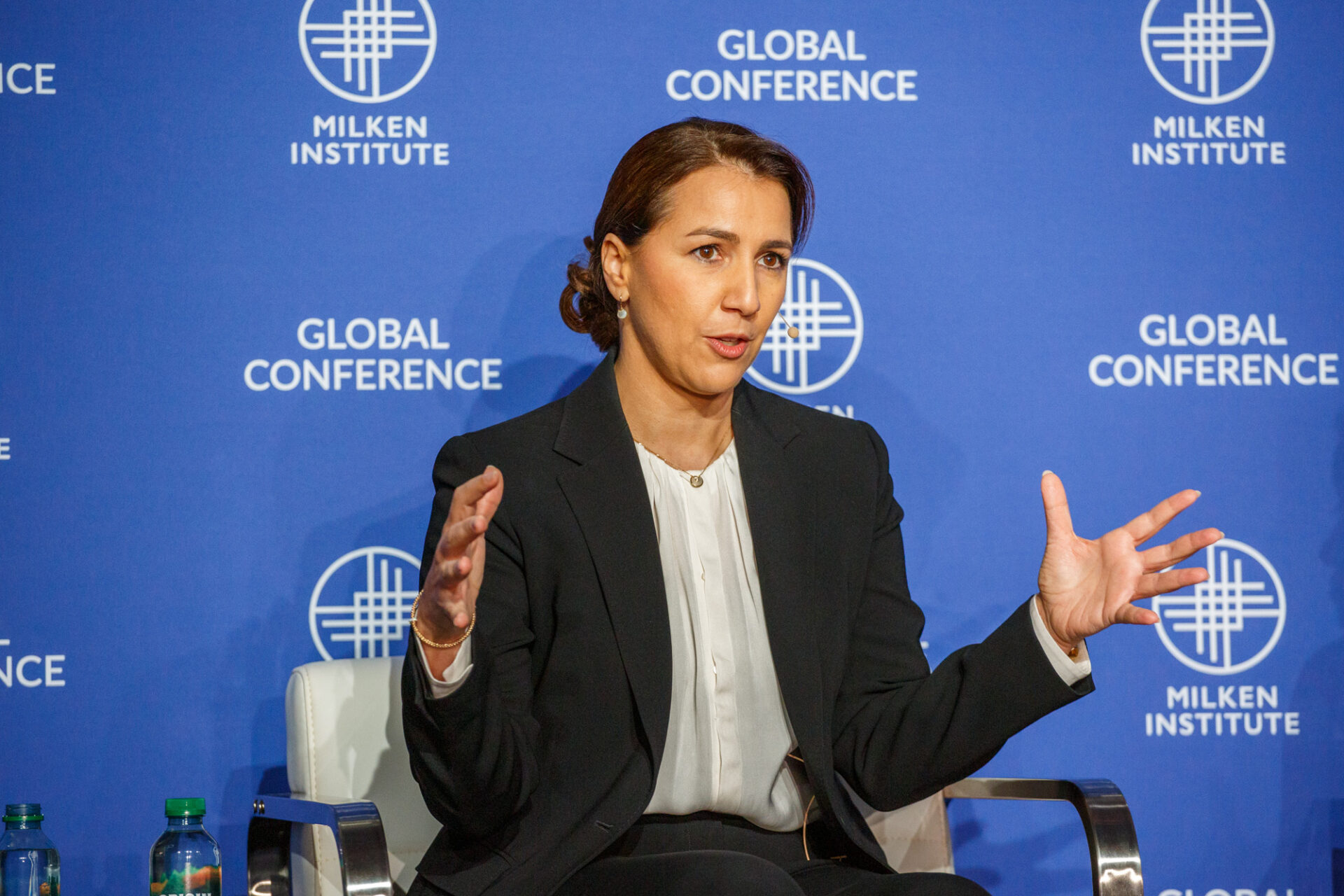
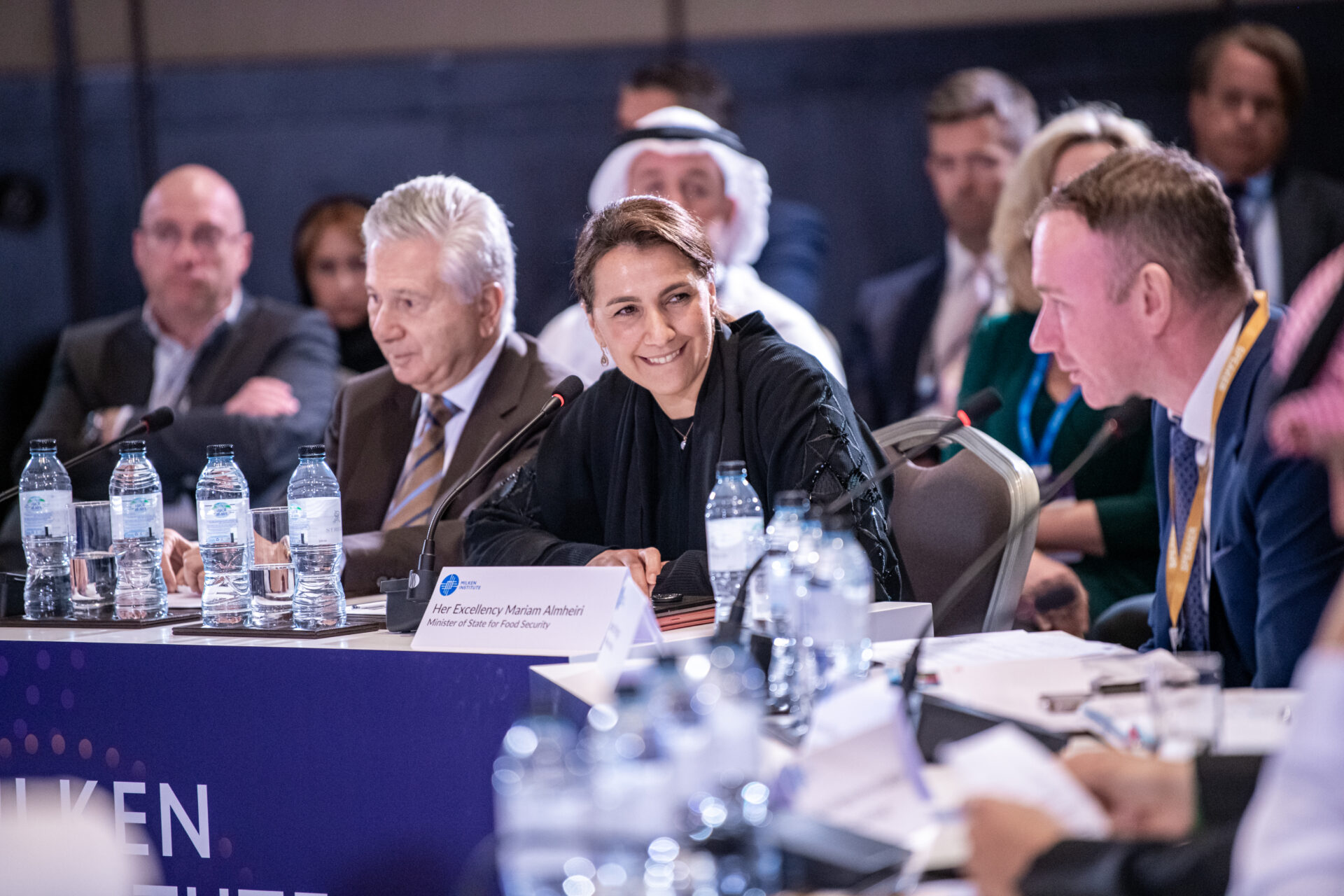
“For us, the Abraham Accords is a historic moment for both countries,” AlMheiri told The Circuit in an interview earlier this month in Los Angeles, where she was speaking at the Milken Institute Global Conference about energy and food technology.
AlMheiri’s approach to her posting has been characterized by a drive to innovate and an attention to detail that she has cultivated since before launching her first business, when she lived in Germany after college and engineered steel bearings for race cars. Last year, when she visited Israel, AlMheiri was serving as minister of state for food and water security. Now, after a promotion, she is responsible for helping the UAE reach ambitious clean energy and sustainability goals. For a major oil-producing nation in a region that is especially susceptible to the ravages of climate change, this is a task both improbable and of paramount importance.
“Things have to move faster. Our government wants to be very agile, very focused on game-changing initiatives,” AlMheiri said.
Asher Fredman, a founder member of the UAE-Israel Business Council, said the UAE is “investing in building the infrastructure to realize the vision of the UAE’s leadership of moving away from fossil fuels and reducing their emissions,” he said, and the Abraham Accords allow for collaboration on this goal.
There is potential in “integrating Israeli startups, or Israeli research, into these major projects that the UAE is developing, both in the UAE and also in other countries around the world,” said Fredman, who also serves as Israel director for the Abraham Accords Peace Institute, an NGO founded by former President Donald Trump’s senior advisor Jared Kushner to advance the Accords.
“Our government wants to be very agile, very focused on game-changing initiatives.”
— Mariam AlMheiri, Emirati minister of climate change and the environment
During AlMheiri’s visit to Israel last July, she and Israel’s environmental protection minister, Tamar Zandberg, signed a memorandum of understanding to cooperate on preservation efforts and environmental protection.
“Israel and the United Arab Emirates have common environmental challenges, and the right way to deal with them is regional cooperation in finding and implementing solutions,” Zandberg told The Circuit in a statement. The MOU represents “an extraordinary opportunity to advance the capabilities of both countries in the fields of the environment and the fight against the climate crisis.”
AlMheiri has spearheaded the development of the UAE’s “FoodTech Valley,” a play on Silicon Valley, that is meant to drive the discovery of the next big ideas in food technology. Aside from its geopolitical significance, her trip to Israel last year was also intended as a way to connect with Israeli entrepreneurs and urge them to take part in the FoodTech Challenge, a tech competition that will award up to $2 million to companies on the cutting edge of food and agriculture technology.
“Here you have two countries that really think of innovation and technology in the heart of everything they do,” AlMheiri said of Israel and the UAE. “We have similar challenges. And having our mindsets put together and using our strengths for mutual benefit, it’s just going to help for regional security, and for the people in our region as well.”
Convincing Israeli entrepreneurs to come to the UAE is easy, AlMheiri said, but getting Emirati businesses interested in Israel is more challenging. “I’ve seen more interest in Israel working in the UAE, but I think that’s because they are further down the line in their business mindset,” she noted. “The UAE is still coming along to this idea of being also a kind of ‘startup nation’ as well.”
The Abraham Accords provided Israeli businesses with an unexpected and lucrative opportunity: access to one of the most dynamic business hubs in the world. And the new relationship gave the UAE a model of how to build a collaborative, interconnected tech ecosystem.
“The UAE being a new market for them is suddenly really attractive, because they want to be the first,” AlMheiri said of Israeli businesses. “You’re seeing that they’re jumping on that ship a lot faster than the UAE companies, because the UAE companies already have access to, let’s say, India or China.” What Emirati companies are looking for, she explained, is “technology partners more than looking at market access.” Israel has the tech know-how; the UAE has the market opportunities. It’s a pairing that makes sense, she said.
AlMheiri easily alternates between savvy business language, scientific jargon and casual conversation. She was educated as a mechanical engineer, but it was a passion for scuba diving that led her, almost by accident, to work for the Emirati government.
She took up deep-sea diving as a hobby while trying to find work in aeronautical engineering when she returned to the UAE, where she grew up, from Germany.
“Going diving, it’s just a different world because you can’t talk to each other. And you’ve got the silence, but you’re just observing and enjoying,” she said. “I think that was when I first started to also see what we’re doing to the environment.”
She noticed fishing traps that had been left behind in the Persian Gulf waters off the country’s coast. Once the big nets get lost at sea, “a fish goes in, gets trapped inside, becomes bait and then attracts other fish to come in,” she explained. So all those fish get trapped, which is bad for marine life and for the ocean. She flagged the issue for the climate change ministry and ultimately got it to prohibit that type of fishing equipment in some areas.
“I was observing a lot of things underwater, which kind of was an eye-opener for me,” AlMheiri recalled. “It started to get me thinking about things like aquaculture. Like, why are we not thinking of growing local fish in a more sustainable way?”
“Israel and the United Arab Emirates have common environmental challenges, and the right way to deal with them is regional cooperation in finding and implementing solutions.”
At a sustainability event, she approached the minister of environment and water to speak about marine research,and suggested she could help.
“The minister said, ‘Why don’t you come and join the ministry?’” said AlMheiri. So she did — first as an expert advising the minister, and then as the director of the Sheikh Khalifa Marine Research Centre, where she created a hatchery for the country to produce fish domestically and launched a marine innovation park in conjunction with an Australian university. She has since risen through the ranks to her current position overseeing the nation’s efforts to adapt to and mitigate the effects of climate change.
She argues that food safety and security are closely connected to questions around climate change. Making the UAE “food secure” is a priority, referring to “when a country ensures that the people in my country have access to safe, nutritious, affordable food at all times,” AlMheiri explained.
She spearheaded a research project to understand the UAE’s “food basket,” meaning the two dozen food items that make up 80% of the country’s diet. “Then you look at those 24 items [and ask], what makes sense to grow in the UAE sustainably where innovation is available, and what makes more sense to store?” she asked. A lot of vegetables can be grown year-round in the UAE, despite its desert climate, due to innovations in agricultural technology. Other food will still be imported, but it must come from a variety of places, so a major natural disaster or other catastrophic event doesn’t cut the UAE off from its food sources.
The rest of the world has learned this lesson in the nearly three months since Russia invaded Ukraine, which is a major exporter of wheat. “We’re in a very good situation, because now that there’s nothing coming from Russia and Ukraine, we’re OK, because we’ve already built that kind of diversification,” said AlMheiri. Delegations from other countries in the region have been making pilgrimages to the UAE to learn what they need to do to catch up.
Her position requires big-picture strategizing and an awareness that it takes many years of incremental steps to reach those long-term goals — a realization that any nation hoping to adapt to climate change will have to come to on their own. Take, for instance, the UAE’s goal to get to net-zero carbon emissions by 2050, which it announced last fall.
“We started from being just oil and gas. By 2050, we want to have 50% clean and renewable,” explained AlMheiri. “We’re working now on a detailed plan with interim targets of 2030, 2035, 2040, so that things become more real. Because 2050 sounds like a long way away, but there’s so many steps we need to do.”
But any nation that hopes to limit the effects of climate change knows it cannot do so alone. “We need to put all hands on deck to solve the climate crisis,” said AlMheiri.
“One of the projects that we’re really proud of now is the Project Prosperity,” a UAE-brokered deal that will see Israel and Jordan trade Israeli desalinated water for Jordanian solar energy, she explained. “It’s a beautiful idea because it’s about regional stability and energy security and water security.” U.S. climate envoy John Kerry traveled to Dubai in November to be present for the signing of a letter of intent from the three countries.
“We want to be the mediator, to try and build those bridges,” said AlMheiri. She noted that the UAE will host the COP28 international climate conference next year. Could the country use its desire to lead on climate as a way to advance the Abraham Accords?
“I don’t work so much in the ministry of foreign affairs,” she said, when asked whether climate change cooperation can bring other Emirati allies like Saudi Arabia into the Abraham Accords. “All I can say is that the climate agenda touches us. Each of us has a role to play.”
AlMheiri has not gone scuba diving in years. Who has the time, when the world is on fire?
“When you’re driven by passion, you sometimes feel guilty to take a few days off,” she said. “There’s so much to do and so little time.”