German parcel company DHL will invest $575 million in the Middle East over the next five years, with a heavy focus on Saudi Arabia and the UAE, as it plans to use Gulf hubs as a gateway for a push into Africa.
Investments across all four of DHL’s divisions – DHL Express, DHL Global Forwarding, DHL Supply Chain, and DHL eCommerce – will “significantly strengthen the region’s logistics backbone,” DHL said in a statement.
The delivery giant sees health-care services in Africa and the Middle East as a major growth opportunity and is targeting time-critical shipments of vaccines, stem-cells and cryogenics, DHL’s Head of Life Sciences MEA Annette Naude told Bloomberg. The move will capitalize on Chinese investment in the region.
“We see America has come in and cut costs, but we do see other countries coming to the forefront and filling those gaps,” Naude said. “I went to China and met with a number of investors who are going to make investments on the African continent. Chinese investment in the region is really big.”
Demand for pharmaceuticals in Africa is rising, with revenues expected to reach $33.8 billion by 2030. Drugs and medical devices require specialized supply chains with reliable ultra-cold refrigeration and end-to-end tracking, which can be a major challenge in many parts of the continent.
Advanced insulin from China is among the sought-after medications by African governments, as emerging lifestyle diseases rise in priority next to established healthcare challenges such as malaria.
Dubai’s health expo projects global ambitions on Burj Khalifa
Bustling with new hospitals and medical startups, the UAE is a global center for innovative health care this week, proclaiming its aspirations from the world’s tallest skyscraper.
The annual Arab Health conference took over the 162-story facade of Dubai’s Burj Khalifa on Tuesday night to announce with a laser light show that it will henceforth be known as WHX – as in, the World Health Expo.
On hand for the event were some of the biggest names in the healthcare industry, including Merck, Baxter AG, the Cleveland Clinic, GE Healthcare, Siemens and the UAE’s PureHealth.
Abu Dhabi’s M42 – backed by Mubadala and G42 – showed off the integration of artificial intelligence into treatment regimens at hospitals and clinics across the country.
Over the three days of proceedings in the vast halls of the Dubai World Trade Centre, some 3,800 companies from 180 countries – including Saudi Arabia, Morocco, the U.S., the U.K., China, India, Singapore and Taiwan – are pitching their wares.
One exhibit that captured attention was a display of Dubai’s use of facial recognition by its ambulance services through an app that can identify unconscious residents who aren’t carrying an ID card.
“This event embodies Dubai’s long-term vision of building innovative and comprehensive health systems based on strong international partnerships and platforms that bring together thought leaders and experts,” said Sheikh Ahmed bin Mohammed Al Maktoum, Second Deputy Ruler of Dubai, hailing the city’s “growing status as a global hub for anticipating and shaping the future” of healthcare.
Also present at the conference were Mansoor Al Mahmoud, Qatar’s Minister of Public Health; Dr. Jaleela bint Al-Sayed Jawad Hassan, Bahrain’s Minister of Health; and Dr. Khaled Atef Abdel-Ghaffar, Egypt’s Minister of Health.
What’s on tap at the Milken Middle East and Africa Summit: Day 2
☀️ Good morning and welcome to Day 2 of The Circuit’s special coverage of the Milken Institute’s 2024 Middle East and Africa Summit. Read here what to expect today as the conference wraps up with discussions on the transition to renewable fuels, regulating digital finance, controlling the costs of health care and investing the Gulf’s sovereign wealth.
The agenda opens today with brief remarks from U.S. Ambassador Martina Strong, who came to Abu Dhabi a year ago and has been a key Biden administration representative in the Middle East.
Following Ambassador Strong onstage, Michael Milken returns to kick off Day 2’s proceedings in a conversation about the future of world financial markets with TPG’s James Coulter, promising to hit on topics including deglobalization, decarbonization, and digitization.
Milken will also lead the conference’s concluding session in a chat with Khaldoon Al Mubarak, one of the country’s most influential leaders as Managing Director and Group CEO of the Mubadala sovereign wealth fund, and a member of the Abu Dhabi Executive Council The conversation promises to touch on how the UAE, Saudi Arabia and their Gulf neighbors have become a dominant force in the investment world, with venture capitalists and hedge fund managers making pilgrimages to tap their financial resources.
Other headliners today include U.S. Ambassador to India Eric Garcetti, the former mayor of Los Angeles, who will join investors and real estate developers on a panel about the future of the world’s cities, with discussions on sustainable transportation, smart infrastructure and enhanced livability.
Among the showcase activities during the Summit has been interviewing and whittling down the list of competing startups for the annual $1 million Milken-Motsepe Fintech Prize, which aims to expand access to capital and financial services for small businesses in emerging and frontier markets. Nominees have been making pitches this week in hopes of competing in the final round taking place at the Milken Institute’s flagship Beverly Hills conference in May, where the prize is presented.
In an interview with The Circuit’s Omnia Al Desoukie, Margaret O’Connor, the chairperson of Mauritius-based Launch Africa and a judge for the Milken-Motsepe award, said the program is a major incentive for the continent’s young companies. “I actually have goosebumps because we’re at a moment in time where we’re building systems to create systematic connectivity,” O’Connor said. ”The GCC needs African talent – AI talent and entrepreneurial talent and business talent. GCC also needs access to African markets [while] African entrepreneurs need access to GCC markets and capital.”
Heard Around Milken
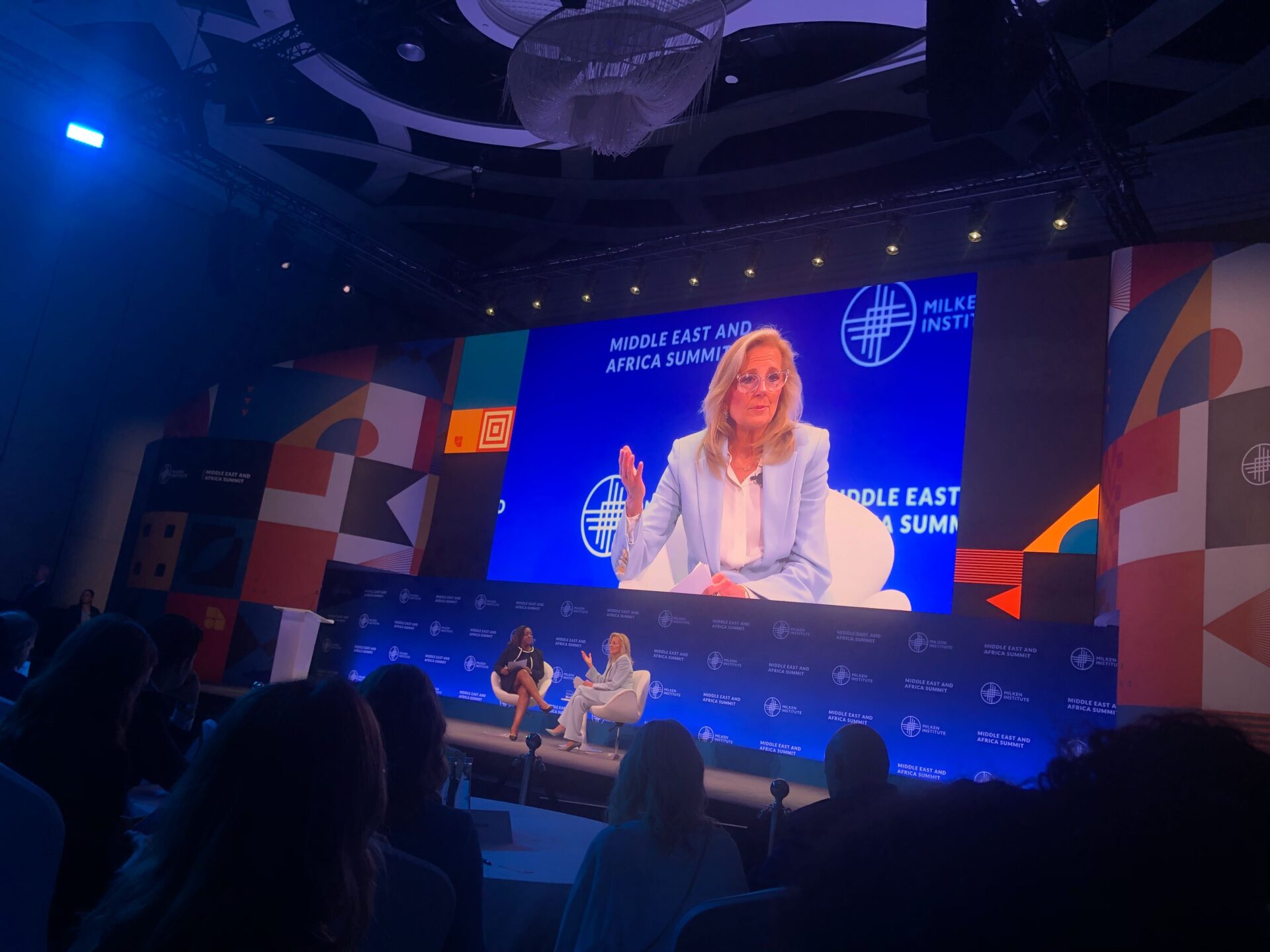
Dr. Jill Biden, First Lady of the United States, told a packed ballroom that she’s proud of the progress made by the Biden administration in advancing medical care and education about women’s health after years of neglect. “I remember going to my husband and saying, ‘Joe, this can’t go on.’”
Actor Ed Norton, who is U.N. Goodwill Ambassador for Biodiversity, on “The Art of Storytelling” in a lunch discussion yesterday: “To get people involved in the story, you have got to make it transparent and about them. People respond well because of the authenticity of the story. When everyone sees that everyone is working from their heart, they will put in their efforts.”
Grant Verstanding, Founder, Chairman and CEO of Red Cell Partners during a panel on artificial intelligence: “The whole world changed after Newton. The whole world will change after AI.”
While the speeches and panel discussions go on in the St. Regis ballrooms, the real Milken Summit action takes place in the lobbies, where dealmakers are fueled by cappuccinos and ample nibbling stations replete with miniature Quiche Lorraines, spears of tandoori chicken, celery sticks and cheese hors d’oevres. Dinner by the pool offered baked seabass flanked by carrot and spinach purees with roasted potatoes.
MUSEUM ISLAND
Abu Dhabi’s Saadiyat Island, where the Milken Summit takes place, continues to develop as one monumental museum rises after another. In the cultural district that was inaugurated in 2017 with the copper-domed Louvre Abu Dhabi, the emirate is building the Zayed National Museum, marked by silvery 300-foot-tall tilted wings and due to open next year. Nearby are the superbly jumbled Guggenheim Abu Dhabi and the fern-terraced blocks of the Natural History Museum. And across the street stands the gleaming white Abrahamic Family House complex that opened last year and contains a mosque, a church and a synagogue built in identical dimensions by architect Sir David Adjaye.
FORMULA ONE FEVER
Once the Milken Summit wraps up today, many delegates will stick around for the Abu Dhabi Grand Prix, the final event in the international Formula One season and a highlight of the emirate’s social calendar, with tickets going for $2,000 and up. Driving into town at night along the Corniche road that abuts the Gulf shoreline, one is dazzled by a riot of red green and white lights matching the UAE flag, with virtual fireworks heralding this weekend’s F1 auto race.
On Tap Today
9 a.m. – Opening Remarks by U.S. Ambassador to the UAE Martina Strong
9:05 a.m. – Building Markets of Tomorrow
Michael Milken interviews Jim Coulter, Founding Partner, Executive Chairman and Director, TPG.
9:30 a.m. – Investing in the Energy Transition
Majid Al Suwaidi, CEO, Altérra; EU Ambassador to the UAE Lucie Berger; Oskar Lewnowski, Founder and Group CEO, Orion Resource Partners. Moderator: John Defterios,Visiting Professor of Business, NYU Abu Dhabi.
10:15 a.m. –Harnessing the Rising Tide of Digital Finance
Olugbenga Agboola, CEO and Founder, Flutterwave; Melvin Deng, CEO, QCP; Gal Krubiner, CEO and Co-Founder, Pagaya; Caroline D. Pham, Commissioner, U.S. Commodity Futures Trading Commission; Moderator: Nicole Valentine, Director, FinTech, Milken Institute.
11 a.m. –Shaping the Future of Health Care
Leah Cotterill, CEO, Cigna Healthcare Middle East and Africa (outside Saudi Arabia); Helmy Eltoukhy, Co-Founder and Co-CEO, Guardant Health; Helmut Schuehsler; Chairman and CEO, TVM Capital Healthcare Partners; Geetha Tharmaratnam; Chief Impact Investment Officer, WHO Foundation. Moderator: James Bethell, Member of the U.K. House of Lords.
11:45 –Global Cities in a New Light
Eric Garcetti, U.S. Ambassador to India, Former Mayor of Los Angeles; Mohammed Ali Al Shorafa, Chairman, Abu Dhabi Department of Municipalities and Transport; Goodwin Gaw, Chairman and Managing Principal, Gaw Capital Partners; Nikhil Goel, Chief Commercial Officer, Archer; Yasseen Mansour, Chairman and Group CEO, Palm Hills Developments. Moderator: CNBC Middle East correspondent Natasha Turak.
12:30 p.m. – Michael Milken in conversation with Khaldoon Al Mubarak, Managing Director and Group CEO, Mubadala Investment Co.
1 p.m. – Closing Reception
Gulf ties with Indian health care draw investors to Mideast alliance
TEL AVIV, Israel – When Hong Kong-based fund manager Sean Debow went hunting in India for promising health care investments in 2009, he became intrigued by the growing demand for knee and hip replacement surgery. Many private hospitals in New Delhi and Mumbai were filling beds for such elective operations with patients from the nearby Arab Gulf states who were struggling with obesity.
The trend in medical tourism that Debow discovered 14 years ago when he ran a small regional investment firm has fueled a significant part of his India strategy as CEO for Asia of Eurizon Asset Management, the Milan-based unit of Italy’s biggest banking group, Intesa Sanpaolo. With $416 billion under management, Eurizon invests in some of India’s biggest hospitals and pharmaceutical companies.
“I’ve been watching the sector grow,” Debow told The Circuit during an interview in Tel Aviv. “The accelerant has absolutely been the growth from the Gulf, whereby there’s this mutual trust between Indian health care companies, health professionals and people in the Gulf,”
The close ties between India and the Gulf states has in turn become a pillar of the regional trade alliance known as “I2U2” that was designed to promote cooperation among India, Israel, the United Arab Emirates and the U.S., following up on the 2020 Abraham Accords. Creating the quartet was among the foreign policy objectives that U.S. President Joe Biden sought to reinforce during his visit to Israel and Saudi Arabia last July. Health care is among the central components of the initiative, which also aims to promote investment in water, energy, transportation, space and food security.
Debow, a 56-year-old Canadian who is also chief investment officer for Eurizon Asia and has spent three decades managing money in the region, describes a synergy among the group’s four members in the health care market. It’s based on the wide-ranging U.S. leadership in the field, the UAE’s willingness to invest large sums of money, Israel’s innovative medical startups and India’s position as the world’s fifth-biggest economy with a population that is projected to surpass China’s this year, he said. Israel’s Teva Pharmaceutical Industries is the largest maker of generic drugs while India’s Sun Pharma is ranked No. 4.
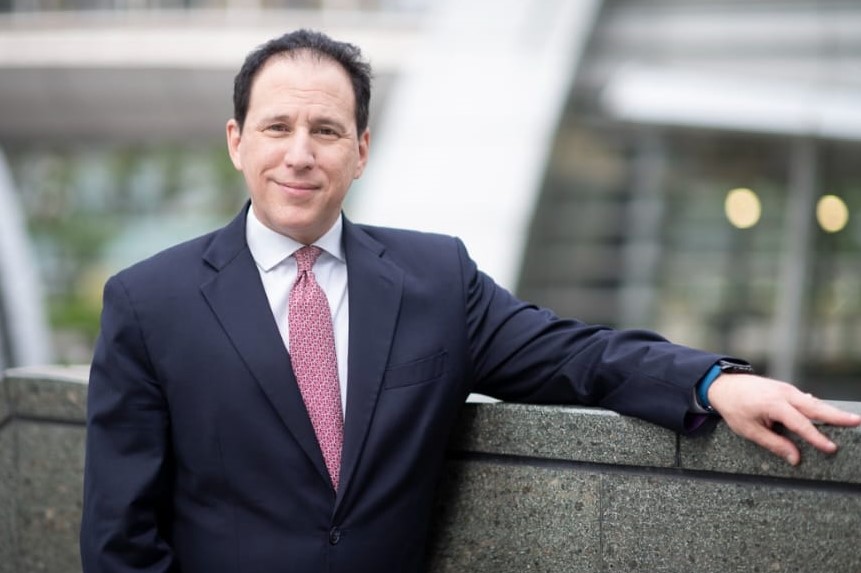
Sean Debow, CEO and CIO of Eurizon Asset Management in Asia
Large asset managers such as Eurizon tend to own positions in excess of $100 million in companies they fund, though Debow declined to confirm the size or names of the firm’s investments in India
Betting on India’s health care industry, where he says “it would not be unusual to see 30% compounded growth for the next five years,” Debow said cooperation with the UAE, Israel and the U.S. is good for everyone.
Several Israeli and UAE hospitals have explored areas of cooperation since the normalization agreements were signed. Israel’s Sheba Medical Center formed a partnership with Bahrain’s King Hamad American Mission Hospital to share new techniques in surgery and telemedicine, as well as medical technology developed by affiliated startup companies.
“Israeli technology is perceived as premium and hot,” Debow said. “It would be up there with Philips and GE.”
Formally established in October 2021 by U.S. Secretary of State Tony Blinken and the foreign ministers of the three countries, I2U2 got a top-level launch last year when Biden held a video conference from Jerusalem to discuss the initiative with Sheikh Mohammed bin Zayed, now president of the UAE; Indian Prime Minister Narendra Modi; and the Israeli prime minister at the time, Yair Lapid.
The first project announced after the call in July was a $2 billion investment by the UAE in developing a series of food parks across India that would use Israeli and U.S. technologies to reduce food waste, conserve fresh water and use renewable energy sources. A second project is a hybrid renewable energy initiative in India’s Gujarat state to generate 300 megawatts of wind and solar capacity along with a battery system to store the energy.
Besides health care, other areas where the commercial paths of the UAE, India and Israel intersect is in water conservation and the diamond trade. Watergen, an Israeli company that can extract large quantities of drinking water from the air, opened a branch in India after a visit in 2018 by Prime Minister Benjamin Netanyahu. Watergen also started operating in the UAE after the Abraham Accords normalized ties between the two countries that had no diplomatic relations before 2020.
The transition of the landmark Arab-Israeli agreements into a multilateral network will have further benefits down the line in developing the alliance as a regional hub for international trade, according to Sanjeev Dutta, executive director of commodities and financial services at the Dubai Multi Commodities Centre.
“You’re opening up corridors, you’re opening up efficiencies, you’re removing a protectionist mentality,” Dutta told The Circuit in Ramat Gan, Israel, where he attended the World Diamond Congress last month.
The DMCC, which houses the Dubai Diamond Exchange as well as global tea and coffee markets, has for years been an environment for interaction among Indians, Israelis and Emiratis, all central players in the global diamond market. It is a free-trade zone and a city within the city of Dubai that is made up of 87 office and residential towers with 100,000 people. More than 75 Israeli companies in industries ranging from financial services to telecommunications and cybersecurity are based in the DMCC.
“The governments have created the playing field for industry across these geographies,” Dutta said. “We provide the infrastructure. It’s like a one-stop shop.”