Investors see tough times persisting for Israeli startups
Israeli venture capitalists see little chance in the next year of relief from the ongoing drought in investment that has forced many startups to cut staff or close down.
“This may be the worst year for fundraising since the 2008 economic crisis,” Alan Feld, co-founder of Vintage Investment Partners, told the Eli Hurvitz Conference on Economy and Society in Jerusalem on Wednesday. “It’s true, there is a global crisis, but the decline in Israel is sharper than the one in the U.S.”
Feld, whose firm manages $3.6 billion in assets, led a succession of Israeli investors who expressed deep pessimism about the technology industry, which has been Israel’s banner of success for the past three decades as a spawning ground for startups. At the same time, they called on the government to spend more money on science and math education to be competitive with China, India and other growing tech hubs. The conference, sponsored by the Israel Democracy Institute, provides an annual review of the country’s financial performance and featured speeches by Finance Minister Bezalel Smotrich and Bank of Israel Governor Amir Biron.
Echoing Feld was Yossi Vardi, a serial entrepreneur and elder statesman of Israel’s startup culture, whose assessment of the industry these days is dark. Much of the problem, however, is self-inflicted, Vardi argues, coming from the ferocious political battles over government efforts to overhaul the judicial system.
“We are facing a terrible crisis — there will be no high-tech and there will be no foreign currency, there will be no money for anything,” should the judicial changes become law, Vardi said. “Put aside the quarrels and toxic talk. If we find a logical way to conclude the current national debate, we have a bright future.”
First-quarter investment in Israeli technology companies sank 71% to $1.7 billion from the same period last year, according to a study by the IVC Research Center, an industry group, and LeumiTech. Moody’s Investors Service downgraded the country’s credit outlook last month from positive to stable, citing a “deterioration of Israel’s governance.”
“The economy and the high-tech industry need trust, stability and certainty,” said Tal Barnoach, a co-founder and general partner in Disruptive VC. “Today we are suffering from both the global crisis and the government conflict, which may be causing irreversible damage to the industry in its early stages.”
While nursing its wounds during the current slowdown, Israel needs to invest in science education to make sure it recaptures its edge when the economy warms up.
“Israeli academia is not competitive globally,” said Eugene Kandel, chairman of the Start-up Nation Policy Institute and former chief economic adviser to Prime Minister Benjamin Netanyahu, who led the panel discussion on tech investment. “Israel can’t depend on second-rate brains. Very quickly, to my regret, we’ve stopped being competitive on first-rate brains.”
Michael Eisenberg, co-founder of the Tel Aviv-based VC fund Aleph, said Israel can increase its pool of skilled technology workers by investing in training programs for underemployed populations such as Arab citizens and Haredi Orthodox Jews. He said the government must also heavily increase funding for math and science education in all schools. “We have to make sure that within a decade, every child in the eighth grade knows how to program,” Eisenberg said.
Yifat Oron, managing director in Israel for New York-based Blackstone, the world’s largest alternative assets manager with $991 billion under management, said the firm is still bullish on Israeli technology companies. “It is important that Israel will continue to be the right place for high-tech companies both in good and in difficult times,” she said. “Israeli governments have known how to do this for decades, and it is important that we do not take our foot off the gas.”
General Atlantic doles out $1 billion to maturing Israeli startups
When Max August was a Harvard undergraduate, he scraped data from about 8,000 startups and 11,000 of their founders to complete a senior thesis on Israel’s fast-maturing tech scene that was supervised by former U.S. Treasury Secretary Lawrence Summers.
Three years later, many of those same Israeli entrepreneurs are vying for the attention of the young investor, who has helped distribute close to $1 billion on behalf of General Atlantic, one of the world’s biggest private equity funds. Most prominent of nine companies in the firm’s Israel portfolio is Mobileye Global, the Intel-controlled maker of self-driving technology that held an IPO in October and is currently valued at about $25 billion.
After starting as an intern at the Park Avenue firm, August was sent to Tel Aviv as an associate last year to scout investment opportunities, opening an office in the 61-story Azrieli Sarona Tower where he can gaze over the Mediterranean coast. Alongside Alex Crisses, a managing director from New York who shuttles to Israel to close deals, General Atlantic last month recruited Yoram Teitz, who was managing partner in Israel at accounting powerhouse Ernst & Young, as a senior adviser. The team is overseen by Anton Levy, the firm’s co-president and chairman of its global technology group.
“Israel is moving from a venture-capital-only market to a later-stage market, where you’ll find bigger companies [and] entrepreneurs who have bigger visions,” Crisses told The Circuit in an interview. “As a global investor, we wanted to pick the locations that over the next five years will have the most innovative technology. And we really do believe that Israel will be that.”
With $73 billion in assets under management and 16 global offices from London to Shanghai, General Atlantic came late to the game in Israel, a tiny Middle Eastern country that has spawned the greatest number of technology startups per capita in the world. Termed a growth equity firm, General Atlantic held back until it saw a growing pattern of Israeli companies raising $100 million and more in a funding round, an indicator of business strength. Similar criteria have drawn other global investment leaders including Blackstone, SoftBank and Koch Disruptive Technologies.
According to the Tel Aviv-based IVC Research Center, the number of Israeli companies valued at over $1 billion – dubbed “unicorns” in Silicon Valley – rose from two in 2018 to 42 in 2021.
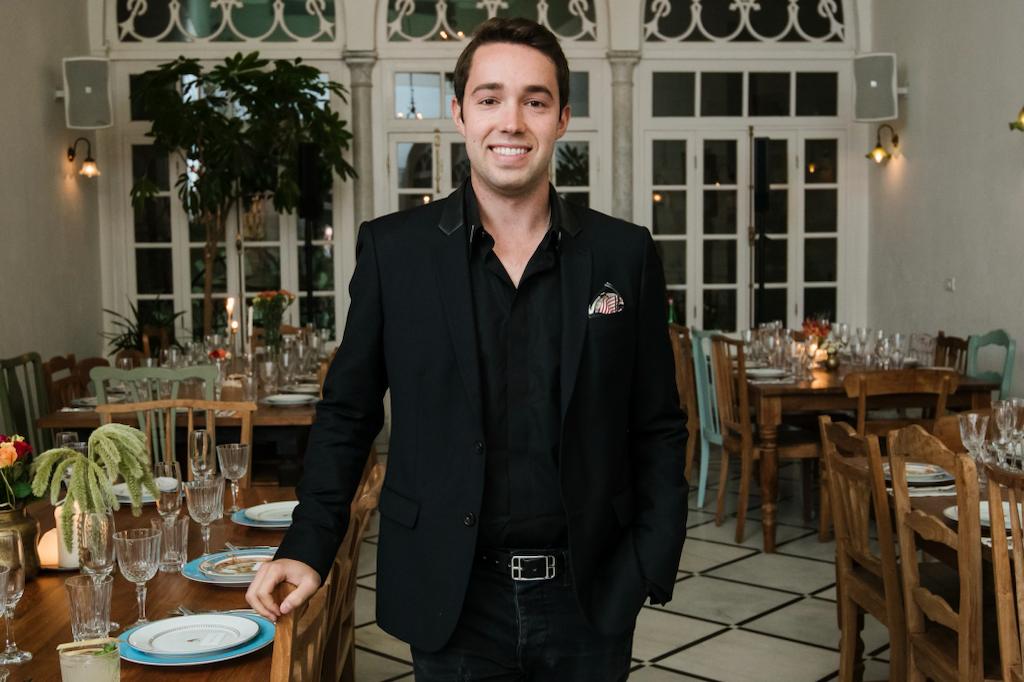
General Atlantic’s Max August hosting a reception in Tel Aviv
And if Israel was once known primarily for being a powerhouse in cybersecurity and software, Crisses said General Atlantic is looking at the next generation of entrepreneurs in fields ranging from financial services and healthcare to climate technologies.
In 2020, the firm led a $210 million fundraising round for AppsFlyer, which uses data analytics to help marketing firms grow. It led two $150 million rounds for HiBob, which assists midsized companies in managing human resources. In 2021, it co-led a $543 million funding round for Transmit Security, which authenticates users without employing passwords.
Mobileye, which Intel bought for $15.3 billion in 2017, is a model for what brought General Atlantic to Israel. It’s “really defining the next chapter of the maturation of Israeli technology,” August said. The firm agreed to buy $100 million of Mobileye shares as part of the IPO.
General Atlantic also sees opportunity in Israel’s growing connections with Arab countries, paved by the 2020 Abraham Accords that were signed with the United Arab Emirates, Bahrain, Sudan and Morocco. “Israel has amazing technology to export,” making it “a real beacon in the area,” Crisses said in the joint interview with August on Zoom.
The arrival of General Atlantic and other world-leading firms reflects the “evolution of ecosystem” in Israel’s investment market and gives it credibility as a country with a greater number of large tech firms, said Avi Hasson, CEO of Start-Up Nation Central, a nonprofit group that promotes the country’s innovation industry.
“Ten years ago, that list would have been very, very short… whereas now there are dozens of such companies in multiple sectors,” Hasson, who was previously Israel’s chief scientist, told The Circuit. Funds such as General Atlantic bring with them financial knowledge, operational expertise, best practices and international networks, all of which are “critical to the growth” of Israeli companies, he said.
August, 25, who grew up in New York City and attended Horace Mann, an elite, college-prep school in the Bronx, developed a connection to Israel at Harvard, where he studied economics. While there, he co-founded the “Israel Summit at Harvard,” an annual campus event that connects students from more than 100 universities with the Jewish state. Summers, who was previously Harvard’s president, and economics professor Paul Gompers served as advisers on August’s thesis: “The Impact of Experience on Israeli Entrepreneurial Success.”
General Atlantic is looking for further investments in Israel and will put money into companies that demonstrate a market growth opportunity and “real product-market fit,” August said. Financial technology, life sciences, biotechnology and climate technologies are the firm’s target areas for Israel.
General Atlantic closed on its BeyondNetZero fund last month, allocating $3.5 billion to support entrepreneurs who deliver innovative environmental solutions while creating durable growth businesses. “We’re deeply focused on climate in Israel,” August said. “We define climate fairly broadly, and so if you think about food tech, ag tech,” and reusable materials, there are “a lot of companies that are already reaching a growth stage” and become ripe for investment.
General Atlantic does not divide its global investment budget by region. Funding for individual companies ranges from $25 million to $1 billion. A single investment committee decides which companies will receive the money, Crisses said. “We have a lot of confidence that… a number of those will come from Israel.”
Politics in Israel and criticism of its new government under Prime Minister Benjamin Netanyahu are unlikely to affect General Atlantic’s investment plans, Crisses said. He also takes in stride the economic shakeout that has cut venture capital funding in Israel almost in half from 2021. Crisses pointed to the General Atlantic’s steadfastness through political and economic turbulence in India, China and Latin America.
When the firm enters a region, it does so with “a lot of thought, a lot of preparation and with the desire to stay long-term and be part of the fabric of the community,” Crisses said. “That’s what we do in all the geographies we enter, and we’re really passionate, personally and institutionally, about making that in Israel.”
Israeli startup funding cut in half amid global slowdown
Funding for Israeli startups slid further from last year’s record heights as sinking technology stocks, rising interest rates and renewed geopolitical conflict chill enthusiasm for investment.
The torrent of cash once lavished on Israel’s emerging tech companies fell to $2.8 billion in the third quarter, a 56% drop from the same period in 2021, and a 36% decline from the previous quarter, according to a report by the Herzliya-based Viola Ventures. The slowdown was especially pronounced in so-called mega deals, valued at more than $100 million, which fell 69% from last year’s third quarter, Viola’s analysts said in the Oct. 12 report, “Public Market Volatility – Reflected in the Israeli Tech Ecosystem.”
While the findings were discouraging, they mirror the decline in startup funding for U.S. and Canadian companies, which fell 53% in the third quarter to about $40 billion from the same period a year ago, and 37% from the second quarter of 2022, according to Crunchbase. The drop must also be viewed in the context of 2021’s record fundraising and an overall upward trend over recent years, the Viola report said.
“Prophecy is for fools, but we do believe that technology will continue to be a massive driver for global transformation, and VCs will continue to invest in disruptive companies,” Tomer Meridor, a member of Viola’s investment team who wrote the report with colleague Rotem Shacham, told The Circuit.
New York’s tech-heavy Nasdaq stock market, where Israeli companies represent the second largest number of foreign members after China, reflects the darkening sentiment. The Nasdaq Composite Index has fallen 33% since the end of last year, and Nice Systems, one of the biggest Israeli companies trading on the exchange, is down 30%. The Federal Reserve raised its benchmark interest rate by three-quarters of a percentage point in September to a range of 3% to 3.25%, bringing borrowing costs to their highest point since 2008. Concern about the Russia-Ukraine conflict and its impact on energy prices has also led investors to reduce risk.
Israeli startups, in turn, have been laying off employees and cutting back on other expenses. Otonomo Technologies, which collects data from network-connected cars, dismissed dozens of its employees after losing 95% of its value on the Nasdaq. Digital advertising platform Taboola, whose shares have fallen 78%, and website maker Wix, down 54%, both reportedly laid off more than 100 employees each.
Setting a record in 2021, Israeli startups raised $25.6 billion and 23 Israel companies held IPOs in the U.S., according to the IVC-Meitar Israeli Tech Review.
“The ongoing economic volatility across the globe is impacting the global public and private markets, and Israel is no different,” said Meridor. “2021 was an outlier in terms of fundraising pace and valuations, and [we’re] actually seeing back-to-normal levels in the short-mid-term.”
Among the ways Israeli companies have sought to contend with the decline in U.S. investment has been to find new partners in the Gulf Arab states that signed the Abraham Accords in 2020, normalizing ties with the Jewish state. Israel and the United Arab Emirates signed a free trade agreement in May that is expected to increase trade between the two countries to $10 billion within five years. OurCrowd, Israel’s most active venture capital platform, was licensed last year to operate as a fund manager in the Abu Dhabi Global Market.
Affinity Partners, a private equity firm founded by Jared Kushner, the former White House adviser, plans to invest millions of dollars in Israeli startups from the $2 billion it raised from Saudi Arabia’s sovereign wealth fund, The Wall Street Journalreported in May. Saudi Arabia’s Mithaq Capital has become the largest investor in Otonomo, amassing a 20% stake as the company’s stock sank.
“We believe this is the time for companies to make bold considerations,” Meridor said, recommending that startups “focus on long-term value creation rather than short-term fixes, diversify revenue streams, hone in on long-term sustainable aligned business models and seek accretive M&A [mergers and acquisitions].”