Cybersecurity and space exploration are emerging as fruitful areas for joint research and investment between Arabs and Israelis. That was the message that rang out from one conference hall to another in Tel Aviv last week, where cabinet ministers, scientists and investors hailed the prospects for Middle East cooperation made possible by the 2020 Abraham Accords.
At the Cybertech 2023 conference, top government officials responsible for cybersecurity in the UAE, Bahrain, Morocco, Israel and the U.S. appeared together onstage to talk about the benefits of regional partnership. “The first word needed for success is trust, and what you see in front of you today is trust,” said Salman bin Mohammed bin Abdullah al-Khalifa, CEO of Bahrain’s National Cybersecurity Centre. “We’ve all been working together behind the scenes but now we’re past that stage, and I think we now want to see this trust in action.” Read The Circuit’s interview with Israeli tech patriarch Yossi Vardi, who hosted both Cybertech and the subsequent DLD Tel Aviv Innovation Festival last week.
Across town at the 18th Ilan Ramon International Space Conference – named for the Israeli astronaut who died with six American crewmates in the 2003 Columbia space shuttle disaster – discussion of Arab-Israeli cooperation generated headlines. “Today we are witnessing a new era of space exploration, one that is marked by cooperation between countries, private companies and research institutions,” said Sarah bint Yousef Al Amiri, the UAE minister of state for advanced technology and chairwoman of the UAE Space Agency. “Let us continue to work together and make the impossible possible.”
Debate continued to rage in Israel over the prospects of a credit downgrade because of Prime Minister Benjamin Netanyahu’s proposals to limit the power of the judiciary, which opponents have branded undemocratic. Thousands marched for the fifth week in a row at protest demonstrations in Tel Aviv, Jerusalem and Haifa. Jacob Frenkel, former governor of the Bank of Israel and ex-chairman of JP Morgan Chase International, criticized the prime minister for dismissing warnings about investor risk. “When JPMorgan makes a recommendation, take it very seriously,” he said in a television interview. Netanyahu, who flew to Paris last week for a meeting with French President Emmanuel Macron, also met with business leaders there and said he heard no concern about dangers of investing in Israel.
The UAE’s envoy to Israel, Ambassador Mohammed Al Khaja, met with the current governor of the Bank of Israel, Amir Yaron, who has also cautioned about the impact of the judicial reform package on Israeli markets. Al Khaja tweeted his appreciation to Yaron “for sharing your insights & prospects of Israel’s economy & the growth potential by engaging all sectors of society. We look forward to continue working together to realize the full potential of our countries’ thriving economies.”
Welcome to The Weekly Circuit, where we cover the Middle East through a business and cultural lens. Read on for the stories, deals and players at the top of the news. Please send comments and story tips to [email protected].
Spread the word! Invite your friends to sign up.👇
OFF THE SHELVES
Missing pieces to cultural puzzles appear in UAE-Israel library ties
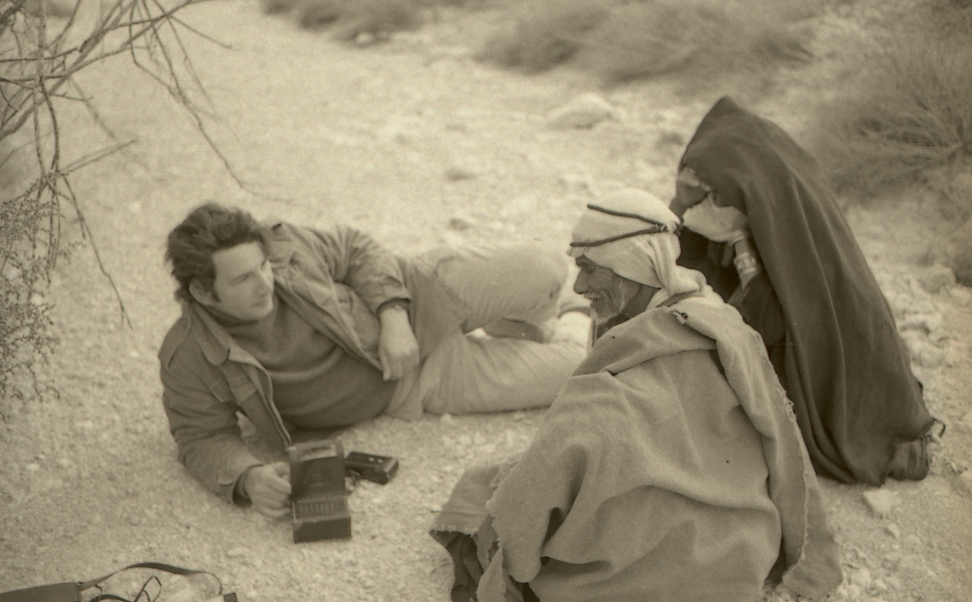
Clinton Bailey recorded hundreds of hours of oral history from Bedouins.
NATIONAL LIBRARY OF ISRAEL
Nearly 120 years ago, Hermann Burchardt, a German Jewish explorer, was traveling in the Middle East, talking to Arab leaders and taking photographs, Jenni Frazer reports for The Circuit. Among the iconic pictures was what is thought to be the first image of the founding father of Abu Dhabi, Sheikh Zayed bin Khalifa Al Nahyan, known as Zayed the First. He was the great-great-grandfather of the current president of the United Arab Emirates, Sheikh Mohamed bin Zayed Al Nahyan.
Murder mystery: Although the pictures Burchardt took in Abu Dhabi became famous in the region and reproduced many times, his personal impressions of the people and places he photographed remained a mystery. He and his fellow travelers were murdered in Yemen in 1909 and his journals were assumed to have been lost. Eventually, via the estate of Eugen Mittwoch, a German scholar of Islamic and Judaic studies, Burchardt’s missing diary — and hundreds of pages of correspondence, notes and official documents, together with numerous photos — all found their way to the National Library of Israel in Jerusalem.
Filling in the blanks: It was this material that delighted Hamad Al-Mutairi, director of the archives department of the Emirates National Library and Archives (NLA), based in Abu Dhabi, when he and other colleagues visited Israel last summer. For Al-Mutairi, seeing the Burchardt collection in Jerusalem was thrilling, and filled in the blanks for his researchers. “We were able to see details about the kind of food he ate, and the type of traditional hospitality given to him at that time as a traveler in the region.” The Emirati visit — and a memorandum of understanding between the two libraries — is a direct and tangible result of the Abraham Accords, signed initially between Israel and three partners — the UAE, Bahrain and Morocco — in 2020.
Joint exhibit: The Burchardt material is essential to drawing a fuller picture of the first years of the individual emirates that now make up the UAE. The Israelis have provided Abu Dhabi with digital copies of Burchardt’s diary and the accompanying papers, which will become part of the NLA collection. “We didn’t stop there,” said Al-Mutairi. “We’re now trying to find the right time to put together some sort of exhibition about Burchardt, charting his journeys across the region. It might be online or it might be physical.” The formal agreement between the two libraries will ensure that the material will marry the holdings that each has; and in the meantime, experts from the two institutions will work together to enrich and expand background information and metadata related to the archive’s contents, including translations, greatly increasing its value to scholars across the globe as a rare reflection of Gulf history.
Oral history: The UAE has built up an enviable body of material based on oral history, while the Israeli library has tended to focus more on physical collections — its Islam and Middle East collection, for example, includes priceless documents and manuscripts not even found in much of the Arab world. Samuel Thrope, curator of the Islam and Middle East collection in Jerusalem, said he has been talking with colleagues at the NLA about oral history connected to a project on Clinton Bailey, an American-Israeli researcher who spent 50 years documenting Bedouin culture and society. The Bailey recordings — all 350 hours of them — are “super-interesting,” said Thrope, and chronicle Bedouin life in the Negev and Sinai between the late 1960s and 2009. “They have all been cataloged and digitized — and now we are in the process of transcribing them.”
Catching up with Yossi Vardi, wisecracking patriarch of Israel’s startup culture
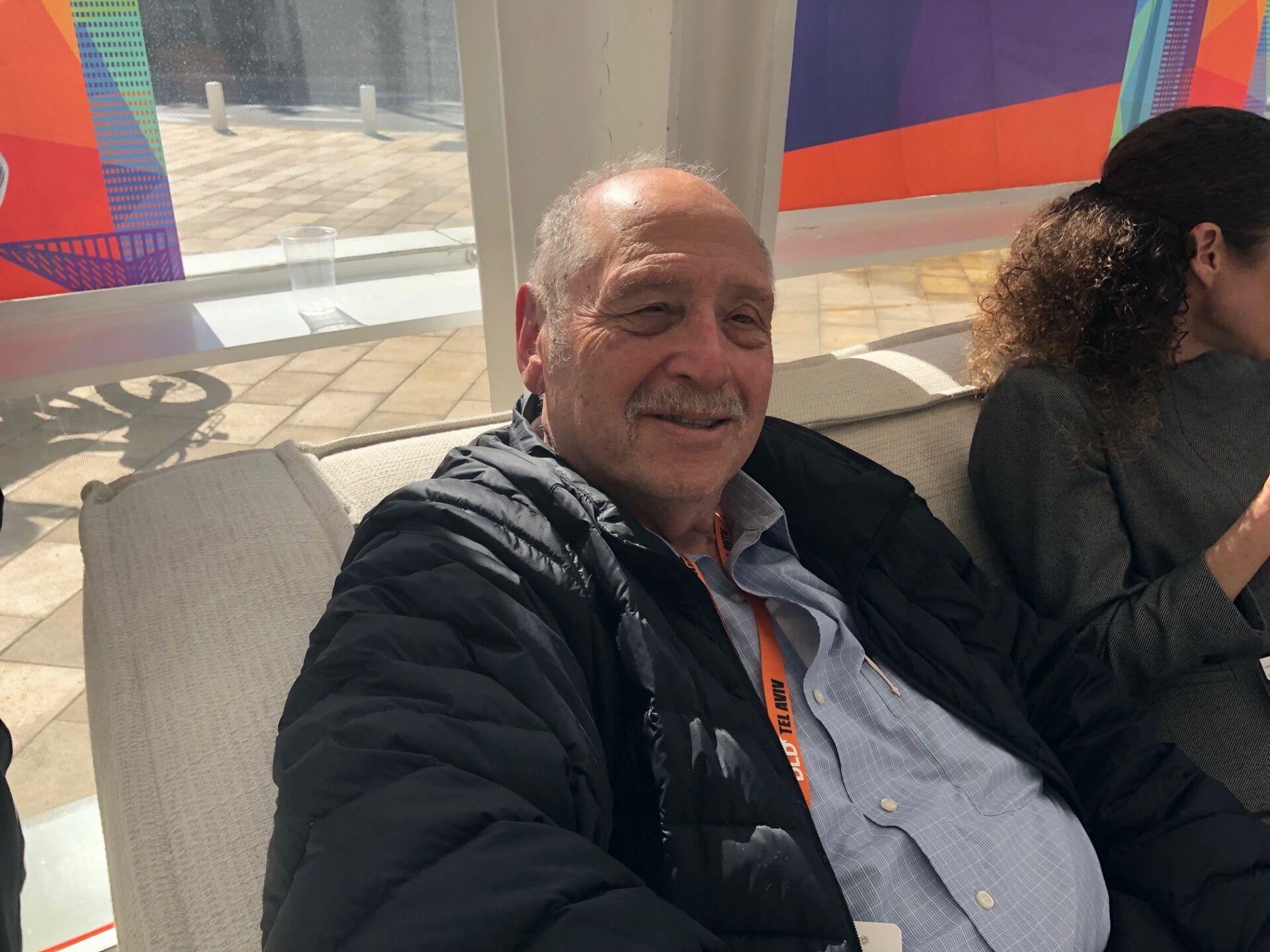
Yossi Vardi holds court in lobby of Habima theater at DLD Tel Aviv Innovation Festival.
Leaning back on a big white couch in the lobby at Tel Aviv’s Habima national theater, where he was hosting one of Israel’s most influential annual technology conferences, Yossi Vardi gets ready to shmooze. At 80 years old, he’s dressed in a scruffy black winter jacket and positions himself at the foot of Habima’s grand curving staircase, The Circuit’s Jonathan Ferziger reports. Inevitably the investors, CEOs and government ministers rushing to lead panel discussions at last week’s DLD Tel Aviv Innovation Festival catch his eye and pause to say hello. In Hebrew, English and Yiddish, Vardi trades quips with them – many of whom consider him their mentor – basking in his reputation as the adorably ornery grandpa of Israel’s startup culture. He doesn’t always remember people’s names so he asks them to draw close and examines their conference badge. One budding entrepreneur wouldn’t leave after a two-minute pitch, and Vardi told him his idea wasn’t worth listening to.
AOL deal: Over the arc of Vardi’s career, which took him from procuring crude for the energy-starved nation in the 1970s as chairman of the Israel National Oil Company to selling ICQ, the first widely used instant messaging software that his son Arik created with three friends, to AOL for $407 million, Vardi has been a leader in Israel’s tech world. He has since led, invested in or helped build more than 70 startups, and is in demand as a speaker around the world about how Israel earned its name as the Startup Nation. He was the recipient of the Prime Minister’s Award for Life Achievement. In between Vardi’s brief conversations with roughly two dozen conference participants heading up the stairs, The Circuit interviewed him about the difficulty of raising venture capital, investor concern about Israel’s judicial reforms, normalization with Arab countries, artificial intelligence and what makes a good startup entrepreneur.
The Circuit: How do companies survive this period when investment capital is drying up?
Yossi Vardi: First of all, they need one very important thing, which is luck. The second thing is money. Money has been disappearing very quickly and therefore some companies will perish and some companies will resolve this by being acquired by other people. We saw it in 2000, we saw it in 2008 to a lesser degree and we’re going to see it again now. It’s not a pleasant situation, but this is business, this is the cycle.
Israeli startup executives are marching in the streets against the government’s proposed judicial reforms and some companies are threatening to take their money out of the country. What impact does that have on foreign investors?
We are now in a very, very sensitive situation. Some people say it will be disaster, while the government says everything is wonderful. We have to stare directly at the crisis and figure out how to resolve it, because the question is not who is right and who is not right. Suppose the worst scenario appears and we lose the tech industry. Some people will say we are sorry. But it’s too serious to just say we’re sorry. We are playing here with a nuclear economic situation. I really hope that we get sober and learn how to reduce the risks.
What impact do the normalization agreements with the Gulf states have on investment?
You have to remember that the two fundamental agreements Israel has reached with Arab countries are with Egypt and Jordan, which stopped the killing of people. This is something holy. We must arrive at some kind of arrangement with the Palestinians. I think the Abraham Accords are important. They enhance the legitimacy of Israel in the eyes of other members in the region. So they’re a segue for us to do more things. In this respect the Abraham Accords are important and I hope they will develop further. When the economic situation of the world is good, we get a wonderful flow of funds. I don’t think business with the Gulf states is going to tilt the needle, but it’s very welcome.
Vertical Farms: Saudi Arabia’s Public Investment Fund signed an agreement with Newark, N.J.-based AeroFarms to create indoor vertical farms. AeroFarms CEO David Rosenberg said the farms will be built in the kingdom and across the MENA region.
Money-Back Guarantee: Indian billionaire Gautam Adani returned $400 million invested by Abu Dhabi’s International Holding Co. after scrapping a planned stock sale in his flagship company.
Hedge Hub: Brevan Howard Asset Management is opening an office in Abu Dhabi that will specialize in digital assets as the UAE becomes a growing hub for hedge funds.
Russia Havens: U.S. officials are pressing the UAE and Turkey to crack down on Russians inside their borders who may be assisting Moscow’s war with Ukraine.
Enter Robodocs: Israel’s Beilinson Hospital hosted a conference on medical uses for artificial intelligence, drawing doctors, scientists and entrepreneurs.
Frequent Visitor: Jordan’s King Abdullah II visited President Joe Biden last week for the third time since Biden became president, making him the most frequent White House foreign guest. Read a report about Jordan’s aversion to the Abraham Accords in Jewish Insider and a recommendation by the Washington Institute for Near East Policy that the king focus on economic issues.
Closing Circuit
First Time: Steven A. Cohen’s Point72 hedge fund bought a $15 million stake in startup MediWound, the American billionaire’s first known investment in an Israeli company
Gas Explorers: Qatar Energy will join a consortium of companies searching for gas off Lebanon’s Mediterranean coast, replacing a Russian firm that withdrew in September.
Fusion Funds: NT-Tao, an Israeli startup developing nuclear fusion-generated energy, raised $22 million in a funding round led by Delek US and NextGear Ventures.
Crypto Wallets: Addressable, an Israeli startup that secures crypto wallets with digital fingerprints, raised $7.5 million in a funding round led by Viola and Fabric Ventures.
Pollen Supplement: BloomX, an Israeli firm that uses AI to help crops get sufficient pollen, raised $8 million in a funding round led by Ahern Agribusiness.
Cloud Protection: Israel’s Sentra, a cybersecurity startup that protects cloud data, raised $30 million in a funding round led by Munich Re Ventures.
On the Circuit
Ayman Alsayariwas appointed governor of Saudi Arabia’s central bank, Sama, replacing Fahad Almubarak, according to a royal decree by King Salman.
Ayelet Shaked, Israel’s former interior minister, was hired as chairperson of Kardan Real Estate, which will pay her $488,000 in salary and stock options.
Jason Greenblatt, the former White House Middle East envoy, writes in Arab News that Saudi Arabia and Qatar are becoming comfortable places to travel for religious Jews.
Ahead on the Circuit
Feb. 6-9, Riyadh, Saudi Arabia: LEAP Tech Conference. More than 100,000 expected at the second edition of the Middle East’s biggest tech event. Riyadh Front Expo Centre.
Feb. 14, Beersheva, Israel: Israel Climate Change Conference. Gathering of environmentalists, researchers, business executives and government officials. Ben- Gurion University campus.
Feb. 15, Jerusalem, Israel: OurCrowd Global Investor Summit. Thousands of investors and startup executives from around the world are expected at the annual conference. Jerusalem International Convention Center.
Feb. 20-24, Abu Dhabi, UAE: IDEX 2023, Middle East’s biggest defense industry conference. Abu Dhabi National Exhibition Centre.
Feb. 20-24, Dubai, UAE. Gulfood Exhibition. More than 4,000 companies from 120 countries attend the world’s largest food and beverage industry conference. Dubai World Trade Centre.
Culture Circuit
Movie Buyout: AMC Theatres sold its stake for $30 million in a joint venture that brought cinemas to Saudi Arabia in 2018. The international movie theater chain said it was bought out by Saudi Entertainment Ventures, its local partner, which will carry a license for the AMC’s brand and content. The New York-based entertainment company has been trying to manage a high debt load stemming from the Covid-19 pandemic. In Saudi Arabia, AMC said it “will transition from a management and investment role to a pure licensing relationship.”
Wellness Highway: Dubai is considering a plan to build a glass-covered “wellness highway” looping around the city, which would be powered by sustainable energy and contain 93 kilometers (58 miles) of paths for biking and running.
Bedouin Film Festival: Rahat, Israel’s largest Bedouin city, is hosting its first film festival over four weekends this month. Some 40 films, including movies from Saudi Arabia, Iran, Italy, France and Spain, will be screened at the Rahat Center for Fine Arts. The event includes the premiere of “Jirah,” a documentary by Rahat filmmaker Yosef Abu Medigam.
UAE-Israel cyber intelligence firm grows with its perch in the Gulf
Years before the Abraham Accords enabled Emiratis and Israelis to openly run businesses together, Abdulla Baqer operated a back-channel in Dubai that brought Israel’s cybersecurity expertise to the Arab world. Working with intelligence veterans in the Middle East, Asia and elsewhere, the charismatic entrepreneur helped facilitate the growing commercial ties that were poking through the longtime Arab-Israeli divide.
Those were days when Israel’s computer startups were becoming competitive with Silicon Valley for government contracts around the world. Check Point Software Technologies and CyberArk were sensations on Wall Street and virtually every country in the world sought access to the smartphone-penetrating software made by Israel’s NSO Group. Former Prime Minister Benjamin Netanyahu, who made a groundbreaking public visit to the Sultanate of Oman in 2018, often described cyber know-how as the linchpin of Israeli diplomacy. Today, Israel is using a similar formula to strengthen ties with Saudi Arabia, the region’s biggest economy.
After the Accords were signed at the White House two years ago, Baqer and his partners unveiled Black Wall Global, a firm that finds little need these days to obscure its mission of marketing Israeli technology to nations that have been reluctant to deal directly with the Jewish state. Baqer, 45, is also co-president of the UAE-Israel Business Council, through which he coaches Israelis on using the United Arab Emirates as a platform for dealing with Arab markets.
“There are a lot of countries that don’t allow Israeli companies to set up shop,” Baqer told The Circuit. “They can always come to the UAE, partner with a UAE company and basically go out and be sold as an Emirati company.”
With Baqer in Dubai, Black Wall is led by a collection of Israeli intelligence veterans and computer scientists. Chairman Asher Ben Artzi worked for 34 years in Israel’s Shin Bet internal security agency and its National Police force, becoming director of the Israeli branch of Interpol, the International Criminal Police Organization. Khoo Boon Hui, who was president of Interpol after retiring as Singapore’s police commissioner, is Black Wall’s honorary president. Others include CEO Anri Amir David, a consultant to Israeli defense contractors and fellow at Russia’s International Academy of Technological Sciences; and Arik Barbing, former director of the Shin Bet’s cyber division.
“We cover it all, from intelligence to cyber defense, border control and protection of critical infrastructure facilities and big data,” Black Wall says on its website. “We provide governments, law enforcement, security forces, and global enterprises with the highest level of safety and security.”
Black Wall is one of the smaller Israeli-led companies that have prospered in the new atmosphere of normalized relations with the Gulf states. Israel and the UAE signed a free-trade agreement in May that eliminates most tariffs and is projected to bring annual trade between the two countries over the next five years to more than $10 billion.
The biggest deal between the Emirates and Israel has been Delek Drilling’s $1 billion sale last year of its stake in an offshore Mediterranean gas field to the UAE’s Mubadala Petroleum. State-owned Israel Aerospace Industries has signed drone-development deals with Edge Group, a government-owned defense company in the UAE. And OurCrowd, a Jerusalem-based venture capital investment platform, set up a subsidiary in the UAE and last November became the first Israeli VC registered by the Abu Dhabi Global Market to operate in the emirate
Baqer points out that the path to Gulf-Israel joint ventures was paved by the Israeli companies that he said operated for decades “under the radar.” The practice, he explained, was to register affiliated corporate entities in third countries and operate through Israeli dual citizens with separate passports who could travel to Arab countries that didn’t have diplomatic relations with Israel.
In the lore of secret dealmaking, the experience of AGT International stands out. The company, led by Israeli entrepreneur Moti Kochavi, won a contract from the Abu Dhabi government in 2008 to create a “smart city” network of surveillance cameras, electronic fences and sensors that paid about $6 billion over seven years. During that period, AGT’s Israeli affiliate, Logic Industries, ferried dozens of engineers each week on an unmarked charter plane between its headquarters in Israel and the UAE capital, according to some of the employees involved who lived in a secure compound under made-up names.
Another example is Israeli defense contractor Elbit Industries, whose American subsidiary had a contract with the Saudi government to sell and service TOW anti-tank missile systems. The relationship came under strain when an employee of Elbit’s American unit died under mysterious circumstances while working in the northwestern Saudi city of Tabuk and the company required Israeli and U.S. diplomatic intervention to retrieve the body.
Now, as president of the new business council, Baqer helps Israelis develop their frontal approach, explaining the nuances of Emirati business culture and guiding them not to expect quick results.
“So many companies came to the UAE at the beginning of [the Abraham Accords] and then they disappeared,” Baqer said. “We decided that we need to help educate Israelis about how Emiratis think and Emiratis about how Israelis think so that they can avoid making mistakes.”
Baqer’s knack for navigating the sensitive realm of Arab-Israeli relations impressed the Israeli founders of the UAE-Israel Business Council. He’s become instrumental in the council’s efforts to promote building further contacts in the Gulf.
“The most interesting thing about trade with the UAE [and Israeli companies] is not so much what trade they’re going to do with the UAE but what trade they’re going to do through the UAE,” Fleur Hassan-Nahoum, a co-founder of the business council and a deputy mayor of Jerusalem, toldThe Circuit. “For any Israeli companies that see themselves trading with the East, Dubai and Abu Dhabi are very interesting hubs for them to do it through.”
Israeli Prime Minister Yair Lapid has sought to expand Israel’s relations with Arab countries and enlisted U.S. help during President Joe Biden’s Middle East trip in July. Biden wrote in The Washington Post that he flew directly from Israel to Saudi Arabia for a summit meeting with Gulf Cooperation Council leaders in Jeddah as a “small symbol of the budding relations and steps toward normalization between Israel and the Arab world, which my administration is working to deepen and expand.”
Affinity Partners, a private equity firm founded by Jared Kushner, the former White House adviser and son-in-law of former President Donald Trump, plans to invest millions of dollars in Israeli startups from the $2 billion it raised from Saudi Arabia’s sovereign wealth fund, according to The Wall Street Journal.
Israelis with experience in trade with Saudi Arabia said much has changed in recent years. “It used to be, OK, pretend to be American, pretend to be British, pretend to be this or that,” Shmuel Bar, chief executive of Herzliya, Israel-based IntuView, toldThe Circuit before Biden’s trip. “That’s no longer the case. When you talk to them, it’s not, ‘let’s play make-believe.’”
Saudi Minister of State for Foreign Affairs Adel al-Jubeir said during Biden’s visit that normalization with Israel was a “strategic option,” but only if Israel agrees first to a two-state solution with the Palestinians.
Hassan-Nahoum, 48, who grew up in Gibraltar, where her father was mayor and chief minister of the British territory, said Israel’s commercial relations with Saudi Arabia are following a “similar pathway” to the business links with the UAE before the Abraham Accords, when an estimated 200 companies were engaged with the tiny Gulf state. She said many Israeli companies in fields ranging from food-tech to renewable energy are now operating discreetly in the Saudi kingdom.
“We may not get a big shiny ceremony on the White House lawn, but I think Saudi Arabia is in the process of normalizing quietly with Israel,” Hassan-Nahoum said.
The social entrepreneur helping Israelis balance their budgets via WhatsApp
When Riseup formally launched last October, its founders had no idea how timely it would end up being.
But six months later, the startup aimed at helping Israelis manage their finances and work their way out of debt could not be more relevant — or necessary. The burgeoning company is now guiding customers to adapt to a new and difficult financial reality.
“Most people are still sort of bracing for what is to come,” Tamara Harel-Cohen, the co-founder and chief growth officer of Riseup, told Jewish Insider in a recent interview from Tel Aviv. “Our role is to help them understand what their reality is, what the new reality is, and when the money will run out. And then what their options are.”
Riseup works to help the average Israeli better understand their cash flow, simplify their finances and guide them toward making better financial decisions — all via WhatsApp. And amid the coronavirus pandemic, with a strict nationwide lockdown in Israel only just beginning to lift, many Israelis are facing an unexpected financial crisis. The unemployment rate in Israel surpassed 25% earlier this month, the highest rate in the country in recorded history.
To that end, Riseup — which generally charges 45 shekels ($13) per month — announced in early April that it was waiving its fee, and would be free to all users through at least the end of June.
“None of us know how long this is going to go on for,” Harel-Cohen said. “But we can help people see how much money they have, how long the runway is going to last — so they can at least know where they stand and feel like they’re in control.”
Riseup’s decision to eliminate its subscription fee shouldn’t come as a surprise to those familiar with the startup. From the beginning, its founders came together with a simple goal: to make a positive impact on Israeli society.
That includes Harel-Cohen, who packed up her bags and arrived in Israel four years ago with the objective of making a difference. A London native, she moved to the U.S. to attend Harvard and remained in America for several years afterward, working in digital media. But she soon found herself looking around and wanting more. And when she decided to shift to the world of social impact, the one place she wanted to be was Israel.
“I felt that this was the place where — if I was going to make a difference — it would be in Israel,” she said. And once she arrived, “it’s a bit cheesy to say I felt a sense of belonging, but that was what I felt.”
While Harel-Cohen may not have been born in Israel, she has serious Zionist credentials: Her grandfather, Yossi Harel, was the commander of the Exodus ship that brought Jewish refugees to Israel in 1947. Her parents — film producer Sharon Harel and Egyptian-born investor and philanthropist Sir Ronald Cohen — today split their time between London and Tel Aviv.
And while she never imagined she’d one day call Israel home, the pull was irresistible. Four years ago, she recalled, “I came for 10 days and ended up staying for a couple months.” Eventually, she said, “I just went to pack up my stuff and move to Israel.”
Iftach Bar, Tamara Harel-Cohen and Yuval Samet.
While Harel-Cohen knew she wanted to tackle social challenges, she wasn’t sure where to begin. But she soon met up with hi-tech veteran and “genius” Iftach Bar and Yuval Samet, who had sold his startup to a Swedish company and also recently moved back to Israel to focus on values-driven business. The trio partnered with entrepreneur and former Jerusalem city councilman Hanan Rubin in creating the new startup.
“We got together and we started looking for a problem that we could solve,” Harel-Cohen said. “When I moved here, I was super shocked — it’s the ‘Startup Nation,’ but the Internet here doesn’t work,” she added. “So many things are backwards.” The “Tel Aviv bubble” of the hi-tech world, she said, doesn’t seem to have improved life for the average Israeli.
“Very quickly, we understood that the issue of consumer debt is something that is very big here,” she said. The Taub Center for Social Policy Studies in Israel reported last year that household debt in Israel has been steadily increasing for more than a decade.
“People are far over-extended, they’re spending more than they’re making,” Harel-Cohen said. The team set out to make financial literacy “super, super simple” for people, guiding them to make better and more-informed fiscal decisions.
The service is a “hybrid model of human and machine,” which is set up to automatically connect to customers’ credit cards and bank accounts and streamline information, sending updates to users via WhatsApp three times a week — and flagging unusual or suspicious transactions.
“We built a very simple model on the basis of cash flow,” Harel-Cohen explained. “The nice thing about cash flow is it gives you one number: How much money do I have left to spend until the end of the month?”
To keep things extra simple, users don’t even need to download an app or manually enter information. Within the WhatsApp chat with Riseup, customers both receive automated updates and can also reach out to the company’s team of human advisors with questions and requests for advice.
“We’re helping people make decisions that will allow them to build financial resiliency and financial well-being — as opposed to creating this… spiral of bad decisions,” Harel-Cohen said. After extensive research, the Riseup team built a product designed to encourage stressed-out consumers to stick with the platform.
“As stress levels go up, then the level of financial decisions that we make goes down,” she explained. “When you’re in scarcity, your IQ goes down, your tunnel vision goes up, your stress levels go up.” That situation, Harel-Cohen said, leads to those in-debt entering “fight or flight mode,” which is “not the mode that you want to be in when you’re making a financial decision.”
The combination of bot and human interaction is essential to the Riseup model. The team of cash flow experts who answer questions for Riseup, she said, advise customers on issues from everything to making big purchases, taking out loans, leasing a car, or even buying new dishes for Passover.
“You can’t call your bank and ask about that,” Harel-Cohen said. “To have someone who can understand and check things… is super, super important. Because a lot of these moments are quite emotional, and technology can often miss that.”
The full Riseup team — before coronavirus.
Today Riseup serves approximately 3,500 customers, and is working on rapidly expanding. But unlike most Israeli startups, it was important to the company’s three founders to focus solely on the local market. It was something Harel-Cohen, Samet and Bar agreed upon before they had any other details in place.
“It was always important to all of us… to create an impact in Israel,” Harel-Cohen said, and “to work to make it work here” instead of aiming at the international market.
The three co-founders assembled a team of like-minded investors, including Michael Eisenberg, a partner in the venture capital fund Aleph who has led investments in Wix, Lemonade and WeWork.
“Strong technology-enabled products with great user experience and aligned business models can and will be real drivers for change and impact,” Eisenberg told JI. “Riseup is the poster child of this model in the field of financial resilience for families.” He noted that in its short period of existence, the business is already “successfully improving the financial lives of thousands of Israelis.” Now, he said, it is expanding “even more quickly because of the urgent need for financial resilience brought on by COVID-19.”
The Riseup team was itself significantly impacted by the coronavirus. Harel-Cohen and eight of her coworkers — more than 30% of the company’s staff — contracted the disease last month.
“But now everyone is feeling good and working hard,” she said. “The whole team is working around the clock to help people answer their [financial] questions.”
The increased financial uncertainty and hardship have made a tool like Riseup more relevant than ever to Israeli families.
“People are tightening their belts, they’re spending less, they don’t know what’s going to happen next month or the month after,” Harel-Cohen said. But despite many families’ diminished income, she said customers are still asking how they can put aside money and save for the months ahead. The Riseup team will work with them to “decide on a number” of savings for each month and adjust their cash flow figure accordingly.
“There are so many forces that we’re not in control of, but we are in control — to some extent — on how much we’re spending,” she said.
Before the coronavirus pandemic hit, teams from Riseup were traveling around the country and giving lectures on financial literacy and money management.
“One of the nice things of being in the market that you serve, is that you can go out and talk to people,” Harel-Cohen said. “We really believe in this field model.” The company has recently started to run some Zoom events in order to continue reaching new customers.
And while Riseup’s founders are wholly focused on the Israeli market right now, they’re not ruling out an eventual expansion abroad.
“Once we feel that we’ve really built that base we’re looking to build in Israel — and created the impact that we want to — then we can start that discussion,” Harel-Cohen said. “We certainly think that we have something excellent that we can offer and differentiate from those in other markets.”