The Daily Circuit: Gulf gas hunt reaches Australia + Arab space investment
👋 Hello from the Middle East!
Today in The Daily Circuit, we’re looking at Gulf astronauts and the region’s $272 billion investment in space exploration, the buyout of Dubai-based BitOasis by India’s CoinDCX, Mubadala-backed fashion retailer Shein’s new partner in Mumbai and U.S. Sen. Cory Booker’s chat with MBS in Jeddah. But first, an Australian LNG company draws interest from Gulf energy giants.
Demand for new sources of natural gas as a cleaner alternative to oil is leading top Gulf energy companies to look at acquisition prospects in Australia. Most recently, both Saudi Aramco and UAE-owned ADNOC have considered making separate bids for Adelaide-based Santos Ltd., the country’s No. 3 producer of liquified natural gas, Bloomberg reports.
While none of the three companies confirmed discussions about a potential purchase, shares of Santos on the Australian Securities Exchange jumped as much as 6.5% after Wednesday’s report, boosting its market value to $17.9 billion. In the past, Santos has rejected takeover bids from U.S. and Australian competitors, as well as offers to buy just its LNG business.
Saudi Energy Minister Prince Abdulaziz bin Salman announced on Tuesday that Aramco has discovered two natural gas fields and two natural gas reservoirs within the kingdom. The company said last week that it signed contracts worth more than $25 billion to expand its gas business.
Trade from Mediterranean gas fields, meanwhile, could be interrupted if the conflict between Israel and Lebanon’s Hezbollah turns into full-scale war, The National reports. Abu Dhabi-based Mubadala Energy is a partner in Israel’s offshore Leviathan gas field, along with U.S.-based Chevron Corp.
Gulf countries have poured more than $272 billion into the space industry during the past decade and are generating some $10 billion in revenue, GCC Secretary-General Jasem Al Budaiwi said at the International Space Forum on Tuesday in Manama, Bahrain. Reviewing the region’s major achievements, Al Budaiwi noted the UAE’s 2021 Mars mission in which an unmanned probe was sent into orbit to study the planet’s atmosphere, the Kuwait News Agency reports. He also hailed the Saudi and Emirati astronauts who have worked in recent years aboard the International Space Station. The World Economic Forum announced in April that it plans to open the Centre for Space Futures in Riyadh later this year with the aim of facilitating discussions on space collaboration between governments and the private sector.
CRYPTO EXIT
UAE virtual asset trading platform BitOasis has been bought for an undisclosed amount by India’s largest trading platform, CoinDCX. Founded in 2016 by Ola Doudin, Tarek Kaylani and Daniel Robenek, BitOasis is MENA’s first and largest crypto asset exchange, available in 15 countries across the region for users to buy, hold and sell over 60 cryptocurrencies. The company has processed over $6 billion in trading volume and raised more than $40 million in funding from CoinDCX and other investors including the UAE’s Wamda Capital; U.S. VC funds Jump Capitaland Pantera Capital; and Berlin-based Global Founders Capital. CoinDCX will gain market entry into MENA with its acquisition, “capitalizing on its mature market and the population’s keen interest in crypto investment,” Sumit Gupta, Co-Founder of CoinDCX, said. Startup exits are on the rise in the region. Forty-three were sold in 2023, up from 15 in 2015, according to funding platform Magnitt.
💲 Sovereign Circuit
Mubadala: Chinese fast fashion retailer Shein, which counts Mubadala as an investor, is preparing to launch in India via billionaire Mukesh Ambani’s Reliance Retail Ventures, selling products on both the conglomerate’s app and brick-and-mortar stores, The Economic Times reported. Shein plans to float an IPO in Hong Kong if its plan to list in London at a $63 billion valuation falls apart, the Financial Times reported last week. Meanwhile, Spanish oil and gas company Cepsa, owned by Mubadala and the Carlyle Group, has reached an agreement with PreZero Spain, part of the environmental division of German supermarket group Lidl’s owner Schwarz Group, to develop biomethane plants using organic waste.
Public Investment Fund: More Saudi professional soccer clubs are up for privatization after the PIF’s purchase of majority stakes in the four top teams sparked a billion-dollar spending spree on foreign stars, Barron’s reports.
Qatar Investment Authority: The QIA has tapped Kevin Zhu as Acting Chief of Investment Strategy, it said in a statement on Wednesday. Zhu will be supported in his role by Donald Raymond, who will transition from his current position as QIA’s Chief of Investment Strategy to an advisory position.
Abu Dhabi Investment Authority: Advent International is in talks with ADIA and other potential partners about a potential bid for Sanofi SA’s $20 billion consumer health division, Bloomberg reports. The discussions come as private equity firms Bain Capital and Cinven also explore a potential joint bid for the unit of the French drugmaker.
↪↩ Closing Circuit
💰 Raising Capital: Dubai-based KHK & Partners is launching Ayala Capital, a new unit that will focus on raising funds in the MENA region, with investors that include Guangzhou, China-based ShoreVest Partners, and France’s Tikehau Capital.
🐣 Poultry Purchase: Abu Dhabi-based Ghitha Holding signed an agreement through its livestock subsidiary Al Ain Farms to buy out Saudi Arabia’s Arabian Farms Investments for $65 million.
🖨️ 3D Printers: Nano Dimension, an Israeli 3D printing company, signed an agreement to acquire its U.S. competitor Desktop Metal for $183 million in an all cash deal.
💵 Tech Fund: Forestay Capital, a European venture capital firm based in London, Dublin and Geneva, said it raised $220 million for a tech fund that will invest primarily in Europe and Israel.
🗣 Circuit Chatter
🕌 Sharia Derivatives: Demand for financial derivatives compliant with Islamic law – including profit-rate swaps and forward-exchange contracts – has been increasing among investors in Muslim-majority countries, Fitch Ratings says in a report.
☕ Coffee City: Saudi Arabia is seeking investment to establish a “coffee city” in its southwestern governorate of Qalwah, aiming to stoke the local industry with a massive tree-planting campaign.
📬 In the Mail: 7X, the company that runs the UAE’s postal service, announced expansion plans on Wednesday aimed at strengthening services such as express mail and currency exchange by adding new customer service centers across the country.
🇲🇦 Startup Lab: The Italian Trade Agency is supporting a new program called Lab Innova to help Moroccan tech startups expand internationally, with 24 early-stage companies selected for the first cohort.
🌍 Power Circuit
Saudi Arabia’s Crown Prince Mohammed bin Salmanmet in Jeddah with U.S. Sen. Cory Booker (D-NJ) on Wednesday to discuss relations between the two countries. Others at the meeting included Princess Reema bint Bandar, the Saudi ambassador to the U.S.; Musaed Al-Aiban, the Saudi National Security Adviser, and Michael Ratney, the U.S. Ambassador to the kingdom.
➿ On the Circuit
Ahmed Kouchouk, a former World Bank economist, was sworn in on Wednesday as Egypt’s new Finance Minister, succeeding Mohamed Maait. Karim Badawi, a longtime executive at U.S. oil service company Schlumberger, was installed as Energy Minister.
Leah Cotterill was named CEO for Cigna Healthcare’s Middle East and Africa division, heading the insurance company’s across the region with the exception of Saudi Arabia.
Abdullah Al-Swaha, Saudi Arabia’s Minister of Communications and Information Technology recently met with Meta CEO Mark Zuckerberg during a visit to the U.S., according to the Saudi Press Agency. Al-Swaha also met with Ruth Porat, CFO of Alphabet and Google, as well as with Groq CEO Jonathan Ross.
🎶 Culture Circuit
👗 Kids Couture: Emirati designer Shatha Essa Al Mulla has been given a dedicated space to showcase her childrenswear label at Harrods, the luxury London department store highly frequented by shoppers from the Gulf. Shatha Essa Kids, which includes pieces for toddlers and girls up to the age of 14, will be displayed in a playfully designed space on the fourth floor.
⚾ Air Base Baseball: Members of the Washington Nationals are scheduled to appear at the Al Udeid Air Base in Qatar today for a live simulcast of the team’s July 4 home game at Nationals Park in Washington D.C., against the New York Mets. The game is being streamed by the Major League Baseball Network and American Forces Network.
📷 Photo of the Day
Prince Faisal bin Bandar bin Sultan Al Saud, President of the Saudi Esports Federation, gives a press conference during the opening ceremony of 2024 Esports World Cup in Riyadh, Saudi Arabia, this week. (Photo: Getty Images)
🗓️ Ahead on The Circuit
July 2-Aug. 25, Riyadh, Saudi Arabia: Esports World Cup. An international competition for professional gamers with a $60 million prize pot. Boulevard City.
July 10-11, Riyadh, Saudi Arabia: Global EV and Technology Forum. The inaugural summit in Saudi Arabia bringing together policymakers, companies and investors focused on sustainable urban mobility solutions. Riyadh International Convention & Exhibition Center.
July 15-26, Granada, Spain: ADIA Lab International Summer School. A course of lectures and case studies to explore the critical role of trust and safety in AI, examining the ethical, technical and societal implications of AI applications. University of Granada.
Aug. 12-15, Riyadh, Saudi Arabia: Saudi Food Expo. One of the kingdom’s largest trade shows for the food & beverage industry. Riyadh Front Exhibitions.
Sep. 30-Oct. 2, Dubai, UAE: Future Hospitality Summit. The global conference for leaders in the hospitality industry expands this year at a new location with dedicated space for ESG planning, country pavilions and a larger exhibition area. Madinat Jumeirah.
Cybersecurity and space exploration are emerging as fruitful areas for joint research and investment between Arabs and Israelis. That was the message that rang out from one conference hall to another in Tel Aviv last week, where cabinet ministers, scientists and investors hailed the prospects for Middle East cooperation made possible by the 2020 Abraham Accords.
At the Cybertech 2023 conference, top government officials responsible for cybersecurity in the UAE, Bahrain, Morocco, Israel and the U.S. appeared together onstage to talk about the benefits of regional partnership. “The first word needed for success is trust, and what you see in front of you today is trust,” said Salman bin Mohammed bin Abdullah al-Khalifa, CEO of Bahrain’s National Cybersecurity Centre. “We’ve all been working together behind the scenes but now we’re past that stage, and I think we now want to see this trust in action.” Read The Circuit’s interview with Israeli tech patriarch Yossi Vardi, who hosted both Cybertech and the subsequent DLD Tel Aviv Innovation Festival last week.
Across town at the 18th Ilan Ramon International Space Conference – named for the Israeli astronaut who died with six American crewmates in the 2003 Columbia space shuttle disaster – discussion of Arab-Israeli cooperation generated headlines. “Today we are witnessing a new era of space exploration, one that is marked by cooperation between countries, private companies and research institutions,” said Sarah bint Yousef Al Amiri, the UAE minister of state for advanced technology and chairwoman of the UAE Space Agency. “Let us continue to work together and make the impossible possible.”
Debate continued to rage in Israel over the prospects of a credit downgrade because of Prime Minister Benjamin Netanyahu’s proposals to limit the power of the judiciary, which opponents have branded undemocratic. Thousands marched for the fifth week in a row at protest demonstrations in Tel Aviv, Jerusalem and Haifa. Jacob Frenkel, former governor of the Bank of Israel and ex-chairman of JP Morgan Chase International, criticized the prime minister for dismissing warnings about investor risk. “When JPMorgan makes a recommendation, take it very seriously,” he said in a television interview. Netanyahu, who flew to Paris last week for a meeting with French President Emmanuel Macron, also met with business leaders there and said he heard no concern about dangers of investing in Israel.
The UAE’s envoy to Israel, Ambassador Mohammed Al Khaja, met with the current governor of the Bank of Israel, Amir Yaron, who has also cautioned about the impact of the judicial reform package on Israeli markets. Al Khaja tweeted his appreciation to Yaron “for sharing your insights & prospects of Israel’s economy & the growth potential by engaging all sectors of society. We look forward to continue working together to realize the full potential of our countries’ thriving economies.”
Welcome to The Weekly Circuit, where we cover the Middle East through a business and cultural lens. Read on for the stories, deals and players at the top of the news. Please send comments and story tips to [email protected].
Spread the word! Invite your friends to sign up.👇
OFF THE SHELVES
Missing pieces to cultural puzzles appear in UAE-Israel library ties
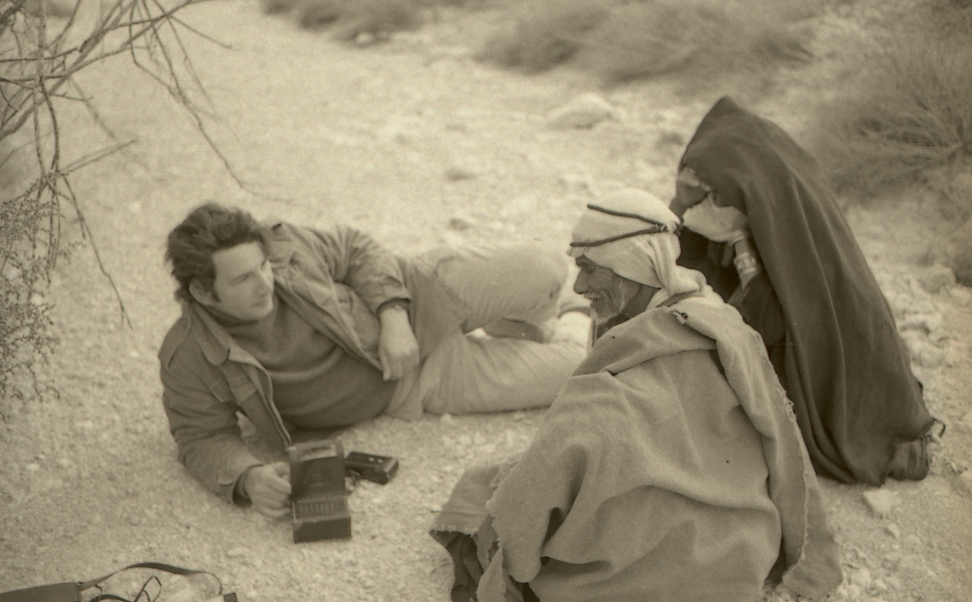
Clinton Bailey recorded hundreds of hours of oral history from Bedouins.
NATIONAL LIBRARY OF ISRAEL
Nearly 120 years ago, Hermann Burchardt, a German Jewish explorer, was traveling in the Middle East, talking to Arab leaders and taking photographs, Jenni Frazer reports for The Circuit. Among the iconic pictures was what is thought to be the first image of the founding father of Abu Dhabi, Sheikh Zayed bin Khalifa Al Nahyan, known as Zayed the First. He was the great-great-grandfather of the current president of the United Arab Emirates, Sheikh Mohamed bin Zayed Al Nahyan.
Murder mystery: Although the pictures Burchardt took in Abu Dhabi became famous in the region and reproduced many times, his personal impressions of the people and places he photographed remained a mystery. He and his fellow travelers were murdered in Yemen in 1909 and his journals were assumed to have been lost. Eventually, via the estate of Eugen Mittwoch, a German scholar of Islamic and Judaic studies, Burchardt’s missing diary — and hundreds of pages of correspondence, notes and official documents, together with numerous photos — all found their way to the National Library of Israel in Jerusalem.
Filling in the blanks: It was this material that delighted Hamad Al-Mutairi, director of the archives department of the Emirates National Library and Archives (NLA), based in Abu Dhabi, when he and other colleagues visited Israel last summer. For Al-Mutairi, seeing the Burchardt collection in Jerusalem was thrilling, and filled in the blanks for his researchers. “We were able to see details about the kind of food he ate, and the type of traditional hospitality given to him at that time as a traveler in the region.” The Emirati visit — and a memorandum of understanding between the two libraries — is a direct and tangible result of the Abraham Accords, signed initially between Israel and three partners — the UAE, Bahrain and Morocco — in 2020.
Joint exhibit: The Burchardt material is essential to drawing a fuller picture of the first years of the individual emirates that now make up the UAE. The Israelis have provided Abu Dhabi with digital copies of Burchardt’s diary and the accompanying papers, which will become part of the NLA collection. “We didn’t stop there,” said Al-Mutairi. “We’re now trying to find the right time to put together some sort of exhibition about Burchardt, charting his journeys across the region. It might be online or it might be physical.” The formal agreement between the two libraries will ensure that the material will marry the holdings that each has; and in the meantime, experts from the two institutions will work together to enrich and expand background information and metadata related to the archive’s contents, including translations, greatly increasing its value to scholars across the globe as a rare reflection of Gulf history.
Oral history: The UAE has built up an enviable body of material based on oral history, while the Israeli library has tended to focus more on physical collections — its Islam and Middle East collection, for example, includes priceless documents and manuscripts not even found in much of the Arab world. Samuel Thrope, curator of the Islam and Middle East collection in Jerusalem, said he has been talking with colleagues at the NLA about oral history connected to a project on Clinton Bailey, an American-Israeli researcher who spent 50 years documenting Bedouin culture and society. The Bailey recordings — all 350 hours of them — are “super-interesting,” said Thrope, and chronicle Bedouin life in the Negev and Sinai between the late 1960s and 2009. “They have all been cataloged and digitized — and now we are in the process of transcribing them.”
Catching up with Yossi Vardi, wisecracking patriarch of Israel’s startup culture
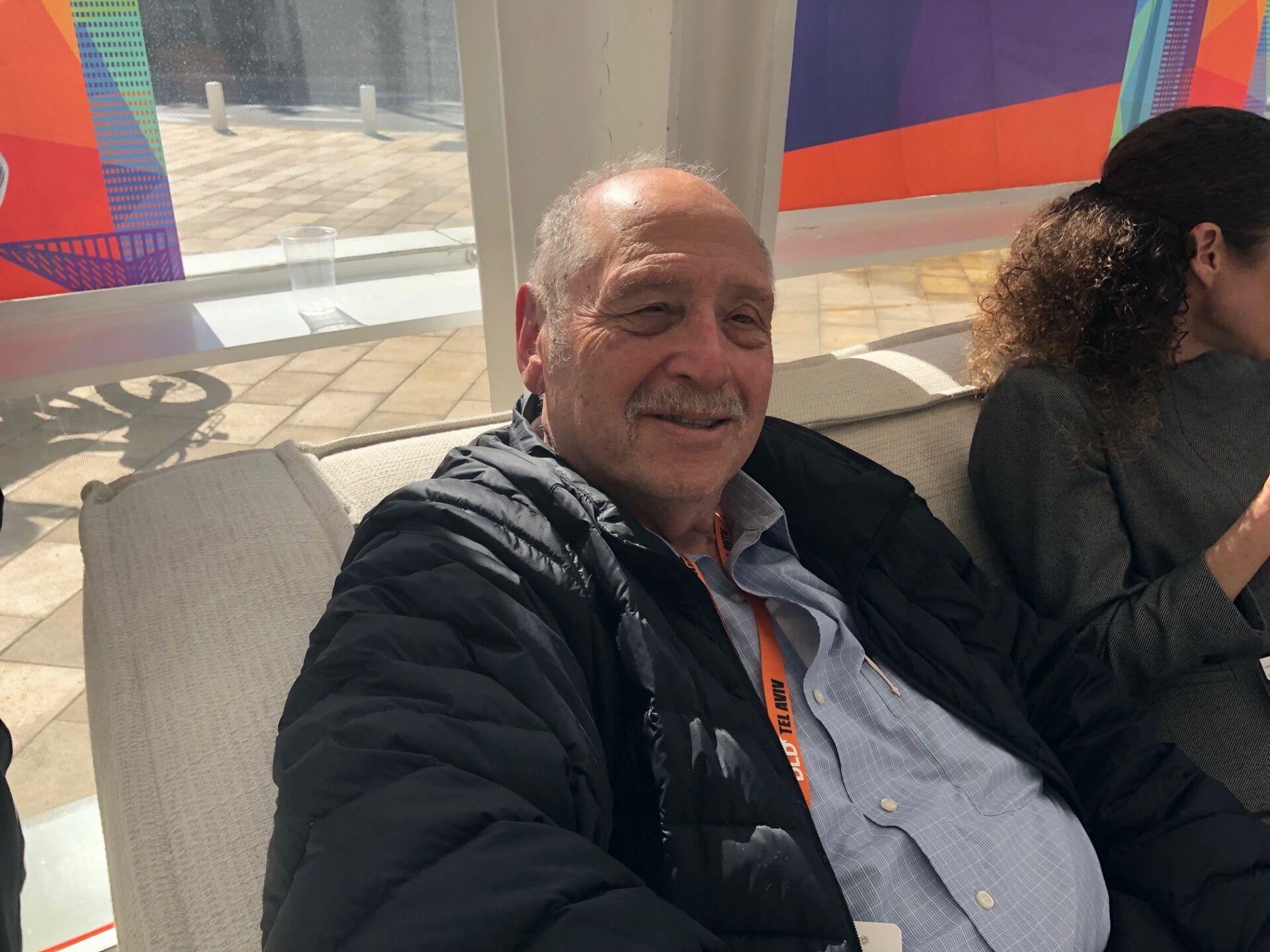
Yossi Vardi holds court in lobby of Habima theater at DLD Tel Aviv Innovation Festival.
Leaning back on a big white couch in the lobby at Tel Aviv’s Habima national theater, where he was hosting one of Israel’s most influential annual technology conferences, Yossi Vardi gets ready to shmooze. At 80 years old, he’s dressed in a scruffy black winter jacket and positions himself at the foot of Habima’s grand curving staircase, The Circuit’s Jonathan Ferziger reports. Inevitably the investors, CEOs and government ministers rushing to lead panel discussions at last week’s DLD Tel Aviv Innovation Festival catch his eye and pause to say hello. In Hebrew, English and Yiddish, Vardi trades quips with them – many of whom consider him their mentor – basking in his reputation as the adorably ornery grandpa of Israel’s startup culture. He doesn’t always remember people’s names so he asks them to draw close and examines their conference badge. One budding entrepreneur wouldn’t leave after a two-minute pitch, and Vardi told him his idea wasn’t worth listening to.
AOL deal: Over the arc of Vardi’s career, which took him from procuring crude for the energy-starved nation in the 1970s as chairman of the Israel National Oil Company to selling ICQ, the first widely used instant messaging software that his son Arik created with three friends, to AOL for $407 million, Vardi has been a leader in Israel’s tech world. He has since led, invested in or helped build more than 70 startups, and is in demand as a speaker around the world about how Israel earned its name as the Startup Nation. He was the recipient of the Prime Minister’s Award for Life Achievement. In between Vardi’s brief conversations with roughly two dozen conference participants heading up the stairs, The Circuit interviewed him about the difficulty of raising venture capital, investor concern about Israel’s judicial reforms, normalization with Arab countries, artificial intelligence and what makes a good startup entrepreneur.
The Circuit: How do companies survive this period when investment capital is drying up?
Yossi Vardi: First of all, they need one very important thing, which is luck. The second thing is money. Money has been disappearing very quickly and therefore some companies will perish and some companies will resolve this by being acquired by other people. We saw it in 2000, we saw it in 2008 to a lesser degree and we’re going to see it again now. It’s not a pleasant situation, but this is business, this is the cycle.
Israeli startup executives are marching in the streets against the government’s proposed judicial reforms and some companies are threatening to take their money out of the country. What impact does that have on foreign investors?
We are now in a very, very sensitive situation. Some people say it will be disaster, while the government says everything is wonderful. We have to stare directly at the crisis and figure out how to resolve it, because the question is not who is right and who is not right. Suppose the worst scenario appears and we lose the tech industry. Some people will say we are sorry. But it’s too serious to just say we’re sorry. We are playing here with a nuclear economic situation. I really hope that we get sober and learn how to reduce the risks.
What impact do the normalization agreements with the Gulf states have on investment?
You have to remember that the two fundamental agreements Israel has reached with Arab countries are with Egypt and Jordan, which stopped the killing of people. This is something holy. We must arrive at some kind of arrangement with the Palestinians. I think the Abraham Accords are important. They enhance the legitimacy of Israel in the eyes of other members in the region. So they’re a segue for us to do more things. In this respect the Abraham Accords are important and I hope they will develop further. When the economic situation of the world is good, we get a wonderful flow of funds. I don’t think business with the Gulf states is going to tilt the needle, but it’s very welcome.
Vertical Farms: Saudi Arabia’s Public Investment Fund signed an agreement with Newark, N.J.-based AeroFarms to create indoor vertical farms. AeroFarms CEO David Rosenberg said the farms will be built in the kingdom and across the MENA region.
Money-Back Guarantee: Indian billionaire Gautam Adani returned $400 million invested by Abu Dhabi’s International Holding Co. after scrapping a planned stock sale in his flagship company.
Hedge Hub: Brevan Howard Asset Management is opening an office in Abu Dhabi that will specialize in digital assets as the UAE becomes a growing hub for hedge funds.
Russia Havens: U.S. officials are pressing the UAE and Turkey to crack down on Russians inside their borders who may be assisting Moscow’s war with Ukraine.
Enter Robodocs: Israel’s Beilinson Hospital hosted a conference on medical uses for artificial intelligence, drawing doctors, scientists and entrepreneurs.
Frequent Visitor: Jordan’s King Abdullah II visited President Joe Biden last week for the third time since Biden became president, making him the most frequent White House foreign guest. Read a report about Jordan’s aversion to the Abraham Accords in Jewish Insider and a recommendation by the Washington Institute for Near East Policy that the king focus on economic issues.
Closing Circuit
First Time: Steven A. Cohen’s Point72 hedge fund bought a $15 million stake in startup MediWound, the American billionaire’s first known investment in an Israeli company
Gas Explorers: Qatar Energy will join a consortium of companies searching for gas off Lebanon’s Mediterranean coast, replacing a Russian firm that withdrew in September.
Fusion Funds: NT-Tao, an Israeli startup developing nuclear fusion-generated energy, raised $22 million in a funding round led by Delek US and NextGear Ventures.
Crypto Wallets: Addressable, an Israeli startup that secures crypto wallets with digital fingerprints, raised $7.5 million in a funding round led by Viola and Fabric Ventures.
Pollen Supplement: BloomX, an Israeli firm that uses AI to help crops get sufficient pollen, raised $8 million in a funding round led by Ahern Agribusiness.
Cloud Protection: Israel’s Sentra, a cybersecurity startup that protects cloud data, raised $30 million in a funding round led by Munich Re Ventures.
On the Circuit
Ayman Alsayariwas appointed governor of Saudi Arabia’s central bank, Sama, replacing Fahad Almubarak, according to a royal decree by King Salman.
Ayelet Shaked, Israel’s former interior minister, was hired as chairperson of Kardan Real Estate, which will pay her $488,000 in salary and stock options.
Jason Greenblatt, the former White House Middle East envoy, writes in Arab News that Saudi Arabia and Qatar are becoming comfortable places to travel for religious Jews.
Ahead on the Circuit
Feb. 6-9, Riyadh, Saudi Arabia: LEAP Tech Conference. More than 100,000 expected at the second edition of the Middle East’s biggest tech event. Riyadh Front Expo Centre.
Feb. 14, Beersheva, Israel: Israel Climate Change Conference. Gathering of environmentalists, researchers, business executives and government officials. Ben- Gurion University campus.
Feb. 15, Jerusalem, Israel: OurCrowd Global Investor Summit. Thousands of investors and startup executives from around the world are expected at the annual conference. Jerusalem International Convention Center.
Feb. 20-24, Abu Dhabi, UAE: IDEX 2023, Middle East’s biggest defense industry conference. Abu Dhabi National Exhibition Centre.
Feb. 20-24, Dubai, UAE. Gulfood Exhibition. More than 4,000 companies from 120 countries attend the world’s largest food and beverage industry conference. Dubai World Trade Centre.
Culture Circuit
Movie Buyout: AMC Theatres sold its stake for $30 million in a joint venture that brought cinemas to Saudi Arabia in 2018. The international movie theater chain said it was bought out by Saudi Entertainment Ventures, its local partner, which will carry a license for the AMC’s brand and content. The New York-based entertainment company has been trying to manage a high debt load stemming from the Covid-19 pandemic. In Saudi Arabia, AMC said it “will transition from a management and investment role to a pure licensing relationship.”
Wellness Highway: Dubai is considering a plan to build a glass-covered “wellness highway” looping around the city, which would be powered by sustainable energy and contain 93 kilometers (58 miles) of paths for biking and running.
Bedouin Film Festival: Rahat, Israel’s largest Bedouin city, is hosting its first film festival over four weekends this month. Some 40 films, including movies from Saudi Arabia, Iran, Italy, France and Spain, will be screened at the Rahat Center for Fine Arts. The event includes the premiere of “Jirah,” a documentary by Rahat filmmaker Yosef Abu Medigam.