Home
Features
Quick Hits
The Daily Circuit
About
Facebook
Twitter
Instagram
Subscribe
SIGN IN
Features Quick Hits The Daily Circuit SWFs Org Charts
Facebook
Twitter
Instagram
Subscribe
SIGN IN
Search

Quick Hits

gulf gateway

Robinhood sets up regional base for trading operations in Dubai

Assuring assets

Saudi Aramco seeks to protect its oil by doubling overseas storage

The Daily Circuit: Aramco seeks more overseas storage + Robinhood comes to Dubai

medicine makers

Mubadala Bio, Eli Lilly lead UAE dealmaking spree in healthcare

The Daily Circuit: Mubadala Bio signs Eli Lilly deal + Ferrari’s Saudi growth

machine learning

UAE firm training robots in Arabic opens Silicon Valley office

early detection

UAE recruits corporate partners for push to predictive healthcare

The Daily Circuit: UAE bets on predictive healthcare + FII conference postponed

summit shelved

Saudi Arabia postpones FII conference after Houthi attacks

waiting game

Saudi flights disrupted amid run-up to Riyadh’s FII conference

The Daily Circuit: Saudi flights grounded amid FII run-up + Humain data center contract

global ambitions

How Mubadala Capital helped Corient take business private

CHEMICAL BONDS

Gulf chemical producers retain edge despite Hormuz disruptions

game delay

Saudi International golf tour postponed amid conflict

The Daily Circuit: Saudi International tour in limbo + ADIA invests in Zetwerk

silicon stakes

Mubadala’s GlobalFoundries, Japan build $21B chip plants

The Daily Circuit: Japan, U.S. back Mubadala’s GlobalFoundries + PIF may scrap stadiums

CIRCUIT Q&A

UAE’s Abdulla Balalaa to promote water security at global forum

growth market

Mubadala’s Al Muhairi banks on India investments for long term

HYBRID SUMMIT

With Riyadh under fire, FII prepares for remote participation

Quick Hits

AMASSING ASSETS

Abu Dhabi’s ADIA joins sovereign wealth’s $1 trillion club

Trailing Norway and China, ADIA holds $1.06 trillion in assets, Kuwait's KIA has $980 billion and Saudi Arabia’s PIF stands at about $950 billion

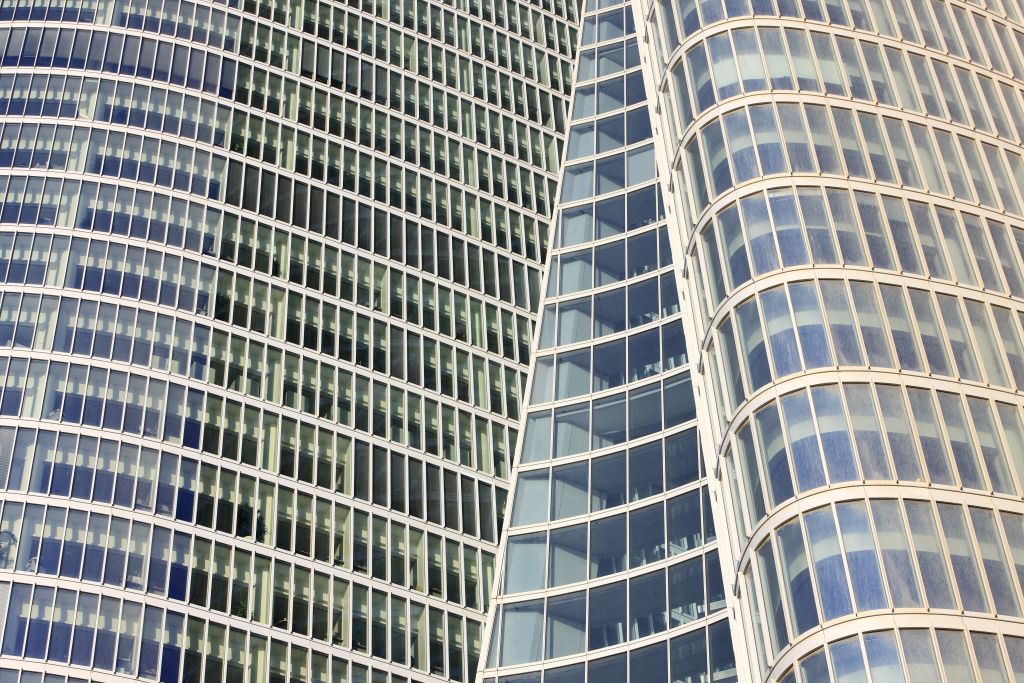
The 40-story ADIA Tower on Abu Dhabi's Corniche. (Getty Images)

By
Jonathan H. Ferziger
December 20, 2024
Share
Facebook
Twitter
Email
Add The Circuit on Google

As 2024 careens to its close – with financial markets jumping even as geopolitical conflicts multiply – Gulf sovereign wealth funds continue to pile up assets.

Leading the way has been ADIA, the Abu Dhabi Investment Authority, which entered the elite $1 trillion club this year with assets reaching $1.06 trillion – trailing only Norway and China – the Sovereign Wealth Fund Institute reports.

Among regional neighbors close to joining the club, the Kuwait Investment Authority holds $980 billion in assets and Saudi Arabia’s Public Investment Fund has about $950 billion. The Qatar Investment Authority stands at $530 billion, according to the SWF ranking.

In Abu Dhabi, a regional center for investing sovereign wealth, Mubadala trails ADIA with $330 billion, followed by ADQ with $250 billion.

Read More
CIRCUIT INTERVIEW

Exploding Bitcoin puts Gulf on course to crypto epicenter

Scintilla’s Tim Popplewell talks about the role of regulation in building trust and how the Gulf will lead the next chapter in financial innovation

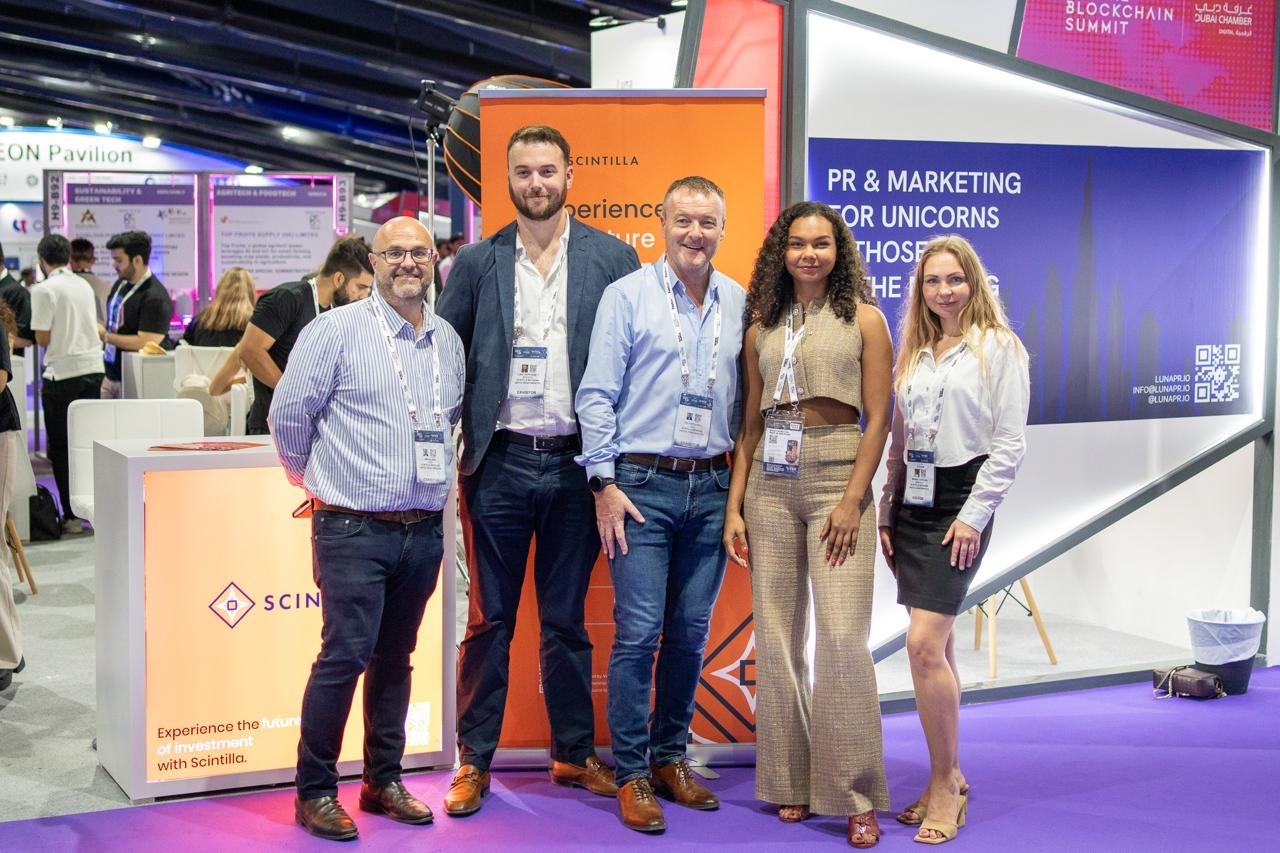
Tim Popplewill (center) with his team from Scintilla at Future Blockchain Summit in October, Dubai.

By
Omnia Al Desoukie
December 20, 2024
Share
Facebook
Twitter
Email
Add The Circuit on Google

Amid the explosive performance of cryptocurrencies this year – with Bitcoin breaking the $100,000 ceiling last week – investors are buckling up for what looks to be a wild ride in 2025.

Eric Trump was greeted with hoots and hollers when he took the stage at December’s Bitcoin MENA conference in Abu Dhabi and promised that his dad will be “most pro-crypto president in the history of America.”

The event coincided with an announcement from the UAE’s Central Bank that it will issue the AE Coin, a so-called stablecoin that will be subject to government regulation to assure its trustworthiness as a digital currency.

After opening the year at $44,204, Bitcoin has soared more than 130%, hitting an all-time high on Tuesday of $107,778 – before slipping yesterday to $94,569 and illustrating crypto’s unpredictability.

In an interview with The Circuit, Tim Popplewell, owner and CEO of Dubai-based Scintilla Network, talks about his investment firm’s crypto strategy, the critical role of regulation in building trust and how the Gulf is poised to lead the next chapter in digital innovation.

Where do you think the UAE is headed in addressing Crypto?

One of the key aspects of cryptocurrencies and digital assets is regulation, and that’s crucial. Generally speaking, there have been some not-so-great stories in recent years, with people paying heavy prices, including prison time.

The UAE, and the Middle East more broadly, has been fantastic in taking the lead. They’ve gone from having little to no framework to establishing authorities like VARA – the Virtual Asset Regulatory Authority – here in Dubai, which is truly leading the world. And I don’t think it’s just me saying that from Dubai. I travel enough to know that this is a widely held opinion in the industry regarding regulation in this space.

With solid regulation comes bigger players. Once the major players realize it’s safe to operate here, they start moving in. You saw it at the [Bitcoin MENA event]. The caliber of international players coming to this region is precisely the kind you want to attract. Regardless of your political views, having Eric Trump speak about crypto is a significant endorsement. Bitcoin MENA is the region’s first event of this kind, and for its debut, it attracted someone of that stature. That speaks volumes about the importance of this space in the region.

As for trends, it’s completely inevitable that digital assets and currencies are the future. Just this [month], we’ve seen leaders from Russia, China, the US, Europe, Britain, and others all make statements in favor of cryptocurrencies, digital assets, central bank digital currencies, or stablecoins. The direction is clear – this is unstoppable.

You also have influential figures like Michael Saylor, BlackRock’s Larry Fink, and many others backing this movement. The trajectory is inevitable; it’s just a matter of what form it will take.

How is digital currency used here in the MENA region?

The MENA region started off behind but is now moving ahead very quickly. One example is the use of Central Bank Digital Currencies (CBDCs). That is an area where the Middle East region has really taken a bit of a lead. A CBDC is a digital currency issued by central banks. In this region, for large oil transactions, CBDCs help cut out middlemen, reduce fees, and speed up transaction times. Another key advantage is that once a transaction happens, it cannot be reversed or disappear — it’s immutable. It is impossible for it to disappear. It is impossible for funds to go missing. 

CBDCs also help legitimize trade in the region. A few years ago, there was still skepticism about whether the Middle East could play a significant role in global finance. Now, digital currencies are helping change that perception. For example, at Abu Dhabi Finance Week, the slogan was “The Capital of Capital,” and no one questions that anymore. I think digital currencies have played a role in that.

What is happening in the UAE regarding digital currency, especially with the recent stablecoin announcement?

At one end of the spectrum, you have central bank digital currencies (CBDCs). These are essentially the digital version of what central banks currently do when they print money, backed fully by the government. At the other end, you have cryptocurrencies, which aren’t backed by anything tangible—only by market sentiment. In the middle, you have stablecoins. The idea behind a stablecoin is that it’s backed by actual assets. For example, the recently announced AE Coin, a new stablecoin for the UAE, is backed by dirhams and other assets. If you buy one dirham worth of stablecoin, it’s fully supported by an equivalent dirham in reserve, ensuring its stability and security.

Can we predict what’s going to happen in the next 5 to 10 years?

In terms of major cryptocurrencies, I think their growth is somewhat inevitable. Far be it from me to make a price prediction, but if you were to ask whether Bitcoin, for example, will be higher in five years than it is today, I’d say it’s almost inevitable. I really can’t see any reasons for that not happening.

The real fascination lies in the interplay between CBDCs, stablecoins, and cryptocurrencies over the next five years. How these entities interact will be key. If you look at CBDCs, on one hand, they offer benefits like cutting costs and reducing transaction times. On the other hand, they bring concerns about government surveillance and tracking how people spend their money. It’s a two-sided story, and I don’t know how it will play out, but it will definitely be fascinating to watch.

Stablecoins, again, seem inevitable. They’re clearly the way of the future, and I don’t think there’s much doubt about that. Cryptocurrencies, however, are more complex. Right now, there are millions of them, and I think we’ll see a split. The larger cryptocurrencies that can be traded in regulated spaces will grow stronger because people trust them. They’re not going to experience “pump and dump” schemes or other risks that jeopardize their money. Then there’s the speculative, “Wild West” side—meme coins and unregulated cryptocurrencies. They’ll continue to exist outside regulation, but good luck to anyone investing in those. They won’t disappear entirely, but the space will split: regulated cryptocurrencies will attract most players, while unregulated ones will remain high-risk.

How do you advise your clients to ensure their investments are secure in crypto?

We are in an interesting position because we are regulated by VARA and we were incubated within a global law firm. So, we saw this coming years ago – the Wild West phase would eventually end, and regulation would become the only way for people like yourself to feel comfortable putting your hard-earned money into this space, whether as an investment or as a way of paying bills.

This ties back to what I mentioned earlier about the importance of regulated players. For example, we’re regulated for exchange services. This means that when you put your money with a regulated provider like us, you can trust that it’s safe. We have to abide by VARA’s regulations, which allow us to do certain things but also prevent us from engaging in others. That’s the direction this space is heading.

On the other hand, if you put your money into a meme coin just because some influencer or KOL (Key Opinion Leader) thinks it’s funny or trendy, well, good luck. Those coins aren’t regulated, and unfortunately, when things go south – and it really is “when,” not “if” – it’s a case of “buyer beware.”

I think we’re going to see a clear shift toward quality, and that quality will revolve around regulated providers.

Read More
IPO FIZZLE

Amid bounty of Gulf IPOs, many firms struggle in trading debut

The desire of Gulf governments to diversify their economies and strenthen their capital markets virtually guarantee lots more listings in 2025 

thecircuit-circuit-difc

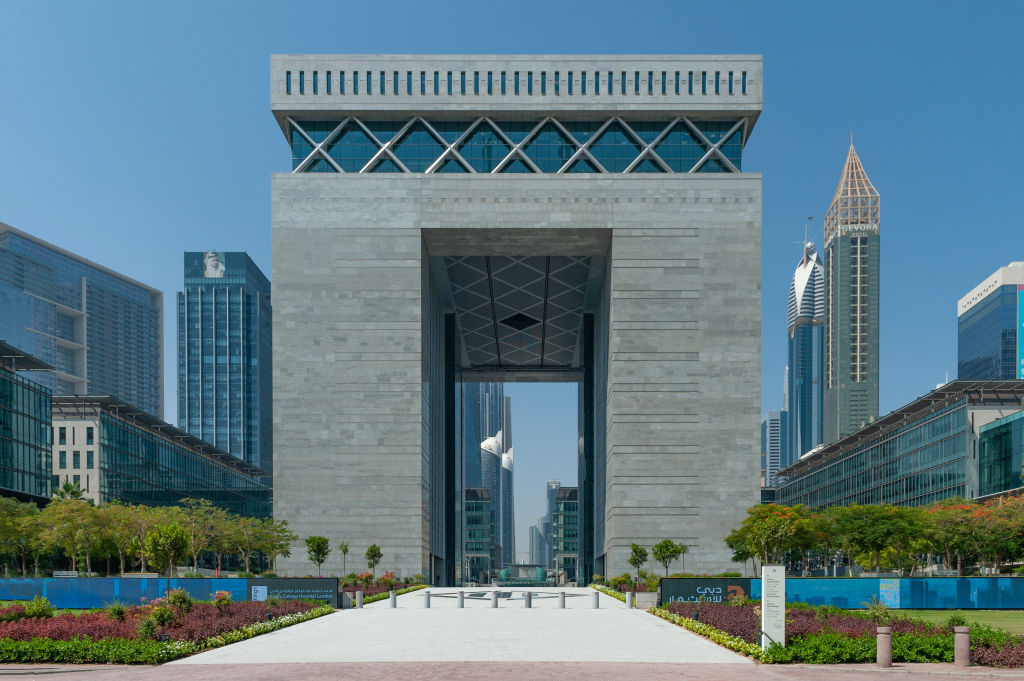
Dubai International Financial Centre (Getty Images)

By
Omnia Al Desoukie
December 19, 2024
Share
Facebook
Twitter
Email
Add The Circuit on Google
Companies in the Middle East have raised $13 billion from IPOs in 2024, making it the region’s second-best year since the pandemic.

Strong early returns from those share sales, however, are no longer guaranteed, Bloomberg reports.

The three largest Gulf IPOs of the year — Talabat, OQ Exploration, and Lulu Retail — had muted debuts despite strong demand.

Still, the desire of Gulf governments to diversify their economies and deepen capital markets virtually guarantee a continued rush of listings in 2025.


Read More
sour sentiment

Gulf central banks chop interest rates in tandem after Fed cut

Middle East stock exchanges lost ground as traders absorbed the message from Fed Chairman Jerome Power that rates cuts will be slower in 2025

Dubai's skyline at sunrise (Getty Images)

By
Jonathan H. Ferziger
December 19, 2024
Share
Facebook
Twitter
Email
Add The Circuit on Google
The U.S. Federal Reserve’s decision to cut interest rates set off a chain reaction of parallel reductions in the Middle East.

Central banks in Saudi Arabia, the UAE, Bahrain and Oman, which have currencies pegged to the U.S. dollar, chopped their own borrowing rates today by 0.25% in tandem with the Fed, Reuters reports. Qatar cut its three main interest rates by 0.30%.

The Fed’s action on Wednesday produced a sour reaction, however, on Gulf stock exchanges, which dropped in morning trading with other global markets as traders absorbed the message from Federal Reserve Chairman Jerome Power that rates cuts will be slower in 2025.

Benchmark indexes lost ground in Riyadh, Dubai and Abu Dhabi. Qatar’s market was closed for the country’s National Day.

Read More
CIRCUIT INTERVIEW

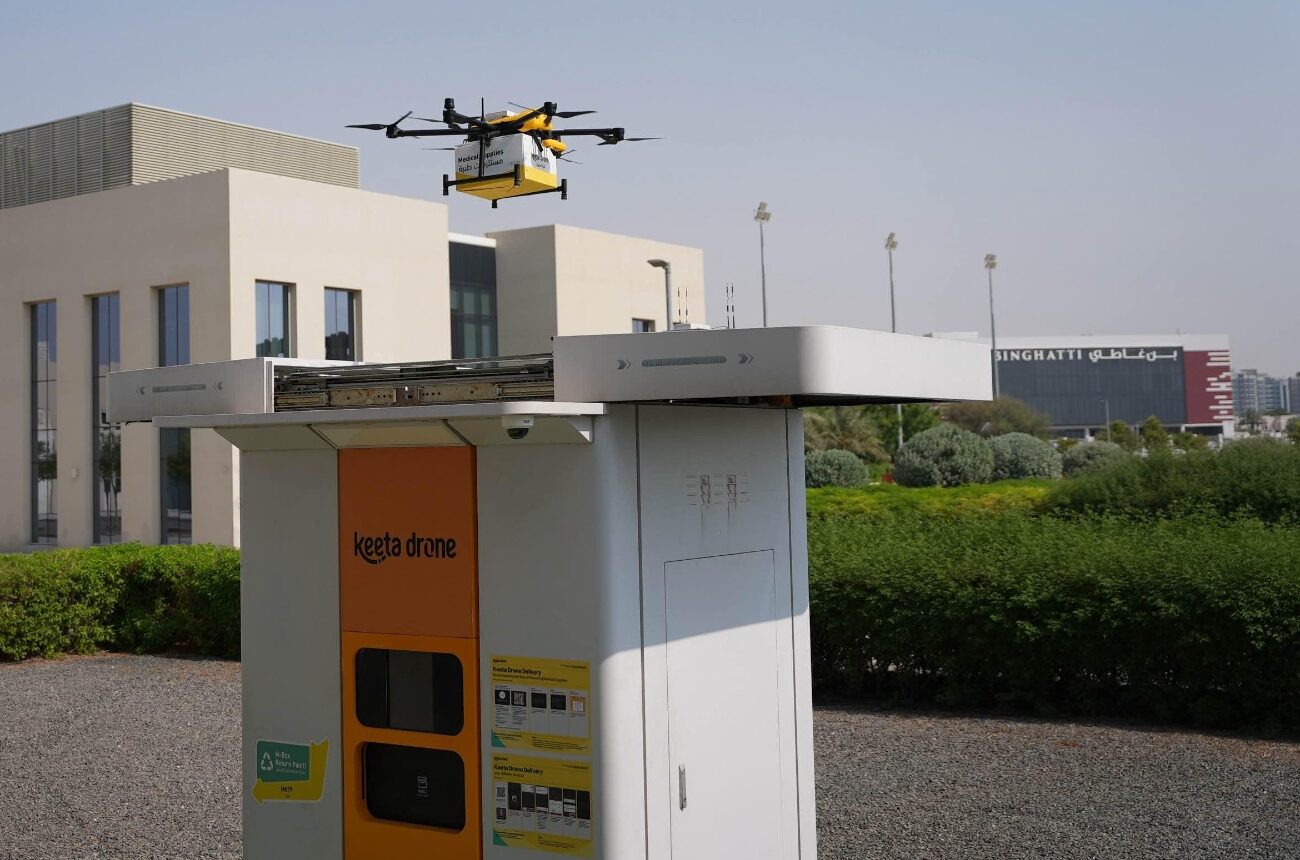
China’s Keeta drones launch in Dubai to make airborne deliveries

Keeta is a subsidiary of Beijing-based Meituan, whose drones have become a popular means of ordering fried chicken by app from KFC

Keeta Drone hovers above its base station in Dubai (Credit: Keeta)

By
Omnia Al Desoukie
December 18, 2024
Share
Facebook
Twitter
Email
Add The Circuit on Google

The skies over Dubai are starting to buzz with drones operated by a Chinese company that has been licensed to deliver fast food, pharmaceuticals and other products to customers across the emirate.

Keeta Drone held a launch event on Tuesday that was attended by Dubai Crown Prince Sheikh Hamdan bin Mohammed bin Rashid. The prince, who is also the UAE’s Deputy Prime Minister and Minister of Defense, was so impressed that he immediately authorized a 33% expansion of Keeta’s initial coverage area.

Keeta is a subsidiary of Beijing-based Meituan, a shopping platform and tech developer active in retail, restaurants, travel and entertainment. The drone itself can carry a payload of 2.5 kilograms and travel up to four kilometers per trip.

Across China, Meituan’s drones have become a popular means of ordering fried chicken from KFC through an app that can also be used to buy hot coffee, groceries and prescription drugs.

In an interview with The Circuit, Keeta President Yinian Mao talked about how the company managed to become the first drone delivery service to start flying in Dubai and its plans to launch its six-propeller aircraft into markets across the Middle East.

 What are your expansion plans beyond Dubai in the Middle East? 

We have been looking at different areas where we can deploy our kiosks. We see a lot of synergy here with medical supply, diagnostics, medicine, prescriptions, all these things. So that’s why we’re going to focus on two things. One is food and beverage. That’s our strength. And then the medical side. We then plan to expand to quite a few areas within Dubai. That’s for the next year, 2025. If we are looking beyond 2025, we are looking at other GCC countries, as well as in MENA.

Are you looking into hiring specialists from the UAE who can fly the drones?

Yes, for operating the drones. We are making expansion plans. We need maintenance crews. We need technicians. We need a skilled labor force. We need all this expertise. 

Can you tell us what kind of partnerships you are looking at here in Dubai as you expand to the city? 

We have two kinds of partnerships. One is with existing businesses, such as Fakeeh University Hospital or Americana. They have either restaurants or prescription drugs that we can deliver. The other partnership might be with those helping us maintain the drones. But right now, we are focusing on the first kind. 

How are you ensuring that your drones are safe?

Our drone is actually equipped with a lot of safety features, including redundant batteries, including motors. If you hit one motor and then disable it, the propulsion will be instantaneously transferred to the rest five. It will still be able to control itself. And including an onboard parachute that it will deploy in case of emergency. If it sees an obstacle in midair, it has something called send, detect and avoid capabilities to avoid obstacles…  to avoid collision in midair. We have, I think, one of the best track records in terms of operational safety for drone delivery. 

How long have you invested in terms of time to actually get the license in Dubai?

We’ve spent close to two years. So we have been planning since the beginning of 2023. There are some investigating phases, and then we did a flight demo here during the GITEX last year. Then, we went through a lot of validations and documentation reviews with DCAA and other regulatory bodies. I think it’s all worth it because, as you understand, we already got our operational license inside China. That was from 2021 to 2023. It took us two years here. Actually, it took us a little bit less time than the first time around because we have all this documentation and validation process with CAC, China’s Regulatory body for the Civil Aviation Authority of China.

Read More
PROPERTY PAYOUT

Emaar leads Dubai rally with dividend boost for shareholders

The company’s 14% surge on the Dubai Financial Market led the exchange’s benchmark index to its highest level in almost a decade, rising 4.5%

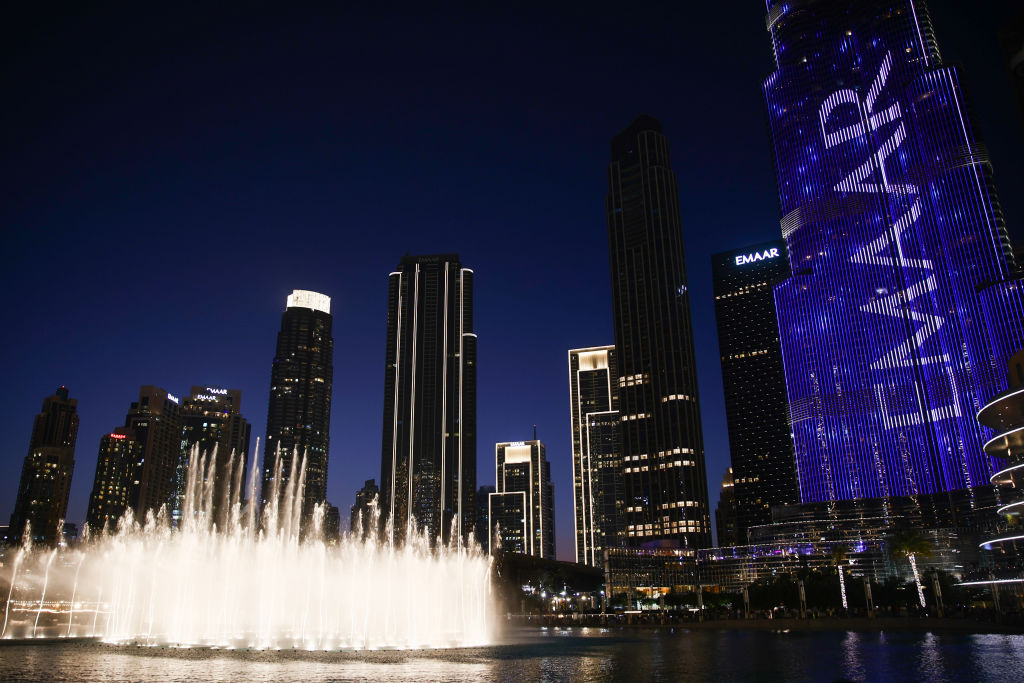
A view of the Dubai Fountain next to Emaar's Burj Khalifa tower in Dubai (Getty Images)

By
Jonathan H. Ferziger
December 17, 2024
Share
Facebook
Twitter
Email
Add The Circuit on Google
Dubai’s property boom prompted Emaar, the city’s largest publicly traded developer, to provide shareholders with a big return. The move sent its stock soaring on Monday to a 17-year high.

The company, founded by Mohamed Alabbar, announced on Friday that it would declare dividends at 100% of its share capital starting with 2024 and continuing for the next few years.

Emaar said the new policy is aimed “at enhancing shareholder value while ensuring the financial sustainability and strategic growth” of the company.

The company’s 14% surge on the Dubai Financial Market on Monday led the exchange’s benchmark index to its highest level in almost a decade, rising 4.5%.

Meanwhile, Ali Sajwani, Managing Director of Damac Properties, says demand for Dubai property is growing among European customers, who are fleeing high taxes and regulatory changes to settle in the UAE.

“The customer base has shifted today,” Sajwani told The National. “The biggest customers are coming from Europe, no longer from Russia or Ukraine, and we believe that’s going to continue, and it’s going to grow further into 2025.”

Read More
flying high

Dubai’s stock market surges to highest in close to a decade

The rally in the Dubai Financial Market comes amid expectations that the U.S. Federal Reserve will cut interest rates this week

A man watches stock movements at the Dubai Financial Market stock exchange. (Photo: Getty Images)

By
Jonathan H. Ferziger
December 16, 2024
Share
Facebook
Twitter
Email
Add The Circuit on Google
Dubai’s benchmark stock index soared today to its highest in nearly 10 years amid expectations that the U.S. Federal Reserve will cut interest rates this week.

The Dubai Financial Market’s General Index jumped 3.7% in morning trading to reach 5,010, led by Emirates NBD, Dubai’s largest bank, which rose 8%. The Fed’s decisions affect monetary policy in the Gulf, where the UAE dirham and other currencies are pegged to the U.S. dollar.

The stock surge comes as the UAE has embarked on a borrowing binge that promises to extend well into 2025, Bloomberg reports.

Emirati companies and sovereign entities in the UAE issued $38.4 billion of dollar debt this year, a 54% increase from 2023, according to the news agency.

In Abu Dhabi, ADNOC’s new XRG investment firm announced today that it has completed the formation of its joint venture with BP on an international natural gas platform called Arcius Energy. The JV, which will initially operate in Egypt, is 51% owned by BP and 49% by XRG.

Read More
flying high

Saudi Arabia seals acquisition of 15% stake in London’s Heathrow

The Saudi fund has a range of U.K. investments that include the Newcastle United football club, Selfridges and the Rocco Forte hotel group

Aircraft on the tarmac at London's Heathrow Airport (Getty Images)

By
Jonathan H. Ferziger
December 13, 2024
Share
Facebook
Twitter
Email
Add The Circuit on Google

Saudi Arabia’s Public Investment Fund concluded its yearlong quest to buy a chunk of London’s Heathrow Airport, joining an ownership group that includes the sovereign wealth funds of Qatar and Singapore.

The PIF will own a 15% stake in FGP TopCo, the holding company that controls Europe’s busiest airport, after the deal was finalized on Thursday. The Saudi fund bought into Heathrow at the same time that Paris-based private equity firm Ardian acquired a 22.6% stake in the airport, which has a market value of about 8.7 billion pounds, or  $11 billion.

“Heathrow acts as a crucial gateway to the world, and we look forward to supporting Heathrow’s management in its efforts to secure the sustainable growth of the airport and to continue to maintain its position as a global aviation hub,” Turqi Al-Nowaiser, PIF Deputy Governor and Head of International Investments, said in a statement.

The Saudi fund, which manages some $930 billion in assets, has acquired a range of holdings in the U.K. that includes the Newcastle United football club and large stakes in Selfridges department store and the Rocco Forte luxury hotel group.

Among Heathrow’s owners are the Qatar Investment Authority, which holds a 20% interest, Singapore’s GIC sovereign fund and the Australian Retirement Trust.

Read More

Posts pagination

Prev 1 … 98 99 100 101 102 103 104 105 106 … 154 Next
Navigation
Home
Features
Quick Hits
The Daily Circuit
Org Charts
About
Social
Facebook
Twitter
Instagram
Subscribe
Subscribe

Copyright © 2025 · All Rights Reserved · The Circuit

Sign into your account

Email me a link to sign in

I don't have an account

Sign in or subscribe to continue to read this article

Enter your email and create a password to gain access to our exclusive content

Already a subscriber? Sign in

Unlock full access
Become a premium subscriber

Don't miss out! A paid subscription is required to access this page