Home
Features
Quick Hits
The Daily Circuit
About
Facebook
Twitter
Instagram
Subscribe
SIGN IN
Features Quick Hits The Daily Circuit SWFs Org Charts
Facebook
Twitter
Instagram
Subscribe
SIGN IN
Search

Quick Hits

hedge hub

Hedge funds flock to Dubai’s DIFC, doubling in the last 2 years

The Daily Circuit: Dubai hedge fund multiply + Mubadala-Barings debt venture

PORT purchase

AD Ports seeks majority stake in Alexandria container terminal

DRIVING INNOVATION

Lucid teams up with KAUST to create Saudi EV research center

The Daily Circuit:  AD Ports eyes Egyptian terminal + IHC agro-food deal Mellon to build “clean food” factories in UAE

The Daily Circuit: Palantir teams up with Dubai + Cruise Saudi expands

tightening TIES

UAE and EU launch talks to forge strategic economic partnership

OXFORD ST. OVERHAUL

UAE royal family firm secures ok for west end development

The Daily Circuit: Mecca draws foreign home buyers + Yango deploys robots

CHILLING out

Diriyah deploys outdoor cooling tech against Riyadh’s blazing heat

Looking east

Mubadala aims to double Asia portfolio to 25% within a decade

The Daily Circuit: Mubadala plots Asia strategy + ADNOC’s Serbian bid

Going Hostile

Abu Dhabi’s L’imad joins Paramount backers in Warner Bros. bidding war

HAMMER TIME

Sotheby’s sells cars, jewelry, handbag at Abu Dhabi auction

FINANCIAL HUB

Abu Dhabi launches FIDA hub to shape future of global finance

The Daily Circuit: Abu Dhabi’s new finance hub + QIA’s AI firm

DIGITAL DAZZLE

Binance’s CZ headlines as crypto crowd pours into Abu Dhabi

CAPITAL GAINS

Abu Dhabi’s ADGM plans to expand with $16B investment

GULF TALKFEST

Wrapping up the Milken Middle East and Africa Summit

The Daily Circuit: ADFW draws global investors + Binance gets Abu Dhabi OK

Quick Hits

AI Emirate 

Abu Dhabi invests $3.5 billion to become AI-native government

The project, which aligns with the UAE's national strategy for artificial intelligence, is projected to add $6.5 billion to GDP while creating 5,000 jobs

the circuit-circuitnews-AbuDhabi

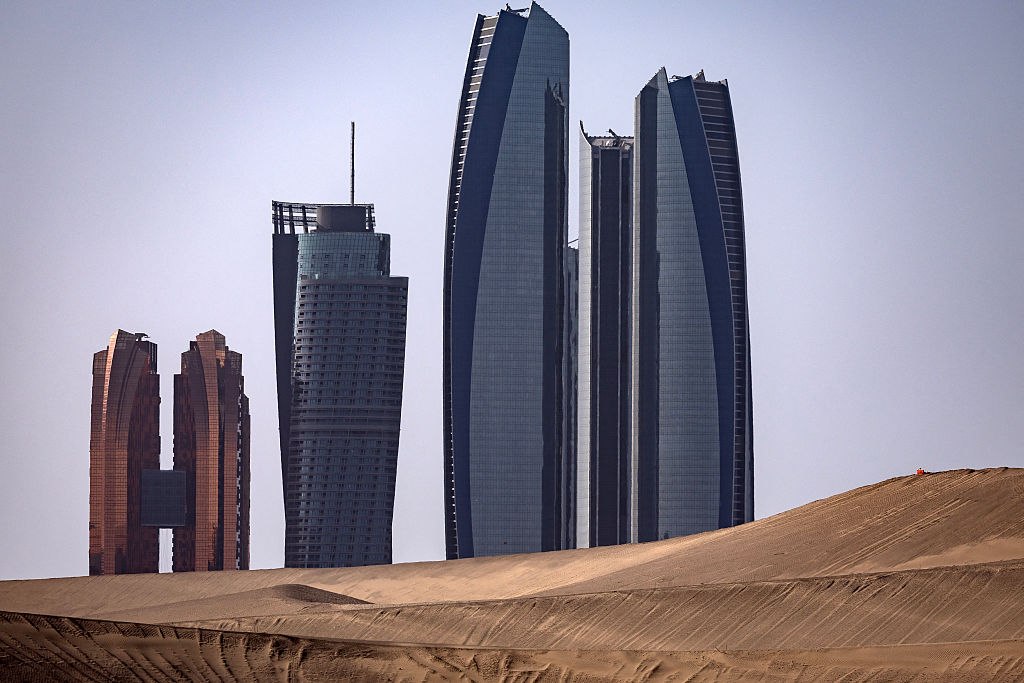
View of Abu Dhabi (Getty Images)

By
Omnia Al Desoukie
January 21, 2025
Share
Facebook
Twitter
Email
Add The Circuit on Google

Abu Dhabi introduced its new Government Digital Strategy on Tuesday, allocating $3.5 billion to digitize and fully automate the emirate’s administrative processes.

The $3.5 billion project aims to make Abu Dhabi the world’s first fully AI-native government by 2027, Ahmed Al Kuttab, Chairman of the Department of Government Enablement, said in a statement.

“By incorporating AI, cloud technologies, and data-driven insights into our government’s DNA, we will transform public service delivery, optimize government operations, and drive sustainable economic growth,” Al Kuttab said.

The project is projected to add $6.5 billion to the emirate’s GDP, while creating 5,000 jobs. It is structured to align with the UAE’s broader 2031 vision, in which the country expects AI to contribute $96 billion to the economy by 2030, or 13.6% of GDP.

Read More
PROPERTY BOOST

Dubai revamps real estate rules to woo foreign investors

The 'freehold' regulations allow investors from abroad to have direct ownership of their properties and the land on which they're built

Downtown Dubai's Sheikh Zayed Road (Getty Images)

By
Omnia Al Desoukie
January 20, 2025
Share
Facebook
Twitter
Email
Add The Circuit on Google

Dubai is taking new steps to make its prime property more attractive to foreign investors.

The emirate issued regulations on Sunday enabling private property owners of all nationalities in the Sheikh Zayed Road and Al Jaddaf areas to convert their ownership to so-called “freehold” status, The National reports.

Under freehold classification, an investor has a direct title of ownership of the property and the land on which it is built.

“This news is huge because it could be the beginning of what I suppose will be the opening up of all areas to be bought by non-locals,” Mario Volpi, head of brokerage at Novvi Properties, told the newspaper.

Read More
DATA-DRIVEN

KKR to invest in Gulf Data Hub’s seven branches across region

GDH owns a portfolio of data centers in the UAE and Saudi Arabia, with additional facilities planned for Kuwait, Qatar, Bahrain and Oman

POLAND - 2024/11/06: In this photo illustration, a Kolkata Knight Riders (KKR) logo is displayed on a smartphone with stock market percentages in the background. (Photo Illustration by Omar Marques/SOPA Images/LightRocket via Getty Images)

By
Omnia Al Desoukie
January 17, 2025
Share
Facebook
Twitter
Email
Add The Circuit on Google

KKR plans to invest in Gulf Data Hub, one of the largest independent data center platforms in the Middle East, amid skyrocketing global data consumption driven by AI and cryptocurrencies.

The announcement will make the global investment firm a major player in the regional data storage market, as GDH owns a portfolio of seven state-of-the-art data centers in the UAE and Saudi Arabia, and additional facilities planned in Kuwait, Qatar, Bahrain and Oman, Bloomberg reports.

Prior investments by KKR in the region include a strategic partnership with ADNOC to create ADNOC Oil Pipelines.

The fund also acquired a commercial aircraft portfolio from Etihad Airways in 2020 through Altitude Aircraft Leasing.

Read More
world summit

Mideast leaders head for global talkfest in snowbound Davos

Headliners to include Saudi Finance Minister Mohammed Aljada, Mubadala CEO Khaldoon Al Mubarak – Donald Trump via video

WEF President Børge Brende at press conference in Davos this week (Getty Images)

By
Jonathan H. Ferziger
January 17, 2025
Share
Facebook
Twitter
Email
Add The Circuit on Google

Gulf business leaders and cabinet ministers will be jetting into snowy Davos, Switzerland, for next week’s World Economic Forum, where discussions will touch on Middle East reconstruction and focus on what to expect as Donald Trump returns to the White House.

Trump himself will address the gathering of the world’s financial elite by video on Thursday, Jan. 23, just three days after his inauguration, with 3,000 participants from more than 130 countries registered to attend the WEF events in person.

Khaldoon Al Mubarak, Group CEO of the UAE’s Mubadala sovereign wealth fund, a member of the Abu Dhabi Executive Council and Chairman of the Manchester City Football Club, will take the stage on Tuesday in a panel discussion about “Finding Growth in Uncertain Times.”

He’ll be chatting in the half-hour session with Carlyle Co-Chairman David Rubinstein; Marcus Wallenberg, Chairman of SEB, Sweden’s largest lender; Ngozi Okonjo-Iweala, Director-General of the World Trade Organization; and WEF President Børge Brende.
|
Later on Tuesday, Brende will hold a public conversation with Sheikh Mohammed bin Abdulrahman Al Thani, Qatar’s Prime Minister and Minister of Foreign Affairs, who is playing a central role in negotiations for the ceasefire agreement in Gaza. Israeli President Isaac Herzog, meanwhile, will be interviewed by CNN’s Fareed Zakaria.

Saudi Arabia, which has rented multiple storefronts on Davos’ central street, the Promenade, to promote its $1.5 trillion Neom megaproject, will be bringing a bevy of key cabinet ministers to the forum.

On Thursday, Saudi Finance Minister Mohammed Aljadaan and Economy and Planning Minister Faisal Alibrahim will be chatting on stage with BlackRock Chairman and CEO Larry Fink and International Monetary Fund Managing Director Kristalina Georgieva.

Also participating in the session will be Minister of Communications and Information Technology Abdullah AlSwaha.

Saudi Arabia has patterned its own annual business forum after the Swiss gathering, establishing the Future Investment Initiative conference in 2017 that was immediately dubbed “Davos in the Desert.”

At its eighth edition last October, some 7,000 movers and shakers poured into Riyadh for the get-together that takes place at the opulent Ritz Carlton hotel and in the vast halls of the adjacent King Abdul Aziz International Conference Center.

Getting a jump on the confab, the developers of Saudi Arabia’s trillion-dollar-plus Neom project invited a select group of financiers, celebrities and influencers to a kickoff event at Sindalah Island, five kilometers off the kingdom’s west coast.

The Red Sea resort island, where an ecosystem is rising of super-luxury hotels, swank night clubs and an 86-berth yacht marina, hosted a beach party headlined by Grammy Award winner Alicia Keys. She sang to an audience that included actor Will Smith, tennis champ Rafael Nidal and former NFL quarterback Tom Brady.

Back in the capital, FII featured a bevy of investment bankers, hedge fund founders and corporate titans who are veterans of Davos and have become regulars at the Saudi conference, showcasing its aspirations for global influence.

Among the speakers on the main stage were bankers Larry Fink, Chairman and CEO of BlackRock; Ben Horowitz, co-founder of Andreesen Horowitz Jane Fraser, CEO of Citi; Ken Griffin, Founder and CEO of Citadel. Others included Dame Julia Hoggett, CEO of the London Stock Exchange; Ruth Porat, President and Chief Investment Officer of Alphabet and Google; and Ben Horowitz, co-founder of Andreesen Horowitz.
|
The three-day event was introduced by Yasir Al-Rumayyan, who is Governor of the Saudi Public Investment Fund and Chairman of Aramco. Richard Attias, who hosts and produces the Saudi conference as CEO of the FII Institute, was earlier in his career producer of the WEF conference in Davos.

Read More
tower power

Kushner teams up with Alabbar to build Trump hotel in Belgrade

Founder of Gulf-backed Affinity Partners tells Bloomberg he talked to brother-in-law Eric Trump and they settled on the licensing deal

Photo: Jonathan H. Ferziger

Affinity Partners founder Jared Kushner at 2022 Future Investment Initiative conference in Riyadh

By
Jonathan H. Ferziger
January 16, 2025
Share
Facebook
Twitter
Email
Add The Circuit on Google

Jared Kushner, founder of Gulf-backed Affinity Partners, is bringing the Trump name to Belgrade.

Kushner tells Bloomberg in an interview published Thursday that Affinity will team up with Mohamed Alabbar, founder of Dubai-based Emaar Properties, to develop a luxury hotel and apartment complex on the site of the former Yugoslav defense ministry in the Serbian capital.

Kushner said he discussed the idea with Eric Trump, his brother-in-law and executive vice president at the Trump Organization, and they settled on the licensing deal.

Hussain Sajwani, founder of Emaar rival Damac Properties, appeared with President-elect Donald Trump at his Mar-a-Lago resort last week and pledged to invest $20 billion to build data centers in the U.S.

Read More
UNDER THE SEA

UAE, Italy, Albania agree on $1.1 billion renewable energy cable

The deal follows a draft agreement last year between Abu Dhabi's Masdar and Albania's KESH to develop sustainable energy projects together

Adriatic coast near Vlorë, Albania (Getty Images)

By
Omnia Al Desoukie
January 16, 2025
Share
Facebook
Twitter
Email
Add The Circuit on Google

The UAE, Italy and Albania are working together on a $1.1 billion venture that includes building an undersea cable to carry renewable energy produced in Albania to Italy.

The deal signed Wednesday in Abu Dhabi will focus on large-scale renewable energy projects in Albania, including solar, wind, and hybrid systems involving battery storage, The National reports.

It follows a preliminary joint venture agreement last year between Abu Dhabi green energy company Masdar and Albania’s KESH to develop renewable energy projects in Albania.

Italian Prime Minister Giorgia Meloni said the deal “tangibly shows new forms of cooperation can be built even among seemingly distant partners – at least geographically speaking.”

Read More
circuit interview

Gulf states need ‘guardrails’ to keep U.S. technology secure

Biden's departing DHS Undersecretary for Policy Robert Silvers warns companies working with the U.S. must watch out for China

Robert Silvers, the U.S. Department of Homeland Security’s former Undersecretary for Policy, meets during a trip to Abu Dhabi in July 2022 with Maj. Gen. Salem al Shamsi, the UAE Ministry of Interior’s Assistant Undersecretary for Resources and Support Services (UAE Ministry of Interior)

By
Jonathan H. Ferziger
January 15, 2025
Share
Facebook
Twitter
Email
Add The Circuit on Google

Backed by trillions of dollars in sovereign wealth, Gulf companies will have enormous opportunities to team up with U.S. developers of artificial intelligence and other advanced technologies as long as they protect American know-how, a key Biden administration security official said.

“The U.S. is going to expect partner countries to impose some guardrails in terms of critical technology and capability and data getting into Chinese government hands,” Robert Silvers, who served as the Department of Homeland Security’s Undersecretary for Policy, said in an interview with The Circuit. “The Biden administration has begun those discussions, and I expect the Trump administration will continue them,” he said.

Silvers, a 44-year-old native New Yorker, wrapped up three and a half years as DHS Undersecretary in December. He was previously the agency’s Assistant Secretary for Cyber Policy during the Obama administration. In between, Silvers was a Partner at the Washington law firm Paul Hastings, advising clients on cybersecurity, internal investigations and “the challenges at the crossroads of law and national security.”

His remarks in a telephone interview with The Circuit have been lightly edited for length and clarity.

It seems virtually every Silicon Valley CEO has been making the rounds in Abu Dhabi and Riyadh. What’s your view of U.S.-Gulf partnerships as you leave your policymaking role?

We’re at a moment where the U.S. and the Gulf countries could come together for a mutually transformational opportunity. That stands for the companies in each region and it stands for The countries themselves. There’s a massive opportunity to bring all of that capital from the Gulf region behind data center construction and other innovation infrastructure that supports U.S. technology – and also to bring in the innovative spirit that is animating so much development and business growth in the Gulf. There’s opportunity to have U.S. companies partner with countries in the Gulf and industry there to bring U.S. technology services to emerging markets all over the world. It’s not just about what’s happening in the Gulf or what’s happening in the United States.

This is about the spread of technology around the world, and in particular, the spread of transformational AI technology and cooperation between the countries at the government-to-government level and the company-to-company level. It’s an opportunity to further establish America’s position as the leading tech powerhouse in the world by bringing on board strategic and investment partners from the region, who are going to reap enormous benefits from those investments as well.

And now I think the U.S. is going to expect partner countries to impose some guardrails in terms of critical technology and capability and data getting into Chinese government hands. The Biden administration has begun those discussions, and I expect the Trump administration will continue them. That all has to be worked through, but I’m extremely optimistic that it can be worked through in a way that’s good for everyone’s economies, everyone’s technology growth and everyone’s security.

China is well embedded in the Middle East business world, as well as across Africa. How can companies learn what does and doesn’t conflict with U.S. interests?

Well, I think that you deal with that through candid conversations at the government-to-government level and at the company-to-company level. Sometimes, that happens together all at once, and you have to reach mutually acceptable understandings about how to proceed in a way that works for everyone. It’s a complex world, but it’s one where there are deals to be made that can protect everyone’s interests. I think everyone sees that, which is why I think the governments on both sides are enthusiastic, regardless of administration. And the companies are enthusiastic too.

You know that parts of the Gulf have become magnets for bad guys and the UAE has worked hard to get removed from the Financial Action Task Force’s Gray List. What progress have you seen in international law enforcement?

Listen, law enforcement agencies have to be able to work together. They have to be able to investigate and prosecute money laundering crimes where they occur and all that can be done while at the same time having a spirit of innovation and allowing technology to be developed and adopted widely.

There are so many opportunities for other kinds of exchange between the United States and the region beyond just technology. For example, Qatar hosted a highly successful World Cup in 2022. Well, the United States, along with Canada and Mexico, are the next hosts of the World Cup in 2026, and Qatar has offered to provide lessons learned and support as we engage in the preparation for for those incredible events. I was in Doha in the summer of 2022, delivering a security assistance package to help them and support them in the hosting of their games so the relationships can play out at the economic, business, political level, and cultural and sporting levels. And I think you’re just going to see more of that.

What tools does the U.S. have to safeguard its most sensitive intellectual property and how are they being used?

Well, the highest-end technologies in areas like artificial intelligence and semiconductors can be used for incredible civilian purposes. Still, they can also be used for military purposes, and it’s been the policy of the United States, across from the Trump administration into the Biden administration, to limit China’s access to highly sensitive technologies that can be used for direct military purposes. That’s just the national security imperative, and one way that the U.S. government does that is through the CFIUS process – the Committee on Foreign Investment in the United States.

CFIUS is a multi-agency panel that reviews inbound investment for potential national security concerns, and it has the power to block deals that are deemed to threaten U.S. national security. A lot of CFIUS’s focus in recent years has been on ensuring that China does not gain access to sensitive technologies or sensitive data and investors. Dealmakers from all parts of the world need to often run their investments through CFIUS. So in structuring the deals and in considering what technology or data they share with downstream partners, they need to consider how CFIUS is going to view that. And that includes sovereign wealth funds and other investment managers in the Gulf region. I was the DHS senior guy on CFIUS, and you saw these trends accelerating, of very close scrutiny, of ever more deals, particularly where there was a nexus to China.

How do you see your work on securing American technology carrying over into the Trump administration?

If an investor is taking a controlling interest in a U.S. business or gaining access to critical U.S. technology, then that deal may be subject to CFIUS jurisdiction. The investor will need to satisfy CFIUS that the technology isn’t going to go to the adversaries of the United States. That might come down to what kind of cybersecurity controls are in place, what kind of limitations are there on data or technology being transferred from the investor to places like China and all of that gets reviewed closely. I expect the incoming administration to use CFIUS with a very strong hand. So on the front end, investors and deal makers need to think about how their investments are going to proceed through that process.

Read More
sustainability week

Masdar unveils round-the-clock renewable energy in Abu Dhabi

'How can we power a world that never sleeps with energy sources that do?' Masdar Chairman Dr. Sultan Al Jaber asked the ADSW audience

Abu Dhabi Sustainability Weeks opens (ADSW)

By
Jonathan H. Ferziger
January 14, 2025
Share
Facebook
Twitter
Email
Add The Circuit on Google


Masdar, the Abu Dhabi-owned renewable energy company orchestrating this week’s crowded lineup of climate conferences in the UAE capital, introduced an innovation today in battery power.

Combining solar energy collection with stored-up battery capacity, Masdar will be able to provide renewable energy around the clock, Dr. Sultan Al Jaber, the company’s Chairman and the UAE Minister of Industry and Advanced Technology, announced on stage at the Abu Dhabi Sustainability Week conference. The project is being carried out in partnership with the Emirates Water and Electricity Company.

“For decades, the biggest barrier facing renewable energy has been intermittency. It has been the moon-shot challenge of our time,” said Al Jaber, who is also CEO of ADNOC and served as President of the U.N.’s COP28 climate conference when it was held in Dubai in 2023.

“How can we power a world that never sleeps with energy sources that do? How can we transform renewable resources into reliable power?” Al Jaber said “This will, for the first time ever, transform renewable energy into baseload energy. It is a first step that could become a giant leap.”

Along with attending the opening ADSW session, UAE President Sheikh Mohamed bin Zayed presented the annual Zayed Sustainability Prize awards on Tuesday. He also held meetings with Ilham Aliyev, President of Azerbaijan; Kassym-Jomart Tokayev, President of Kazakhstan; and other heads of state attending the conference.

Read More

Posts pagination

Prev 1 … 45 46 47 48 49 50 51 52 53 … 103 Next
Navigation
Home
Features
Quick Hits
The Daily Circuit
Org Charts
About
Social
Facebook
Twitter
Instagram
Subscribe
Subscribe

Copyright © 2025 · All Rights Reserved · The Circuit

Sign into your account

Email me a link to sign in

I don't have an account

Sign in or subscribe to continue to read this article

Enter your email and create a password to gain access to our exclusive content

Already a subscriber? Sign in

Unlock full access
Become a premium subscriber

Don't miss out! A paid subscription is required to access this page