Home
Features
Quick Hits
The Daily Circuit
About
Facebook
Twitter
Instagram
Subscribe
SIGN IN
Features Quick Hits The Daily Circuit SWFs Org Charts
Facebook
Twitter
Instagram
Subscribe
SIGN IN
Search

Quick Hits

gulf gateway

Robinhood sets up regional base for trading operations in Dubai

Assuring assets

Saudi Aramco seeks to protect its oil by doubling overseas storage

The Daily Circuit: Aramco seeks more overseas storage + Robinhood comes to Dubai

medicine makers

Mubadala Bio, Eli Lilly lead UAE dealmaking spree in healthcare

The Daily Circuit: Mubadala Bio signs Eli Lilly deal + Ferrari’s Saudi growth

machine learning

UAE firm training robots in Arabic opens Silicon Valley office

early detection

UAE recruits corporate partners for push to predictive healthcare

The Daily Circuit: UAE bets on predictive healthcare + FII conference postponed

summit shelved

Saudi Arabia postpones FII conference after Houthi attacks

waiting game

Saudi flights disrupted amid run-up to Riyadh’s FII conference

The Daily Circuit: Saudi flights grounded amid FII run-up + Humain data center contract

global ambitions

How Mubadala Capital helped Corient take business private

CHEMICAL BONDS

Gulf chemical producers retain edge despite Hormuz disruptions

game delay

Saudi International golf tour postponed amid conflict

The Daily Circuit: Saudi International tour in limbo + ADIA invests in Zetwerk

silicon stakes

Mubadala’s GlobalFoundries, Japan build $21B chip plants

The Daily Circuit: Japan, U.S. back Mubadala’s GlobalFoundries + PIF may scrap stadiums

CIRCUIT Q&A

UAE’s Abdulla Balalaa to promote water security at global forum

growth market

Mubadala’s Al Muhairi banks on India investments for long term

HYBRID SUMMIT

With Riyadh under fire, FII prepares for remote participation

Quick Hits

IMPORT EXPORT

UAE and Ukraine sign free-trade deal amid efforts to end war

Under terms of the pact, 99% of Ukrainian imports from the UAE and 97% of Ukrainian exports to the UAE will be exempt from customs duties

Signing ceremony at the Qasr Al Shati palace in Abu Dhabi on Monday (WAM)

By
Omnia Al Desoukie
February 18, 2025
Share
Facebook
Twitter
Email
Add The Circuit on Google

The UAE signed a free-trade agreement with Ukraine amidst a joint U.S.-Saudi effort to bring Russia’s three-year war in the country to a close.

Ukraine President Volodymyr Zelensky and UAE President Sheikh Mohamed bin Zayed witnessed the signing of the Comprehensive Economic Partnership Agreement on Monday at the Qasr Al Shati palace in Abu Dhabi.

Under the terms of the pact, 99% of Ukrainian imports from the UAE and 97% of Ukrainian exports to the UAE will be exempt from customs duties.

The CEPA is aimed at accelerating Ukraine’s economic recovery from the war while creating new opportunities for trade with the UAE in fields including aviation, information technology, infrastructure and heavy industry.

Read More
GULF CUISINE

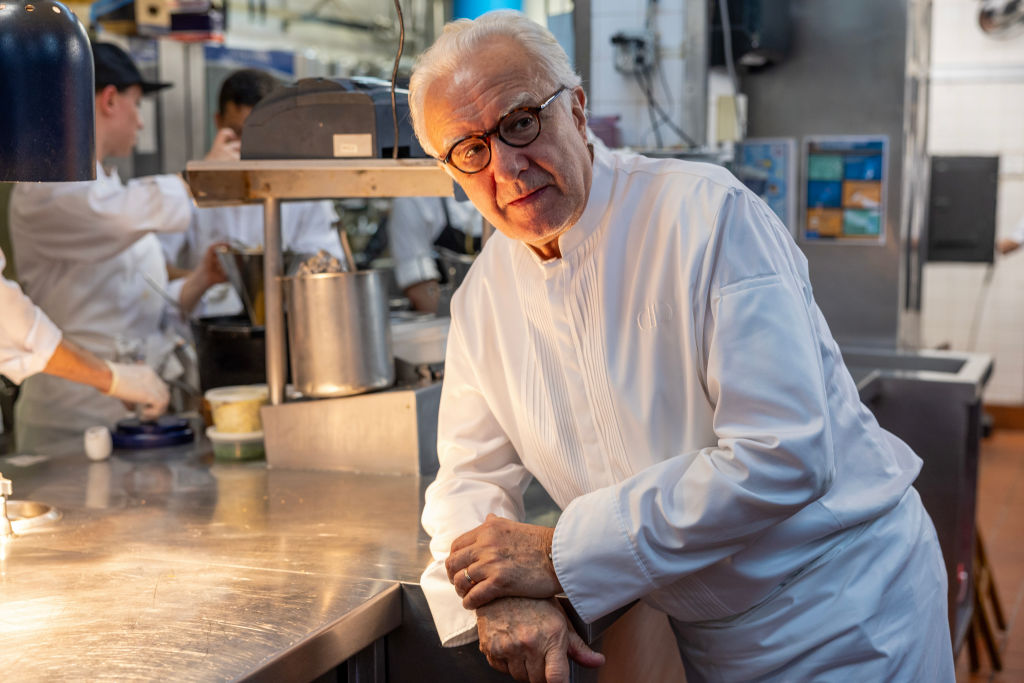
Alain Ducasse tops line-up of star Michelin chefs at Dubai food fair

Gulfood features 50 renowned chefs at this year's five-day event, along with 5,500 exhibitors from 129 countries showing off more than 1 million products

Chef Alain Ducasse at his Benoit New York restaurant (Getty Images)

By
Jonathan H. Ferziger
February 18, 2025
Share
Facebook
Twitter
Email
Add The Circuit on Google

Alain Ducasse leads an all-star line-up of international chefs showing off their signature dishes this week at Dubai’s Gulfood fair, the savory event’s 30th annual edition.

Joining Ducasse – whose restaurants have amassed 21 Michelin stars – are some 50 top chefs including Romain Meder of France, Slovenia’s Ana Roš, Spain’s Ángel León and Swedish-born New Yorker Fredrik Berselius. 

Amid the pop-up kitchens scattered through the vast Dubai World Trade Centre are 5,500 exhibitors from 129 countries showing off more than 1 million products, according to the organizers who promise “invaluable market foresight into the futuristic era of global food commerce.”

The popular exhibition draws tens of thousands of foodies from the UAE and around the world, who can sign up for tours focused on a range of themes including gourmet, alternative proteins and plant-based foods, digitalization & traceability and Made in the Emirates.

Many of the food manufacturers and kitchen appliance companies will exhibit in national pavilions from the U.S., France, Brazil, the U.K., India, Singapore, Japan and Australia. First-time exhibitors are in Dubai from Kosovo, Madagascar, Mauritius and Zambia. Also featured will be a wide array of halal-certified companies, as well as several producing kosher food.

Among the largest companies exhibiting at Gulfood are the Brazilian Beef Exporters Association, Japan Meat & Livestock, the UAE’s Al Ain Farms, Kuwaiti-owned Americana, Dilmah Ceylon Tea, Savenica Fromage & Dairy, Seara Food Europe Holding, TATA International Ltd. and the U.S. Meat Export Federation.

Read More
BUILDING SITE

First phase of NEOM’s city starts construction on Red Sea coast

The megaproject's initial section will stretch 2.5 kilometers in length, rise 500 meters high, and accommodate 200,000 residents in 80,000 homes

Getty Images

Artist illustration model of NEOM's The Line

By
Omnia Al Desoukie
February 17, 2025
Share
Facebook
Twitter
Email
Add The Circuit on Google

Saudi Arabia’s $500 billion NEOM mega-project is getting off the ground.

Speaking at the Public Investment Fund’s Private Sector Forum in Riyadh, NEOM Chief Development Officer Denis Hickey said on Friday that the first phase of its 170 kilometer-long city, The Line, will be built at the Hidden Marina site on the kingdom’s Red Sea coast.

The first segment of the project will stretch 2.5 kilometers in length and rise 500 meters high.

It is expected to accommodate over 200,000 residents in 80,000 residential units, with 9,000 hotel rooms, as well as commercial and retail spaces, fire stations, schools, police and security services.

Read More
MINERAL WEALTH

Saudi Northern Borders region yields growing mineral revenue

The kingdom boasts five phosphate ore sites and has granted 29 active mining licenses as it shifts the economy from dependence on oil revenue

Saudi Arabia's Mansourah Massarah gold mine (Ma'aden)

By
Omnia Al Desoukie
February 17, 2025
Share
Facebook
Twitter
Email
Add The Circuit on Google

Saudi Arabia’s Northern Borders region is emerging as a key driver of economic growth and investment with its $1.2 trillion in mineral resources.

Its phosphate, coal, dolomite, limestone and silica sand deposits have made Saudi Arabia a leading mineral exporter.

The kingdom boasts five phosphate ore sites and has granted 29 active mining licenses, according to government statistics.

Mining and mineral exports have become a central part of Saudi Arabia’s shift from dependence on oil, which aligns with the government’s goal of diversifying the economy and deriving revenue from non-petroleum sources.

Read More
CIRCUIT INTERVIEW

Dubai Future Foundation’s Belhoul goes full speed ahead

In a chat with The Circuit, Dubai’s futurist-in-chief says the city needs to tolerate mistakes if it wants to grow into a center of AI innovation

Khalfan Belhoul, CEO of the Dubai Future Foundation, speaking at the 2024 Davos conference (WAM)

By
Omnia Al Desoukie
February 14, 2025
Share
Facebook
Twitter
Email
Add The Circuit on Google

As this week’s World Governments Summit was wrapping up in Dubai, Khalfan Belhoul’s head was buzzing with all things AI.

Having hosted TIME Magazine’s TIME100 AI Impact Awards Gala at the Museum of the Future on Monday night, Belhoul, CEO of the Dubai Future Foundation, followed it up on Tuesday by signing a partnership pact with IBM Chairman and CEO Arvind Krishna to bolster the use of artificial intelligence tools in the wealthy Gulf financial center.

IBM will also co-publish so-called white papers with the Dubai Future Foundation in April to coincide with the inaugural Dubai AI Week. Belhoul promised more “very interesting announcements” in the coming days that will be “an example for the world.”

As head of a foundation that runs a $300 million venture capital fund and built the city’s iconic Museum of the Future – a massive seven-story elliptical loop with a silvery translucent skin covered in Arabic calligraphy – Belhoul has a challenging mission.

Appointed eight years ago by Sheikh Mohammed bin Rashid, the Ruler of Dubai and Vice President of the UAE, Belhoul was tasked to “imagine, inspire and design Dubai’s future.” To that end, the Boston University graduate with a master’s degree in e-commerce, assembled a team of scientists, researchers and startup investors to plot Dubai’s long-term roadmap.

“If we think that we will get it right every single time, then we will still not be a leading city of the future,” Belhoul told The Circuit. “Our platform has been built for us to pivot and to make mistakes.”

The interview was edited for length and clarity.

Why does Dubai need a special foundation to chart its future?

When the Dubai Future Foundation was set up – I’ll be very frank with you – we had no clue how to set it up. The idea was that we needed to institutionalize future foresight. Fast forward now, around eight to nine years since the formation, we have a foresight team, we have a think tank, and we have an execution team. I think this shows you the balance between staying up to speed when it comes to what’s happening in the future and of course, you know most of the trends – and the hope and the fear at the same time. Whether it’s climate, AI, mobility, you name it. But then, how can you take all that and create a platform that is for the betterment of humanity? This is what we do.

Critics say you’re a dreamer and that many of the DFF’s ideas are unlikely to ever be put into practice. Are they right?

if you look at our projects, you would see that many of them have seen light and become an example for the world. And what I would really say to those people is that if we think this way, we will never be a leading city of the future. If we think that we will get it right every single time, then we will still not be a leading city of the future. Our platform has been built for us to pivot and to make mistakes.

If you look at investors in venture capital and their portfolio of investments in technology, 80 percent of their portfolio goes bust. But it’s that one story that creates history for them that recovers the whole portfolio. So you can see us working in the same way, where we create a safe environment to test and fail – as long as no one gets hurt or injured or nothing serious happens. Then, we double down on the winning bets and set an example for the world.

Look ahead. How will the DFF look 20 years from now?

Very futuristic. Constantly evolving. Our entity should grow in importance – not because I’m part of it, but because having an entity that becomes a think tank for Dubai and for the UAE to share a view on where the future is evolving is always a need because the future will continue to evolve.

And the interesting – I wouldn’t say scary – part is that this evolution is happening at a much faster pace. If you look at the industrial revolutions and the change from one to the other, you realize that the gap between one revolution to the next is shrinking. You see that our phones are advancing dramatically year after year. Let alone the evolution of AI, quantum computing, and robotics. So you can only imagine where we’re heading.

Dubai, Abu Dhabi, Riyadh and other parts of the region are both friendly neighbors and well-financed rivals. How do you address the competition?

One word: Synergy. Second word: Complementing each other. I think Dubai and the UAE – our population is not big enough for a company to scale. Neither is any other Arab country in the world. It’s the whole region that should benefit from this growth. Nowadays, when you set up a business on your phone, with one click of a button, the world becomes your market. So, how do you really connect that world together? Connect the Arab world to ensure that those businesses can scale in a seamless way. And that’s the vision – collaboration, inclusivity, unity – working with one another and creating a bigger impact.

Read More
change agent

Musk talks digging tunnels and cutting budgets at Dubai summit

The founder of Tesla, SpaceX and The Boring Company also signed a draft agreement to dig the foundations for the 'Dubai Loop' rapid transit system

Musk addresses World Governments Summit in Dubai via video feed (Getty Images)

By
Omnia Al Desoukie
February 13, 2025
Share
Facebook
Twitter
Email
Add The Circuit on Google

Offering the UAE an earth-boring contract potentially costing billions and a peek into his budget-slashing activities at the White House, Elon Musk headlined today’s final sessions at the World Governments Summit in Dubai.

Musk, the world’s wealthiest person, appeared on giant screens before the conference’s 6,000 participants, looking like Big Brother with the words, “Tech Support” emblazoned on his black T-shirt.

The 54-year-old chief of X, Tesla, SpaceX and The Boring Company earlier signed a draft agreement with the UAE government to dig the foundations for the “Dubai Loop.” He said the new public transportation system would speed residents and visitors underground across the Gulf financial center that is home to the Burj Khalifa, the world’s tallest skyscraper.

“You just wormhole from one part of the city – Boom! – you’re out in another part of the city,” Musk said, answering questions from Omar Al Olama, the UAE’s Minister of State for Artificial Intelligence, Digital Economy, and Remote Work Applications, as well as Vice Chair of the conference.

Describing his work as head of U.S. President Donald Trump’s newly created Department of Government Efficiency, known as DOGE, Musk said dismantling the U.S. Agency for International Development reflects a new approach: Washington is  “less interested in interfering with the affairs of other countries,” he said.

“Basically, America should mind its own business rather than push for regime change all over the place,” Musk told the crowd, which included at least 30 presidents and prime ministers from across the globe.

Musk was the last in a series of tech leaders from some of the world’s biggest companies who spoke at the government summit. On Wednesday, Oracle’s Larry Ellison and former U.K. Prime Minister Tony Blair teamed up to examine the promise and threats of artificial intelligence.

Ellison, also speaking virtually with Blair onstage in Dubai, said AI will be transformative for governments and a broad range of industries including medicine, agriculture and robotics.

“Countries need to unify their data so it can be consumed and used by the AI model,” Ellison said, warning about the dangers of lax information security. “The digital tools we have right now are so primitive,” he said. “We can easily be locked out of all our data; passwords and data are so easily stolen and ransomed. We need to modernize our systems.”

On the first day of the conference, Robin Li, CEO of China’s Baidu, talked about how the high costs of AI development have forced the world’s second-largest economy to find new computing solutions, including DeepSeek, which has come up with vastly cheaper AI models than those developed by OpenAI, Microsoft and Google.

“You just don’t know when and where innovations come from,” Li said.

Read More
Presidential podium

Trump to address Saudi FII Summit next week in Miami

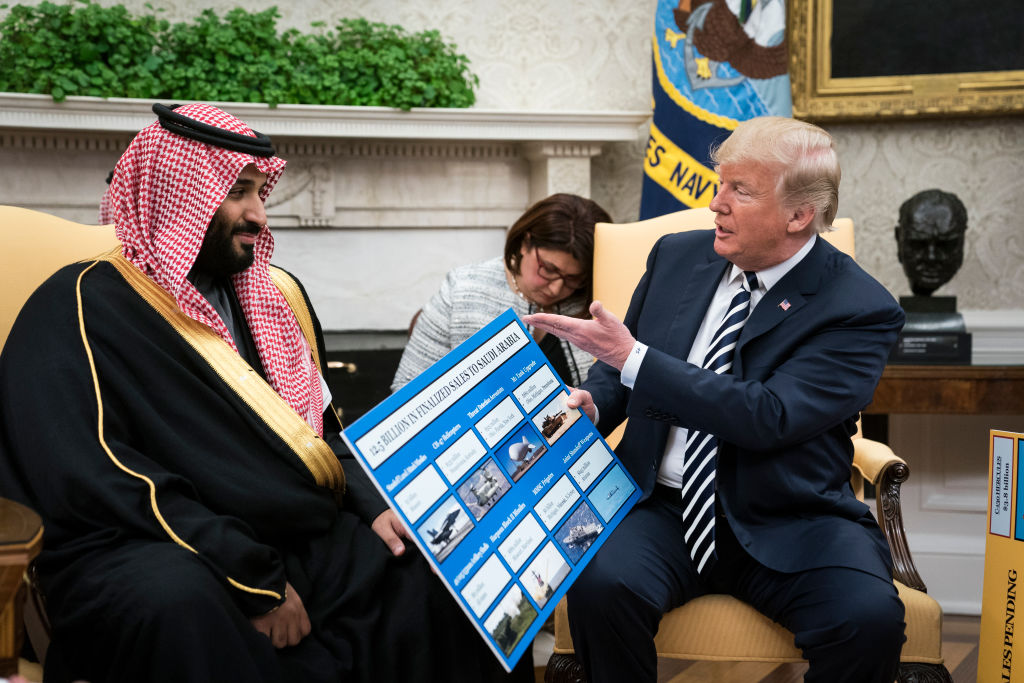
The appearance comes amid Saudi Crown Prince Mohammed bin Salman’s pledge to invest $600 billion in the U.S. Trump said make it $1 trillion

Getty Images

U.S. President Donald Trump met in the Oval Office with Saudi Crown Prince Mohammed bin Salman in 2018

By
Jonathan H. Ferziger
February 12, 2025
Share
Facebook
Twitter
Email
Add The Circuit on Google

Saudi Arabia has lined up U.S. President Donald Trump to headline its annual FII Priority Summit in Miami, Fla., next week.

The kingdom’s Future Investment Initiative Institute announced on Wednesday that Trump will speak at the conference’s opening session Feb. 19 at the Faena Hotel in Miami Beach. 

Among those also scheduled to participate in the three-day event are SoftBank’s Masayoshi Son, BlackRock’s Robert S. Kapito, Oracle’s Safra Catz, Point72’s Steven Cohen and Bridgewater’s Nir Bar Dea. Saudi Public Investment Fund Governor Yasir Al-Rumayyan is the conference’s host.

The Miami conference will take place in the wake of Saudi Crown Prince Mohammed bin Salman’s pledge last month to invest at least $600 billion in the U.S. over the next four years. Trump responded with thanks while suggesting that the kingdom raise its investment to $1 trillion.

Florida is a center of Trump family activities, with the Mar-a-Lago resort in Palm Beach serving as the President’s home between terms in the White House. Trump’s son-in-law Jared Kushner lives with his wife Ivanka Trump and three children on Miami’s exclusive Indian Creek Island. Kushner’s $4.6 billion private equity fund Affinity Partners, which is backed by sovereign wealth funds in Saudi Arabia, the UAE and Qatar, is based in Miami.

Trump’s appearance at the conference also comes amid tension between the two countries after the President proposed that the U.S. take possession of the Gaza Strip. The plan would move some 1.8 million Palestinian residents out of the war-ravaged territory while building resort hotels that would turn Gaza into the “Riviera of the Middle East.”

Saudi Arabia, Jordan, Egypt, the Palestinian Authority and other Arab countries have condemned the Trump plan, saying any Gaza reconstruction effort must not force residents to leave.

Read More
CIRCUIT INTERVIEW

Presight’s data analytics help UAE’s biggest companies conquer AI fears

In an interview with The Circuit, CEO Thomas Pramotedham says the G42-owned firm is working with ADNOC and expanding into the wider Mideast and Africa

Presight CEO Thomas Pramotedham at signing ceremony last year to promote women's profession cycling in partnership with UAE Team ADQ (Presight)

By
Omnia Al Desoukie
February 12, 2025
Share
Facebook
Twitter
Email
Add The Circuit on Google

As the UAE carves out a role in developing artificial intelligence tools with Microsoft, Google and OpenAI, Abu Dhabi-based Presight is harnessing big data analytics to help governments, energy producers and other industrial giants sharpen their performance.

The $3.5 billion company got off the ground less than three years ago as a subsidiary of G42, the UAE’s umbrella AI firm owned by Sheikh Tahnoon bin Zayed’s Royal Group and backed by the Mubadala sovereign wealth fund. Now, after a March 2023 IPO, it’s expanding through acquisitions, most recently buying a majority stake in AIQ, the data arm of national oil company ADNOC.

In an interview with The Circuit on the sidelines of the World Governments Summit in Dubai, Presight CEO Thomas Pramotedham said the company aims to decipher AI for some of the largest state-owned enterprises in the UAE and elsewhere in the Middle East and Africa while breaking down hurdles to wider adoption. Before moving to Abu Dhabi, he was CEO of Esri Singapore, which helped build the city-state’s Smart Nation program using data analytics and digital know-how to improve government services.

“We fear something we don’t understand,” Pramotedham said. “We will continue to evolve AI but also bring other technologies and apply them in an impactful way, where the technology truly hits the ground running.”

The interview has been edited for length and clarity.

The Circuit: How would you describe Presight’s mission and where do you see areas for growth?

Thomas Pramotedham:
In my view, we’re definitely on the cusp of a transformation era. Presight has a very strong foundation in national platforms, applied technology, applied big data analytics and smart cities. And then, you have generative AI coming in for disruption.

We’re a company based in the UAE, focusing on the Global South – countries in Africa, Central Asia, and ASEAN. We focus on applying technology. That’s a key part of it. I believe AI will become more accessible, especially with recent advancements in open-source models that are more efficient.

Presight always operates on a national platform – we’re not really a B2B company. We work with large state-owned enterprises, primarily in Abu Dhabi, as their digital transformation and AI partner. That’s the trajectory I see. We will continue to evolve AI but also bring other technologies and apply them in an impactful way—where the technology truly hits the ground running.

Where does Presight fit in with the global energy transition?

There are two parts of the story. Either the rise of AI, everyone’s talking about where we are going to find the energy to support computing and no less so, buying the chips and creating the infrastructure. So that’s one part of the angle that we put in. The second part is this: the move from current energy transition into renewables is a journey that is taken. Our AIQ venture with ADNOC is really driven by ADNOC ‘s vision of AI in energy and energy for AI. What do I mean by that? AI is going to help the current energy operation transform, optimize, and therefore, they should be able to do more with less – and how do you achieve the requirement that is needed without an increased carbon footprint.

Then on the other side, [with Presight’s power-generation] “IntelliGrid” businesses, it’s really a transition of digitization or transmission and distribution network. So a smart grid, when you put the two together, what we’re expecting to see is soon traditional and renewable energy will interact. So you get two sources of energy providing, whether it’s compute or powering a city. Then what you really need is microgrids that are driven by AI algorithms that regulate this transmission. So really minimizing the wastage of electricity or optimizing, you know, how individual households consume electricity.

What are the key challenges in deploying AI at scale in critical infrastructure sectors like energy?

We are seeing a higher adoption of AI. We did for ADNOC, we launched the ENERGYai Large Language Model. It’s a generative AI workflow that helps optimize reservoir selections, seismic cube analysis, and in many ways, through AI automation, improves ADNOC’s upstream functions and workflows. So, helping energy companies optimize for better energy production.

On the city side, on the consumption of it, to work with cities, like what we’re doing now with Azerbaijan and many other countries, is really introducing a smart grid into the transmission networks that a country has. So it’s the adoption of the two. Of course, not every country. Power is still an issue. Electricity is not accessible to almost 700 million people around the world. But really, how do we bring this transition and make it available to developing or underdeveloped countries? It’s really one of the key ways to bridge the electricity divide – not just the digital divide, but the electricity divide.

How have you been actually limiting the electricity divide?

One is the work we’re doing with Azeri Gas. So, smart meter digitization is a piece of work that I think will continue. Through that, the optimization of transmission and distribution of utilities in the country can be improved. So that’s the work we do with IntelliGrid, our joint venture.

For, like I said, the acquisition of AIQ, it’s creating base models that can help not just large national oil and international oil companies but also small and medium oil companies optimize their operations. Using the models that we’re building with ADNOC, the model is trained on AdNoc, it’s applied to ADNOC. But the foundation model can be taken out to help a medium-sized oil company improve their production, improve their operations.

What impact will your work for ADNOC have on the broader industry?

I think ADNOC is an example of a large energy language model with agentic workflows that is converging with what we’ve seen in the last 18 months. So in 2023 and 2024, you heard a lot about large language models, and then last year, you heard a lot about agentic models. Large language models are foundation models that support broad queries. But when you specialize down to industrial language, that’s where agentic workflows come in.

So I could do the same at ADNOC and financial services. I could do it for the supply chain. I could do it for transportation, and what will happen is you get AI trained in a particular vertical, and from then, you develop different agents that help that vertical optimize itself. For example, the requirements I need in port operations and supply chains are quite different from the models I need in regular multimodal transportation.

Read More

Posts pagination

Prev 1 … 92 93 94 95 96 97 98 99 100 … 154 Next
Navigation
Home
Features
Quick Hits
The Daily Circuit
Org Charts
About
Social
Facebook
Twitter
Instagram
Subscribe
Subscribe

Copyright © 2025 · All Rights Reserved · The Circuit

Sign into your account

Email me a link to sign in

I don't have an account

Sign in or subscribe to continue to read this article

Enter your email and create a password to gain access to our exclusive content

Already a subscriber? Sign in

Unlock full access
Become a premium subscriber

Don't miss out! A paid subscription is required to access this page