







Home
Features
Quick Hits
The Daily Circuit
About
Facebook
Twitter
Instagram
Subscribe
SIGN IN
Features Quick Hits The Daily Circuit SWFs Org Charts
Facebook
Twitter
Instagram
Subscribe
SIGN IN
Search

Quick Hits

alternate route

Egypt offers to transport Saudi crude oil to Mediterranean port

rescue mission

Etihad Rail evacuates stranded UAE travelers across Saudi border

The Daily Circuit:  Etihad Rail’s rescue mission + Aramco avoids Hormuz

financial fallout

Iran attacks roil Mideast markets, though oil impact stays moderate

Economic Partners

UAE and Ecuador seal trade accord with $3B in potential deals

The Daily Circuit:  Gulf markets absorb missile strikes + ADIA divests hotels

STORMY SEAS

Shipping insurers threaten to cancel policies after Iran strikes

risky business

Finance firms reassess Gulf business plans after Iran strikes

The Daily Circuit:  Iran attacks shake Gulf business + ADNOC delays bond issue

WINDY FRONTIER

Masdar to sell 60% stake in Portuguese wind farms to Exus

studio sale

Paramount squeezes out Netflix with Gulf-backed bid for Warner

SHALE PREMIUM

Saudi Aramco launches giant Jafurah shale gas fracking project

The Daily Circuit: Gulf backing wins Warner + Aramco fracking

AI GUARDRAILS

G42 unveils monitoring system to safeguard U.S.-made AI chips

MEGA UNLOCK

Egypt receives $2.3 billion IMF payout after review of reforms

The Daily Circuit: G42 rolls out chip guardrails + EGA exports to U.S.

DREAM ROUTE

Riyadh Air to launch daily flights to Cairo with international push

The Daily Circuit: Oil tanker costs soar + Burjeel debt round

rough seas

Oil tanker daily rates hit $200,000 with Middle East tensions rising

BUDGET blues

Saudi Arabia posts largest quarterly deficit since 2020

Quick Hits

OPEN DATA

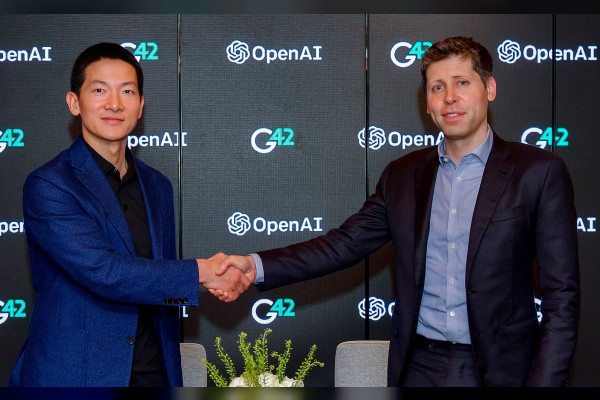
G42 partners with OpenAI to bring ChatGPT tools to the Middle East 

Agreement comes four months after Altman’s visit to the UAE
Emirates News Agency

G42 CEO Peng Xiao shakes hands with Sam Altman, cofounder and CEO of OpenAI, at the signing of a partnership agreement in 2023

October 19, 2023
Share
Facebook
Twitter
Email
Add The Circuit on Google

ABU DHABI, United Arab Emirates – The creator of ChatGPT is working with Abu Dhabi’s biggest artificial intelligence firm to scale up the availability of generative AI tools in the Middle East. 

Mubadala-backed artificial intelligence firm G42 will use OpenAI’s large language models to build new products for clients in sectors where it is already active – financial services, energy and healthcare – and provide infrastructure capacity to support OpenAI’s local and regional inferencing on Microsoft Azure data centers. No financial details of the partnership were disclosed.

“Leveraging G42’s industry expertise, we aim to empower businesses and communities with effective solutions that resonate with the nuances of the region,” Sam Altman, co-founder and CEO of the San Francisco-based company, said in a statement on Wednesday. 

G42 CEO Peng Xiao called the partnership  “a convergence of value and vision.” 

Since becoming available to the public last year, OpenAI’s ChatGPT has inspired a gusher of investment into vast databases and neural networks to mimic human intelligence for commercial gain. 

But the UAE was an early mover on AI. The country is set to reap the biggest economic boost in the region, with AI expected to contribute to 14% of GDP by 2030, according to a PwC study that the government often cites. In 2017 it released a strategic roadmap for integrating the then-nascent technology into its economy and regulation. In 2019, Abu Dhabi opened a dedicated AI research university.

In 2020 G42 became the first UAE company to open an office in tech-heavy Israel after the Abraham Accords were signed, and within a year formed a joint venture with Israel’s state-owned Rafael Advanced Defense Systems to commercialize AI and big data technologies.

G42 is also partnering with Cerebras Systems, which recently built the first of nine AI supercomputers, offering a compelling alternative to the market leader Nvidia. 

The G42-OpenAI partnership comes four months after Altman stopped through the UAE on a global tour that included India, Israel, Qatar and South Korea. During a talk in Abu Dhabi, Altman said the UAE “has been talking about AI since before it was cool.” 

Read More
GREEN GOALS

King Charles III, Gates Foundation, OECD join COP28 coalition to address climate finance gap 

Over 70,000 are expected to attend the UN climate conference opening next month in Dubai

Al Wasl Plaza at Expo City Dubai (Waleed Zein/Getty)

October 19, 2023
Share
Facebook
Twitter
Email
Add The Circuit on Google

Businesses and philanthropic organizations will meet at the COP28 climate conference to debate how the world can raise more than $3 trillion a year in a bid   to reach net zero emissions. 

To lead the event, the COP28 Business & Philanthropy Climate Forum has partnered with the Sustainable Markets Initiative, which was launched by King Charles III at Davos in 2020 before he ascended the throne. Also backing the initiative are the Bill & Melinda Gates Foundation, the International Finance Corporation, the Organization for Economic Cooperation and Development, the World Economic Forum, the Asian Development Bank, Africa Finance Corp. and XPRIZE.

The forum will convene 500 business and philanthropy leaders alongside policymakers, hosted by COP28 president-designate Sultan Al Jaber on Dec. 1 and 2.

“We are committed to hosting a fully inclusive COP, and it would be impossible to do this without the vital input of our business and philanthropy communities,” said Al Jaber, who is also the CEO of  the Abu Dhabi National Oil Co. and chairman of alternative energy company Masdar.  

On the agenda is how the private sector can help address the financing gap of over $3 trillion that scientists and policymakers say is required annually to achieve net-zero emissions, support climate adaptation, reverse nature loss and restore biodiversity.

As mandated by the Paris Climate Agreement, COP28 UAE will deliver the first-ever “Global Stocktake” – a comprehensive evaluation of progress against climate goals. The UAE will also lead a process for all parties to agree upon a roadmap to accelerate emissions reductions and the energy transition. 

The climate meeting will take place at Expo City Dubai from November 30 to December 12. 

The conference is expected to draw over 70,000 participants, including heads of state, government officials, international industry leaders, private sector representatives, academics, experts and youth leaders, according to organizers. 

Read More
NEW DIMENSION

Abu Dhabi wants to sell 3D-printed parts for racing cars and satellites after research breakthrough

This is the first time a Middle East country has contributed a new material to the 3D-printing library

(Marijan Murat/Getty)

Examples of 3D-printed alloy parts for the aerospace sector photographed in Germany. (Marijan Murat/Getty)

October 18, 2023
Share
Facebook
Twitter
Email
Add The Circuit on Google

DUBAI, United Arab Emirates – Abu Dhabi is touting a breakthrough in 3D printing for the automotive and aerospace industries at the massive technology show GITEX in Dubai this week.

Researchers at the Technology Innovation Institute, a government-backed entity for applied research, developed a new patent-pending metal alloy at its additive manufacturing lab, which they say has commercial potential for pistons in racing cars and satellites. 

The additive manufacturing market, known colloquially as 3D printing, was worth $16.8 billion in 2022 and is set to grow nearly threefold by 2027 to $44 billion, according to Research and Markets. Expanding the range of materials that can be used to print parts and withstand high temperatures and other harsh environments is a critical part of building the value of the still-niche 3D field. 

Nesma Aboulkhair, who leads the additive manufacturing team of seven at TII, said this is the first time a Middle East country has contributed a new material to the library in a research domain dominated by the United States and Europe. 

“We are now cultivating the expertise to produce metal powder and design innovative materials, empowering us to manufacture existing alloys and create new ones for both local and global markets,” she said in a statement today. 

AMALLOY, as the material has been dubbed by the TII team, solves long-standing issues faced by the 3D-printing industry to produce metal parts using lasers to melt and fuse powders. Particularly with high-strength metals, cracks and defects are common given the high temperatures of the lasers used in the printing process. The new alloy is more heat-resistant compared to what is currently available.

Venture One, which works to build commercial cases for TII’s research output, is likely to market the new alloy to car, plane and aerospace manufacturers, as well as the oil and gas industry. But these products will not necessarily be mass-produced: at TII, a 5-inch rocket engine prototype part takes about 24 hours to print.

Still, the research hub fits into Abu Dhabi’s overarching industrial strategy,  a 10-year plan that aims to double manufacturing’s contribution to the economy by 2031, which includes increasing infrastructure, bringing down operational costs and improving regulations and access to financing. 

Read More
DEAL FLOW

War should be no barrier to investments, privacy guru says

Focusing on Silicon Valley and Israel, Michael Fertik looks for tight-knit teams that have extraordinary technology and share Chinese food

JONATHAN H. FERZIGER

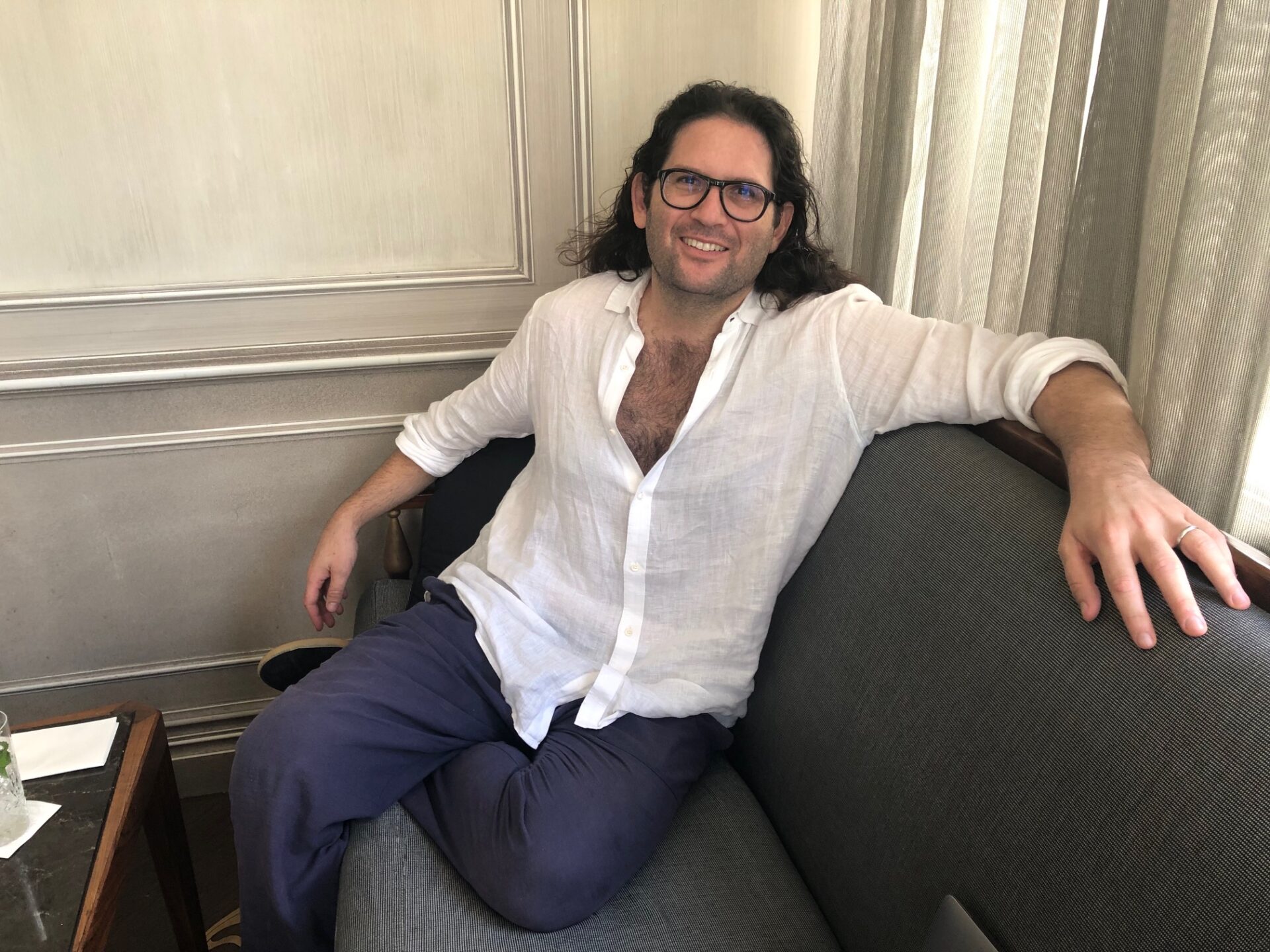
Heroic Ventures founder Michael Fertik at Norman Hotel in Tel Aviv

By
Jonathan H. Ferziger
October 11, 2023
Share
Facebook
Twitter
Email
Add The Circuit on Google

TEL AVIV, Israel – Before internet privacy pioneer Michael Fertik decides to invest in a startup, he hangs out with the founders and pays attention to their table manners.

“If you’re ordering Chinese food and they’re eating from each other’s bowls or plates, that means they’re very close,” said Fertik, a serial entrepreneur and venture capital investor whose firm, Heroic Ventures, funds early-stage companies in northern California and Israel.

Given a unique product with a promising market, few things are more important than a young company’s ability to work as a tight-knit team, Fertik told The Circuit. That’s how he decided to invest in NextSilicon and Sunbit, both so-called unicorns valued at more than $1 billion. It’s why he’s now betting on ProntoNLP, Proov.ai and Exists.ai, three Israeli companies that he’s helped launch at a time that venture capital is scarce.

A native New Yorker who made a fortune in Silicon Valley, Fertik said his willingness to provide “first money” capital for young companies when other investors are pulling back has paid off. As founder of Palo Alto, Calif.-based Heroic Ventures, he has bucked recessionary fears in Israel, criticized capital flight stemming from the government’s judicial reform efforts and dismissed the five-day-old Gaza war as a poor excuse for abandoning tech startups.

“I’m here. I’ll take your deal flow. I’m open for business,” Fertik said, sitting on a sofa at Tel Aviv’s stylish Norman Hotel in mid-September when anti-government protests filled the streets with 100,000 protesters every Saturday night. With dark shoulder-length hair, glasses and a rumpled linen shirt, the 45-year-old investor looks like he just spent a weekend at Burning Man.

Now that Israel’s streets are emptier amid Hamas missile attacks and some investors are fleeing amid expectations of prolonged fighting in the Gaza Strip, Fertik is steadfast.

“Yes, I will continue investing in Israeli startups,” he wrote in a LinkedIn post this week. “Yes, all or nearly all the Israeli startups in which I’ve invested have already felt the impacts of Hamas’s psychotic medieval terror…. Yes, Israel’s future is bright and brighter.”

Fertik grew up in a Jewish family on New York’s Upper West Side in a building above Murray’s Sturgeon Shop, a hallowed temple for bagels and lox. His connection to Israel dates back to age 5 when his father, Oscar-winning movie director William Fertik, was hired in 1983 to make a television commercial promoting Israeli tourism. “Come to Israel. Come stay with friends,” the tagline went.

Fertik went to prep school at New York’s Horace Mann and college at Harvard, continuing on to Harvard Law School, where he now lectures on the legal aspects of digital privacy and entrepreneurship. He is the author of several books, including “Wild West 2.0: How to Protect and Restore Your Reputation on the Untamed Social Frontier,” and “Hip Set,” a noir novel about an African immigrant in Tel Aviv.

As the internet became central to people’s lives at the turn of the century, Fertik said he was disturbed at how damaging personal information could be when accessible online. In 2006, he founded reputationdefender.com, which enabled people to have bad news scrubbed from social media. He sold the company to Norton in 2018, retaining part of the firm that catered to business, which he named simply, Reputation.

“There came a time when, you know, a very rich person who was getting divorced was like, ‘I’ve done all this stuff in my life. How about the real estate deals that I do and the hedge funds that I’ve built and the companies I built? Why is it the only thing that people care about is the New York Post article from Florida about my divorce?’”  Fertik said. “That was something I was sympathetic to. It was something we could change and work on very actively.”

Now executive chairman of Reputation, which has grown to 600 employees, Fertik has gotten more involved in helping new tech companies get off the ground. Heroic Ventures generally provides about $1 million to startups that meet Fertik’s investment criteria. Those include his insistence that the founders and top executives live and breathe close teamwork.

“One of the things that Israel does very well is team formation,” Fertik said, describing his Chinese food test. “The founders tend to know one another while they served in the army together. They’ve collaborated closely under difficult conditions. They’ve been through adversity together.”

“That is much better than a marriage of convenience at Harvard Business School, where [people say], ‘You’re a good-looking person. I’m a good-looking person. Let’s form a company,’” he said.

The other critical factor he looks for is “total addressable market” or TAM, a measure for determining the entire revenue potential that exists within a market for a product or service. Most of the tech firms Fertik looks at are at a stage where they have little revenue yet so the projections are important. “I look for extraordinary teams and TAM,” he said.

Among the budding companies in his portfolio that get Fertik excited is exists.ai, which enables people to use artificial intelligence and create realistic moving landscapes for computer games they develop themselves. On the website, you’re taken on a super-fast ride with cowboys through an animated rainforest. Then the scene is instantly transformed into a deathmatch on a rocky island with zombies.

“I’m a little bit enthralled,” Fertik said. “You can allow every single kid or adult playing computer games to generate his or her own territory automatically from a typed prompt. Imagine the amount of entertainment, the amount of creativity that will be unleashed by allowing people to create their own games.” His 10-year-old son, who went to summer surfing camp in Israel, was immersed in the site, he said.

Less colorful but more profitable for now is ProntoNLP, which uses natural language processing and AI to sort through enormous amounts of financial data and give investors tightly crafted analysis they need to make buy and sell decisions.

“They’re selling this to some of the best hedge funds in the world,” Fertik said. “And it works and it’s extraordinary and they’re paying gobs of money for it, and it’s like, two and a half guys in Israel using cutting-edge AI.”

Founder Ronen Feldman, a data science professor at Hebrew University in Jerusalem, said Fertik knows both how to help and when to step aside.

“I’ve worked with a lot of VCs before and most of them are really nasty,” he said. “They bring zero value and interfere with running the company. Michael gets it. He is sharp. No nonsense.”

Read More
HEALTH CHECK

High quality of care and tech makes Abu Dhabi attractive for health start-ups: Isaac Applbaum

The cofounder and general partner of Israel VC firm MizMaa Ventures spoke at Forbes Middle East Healthcare Summit today

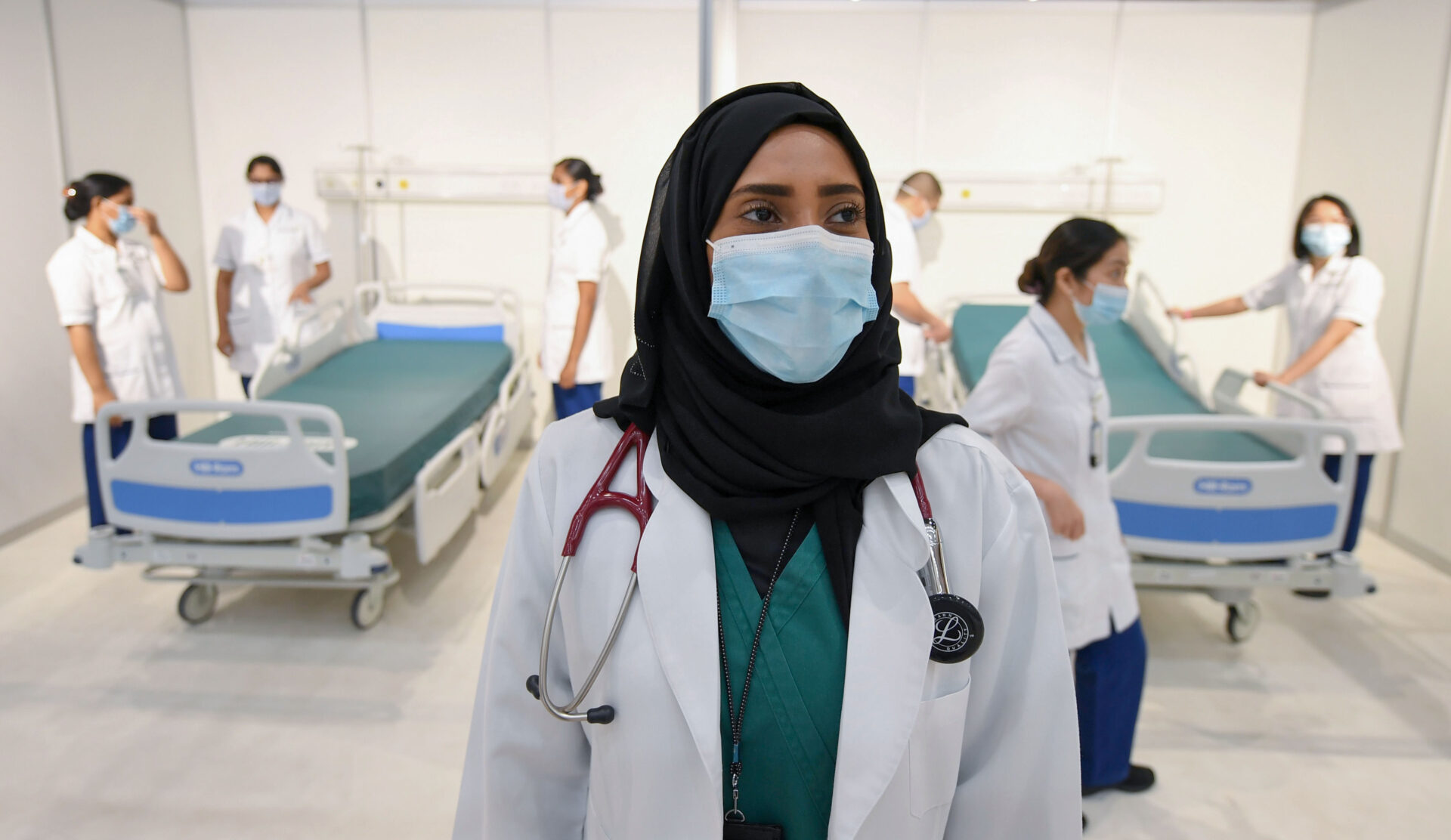
An Emirati doctor looks on as a nursing staff prepares bedsin the UAE during the Covid-19 pandemic. (KARIM SAHIB/AFP VIA GETTY)

October 10, 2023
Share
Facebook
Twitter
Email
Add The Circuit on Google

ABU DHABI, United Arab Emirates – Abu Dhabi’s massive investments in healthcare and technology make it a prime market for “patient-centric” healthcare startups looking to reach new markets, according to venture capital investor Isaac Applbaum.

The cofounder and general partner of MizMaa Ventures, an early-stage deep tech fund with headquarters in Tel Aviv and offices in San Francisco and Hong Kong, said he is looking at what portfolio companies can “leverage the high quality of care and the high quality of technology, so I’m going to look at things that are patient-centric” to introduce to Abu Dhabi. 

“I’ve been investing in the region for a very long time. If I may just say, with the Abraham Accords, things have just opened up in an extraordinary way,” he said. 

Applbaum, speaking at the Forbes Middle East Healthcare Summit in Abu Dhabi, said in the current risk environment founders must get products to market as fast as possible.

“Particularly in the digital health space, and the device space, and in healthcare, understanding how you get your product to market as quickly as possible, how you solve problems that aren’t 100 years away, but are actually solvable problems now,” he said.

“It’s really important: you need to be capital efficient… how you’re going to make your money back becomes way more important than it ever was, because it’s much more difficult.”

Read More
SOVEREIGN REPORT

ADIA boosts private equity as it seeks opportunities in challenging market

The Mideast’s largest sovereign wealth fund revealed a flat rate of return and increased exposure to China data centers in its 2022 annual report

The ADIA building on the Corniche in the UAE's capital. (ANDREW HOLBROOKE/GETTY)

October 10, 2023
Share
Facebook
Twitter
Email
Add The Circuit on Google

ABU DHABI, United Arab Emirates – Sovereign wealth fund Abu Dhabi Investment Authority is increasing its allocation in private equities and eyeing investment opportunities in energy transition and technology. 

ADIA, which re-invests oil revenues outside the UAE on behalf of the Abu Dhabi government in equities, fixed income, infrastructure, private equity and real estate, released its 2022 annual report today. The fund increased the allocation range for private equity to 10%-15% of the total portfolio, from 7%-12% in 2021. 

The sovereign wealth fund, the biggest in the Gulf and fourth-largest in the world, has estimated assets of $993 billion, according to Global SWF, a figure that is more than four times the size of Abu Dhabi’s economy in 2022.

As of December 31, 2022, Adia’s 20-year and 30-year annualized rates of return, on a point-to-point basis, remained flat: 7.1% and 7% respectively, compared with 7.3% and 7.3% in 2021, according to the report.

ADIA is finding public equities are more attractive after the 2022 market correction, spurred by high inflation and increased interest rates. It is also looking at the private credit market amid a more cautious lending environment, according to Managing Director Hamed bin Zayed Al Nahyan. 

“Equities – both public and private – should continue to find support, especially if profitability remains resilient despite lingering tensions in supply chains and the availability of labor,” Al Nahyan wrote in the report.

Remarking on the challenging economic environment, Al Nahyan singled out infrastructure and the energy transition as investment opportunities.

“The new landscape may also increase the appeal of physical assets and alternative approaches that are better suited to managing inflation risk. One positive consequence of this trend may be greater alignment between investment goals and societal imperatives. Over time, global investors have played a vital role in supporting and accelerating social progress and this is expected to continue. One example is investment in infrastructure projects, where estimates suggest that more than $3 trillion a year is needed to support global economic growth aspirations and provide citizens with essential services. Importantly, this includes ventures aimed at accelerating the energy transition.”

“Looking ahead, [private equity] is positioning for the continued growth of private equity markets including private credit as an increasingly important alternative to traditional bank lending,” according to the report.

The fund, which rarely discloses asset activity, outlined some of its private equity transactions last year, reporting a “roughly equal” allocation between direct investments and funds, alongside an increased allocation to secondaries. 

ADIA’s private equity department completed 24 direct investments of more than $150 million, in line with 2021. In industrials, ADIA supported the merger of e-commerce and logistics automation firms MHS Global and Fortna. It also acquired a stake in Emerson’s Climate Technologies, a leading player in HVAC and refrigeration end-markets. 

In financial services, the department “continued to focus on multiple themes, including insurance brokers and digital transformation, while remaining mindful of valuations in the sector.” 

The department led the funding round of US insurance broker Acrisure. It also invested in Merchants Fleet, a leading provider of fleet management services. 

ADIA revealed a “more difficult” period for consumer private equity. Despite this, the department invested in AmeriVet, which partners with veterinarians across the U.S., and in McWin, a platform of European quick service restaurants. 

In healthcare, ADIA made private equity investments in China including American Sino, a provider of premium private healthcare services; Taibang, a provider of bloodplasma products in China; and early stage biotech company Sironax. 

ADIA also noted an increase in take-private transactions, including that of U.S. Zendesk, a provider of software for customer service management. 

The fund has undergone a restructuring over the last several years, Reuters reports, combining middle and back office activities and centralizing processes. Last year, it separated its infrastructure and real estate investment teams into standalone departments.

The changes have resulted in a reduction in its workforce to 1,380 at the end of 2022, the report showed, down from 1,520 reported in its 2021 review.

ADIA is also building out a quantitative research and development team to integrate artificial intelligence and investment decisions. It currently has more than 50 on this unit’s staff and is still recruiting, the report said.

Read More
DOOR'S OPEN

Saudi Arabia’s $800 billion tourism plan starts to take shape

With a target of 200 hotels at its mega-project Neom and a new hospitality school, the kingdom is charting its path to 70 million visitors a year

THOMAS SAMSON/AFP VIA GETTY IMAGES

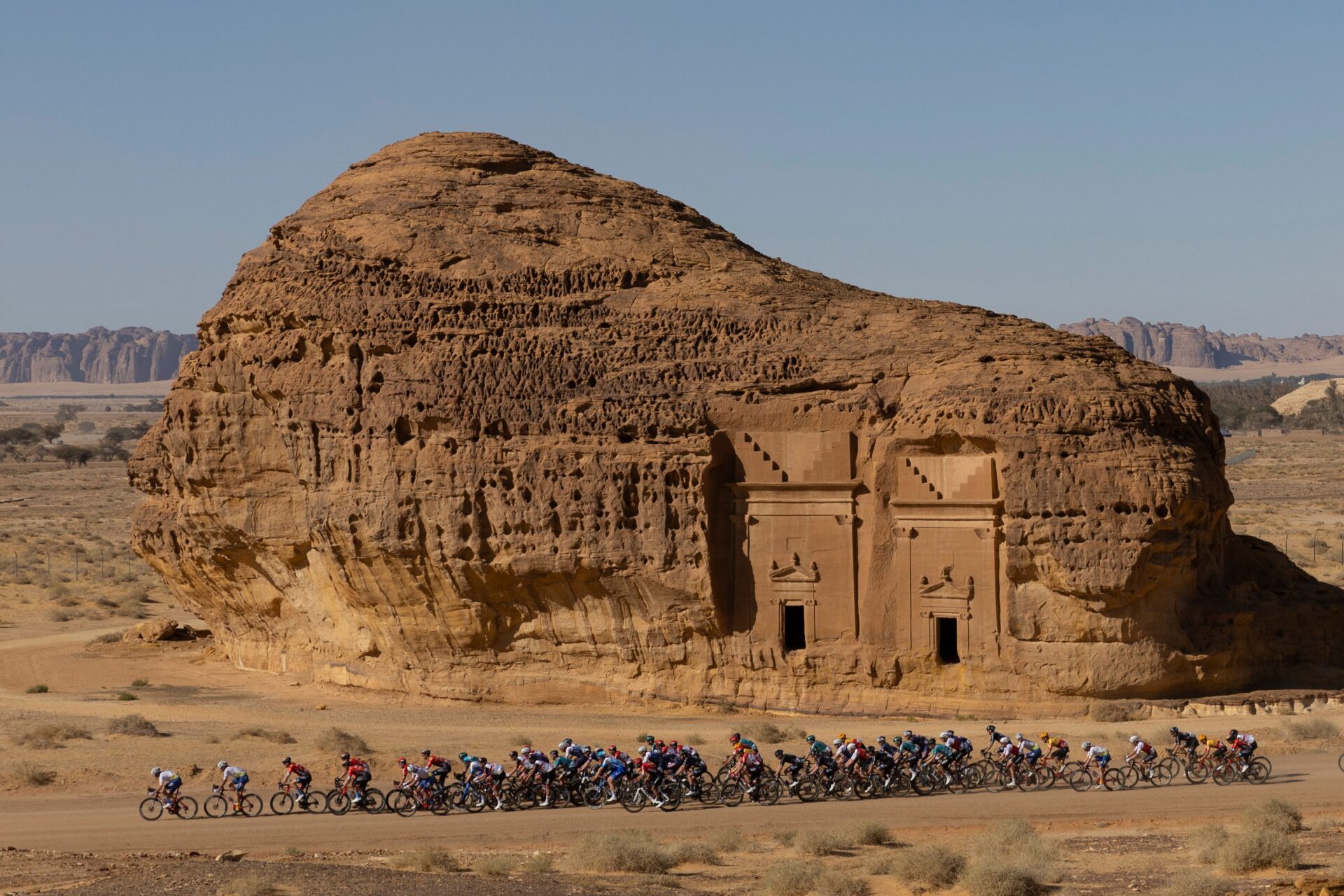
Cyclists on Saudi Tour pass Al-Hijr archaeological site

October 2, 2023
Share
Facebook
Twitter
Email
Add The Circuit on Google

RIYADH, Saudi Arabia — Four years after opening up to international tourists for the first time, Saudi Arabia marked progress on its massive $800 billion investment drive to lure travelers as it played host to the United Nations’ World Tourism Day. 

Riyadh welcomed over 500 government officials, investors, international press and U.N. delegates from 120 countries last week to underscore the importance of the global tourism industry. The occasion was also an opportunity for Saudi Arabia to set out more bold plans for its young tourism sector as it seeks to diversify its economy beyond oil revenues.

“If you want to introduce your country to the world, then tourism is the best way to do it,” Zurab Pololikashvili, secretary-general of the U.N. World Tourism Organization, said during a  roundtable discussion. 

Neom has signed around 18 hotel deals – including with luxury brands like JW Marriott, The W and German boutique concept 25Hours – and has a target of 200 total, most of them to be built on The Line, a spokesperson for Neom Hotel Development told The Circuit. 

First unveiled by Crown Prince Mohammed bin Salman in 2017, Neom is a $500 billion mega-project in the northwest of the country along the Red Sea coast, with construction underway on a variety of zones such as a mountain ski resort, an island getaway, a major port and a city-of-the-future concept known as The Line, where the majority of the hotels will be built. 

The flurry of deals in Neom marks a shift for the kingdom, which has always catered to  Muslim pilgrimage tourists. The majority of hotels currently open in Saudi Arabia are centralized in Medina adjacent to the holy site of Mecca. 

Saudi Arabia’s Minister of Tourism Ahmed Al-Khateeb announced the creation of the Riyadh School for Tourism and Hospitality to build a pipeline of talent to staff the fast-growing industry. Set to open in 2027, it will cost more than $1 billion to build and be located in the capital’s entertainment and tourism project known as Qiddiyah.

Pololikashvili also announced the creation of a center for the study of sustainability — of which the UNWTO was working closely with officials in the kingdom to accomplish. The program is due to be launched in September and will offer a bachelor’s degree program with students spending time pursuing studies in Madrid, Spain and the Swiss city of Lucerne. 

Al-Khateeb said the kingdom will invest $800 billion to develop tourism over the next decade as the contribution of travel and tourism to the nation’s economy begins to pick up pace. The goal is for the sector to contribute up to 10% of gross domestic product  by 2030, up from a current 4.5%.

The kingdom has also raised  its tourism targets, setting a goal of attracting 70 million international visitors annually by 2030, up from 50 million, Bloomberg reported.  

Among the various delegates in attendance at World Tourism Day was Israel’s Tourism Minister Haim Katz, who arrived in the kingdom on Tuesday, becoming the first Israeli minister to lead a delegation to Saudi Arabia. The visit comes at a time when Israel and the kingdom are moving closer towards a U.S.-brokered normalization deal.

Pololikashvili said Saudi Arabia was obliged to admit the Israeli minister for the U.N. event even though the two countries don’t have diplomatic relations. “All our member states are invited to take part in our events – independently of where they are held,” Pololikashvili told The Circuit.

Read More
PLUGGING IN

Can Lucid jump-start the electric vehicle industry in Saudi Arabia?

Though fewer than 1% of cars on the road are electric, the kingdom is setting an ambitious target for 2030 of 30% as it tries to shift the economy from oil

AMER HILABI/AFP via Getty Images

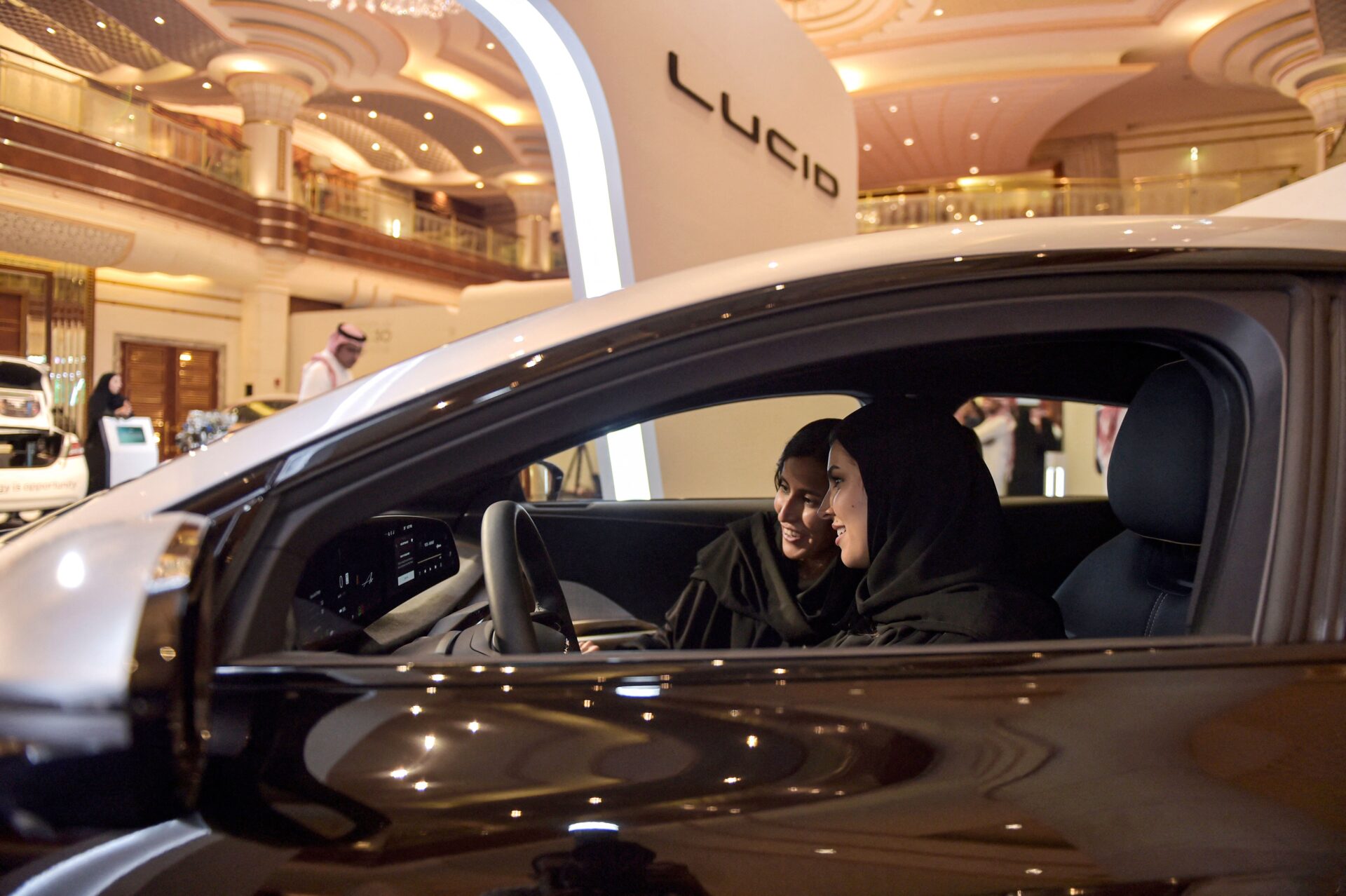
A Lucid Motors electric vehicle shown at the KSA Green Transition Journey exhibition in Jeddah. (Photo: Getty Images)

October 2, 2023
Share
Facebook
Twitter
Email
Add The Circuit on Google

Saudi Arabia’s push to develop an electric vehicle industry took a step forward last week when California-based Lucid Motors opened the kingdom’s first automobile factory. 

With initial plans to assemble 5,000 EVs a year at its new plant outside the western port city of Jeddah, Lucid expects to boost that number to 155,000, underlining Saudi Arabia’s ambition to become a significant manufacturer. It would be a major leap as much for the country as for the luxury carmaker, which produced 7,180 vehicles last year at its sole factory in Casa Grande, Ariz., hampered by supply chain issues and recalls. By comparison, Elon Musk’s Tesla sent almost 1.4 million cars off its assembly lines in the U.S., Germany and China last year. 

Riyadh is looking to supply the domestic market but also to transform the kingdom into a regional car hub as it diversifies its economy beyond oil revenue – and it’s looking beyond Lucid to meet its aims. 

While the kingdom’s Public Investment Fund has put a total of $5.4 billion into the loss-making Lucid to become its largest shareholder, the government has also signed a $5.6 billion deal with China’s Human Horizons to develop and manufacture EVs. Meanwhile, major players from Hyundai to Peugeot have already said they see a road to Middle East manufacturing and sales of EVs running through Saudi Arabia.

Market research firm Mordor Intelligence valued the EV market in the Middle East and Africa at $2.7 billion this year, dominated by Tesla, Volkswagen, BMW, Nissan and Hyundai but estimates it will grow to $7.65 billion by 2028. 

The kingdom is eyeing the domestic development of EV parts both for home and export as well. PIF, Saudi Arabia’s sovereign wealth fund, and Taiwanese manufacturing giant Foxconn founded the Saudi electric car company Ceer Motors in 2022 and the pair is in talks to build a $9 billion plant to manufacture microchips and electric-vehicle components. 

While the new Lucid plant will see workers reassemble premade American-designed and built “kits,”, the kingdom is planning to domestically design and manufacture EVs as part of its Vision 2030 reform program to shake up almost every sector of the society and economy over the next seven years under Crown Prince Mohammed bin Salman. 

“As Saudi charges toward its Vision 2030, our facility will pave the way for the country’s electric automotive industry and the expansion of the supply chain, and with the support of the Saudi Government, we are proud to drive local talent development in the technology industry,”  Peter Rawlinson, CEO and chief technology officer of Lucid Group, said at the opening of the plant in Jeddah on Wednesday. “We look forward to delivering Saudi-assembled cars to customers in Saudi Arabia and beyond.”

But Saudi Arabia will face strong global competition in EV manufacturing and regional challenges from long-established car industries in Morocco and Turkey; the latter says its membership in the EU Customs Union gives it a strong advantage. 

While the kingdom plans on 30% of car sales to be EVs by 2030, it may face consumer hesitation. Gasoline is subsidized at $2.35 a gallon this month – compared to an average $3.85 in the U.S. – and less than 1% of passenger car sales are currently electric. 

Another major speed bump is a lack of charging infrastructure as well as maintenance and specialized technical knowledge.

However,  the government launched the Saudi Electrical Vehicle Charging Infrastructure Development Initiative in 2021 with the target of 50,000 charging stations across the nation by 2025. 

A poll by General Motors and Morningstar in June 2023 found that 63% of Saudi respondents were “strongly considering” a future EV purchase but only 1 in 5 said that they knew of a charging point in a convenient location for home or work. 

The same poll found that knowledge of EVs in the kingdom was already very high, no doubt boosted by some of the kingdom’s flagship projects like the NEOM McLaren Electric Racing team competing in the Formula E championships as well as the off-road all-electric Extreme E race.

While the kingdom is aiming for net zero by 2060, most respondents to the survey said that it was the cost of fuel, potential savings and the improvement in available EV options that was driving them to look at buying an electric car. 

Read More

Posts pagination

Prev 1 … 101 102 103 104 105 106 107 108 109 … 115 Next
Navigation
Home
Features
Quick Hits
The Daily Circuit
Org Charts
About
Social
Facebook
Twitter
Instagram
Subscribe
Subscribe

Copyright © 2025 · All Rights Reserved · The Circuit

Sign into your account

Email me a link to sign in

I don't have an account

Sign in or subscribe to continue to read this article

Enter your email and create a password to gain access to our exclusive content

Already a subscriber? Sign in

Unlock full access
Become a premium subscriber

Don't miss out! A paid subscription is required to access this page