











Home
Features
Quick Hits
The Daily Circuit
About
Facebook
Twitter
Instagram
Subscribe
SIGN IN
Features Quick Hits The Daily Circuit SWFs Org Charts
Facebook
Twitter
Instagram
Subscribe
SIGN IN
Search

Quick Hits

REAL TEST

Dubai’s property market put to test in missile barrage from Iran

risky waters

Shipping giants freeze container traffic amid rising Gulf threats

The Daily Circuit: Container ships stuck in Gulf + ADIA, QIA invest in Softbank unit

alternate route

Egypt offers to transport Saudi crude oil to Mediterranean port

rescue mission

Etihad Rail evacuates stranded UAE travelers across Saudi border

The Daily Circuit:  Etihad Rail’s rescue mission + Aramco avoids Hormuz

financial fallout

Iran attacks roil Mideast markets, though oil impact stays moderate

Economic Partners

UAE and Ecuador seal trade accord with $3B in potential deals

The Daily Circuit:  Gulf markets absorb missile strikes + ADIA divests hotels

STORMY SEAS

Shipping insurers threaten to cancel policies after Iran strikes

risky business

Finance firms reassess Gulf business plans after Iran strikes

The Daily Circuit:  Iran attacks shake Gulf business + ADNOC delays bond issue

WINDY FRONTIER

Masdar to sell 60% stake in Portuguese wind farms to Exus

studio sale

Paramount squeezes out Netflix with Gulf-backed bid for Warner

SHALE PREMIUM

Saudi Aramco launches giant Jafurah shale gas fracking project

The Daily Circuit: Gulf backing wins Warner + Aramco fracking

AI GUARDRAILS

G42 unveils monitoring system to safeguard U.S.-made AI chips

MEGA UNLOCK

Egypt receives $2.3 billion IMF payout after review of reforms

The Daily Circuit: G42 rolls out chip guardrails + EGA exports to U.S.

DREAM ROUTE

Riyadh Air to launch daily flights to Cairo with international push

Quick Hits

CONNECTING WOMEN

Moroccan conference draws MENA’s female business leaders

Gathering in Marrakesh brings together women from North Africa, the Gulf and Israel to develop networks and confront shared challenges in the region
START-UP NATION CENTRAL

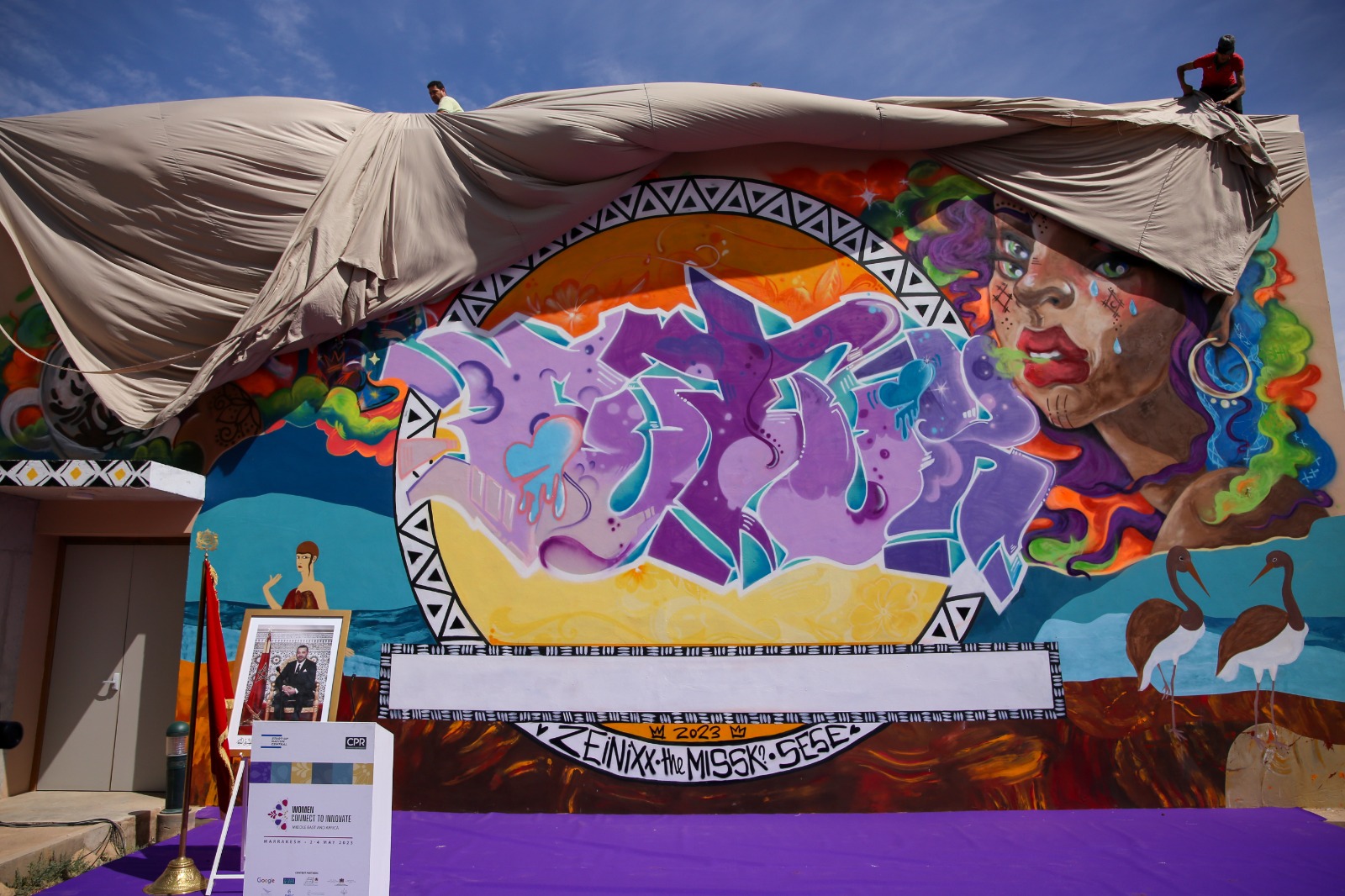
Graffiti wall at Marrakesh conference painted by artists from Morocco, Senegal and Israel

By
Jonathan H. Ferziger
July 10, 2023
Share
Facebook
Twitter
Email
Add The Circuit on Google

In a bid to strengthen normalization efforts across the Middle East and North Africa, Morocco, Bahrain, the United Arab Emirates and Israel are promoting business ties among women.

The most recent joint activity was a three-day conference in May that took place in Marrakesh, Morocco, and drew nearly 100 female business leaders. Besides networking, the gathering explored women’s access to education, financial security and opportunities for leadership. In a series of panel discussions and workshops, the conference focused on investments, corporate funding and infrastructure development. Participants also discussed shared challenges for women in the Middle East and Africa and the impact of geography, culture and religion.

The conference was organized by Start-Up Nation Central, a nonprofit organization  that promotes Israeli tech companies, and Morocco’s Consensus Public Relations firm. 

Among the participants were women from Bahrain, Benin, Egypt, Israel, Jordan, Kenya, Morocco, Nigeria, South Africa, Sudan, United Arab Emirates and the U.S., organizers said.

“What we were hearing often is that these women, particularly in the countries that we targeted, are often alone around decision-making tables,” Aviva Steinberger, SNC’s director of innovation diplomacy, told The Circuit. “The goals of this event were to connect these women at a professional level and at a personal level.”

The conference, which was titled “Women Connect to Innovate,” was supported by a range of companies and organizations including Google, Women in Tech, Morocco’s Foundation for Research, Development and Innovation in Science and Engineering and the Mohammed VI Polytechnic University.

Among the participants from Israel was Justine Zwerling, who heads the Middle East branch of Shore Capital Markets and was a founding member of the Gulf-Israel Women’s Forum. Morocco’s minister of solidarity and social integration, Aawatif Hayar, hosted a dinner for the conference. While the workshops were going on, three artists from Morocco, Israel and Senegal created a graffiti wall dedicated to women’s solidarity and international cooperation.

The event followed up on a larger conference organized last year by SNC that focused on developing ties between Moroccan and Israeli technology startups, particularly those addressing health, agriculture and climate technologies.

During the 2022 conference, companies and organizations from the two countries signed 13 memorandums of understanding: Israel’s Watergen, whose technology extracts water from air, signed a distribution deal with Morocco’s Waman Solutions; Israel’s Mehadrin formed a partnership with Adolam under the name “Global Farming Morocco” to grow and export avocados; and Israel’s Alma Lasers signed with Casablanca-based Guess Clinic to bring Alma’s aesthetic surgery devices to the Moroccan market.

Israel and Morocco maintained low-key business and diplomatic ties for years until agreeing to normalize relations under the Abraham Accords in December 2020. Many Israelis come from Moroccan descent and are estimated to number close to 1 million. André Azoulay, a prominent Jewish businessman in Morocco and senior adviser to King Mohammed VI, presented SNC with an award for its contributions to technological cooperation between the two countries.
Read More
BOUND FOR DUBAI

AllianceBernstein joins UAE’s new wave of investment firms

U.S. money manager to open office at Dubai International Financial Centre, catering to clients throughout the Gulf and across the broader Middle East

Sylvain Sonnet via GettyImages

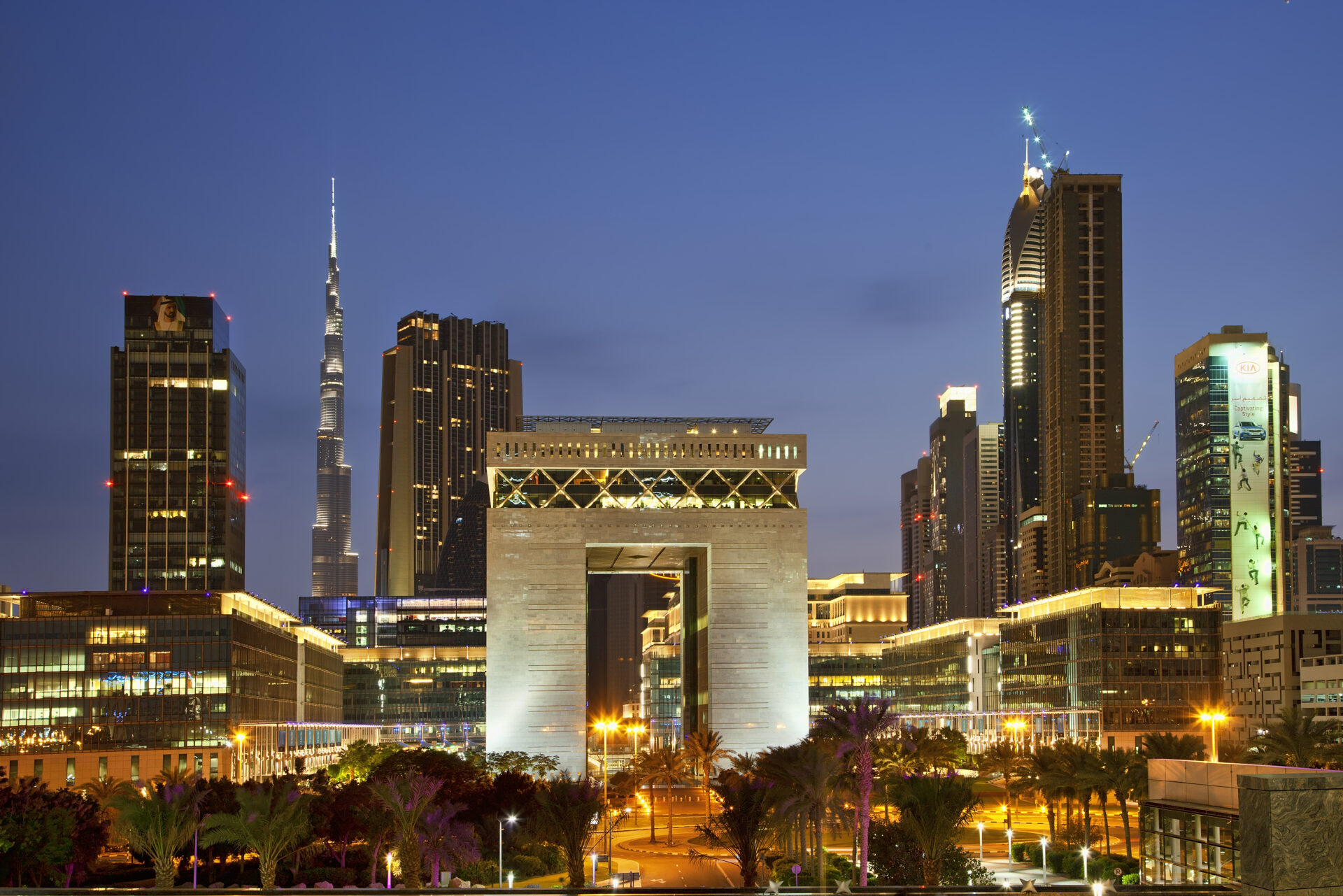
Dubai International Financial Centre

By
Jonathan H. Ferziger
July 10, 2023
Share
Facebook
Twitter
Email
Add The Circuit on Google

AllianceBernstein, one of the largest U.S. asset managers, plans to open a regional office in the United Arab Emirates to tap into the rising tide of investments flowing through the Gulf.

The Nashville, Tenn.-based firm, which has $676 billion in assets under management, said last week that it received a regulatory license to operate in the Dubai International Financial Centre, a special economic zone within the UAE’s largest city. More than 300 asset- and wealth-management firms have offices in the DIFC.

The new office will be led by Jean-Paul Hobeika, managing director for Middle East institutions, who was named senior executive officer, AllianceBernstein said. He will work with Eduard van Nes, head of intermediary sales for the Middle East and Africa, who recently moved to Dubai. The firm, which employs 3,000 people at 45 offices around the world, has an Israeli branch in Tel Aviv.

Setting up in the UAE will spur AllianceBernstein’s regional growth and “improve our ability to serve clients through proximity as well as capturing important market opportunities,” said Willem van Gijzen, head of Central Europe, Middle East and Africa institutions at the firm. The new office will target institutional clients, distribution partners and family offices with its asset management services, the firm said.

A proliferation of mergers and acquisitions across the Gulf, as well as the inflow of money from Russians relocating because of international sanctions have bolstered financial and property markets in the UAE. The country’s sovereign wealth funds now manage more than $1.5 trillion in assets.

Capital inflow to the UAE rose by 10% last year to $23 billion, according to government records. Investment banks and asset management firms have also been opening new offices in Saudi Arabia, which has made establishing local branches a prerequisite for government business. The World Bank raised its growth forecast for the UAE to 3.4% from 1.1%, based on higher oil output, recent economic reforms and new investments.

Arif Amiri, CEO of the DIFC Authority, said AllianceBernstein’s “commitment to the region is testament to Dubai’s strategic position at the center of the world, providing the firm with access to $8 trillion of private wealth across the Middle East, Africa and South Asia.” The DIFC said in February that some 50 international hedge funds have applied for licenses to open in its independently regulated district.

Read More
DRY WELL

Recovery in tech investment leaves Israeli startups behind

Fundraising by Israeli companies at midyear drops to lowest since 2018 as industry reports show gap widening with U.S. in financing and stock prices

JACK GUEZ/AFP via Getty Images

Israeli startups promote their products at investor conference in Tel Aviv

By
Jonathan H. Ferziger
July 3, 2023
Share
Facebook
Twitter
Email
Add The Circuit on Google

TEL AVIV, Israel – Israel’s tech industry is lagging behind the U.S. and Europe in attracting venture capital amid breakthroughs in artificial intelligence that are generating renewed investment in startups, according to three new reports.

Companies in Israel raised $3.7 billion in the first six months of 2023 – the lowest amount of technology investment at the midyear point since 2018, according to a survey by the Start-Up Nation Policy Institute. That represents a 68% drop in financing from the same period last year.

Drilling down further, a report by the IVC research center, an industry group, and Bank Leumi’s LeumiTech unit indicated that the 100 fundraising deals recorded in the second quarter of 2023 represented a 48% decline from the corresponding period last year. Second-quarter funding was down 65% from the same quarter in 2022.

The SNPI report suggested that perceptions of instability in Israel stemming from government efforts to overhaul the judicial system and widespread protests against the proposals continue to chill investment.

“We are concerned that local unrest could cut off Israel’s high-tech industry from the global technology sector’s recovery, making it less competitive during this crucial time,“  the policy institute said.

The government’s Israel Innovation Authority added its own note of caution in a midyear report, citing a recovery by technology stocks in the U.S. that has not included Israeli companies. The Nasdaq 100 technology sector index rose 23.7% in the first quarter, compared to Israeli companies on the Nasdaq that increased only 10.8%.

“In light of the increase in the NASDAQ since the beginning of the year, the normal expectation would have been for an increase in fundraising and employee recruitment in Israel already during the summer months of 2023,” the government report said. “However, according to indicators presented so far, and which are reinforced by data for April and May, there is a genuine concern that Israeli high-tech will become detached from global trends.”

Israel’s success in spawning technology companies was enshrined in a 2009 book by Saul Singer and Dan Senor called Start-Up Nation. Technology has anchored Israel’s economy for the past three decades, now accounting for 15% of GDP, 50% of exports and 25% of tax income.

Tech company founders have been among the leaders of the protest movement against the proposed judicial measures, arguing that foreign funds are afraid their investments won’t be safe in Israel if the court system is the government controls the courts.

Moody’s Investors Service downgraded the country’s credit outlook in May from positive to stable, citing a “deterioration of Israel’s governance.” A month later Standard & Poor’s maintained its ratings for Israel after Netanyahu slowed down the judicial overhaul and said it would be moderated to reflect public concerns with the legislation.

Read More
CYBER COMBAT

UAE, Israel battle computer hackers together with ‘Crystal Ball’ platform

Emirati cybersecurity chief Mohamed Al Kuwaiti meets Netanyahu, addresses international conference at Tel Aviv University

Cyber Week, Tel Aviv University

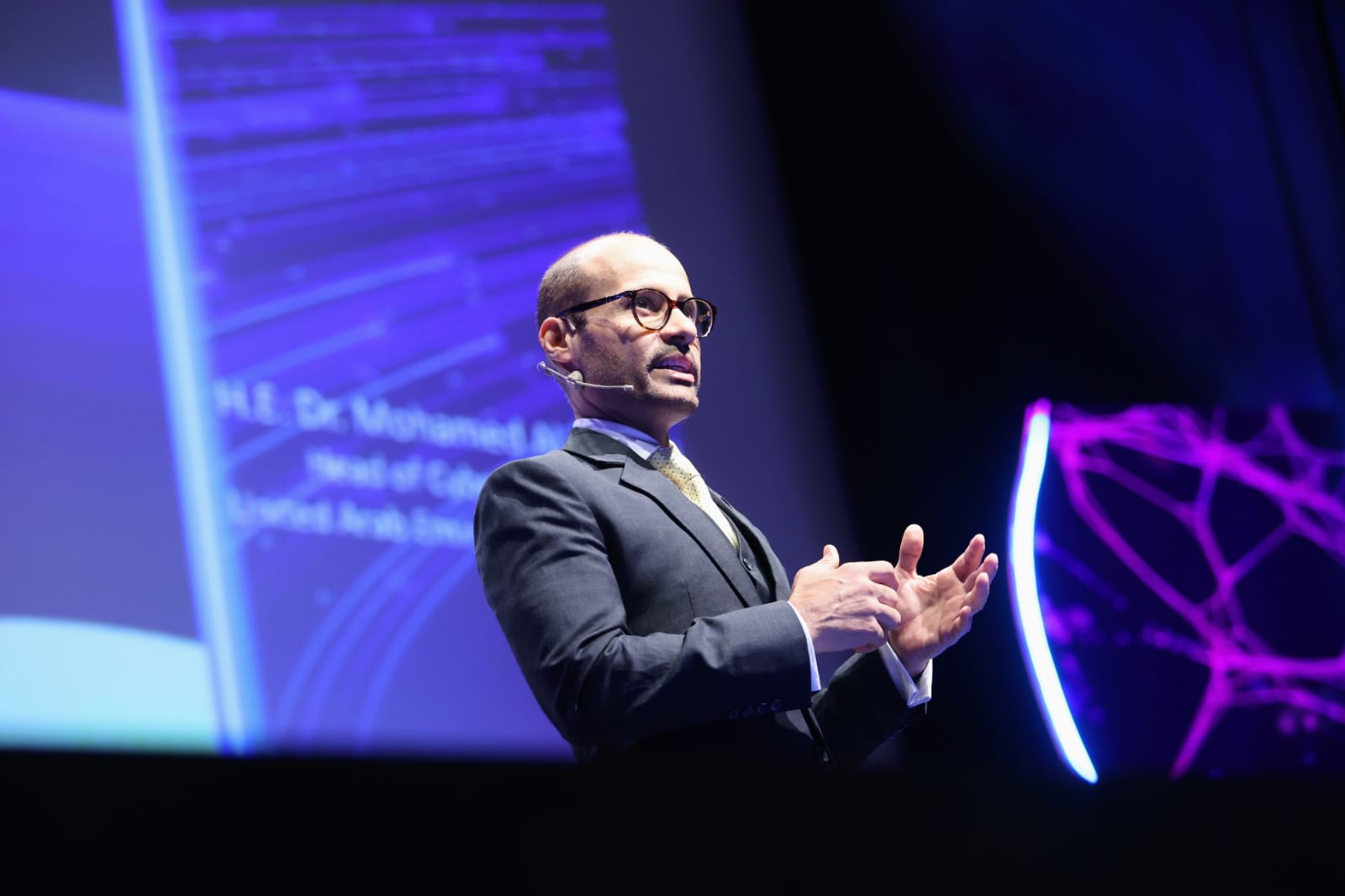
Mohamed Al Kuwaiti, UAE head of cybersecurity, speaking at Cyber Week conference in Tel Aviv

June 28, 2023
Share
Facebook
Twitter
Email
Add The Circuit on Google

TEL AVIV, Israel – Fighting computer crime together has helped reinforce ties between the United Arab Emirates and Israel since they signed a normalization agreement almost three years ago, the UAE’s head of cybersecurity, Mohamed Al Kuwaiti said.

Visiting Tel Aviv last week for the annual Cyber Week conference, Al Kuwait introduced the “Crystal Ball” project, a digital platform for detecting and repelling computer attacks. Microsoft, Israel’s Rafael Advanced Defense Systems and Abu Dhabi-based CPX are providing the technological backbone, and an unspecified number of countries will also participate.

“Cyberthreats do not distinguish between nations, do not distinguish between entities or people,” Al Kuwaiti said on Tuesday at Tel Aviv University gathering. “That is why we need to unite against those threats, and the Crystal Ball, that we are aiming for the whole community, will be the first step toward that.”

Al Kuwaiti, who met with Israeli Prime Minister Benjamin Netanyahu on Monday as part of a group of national cyber directors attending the conference, said the platform will enable partner countries to “easily and seamlessly share information.” The collaborative international effort will be strengthened by the combination of abilities, processing power and volume of data, he said.

The mission is to “design, deploy and enable regional intelligence enhancement” through collaboration and knowledge-sharing to combat national-level cyberthreats, according to a slide Al Kuwaiti showed during his presentation. He said the value of cooperation between the two countries was demonstrated recently when they worked together to ward off a DDOS (distributed denial of service) attack on their networks.

The UAE and Israel normalized diplomatic relations as part of the September 2020 Abraham Accords, leading to the bolstering of both commercial and strategic ties between the countries. Al Kuwaiti said the connection with Israeli tech companies has been especially helpful in his country’s transition to a digital economy.

Amid the high-level meetings, two networking organizations for information security  professionals in the UAE and Israel signed a memorandum of understanding to promote collaboration. UAE-based EliteCISOs and Israel’s Cyber Together said in a statement that they would cooperate on knowledge-sharing, professional training and cybersecurity workshops to help confront emerging threats to both countries.

The meeting with Netanyahu was held at the headquarters of the Israel Security Agency, or Shin Bet, whose director, Ronen Bar, spoke at the Cyber Week conference about the agency’s increasing use of artificial intelligence.

“The ISA and AI have one thing in common,” Bar said. “We both make a living by looking for patterns and anomalies.” He said the agency has also developed its own Generative AI tool that can be used like OpenAI’s ChatGPT.

Another AI innovation being tested by the ISA is an airport security system that he said would “dramatically change” the screening process before flight check-in.

“Maybe one day we will abandon the traditional favorite question for all of you: Did you pack by yourself,” he said.

Bar said the ISA is setting up a technology incubator to help startups develop generative AI products to address security and intelligence needs. He said AI will help the agency in several areas: prioritizing information; boosting intelligence capabilities by identifying patterns and deviations from patterns; becoming a tool in the decision-making process; and helping to forecast trends and the likelihood of their realization.For the agency, he said, generative AI will be a “partner” at the decision-making table, but not a “decision-maker.”

Speaking at the conference on Monday, a former Pentagon official warned that both government and business aren’t paying enough attention to AI’s potential dangers.

“I think that Israel should be very concerned about what algorithms Iran may be trying to develop or acquire overseas,” said Ezra Cohen, the former acting under secretary of defense for intelligence and security who is now vice president for corporate strategy at Oracle Corp.

“Now I’m not saying that we should be treating AI today like a nuclear weapon or anything like that, but there should be certain procedures that are put in place and I think a lot of these companies are really very juicy targets for the adversary,” Cohen said.

Read More
MOVING MONEY

Airwallex sets sights on Arab Gulf states as it opens office in Tel Aviv

Digital payment processor worth $5.5 billion eyes growing population in Mideast with disposable income its young people like to spend online

Nir Kedar/Airwallex

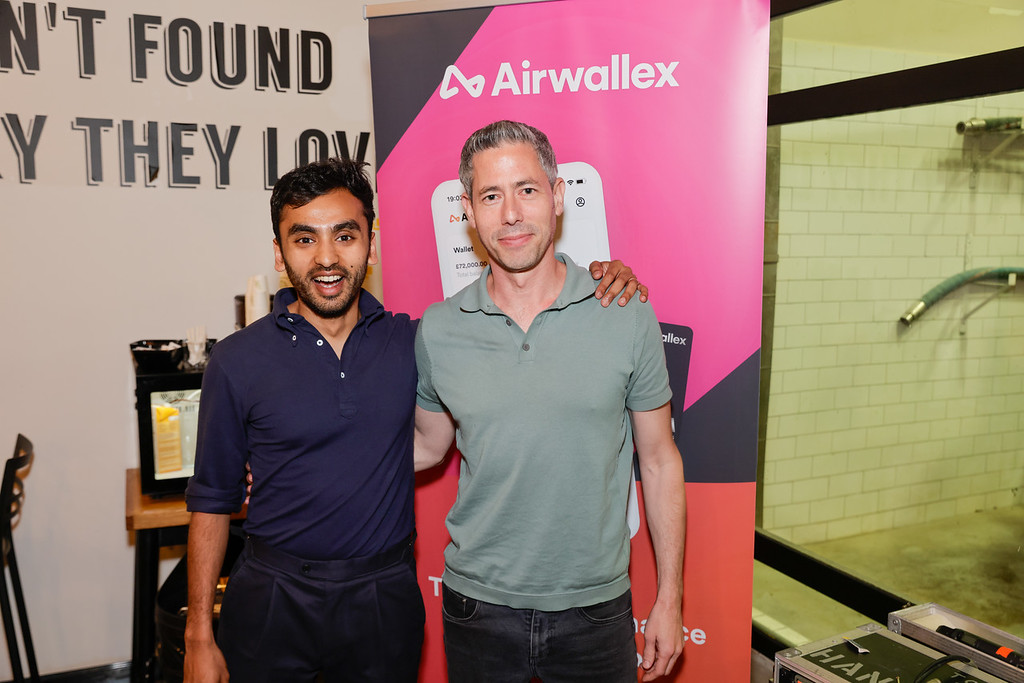
Pranav Sood, general manager for Airwallex's Europe, Middle East and Africa division (left), and Or Liban, head of the Israel office and the Middle East

By
Jonathan H. Ferziger
June 22, 2023
Share
Facebook
Twitter
Email
Add The Circuit on Google


TEL AVIV, Israel – Airwallex, a digital payment platform that aims to disrupt the way businesses move money around the world, is building up its new office in Israel and aiming to expand its reach to the Arab Gulf states.

Founded in 2015  in Melbourne, Australia, Airwallex opened a branch in Tel Aviv in May, hiring Or Liban, a former Google executive, to run operations and expand in the region, Pranav Sood, general manager for Europe, the Middle East and Africa, told The Circuit.

“
Across the Middle East, you see young, growing populations – populations that have lots of disposable income and people who are looking to spend online for e-commerce – also to travel and to buy and sell things around the world,” Sood said in an interview from London. “All of those factors mean that the Middle East is a region that we’re very excited about and looking to invest in.”

Airwallex, which processes more than $50 billion in transactions a year, is one of the fastest growing financial technology companies and carries a market value of $5.5 billion. The company raised $902 million from investors that include Salesforce Ventures, Sequoia, MasterCard, Tencent and Lone Pine Capital.

Sood will be in Israel on Monday to attend the Calcalist conference on financial innovation, which is being co-sponsored by Airwallex. Liban is scheduled to speak on a panel about the relationship between banks and fintech companies.

In Israel, the company’s customers include Papaya Global, which helps businesses manage payroll and payments, and OurCrowd, a Jerusalem-based venture capital investing platform. Airwallex has about 1,300 employees in 20 offices, including San Francisco, London, Amsterdam, Singapore, Hong Kong, Shanghai and Tokyo. The company is currently recruiting a staff of about 10 employees for its new office in Tel Aviv and is looking at potential acquisitions in Israel in the field of cybersecurity.

“Israel is a market where we are already present and we have customers,” said Sood, 33, who was hired a year ago and visits Israel every two or three months. “When we look at the UAE, we also see opportunity to expand our coverage. Many of our customers want access to the UAE because it’s a strong economy and there’s a lot of international trade that comes out of it.”

Airwallex’s creation story involves a coffee shop the company’s four founders opened as students at the University of Melbourne and “came to the conclusion that it is very, very painful and expensive to buy and sell things around the world,” Sood said. Jack Zhang, now the CEO, had a background in foreign exchange and had written trading algorithms for a number of investment banks, Sood said.

Eight years later, Airwallex is challenging the biggest players in the international payments market, led by the Brussels-based Swift network, which Sood says is too slow.  Airwallex’s proprietary technology revolves around a digital wallet that customers pay into and can use to make payments to countries where it is connected with local banking networks. The company has also focused on developing a “deep regulatory and licensing backbone” around the world, he said. It has managed to carve out a loyal customer base by focusing on small businesses and making it less complicated and expensive for them to pay bills and receive payments across national borders.

Airwallex’s founders “basically thought, ‘you know what, let’s use this experience and expertise and build something that fundamentally changes the way that people move money around the world,’” Sood said.

Read More
MEDICAL MILESTONE

UAE’s PureHealth, Israel’s Sheba Hospital sign cooperation pact

A team from the Gulf state’s largest health care provider visits Israeli medical center to discuss joint plans on research, training and medical tourism

Sheba Medical Center

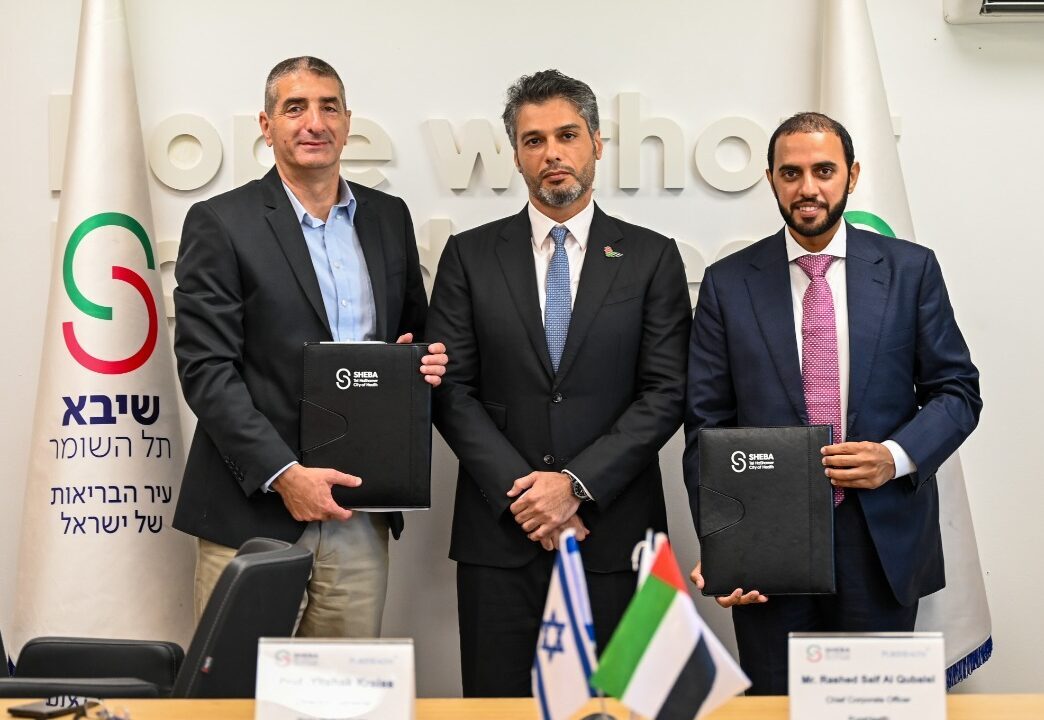
Sheba Medical Center Director Yitshak Kreiss, UAE Ambassador to Israel Mohamed Al Khaja and PureHealth Group Chief Corporate Officer Rashid Al Qubaisi at signing ceremony

By
Jonathan H. Ferziger
June 18, 2023
Share
Facebook
Twitter
Email
Add The Circuit on Google

TEL AVIV, Israel – PureHealth, the largest healthcare company in the United Arab Emirates, and Israel’s Sheba Medical Center signed an agreement last week to conduct joint research, collaborate on staff training and combine efforts to promote medical tourism.

The two institutions approved a memorandum of understanding outlining their intention to work together across a range of medical fields. Israel’s ambassador to the UAE, Amir Hayek, told The Circuit that the preliminary agreement demonstrates a growing momentum for the Abraham Accords, which normalized relations between the two countries in 2020.

“We are talking to each other about everything,” Hayek said in an interview from Abu Dhabi. “We are open about everything and we are past the point of no return.”

The agreement follows a visit to Sheba, near Tel Aviv, and other Israeli health facilities last week by top executives and doctors from the Emirati organization, Hayek said. PureHealth is a $5 billion subsidiary of Abu Dhabi’s ADQ sovereign wealth fund that was formed last year to consolidate the UAE’s major health institutions, including Abu Dhabi Health Services Co., The National Health Insurance Co., Tamouh Healthcare and the Abu Dhabi Stem Cell Center. PureHealth operates 25 hospitals and 100 clinics across the Gulf state.

“This collaboration marks a major milestone in our efforts to drive healthcare innovation and improve patient outcomes,” Rashid Al Qubaisi, PureHealth’s group chief corporate officer, said in a statement. “By combining our expertise and resources, we aim to foster breakthrough research, advance medical education, and establish a robust framework for clinical services coordination.”

Since the signing of the U.S.-backed Accords at the White House in September 2020, trade between the UAE and Israel has exceeded $3.8 billion and the two countries expect commercial activity to reach $10 billion by the end of 2026. ADQ reached an agreement in December to buy control of Phoenix Holdings, Israel’s biggest insurer, for about $675 million. The deal is under regulatory review in Israel.

In another agreement last week, Abu Dhabi’s G42 technology company and Israel’s Viola Ventures investment firm launched a joint business aimed at providing computer engineers and other skilled employees to businesses in both countries and around the world.

Sheba, Israel’s largest hospital, is already working with Bahrain’s King Hamad American Mission Hospital, sharing advanced medical capabilities that are based on artificial intelligence, virtual reality and digital health care management. The UAE agreement “is of the utmost importance in creating a strategy whereby we will work to share our knowledge in the areas of research, clinical trials, and medical training,” said Yoel Har-Even, director of Sheba’s international division.

The UAE’s ambassador to Israel, Mohamed Al Khaja, who was present at the signing of the agreement, said it expressed the need to “find and focus on the real benefits of peace, which improve people’s health, lives and standards of living.”

Recognizing that memorandums of understanding don’t always get implemented, Hayek said the two governments are determined to help Sheba and PureHealth develop their collaboration.

“This MOU needs to be turned into a business plan,” Hayek said. “We will do everything needed to help them, but I think that from this stage… they need to cooperate between themselves and take it forward. We will follow up just to make sure that it happened.”

Sheba held a 75th anniversary fundraising dinner this month at which Mohamed Alabbar, founder of Dubai-based Emaar Properties and builder of the Burj Khalifa tower, the world’s tallest, addressed the crowd about the value of medical cooperation in advancing peace.

Read More
TALENT GAP

UAE’s G42 teams up with Viola in Israel to address worldwide tech employee shortage

The joint venture, Global Valley, will be based in Abu Dhabi and steer programmers to companies around the world

Gettyimages

Global Valley will seek to a address the world shortage of technology workers from its base in Abu Dhabi

By
Jonathan H. Ferziger
June 16, 2023
Share
Facebook
Twitter
Email
Add The Circuit on Google

TEL AVIV – A government-owned technology company in the United Arab Emirates and Israel’s largest private investor in tech firms launched Thursday a joint venture aimed at providing computer engineers and other skilled employees to businesses around the world.

The new company, Global Valley, will be based in Abu Dhabi, the UAE’s capital, and address an international shortage of programming talent. It’s the product of collaboration between Abu Dhabi’s G42, which has interests ranging from biotechnology to artificial intelligence, the Abu Dhabi Investment Office (ADIO) and Israel’s Viola Ventures, which has $5 billion in assets under management, they said in a statement.

Global Valley is also a banner project for the Abraham Accords, which normalized ties between the UAE and Israel in September 2020 and has generated $3.8 billion of trade volume between the two countries. G42 is controlled by Sheikh Tahnoon bin Zayed, the UAE’s national security adviser and younger brother of UAE President Mohamed bin Zayed, ruler of Abu Dhabi.

The new company will strengthen Abu Dhabi as a “dynamic hub for technological advancement and business prowess,” G42 Group Chief Executive Peng Xiao said in a statement on Thursday. Avi Zeevi, a co-founder and general partner of Viola, said Global Valley “will provide tech companies, in Israel and globally, with the best-of-class tech talent to fuel their future growth and support their activities in the region.”

While the ongoing global economic slowdown has led to layoffs that increased the supply of tech workers, the industry expects the employee shortage to grow. A study by the consulting firm Korn Ferry predicts a global talent gap by 2030 of some 85 million employees in the telecommunications, media and technology sector.

Since the normalization agreements, ADIO has also collaborated with OurCrowd, a Jerusalem-based venture capital that established an AI development center in Abu Dhabi, and Liquidity Group, a Tel Aviv-based lender specializing in fintech companies that opened an R&D center in the UAE capital. In December, Abu Dhabi’s ADQ investment firm agreed to buy control of Phoenix Holdings, Israel’s biggest insurer, for about $675 million. The deal is under regulatory review in Israel.

Global Valley “builds on the enthusiasm generated by the Abraham Accords, which continues to create important collaborations in sectors focused on innovation and advanced technology,” said ADIO Director General Abdulla Abdul Aziz AlShamsi.

Read More
ON THE ROAD

Intel preparing to sell off $1.5 billion stake in Israel’s Mobileye

Computer chip giant to retain control in secondary offering of company, which has pioneered technology for self-driving cars

Mobileye

Mobileye

A self-driving vehicle from Mobileye’s autonomous fleet in Israel.

By
Jonathan H. Ferziger
June 12, 2023
Share
Facebook
Twitter
Email
Add The Circuit on Google

Since Mobileye Global, the Israeli developer of self-driving car technology, sold shares last year in an IPO, its stock price has doubled. Now Intel Corp. is planning a secondary offering to carve some profit from the pioneering automotive startup it bought six years ago for more than $15 billion.

Intel, one of the largest computer chipmakers, will sell 35 million shares in its Jerusalem-based subsidiary, a stake worth about $1.5 billion, with an option to sell another 5.25 million shares, Mobileye said in a June 5 filing with the U.S. Security and Exchange Commission. Goldman Sachs and Morgan Stanley are managing the sale, which will leave Intel solidly in control with more than 88% of the shares.

Mobileye is a world leader in creating software, semiconductor chips, cameras and sensory arrays to enable the development of self-driving vehicles. BMW, Volkswagen and Nissan are among its clients. Senior auto executives regularly make the pilgrimage to Jerusalem to meet with Mobileye CEO Amnon Shashua.

The company raised some $860 million in its IPO at the end of October, giving it a market value of about $21 billion after the first day of trading. That was well short of the $50 billion Intel had earlier expected as it was making preparations for the initial offering. Since then the stock price has nearly doubled from $21 a share to $41.77 at the end of last week as its market cap surged to $34 billion. The sale will give Intel cash at a time that it has announced plans to invest in artificial intelligence, vying with upstart competitors such as Nvidia.

Mobileye shares are likely to reach $50 a share over the 12 months, according to Canaccord Genuity, a Toronto-based investment bank, which initiated coverage of the company last week with a “buy” rating. In an analyst note, Canaccord described autonomous driving as  “one of the highest value-creating technologies to be deployed. Ever.”

Noting Mobileye’s “impressive growth indicators and long-term potential within its category,” the investment bank said the company has a “dominant” 70% share in the advanced driver assistance systems (ADAS) market, adding that “its advantageous position in the emerging full self-driving market further strengthens its prospects.”

Read More

Posts pagination

Prev 1 … 104 105 106 107 108 109 110 111 112 … 116 Next
Navigation
Home
Features
Quick Hits
The Daily Circuit
Org Charts
About
Social
Facebook
Twitter
Instagram
Subscribe
Subscribe

Copyright © 2025 · All Rights Reserved · The Circuit

Sign into your account

Email me a link to sign in

I don't have an account

Sign in or subscribe to continue to read this article

Enter your email and create a password to gain access to our exclusive content

Already a subscriber? Sign in

Unlock full access
Become a premium subscriber

Don't miss out! A paid subscription is required to access this page