




Home
Features
Quick Hits
The Daily Circuit
About
Facebook
Twitter
Instagram
Subscribe
SIGN IN
Features Quick Hits The Daily Circuit SWFs Org Charts
Facebook
Twitter
Instagram
Subscribe
SIGN IN
Search

Quick Hits

hormuz bypass

UAE maps strategy to protect Gulf shipping from renewed threats

The Daily Circuit: UAE outlines Hormuz bypass + DP World eyes U.S. port

fight night

MBZ sings UFC chief Dana White’s praises to Trump at G7 summit

oil veteran

ADNOC hires Squarepoint’s Benoit Roulon to lead trading arm

open waters

Gulf companies will still face disruptions in Strait of Hormuz

PIF REGATTA

Will Smith’s E1 boat team beats LeBron James’ AlUla in Croatia

The Daily Circuit: Lingering obstacles in Hormuz + Mubadala’s Greenlink stake

The Daily Circuit: 2PointZero’s Almheiri pushes AI energy + KIA funds Helix

power broker

MBZ awards Martin Edelman with UAE’s Order of the Union

powering AI

2PointZero’s Mariam Almheiri says countries should be racing to build AI energy infrastructure

BACK TO BUSINESS

JPMorgan invests $20B in Gulf, betting on reconstruction boom

The Daily Circuit: JP Morgan pours $20B into Gulf + SpaceX gets sovereign billions

leadership transition

FII names Princess Maha bint Mishari as CEO, alongside Attias

islamic fintech

Fasset among World Economic Forum’s 100 tech pioneers

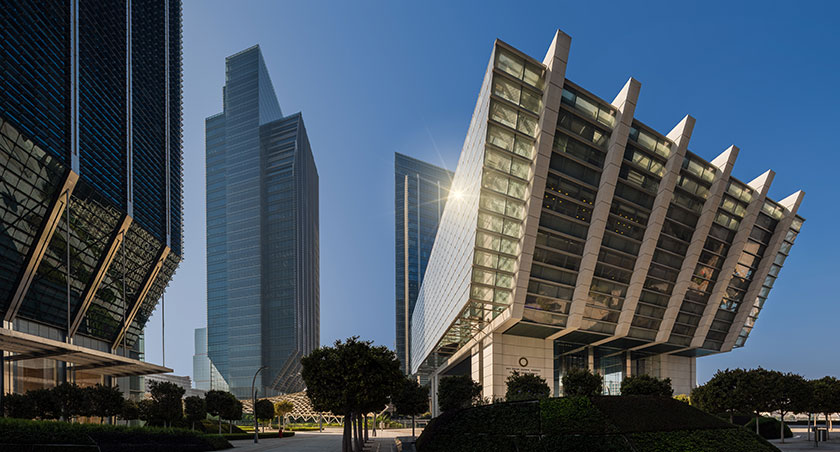
Abu Dhabi Global Market counted 1,825 firms on its roster at the end of 2023. (Photo: ADGM)

investor hub

Blue Owl opens regional office in Abu Dhabi Global Market

The Daily Circuit: Blue Owl lands in Abu Dhabi + Mubadala eyes European fast food

open skies

Emirates’ Tim Clark warns European Airlines on Mideast comeback

The Daily Circuit: Zoom’s Saudi data center + Emirates chief rips European rivals

digital drive

Zoom opens new Saudi data center in $75 million expansion 

taking off

Riyadh Air takes delivery of first Boeing Dreamliner planes

Quick Hits

Business Diplomacy

Meet the UAE’s unofficial business ambassador

Finding synergy between the Israeli entrepreneurial spirit and the thoughtful, strategic thinking of Emiratis could make for the ‘best business partnership in the world,’ says Sabah al-Binali

Screenshot

Dr. Sabah al-Binali

March 28, 2022
Share
Facebook
Twitter
Email
Add The Circuit on Google

Emirati investor Sabah al-Binali is a seasoned financial services executive, but 18 months after the Abraham Accords, he is adding another, albeit informal, role to his already impressive portfolio: business ambassador.

“People call me for advice from both sides,” al-Binali, partner and executive chairman of OurCrowd Arabia, one of the largest global venture investing platforms based in Jerusalem, told The Circuit of his work connecting Israeli and Emirati companies. Trade and investments between the two countries are already flourishing, reaching an estimated over $600-$700 million within the first year. In September, Emirati Minister of Economy Abdulla bin Touq Al-Marri predicted that economic activity with Israel could reach more than $1 trillion over the next decade.

“I get Emirati businessmen asking me, ‘How do I manage this guy, he’s calling three times a day?’” said al-Binali, who forged close ties with Jewish and Israeli peers as an undergraduate student at Princeton University. “I tell him, be direct, say, ‘Don’t call me three times a day, I’ll get back to you about this point.’”

And he also has a message for Israelis eyeing business opportunities in the Gulf too: slow down – and prioritize hiring those with experience working with Emiratis, who can help to navigate cultural differences.

“I know I’m generalizing here, but Israelis have a strong entrepreneurial spirit and are quick decision-makers, while in the UAE, you have good, long-term strategic thinking,” said al-Binali, adding, “If we can synergize this fast-decision-making entrepreneurial spirit with the thoughtful, strategic thinking, then it could be the best partnership in the world — it could be unbelievable.”

Finding a way to bridge these contrasting business styles is exactly what al-Binali, who took up the position of executive chairman just a few weeks after the normalization agreements were signed in September 2020, is trying to do for OurCrowd and for the Abraham Accords.

This week, foreign ministers from Israel, the UAE, Bahrain, Morocco and Egypt, as well as Secretary of State Tony Blinken, held a historic diplomatic summit in Israel’s Negev desert. 

Al-Binali, who is considered one of the most senior Emirati nationals operating on behalf of an Israeli venture capital firm, says the next step is creating similar interaction in the business realm.

But first, he told The Circuit, some key misconceptions and even a level of mistrust must be addressed and dispelled.  

In August 2020, when he first began talking to OurCrowd CEO Jon Medved about taking on the unprecedented role, al-Binali told him, “If you’re going to have this view that you go to the UAE to raise money, then I am the wrong person for the job, and you’ll probably not raise even one cent.”

“I think we’ve got to get away from this fantasy that the opportunity here is money coming from the UAE and technology coming from Israel,” Binali continued. “Israeli startups are drowning in money and so, you know, without being cynical, if that’s what people are looking at as the opportunity, I believe, they will be disappointed.”

Instead, he said, the countries can be mutually beneficial to one another on multiple levels. al-Binali believes that Israel and the UAE can serve as a gateway for one another. The Emiratis, who are active in Africa and Southeast Asia, can open up new markets for Israel. And Israel’s close ties with the U.S. are attractive for Emirati companies. 

On another level, the two markets can become a testing ground for new innovation. Al-Binali points out that similarities in size and scale between the two Middle Eastern states makes them ideal partners.

“Some Israeli startups are fortunate enough to start commercializing in the States, and obviously the big market is where everyone wants to go, but there are also many that just can’t make that big jump from Israel to the U.S., so it makes sense for them to use the UAE as a gateway to other countries in the Middle East, Africa and South Southeast Asia,” he said, giving the example of some medtech companies currently carrying out clinical trials in the UAE.

And as for the question of whether a slew of lucrative deals will open up markets in countries who have not yet normalized ties with Israel, such as Saudi Arabia, al-Binali is certain that it is only a matter of time.

“There’s clear curiosity,” he said, describing how businesspeople from those countries, including Saudi Arabia, are expressing an interest in meeting with their Israeli counterparts in the UAE.

“I’ve seen it in Dubai, Saudis who are visiting want to start having that discussion.”

Despite the long antipathy between Jerusalem and Riyadh, al-Binali believes that a thaw is inevitable. “Look, I think it’s going that way. I mean, let’s look at what is happening now, you have [Israeli airline] overflight rights and that means the mind is open,” he observed. “How and when we will get there is not clear to me, but I feel strongly that it is not a question of if; it depends on the Saudi leadership. They will decide based on their interests the best timing.”

Between Israelis and Emiratis, al-Binali said, “there are still personal reservations on both sides, but in general, the societal move overcomes any personal reservations, and people are just curious.”

As for his progress so far with OurCrowd, which is the first venture capital company to be licensed in the UAE, al-Binali said he has been afforded significant flexibility in developing operations in the Gulf, and that several big projects are already in the works, including a global AI innovation center and a new incubator.

“Of course, there is potential for disagreements and working together is still a challenge, but I also believe there are some great opportunities,” concluded al-Binali, pointing to global events such as changes in the U.S. equity market, growing inflation and the Russia-Ukraine war. “You’re going to see contraction, but on the flip side oil has just gone through the roof, which means the coffers of the sovereign wealth funds in the Gulf will be filled out, and there’ll be pressure on them to expand their investment programs.”

Read More
normalization nation

Israel’s first ambassador to Morocco is building people-to-people ties

‘Before I arrived, my expectations were at a certain level,’ Govrin told JI. ‘After arriving, however, I noticed that the reality was way beyond that’

Courtesy

Israeli Ambassador to Morocco David Govrin

March 24, 2022
Share
Facebook
Twitter
Email
Add The Circuit on Google

This article first appeared on Jewish Insider.

When Israel’s newly installed ambassador to Morocco, David Govrin, recently addressed a gathering of young Israelis and Moroccans in Marrakesh, he summed up his first 14 months on the job by recalling a conversation with a local official: “He asked me if I’d encountered any problems so far; I told him I had one big problem,” Govrin joked. “The food is simply too good here.”

While there is no doubt that delectable and intoxicating Moroccan fare, which is also wildly popular in Israel thanks to the nearly half a million Jews of Moroccan heritage who reside in the Jewish state, might not be good for the waistline, Govrin told Jewish Insider in an interview last week that his answer was the truth – he has received a warm and genuine welcome since arriving in the Arab country in January 2021.

“There’s a lot of enthusiasm,” Govrin told JI. “We feel it and see it every day, the people here are genuinely very excited about Israel.”

Govrin became Israel’s first ambassador to Morocco just a month after the two countries agreed to establish full and open ties in December 2020, and has been working to both establish a fully functional diplomatic mission and build people-to-people ties that will enhance the already warm peace that is rapidly growing between the countries.

A veteran of Israel’s foreign service and a fluent Arabic speaker, Govrin understands the difference between a peace that is warm over one that is not. A former ambassador to Egypt, from 2016 to 2019 – Govrin also served as first secretary in Cairo between 1994-1997 – he said Israel’s relations with the two Arab states differ wildly. 

“One has to bear in mind that Israel and Egypt have engaged in five wars, this is not the same for Israel and Morocco,” Govrin began, highlighting that powerful segments in Egyptian society – the Nasserists and the Islamists – have remained an obstacle to Egypt’s ability to develop better personal ties with Israel.

“There are also no cultural relations between Israel and Egypt,” he continued. “This is unfortunate because it is cultural relations that really bring people together.”

During his short time in Morocco, Govrin has focused on building those cultural and people-to-people relationships. From a young leaders’ seminar last month in Marrakesh to a Jewish women’s festival in the Mediterranean city of Tangiers to mark International Women’s Day, he said it has been easy.

“Before I arrived, my expectations were at a certain level,” Govrin admitted. “After arriving, however, I noticed that the reality was way beyond that. There’s so much enthusiasm and the people here are very excited and eager to visit Israel.”

Indeed, the new consular section, which did not exist before Govrin’s arrival, has received endless inquiries and requests from Moroccans wanting to visit Israel. Israeli airlines began direct flights to Morocco last summer, and the first Moroccan airline held its inaugural flight from Casablanca just over a week ago.

What sets Morocco apart from other Arab states, Govrin explained, is that “the Moroccan people fully understand the importance of the peace with Israel” and feel connected to Jews because of the community’s long presence in the country.

“They have a positive and forthcoming approach to Jews because the Jews were an integral part of Moroccan society, history and heritage for many centuries,” he continued. “This has helped us to push the relationship forward.”

Jews have had a permanent presence in Morocco for more than 2,000 years and with the arrival of Jews from Spain and Portugal – following their expulsion in 1492 – their impact in the country grew even further. Today, while the community has shrunk from an estimated 250,000 to 300,000 in the mid-20th century to only about 2,000 – most fleeing following waves of antisemitism after Israel’s creation –  those still living in the country remain openly and actively Jewish.

“In Morocco, the Jewish presence was welcomed for many years by the kings, and [the current leader] King Mohammed VI is very supportive and encouraging as far as relations with Israel are concerned,” said Govrin. “And we have to bear in mind that leaders play a role in sending a message to their citizens.” 

As for the thorny issue of Israel’s conflict with the Palestinian, which served been a point of contention for many Arab countries and prevented them from normalizing ties with Israel for decades, Govrin said the subject feels distant in Morocco. There were a handful of protests against the resumption of relations with Israel in December 2021, but following a recent national election in the country, the strongest voices opposed to normalization with the Jewish state – the Islamists – are now on the margins. 

“Morocco’s foreign policy is led by the king and [since] the Islamists are no longer part of the governing coalition, their presence in parliament was greatly diminished, and as far as the relationship between Israel and Morocco goes, we feel that the majority of Moroccans are very much in favor of bilateral ties,” he said. 

“The perception of the Palestinian issue changed here following the Arab Spring,” continued the ambassador, author of a 2016 book about the ideological upheaval caused by the wave of popular protests that swept the Arab world a decade ago. “People here are focused more on domestic issues and the Palestinian issue is just one of many other regional conflicts.”

“The Moroccan outlook is towards Europe and Africa,” Govrin continued, adding that “Moroccans invest most of their energy on improving the relationship with Europe and Africa.”

For Israel, Morocco is both a natural ally and a strategic asset exactly because it sits at the gateway to two continents, and, said Govrin, the Jewish state is utilizing the renewed relationship to expand cooperation on multiple levels – diplomatic, economic and cultural, as well as security cooperation.

In the short space of time since he arrived in Rabat, Morocco’s capital, he has already welcomed a slew of top Israeli officials from Foreign Minister Yair Lapid to Defense Minister Benny Gantz to Economy Minister Orna Barbivai. Visits that have paved the way for stronger and deeper cooperation, said Govrin.

“We’ve achieved a lot over the past year,” the ambassador finished, and while COVID-19 has hampered the process somewhat, he promised that a reciprocal visit by a top Moroccan official to Israel is likely to happen very soon.

Read More
Gulf Goals

Abraham Accords Games to spotlight soccer diplomacy at Dubai Expo

Players from Israel, Morocco, Bahrain and the UAE are set to meet for the soccer match next week

U.S. Ambassador to Israel Tom Nides speaks at Jewish Insider's Insider Access event

By
Gabby Deutch
March 24, 2022
Share
Facebook
Twitter
Email
Add The Circuit on Google

This article first appeared on Jewish Insider.

As Expo 2020 Dubai comes to a close at the end of March, the United Arab Emirates will host a soccer match between teams from the Abraham Accords’ signatory countries, U.S. Ambassador to Israel Tom Nides announced on Wednesday. 

Players from Israel, Morocco, Bahrain and the United Arab Emirates will face off in Dubai in the inaugural “Abraham Accords Games,” an effort being spearheaded by Nides and the UAE’s ambassador to Israel, Mohamed Al Khaja. The event will also feature a “dinner celebration” with chefs from each country. 

“I fundamentally believe that travel, tourism [and] culture is the way to cement, in people’s psyche, the importance of these Abraham Accords,” Nides told reporters in a virtual press conference on Wednesday. 

Since arriving in Israel in December, Nides has emerged as one of the most vocal proponents of the Abraham Accords — the 2020 pact that normalized ties between Israel, the UAE, Morocco, Bahrain and Sudan — within President Joe Biden’s administration. 

The event will take place on March 29, and the delegations from each country will also visit the others’ booths at the Expo. The culture ministers from each of the four countries will be in attendance. After the event, they will sign a “cultural cooperation declaration” with the goal of “fomenting and just continuing to advance the idea that cultural cooperation is the key to success to the Abraham Accords,” said Nides. 

With the event taking place in an international hub like Dubai, Nides said he hopes the event will show other countries the benefit of joining the Abraham Accords.

“It just shows what happens when there’s cooperation,” he explained. “Obviously, the more people understand each other, the more ability there is to work together, not only on playing football or eating food, but how do we do economic ties? How do we do energy ties? How do we do security ties? How do we do cooperation?”

Sudan, which was a signatory to the Abraham Accords in 2020 but has been absent from most of the resulting cooperation, will not participate in the Abraham Accords Games. Sudan “is going through some complications with leadership,” said Nides, referring to a military coup that rocked the country last year, but “our hope is that we’ll all be doing all these events together.” 

The Abraham Accords Games is the first major event in a cross-cultural approach Nides is taking to advancing the Abraham Accords and showing their potential to other countries in the region. “I’m hoping that Israel plans to do something this summer for a month of different activities in the cultures of all the countries,” Nides said, explaining his vision for a “whole month of concerts and plays and arts. There’s just a massive amount of stuff that people don’t know about each one of these countries.” 

Nides urged policymakers and practitioners in the Abraham Accords countries to “get in the mindset of kids” by working with “influencers, pop stars [and] cultural icons,” which he said he has a plan to do.

Read More
new horizons

Israeli entrepreneur and investor Erel Margalit explores Bahrain’s fintech sector

Margalit is the first Israeli businessman to meet with Bahrain’s finance minister since signing of the Abraham Accords

Courtesy

Israeli entrepreneur and investor Erel Margalit met last week with Bahrain’s Minister of Finance and National Economy H. E. Shaikh Salman bin Khalifa Al Khalifa to explore cooperation in the country’s fintech sector.

March 21, 2022
Share
Facebook
Twitter
Email
Add The Circuit on Google

This article was first published in Jewish Insider.

With an eye to Riyadh, Israeli entrepreneur and investor Erel Margalit spent four days in Bahrain last week exploring the Gulf state’s advances and aspirations in the world of financial technology, or fintech, as well as assessing the possibility of opening one of his innovation centers in the country. He believes that such developments could form a tech bridge to Bahrain’s neighbor, Saudi Arabia, which Israel has long been hoping will be the next country to join the Abraham Accords normalization agreements. 

“I was surprised by the level of entrepreneurship in Bahrain; those regulating the country are using ideas and concepts like a startup,” Margalit, founder and executive chairman of Jerusalem Venture Partners (JVP) – one of Israel’s oldest and most established venture capital companies – told Jewish Insider in an exclusive interview on Saturday.

“They are able and modest and ready to hear new ideas,” he said of Bahraini officials and counterparts that he met with. “They want to hear about what we are doing in Israel and there is a real eagerness to cooperate with us.”

Margalit, who served as a member of Knesset for the Labor party from 2015-2017, was invited by the Bahraini government and the country’s Economic Development Board. He was also a special guest of the country’s finance and national economy minister, H. E. Shaikh Salman bin Khalifa Al Khalifa.

The first Israeli businessman to meet with the minister since the signing of the Abraham Accords in September 2020, Margalit also held discussions with economic-business leaders, including the heads of Bahrain’s major banks – the National Bank of Bahrain and ila Bank ­– various investment funds, communications and energy companies, and heads of leading universities, as well as leaders in the innovation industry and dozens of technology and social entrepreneurs.

Much of the discussions, Margalit told JI, focused on how to develop the country’s fintech industry, which draws innovators and investors from across the Arab world. It’s a fine fit for many Israeli companies already working in this now-growing tech field, he added.

“Fintech is about allowing financial services to reach people who don’t always have access to them,” the entrepreneur explained. “Bringing financial services to small businesses in different countries is touching, and it is a path that builds goodwill and removes barriers.”

But boosting the fintech industry in Bahrain, which is strategically located in the Persian Gulf just off the coast of Saudi Arabia, could also be a highly beneficial step for Israel, where there is hope that the Saudis may be the next Arab nation to normalize ties with the Jewish state.

“Bahrain is a bridge to Saudi Arabia, and we all realize that this might be Israel’s next big step in the Arab world,” Margalit said. “For Israel, Bahrain can serve as a gateway to a much larger chapter that will make a big difference to Israel’s economy and its diplomacy.”

Margalit said that Al Khalifa took a special interest in his Startup City model, which connects prominent tech and business players with social and cultural entrepreneurs. Margalit first developed the concept about 15 years ago in Jerusalem and has since created four more hubs, each focused on a specific aspect of the innovation and technology ecosystem, including cyber, food tech and health tech.

“They heard about what we are doing in New York [Margalit opened a hub in Soho in June 2021], Haifa, the Galilee, Jerusalem and Beersheba and invited us to have an open conversation about how Israel and Bahrain can cooperate,” Margalit said, adding he was “honored to answer the invitation of the Bahraini government to open a new economic chapter between the two countries based on high-tech and entrepreneurship.”

Israel’s ambassador to Bahrain, Eitan Na’eh, who accompanied Margalit at the meetings, called the visit a “milestone in the relations between the business sectors of the two countries.”

“Erel’s Startup City model, which was presented to senior Bahraini officials, complements our joint vision of building a tech corridor between the two countries,” Na’eh said. “Israel sees Bahrain as the gateway to the Gulf.”

Read More
building bridges

Young leaders’ summit builds on seeds of Israeli-Moroccan normalization

Sixty young Israelis and Moroccans worked together in Marrakesh last week to build sustainable and cultural bridges between their countries

Tzahi Shemesh

Elad Kakon communicates with non-hearing students during a visit to the class for the deaf at the École de la Princesse Lalla Amina school in Marrakesh, Morocco, on Feb. 28, 2022.

March 7, 2022
Share
Facebook
Twitter
Email
Add The Circuit on Google

This article first appeared on Jewish Insider.

In a simply decorated classroom on the far side of a dusty schoolyard deep inside Marrakesh’s bustling Medina, or old town, about a dozen Deaf schoolchildren watched with amusement last week as a small group of well-educated — and usually articulate — young hearing Israelis and Moroccans attempted to communicate with them.  

Using very basic sign language, or at least those signs shared by the Hebrew and Moroccan versions of the visual-manual modality language, the children seemed not to know or care that they were a part of something very remarkable, even historic.

As the governments of Israel and Morocco work to normalize relations on a diplomatic level following a December 2020 agreement to establish full and open ties, grassroots movements and civil society organizations are working to build and strengthen the connection between the two countries, already deeply linked via long-standing cultural roots.

The group visiting the École de la Princesse Lalla Amina school and the class for the non-hearing, which is operated by an independent local charity, were participants in the Leaders of Tomorrow Summit and one of four teams competing in a low-tech hackathon challenge to create sustainable and cultural people-to-people projects that aim to build bridges between their countries.

“Our main goal is to leave no one behind,” Oumaima Mhijir, 29, a participant from Morocco, later told hackathon judges in a five-minute pitch about Project Ismaani (translated from Moroccan as “listen to me”). “We want to create a fellowship for good that aims to enhance cultural understanding between our two people.”

Elad Kakon, 36, an Israeli on the same team, told Jewish Insider that the team’s decision to focus on the non-hearing community came about after Mhijir, who helped established, through a local nonprofit, Marrakesh’s Sign Language Café, appealed to the Israeli participants for assistance with the charity that runs the school for the Deaf. When Kakon revealed to the group that his Moroccan-born father, who grew up in Casablanca, was also non-hearing, the group hit on the idea of building a bridge between the two tiny and often sidelined communities.

“It’s a subject that’s very close to my heart,” said Kakon, who patched in his father from Israel via FaceTime so he could converse with the schoolchildren in Moroccan sign language. “I think there’s a lot Israel’s non-hearing community can contribute to the community in Morocco,” he added after the visit to the school.

Both Kakon and Mhijir described to JI that they decided to participate in the four-day conference in Marrakesh because they wanted to learn more about the other country and connect with real people.

“It’s amazing what is happening here, and I think we’ve formed some true friendships,” Kakon, who lives near Ashdod and runs educational projects in Israeli schools, said of his encounters at the conference.

Mhijir, director of development for an NGO that works with children at risk, was pulled into the initiative by a colleague who volunteers with the Mimouna Association, a cultural non-profit created by young Muslim students to promote and preserve Jewish heritage in Morocco.

“I don’t know much about Jewish culture or Judaism as a religion, and I know even less about the Israeli people,” she told JI. “But I was aware of the Moroccan-Jewish relationship, I knew that Jews and Muslims were once neighbors here, that they lived together in many Moroccan cities, and I also always knew that there were neighborhoods dedicated to the Jews.”

She said she was also cognizant of negative perceptions in Morocco of Jews and particularly of Israel because of its conflict with the Palestinians but maintained that “no religion, no human being, no one from any culture should be treated or perceived that way.”

Organized by the Tel Aviv-based NGO ISRAEL-is, which educates and trains young Israelis to conduct meaningful encounters with their international peers, in collaboration with Mimouna Association, the summit brought together some 60 highly educated young Israelis and Moroccans, a mix of students and professionals.

The Israeli group was comprised of individuals selected by the Edmond de Rothschild Foundation, Kulna, an NGO that promotes Moroccan Jewish heritage and culture in Israel, and some independent participants, while the 30 Moroccan participants were mostly volunteers involved with Mimouna’s activities.

Mimouna’s president, El Mehdi Boura, who established the organization in 2007, said there were some negative views of Jews, and of Israel, in Morocco but the normalization agreement, which is linked to the broader Abraham Accords with an additional three Arab countries, has served to bolster Mimouna’s profile and has made working on Jewish-related projects in the country much easier.

“What we are doing in Morocco is not about the Abraham Accords, but it has definitely facilitated things for us,” he said, adding, “There are one million Jews of Moroccan descent in Israel and around the world and they are our brothers.”

“Even though they have been separated from us for many years, they have kept their Moroccan-ness, people here know that, and we are really proud of Moroccan Israelis,” Boura continued. “This is what makes the connection between us and Israel very special.”

Boura said he was aware of some negative views of Jews and of Israel in Morocco but, he added, “It’s all about education, and many people here never had the chance to meet Jews. We just need to show them that it’s OK.”

And, whenever people challenge him about his work with the Jewish community, Boura told JI that he sends them to talk with their grandparents – “99 percent of the time they come back to me and have changed their perception about Jews,” he said.

Of the meet-up with Israelis last week, Boura said the collaboration with ISRAEL-is was so important.

“It was the first time that young people from Morocco and young people from Israel are coming together on the civil society level,” he said. “We have seen official agreements being signed, which is really great, but in the long run, for sustainability, it is the relation between people that will make this work.”

Eyal Biram, co-founder and CEO of ISRAEL-is, told JI that he created the Leaders of Tomorrow Summit following the Abraham Accords’ signing to harness the new relationships that were forming.

“After 25 years where there wasn’t any kind of peace agreement between Israel and Arab countries, we realized that we needed to find a way to celebrate this historic achievement, but we had zero connections on the other side,” Biram, 30, said, describing how his team set to work sending messages on social media to influencers in the UAE.

“Two days later, we held a Zoom meeting,” he continued. “We understood then that something really special was happening, that there was an Arab country opening its heart to peace and the people there were looking to connect with young people in Israel.”

Since then, ISRAEL-is has forged partnerships with groups of young Bahrainis and Emirates – two of the other Arab countries that recently normalized ties with Israel – and now Moroccans.

“I really hope that we can build similar platforms, not only in Morocco, the Emirates and Bahrain, but also one day with Saudi Arabia and other places in the Middle East,” said Biram, who founded ISRAEL-is in 2017 to train a new generation of informal ambassadors for Israel. “In order to make real peace, you need real action.”

For most of the conference participants, it was their first time meeting someone from the other country, and the discussions were fun but intense, focusing on the place of the Jewish community in Moroccan history, religious and cultural similarities and differences, as well as some politics.

Run mostly in English, with a smattering of Hebrew, Arabic and French, the central activity was developing the ideas from the hackathon, which will be presented to Israeli President Isaac Herzog in May when the Moroccan delegation visits Israel. Projects focused on reciprocal tourism, arts and culture, as well as Project Ismaani for the non-hearing communities, which turned out to be the judge’s favorite.

At the school for the Deaf, where the mixed tongues of English, French, Hebrew, Moroccan, Arabic were inconsequential, volunteer teacher Hafsa Ait Sidi also made clear that the religious and national differences made little difference too.

“When the non-hearing community in one country gets to meet non-hearing people from another country, we do not care about politics or religion, we care about human beings and about the interactions,” she told the hackathon team.

She said she would be delighted to participate in their project and was looking forward to connecting with Deaf and hard-of-hearing Israelis.

This story is part of a series on the Israel-Moroccan relationship developing following the signing of the normalization agreement in December 2020. Eglash was a guest of the ISRAEL-is at the Leaders of Tomorrow Summit in Marrakesh.

Read More
forging ties

Abraham Accords Peace Institute signs cooperation deal with Israeli NGO

The organizations aim to promote dialogue between young Muslim, Jewish and Christian leaders from the region

Tzahi Shemesh

Asher Fredman (right), Israel director of AAPI, and Eyal Biram, co-founder and CEO of ISRAEL-is signed a memorandum of understanding in Marrakesh, Morocco, on Sunday.

By
Ruth Marks Eglash
March 1, 2022
Share
Facebook
Twitter
Email
Add The Circuit on Google

Seeking to spur dialogue between young Muslim, Jewish and Christian leaders in the Middle East and build on the emerging ties forged by the recent Abraham Accords, the Washington-based Abraham Accords Peace Institute (AAPI) signed a memorandum of understanding with the Tel Aviv-based NGO ISRAEL-is during a special ceremony last weekend in Marrakesh, Morocco.

Taking place on the sidelines of the Leaders of Tomorrow Summit, a forum that brought together young Israeli and Moroccan leaders, the two organizations said the new arrangement would bolster such interactions and help the parties develop sustainable innovation projects, build additional cultural exchanges and promote influencer delegations between Israel and Morocco, as well as two other Arab countries —  the United Arab Emirates and Bahrain.

The UAE and Bahrain signed the Abraham Accords with Israel on Sept. 15, 2020, with Morocco normalizing ties with the Jewish state a few months later. Since then, diplomatic and economic relations have grown steadily.

Asher Fredman, Israel director of AAPI, a nonpartisan, nonprofit organization dedicated to supporting the implementation and expansion of the Abraham Accords, who was present at the weekend seminar, told Jewish Insider that the new cooperation would serve to “strengthen culture, tourism and people-to-people ties.”

“It is an investment in the next generation of leaders in all the countries,” he said, adding that the ultimate goal was to “expand the circle of the Abraham Accords” by showing how peace can create shared opportunities and strengthen societies for the future.

Eyal Biram, co-founder and CEO of ISRAEL-is, which educates and trains young Israelis to conduct meaningful encounters with their international peers, said the cooperation with AAPI was “deeply important.”

“The seeds of this effort were planted by the United States government,” he said. “Every development could not have happened without the support of the U.S., and we are looking forward to creating more wonderful opportunities and building a shared future.”

The two organizations said they will work together to bring regional delegations to Israel to meet with both Jews and Arabs in diverse fields such as politics, business and culture, and to bring Israeli young leaders and prominent figures to the Arab world.

“The key to ensuring that the Abraham Accords continue to flourish for generations is through deepening people-to-people cooperation,” AAPI’s president and executive director, Robert Greenway, said in a statement.

“The decades of political disconnect between Israel and the countries of the Middle East have led too often to misunderstandings, hostility and conflict,” he said. “By working with ISRAEL-is on bringing together young leaders from across the region, we can ensure that the Abraham Accords are not just agreements on paper, but an ongoing paradigm for peace, cooperation and prosperity.”

The Leaders of Tomorrow Summit included some 60 people from Israel and Morocco. Participants engaged in a two-day hackathon to brainstorm ideas and initiatives that could be developed between the two countries.

This story is part of a series on the emerging relationship between Israel-Moroccan following the signing of the normalization agreement in October 2020. Eglash was a guest of ISRAEL-is at the Leaders of Tomorrow Summit in Marrakesh.

Read More
munich moments

Israel-Bahrain cooperation on display in Munich

Increasing security collaboration between the two Abraham Accords' countries on display during last weekend's Munich Security Conference

Munich Security Conference

Israeli Defense Minister Benny Gantz (center) and Bahraini Undersecretary for Political Affairs of the Foreign Ministry Dr. Sheikh Abdullah bin Ahmed Al Khalifa (left) during a session of the 2022 Munich Security Conference.

By
Ahdeya Ahmed
February 23, 2022
Share
Facebook
Twitter
Email
Add The Circuit on Google

Cooperation between Bahrain and Israel stepped up a level this weekend with the prominent participation of both countries in the Munich Security Conference.

Undersecretary for Political Affairs of the Foreign Ministry Dr. Sheikh Abdullah bin Ahmed Al Khalifa represented Bahrain in the session titled “Abrahamic Agreements and Peace Options,” and shed light on a strong alliance between two countries in the Middle East that have common interests aimed at creating a more secure region in the face of the rise of extremism and terrorism that has threatened both countries and has destabilised others nations of the Middle East.

“If this security cooperation between Bahrain and Israel would mean providing more stability and security, so be it. If it would mean saving the lives of innocent civilians, so be it. That is why during a number of visits of the head of the Mossad to Bahrain, it was publicly announced in the Bahrain News Agency. Probably, the first time it was announced was in September 2020 and in May 2021 that yes the head of the Mossad was received by his counterpart in Bahrain. So we do believe that security cooperation, intelligence cooperation is part of our ongoing partnership between Bahrain and Israel,” Abdullah said.

The meeting in Munich followed two historical visits made by Israeli Prime Minister Naftali Bennett and Defence Minister Benny Gantz within 10 days to Bahrain and Abdullah’s words make it clear that Bahrain would exert utmost effort into any political or diplomatic initiative and co-operation that could lead to saving the lives of innocent civilians.

The Abraham Accords that marked a transitional point in the Middle East’s history and future and consolidated strategic cooperation between two countries that believe in peace as a consistent approach to confronting destructive ideas and ideologies that perpetuate hatred and promote terrorism — this has been the main focus of discussion and cooperation between the two states.

Both suffer from threats by terrorist entities and countries harbouring terrorists. Iran has been the focal point of all threats, directly and indirectly.

The participation of Anwar Mohammad Gargash, diplomatic adviser to His Highness the president of the United Arab Emirates, in the Munich Security Conference also gave weight to the discussions as the UAE continues — through genuine diplomatic efforts — to achieve stability and security in the region; the UAE has always been known for such efforts and stands as a great example for resolving several regional and international issues through its diplomatic effort, experience and in-depth analysis of the different players in the region.

History books will document the Abraham Accords that brought the UAE, Bahrain and Israel together, thanks to the brave decisions taken by their leaders in a part of the world where the some countries countries funding terrorism have created a turbulent region.

Munich brought together diplomatic and defense leaders who addressed a number of challenges facing the region, foremost among them terrorism based on extremist ideology, and the rejection of coexistence and diversity, which represents another challenge as it is linked to the spread of sectarianism and negative ideas. Antisemitism and Islamophobia have been the unfortunate results of hatred and demonizing Israel in many parts of the Muslim world.

Sheikh Abdullah al Khalifa focused on the challenge of armed proxy militias and the threat to maritime security, in addition to targeting oil and vital facilities in the countries of the region through drones and guided missiles to destabilize the region. This comes at a time that the Houthis, funded by Iran, continue to target Saudi Arabia and Abu Dhabi, causing the death of innocent civilians. Munich came during the same week that Australia classified Hamas as a terrorist entity, months after the U.K. had done so, and after Germany classified the political wing of Hezbollah as terrorists.

The Munich conference has come to a close but the mission to eliminate the enemies of peace has just begun.

Read More
jewish revival

One year after Abraham Accords, growing Gulf Jewish community finds cohesion

The Association of Gulf Jewish Community's Rabbi Elie Abadie says many countries now realize they made a ‘historical mistake’ and want to ‘welcome the Jews back'

February 14, 2022
Share
Facebook
Twitter
Email
Add The Circuit on Google

When Rafael Schwartz moved to Kuwait three years ago for work, he was hoping he’d be able to make quick trips to the fledgling Jewish community in the nearby United Arab Emirates every few weeks if he needed Jewish company or kosher food. But when COVID-19 struck two years ago, he found himself unable to travel.

“My intention was to leave once a month and go to Dubai, where there was a small Jewish community, but the pandemic changed all that and I never left Kuwait,” Schwartz, who is originally from the U.K., recently told The Circuit over Zoom.

Once the virus hit, traveling in and out of Kuwait, which sits at the tip of the Persian Gulf, bordering Iraq and Saudi Arabia, became difficult — and sometimes impossible, when the country closed its borders — and Schwartz soon found himself trying to keep up with his Jewish traditions in a country that does not officially recognize Israel and is known for its institutionalized, often pervasive, antisemitism. An engineer by trade, Schwartz told JI that while he has lived and worked in multiple countries with small or nonexistent Jewish residents, he still found himself yearning for Jewish community.

Then, in February 2021, something like a miracle happened. Spurred by the fall 2020 signing of the Abraham Accords, a set of normalization agreements between Israel and four Muslim-majority countries, the Association of Gulf Jewish Communities (AGJC) was born, connecting Jews in six Persian Gulf countries and providing a Jewish lifeline for people like Schwartz.

In that short time, the AGJC has become the backbone of Jewish life in the Gulf, primarily in the UAE and Bahrain — two of the signatories to the Abraham Accords — and has connected the sprinkling of Jews living and working in Kuwait, Oman, Qatar and Saudi Arabia.

The association estimates there are roughly 1,200 Jews residing in the Gulf, not including a further 1,000 serving there as part of the U.S. military. Among its activities, the organization has played a hand in the growing number of Jewish life-cycle events, helping to organize the region’s first bar mitzvah in 16 years and its first Jewish wedding in 52 years. It has also launched a Jewish dating website, a Beth Din of Arabia (Jewish religious court), and is currently in the process of creating an Arabian Kosher Certification Agency, which will set standards for kashrut throughout all six Gulf countries. The AGJC also offers weekly in-person and virtual programming, including a Friday pre-Shabbat Zoom and events around the holidays.

“There was a big Pesach turnout,” said Schwartz, who logged into the Zoom event from Kuwait. “One of the people who also joined was a Jewish lady from Kuwait City who has lived here for 40 years. She was curious about where to find matzah and the rabbi connected us so that we could meet.”

For indigenous Gulf Jews, such as Ebrahim Daoud Nonoo, AGJC’s president and the chairman of the board of trustees of the House of Ten Commandments, the Jewish community in Bahrain, the growing Jewish life is a welcome change.

“It is lovely,” Nonoo, whose family has lived in Manama, Bahrain’s capital, for more than 100 years, told JI. “The community is a very ancient one but until now we had to send our kids abroad to study, and the problem with that is that they don’t come back. So now we have a community that is growing older and older and there are no children.”

“We are a tiny community and the good thing we are seeing now is that we have a workable way to make Jewish life flourish in the country,” he continued. “The AGJC is a fantastic support for all the communities in the Gulf, allowing us to enjoy Jewish life not just from the point of view of kosher food or religious books, but we also have the input of a rabbi and we have used him for bar mitzvahs and weddings.”

Nonoo, who served as a member of Bahrain’s Shura Council (Upper House of Parliament) from 2001 to 2006, added, “We are in a much better place than before because we no longer need to go to Europe or the United States to find Jewish support, we can now get it from Dubai or we have it here in Bahrain.”

The more the Jewish community grows, said Nonoo, it will attract Jews from all over the world to live and work comfortably in the Gulf. And, he added, the presence of a Jewish community in countries where they were absent or invisible for so many decades is essential for outreach to local Muslim populations.

“It is really sad to see a Jewish community die, and we are bringing them back to life,” he said, adding that the synagogue often invites local Muslims to participate in services and events to learn about Judaism.

“When I arrived here a year ago, Jewish life in the Gulf was almost unknown,” Rabbi Dr. Elie Abadie, the AGJC’s rabbi, said in an interview with JI. “It was barren land, but I could see that we could create an orchard and connect Jewish communities and individuals in all of the countries.”

Abadie, who was born in Lebanon and speaks fluent Arabic, said that the UAE and Bahrain are now “fully open” and embracing their Jewish communities, and he is hopeful that “Saudi Arabia will follow suit sooner rather than later, then Oman, Qatar, Kuwait — which will probably be the last the one to open, although there are some rumblings that people want to open up to Jews and Israel.”

Abadie said that the AGJC had connected with individual American Jewish soldiers stationed in Kuwait who have lived there for decades and are married to locals, as well as a few descendants of Jews who now live as Muslims.

“It feels really good watching this and, in a way, it makes you feel vindicated that finally Arab countries have come to realize that either persecuting or expelling their Jews was a historical mistake and now they want to correct that and welcome the Jews back,” he said. “I hope and pray that we will see even more events for the Jewish community in these countries and that more Jews will either go to settle there or come out of the closet, so to speak.”

Read More

Posts pagination

Prev 1 … 127 128 129 130 131 132 Next
Navigation
Home
Features
Quick Hits
The Daily Circuit
Org Charts
About
Social
Facebook
Twitter
Instagram
Subscribe
Subscribe

Copyright © 2025 · All Rights Reserved · The Circuit

Sign into your account

Email me a link to sign in

I don't have an account

Sign in or subscribe to continue to read this article

Enter your email and create a password to gain access to our exclusive content

Already a subscriber? Sign in

Unlock full access
Become a premium subscriber

Don't miss out! A paid subscription is required to access this page