













Home
Features
Quick Hits
The Daily Circuit
About
Facebook
Twitter
Instagram
Subscribe
SIGN IN
Features Quick Hits The Daily Circuit SWFs Org Charts
Facebook
Twitter
Instagram
Subscribe
SIGN IN
Search

Quick Hits

riyadh EXODUS

Houthi attacks are driving expat executives out of Saudi capital

ai payday

Gulf investors hold $100 billion in Anthropic shares after record IPO

The Daily Circuit: Anthropic’s IPO windfall for Gulf funds + ExxonMobil’s Oman deal

gulf links

Trump golf resort in Qatar moves forward with construction

missile strike

Houthi attack damages Saudi wealth fund’s Riyadh skyscraper

The Daily Circuit: PIF Tower attacked +  DP World expands in Africa

pipeline diplomacy

Saudi Arabia’s Delta Energy eyes $30 billion Pakistan gas network

capital gains

MGX, QIA poised to reap rewards from early bets on Anthropic

The Daily Circuit: MGX, QIA poised for Anthropic IPO +  PIF’s SpaceX portfolio

cold front

Mubadala CEO bets on U.S. as winter approaches for AI

high gear

Saudi PIF set for blockbuster Grand Theft Auto VI debut

The Daily Circuit: PIF’s Grand Theft Auto payday + Lunate’s robot ETF

money managers

Mubadala buys into Canaccord’s wealth business in the U.K.

The Daily Circuit: Mubadala bets on British wealth + EDGE’s quantum investment

manhattan transfer

Abu Dhabi takes investment forum to New York City

digital toolkit

PIF’s HUMAIN sets up December rollout for its Saudi AI tools

The Daily Circuit: PIF’S HUMAIN plans AI rollout + Alabbar expects rebound

corporate finance

Goldman, HSBC and Fortress back Saudi private credit deal

deep pockets

Blackstone opens Dubai office to advise wealthy Gulf investors

The Daily Circuit: Blackstone courts Dubai wealthy + FAB’s $4B rights issue

Quick Hits

HELIUM SQUEEZE

World helium prices spike as Iran conflict disrupts Qatar processing

Qatar produces roughly one-third of the world’s helium, and the shutdown of some gas facilities and shipping routes has sharply reduced supply

Stringer/picture alliance via Getty Images

The LNG production facility in Qatar's Ras Laffan Industrial City

By
Omnia Al Desoukie
March 13, 2026
Share
Facebook
Twitter
Email
Add The Circuit on Google

Helium prices are surging after the Iran conflict disrupted Qatar’s natural-gas processing, exposing the fragility of a market that supplies industries from semiconductor manufacturing to medical imaging.

Qatar produces roughly one-third of the world’s helium, and the shutdown of some gas facilities and shipping routes has sharply reduced supply.

Spot helium prices have roughly doubled as buyers scramble to secure shipments, Reuters reports.

Qatari Energy Minister Saad al-Kaabi told the Financial Times last week that it would take “weeks to months” for deliveries to return ​to ​normal.

Read More
Trade shock

Gulf states review sovereign wealth funds amid Iran conflict

The reassessments could lead to delaying some overseas investments, reconsidering sponsorship commitments and selling state assets

Jeremy Suyker / Bloomberg via Getty Images

Looking out over the Riyadh skyline

By
Jonathan H. Ferziger
March 12, 2026
Share
Facebook
Twitter
Email
Add The Circuit on Google

The financial shock from the Iran war, with its disruptions of oil shipping and global trade, is leading at least three Gulf states to review how their sovereign wealth funds are managing trillions of dollars in global investments.

The reassessments could lead to measures such as delaying some overseas investments, reassessing sponsorship commitments and potentially selling government assets in order to relieve pressure on their economies, Reuters reports, citing an unnamed Gulf official.

The individual sovereign funds were not identified by the news agency, which said three of the four largest economies in the Gulf – which are Saudi Arabia, the UAE, Qatar and Kuwait – were formally conducting the reviews.

Saudi Arabia’s Public Investment Fund, Abu Dhabi’s Mubadala, the Qatar Investment Authority and Kuwait Investment Authority are continuing to pursue international deals, while their governments decide whether spending priorities or the pace of investments should be adjusted as the crisis unfolds, Reuters said.

Meanwhile, Saudi Arabia’s $38 billion push to build a global video-game industry is facing new uncertainty as the Iran war raises security concerns that could deter foreign developers, investors and esports events the kingdom hopes to attract, Bloomberg reports.

The initiative, led by the PIF’s Savvy Games Group as part of the kingdom’s economic diversification strategy, depends heavily on international partnerships that could slow if regional instability persists.

Read More
INSECURITY BENEFITS

Nuclear industry sees revival as Mideast crisis pushes oil to $100

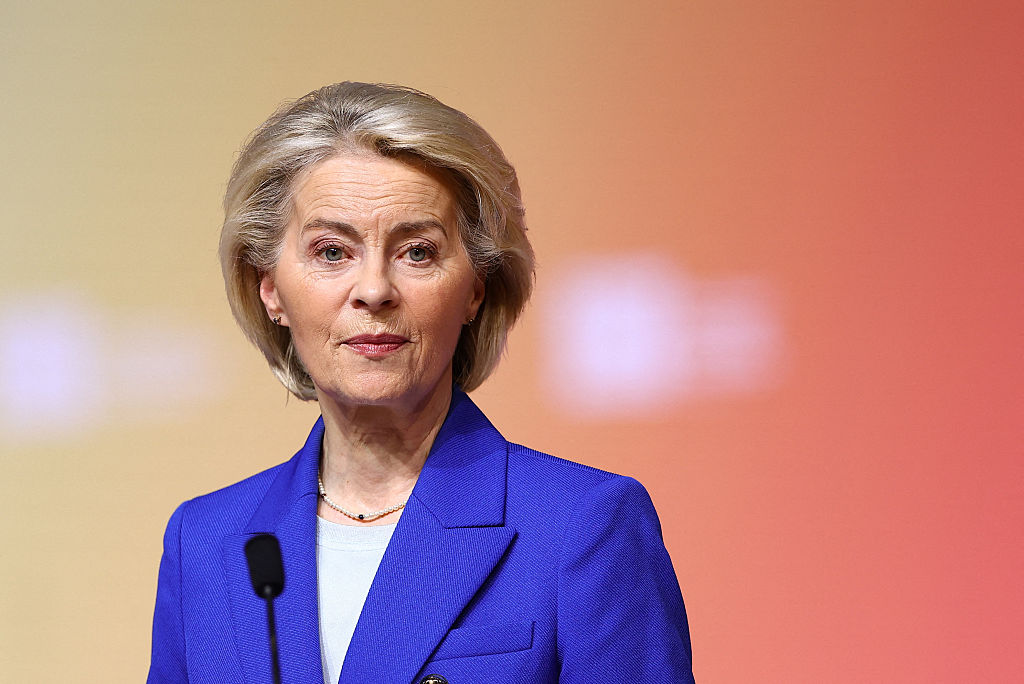
European Commission President Ursula von der Leyen says the continent’s earlier retreat from nuclear power represents a 'strategic mistake'

Abdul Saboor / POOL / AFP via Getty Images

European Commission President Ursula von der Leyen

By
Omnia Al Desoukie
March 12, 2026
Share
Facebook
Twitter
Email
Add The Circuit on Google

The nuclear industry could benefit from the current bout of global energy insecurity as attacks on three more cargo ships in the Gulf push oil prices toward $100.

Boris Schucht, CEO of uranium enrichment company Urenco, told the Financial Times that a “nuclear renaissance” is underway, with the company holding a record $21.3 billion order book for uranium and fuel products.

“The supply crisis in the Middle East will refocus policymakers and industry on energy security and the need to have some form of baseload power in countries that is independent from supply threats,” Schucht said.

Analysts say the crisis is prompting governments from Europe to Japan to accelerate nuclear plans, while European Commission President Ursula von der Leyen called the continent’s earlier retreat from nuclear power a “strategic mistake.”

Read More
OIL SAGA

Energy agency weighs record oil release as Iran tensions mount

Saudi pipelines that bypass the Strait of Hormuz to reach export terminals on the Red Sea can help keep oil moving if shipping disruptions worsen

Nicolas TUCAT / AFP via Getty Images

International Energy Agency Executive Director Fatih Birol

By
Jonathan H. Ferziger
March 11, 2026
Share
Facebook
Twitter
Email
Add The Circuit on Google

Governments around the world are scrambling to contain the escalating shock to energy markets from the Iran war, with oil traders tracking disruptions to Gulf exports and tanker traffic as officials weigh emergency measures to stabilize supplies.

Officials from the International Energy Agency are discussing what could be the largest coordinated release of strategic oil reserves in history – about 300 million to 400 million barrels – far exceeding the 182 million barrels released in 2022 after Russia’s invasion of Ukraine, Bloomberg reports.

Saudi Arabia, the UAE and other Gulf producers are assessing how much crude they can continue exporting as tanker insurers and shipping companies review the risks of operating in the region.

Many cargoes have been delayed and freight rates for vessels willing to enter the Gulf have surged as the conflict intensifies.

At the same time, officials are studying whether alternative routes – including Saudi pipelines that bypass the Strait of Hormuz and export terminals on the Red Sea – can help keep oil moving if shipping disruptions worsen, The Wall Street Journal reports.

The U.S. and its allies are also discussing naval measures to safeguard commercial traffic through the Gulf.

Energy traders say the combination of possible supply outages, tanker disruptions and a record emergency stockpile release has turned the oil market into a day-to-day calculation of how quickly governments can offset the barrels at risk from the conflict.

Read More
FERTILIZER CRISIS

Iran crisis sparks farm chemical crunch, threatening food supplies

The Middle East is the source of some 45% of global urea supplies used in making chemical fertilizers, which cannot be stored for long periods

Jc Milhet / Hans Lucas / AFP via Getty Images

Ground-mounted pesticide and fertilizer sprayer

By
Omnia Al Desoukie
March 11, 2026
Share
Facebook
Twitter
Email
Add The Circuit on Google

It’s not just oil. War with Iran is also making a range of chemicals critical for food production more expensive, including fertilizer components like urea and ammonia, Bloomberg reports.

The Middle East is the source of some 45% of the global urea supplies, which cannot be stored for long periods.

That means logistical disruptions such as the shutdown of the Strait of Hormuz can quickly tighten the market and send prices soaring.

Western sanctions have curtailed imports of Russian fertilizers, while China has imposed export restrictions to protect domestic demand and support its farming sector, the news agency said. 

Read More
METROPOLITAN OASIS

Saudi Arabia gets $3.8B foreign investment for King Salman Park

More than 1 million trees will be planted in the massive Riyadh project, which will also contain offices, homes, hotels, schools and shopping centers

Maya Anwar/Bloomberg via Getty Images

The King Salman Park construction site in Riyadh

By
Omnia Al Desoukie
March 11, 2026
Share
Facebook
Twitter
Email
Add The Circuit on Google

Saudi Arabia’s ambition to build the world’s biggest urban park has received a $3.8 billion vote of confidence from foreign investors.

The King Salman Park Foundation said on Tuesday that the new funds raise the total investment in the Riyadh mega-project to more than $5.3 billion.

The development, launched in 2019 under Saudi Crown Prince Mohammed bin Salman’s Vision 2030 economic overhaul plan, calls for construction of offices, homes, hotels, schools and shopping centers within the 17 square-kilometer (6.6 square-mile) metropolitan oasis, along with the planting of more than 1 million trees.

“Securing investment of this scale, supported by international capital and expertise, is an important milestone,” the foundation’s CEO George Tanasijevich said. 

Read More
GULF BOTTLENECK

Strait of Hormuz traffic plummets amid fears of new Iranian attacks

Many of the ships are idling near the narrow waterway, while 2,474 vessels, including 178 oil tankers, have remained in Gulf waters since March 5

Giuseppe CACACE / AFP via Getty Images

Cargo ships and tankers in the Strait of Hormuz off the UAE's coastal city of Fujairah

By
Omnia Al Desoukie
March 10, 2026
Share
Facebook
Twitter
Email
Add The Circuit on Google

About 1,000 vessels carrying roughly 20,000 crew members are unable to pass through the Strait of Hormuz amid fears of Iranian attacks, cutting traffic by nearly 90%.

The International Maritime Organization says many of the ships are idling near the narrow waterway, while 2,474 vessels, including 178 oil tankers, have remained in the Gulf waters since March 5.

IMO Secretary-General Arsenio Dominguez expressed “grave concern” after recent attacks killed at least seven seafarers and called on operators to exercise “maximum caution.”

Roughly 20% of the world’s oil is transported through the Strait of Hormuz.

Read More
'catastrophic consequences'

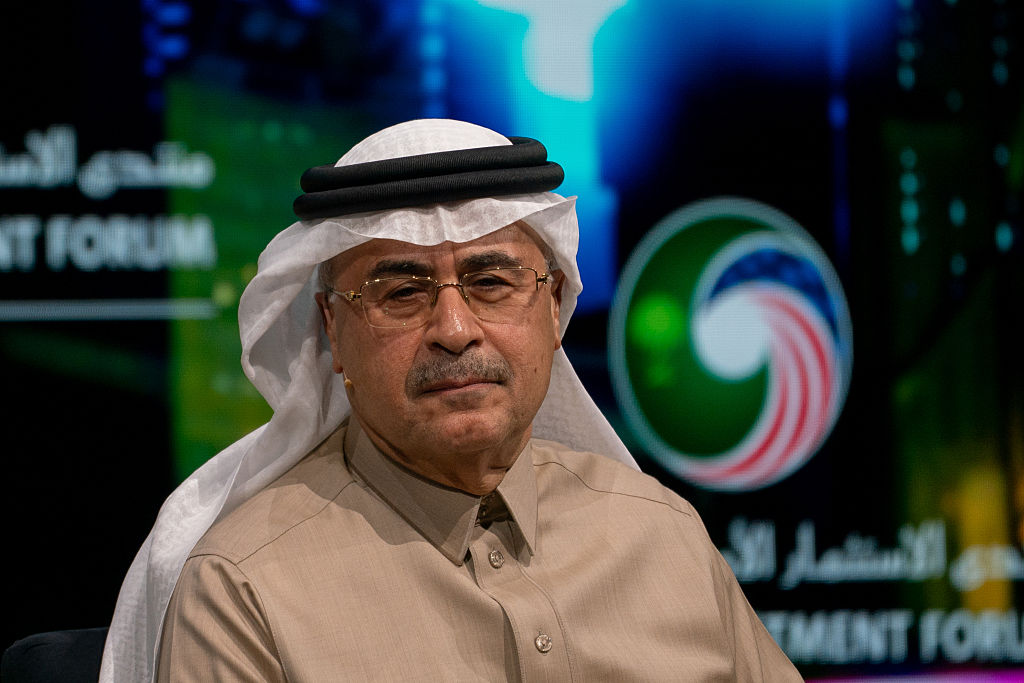
Aramco CEO sounds alarm on impact of Iran conflict for oil

To protect its oil tankers, Aramco has stopped loading crude from Gulf terminals and is sending shipments by pipeline to the Red Sea port of Yanbu

Stefani Reynolds / Bloomberg via Getty Images

Saudi Aramco CEO Amin Nasser

By
Jonathan H. Ferziger
March 10, 2026
Share
Facebook
Twitter
Email
Add The Circuit on Google

Saudi Aramco CEO Amin Nasser warned that the global energy industry is headed for disaster if conflict with Iran continues and the Strait of Hormuz is shut down.

“There would be catastrophic consequences for the world’s oil markets,” Nasser told reporters on an earnings call today after Aramco reported a 12% drop in 2025 annual profit. “The longer the disruption goes on,” he said, “the more drastic the consequences for the global economy.”

To protect its oil tankers from the threat of Iranian attacks, Aramco has stopped loading crude from Gulf terminals and is redirecting shipments through its East-West pipeline to the Red Sea port of Yanbu, Reuters reports.

The conflict briefly pushed Brent crude to a near four-year high of $120 a barrel on Monday before retreating to $85 today – which is up from $66 in mid-February. Insurers, shipping companies and airlines are making contingency plans for wider disruptions to global supply chains.

Iranian leaders have said no oil will leave the Middle East if U.S. and Israeli attacks continue, prompting a warning ‌from President Donald Trump that the U.S. would hit Iran ⁠much harder if it continues to block exports through Hormuz.

Read More

Posts pagination

Prev 1 … 38 39 40 41 42 43 44 45 46 … 158 Next
Navigation
Home
Features
Quick Hits
The Daily Circuit
Org Charts
About
Social
Facebook
Twitter
Instagram
Subscribe
Subscribe

Copyright © 2025 · All Rights Reserved · The Circuit

Sign into your account

Email me a link to sign in

I don't have an account

Sign in or subscribe to continue to read this article

Enter your email and create a password to gain access to our exclusive content

Already a subscriber? Sign in

Unlock full access
Become a premium subscriber

Don't miss out! A paid subscription is required to access this page