









Home
Features
Quick Hits
The Daily Circuit
About
Facebook
Twitter
Instagram
Subscribe
SIGN IN
Features Quick Hits The Daily Circuit SWFs Org Charts
Facebook
Twitter
Instagram
Subscribe
SIGN IN
Search

Quick Hits

DOLLAR DEAL

UAE rejects liquidity concerns while exploring U.S. currency swap

The Daily Circuit: Trump mulls UAE currency swap + Larry Fink in Abu Dhabi

CONNECTING FLIGHTS

Dubai plans Airport Express train linking DXB and Al Maktoum

OIL WOES

Kuwait suspends oil contracts again as Strait remains blocked

great expectations

UAE’s Al Olama hails tech ties with Musk in Instagram post

The Daily Circuit: Kuwait oil woes worsen + Riyadh Air eyes Madrid

helping hand

UAE eyes currency support from U.S. if war disruptions deepen

FOLLOW THE MONEY

Saudi Arabia commits to wage battle against money laundering

The Daily Circuit: UAE contingency planning + AIQ’s North American push

The Daily Circuit: PIF sells top football team + Gulf faces economic fallout

TEED OFF

Saudi PIF weighs pulling funding from LIV Golf amid heavy losses

mideast track

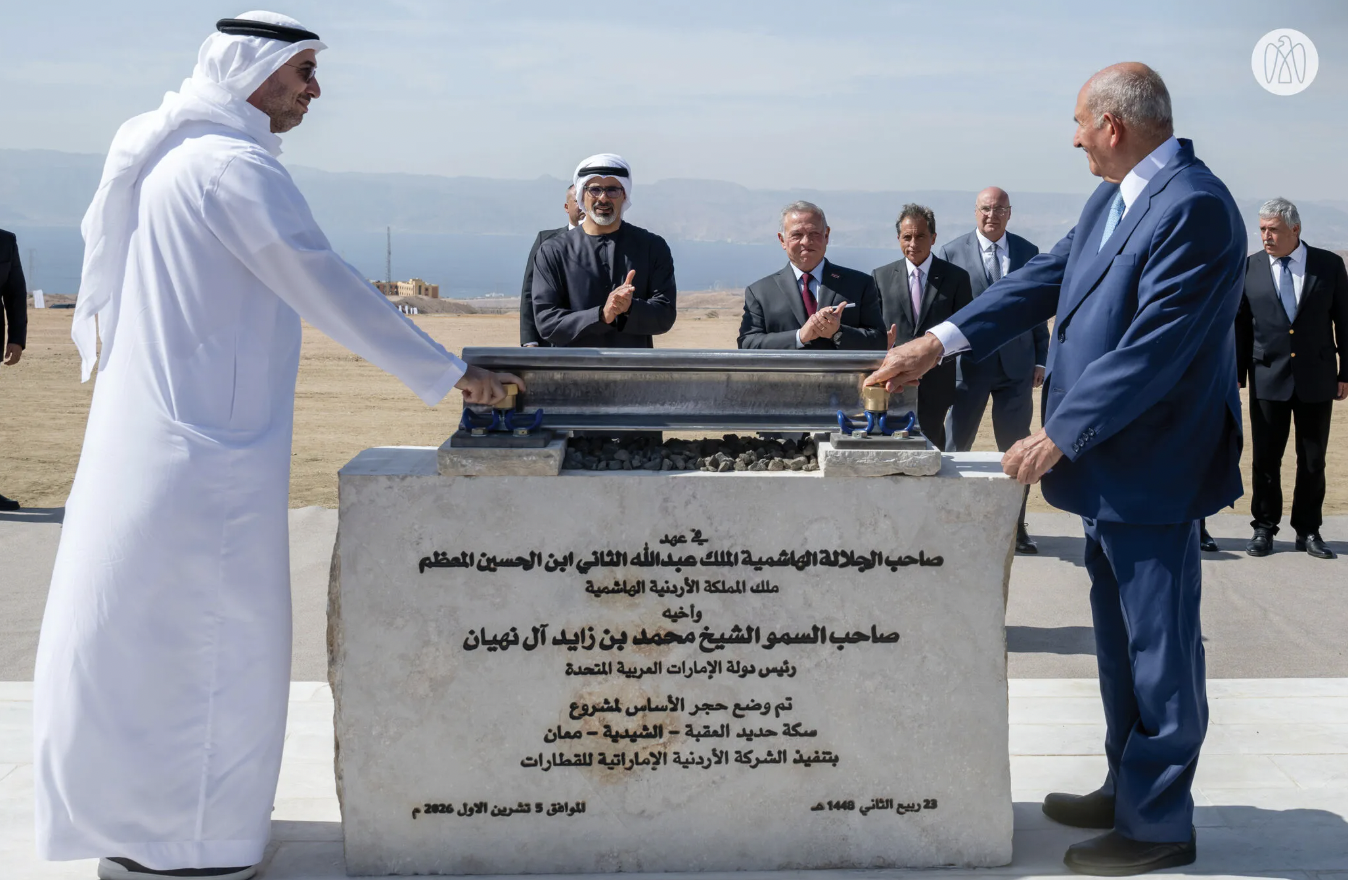
UAE and Jordan sign $2.3 billion deal to develop Aqaba rail link

The Daily Circuit: LIV Golf’s cloudy future + UAE-Jordan rail deal

security concerns

Mideast conflict stokes Gulf investment in defense, energy

The Daily Circuit: Gulf invests in defense + Lucid gets $750M

CLOUDY FORECAST

IMF cuts MENA growth outlook as war disrupts trade, energy

slow recovery

UAE tourism urged to ‘reinvent itself’ as war hits visitor numbers

pied-à-terre

Gulf expats shop for second homes, safe haven in Europe

The Daily Circuit: KBM meets Xi in Beijing + OPEC production slide

TROUBLED Brands

Slow Dubai mall sales threaten luxury shopping recovery

Quick Hits

security concerns

Mideast conflict stokes Gulf investment in defense, energy

Abu Dhabi-based BlueFive Capital is planning a $3 billion fund focused on aerospace and defense, with an emphasis on advanced technologies

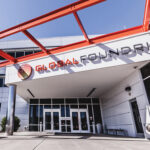
ADGM

BlueFive Capital is based in the Abu Dhabi Global Market

By
Jonathan H. Ferziger
April 15, 2026
Share
Facebook
Twitter
Email
Add The Circuit on Google

Gulf states are ramping up investments and financial support tied to defense and energy, channeling billions of dollars into security-linked companies as the conflict with Iran reshapes priorities across capital markets and government policy.

Abu Dhabi-based BlueFive Capital is planning a $3 billion fund focused on aerospace and defense, targeting companies tied to military and advanced technologies as the UAE positions itself as a hub for security-related investment, Bloomberg reports.

At the same time, Saudi Arabia is reinforcing its geopolitical alliances by providing Pakistan with $3 billion in fresh financing and extending a separate $5 billion deposit, helping Islamabad stabilize its reserves and meet external obligations, including a loan repayment to the UAE.

The support is an indicator of Pakistan’s reliance on Gulf backing amid financial strain, with the repayment accounting for a significant share of its foreign reserves and highlighting the strategic role of Gulf capital in regional stability.

Beyond defense and finance, Indonesia’s sovereign wealth fund Danantara is increasing its focus on the Middle East, planning major investments in energy security, critical minerals and infrastructure, as global investors pivot toward assets tied to supply resilience and long-term strategic needs.

Read More
CLOUDY FORECAST

IMF cuts MENA growth outlook as war disrupts trade, energy

Saudi Arabia is faring better than other countries, while the economies of Iran, Bahrain, Iraq, Kuwait and Qatar are now expected to ​contract.

Kent NISHIMURA / AFP via Getty Images

IMF holds briefing on economic outlook

By
Omnia Al Desoukie
April 15, 2026
Share
Facebook
Twitter
Email
Add The Circuit on Google

The International Monetary Fund slashed its economic forecast for the Middle East and North Africa and said it expects lower global growth, blaming the Iran war for disrupting trade and energy markets.

The region’s GDP growth forecast has been cut to 1.1.% in the IMF’s latest World Economic Outlook, 2.8 percentage points lower than its January projection for this year.

Saudi Arabia is faring better than other countries, while the economies of Iran, Bahrain, Iraq, Kuwait and Qatar are now expected to ​contract, Reuters reports.

Growth is expected to rebound to 4.8% by 2027, presuming energy production and transportation return to normal over the next few months.

“MENA countries are facing unprecedented challenges, exceptional uncertainty in their outlook,” IMF Deputy Managing Director Bo Li said during a panel discussion in Washington.

Read More
slow recovery

UAE tourism urged to ‘reinvent itself’ as war hits visitor numbers

From the Burj Khalifa skyscraper to Abu Dhabi’s brand new museums, the UAE's normally bustling sites have fallen quiet since the start of the war

Tim de Waele/Getty Images

Cyclists pass the site where the Guggenheim Abu Dhabi Museum is nearing completion

By
Omnia Al Desoukie
April 14, 2026
Share
Facebook
Twitter
Email
Add The Circuit on Google

UAE tourism needs to “reinvent itself” to recover from the impact of regional war, officials and hospitality players told a special meeting convened to address the industry in crisis.

From the dazzling Dubai Gold Souk and Burj Khalifa skyscraper to Abu Dhabi’s cluster of brand new museums, the normally bustling sites that are the engine of the country’s tourism economy have fallen quiet since the start of the war.

At a newly formed Tourism Majlis, organized by the Ministry of Economy and Tourism, leaders gathered to confront a sharp drop in visitors following the Iran crisis and share ideas to shape a coordinated recovery plan.

Chaired by Ras Al Khaimah Ruler Sheikh Saud bin Saqr Al Qasimi, the discussion stressed that recovery would require a clear, unified strategy rather than quick fixes, with a focus on collaboration across all seven emirates. 

Read More
pied-à-terre

Gulf expats shop for second homes, safe haven in Europe

Hotspots include London, Geneva and Monaco, which are seeing buyers from the UAE, Saudi Arabia and their neighbors amid war in the Mideast

A gathering during last year's Monaco Yacht Show

By
Jonathan H. Ferziger
April 14, 2026
Share
Facebook
Twitter
Email
Add The Circuit on Google

Expats in the Middle East are shopping for second homes in Europe and paying hundreds of thousands of dollars for second passports as the Iran war fuels safety concerns and drives demand for stable overseas assets.

Hotspots for house-shoppers include London, Paris, Geneva and Monaco, which are seeing increased interest from expats living in the UAE, Saudi Arabia and other Gulf states, Bloomberg reports.

Buyers are focusing on prime, ready-to-move-in properties and working through family offices and brokers to secure residences quickly, with some shifting funds out of the region as security risks rise and travel patterns change. 

In parallel, demand from UAE expats for passports from other countries has increased since the start of the war, Arabian Gulf Business Insight reports. It cites an Indian-Arab family of four that secured citizenship in St. Kitts and Nevis under a government program that charged about $270,000.

Meanwhile, U.K. Chancellor Rachel Reeves is seeking to attract expats from the Gulf by promoting Britain as a safe haven and repairing relationships strained by recent tax changes, The Financial Times reports. She plans to revisit tax rules that currently risk double taxation on income from U.S. LLCs for those relocating to the U.K., according to the FT.

Read More
TROUBLED Brands

Slow Dubai mall sales threaten luxury shopping recovery

Revenues at the Mall of the Emirates were down as much as 50% for some labels in March, pointing to a broad pullback in discretionary spending

Charles Crowell/Bloomberg via Getty Images

Shoppers walk past a Dior store in the Dubai Mall

By
Omnia Al Desoukie
April 13, 2026
Share
Facebook
Twitter
Email
Add The Circuit on Google

Faltering sales in Dubai are threatening a much-needed recovery for the luxury retail market, just as LVMH, Kering and Hermès prepare to report earnings.

Revenues at Mall of the Emirates were down 30-50% for some brands in March compared to the same period last year, while footfall declines across flagship retail hubs, including a steeper slump at Dubai Mall, point to a broader pullback in discretionary spending among tourists and residents alike.

Even relatively resilient locations such as The Galleria Al Maryah Island in Abu Dhabi recorded weaker sales, suggesting the downturn is spreading beyond Dubai’s tourism-dependent economy.

The figures cast doubt on the Middle East’s role as a rare growth engine for luxury brands, as geopolitical tensions threaten to delay an already fragile global recovery in the sector, Reuters reports.

Read More
Alternate route

Saudi Arabia repairs East-West oil pipeline after war damage

The restoration adds 7 million barrels back to state-owned Saudi Aramco’s daily oil shipments, even as security risks persist in Gulf shipping lanes

Dina Khrennikova / Bloomberg via Getty Images

Pipelines at Saudi Aramco's crude oil processing facility in Abqaiq, Saudi Arabia

By
Jonathan H. Ferziger
April 13, 2026
Share
Facebook
Twitter
Email
Add The Circuit on Google

Saudi Arabia has restored its East-West oil pipeline to full capacity after damage linked to the Iran conflict disrupted flows across the kingdom.

Repairs to the pipeline, which runs from oil fields in Saudi Arabia’s Eastern Province to the Red Sea port of Yanbu, were completed after attacks reduced throughput, making the desert route a critical alternative that allows exports to bypass the Strait of Hormuz.

The restoration adds about 7 million barrels back to state-owned Saudi Aramco’s daily oil shipments, strengthening its ability to fulfill orders to global markets even as security risks persist in Gulf shipping lanes.

Meanwhile, Saudi Arabia’s crude shipments to China are set to drop by about half next month to roughly 20 million barrels, down from around 40 million in April, Bloomberg reports.

The decline reflects sharply higher official selling prices and constrained export routes, with some cargoes rerouted via the East-West pipeline to the Red Sea.

Read More
SKIN IN THE GAME

China’s Iran support restrained by investments in Middle East

Dubai airport, Jebel Ali power plant and the Ras Laffan complex are among the projects that received loans from Chinese state-owned creditors

Li Gang/Xinhua via Getty Images

Chinese President Xi Jinping

By
Omnia Al Desoukie
April 10, 2026
Share
Facebook
Twitter
Email
Add The Circuit on Google

China’s support for Iran has been tempered by its growing investments across the Middle East, where it has deployed about $270 billion since the pandemic.

The region has been a key beneficiary of President Xi Jinping’s Belt & Road initiative, with Chinese investment and construction growing at its fastest pace of anywhere in the world, Bloomberg reports.

Between 2014 and 2023, China provided roughly $2.34 in financing to Middle East countries for every $1 provided by the United States, the news agency added.

Dubai airport, Jebel Ali power plant and Ras Laffan industrial complex are among the projects that received loans from Chinese state-owned creditors worth about $4.66 billion, according to AidData estimates.

China, traditionally one of Iran’s biggest allies, has played a key role in convincing the country’s leaders to agree to the two-week ceasefire.

Read More
war toll

Saudi Aramco-TotalEnergies refinery damaged in Iran attack

The strikes also hit oilfields, refineries and a pumping station on the East-West pipeline, cutting Saudi production capacity by 600,000 barrels a day

Romain Gautier / Hans Lucas / AFP via Getty Images

A TotalEnergies gas station in Aibrais, France

By
Jonathan H. Ferziger
April 10, 2026
Share
Facebook
Twitter
Email
Add The Circuit on Google

TotalEnergies said on Friday that a processing unit at its SATORP refinery in eastern Saudi Arabia was damaged this week, forcing a shutdown amid the Iranian assault on Saudi energy infrastructure.

The facility, a joint venture between the Paris-based oil and gas company and Saudi Aramco, is one of the kingdom’s largest refining and petrochemical complexes, processing about 465,000 barrels a day in the port city of Jubail.

The overnight strikes between Tuesday and Wednesday also hit oilfields, refineries and a pumping station on the East-West pipeline, cutting Saudi production capacity by about 600,000 barrels a day and reducing pipeline flows by roughly 700,000 barrels a day. They came as the ceasefire agreed upon by the U.S. and Iran was due to take effect.

The pipeline, which runs from the Gulf to the Red Sea, has become Saudi Arabia’s main alternative to shipping crude through the Strait of Hormuz, making the damage especially significant as Iran restricts tanker traffic through the waterway.

Oil prices rose following the strikes on Saudi facilities, with markets reacting to the combined loss of production and disruption to alternative export routes.

Read More

Posts pagination

Prev 1 2 3 4 5 6 … 123 Next
Navigation
Home
Features
Quick Hits
The Daily Circuit
Org Charts
About
Social
Facebook
Twitter
Instagram
Subscribe
Subscribe

Copyright © 2025 · All Rights Reserved · The Circuit

Sign into your account

Email me a link to sign in

I don't have an account

Sign in or subscribe to continue to read this article

Enter your email and create a password to gain access to our exclusive content

Already a subscriber? Sign in

Unlock full access
Become a premium subscriber

Don't miss out! A paid subscription is required to access this page