











Home
Features
Quick Hits
The Daily Circuit
About
Facebook
Twitter
Instagram
Subscribe
SIGN IN
Features Quick Hits The Daily Circuit SWFs Org Charts
Facebook
Twitter
Instagram
Subscribe
SIGN IN
Search

Quick Hits

islamic fintech

Fasset among World Economic Forum’s 100 tech pioneers

Abu Dhabi Global Market counted 1,825 firms on its roster at the end of 2023. (Photo: ADGM)

investor hub

Blue Owl opens regional office in Abu Dhabi Global Market

The Daily Circuit: Blue Owl lands in Abu Dhabi + Mubadala eyes European fast food

open skies

Emirates’ Tim Clark warns European Airlines on Mideast comeback

The Daily Circuit: Zoom’s Saudi data center + Emirates chief rips European rivals

digital drive

Zoom opens new Saudi data center in $75 million expansion 

taking off

Riyadh Air takes delivery of first Boeing Dreamliner planes

The Daily Circuit: Riyadh Air gets Dreamliners + Uber Gulf air taxis

mideast vision

Uber CEO Dara Khosrowshahi plans air taxis, new tech in Gulf

AFRICAN WINDFALL

Hormuz tensions drive surge of investment in Libyan oil, gas

PETRO GAP

Saudi energy minister says ‘every molecule’ of fuel needed

The Daily Circuit: Saudi appeal to energy execs + Libya’s oil windfall

financial copilot

G42, Santander strike deal to create AI tools for global banking

LOCAL TALENT

Public Investment Fund elevates more Saudis to senior posts

The Daily Circuit: PIF switches to Saudi CEOs + Bahrain’s $1B bond sale

The Daily Circuit: Core42 grows in Big Apple + AD Ports’ Brazil acquisition

teaming up

Dubai, Hong Kong better partners than rivals, Hadi Badri says

intelligence boost

Core42 expands AI business in New York amid growing demand

moving up

Mubadala names Richard Nordell to lead infrastructure business

market moment

Gulf wealth funds poised to profit from Anthropic, SpaceX IPOs

Quick Hits

pied-à-terre

Gulf expats shop for second homes, safe haven in Europe

Hotspots include London, Geneva and Monaco, which are seeing buyers from the UAE, Saudi Arabia and their neighbors amid war in the Mideast

A gathering during last year's Monaco Yacht Show

By
Jonathan H. Ferziger
April 14, 2026
Share
Facebook
Twitter
Email
Add The Circuit on Google

Expats in the Middle East are shopping for second homes in Europe and paying hundreds of thousands of dollars for second passports as the Iran war fuels safety concerns and drives demand for stable overseas assets.

Hotspots for house-shoppers include London, Paris, Geneva and Monaco, which are seeing increased interest from expats living in the UAE, Saudi Arabia and other Gulf states, Bloomberg reports.

Buyers are focusing on prime, ready-to-move-in properties and working through family offices and brokers to secure residences quickly, with some shifting funds out of the region as security risks rise and travel patterns change. 

In parallel, demand from UAE expats for passports from other countries has increased since the start of the war, Arabian Gulf Business Insight reports. It cites an Indian-Arab family of four that secured citizenship in St. Kitts and Nevis under a government program that charged about $270,000.

Meanwhile, U.K. Chancellor Rachel Reeves is seeking to attract expats from the Gulf by promoting Britain as a safe haven and repairing relationships strained by recent tax changes, The Financial Times reports. She plans to revisit tax rules that currently risk double taxation on income from U.S. LLCs for those relocating to the U.K., according to the FT.

Read More
TROUBLED Brands

Slow Dubai mall sales threaten luxury shopping recovery

Revenues at the Mall of the Emirates were down as much as 50% for some labels in March, pointing to a broad pullback in discretionary spending

Charles Crowell/Bloomberg via Getty Images

Shoppers walk past a Dior store in the Dubai Mall

By
Omnia Al Desoukie
April 13, 2026
Share
Facebook
Twitter
Email
Add The Circuit on Google

Faltering sales in Dubai are threatening a much-needed recovery for the luxury retail market, just as LVMH, Kering and Hermès prepare to report earnings.

Revenues at Mall of the Emirates were down 30-50% for some brands in March compared to the same period last year, while footfall declines across flagship retail hubs, including a steeper slump at Dubai Mall, point to a broader pullback in discretionary spending among tourists and residents alike.

Even relatively resilient locations such as The Galleria Al Maryah Island in Abu Dhabi recorded weaker sales, suggesting the downturn is spreading beyond Dubai’s tourism-dependent economy.

The figures cast doubt on the Middle East’s role as a rare growth engine for luxury brands, as geopolitical tensions threaten to delay an already fragile global recovery in the sector, Reuters reports.

Read More
Alternate route

Saudi Arabia repairs East-West oil pipeline after war damage

The restoration adds 7 million barrels back to state-owned Saudi Aramco’s daily oil shipments, even as security risks persist in Gulf shipping lanes

Dina Khrennikova / Bloomberg via Getty Images

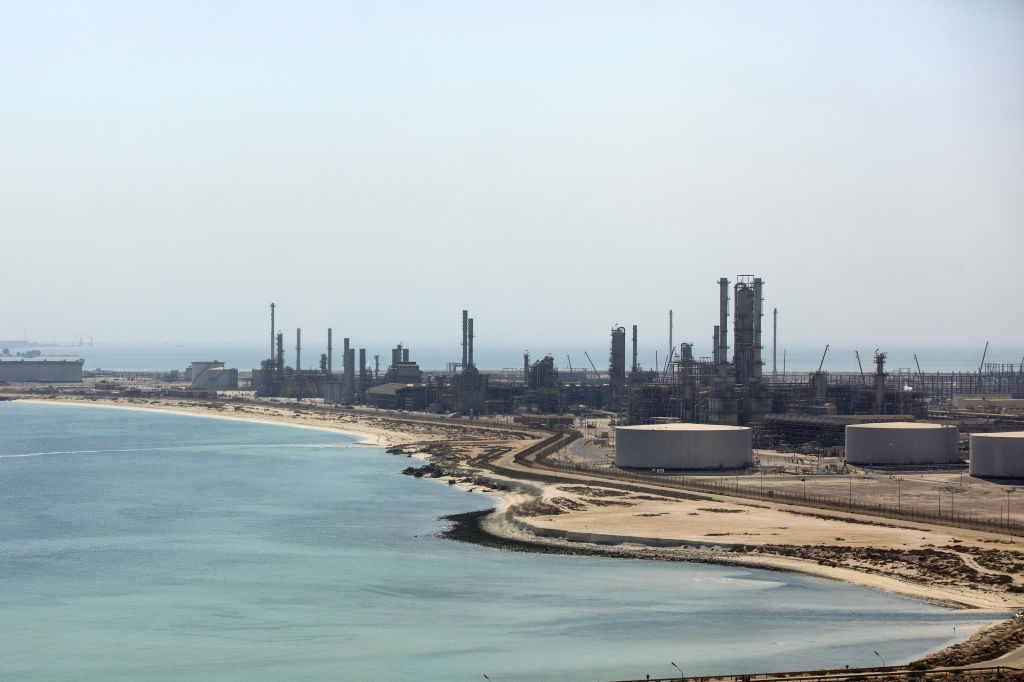
Pipelines at Saudi Aramco's crude oil processing facility in Abqaiq, Saudi Arabia

By
Jonathan H. Ferziger
April 13, 2026
Share
Facebook
Twitter
Email
Add The Circuit on Google

Saudi Arabia has restored its East-West oil pipeline to full capacity after damage linked to the Iran conflict disrupted flows across the kingdom.

Repairs to the pipeline, which runs from oil fields in Saudi Arabia’s Eastern Province to the Red Sea port of Yanbu, were completed after attacks reduced throughput, making the desert route a critical alternative that allows exports to bypass the Strait of Hormuz.

The restoration adds about 7 million barrels back to state-owned Saudi Aramco’s daily oil shipments, strengthening its ability to fulfill orders to global markets even as security risks persist in Gulf shipping lanes.

Meanwhile, Saudi Arabia’s crude shipments to China are set to drop by about half next month to roughly 20 million barrels, down from around 40 million in April, Bloomberg reports.

The decline reflects sharply higher official selling prices and constrained export routes, with some cargoes rerouted via the East-West pipeline to the Red Sea.

Read More
SKIN IN THE GAME

China’s Iran support restrained by investments in Middle East

Dubai airport, Jebel Ali power plant and the Ras Laffan complex are among the projects that received loans from Chinese state-owned creditors

Li Gang/Xinhua via Getty Images

Chinese President Xi Jinping

By
Omnia Al Desoukie
April 10, 2026
Share
Facebook
Twitter
Email
Add The Circuit on Google

China’s support for Iran has been tempered by its growing investments across the Middle East, where it has deployed about $270 billion since the pandemic.

The region has been a key beneficiary of President Xi Jinping’s Belt & Road initiative, with Chinese investment and construction growing at its fastest pace of anywhere in the world, Bloomberg reports.

Between 2014 and 2023, China provided roughly $2.34 in financing to Middle East countries for every $1 provided by the United States, the news agency added.

Dubai airport, Jebel Ali power plant and Ras Laffan industrial complex are among the projects that received loans from Chinese state-owned creditors worth about $4.66 billion, according to AidData estimates.

China, traditionally one of Iran’s biggest allies, has played a key role in convincing the country’s leaders to agree to the two-week ceasefire.

Read More
war toll

Saudi Aramco-TotalEnergies refinery damaged in Iran attack

The strikes also hit oilfields, refineries and a pumping station on the East-West pipeline, cutting Saudi production capacity by 600,000 barrels a day

Romain Gautier / Hans Lucas / AFP via Getty Images

A TotalEnergies gas station in Aibrais, France

By
Jonathan H. Ferziger
April 10, 2026
Share
Facebook
Twitter
Email
Add The Circuit on Google

TotalEnergies said on Friday that a processing unit at its SATORP refinery in eastern Saudi Arabia was damaged this week, forcing a shutdown amid the Iranian assault on Saudi energy infrastructure.

The facility, a joint venture between the Paris-based oil and gas company and Saudi Aramco, is one of the kingdom’s largest refining and petrochemical complexes, processing about 465,000 barrels a day in the port city of Jubail.

The overnight strikes between Tuesday and Wednesday also hit oilfields, refineries and a pumping station on the East-West pipeline, cutting Saudi production capacity by about 600,000 barrels a day and reducing pipeline flows by roughly 700,000 barrels a day. They came as the ceasefire agreed upon by the U.S. and Iran was due to take effect.

The pipeline, which runs from the Gulf to the Red Sea, has become Saudi Arabia’s main alternative to shipping crude through the Strait of Hormuz, making the damage especially significant as Iran restricts tanker traffic through the waterway.

Oil prices rose following the strikes on Saudi facilities, with markets reacting to the combined loss of production and disruption to alternative export routes.

Read More
bulking up

Mubadala’s assets under management grow 17% to $385B

The Abu Dhabi sovereign wealth fund said the U.S. accounted for 44% of its investments last year while 25% was spent at home in the UAE

Picture courtesy of Mubadala

Mubadala Tower in Abu Dhabi

By
Omnia Al Desoukie
April 9, 2026
Share
Facebook
Twitter
Email
Add The Circuit on Google

Abu Dhabi’s Mubadala sovereign wealth fund said assets under management rose 17% to $385 billion in 2025.

The fund said in a statement issued today that the U.S. accounted for 44% of its investments last year and 25% was spent in the UAE.

Mubadala, which has major UAE holdings including tech firm G42, Aldar Properties and renewable energy company Masdar, said it will pursue new opportunities this year in artificial intelligence, robotics and data centers.

Khaldoon Al Mubarak, Mubadala’s Managing Director and Group CEO, said the fund “remains resilient and well positioned to weather the current challenges facing the regional and global economy.”

Read More
perilous passage

ADNOC’s Al Jaber says Strait must open with ‘no strings attached’

The International Maritime Organization condemned Iran’s imposition of fees for crossing the Strait of Hormuz, where sea mines remain a danger

Su Xiaopo/Xinhua via Getty Images

Dr. Sultan Al Jaber, Group CEO of ADNOC and UAE Minister of Industry and Advanced Technology

By
Jonathan H. Ferziger
April 9, 2026
Share
Facebook
Twitter
Email
Add The Circuit on Google

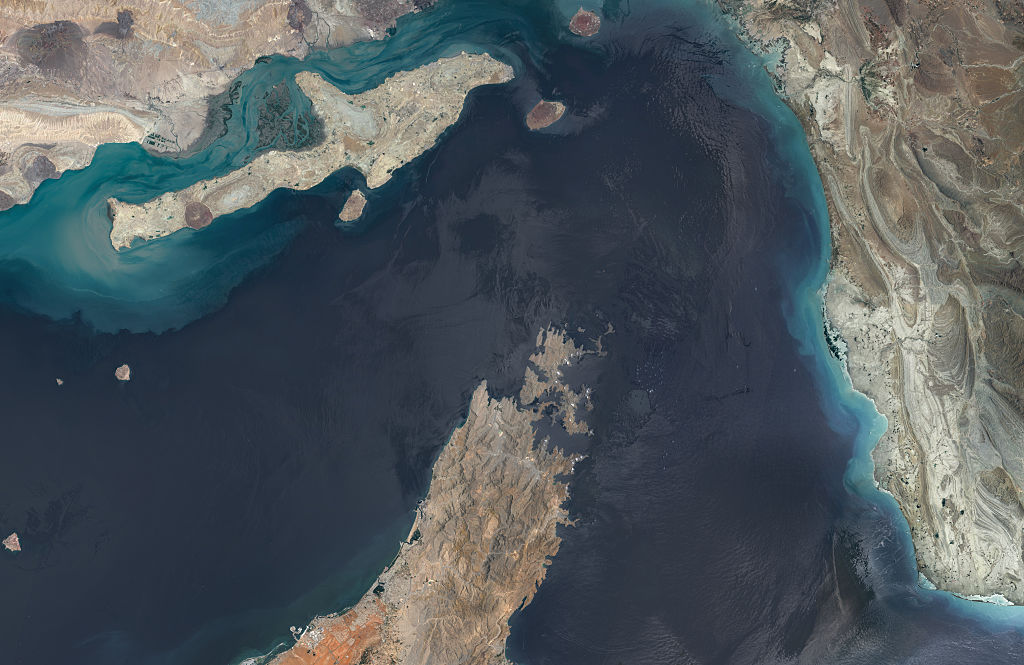
The UAE’s top oil executive said the Strait of Hormuz remains effectively shut despite a two-day-old ceasefire, and demanded that Iran open access to the Gulf waterway “with no strings attached.”

Dr. Sultan Al Jaber, Group CEO of ADNOC and the UAE Minister of Industry and Advanced Technology, cited damage to the company’s oil facilities during the six-week war between the U.S., Israel and Iran, condemned Iran’s insistence that any passage of ships be under its supervision.

“Conditional passage is not passage – it is control by another name,” Al Jaber said in a statement posted today on LinkedIn. “Energy security and global economic stability depend on it.”

Iran has designated two safe routes for vessels entering and exiting Hormuz, which were established to avoid the potential presence of sea mines in the area, Bloomberg reported, citing Iran’s state-run Nour News.

The head of the International Maritime Organization, Arsenio Dominguez, meanwhile, condemned Iran’s imposition of fees crossing the Strait of Hormuz, telling Bloomberg Television, “We don’t even know if it guarantees the safety of the ships.”

Read More
Ticking clock

Gulf braces for violent night as Trump deadline on Iran looms

Barring Iran’s compliance, Trump said a U.S. air assault would ensure every power plant in the Islamic Republic will be burning and 'out of business'

Tom Williams/CQ-Roll Call, Inc via Getty Images

U.S. President Donald Trump mimics firing a gun during a White House news conference

By
Jonathan H. Ferziger
April 7, 2026
Share
Facebook
Twitter
Email
Add The Circuit on Google

Power plants and oil installations on both sides of the Gulf are girding against the probability of attacks tonight as U.S. President Donald Trump’s deadline for Iran to lift its blockade of the Strait of Hormuz ticks down.

Trump said at a White House news conference on Monday that, barring Iran’s compliance, the coming U.S. air assault would ensure that every power plant in the Islamic Republic will be “out of business, burning, exploding and never to be used again.”

The President set 8 p.m. EDT (4 a.m. GST) as the deadline for Iran to open the Gulf waterway, where about 20 million barrels of oil – 20% of world demand – flowed through every day before the conflict started Feb. 28. Oil prices rose as much as 1% today, with the benchmark Brent crude reaching $1.11 a barrel, a 50% increase over the past five weeks.

Iran, in turn, rejected Trump’s ceasefire terms and said it would retaliate by attacking energy facilities in U.S.-aligned Gulf states and Israel. Oil and gas plants owned by Aramco and ADNOC have been damaged in previous Iranian attacks. Saudi Arabia said today that it intercepted seven ballistic missiles from Iran, with ​debris falling near energy facilities.

The head of the International Energy Agency, meanwhile, said the ‌current oil and gas crisis  is “more serious than the ​ones in 1973, ​1979 and 2022 together.” IEA Chief Fatih Birol told ⁠Le Figaro in Paris that the ‌countries most at risk are developing ⁠nations, which will suffer from higher oil and gas prices, higher food prices and a general acceleration of inflation.

Read More

Posts pagination

Prev 1 … 7 8 9 10 11 12 13 14 15 … 131 Next
Navigation
Home
Features
Quick Hits
The Daily Circuit
Org Charts
About
Social
Facebook
Twitter
Instagram
Subscribe
Subscribe

Copyright © 2025 · All Rights Reserved · The Circuit

Sign into your account

Email me a link to sign in

I don't have an account

Sign in or subscribe to continue to read this article

Enter your email and create a password to gain access to our exclusive content

Already a subscriber? Sign in

Unlock full access
Become a premium subscriber

Don't miss out! A paid subscription is required to access this page