







DHL is investing $565 million across its Mideast facilities, betting the region will emerge as a dominant hub despite its disrupted shipping routes
Picture courtesy of DHL Global Forwarding MEA
Tobias Maier, CEO DHL Global Forwarding MEA
DHL is locking in plans to invest some $565 million to expand its Middle East operations, betting that the region will emerge from war with Iran as a dominant global logistics hub.
Tobias Maier, CEO of DHL Global Forwarding Middle East & Africa, said upcoming infrastructure and energy projects financed by Gulf sovereign wealth funds present new opportunities for the express delivery company amid the war’s disruption of traditional shipping routes.
“These investments don’t stop because supply chains become more complicated – they become more important,” Maier said in an interview with The Circuit.
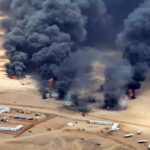
DHL has committed about half of its planned investment to expand logistics facilities in Riyadh and Dubai. The new funding comes as ships have been targeted by missile and drone attacks in both the Gulf and the Red Sea during the war between the U.S., Iran and Israel that began in late February.
The supply-chain disruptions resulting from the war have prompted many customers to switch their shipping from sea vessels to air freight to avoid delays and keep products on shelves. DHL has the third-largest air network among global delivery services, behind FedEx and UPS.
“There was a shift in reality,” said Maier, who took over the Dubai-based DHL unit last December. “Typically, most cargo volumes go via sea freight on shipping lines, which is, of course, much cheaper and lower cost.”
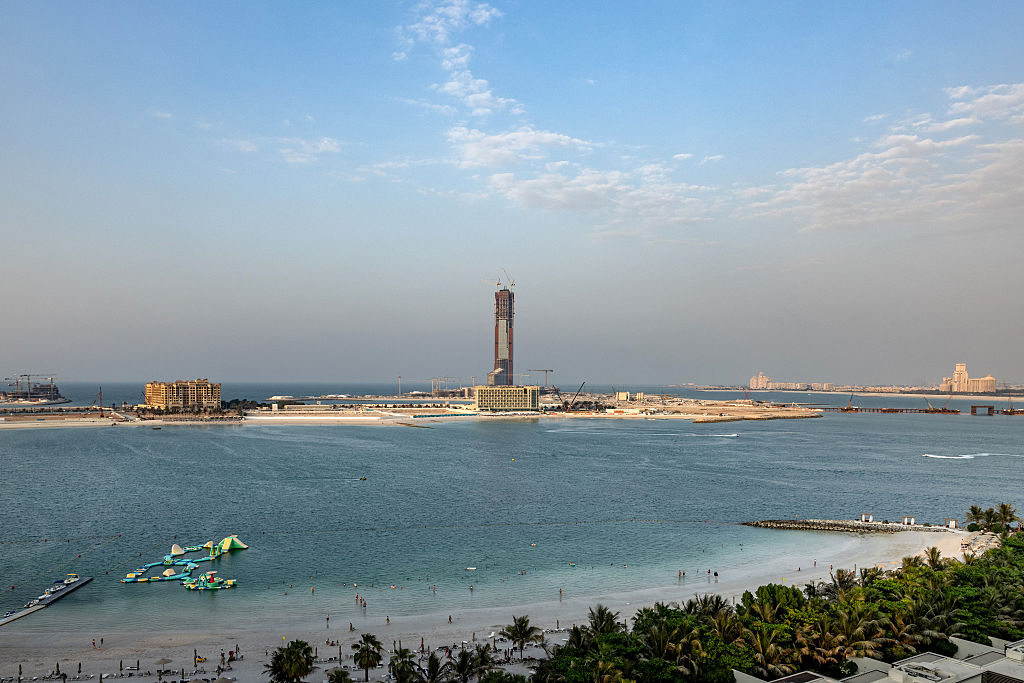
DHL Group, which employs roughly 400,000 people worldwide, is building a 55,000-square-meter warehouse in Dubai South at a cost of $140 million, with construction underway and completion planned for summer 2027. The site sits inside the emirate’s aviation, logistics and free-trade zone, anchored around the under-construction Al Maktoum International Airport, which Dubai is positioning to become the world’s largest.
The ongoing disruptions have highlighted a broad shift in the logistics industry, where shipping expertise provides additional value in areas such as customs clearance, documentation, market intelligence, routing alternatives and access to diversified transportation networks.
From the perspective of cargo shippers, the Strait of Hormuz blockade has reinforced the need to focus on dependability, even at the expense of speed.
“Companies are increasingly moving away from a purely lowest-cost model and prioritizing redundancy, flexibility and continuity of supply,” Rohan Mehta, Managing Director of Petrochem Middle East, the largest independent chemical distributor in the region, told The Circuit.
“What we are seeing is not just a short-term rerouting exercise; it is a clear shift toward resilience,” he said.
Mehta said that means more diversified routing and greater use of alternative export corridors, such as the UAE’s eastern emirate of Fujairah and Saudi Arabia’s Red Sea port of Yanbu.
Historically, the UAE and other Gulf ports have served as logistics hubs for Africa, with companies storing inventory in the region’s free zones before distributing products across the continent. The recent war-related disruptions, though, have encouraged some companies to bypass Dubai and ship directly from Europe or China into African markets.
At the same time, countries such as Egypt are attracting increased manufacturing investment, particularly from Turkey, creating new logistics opportunities for DHL across the region. Beyond the Riyadh and Dubai facilities, DHL has earmarked $85 million for its first regional aircraft maintenance hangar, at Bahrain International Airport, and about $30 million for an air-side gateway facility at Muscat International Airport in Oman.
Still, Maier said the UAE retains advantages that are difficult for competitors to replicate.
“It’s not just about infrastructure or capital,” he said. “The UAE has developed a business-friendly culture, agility, and government support that are difficult to replicate.”
While the Gulf will remain a critical hub, Petrochem’s Mehta said the new conditions are accelerating structural changes that will determine how companies plan logistics.
“Companies that adapt now are likely to be better protected against the next shock, whether that is geopolitical, operational or commercial,” Mehta said.