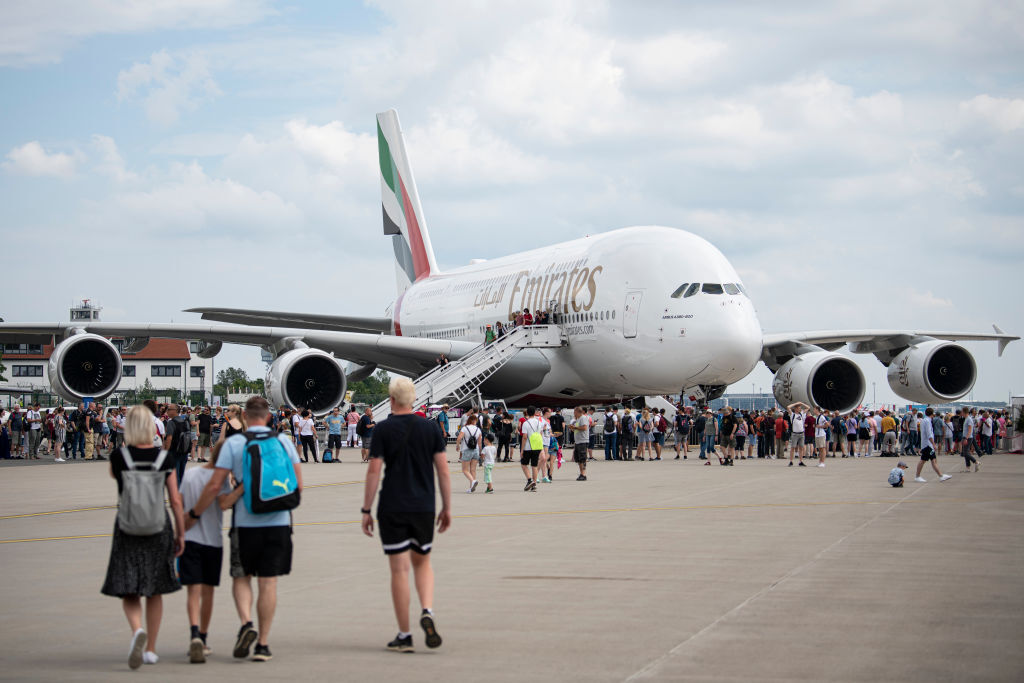
Pressure is mounting on the German government to let Dubai-based Emirates airline schedule more flights to Germany.
The Germany-UAE Business Council is calling on the Chancellor’s office to support daily direct flights by the airline, both between Dubai and Berlin and between Dubai and Stuttgart, according to a letter obtained by The Circuit.
In its letter to the Federal Chancellery, the business lobby expressed regret that talks between Germany and the UAE on expanding air-traffic rights ended without an agreement. According to the group, the German side offered only two weekly flights for UAE airlines to Berlin.
“From a commercial perspective, such a limited frequency would neither provide a viable basis for establishing and sustainably operating the route, nor would it adequately meet the level of the demand identified,” the letter said, seeking support from the Chancellery for the extra service.
The dispute is rooted in a long-running disagreement over traffic rights to German destinations for airlines from the UAE. Emirates currently serves Frankfurt, Munich, Düsseldorf and Hamburg. To add regular services to Berlin and Stuttgart, the airline needs to expand its existing traffic rights.
The issue gained fresh momentum following Chancellor Friedrich Merz’s visit to the UAE in February. In its letter, the GUBC pointed to “positive signals” from the Chancellor regarding additional traffic rights. According to media reports, however, there were differing views within the German government.
While the Transport Ministry was said to have initially offered two weekly flights to Berlin, the Chancellery pushed for a broader agreement allowing six or seven flights a week to Berlin and Stuttgart.
The dispute is politically sensitive in part because additional Emirates services could intensify competition with Lufthansa and other European airlines. Lufthansa opposes an expansion of the traffic rights. Germany and the UAE have yet to reach an agreement, Tagesspiegel reported.
The GUBC’s German Chairperson is Günther Oettinger, a former Minister-President of the state of Baden-Württemberg and past EU commissioner. The UAE Chairperson is Musabbeh Al Kaabi, CEO for upstream operations at ADNOC
This article was produced through the Axel Springer Global Reporters Network, a multi-publication initiative publishing scoops, investigations, interviews, op-eds and analysis that reverberate across the world. It connects journalists from Axel Springer brands – including POLITICO, The Telegraph, Business Insider, WELT, BILD, Onet, and now The Circuit – on major stories for an international audience. Their ambitious reporting stretches across Axel Springer platforms: online, print, TV, and audio. Together, the outlets reach hundreds of millions of people worldwide.



















 Add The Circuit on Google